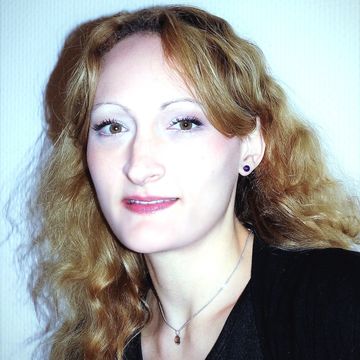
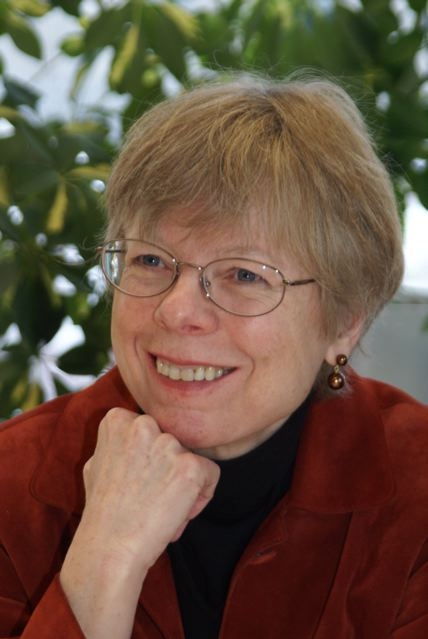
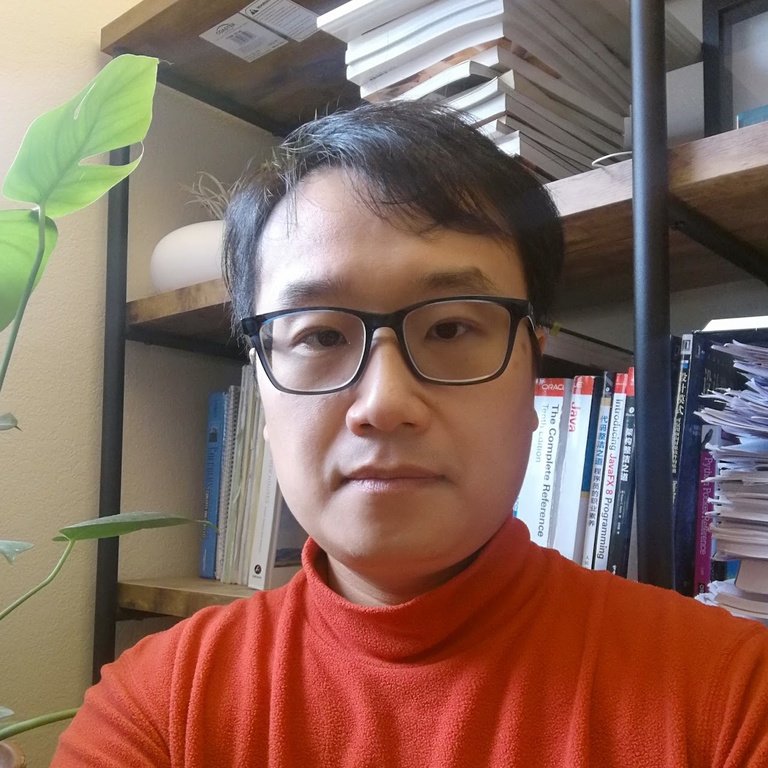
Malvina Nissim is a leading researcher in computational linguistics and NLP at the University of Groningen's Department of Artificial Intelligence, with a focus on multilingual modeling, bias mitigation, and human evaluation frameworks. Key Contributions : Developed CALAMITA (Italian LLM benchmark), IT5 models for Italian language processing, and ReproHum framework for NLP evaluation reproducibility Research Pillars : Multilingual reasoning consistency, perspective-based text analysis, and figurative language modeling Her work spans activation steering techniques, cross-lingual transfer learning, and the creation of specialized language resources like the EurekaRebus dataset and MAGPIE idiom corpus. She pioneered methods for gender bias measurement in BERT and developed the SocioFillmore tool for perspective visualization. Recent publications explore model uncertainty as MCQ difficulty proxy, Italian headline generation benchmarks, and multilingual multi-figurative language detection. She actively participates in teaching initiatives like the "NLP with Bracelets" workshop for Italian high school students. Scientific Awards : ACL Best Paper Award (2025) EMNLP Outstanding Reviewer (2023) EVALITA Leadership Recognition (2024) She advises PhD students in model bias analysis and has contributed to the development of the Dutch Abusive Language Corpus (DALC) and the ReproNLP reproducibility framework. Her collaborations span institutions in Italy, Netherlands, and international NLP communities.
Xinya Du is an Assistant Professor in the Department of Computer Science at the University of Texas at Dallas (UT Dallas), affiliated with the Erik Jonsson School of Engineering and Computer Science. She holds a Ph.D. in Computer Science from Cornell University and completed a postdoctoral fellowship at the University of Illinois at Urbana-Champaign. Her research focuses on advancing trustworthy and impactful AI systems, particularly in Natural Language Processing (NLP), Large Language Models (LLMs), and Vision-Language Models (VLMs). Key research areas include Document understanding and knowledge acquisition Trustworthy reasoning and hallucination detection in LLMs Applications of NLP in scientific research and multimodal systems Alignment of AI systems with human values Dr. Du has received notable awards such as the NSF CAREER Award (2024), Amazon Research Award (2023), and recognition as a Spotlight Rising Star in Data Science. She has authored over 30 papers in top venues like ACL, EMNLP, NeurIPS, and CVPR, contributing to foundational work in multimodal reasoning, LLM evaluation, and automated scientific hypothesis generation. She teaches advanced courses including CS 6301: Special Topics in Computer Science - Deep Learning for NLP and actively mentors students in research projects. Her work has been highlighted in major media and led to impactful open-source contributions, including repositories for event extraction and LLM benchmarking.
Prof. Dr. Axel Mecklinger is a leading cognitive neuroscientist at Saarland University , specializing in the neurocognition of memory and language through spatiotemporal brain imaging (EEG/MEG/fMRI). His career spans over three decades, with significant contributions to understanding visual working memory , associative recognition , and memory development . Key research areas: Memory binding, ERP subsequent memory effects, novelty detection, and cognitive aging Major grants: DFG Research Groups, Collaborative Research Centers, and international collaborations with the Chinese Academy of Sciences Scientific leadership: Organized conferences, edited journals, and served as speaker for research training groups His recent work explores unitization in memory formation , cross-cultural differences in memory processing , and theta neurofeedback interventions . Awards include the Early Career Award of the German Psychophysiology Society (1992) and the European Federation of Psychophysiology Societies' Federation Prize (1994). Current projects investigate the neural mechanisms of semantic surprisal and memory plasticity in aging populations.
Dr. Anna Rogos-Hebda is an Assistant Professor at the Faculty of English, Adam Mickiewicz University in Poznań, Poland. She is actively involved in research and teaching in the fields of cognitive and historical linguistics, with a strong emphasis on diachronic semantics, emotion terminology, and corpus-based analysis. Faculty of English, Adam Mickiewicz University Researcher in Cognitive and Historical Linguistics Active contributor to international academic conferences Her research interests center on the language of emotions , conceptual metaphor theory , and the diachronic development of abstract categories in English and Polish. She employs corpus linguistics and cognitive semantics to investigate semantic change, particularly in Middle and Late Modern English. Her work explores how emotions such as hope, belief, and hate are linguistically encoded and evolve over time. The recent articles reflect a consistent focus on diachronic cognitive linguistics , with themes including semantic change in emotion terms , conceptualization of social categories (e.g., beggars, refugees, immigrants), and political and ideological discourse . Her methodology is predominantly corpus-based, often involving quantitative and multivariate analysis of lexical usage across time and cultures. She has not been awarded any formal scientific prizes or fellowships mentioned in the text. Dr. Rogos-Hebda has served as an assistant editor for Studia Anglica Posnaniensia (2001–2010) and has been actively involved in organizing academic events such as the History of English Language in Poznań (HEL-P) and Figurative Thought and Language (FTL) conferences. She has received research support through scholarships from the University of Helsinki and Otto Friedrich Universität, Bamberg, as well as a conference grant from the Foundation for Polish Science. She is a member of several professional organizations, including Societas Linguistica Europea (SLE), Polish Association for the Study of English (PASE), International Society for the Linguistics of English (ISLE), and The Philological Society (TPS). She regularly presents her work at major international conferences and contributes to collaborative research projects, particularly with scholars like Małgorzata Fabiszak and Karolina Krawczak-Glynn.
Dr. Wan Renjie is an Assistant Professor in the Department of Computer Science at the Faculty of Science, Hong Kong Baptist University (HKBU). He holds a BEng in Network Engineering from the University of Electronic Science and Technology of China and a PhD from Nanyang Technological University (NTU), Singapore. Prior to joining HKBU, he was a Wallenberg-NTU Presidential Postdoctoral Fellow (2020–2022) and a guest researcher at Peking University (2019–2020). His research focuses on computational photography, 3D vision, AI security, digital watermarking, and neural representations . He explores robustness and security in vision models, especially concerning NeRFs and 3D Gaussian Splatting, and develops methods for low-light enhancement, reflection removal, and domain adaptation. Dr. Wan has published in top-tier venues including TPAMI, IJCV, CVPR, ICCV, NeurIPS, AAAI, and ECCV . His recent work emphasizes copyright protection for neural 3D models , adversarial attacks in multimodal and event-based systems, and medical image reconstruction. He is actively mentoring PhD students and research assistants. VCIP 2020 Best Paper Award Outstanding Reviewer, ICCV 2019 He teaches courses such as Introduction to AI and ML (COMP3057) , AI Application Development (COMP3065) , and Python for Data Analysis and Machine Intelligence (COMP7035) . Dr. Wan leads a dynamic research group with ongoing projects on watermarking, 3D reconstruction, and AI security, and he is currently recruiting new PhD students and research assistants.
Mikael Johansson is a Professor in the Department of Psychology at Lund University, where he leads research on the cognitive and neural bases of memory and cognitive control. His academic appointments include membership in eSSENCE: The e-Science Collaboration, LAMiNATE (Language Acquisition, Multilingualism, and Teaching), LU Profile Area: Proactive Ageing, and LU Profile Area: Natural and Artificial Cognition. With 159 research outputs and leadership in 18 projects (8 active), he maintains a prominent position in cognitive neuroscience research. His research focuses on the neural mechanisms of memory using behavioral, electrophysiological (EEG/ERP), and functional magnetic resonance imaging (fMRI) methods. Key interests include interactions between memory systems, formation and retrieval of episodic memories, emotion regulation and emotional memory, mechanisms underlying incidental and intentional forgetting, and the relationship between eye-movements, mental imagery and memory. His work has significant implications for understanding memory functions in psychiatric conditions such as depression and post-traumatic stress disorder. Analyzing his extensive publication record spanning from 2012-2025 reveals a consistent focus on memory mechanisms with increasing integration of eye-tracking methodologies and clinical applications. His research demonstrates an evolving trajectory from basic memory processes toward understanding memory in real-world contexts and clinical populations, with recent work emphasizing the role of eye movements in memory construction and the neural dynamics of memory integration. Mikael Johansson serves as a member of The Swedish National Committee for Psychological Sciences at the Royal Swedish Academy of Sciences since 2011 and has received significant research funding including from The Bank of Sweden Tercentenary Foundation, Swedish Research Council, and Stiftelsen Marcus och Amalia Wallenbergs Minnesfond. His current major projects include TEAM: Transdisciplinary Approaches to Learning, Acquisition, Multilingualism (2024-2029), Tracking cognitive change as a function of normal ageing and different types of degenerative disease, and How the brain constructs the present and reconstructs the past via sequences of eye movements. He leads the Lund Memory Lab where his team investigates how the brain constructs and maintains coherent episodic memories through eye movements. His research group actively collaborates with international partners across multiple disciplines, bridging cognitive psychology, neuroscience, and clinical applications. The lab's work has gained significant attention, with several publications being highlighted in news outlets and academic discussions.
Payam Barnaghi is a Professor and Chair in Machine Intelligence Applied to Medicine at Imperial College London's Department of Brain Sciences, part of the Faculty of Medicine. He holds multiple leadership roles, including Co-Director of the School of Convergence Science in Human and Artificial Intelligence and Deputy Head of Neurology. His research focuses on AI-driven healthcare solutions, particularly in neurosciences and dementia care. He leads the Translational Machine Intelligence group at the UK Dementia Research Institute (UK DRI) and is a Visiting Professor at University College London's Institute of Child Health. His affiliations include the NVIDIA Deep Learning Institute, the British Heart Foundation Centre for Research Excellence, and the UK DRI Care and Research Technology Centre. He has received awards such as the Wellcome Trust Mental Health Ideathon Award (2023) and the IEEE Outstanding Leadership Award (2017). His work emphasizes remote patient monitoring, digital biomarkers, and explainable AI for early health event detection. Key projects include the TIHM (Technology Integrated Health Management) initiative for dementia care, leveraging wearable sensors and machine learning. He contributes to interdisciplinary efforts in smart care ethics and has published extensively on topics like neural network applications, healthcare data analysis, and clinical decision support systems.
Professor Adrian Hilton is a distinguished faculty member at the University of Surrey, serving as Director of the Centre for Vision, Speech and Signal Processing (CVSSP) and Director of the Surrey Institute for People-Centred AI. He is affiliated with the School of Computer Science and Electronic Engineering and leads the Visual Media Research Lab (V-Lab). His research focuses on pioneering next-generation 4D computer vision technologies that enable machines to understand and model dynamic real-world scenes. Key areas include 3D/4D shape capture, computer vision, machine learning, graphics, and animation for applications in sports analysis, film/TV production, virtual reality, and medical imaging. His work bridges the gap between real and computer-generated imagery, with notable contributions in volumetric capture, motion capture, and free-viewpoint video. Hilton's recent publications demonstrate a strong trend toward multimodal integration, particularly combining audio and visual processing for spatial audio applications, while advancing 4D reconstruction techniques for human performance capture. His work increasingly incorporates transformer architectures and neural rendering techniques for improved illumination estimation, shadow modeling, and multi-view consistency. Scientific Awards and Recognition Two EU IST Innovation Prizes Manufacturing Industry Achievement Award Royal Society Industry Fellowship (2008-2011) Royal Society Wolfson Research Merit Award in 4D Vision (2013-2018) Fellow of the Royal Academy of Engineering (FREng) Fellow of the International Association for Pattern Recognition (FIAPR) Fellow of the Institution of Engineering and Technology (FIET) Hilton actively mentors PhD and post-doctoral researchers through his leadership of CVSSP, which has a grant portfolio exceeding £31M and comprises 170 researchers. He has successfully commercialized several technologies, including systems used by the BBC for sports commentary visualization. His research collaborations span major industry partners including BBC, BT, Sony, Framestore, and The Foundry. He co-founded the G3 Games forum and the CVMP Conference on Visual Media Production, demonstrating strong engagement with the creative industries. Current research projects include the S3A Programme Grant in Future Spatial Audio and InnovateUK's ALIVE project for 360 video reconstruction.
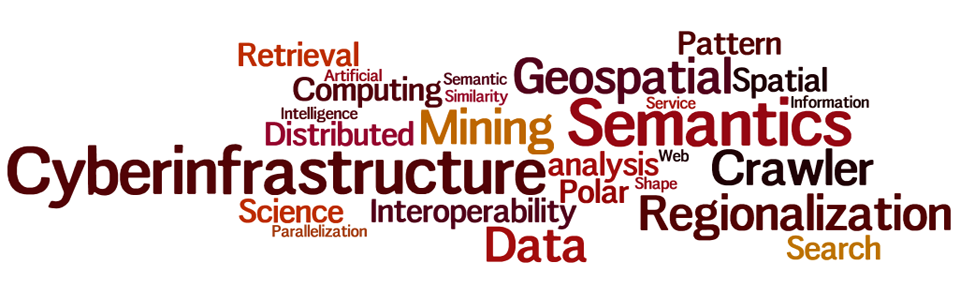
Wenwen Li is a Professor at Arizona State University (ASU), holding roles as Director of the CyberInfrastructure and Computation Intelligence (CICI) Lab and Research Director at the Spatial Analysis Research Center (SPARC). She specializes in geographic information science, cyberinfrastructure, and geospatial big data. Her work focuses on developing intelligent cyberinfrastructure for environmental and urban studies, leveraging AI and semantic technologies. Li's research has been supported by NSF, USGS, and Google.org, among others. Education: Ph.D. in Earth System and Geoinformation Science (George Mason University, 2010), M.S. in Signal and Information Processing (Chinese Academy of Sciences, 2007), and B.S. in Computer Science (Beijing Normal University, 2004). Research Interests : Cyberinfrastructure, spatial-temporal data mining, semantic interoperability, GeoAI applications in climate science, and urban studies. Her lab, CICI, pioneers projects like the Arctic Permafrost Thaw analysis and disaster response systems. Awards : 2023 AAG and UCGIS Fellowships, 2021 NSF Mid-Career Award, 2015 NSF CAREER Award, and the 2024 Greg Leptoukh Lecture Award (AGU). She chairs AAG's Cyberinfrastructure Specialty Group and serves on editorial boards of key journals. Grants & Service : Leads NSF-funded projects on GeoAI, climate modeling, and Arctic science. Active in AAG leadership roles and global initiatives like the Polar Cyberinfrastructure Portal. Recruits Ph.D. students in Geography and Computer Science. Labs & Teams : Directs the CICI Lab, advancing interdisciplinary GeoAI research and training. Collaborates with global partners on environmental and computational geography projects.
Dr. Armin Mustafa is an Associate Professor in Computer Vision and AI at the University of Surrey, where he holds a prestigious Royal Academy of Engineering Research Fellow position. He is affiliated with the Centre for Vision, Speech and Signal Processing (CVSSP), the School of Computer Science and Electronic Engineering, and the Surrey Institute for People-Centred Artificial Intelligence (PAI). His research focuses on developing AI systems for visual understanding of complex dynamic scenes, with applications in entertainment, autonomous systems, and augmented/virtual reality. Dr. Mustafa completed his PhD in general dynamic scene reconstruction from multi-view videos in 2016 from the University of Surrey under the supervision of Prof. Adrian Hilton. Prior to his doctoral studies, he worked for three years (2010-2013) at Samsung Research Institute in Bangalore, India, in the field of Computer Vision. His research expertise spans Computer Vision, Scene Understanding, 3D/4D Vision, Virtual Reality, Light Fields, Machine Learning, Video Captioning, Augmented Reality, Artificial Intelligence, and Audio-visual Video Understanding. Dr. Mustafa has pioneered advances in 4D vision, NLP, and Scene Understanding over the past decade, with a particular focus on enabling machines to model and interpret real-world environments for socially beneficial applications. His work bridges theoretical advances in computer vision with practical applications in media production, virtual reality, and autonomous systems. Analysis of Dr. Mustafa's recent publications reveals a strong focus on multimodal learning, particularly the integration of audio and visual information for scene understanding. His work spans diverse areas including shadow detection and removal, audio event classification, video captioning, person image generation, and dynamic scene reconstruction. A notable trend is his exploration of transformer architectures for both vision and audio tasks, as well as the application of self-supervised learning techniques to reduce dependency on labeled data. Dr. Mustafa has received numerous prestigious awards: 2018 - Research Fellowship, The Royal Academy of Engineering, UK 2017 - Young Researcher award, CVPR 2016 - Doctoral Consortium grant, CVPR 2015 - BMVA travel grant for ICCV 2014 - Set-Squared Research to Innovator grant 2013 - Overseas Research Scholarship, FEPS, The University of Surrey 2010 - Cadence Silver Medal, Indian Institute of Technology, Kanpur As a dedicated mentor, Dr. Mustafa supervises several PhD students working on cutting-edge topics including multi-person reconstruction, audio-visual scene understanding, and automatic storyboard generation. His research is supported by significant grants including a £15 million UKRI Prosperity Partnership with the BBC (AI4ME), a 5-year Royal Academy of Engineering fellowship (4D Vision for Perceptive Machines), and multiple projects with industry partners such as Figment Productions and Foundry. Dr. Mustafa is an active member of the Centre for Vision, Speech and Signal Processing (CVSSP), one of the world's leading research centers in vision, speech, and signal processing. He also contributes to the Surrey Institute for People-Centred Artificial Intelligence (PAI), where he serves as a Surrey AI Fellow. His work often involves collaboration with industry partners and other academic institutions across Europe.
Prof. Dr. Helen Engemann is a Junior Professor at the Department of English, School of Humanities, University of Mannheim. Her research focuses on multilingualism, language acquisition, and cognitive aspects of bilingualism. She is affiliated with the Research Team JP Multilingualism and is a member of the Deutsche Gesellschaft für Sprachwissenschaft (DGfS), European Second Language Association (EUROSLA), and International Association for the Study of Child Language (IASCL). Her work investigates how language structures influence cognitive processes, particularly in bilingual children and heritage speakers. Key topics include motion event constructions, crosslinguistic influence, and syntactic packaging in multilingual environments. Recent studies explore language change mechanisms in Italian heritage speakers and the impact of typological factors on memory and event encoding. Publications span prestigious journals like Linguistic Approaches to Bilingualism , Journal of Child Language , and Bilingualism: Language and Cognition . Her research bridges linguistics, psychology, and education, addressing both theoretical and applied questions in multilingual development.
Dr. Anatol Stefanowitsch is a Professor at the Institute of English Philology, Freie Universität Berlin. His work bridges corpus linguistics, cognitive linguistics, and sociolinguistic analysis, with a focus on construction grammar and language's role in societal discourse. He contributes to debates on language policy, gender marking, and digital communication, particularly through public commentary and academic publications. Linguistics (structure of modern English) Corpus Linguistics Cognitive Linguistics Construction Grammar Language Variation and Change Sociolinguistics Recent publications emphasize collocational patterns, metaphor interpretation, and motion event encoding. His research often integrates empirical methodologies with theoretical insights, challenging traditional grammatical paradigms. Key areas include the cognitive basis of language structures and their application to sociopolitical contexts.
Dedre Gentner is the Alice Gabrielle Twight Professor of Psychology and Education at Northwestern University , where she also serves as Director of the Cognitive Science Program and Co P.I. of the Spatial Intelligence and Learning Center . She holds joint appointments in the School of Education and Social Policy and the Department of Psychology. Ph.D. in Psychology, University of California, San Diego (1974) B.A. in Physics, University of California, Berkeley (1967) Research Interests focus on analogical processing , relational cognition , and language acquisition . Her work explores how structural alignment underpins analogical and metaphorical reasoning, with applications to education , child development , and cognitive modeling . Key themes include: Structure-mapping theory for analogical reasoning Role of relational language in concept formation Causal systems categorization in novices vs. experts Analogy in scientific discovery Impact of analogy on spatial/geoscience education Scientific Awards include the David E. Rumelhart Prize (2016) , Alexander von Humboldt Research Award (2012) , and Journal of Cognition and Development's Editor's Choice Award (2010) . She is a Fellow of the American Academy of Arts and Sciences , APA , and Cognitive Science Society . Advising & Grants : Gentner has advised numerous projects and secured grants from institutions like the Office of Naval Research (ONR) and National Science Foundation (NSF) . Her lab collaborates on topics such as analogical learning in children’s museums and computational models of analogy . Labs & Teams : Leads the Cognition and Language Lab and co-leads the Spatial Intelligence and Learning Center , focusing on interdisciplinary research bridging psychology, education, and computational modeling.
Weiran Wang is an Assistant Professor in the Department of Computer Science at the University of Iowa. Previously, he worked as a Staff Research Scientist at Google (2021-2024), Senior Research Scientist at Salesforce Research (2019-2020), and Amazon Alexa (2017-2019). He completed his PhD in 2013 at UC Merced under Miguel A. Carreira-Perpinan and postdoctoral research at Toyota Technological Institute at Chicago (2014-2017) with Karen Livescu and Nathan Srebro. PhD: EECS Department, UC Merced (2013) MS: Computer Science, Chinese Academy of Sciences (2008) BS: Computer Science, Huazhong University of Science and Technology (2005) His research focuses on machine learning algorithms for speech processing , multi-view representation learning , and optimization . Key contributions include advancements in end-to-end speech recognition, stochastic canonical correlation analysis, and deep variational methods for multi-modal data. Notable work includes improving WER metrics for telephony speech and developing GPU/TPU implementations for ASR biasing. The 15 most recent publications span 2024-2018, emphasizing speech recognition (2024 NAACL/Interspeech), multi-view learning (2022 ICLR), self-training (2020 Interspeech), and acoustic modeling (2018). Trends include deep learning, attention mechanisms, and distributed optimization techniques. No scientific awards are explicitly mentioned in the provided texts. Current teaching includes CS4980: Deep Learning (Spring 2025) and CS4420: Artificial Intelligence (Fall 2024).
Giles Reger is a Senior Lecturer in the Formal Methods Group of the School of Computer Science at the University of Manchester. He completed his BA in Computer Science at the University of Cambridge in 2009, followed by an MSc in Advanced Computer Science at the University of Manchester in 2010 (awarded Highest Achiever of the Year), and earned his PhD from the University of Manchester in 2014 with a thesis titled "Automata based monitoring and mining of execution traces". His research spans several key areas within computer science: Automated Theorem Proving (first-order) Saturation-based techniques Reasoning with theories and quantifiers Finite Model finding Collaborative and Concurrent proof attempts Runtime Monitoring/Verification Temporal specification languages Specification Mining/Inference Dr. Reger leads multiple EPSRC-funded research projects including SCorCH (Secure Code for Capability Hardware), CAPS (Collaborative Architectures for Proof Search), and QuTie (reasoning with Quantifiers and Theories). His work on the Vampire theorem prover and MarQ monitoring tool demonstrates his bridge between theoretical computer science and practical applications. Recent publications show strong focus on runtime verification, theorem proving, and program analysis with applications to security and performance monitoring. Notable awards: Highest Achiever of the Year Award for MSc studies Dr. Reger collaborates extensively with institutions including the University of Oxford, Arm, Amazon Web Services, and CERN (CMS Experiment). As Manchester lead on the SCorCH project, he develops formal analysis tools for security-aware hardware chips. His work on the VyPR framework enables developers to analyze Python program performance through temporal specification languages and monitoring algorithms.