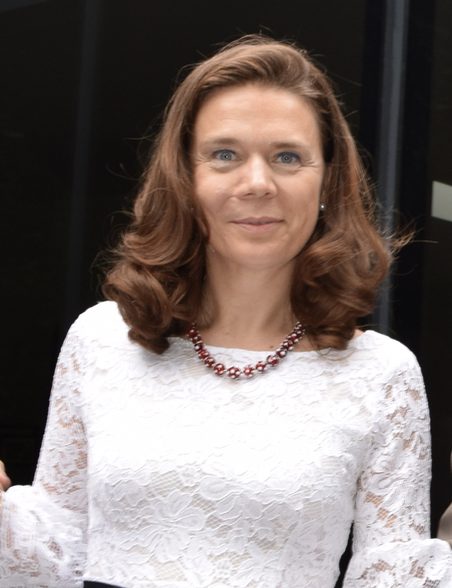
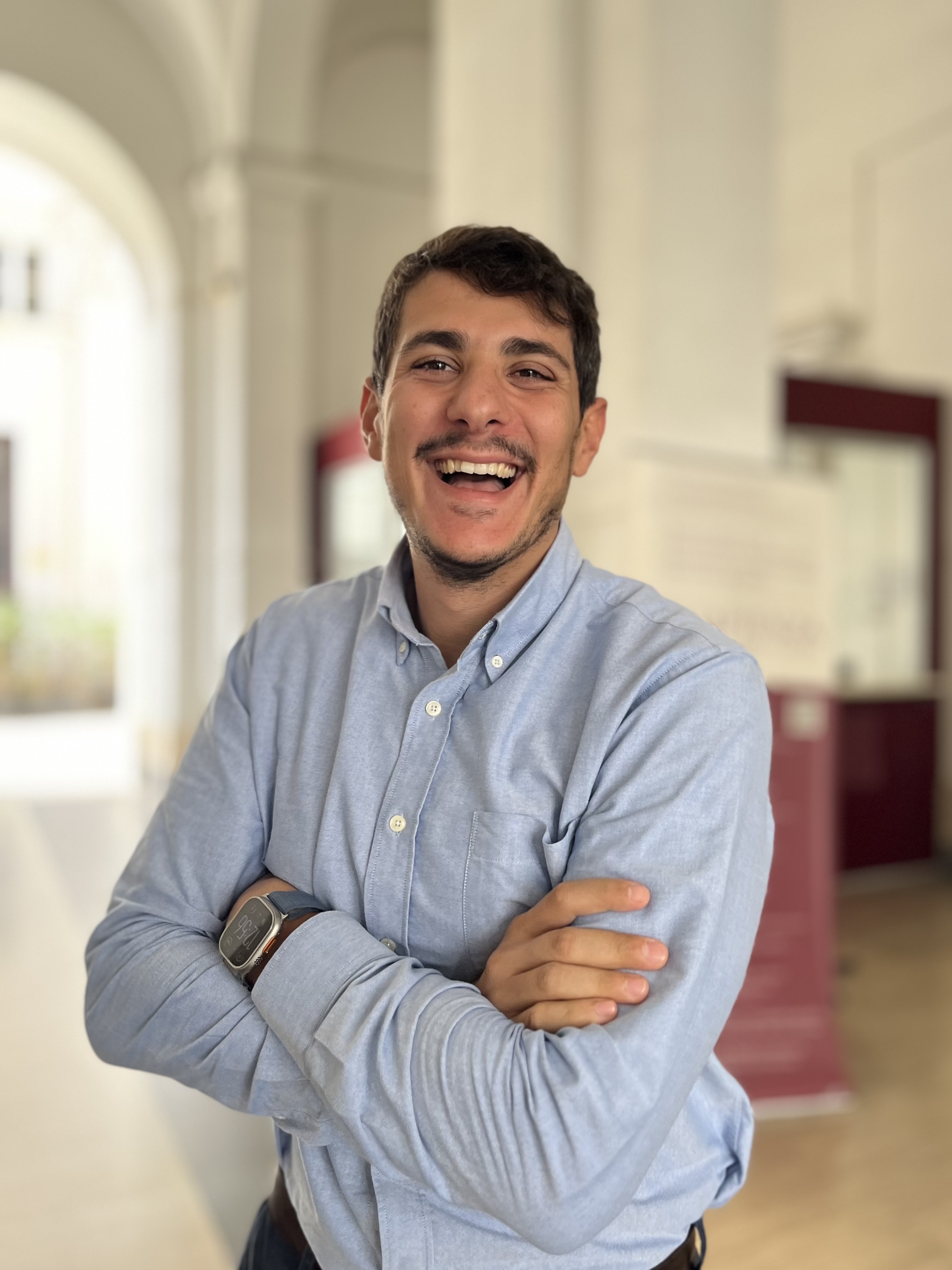
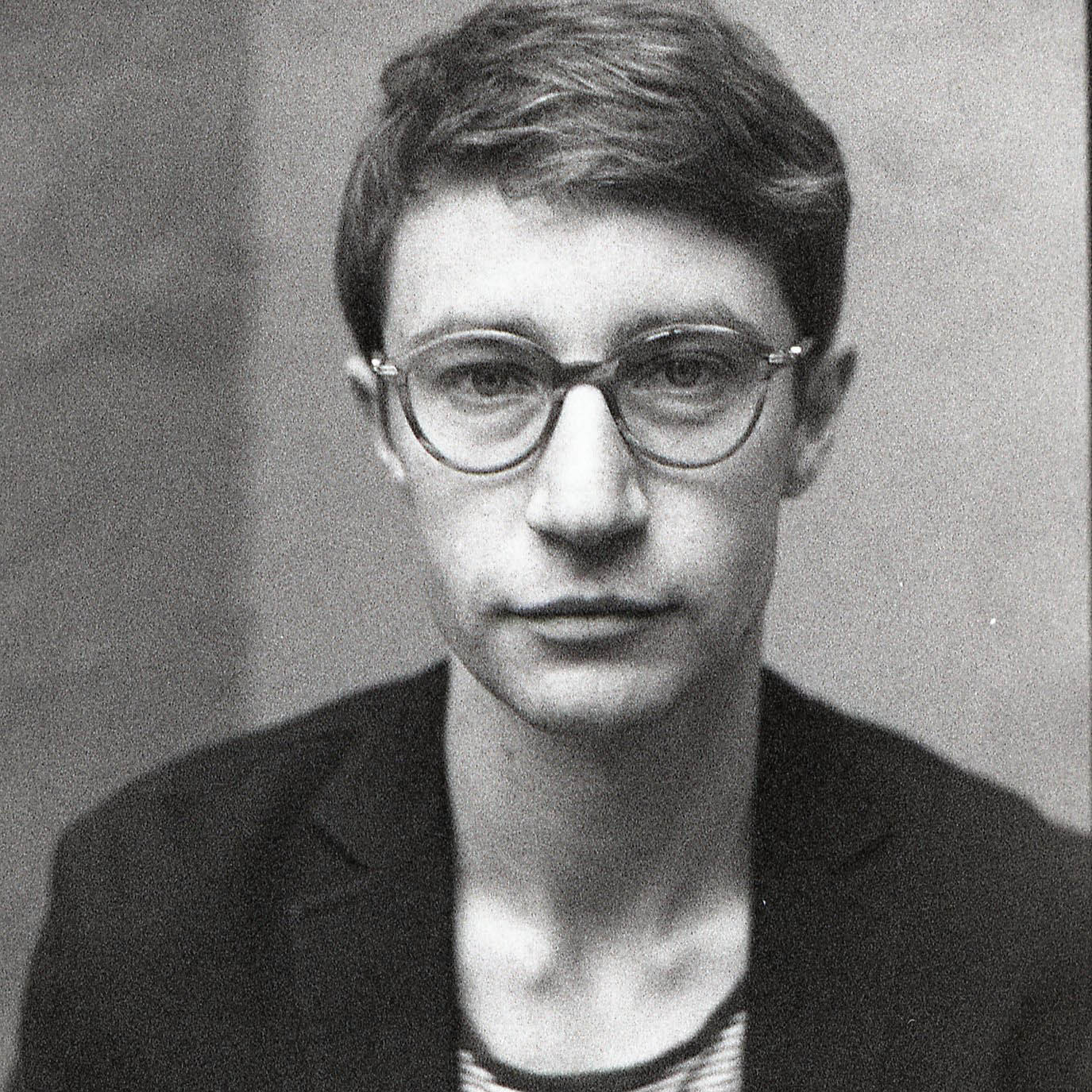
Ido Dagan is a Professor at the Department of Computer Science at Bar-Ilan University , Israel, and founder of the Natural Language Processing (NLP) Lab . He is a Fellow of the Association for Computational Linguistics and served as ACL President (2010) and Executive Committee member (2008–2011), leading the establishment of Transactions of the Association for Computational Linguistics . Dagan’s research focuses on applied semantic processing , including textual entailment , natural semantic representation , multi-text information consolidation , and interactive text summarization . His recent work addresses attributable text generation , summary-source alignment , and cross-sentence argument detection , with applications to fact verification and hallucination detection. Key trends in his publications include cross-document coreference resolution , question-answering systems , semantic parsing , and interactive summarization . Notable collaborative projects involve UI trajectory analysis and long-context QA with Arman Cohan and Jacob Goldberger. Scientific Awards Fellow, Association for Computational Linguistics (ACL) President, ACL (2010) Executive Committee, ACL (2008–2011) Advising & Collaborations Dagan has supervised numerous PhD, MSc, and postdoctoral students since 1997, including Shachar Mirkin and Shmuel Amar . He collaborates with researchers like Ori Ernst , Avi Caciularu , and Aviv Slobodkin , with grants from institutions like IBM Haifa Scientific Center and AT&T Bell Laboratories .
David Buján Carballal is a Lecturer and Researcher at the Faculty of Engineering, University of Deusto, and a member of the MORElab 'Envisioning Future Internet' Research Group. He is affiliated with DeustoTech (Deusto Institute of Technology) and the Telefónica Deusto Chair. His academic career spans software engineering, semantic web technologies, and digital transformation. BSc in Computing, Faculty of Engineering, University of Deusto MSc in e-Business, University of Deusto PhD in Computer Sciences, University of Deusto Dr. Buján's research focuses on Digital Transformation for smart communities and rural areas, Blockchain Technology applications in traceability, and Cybersecurity solutions for connected industries. His work addresses Grid Computing , Semantic Web , and Context Modelling for tourism applications. Recent publications highlight his contributions to digital ecosystems for rural innovation, blockchain-based energy traceability, and cybersecurity frameworks for connected industries. His projects include EU-funded AURORAL , HAZITEK BLOCKCHAINFOOD , and collaborations with Accenture, Telefónica, and BBK. Scientific Contributions: Member of Deustek Research Group Program Committee member for CAEPIA workshops Article reviewer for IoT, Ubicomp, and Semantic Web conferences Dr. Buján has participated in numerous national and international conferences on semantic technologies, grid computing, and digital ecosystems. He contributes to academic governance through curriculum development and teaching innovation initiatives at the Faculty of Engineering.
Dr. Estrid He is a Senior Lecturer at RMIT University's School of Computing Technologies. She obtained her PhD from the University of Melbourne in 2020, where she subsequently served as a postdoctoral research fellow. Her research bridges natural language processing, data mining, and deep learning optimization, with applications spanning healthcare, communications, and algorithmic fairness. Research Focus: Core NLP techniques for knowledge extraction from complex texts (patents, medical records) Enhancing security/efficiency of deep learning models in resource-constrained environments Multimodal learning integrating text, sensor data, and biomedical signals Fairness-aware AI systems for computer vision and graph neural networks Her publication portfolio demonstrates strong cross-disciplinary collaboration, with recent work in: Wireless communications (terahertz signal processing, 6G hardware) Biomedical applications (brain disorder prediction, clinical NLP) Generative models for sensor data and multimodal content Algorithmic fairness in computer vision and graph networks She actively supervises graduate research, with current projects including: Graph learning for brain disorder prediction Multimodal health data mining Privacy-preserving AI for urban sensing Integration of spiking neural networks with LLMs
Prof. Dr. Katharina Spalek serves as Professor of Psycho- and Neurolinguistics at Heinrich Heine University Düsseldorf's Faculty of Arts and Humanities within the Institute of Linguistics since her appointment in August 2021. Her research examines human language processing across multiple linguistic levels—from phonetics to narrative discourse—with particular emphasis on focus alternatives and memory mechanisms. Current affiliations include leadership of ERC-funded projects and active participation in international research collaborations. Her educational background spans German linguistics and psychology studies at Heidelberg University, University of Oxford, and Humboldt University Berlin, culminating in a doctoral degree from Radboud University Nijmegen (2005). Postdoctoral research followed in the USA and UK before her 2007 appointment as junior professor at Humboldt University Berlin. Spalek's research trajectory evolved from language production in monolingual/bilingual speakers toward language comprehension, investigating how humans process sounds, words, phrases, and narrative discourse. Recent work integrates electrophysiological (ERP), behavioral, and computational methods to explore focus alternatives, cross-linguistic variation (including Vietnamese tonal systems), and the interplay between linguistic and visual information. Her experimental paradigms frequently employ picture-word interference, recall tasks, and discourse analysis to uncover cognitive mechanisms underlying alternative set representation. Analysis of her 15 most recent publications (2019-2024) reveals three dominant trends: (1) neurocognitive investigation of focus alternatives using ERP methodology, (2) cross-linguistic studies of intonation and tonal processing, and (3) computational modeling of human performance in language tasks. These works consistently bridge theoretical linguistics with experimental validation, emphasizing memory encoding for contextual alternatives and individual differences in processing. ERC Starter Grant for 'focus alternatives in the human mind' (2016) Posterpreis at 17th Herbsttreffen Patholinguistik (2023) Her ERC-funded research program examines how focus particles and pitch accents modulate alternative set representation in production and comprehension. Current projects investigate neural correlates of discourse memory, Vietnamese intonation patterns, and computational models of human language processing limitations. Collaborative work spans institutions in Germany, Netherlands, and Vietnam, with methodological emphasis on controlled experiments and cross-linguistic comparison. Spalek leads the Psycho- and Neurolinguistics research group within the Institute of Linguistics, utilizing facilities for ERP recording, eye-tracking, and behavioral experimentation. Her team conducts interdisciplinary research at the intersection of linguistics, cognitive science, and neuroscience, with particular focus on how information structure shapes language processing and memory.
James Martin is a Professor of Computer Science at the University of Colorado at Boulder and a Fellow in the Institute of Cognitive Science. He holds a B.S. in Computer Science from Columbia University and a Ph.D. in Computer Science from the University of California at Berkeley. His research focuses on computational semantics, particularly how languages convey meaning to humans and computers, with a specific emphasis on metaphor processing and non-literal language analysis. He co-authored the widely used textbook Speech and Language Processing (3rd edition in progress), and his work extends to applications in healthcare and education through projects like the TalkMoves dataset analyzing classroom discourse. Current research includes cross-document event coreference resolution, AMR parsing tools (e.g., X-AMR), and AI-driven educational systems via the Institute for Student-AI Teaming (iSAT). Education History: Bachelor of Science in Computer Science, Columbia University Doctor of Philosophy (Ph.D.) in Computer Science, University of California, Berkeley Research Interests: Natural Language Processing (NLP) and Computational Linguistics Metaphor Analysis in Language and AI Semantic Parsing and Knowledge Representation AI Applications in Healthcare and Education Dialogue Systems and Classroom Discourse Analysis Recent Work Trends: His 2023-2024 publications emphasize multimodal NLP, cross-document semantic analysis (e.g., event coreference resolution), and AI tools for education (e.g., TalkMoves application for teacher feedback). NSF-funded National AI Institutes collaborations highlight strategic technology development. No scientific awards explicitly listed, though his textbook and research contributions are widely recognized in the field. Currently not actively recruiting PhD students. Labs/Teams: Core contributor to NLP initiatives at University of Colorado, particularly in semantic parsing and educational AI through iSAT. Involved with projects like the TalkMoves dataset and AMR annotation tools (CAMRA, X-AMR).
Veronique Hoste is a Full Professor of Computational Linguistics at Ghent University's Faculty of Arts and Philosophy , where she serves as Department Head of the Department of Translation, Interpreting and Communication and Director of the LT3 Language and Translation Technology Team . Her work bridges machine learning with natural language processing, focusing on semantics, discourse modeling, and practical applications in emotion detection, irony recognition, and customer service dialogue analysis. PhD in Computational Linguistics from University of Antwerp (2005) 2023-2024: Francqui Chair at Université Libre de Bruxelles 2024: Elected to Royal Flemish Academy of Belgium (KVAB) Research Interests: Specializes in machine learning approaches to coreference resolution, sentiment analysis, and multimodal emotion detection. Leads projects like FlandersAI (empathy in conversational agents), METRICS (emotion trajectories in service dialogues), and SENTiVENT (financial event extraction). Develops high-quality datasets (e.g., EmotioNL , ENCORE ) for broader NLP community use. Recent Publications span Dutch social media irony detection, Classical Chinese poetry sentiment analysis, and multimodal emotion datasets. Collaborates on interdisciplinary initiatives like NewsDNA (news recommendation) and SentEMO (commercial sentiment analysis). Scientific Awards Francqui Chair (2023-2024) KVAB Membership (2024) Outreach includes co-founding AlfaSent (LT3 spin-off for customer feedback analysis) and authoring the first Dutch-language NLP book Taaltechnologie Ontrafeld (2024). Coordinates AI education initiatives like the AI at School project.
Edoardo Barba is a full-time Researcher (RTDA) in the Department of Computer, Control and Management Engineering (DIAG) at Sapienza University of Rome. He is a core member of the Sapienza NLP group led by Professor Roberto Navigli, focusing on Lexical Semantics, Entity Linking, and Word Sense Disambiguation. His recent work explores descriptive modeling applications in Language Modeling, Semantic Role Labeling, and Machine Translation. He co-founded Litus AI, an NLP-focused startup in Rome. Barba holds a Ph.D. in Computer Science from Sapienza University (2023), with a thesis on 'Descriptive Modeling: Capturing Semantics in Neural Models via Natural Language Descriptions'. His research emphasizes innovative architectures like ReLiK (entity linking/relation extraction) and ExtEnD (extractive entity disambiguation), achieving state-of-the-art results. He has published extensively in top conferences like ACL, EMNLP, and IJCAI, focusing on semantic grounding, metric evaluation, and efficient NLP systems. His work on ConSeC (continuous sense comprehension) and DMLM (descriptive masked language modeling) highlights contributions to semantic understanding and knowledge-enhanced models. Selected Awards: None explicitly mentioned, though his publications reflect significant academic recognition. Grants/Advising: Not detailed in the provided text. Barba collaborates on multilingual resources like MOSAICo and explores Italian-specific LLM optimizations. His research bridges theoretical advancements with practical applications in startups and open-source tools.
Jana Straková is a researcher at the Institute of Formal and Applied Linguistics (ÚFAL) within the Faculty of Mathematics and Physics at Charles University in Prague. Her work focuses on advancing natural language processing techniques for multilingual applications, particularly in deep learning architectures for linguistic analysis. Her research interests span Natural Language Processing , Deep Learning , and Multilingual Text Processing with specialization in named entity recognition, dependency parsing, and morphological analysis. She has pioneered neural network approaches for tasks like diacritics restoration and grammar error correction, with particular emphasis on Czech language processing while extending methodologies to Latin and other languages. Analysis of her publication record from 2019-2025 reveals consistent innovation in NLP tool development, particularly the NameTag and UDPipe systems. Her work demonstrates strong integration of contextual embeddings with linguistic resources, showing increasing focus on cross-lingual transfer and historical language processing in recent years. As part of the ÚFAL research group, she collaborates extensively with Milan Straka and Jan Hajič on developing open-source NLP pipelines. Her projects include creating large-scale datasets like CWRCzech for web relevance ranking and advancing ontology engineering through LLM-augmented approaches.
Marc Verhagen is a computational linguist and programmer affiliated with Brandeis University's Computer Science Department. He holds a PhD in Computer Science (2004) and MA degrees in Computational Linguistics (University of Utrecht, 1991) and Social Geography (1985). His roles include Senior Research Scientist (2007-2008) and Postdoctoral Fellow (2004-2006). He co-founded LingoMotors Inc. (1997-2002), leading software development for natural language processing (NLP) tools. Research Focus: Temporal information extraction, TimeML standards, and computational linguistics infrastructure. Key Projects: TARSQI toolkit for temporal processing, LAPPS Grid, ISO-Space spatial annotation, and Medstract biomedical NLP. He has expertise in programming languages (Python, Perl), database systems (Oracle), and tools like Dreamweaver. His work bridges academia and industry, emphasizing NLP tool development and semantic interoperability. Beyond technical roles, he coordinated large-scale events (300–800 attendees) and served as a free-lance DJ and theater participant. Research interests span temporal semantics, event modeling, and spatial NLP, with contributions to TimeML, annotation frameworks, and semantic visualization. Over 30 publications since 1990, including his 2004 PhD thesis Times Between the Lines .
Ilia Markov is an Assistant Professor at the Vrije Universiteit Amsterdam, affiliated with both the Faculty of Social Sciences and Humanities and the Network Institute. His research focuses on computational linguistics, natural language processing, and artificial intelligence, with particular emphasis on hate speech detection and counterspeech strategies. Education: PhD in Computer Science (with honors) from the National Polytechnic Institute, Mexico (2018) Dr. Markov's research aims to foster more inclusive and respectful online communication by mitigating online hate speech and developing context-aware, personalized counterspeech strategies tailored to authors' sociodemographic profiles. He also investigates cross-domain scalability and the reasoning capabilities of AI models. His work bridges computational linguistics with social computing, focusing on practical applications for creating safer online environments. His research demonstrates technical sophistication in developing novel computational methods while maintaining awareness of social implications. His publication record shows a clear trajectory from foundational work in authorship analysis and native language identification to current research on hate speech detection and counterspeech generation. Recent publications emphasize multimodal approaches that integrate text and image analysis, cross-lingual transfer learning techniques, and ethical considerations in deploying AI systems for social media moderation. His work increasingly addresses low-resource language scenarios and the challenges of adapting models across different social contexts. Scientific Awards and Recognition: Outstanding Academic Performance Award for PhD students at the National Polytechnic Institute Senior Area Chair for LREC-COLING 2024 Area Chair for LREC 2026 Dr. Markov has co-organized several international competitions on automatic authorship identification and serves in editorial roles for major conferences in computational linguistics. His collaborative work spans multiple institutions across Europe and Latin America, reflecting the international nature of his research community. He has published over 65 peer-reviewed papers in journals and conference proceedings, demonstrating consistent productivity and impact in his field. As part of the Network Institute at VU Amsterdam, Dr. Markov contributes to interdisciplinary research that combines computational methods with social science perspectives to address contemporary challenges in digital communication. His affiliation with this institute provides a rich environment for exploring the societal implications of his technical work while maintaining rigorous methodological standards.
Yulan He is an active researcher in Natural Language Processing and Computational Linguistics with numerous publications in top-tier conferences including ACL, EMNLP, and COLING from 2023-2025. Their work spans both theoretical advancements in Large Language Model architectures and practical applications in healthcare, social media analysis, and information retrieval. Research interests focus on Large Language Model optimization , including improving faithfulness in rationale generation, enhancing reasoning capabilities, personalizing outputs to user preferences, and optimizing computational efficiency. Significant contributions include frameworks for debiasing opinion summarization, improving depression detection in clinical interviews, and developing methods for Theory-of-Mind reasoning in LLMs. Their work addresses critical challenges in LLM reliability, interpretability, and efficiency. Analysis of recent publications reveals consistent focus on bridging the gap between theoretical LLM capabilities and practical applications , with particular attention to healthcare contexts, social media analysis, and complex reasoning tasks. Their research demonstrates how to make LLMs more reliable, efficient, and aligned with human needs across diverse domains. Scientific contributions include: Novel frameworks for LLM faithfulness and reasoning (Drift, EnigmaToM) Efficient inference methods (SCOPE, PECAN) Bias mitigation techniques (LASS, Rehearse With User) Personalization approaches (PROPER) Healthcare applications (Explainable Depression Detection) As evidenced by senior authorship positions across numerous publications, Yulan He leads research projects and likely supervises graduate students in NLP research. Their work demonstrates strong technical expertise combined with practical problem-solving approaches to real-world NLP challenges.
Ben Wellner is a Lecturer in the Department of Computer Science at Brandeis University and a Lead Scientist at The MITRE Corporation's Information Technology Center. His research spans Natural Language Processing, Discourse Analysis, Temporal Reasoning, and Biomedical Informatics. Current teaching: Statistical Natural Language Processing Key collaborations: Andrew McCallum, James Pustejovsky, Lynette Hirschman, and others Methodological focus: Sequence models, weakly supervised learning, and graph partitioning techniques Research trends from his publications include: Developing machine learning approaches for discourse structure analysis Creating adaptive systems for information extraction and coreference resolution Applying NLP techniques to biomedical data normalization Building temporally-aware models for text analysis
Anaïs LEFEUVRE-HALFTERMEYER is a Senior Lecturer at the University of Orleans, where she is affiliated with the LIFO (Laboratoire d'Informatique Fondamentale d'Orléans) research laboratory. She serves as a member of the DIAMS steering committee and is an associate member of both LIFAT and LLL research groups. Her academic profile reflects strong engagement with both teaching responsibilities and research activities in computer science with a human-centered focus. Dr. LEFEUVRE-HALFTERMEYER's research spans multiple interconnected domains within computational linguistics and human-computer interaction. Her primary interests include Natural Language Processing , Corpus Linguistics , and Augmentative and Alternative Communication systems. She has developed significant expertise in Explainable Artificial Intelligence approaches, particularly for image captioning systems, and has conducted substantial work on social media analysis, temporal annotation, and accessibility technologies. Her research consistently demonstrates a commitment to practical applications that address real-world communication challenges, especially in rehabilitation contexts. Analysis of her publication record reveals a clear trajectory from foundational corpus linguistics work toward increasingly applied research with strong human impact. Early publications focused on French spoken language treebanks and syntactic annotation tools, while more recent work addresses accessibility technologies, ethical considerations in AI, and explainability in vision-language models. There's a notable emphasis on bridging theoretical linguistic concepts with practical implementation, particularly for assistive technologies that serve people with communication disabilities. Dr. LEFEUVRE-HALFTERMEYER actively contributes to the academic community through mentorship and organizational roles. She has served as a mentor for student projects, including work on French language model comparison, and previously organized the JOLICO (JOurnées jeunes chercheurs de la LInguistique de COrpus) conference in 2015 as part of the scientific committee. Her institutional involvement includes membership on the DIAMS steering committee, demonstrating leadership within her research community.
Rob Voigt is an Assistant Professor of Linguistics and Courtesy Professor of Computer Science at Northwestern University, directing the Linguistic Mechanisms Lab. He holds affiliations with the Institute for Policy Research and Cognitive Science Program. His research focuses on computational linguistics applied to social issues like policing, mental health, and immigration, using NLP methods to analyze body camera footage, historical texts, and social media discourse. Education includes a PhD in Linguistics (Stanford, 2019) with a dissertation on police-community interaction, an MA in East Asian Studies (Stanford, 2013), and a BA in Chinese from Vassar College (2008). He has received prestigious awards including the Cozzarelli Prize (2017) and Cialdini Prize (2018). Recent projects include multimodal policing analysis, cross-lingual NLP models (GreenPLM), and computational studies of French rap lyrics. He leads grants totaling $4.4M, including NIH-funded studies on psychosis indicators and language in autism. Teaching includes courses on computational linguistics and text processing for linguists. His lab explores intersections of language, technology, and social justice, with over 40 publications. Collaborations span social sciences, computer science, and public policy. He maintains a music career under 'facsimiles' and created the board game 'Who Got It?!'.
Amit Almor is Associate Professor in Psychology and Director of the Experimental Psychology Program at the University of South Carolina. His research examines language processing using neuroimaging, with focus on discourse reference, aging, and dementia. Key investigations include neural mechanisms of pronoun/anaphor processing, spatial language cognition, and conversational interference effects. Clinical work explores linguistic markers in Alzheimer's and Huntington's disease. Funded by NSF and NIH grants including 'The neural basis of processing discourse reference'. Teaches graduate seminars in Cognitive Neuroscience, Psycholinguistics, and Bayesian Modeling. Recipient of multiple teaching commendations.