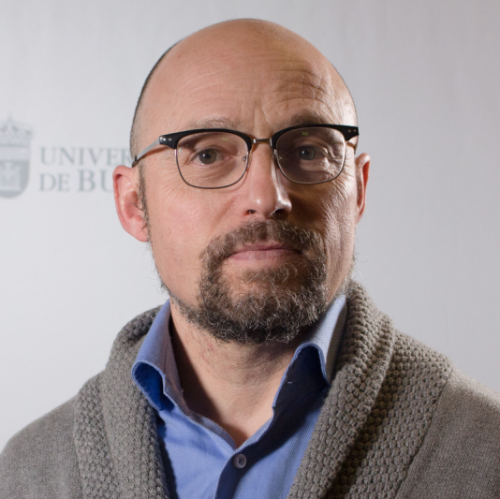
Pia Svedberg is an Associate Professor and Principal Researcher at Karolinska Institutet's Department of Clinical Neuroscience, Division of Insurance Medicine. Her research focuses on understanding genetic and environmental determinants of work disability, particularly sickness absence and disability pensions, through twin cohort studies and national register data. PhD in Epidemiology (2006), Karolinska Institutet Docent in Epidemiology (2013), Karolinska Institutet BSc in Psychology (1995), Uppsala University Her research group examines musculoskeletal and mental disorders' impact on labor market participation, utilizing Swedish Twin Registry data and national health registers. Key projects include the Swedish Twin project Of Disability pension and Sickness absence (STODS) and Sustainable working life: early determinants and later predictors (SustWork) , analyzing comorbidity, genetic liability, and workplace environment factors. Recent publications highlight her work on twin trajectories of work disability, gender-specific risk factors, and the interplay between mental health and occupational outcomes. Collaborations span Nordic institutions like University of Helsinki, University of Southern Denmark, and Norwegian Institute of Public Health through the NorTwinDiSa network. She leads studies investigating how early life events, health behaviors, and psychosocial factors influence sustainable working life, emphasizing methodological rigor through co-twin control designs and longitudinal analysis.
Anne Nassauer is a Professor of Sociology, especially Political Sociology, at the Faculty of Economics, Law and Social Sciences of the University of Erfurt. She is a member of the diversity advisory board in the university's presidium and specializes in situational dynamics of violence, collective behavior, and video data analysis. Key Research Areas : Protest violence, school shootings, police use of force, video-based methodology, racial biases in policing, and ethical consumption tactics. Recent Publications : Focused on gun culture in school shootings (2025), dehumanization in police shootings (2024), and video data analysis challenges (2023). Awards : 2021: Outstanding Recent Contribution in Social Psychology Award (American Sociological Association) 2020: Charles Horton Cooley Book Award (Society for the Study of Symbolic Interaction) 2020: Honourable Mention, Outstanding Contribution to Political Sociology (American Sociological Association) Media Engagement : Regularly appears in podcasts (e.g., Back to School Shootings, 2025), documentaries (Terra X, 2023), and international media (Wall Street Journal, FiveThirtyEight, WIRED).
Robert J Hinchliffe serves as Clinical Professor of Vascular Surgery at Bristol Medical School, University of Bristol, and is affiliated with the Bristol Population Health Science Institute. His clinical and research expertise centers on vascular pathologies including abdominal aortic aneurysms, chronic limb-threatening ischaemia, and diabetic foot complications. His educational credentials include: MB ChB from University of Bristol MD from University of Nottingham Fellowship of the Royal College of Surgeons (FRCS) Hinchliffe's research program pioneers evidence-based vascular surgery through high-impact systematic reviews and randomized controlled trials. He investigates critical areas such as limb salvage strategies in critical ischaemia, diabetes-related foot disease management, and surgical oncology outcomes. His methodological rigor in clinical trial design and health economic analyses significantly influences vascular surgery guidelines and practice. Recent publication trends reveal growing emphasis on health economic evaluations of revascularization techniques and real-world adherence to diabetic foot care pathways. His work bridges clinical practice with health policy implementation, particularly through NICE guideline assessments. As active supervisor of graduate researchers, he contributes to vascular surgery education while leading three major funded projects: CAMELOT: Continuous rectus sheath analgesia in emergency laparotomy PROTECTOR: Perioperative tobacco cessation in vascular/cardiothoracic surgery Reporting frameworks for anaesthesia interventions in RCTs His laboratory work integrates with multidisciplinary vascular teams across Bristol's teaching hospitals, focusing on perioperative optimization and translational research in limb preservation.
Hans van Dijk serves as a Senior Researcher in the Signal Processing Systems group within the Department of Electrical Engineering at Eindhoven University of Technology. He simultaneously holds leadership and research positions at multiple institutions, heading the Clinical Physics department at Kempenhaeghe (an institute specializing in Epileptology and Sleep medicine) and working as a Senior Researcher at the University Hospital in Ulm, Germany. His multidisciplinary career bridges engineering, clinical neurophysiology, and sleep medicine. Dr. van Dijk's research focuses on biomedical engineering applications in Clinical Neurophysiology, with particular expertise in electrophysiological techniques including EEG, EMG, and ECG. His work centers on developing and applying signal processing methods to diagnose neurological disorders, with specific emphasis on seizure detection using EEG , High-Density EMG for facial and masticatory muscles , and alternative diagnostic methods for sleep disorders . His recent publications demonstrate a strong focus on applying machine learning techniques to sleep medicine and epilepsy monitoring. Analysis of Dr. van Dijk's recent publications (2021-2025) reveals a consistent research trajectory in developing advanced signal processing methods for clinical neurophysiology. His work spans three main domains: epilepsy monitoring and seizure detection (particularly in children), sleep disorder diagnostics (using multimodal approaches beyond traditional polysomnography), and advanced EMG techniques for motor unit analysis. His research increasingly incorporates deep learning and multi-modal sensor fusion approaches to improve diagnostic accuracy while reducing the invasiveness of monitoring procedures. 2699 citations according to Scopus metrics 101 research outputs documented in institutional repository Active research collaboration with Philips Research and Kempenhaeghe Contributions to UN Sustainable Development Goals through medical diagnostics research Dr. van Dijk supervises research activities with 8 documented supervised works, collaborating extensively with clinical and engineering researchers across multiple institutions. His research program integrates signal processing expertise with clinical needs in neurology and sleep medicine, developing practical solutions for monitoring and diagnosing neurological disorders. His work at Kempenhaeghe focuses on translating engineering innovations into clinical practice for epilepsy and sleep disorder patients.
Teun Vogel serves as a Lecturer in Soil Physics and Land Management, specializing in soil erosion dynamics and sustainable land management practices with emphasis on agricultural landscapes. His research integrates advanced geospatial technologies to address critical environmental challenges in vineyard systems and erosion-prone terrains. Vogel's primary research focuses on applying Geographic Information Systems (GIS) and remote sensing for precision monitoring of soil erosion processes, particularly in steep-slope vineyards where conventional conservation methods face significant challenges. His work investigates geomorphological responses to agricultural practices, water erosion mechanisms, and the effectiveness of conservation strategies using frameworks like the Revised Universal Soil Loss Equation (RUSLE). This research bridges field observations with spatial modeling to develop practical solutions for soil conservation in vulnerable agricultural ecosystems. Analysis of his publication record reveals a strong methodological trend combining remote sensing validation with field-based erosion monitoring, demonstrating how GIS modeling can optimize vineyard management practices under climate vulnerability. His work consistently targets real-world applications in Mediterranean agricultural systems where soil degradation threatens long-term productivity. Vogel actively engages with public discourse through expert media commentary on extreme weather events and landscape management, including analysis of Spain's 2024 rainfall disasters and the 2022 Limburg floods. He has also contributed to educational innovation through the PEEK field-learning app developed during the coronavirus pandemic, demonstrating commitment to practical knowledge transfer. His research collaborations span international networks with prominent institutions, evidenced by co-authorship with researchers from multiple European countries on high-impact soil conservation studies. The significant Scopus citation counts (78 for his 2020 Catena paper and 36 for his 2021 ISWCR publication) reflect substantial academic influence in soil science and geospatial environmental research.
Cate d'Este is a Conjoint Professor and Honorary Professor at the University of Newcastle's School of Medicine and Public Health, specializing in Biostatistics. She has accumulated approximately 18 years of experience in health research and teaching in national and international arenas, primarily within the Faculty of Health and Discipline of Statistics at the University of Newcastle. She also maintains an Honorary Research Consultant position at the Centre for Military and Veterans Health at the University of Queensland. Professor d'Este holds the following qualifications: Doctor of Philosophy, University of Newcastle Graduate Diploma in Medical Statistics, University of Newcastle Diploma in Education, University of Newcastle Bachelor of Mathematics, University of Newcastle (majoring in statistics) As a biostatistician and methodologist, Professor d'Este's research spans various health domains with common themes including cardiovascular disease, randomized controlled trials, longitudinal studies, and meta-analysis. Her work emphasizes multidisciplinary research and capacity building in biostatistical methodology. She has extensive consulting experience nationally and internationally, providing quantitative and methodological input to numerous state and national committees, government agencies, and non-government organizations. Her recent publications demonstrate a strong focus on implementation science in stroke care, dementia prevention, cancer care, and public health interventions across multiple countries. There's a clear pattern of applying biostatistical expertise to complex health problems, particularly in the areas of stroke management, dementia risk reduction, and cancer care. Her work frequently involves cluster randomized trials, process evaluations, and multi-country comparative studies, reflecting her expertise in challenging methodological areas. Professor d'Este has received the following scientific recognition: Faculty of Health, University of Newcastle, Excellence in Teaching Award (2003) Professor d'Este has been an investigator on over 35 grants totaling more than $17 million and has co-authored nearly 100 peer-reviewed journal articles, book chapters, and commissioned reports. She has successfully supervised or co-supervised to completion six research masters students and six PhD students, with additional PhD students currently under supervision. Her supervisory approach encompasses a range of content areas and study designs with varying statistical complexity, including off-campus and international students. Her administrative roles, including Deans Representative for Research Higher Degree and Research Development Manager, have provided her with substantial understanding of the research higher degree process across the Faculty of Health. Professor d'Este has played key roles in several research centers and initiatives, including the Centre for Clinical Epidemiology and Biostatistics (CCEB), where she served on multiple committees. Her national and international committee work demonstrates her integration into broader research networks focused on health services research, clinical epidemiology, and biostatistics methodology. She has been instrumental in developing and coordinating distance learning programs in biostatistics, including managing cohorts of international students from Zimbabwe and Japan.
Gerrit Van Onsem is a postdoctoral researcher in High Energy Physics at the Department of Physics within the Faculty of Science and Bio-engineering Sciences at Vrije Universiteit Brussel (VUB). With a substantial research output of 549 publications and an impressive h-index of 100 based on over 44,197 citations, he is an active contributor to the CMS Collaboration at CERN. His research interests span High Energy Physics, Particle Physics, Collider Physics, and the CMS Experiment, with specialized focus on Higgs Boson Physics, Quark Physics, Lepton Physics, Quantum Chromodynamics, and Beyond Standard Model Physics. The fingerprint analysis of his work shows dominant activity in collisions (100%), protons (43%), luminosity (37%), quarks (37%), leptons (34%), bosons (31%), cross sections (29%), and transverse momentum (27%). His recent publications (2024-2025) demonstrate significant contributions to Higgs boson measurements, heavy ion physics, searches for new physics beyond the Standard Model, and precision measurements of fundamental particles. His work primarily involves analyzing data from the Large Hadron Collider, with particular emphasis on proton-proton and heavy ion collisions at various energy levels. Dr. Van Onsem has participated in numerous CMS-related activities including the CMS Physics Week (2015), CMS detector Control and Safety shifts, and specialized workshops on top quark physics and vector-like quarks. His research collaborations span international institutions as evidenced by the global nature of the CMS Collaboration.
Associate Professor Pan Wang is affiliated with the College of Arts, Design & Architecture at the University of New South Wales . Her research spans gender, family and marriage dynamics in China, Chinese media , and intimate relationships in diverse contexts. PhD in International Studies (2013, University of Technology Sydney) Graduate Diploma in Secondary Education (2014, Australian Catholic University) MA in International Journalism (2007, Cardiff University) BA in Economic Journalism (2005, Beijing Technology and Business University) Her work explores the evolution of love and marriage in China, including digital transformations and intercultural aspects. Recent publications focus on single economies , gender-based violence , and social media regulation . She contributes to Al Jazeera , The Guardian , and CNN as a commentator. Scientific awards highlight her teaching excellence and research contributions , with recognitions from UNSW, ARC, and Scientia Education Academy. She supervises HDR students on topics like Chinese feminist discourse and gender policy impacts . Pan Wang coordinates courses including Gender in China and Chinese Media and Communication . She serves as guest editor for the Special Issue of Social Sciences on intimate relationships, and actively engages in peer reviewing and keynote speaking.
Professor Simon J E Taylor is a Professor of Computer Science and Vice Dean Research at the College of Engineering, Design and Physical Sciences, Brunel University London. He is Co-Director of the Modelling and Simulation Research Group and Adjunct Director of the Smart Technology Advancements for Health and Rehabilitation (STAHR) Centre. Research Interests: Modelling & Simulation Digital Infrastructures and Services Cloud Computing International Development Open Science His research focuses on high-performance simulation infrastructures, AI-based optimization, and open science applications in healthcare and industry. He has led international projects improving digital infrastructure across Africa and contributed to standards in simulation interoperability. Scientific Contributions & Leadership: Co-founder and former Editor-in-Chief of the Journal of Simulation Chair of ACM SIGSIM (2005–2008) General Chair, IEEE/ACM 2025 Winter Simulation Conference Executive Chair, Simulation Exploration Experience (SEE) Member, Computer Simulation Archive steering committee PhD Supervision & Teaching: Professor Taylor has supervised over 20 doctoral students and examined more than 25 PhDs globally. He leads modules in distributed computing and has developed several postgraduate degrees. He is actively involved in undergraduate and postgraduate teaching, including NATCOR courses, and supports student internships. Research Grants & Projects: Framework Development of Simulation-Augmented Many Objective Optimization for Sustainable Supply Chains (MITRE Corporation, 2023) HIDALGO: HPC and Big Data Technologies for Global Systems (EU, 2018–2021) COLA: Cloud Orchestration at the Level of Application (EU, 2017–2019) CloudSME: Cloud-based simulation platform for manufacturing (EU, 2013–2015) Sci-GalA: Science Gateways and e-Infrastructures in Africa (EU, 2015–2017)
Professor Holger Müller is a Professor for Business Administration, especially Supply Chain Management at the Leipzig University of Applied Sciences (HTWK Leipzig), where he has been teaching since 2013. He also serves as the Dean of Studies for the Master's program in Business Administration. His work focuses on the intersection of supply chain management, digital transformation, and sustainable business practices. Professor Müller earned his Diploma in Business Information Systems from Dresden University of Technology between 1992 and 1997. He completed his doctoral studies at the Bavarian Julius-Maximilians-University Würzburg, where he worked as a Research Assistant from 2001 to 2013. His dissertation received the Austrian eProcurement Award and the Science Prize of the Federal Association for Materials Management, Purchasing and Logistics in 2004. Professor Müller's research focuses on how digital transformation is reshaping procurement practices, with particular emphasis on sustainability, data analytics, and the integration of ESG criteria into procurement processes. His work investigates how emerging technologies can enhance supply chain resilience and efficiency, especially in the context of global disruptions like the pandemic. Recent publications demonstrate a clear trend toward integrating sustainability considerations with digital transformation in procurement. His publication record shows a progression from early work on e-procurement systems toward more complex topics involving sustainability, data analytics, and digital transformation in supply chains. Recent articles increasingly address the intersection of ESG criteria, digital tools, and sustainable procurement practices, reflecting the evolving priorities in the field. Professor Müller has received several prestigious awards for his contributions to the field: Austrian eProcurement Award for his dissertation (2004) Science Prize of the Federal Association for Materials Management, Purchasing and Logistics (2004) Dr. Feldbausch Award from the Technical University of Dresden for his diploma thesis (1998) Professor Müller actively contributes to the academic and professional community through his leadership roles. He has served as Managing Director of the Center for Supply Management GmbH since 2004. Since 2010, he has been a member of the Saxony regional board of the Federal Association for Materials Management, Purchasing and Logistics. He has also served on the program committee of the scientific symposium "Supply Management" since 2015. His current research focuses on the Digital Transformation Cluster and Purchasing and Logistics Cluster, examining how digital technologies can drive innovation and sustainability in supply chain management. Professor Müller leads research initiatives within the Department of Production Management and Supply Chain Management at HTWK Leipzig. His work often involves collaboration with industry partners, as evidenced by his participation in events like "Companies Visiting HTWK Leipzig," which connects students with regional companies. He is particularly involved in research projects examining sustainability in supply chains, digital commerce, and the integration of ESG criteria into procurement processes.
Professor Ashley Akbari serves as a Research Professor of Population Data Science at Swansea University's School of Medicine, where she has worked since 2008. She plays a significant role in major research programs using population-scale data through the SAIL Data Bank, leading multidisciplinary collaborations to develop research that informs policy across academia and government. Her research interests center on Population Data Science, Public Health, Epidemiology, and Health of Populations, with particular expertise in advancing team science and developing the next generation of data scientists. She promotes learning outcomes that translate into policy improvements through structured query language (SQL), project management, and agile methodologies. Her work frequently employs linked electronic health records to examine health disparities, chronic disease management, and pandemic impacts across Welsh populations. Ashley directs the Population Data Science Internship Programme, providing undergraduate and postgraduate students with funded summer placements in research teams. Her scholarly output demonstrates consistent focus on health inequalities, multimorbidity patterns, and data linkage methodology, with numerous high-impact publications in journals including Nature Communications, The Lancet, and BMJ Open. She actively promotes team science and collaborates with multidisciplinary groups to develop research that improves services and people's lives. Her work spans cardiovascular health, mental-physical health interactions, pandemic response evaluation, and methodological innovations in population health data science.
Ruben Aragon Posadas serves as Associate Professor in Nursing at the Faculty of Health Sciences, University of Burgos. His work integrates teaching, research, and community service, with a focus on elderly health and sexual education. He earned his doctorate from the University of Burgos in 2022, with a thesis on the "SEXMA" program for elderly sexual education. Dr. Posadas' primary research interests include gerontological nursing, sexual health education for the elderly, and health promotion. He has spearheaded the SEXMA program and the "Evalúa tu salud" initiative, evaluating non-pharmacological interventions for hypertension and caregiver support. His methodology often involves service-learning and community-based participatory research. His publication record (2010-2023) shows a progression from hypertension management and caregiver syndrome to a concentrated focus on elderly sexual health, with the SEXMA program dominating recent work. This reflects a commitment to addressing understudied aspects of elderly care through practical, service-oriented research. He has supervised doctoral students, including Belén Zurro García (2022). While specific grants are not detailed, his projects demonstrate active engagement in university-community partnerships for health improvement. Dr. Posadas contributes to the University of Burgos Health Promotion Week, illustrating his dedication to applied public health initiatives.
Dr Carol-Ann Getty is a Research Fellow at the National Addiction Centre within the Department of Addictions Sciences at King's College London's Institute of Psychiatry, Psychology & Neuroscience (IoPPN). She currently holds an Academic Fellowship from the Society for the Study of Addiction (SSA) and has been at King's since 2017, initially undertaking an SSA-funded PhD. Her research focuses on the development and evaluation of digitally delivered Contingency Management (CM) behavioral interventions for individuals with substance use disorders. Dr Getty's work specifically explores how mobile and digital platforms can increase the accessibility, engagement, and effectiveness of evidence-based CM approaches within real-world addiction services. As part of her Fellowship, she is developing and evaluating a smartphone app to remotely monitor heroin use and incentivize abstinence in service users with heroin dependence. Dr Getty has contributed to several NIHR-funded research projects evaluating CM interventions aimed at improving adherence to supervised opioid agonist treatment, increasing naloxone carriage, and supporting continuity of care for individuals with a history of heroin use transitioning from prison to the community. Prior to joining King's, she worked at the Behavioural Research Unit at Johns Hopkins University in Baltimore on CM studies related to substance dependence treatment outcomes, medication adherence in HIV patients, and reducing HIV-related risk behaviors among people who inject drugs. SSA Academic Fellowship - Primary Investigator (2023-2026) CM4COYN Project - Co-Investigator (2025-2026) Drugs Research Group member CM4OUD, TIES, PRET research initiatives In addition to her research, Dr Getty co-leads the 'Contemporary Issues and Theories in Addiction Science' module on KCL's BSc Psychology programme and supervises MSc students on the Addictions programme at KCL. She also serves as a co-organizer and committee member for the SSA's annual conference and on the communications and events committee for the SSA.
Professor Onno Bokhove holds the Chair in Geophysical Fluid Dynamics at the School of Mathematics, Faculty of Engineering and Physical Sciences, University of Leeds. With extensive expertise in applied mathematics of geophysical fluid dynamics, he bridges theoretical mathematical approaches with practical environmental solutions, particularly in flood mitigation and wave dynamics. His research encompasses: Design and testing of laboratory configurations for mathematical model validation Computational techniques for PDEs using discontinuous Galerkin FEM Hamiltonian fluid dynamics frameworks Idealised models for weather prediction Hydraulic solutions of hyperbolic systems Flood mitigation strategies through flood-excess volume analysis Analysis of his recent publications reveals a strategic shift toward practical applications of geophysical fluid dynamics with significant societal impact. Professor Bokhove pioneered the concept of "flood-excess volume" as a communication tool for flood mitigation effectiveness, which evolved from the Wetropolis demonstrator into a REF2021 Impact Case Study. His work increasingly integrates mathematical rigor with policy-relevant applications, particularly through the EU-funded Eagre project on high-seas wave-impact modeling, where he serves as principal investigator collaborating with MARIN (Maritime Research Institute Netherlands). Professor Bokhove has supervised numerous PhD students across diverse fluid dynamics applications: Tom Kent (2014-2016): EPSRC Case Met Office project with Steve Tobias Floriane Gidel (2015-2018): EU project with Mark Kelmanson Tomasz Salwa (2015-2019): EU project with Mark Kelmanson Luca Cantarello: NERC Case with Met Office Current students Yang Lu and Wajiha Rehman working on the EU Eagre project His research has been supported by significant grants including: EU European Industrial Doctorates project "Eagre" (2020-2023, project 859983) NERC-funded projects on flood mitigation EPSRC Case projects with the Met Office REF2021 Impact Case Study funding Professor Bokhove leads research teams within the Leeds Institute for Fluid Dynamics focusing on: The Wetropolis flood demonstrator project, now a policy-relevant analytical framework The Eagre project developing numerical wavetanks for extreme wave modeling Collaborations with MARIN on wave-energy devices and offshore structures
José María Guerrero Rodríguez serves as a Professor in the Department of Automation, Electronics, Architecture and Computer Networks Engineering at the University of Cadiz, Spain. His research is anchored within the TIC138 Electronic and Electromagnetic Design group under the PAIDI Areas for Information and Communication Technologies, focusing on advanced instrumentation systems for space and industrial applications. He completed his doctorate at the University of Cadiz in 2009 with the thesis A contribution to reconfigurability in intelligent instrumentation based on sensors and programmable devices , supervised by Dr. Diego Gómez Vela. His educational background forms the foundation for his expertise in sensor reconfigurability and programmable device integration. Guerrero Rodríguez's research spans Electronics, Embedded Systems, and Space Instrumentation, with significant contributions in magnetic measurement subsystems for CubeSats, low-frequency noise reduction in orbital environments, and neuromorphic sensor design. His work bridges theoretical electromagnetic modeling with practical embedded implementations, particularly in spiking neuron-based movement classification and optical flow algorithms for real-time tracking. Educational innovation is a secondary focus, evidenced by flipped classroom methodologies in analog electronics instruction. Analysis of his 2020-2024 publications reveals three dominant trends: (1) Space instrumentation for CubeSats emphasizing magnetic field measurement accuracy, (2) Novel sensor architectures using asynchronous vision and spiking neurons for flame detection and movement tracking, and (3) Educational technology integration in engineering pedagogy. These areas demonstrate consistent progression from fundamental sensor design to in-orbit validation. No scientific awards were documented in the provided source material. While the source references thesis supervision and funding sections, specific student names, grant details, or advising methodologies remain undisclosed. His research direction suggests ongoing collaboration with space technology initiatives, particularly in low-technology-readiness-level subsystem validation. Guerrero Rodríguez operates within the TIC138 research group, which specializes in electronic and electromagnetic design for aerospace applications. The group's work centers on advancing the technological maturity of measurement systems through CubeSat platforms, with recent focus on in-orbit demonstrators for magnetic field characterization in low-Earth orbit environments.