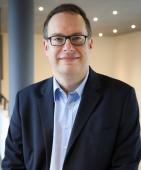
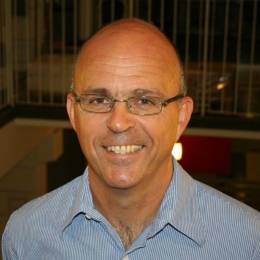
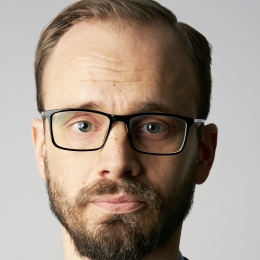
Prof. Dr. Sakibe Nalan BÜYÜKKANTARCIOĞLU is a Professor at Çankaya University, Faculty of Arts and Sciences, Department of Translation and Interpreting Studies (English). She previously served as Professor (2007–2019), Associate Professor (2000–2007), and Assistant Professor (1997–2000) at Hacettepe University, Department of English Linguistics. PhD in English Linguistics (Hacettepe University, 1991) MA in English Language Teaching (Middle East Technical University, 1985) BA in English Teaching (Istanbul University, 1978) Her research spans Linguistics, Cognitive Linguistics, Discourse Analysis, Psycholinguistics, Sociolinguistics, Translation Studies , with a focus on figurative language, interjections, political discourse, and endangered languages. She received the European Language Award (2011) and has supervised numerous PhD and MA theses, including work on Turkish idioms, gender representation, and language awareness. A prolific editor and conference participant, she has contributed to interdisciplinary projects and publications on Turkish sociolinguistics.
Trajche Panov serves as a Teaching Fellow (academic rank: Lecturer) in the Department of Political Science at Trinity College Dublin, contributing to undergraduate and postgraduate instruction within the university's humanities and social sciences framework. His research spans core political science disciplines with emphasis on: International Relations Comparative Politics Political Theory Public Policy European Politics Political Methodology Dr. Panov maintains active scholarly engagement through his teaching role while advancing research in contemporary political systems and governance structures across European and global contexts.
Robert JOLIET is an Associate Professor of Finance at IÉSEG School of Management in France. He holds a Ph.D. in Economics and Management from HEC-ULg Management School (Belgium) and has held various academic leadership roles, including Director of Academic Development and Academic Director of the PGE (MSc in Management). His research focuses on finance, portfolio management, SRI (Socially Responsible Investing), and corporate finance, with a particular emphasis on international expansion, capital structure, and sustainable investment strategies. Education: 2008: Ph.D. in Economics and Management, HEC-ULg Management School, Belgium 2004: Master of Advanced Studies (DEA), Management Sciences (Finance), University of Liège, Belgium 2002: Master of Science in Business Engineering (Finance), University of Liège, Belgium Research interests span SRI fund dynamics, corporate social responsibility valuation, international debt policies, and market liquidity. Notable contributions include analyzing the impact of SRI mutual funds on corporate governance and environmental practices, and exploring the stability of sovereign debt structures in the Eurozone. Awards include the 2005 FORTIS Award (Third Prize) and the 2003 E.G. de Barsy Doctoral Fellowship. He has published extensively in journals like Economics Letters and Journal of Banking & Finance . Academic leadership roles include directing programs and departments at IÉSEG, alongside coordinating the Finance Track and managing academic development initiatives. His teaching focuses on financial data analysis, active portfolio management, and investment strategies in capital markets. He is a member of the LEM (Laboratoire d'Économie Moderne) research group and contributes to interdisciplinary research in finance and economics.
Tomaso Aste is a Professor of Complexity Science at the Department of Computer Science, University College London (UCL). He founded the Financial Computing and Analytics group and co-founded the UCL Centre for Blockchain Technologies. His work bridges complex systems, data science, and finance, with applications in blockchain, fintech, and market modeling. Education: PhD in Physics (Politecnico di Milano, 1994); Laurea in Physics (University of Genoa, 1990) Prior Appointments: Reader at University of Kent's School of Physics; Associate Professor at Australian National University's Applied Mathematics His research focuses on data-driven modeling of complex systems , particularly financial systems, complex networks, and statistical physics. He has pioneered information filtering networks and topological machine learning methods for financial applications, including portfolio optimization, risk assessment, and cryptocurrency analysis. Recent publications highlight his expertise in financial time-series analysis, blockchain technology, and AI-driven modeling. Articles explore topics like limit order books, cryptocurrency market fragility, and topological neural networks. His work has influenced regulatory technology (RegTech) frameworks and digital economy strategies. Scientific Awards : Marie Curie Individual Fellowship University of Genoa graduate study specialization Fellowship Bacheflor Boncompagni-Ludovisi Foundation Fellowship Awarded fellowships from European Commission and academic foundations support his interdisciplinary research. He has held editorial roles at journals like Philosophical Magazine and Granular Matter , and contributed to professional societies including American Physical Society and Australian Research Council panels. Teaching & Academic Leadership : Co-created four UCL Master's programs: Financial Risk Management, Computational Finance, Financial Technologies, Emerging Digital Technologies Coordinates executive training on AI, blockchain, fintech, and regtech for regulators and private firms Teaches graduate-level courses in Data-Driven Modeling, Data Science, and Advanced AI
Mauro Bambi is an Associate Professor at Durham University Business School and an Associate Fellow at the Institute of Advanced Studies. His research focuses on Macroeconomic Theory, Endogenous Growth, Habit Formation, and Behavioral Economics. He earned his PhD from the European University Institute (2007) and held positions at ETH Zurich and the University of York. He directs the Centre for Macroeconomic Policy (CEMAP) and has been recognized with the 2008 Italian Association of Applied Mathematics award for his PhD thesis. Education: PhD in Economics (European University Institute, 2007); Postdoctoral Fellowships at Université Catholique de Louvain (Belgium) and ETH Zurich (Switzerland). Research Interests: Macroeconomic Theory and Policy Design Endogenous Growth and Fluctuations Habit Formation in Economic Models Behavioral Economic Preferences Mathematical Methods in Macroeconomics Key Contributions: His work on habit formation models, time-to-build frameworks, and policy design has influenced macroeconomic theory. Recent studies analyze post-COVID demand shifts and pandemic economic impacts. Awards: 2008 Graduate Prize for Best PhD Thesis (Italian Association of Applied Mathematics). Advising and Leadership: Supervised PhD students like Federico Bertoni and Xinyi Xu. Directed CEMAP from 2019–2022, fostering macroeconomic policy research. Active in interdisciplinary collaborations at the Institute of Advanced Studies. Labs/Teams: Leader of CEMAP, collaborating with global institutions on macroeconomic policy analysis.
Per Krusell is Professor of Economics at Stockholm University and holds the Torsten and Ragnar Söderberg Chair at the Institute for International Economic Studies (IIES). He is a Fellow of the Econometric Society and served as President of the European Economic Association in 2020. He is currently the Secretary of the Prize Committee for the Sveriges Riksbank Prize in Economic Sciences in Memory of Alfred Nobel. Education: PhD in Economics, University of Minnesota Research Interests: Per Krusell’s research spans macroeconomics , inequality , climate economics , labor markets , and political economy . He has made foundational contributions to understanding incomplete markets, wealth distribution, optimal taxation, and the macroeconomic effects of climate change. His work often integrates dynamic stochastic general equilibrium (DSGE) models with heterogeneous agents to study long-run outcomes and policy impacts. Publications Trend: His recent publications (2022–2025) reflect a strong focus on climate policy , integrated assessment modeling , and macro-labor dynamics . Key themes include carbon taxation, labor supply responses to productivity growth, fiscal multipliers in heterogeneous-agent settings, and the macroeconomic consequences of vaccination and epidemic control. Awards & Honors: Fellow of the Econometric Society Torsten and Ragnar Söderberg Chair in Economics President, European Economic Association (2020) Secretary, Nobel Prize Committee in Economic Sciences Advising & Grants: While specific student names are not listed, his leadership roles in global economic associations and policy committees indicate extensive academic advising and grant involvement in macroeconomic policy and climate economics. Labs & Teams: He is affiliated with the Institute for International Economic Studies (IIES) at Stockholm University, a leading research institute in macroeconomics and international economics.
Joselyn Muhleisen serves as a Lecturer in the Department of Public Affairs at the Marxe School of Public and International Affairs, Baruch College, City University of New York. She teaches core courses including Citizenship and Public Affairs, Comprehensive Public Policy & Administration, and capstone seminars in Public and International Affairs, with active teaching assignments extending through Spring 2025. Her academic foundation includes: PhD in Political Science, The Graduate Center, CUNY (2016) MPhil in Political Science, The Graduate Center, CUNY MA in European Union International Relations and Diplomacy, College of Europe Brugge, Belgium BS in Public Affairs and English, Baruch College Dr. Muhleisen's research centers on international regimes, regulatory politics, and global governance , with specialized expertise in trade/financial regulation within transatlantic frameworks. Her scholarship critically examines EU-US regulatory convergence, Brexit's implications for global finance, and the institutional dynamics of international organizations. She has established herself as a leading voice in comparative policy analysis through foundational texts and systematic field reviews. Her 2016-2020 publications reveal a cohesive scholarly trajectory focused on advancing methodological rigor in comparative policy studies. The works collectively analyze historical evolution, theoretical frameworks, and cross-national applications of policy analysis, with particular emphasis on European and transatlantic contexts. This body of work demonstrates consistent engagement with both classical scholarship and contemporary developments in governance studies. Her honors include: Fulbright Study Grant to European Union (2007-2008) Getting to Know Europe Grant (European Commission) Doctoral Student Research Grant (2011) 23rd Street Scholarship for Excellence in Public Affairs (2007) Alfred Zweifach Award (2007) Colin Powell Fellowship (2007) Grant for Internship Travel to Romania (2005) USA Today Best and Brightest Nomination (2005) As Faculty Advisor since 2015, she mentors honors students and serves on multiple committees including the Excelsior Service Fellowship Committee and Undergraduate Honors Program Committee. Her grant portfolio features significant research funding including Fulbright and European Commission support for transatlantic regulatory studies. She actively contributes to academic governance through the Journal of Comparative Policy Analysis Award Committee and International Comparative Policy Analysis Forum leadership. She maintains active collaboration with the International Comparative Policy Analysis Forum as an officer and regularly presents at major conferences including the European Union Studies Association. Her research network includes prominent scholars like Iris Geva-May and Diane Hoffman, with ongoing projects examining post-Brexit financial governance structures.
Andrew Radin is a Senior Political Scientist at the RAND Corporation and Associate Director of the Master of National Security Policy Program at the RAND School of Public Policy. His work focuses on European security, military activities in space, and state-building, with expertise in NATO, Russia, Ukraine, and Afghanistan. Ph.D. in Political Science, MIT B.A. in Political Science and Mathematics, University of Chicago Postdoctoral Fellow, Harvard Kennedy School Postdoctoral Fellow, University of Southern California His research centers on European and Eurasian security , military strategy , and state-building in weak states . He emphasizes the role of local politics in institution-building and has conducted case studies in Bosnia, Kosovo, Iraq, Timor-Leste, and Ukraine. His work explores hybrid warfare, deterrence, security sector reform, and U.S. policy toward Russia and China. His recent publications reveal a strong trend in analyzing space as a domain of military competition , NATO deterrence strategies , and Russian gray-zone aggression . Topics frequently include escalation dynamics, allied cooperation, and the future of the liberal international order. His research combines policy relevance with academic rigor. Scientific Contributions and Recognition: Author of Institution Building in Weak States: The Primacy of Local Politics (Georgetown University Press) Published in Security Studies , Journal of Conflict Resolution , Washington Quarterly , and War on the Rocks Contributor to high-impact RAND reports on Ukraine, NATO, Russia, and international order Andrew Radin has advised on national security policy, including serving as Country Director for Afghanistan in the Office of the Under Secretary of Defense for Policy. He previously taught as an adjunct professor at Georgetown University. He has not received mention of specific grants or student advisees, but his leadership in the Master of National Security Policy program suggests mentorship and program development responsibilities. He is active in shaping U.S. defense and foreign policy through research and commentary. Laboratories, Teams, and Research Groups: He is affiliated with the RAND Corporation’s international security research division and contributes to projects on global competition, military strategy, and political warfare. His work is often collaborative, involving multidisciplinary teams focused on defense policy and strategic stability.
Karl Gustafsson is a Professor at Stockholm University within the Department of Economic History and International Relations. His work bridges security studies , collective memory , and digital research methods in international relations. Current Role: Professor of International Relations, Stockholm University Previous Positions: Post-Doc at Lund University, Researcher at Swedish Institute of International Affairs Visiting Appointments: University of Tokyo, Osaka University, Keio University, Academia Sinica, Nordic Institute of Asian Studies Research Focus: Karl specializes in memory politics , ontological security , and anxiety-driven international dynamics , particularly in Sino-Japanese relations and digital platforms . His studies explore how historical narratives and online memory construction influence state identity and policy. Awards & Grants: Recipient of the Wang Gungwu Prize (2014) and Stockholm University Association’s award (2011). Holds Swedish Research Council and Marianne & Marcus Wallenberg Foundation grants for projects on apologies in international politics and digital memory in East Asia . Publications: His work appears in journals such as International Studies Quarterly , European Journal of International Relations , and Memory Studies , addressing topics like narrative power in East Asia, anxiety’s role in policy change , and digital humanities applications in IR.
Marlon Dumas is a Professor of Information Systems at the University of Tartu's Faculty of Science and Technology, with a 20-year academic career spanning Estonia and Australia. He holds a PhD in Computer Science from the University of Grenoble 1, France, and has served as Head of Chair and Programme Director in Software Engineering programs. Specializes in Business Process Management (BPM) and Process Mining Current research focuses on prescriptive process monitoring, simulation modeling, and data privacy Recipient of 25+ scientific awards, including multiple Test of Time Awards and the Estonian National Research Award in Technical Sciences Editorial leadership: Area Editor for Information Systems (Elsevier) and ERC Starting Grant Panel Chair His work bridges theoretical advancements in BPM with practical applications in financial services and anti-money laundering. He has developed tools like SIMOD, Kronos, and Kairos for process optimization and analysis. His research integrates AI/ML techniques (reinforcement learning, causal inference) with traditional process modeling. Key trends in his recent publications include: Prescriptive monitoring systems combining causal inference and machine learning Privacy-preserving process mining techniques (differential privacy, anonymization) Resource availability modeling and multi-objective process optimization LLM applications for process analysis and intervention policies Scientific honors include: 2024 BPM Best Paper & Prototype Awards 2023 ICPM Best Prototype Award 2019 ERC Advanced Grantee 2017 Estonian National Research Award in Technical Sciences 2019 MODELS Test of Time Award 2017 BPM Best Prototype Award He has mentored PhD candidates as thesis examiner and contributed to 30+ conference program committees, including General Co-Chair roles at ESEC-FSE 2019 and CAiSE 2018. His work has been supported by European Research Council grants and Estonian Science Foundation projects.
Gilbert Fridgen is Full Professor in Digital Financial Services and holder of the PayPal-FNR PEARL Chair at the University of Luxembourg's Interdisciplinary Centre for Security, Reliability and Trust (SnT). He leads the FINATRAX research group focusing on blockchain, digital identity, and sustainable digital solutions. His research explores decentralized technologies in finance, energy systems, and public administration. Current projects investigate blockchain applications in industrial demand response, NFT markets, EU digital identity wallets, and DeFi institutional adoption. Prof. Fridgen examines the intersection of technology with regulatory frameworks and user behavior in energy and financial systems. He collaborates extensively with industry partners including PayPal and Spuerkeess. Prof. Fridgen actively contributes to EU digital policy discussions, particularly regarding the European Digital Identity Wallet framework and decentralized finance governance.
Professor Hendrik Vollmer is a faculty member in the Accounting Group at Warwick Business School , University of Warwick, since 2020. He previously served as Head of the Accounting Division at the University of Leicester (2015–2020) and worked at Bielefeld University in Germany for 16 years. His research bridges accounting, sociology, and environmental studies, focusing on accounting as a social practice and its role in addressing ecological challenges. Senior Fellow of the Higher Education Academy Associate Editor of European Accounting Review Member of editorial boards for Zeitschrift für Soziologie, Accounting, Organizations and Society, and Social and Environmental Accountability Journal Active in sustainability accounting research and education Contributor to interdisciplinary accounting literature Recent publications explore accounting's role in climate change mitigation, public value creation, and the spatialization of worth. His teaching modules include Accounting for Sustainability, People, Planet and Financial Accounting: Theory and Context .
Linda Morrice is a Professor of Education and Migration at the School of Education and Social Work, University of Sussex. She specializes in the intersection of refugee/migration studies with education, focusing on informal learning, social integration, and exclusion. Her research spans both the Global North and South, emphasizing refugee access to higher education and policy implications. Current role: Co-Director, Centre for International Education (2021-2024) Education: BA(Hons) in Social Anthropology (University of Sussex), PgDip (Birkbeck, 2004), MA (University of Sussex, 2005), Doctorate in Education (University of Sussex, 2010) Her scientific work explores refugee education through participatory methodologies, creative/narrative methods, and life history approaches. Recent publications analyze racialized borders, digital technology’s role in refugee well-being, and sanctuary city frameworks. Supervision interests include refugee family dynamics, informal pedagogies, and gendered policy impacts. Key grants include UKRI funding for digital well-being of unaccompanied refugee children (2024-2027), ESRC projects on longitudinal qualitative studies (2023-2024), and AHRC research on refugee cultural values (2013-2014). She has led evaluations for the Home Office and Queen Rania Foundation. Professional roles: Co-Chair, Sussex University of Sanctuary group (2019-2024) Advisory member for Home Office integration frameworks and vulnerable persons resettlement schemes Labs/teams: Founding member of University of Sussex Sanctuary Group and Brighton & Hove Sanctuary on Sea. Her research emphasizes participatory practices with refugee communities and longitudinal tracking of social networks.
Mungo Wilson is a Professor of Finance at the Saïd Business School , University of Oxford, and an associate member of the Oxford-Man Institute of Quantitative Finance. He holds a PPE degree from Oxford, an MSc in Economics from LSE, and a PhD in Economics from Harvard. His research focuses on asset pricing, credit risk, mutual funds, and macroeconomic influences on financial markets. He has published extensively in top journals and engages actively with industry through board roles and advisory work. Education : Bachelor's in Philosophy, Politics & Economics (PPE), University of Oxford MSc Economics, London School of Economics PhD in Economics, Harvard University Research Interests : Assesses how macroeconomic conditions and credit risk shape asset prices Analyzes mutual fund behavior and market information transmission mechanisms Explores political dynamics' impact on financial markets His professional engagements include board memberships with funds like EA Asia Absolute Return Master Fund and advisory roles at Broadwell Capital. Teaching focuses on microeconomics for MBA programs, covering game theory, market structures, and price discrimination. Advisory & Grants : Supervises doctoral students at Saïd Business School and serves on programme committees for major finance conferences (e.g., European Finance Association, CEPR Annual Spring Symposium). Awards : While no specific prizes are listed, his impactful research has been widely cited and presented globally.
Rachel Morley is an Associate Professor at the School of Slavonic and East European Studies (SSEES), University College London. She holds a BA in French Language and Literature from the University of Oxford (1992), followed by BA, MA, and PhD degrees from UCL (1999, 2001, 2011). Her roles include Academic Director of Education and Student Experience at SSEES (2022–2027) and Co-Convenor of the UCL SSEES Cinema Research Group. Dr. Morley's research focuses on Cinema studies Cultural studies Feminist and queer theory Literary studies with emphasis on Soviet/Russian cinema, gender representation, and film historiography. She held a Leverhulme Trust Research Fellowship (2020–2022) for her project on female subjectivity in contemporary Russian cinema. Her teaching spans Russian cinema, poetry, language, and translation. Past roles include Postgraduate Teaching Assistant at SSEES (1999–2009) and lecturer at the University of Cambridge (2006, 2008). She has also supported international students as SSEES International and Affiliate Tutor (2014–2018). Key Achievements: Leverhulme Trust Research Fellowship Fellow of the Higher Education Academy (2016) Her work bridges film, literature, and cultural history, emphasizing underrepresented narratives and feminist perspectives in Russian and Soviet cinema.