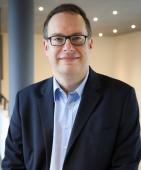
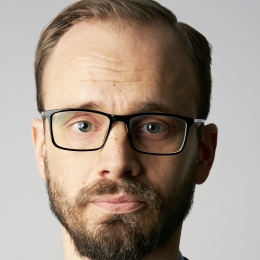
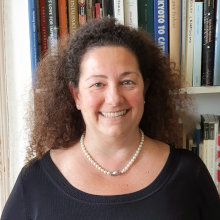
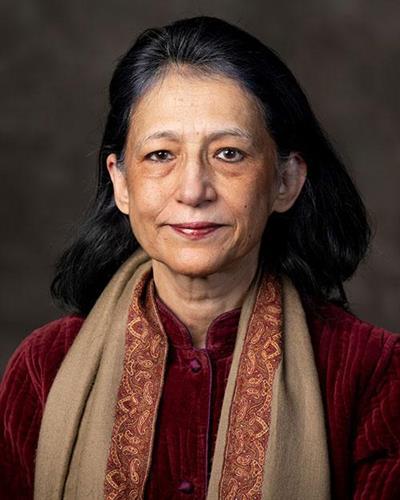
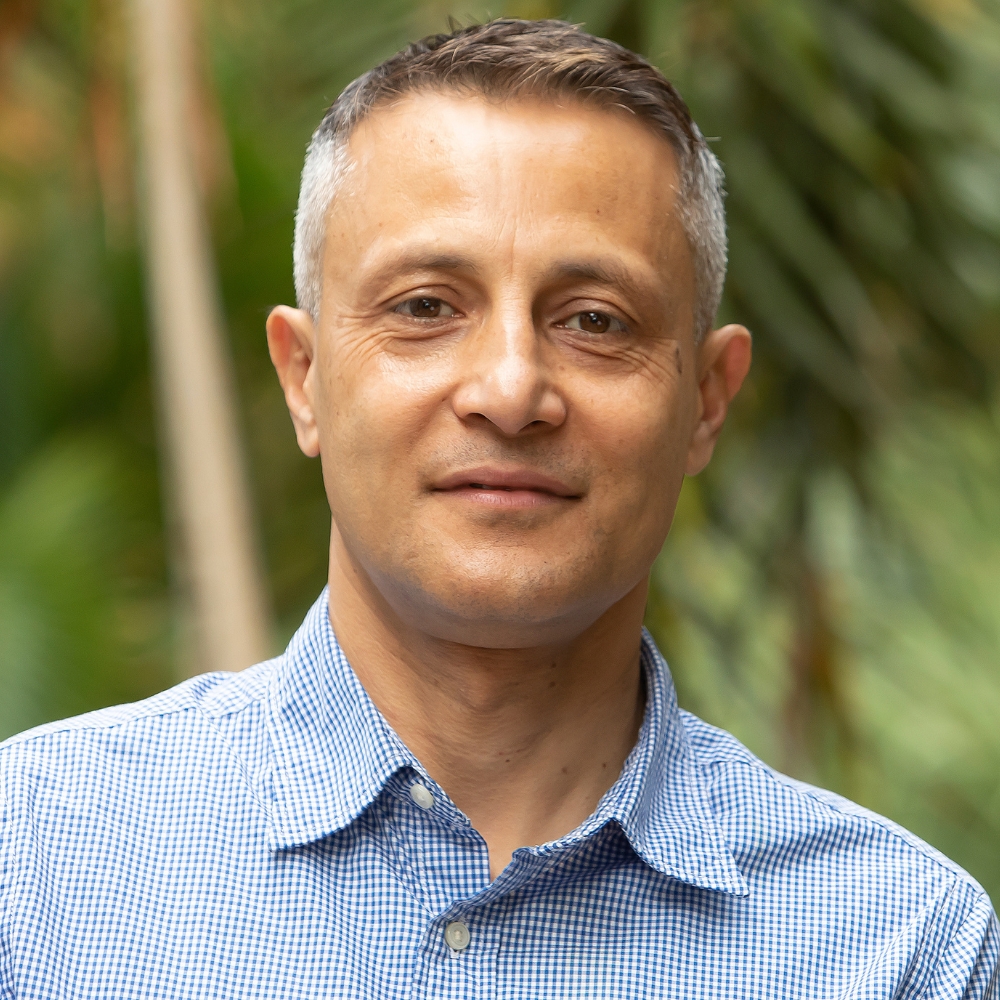
Robert JOLIET is an Associate Professor of Finance at IÉSEG School of Management in France. He holds a Ph.D. in Economics and Management from HEC-ULg Management School (Belgium) and has held various academic leadership roles, including Director of Academic Development and Academic Director of the PGE (MSc in Management). His research focuses on finance, portfolio management, SRI (Socially Responsible Investing), and corporate finance, with a particular emphasis on international expansion, capital structure, and sustainable investment strategies. Education: 2008: Ph.D. in Economics and Management, HEC-ULg Management School, Belgium 2004: Master of Advanced Studies (DEA), Management Sciences (Finance), University of Liège, Belgium 2002: Master of Science in Business Engineering (Finance), University of Liège, Belgium Research interests span SRI fund dynamics, corporate social responsibility valuation, international debt policies, and market liquidity. Notable contributions include analyzing the impact of SRI mutual funds on corporate governance and environmental practices, and exploring the stability of sovereign debt structures in the Eurozone. Awards include the 2005 FORTIS Award (Third Prize) and the 2003 E.G. de Barsy Doctoral Fellowship. He has published extensively in journals like Economics Letters and Journal of Banking & Finance . Academic leadership roles include directing programs and departments at IÉSEG, alongside coordinating the Finance Track and managing academic development initiatives. His teaching focuses on financial data analysis, active portfolio management, and investment strategies in capital markets. He is a member of the LEM (Laboratoire d'Économie Moderne) research group and contributes to interdisciplinary research in finance and economics.
Rhenish Friedrich Wilhelm University of BonnGermany
Gül Şen is a Senior Lecturer and Privatdozentin at the Institute of Oriental and Asian Studies, University of Bonn, and also serves as a Lecturer at the University of Heidelberg. Her academic work focuses on premodern Ottoman history, historiography, and the dynamics of dependency, particularly in maritime contexts such as galley slavery and war captivity. She is actively involved in major research programs including the DFG-Priority Program 'Transottomanica' and the Bonn Center for Dependency and Slavery Studies. Her research areas include: Premodern Ottoman historiography and narrative strategies Legitimacy of rule and political transitions Maritime unfree labor and galley slavery War captivity and captivity narratives in the 18th century Dependency and asymmetrical power relations in the early modern Mediterranean Her recent publications reveal a strong thematic trend centered on the interplay between narrative construction and social power, particularly in contexts of slavery and captivity. She investigates how historical actors used storytelling to assert legitimacy, cope with crises, and negotiate identity. Her work bridges literary analysis with social history, offering nuanced understandings of agency within systems of dependency. She frequently collaborates with leading scholars like Stephan Conermann and contributes to major edited volumes and series in Ottoman studies. Her scientific awards include: DAAD Award for outstanding academic achievements (2012) Postdoctoral Scholarship from the Fritz Thyssen Foundation (2012–2013) Postdoctoral Fellowships at the Annemarie Schimmel Kolleg (2015–2016, 2018–2019) Postdoctoral Scholarship from the University of Bonn (2019–2020) She has supervised numerous B.A. and M.A. theses at the University of Bonn and Heidelberg and has secured third-party funding, including a DFG project (€192,000) from 2016–2018 and Fritz Thyssen Foundation grants. She is co-editor of the 'Ottoman Studies' and 'Otto Spies Memorial Series' book series, and holds leadership roles in the Society for Turkic, Ottoman and Turkish Studies (GTOT) and the International Association for Ottoman Social and Economic History (IAOSEH). Her academic activities are deeply embedded in collaborative and interdisciplinary research environments. She is affiliated with the Bonn Center for Dependency and Slavery Studies and contributes to the DFG-Priority Program 'Transottomanica,' where she examines mobility dynamics and captivity narratives. Her work is supported by a strong network of international collaborations and editorial engagements.
Karl Gustafsson is a Professor at Stockholm University within the Department of Economic History and International Relations. His work bridges security studies , collective memory , and digital research methods in international relations. Current Role: Professor of International Relations, Stockholm University Previous Positions: Post-Doc at Lund University, Researcher at Swedish Institute of International Affairs Visiting Appointments: University of Tokyo, Osaka University, Keio University, Academia Sinica, Nordic Institute of Asian Studies Research Focus: Karl specializes in memory politics , ontological security , and anxiety-driven international dynamics , particularly in Sino-Japanese relations and digital platforms . His studies explore how historical narratives and online memory construction influence state identity and policy. Awards & Grants: Recipient of the Wang Gungwu Prize (2014) and Stockholm University Association’s award (2011). Holds Swedish Research Council and Marianne & Marcus Wallenberg Foundation grants for projects on apologies in international politics and digital memory in East Asia . Publications: His work appears in journals such as International Studies Quarterly , European Journal of International Relations , and Memory Studies , addressing topics like narrative power in East Asia, anxiety’s role in policy change , and digital humanities applications in IR.
Dr. Silvia VESCO is an Associate Professor in the Department of Asian and North African Studies at Ca' Foscari University of Venice, where she specializes in Japanese art history, particularly Edo-period visual culture, ukiyo-e prints, illustrated books, and the works of Katsushika Hokusai. She is actively involved in research, teaching, and cultural curation, with a strong focus on Italian collections of Japanese art and cross-cultural artistic dialogues between Japan and the West. Education: PhD in History of Indian and East Asian Art, Ca' Foscari University of Venice (1999) Master in Art & Archaeology, SOAS, University of London (1995) Degree in Oriental Languages and Literatures, University of Venice (1993, with honors) Her research interests encompass Japanese aesthetics, museum studies, and the global reception of Japanese art. She has led major digitization projects for the Museum of Oriental Art in Venice and contributed to the development of its new museological framework. Her scholarly work reveals a consistent focus on Hokusai, Edo-period print culture, and the philosophical dimensions of Japanese visual forms. The recent publications highlight a deep engagement with Hokusai’s pedagogical works, the aesthetics of emptiness, and contemporary reflections on nature in post-Fukushima Japan. Her interdisciplinary approach bridges art history, cultural studies, and museum practice. Scientific Recognition: Finalist, Premio Nazionale per la divulgazione scientifica 'Giancarlo Dosi' (2020) Japan Foundation Fellowship (1997) Postgraduate scholarship from the University of Venice (1994) She has supervised numerous MA theses, served on PhD committees, and mentored students in Japanese art history. Her research has been supported by grants from the Japan Foundation and institutional collaborations with museums and cultural centers. She is a referee for VQR, Edizioni Ca' Foscari, and international journals, and serves on the scientific committees of several academic and museum publications. Labs and Teams: Scientific Committee, Museum of Oriental Art, Ca' Pesaro, Venice Scientific Committee, Edizioni Ca' Foscari Coordinator, Scientific Committee for Ca' Foscari Japanese Studies, Arts and Literature Member of the editorial board of 'Venezia Arti' and 'Quaderni del Polo museale del Veneto'
Dr. Soohyun Lee is a Senior Lecturer in Korean and East Asian Political Economy at King's College London, based in the Department of European & International Studies within the School of Politics & Economics. She holds a BSc from Ewha Womans University (South Korea), an MSc from the London School of Economics, and a DPhil from the University of Oxford. Affiliations: European Politics and Society Research Group King’s Korea Initiative Her research focuses on the comparative political economy of welfare states, particularly in East Asia and Europe, with an emphasis on labor market dualization, social policy reforms, and family policies. She has explored how countries address welfare challenges and the conditions for successful welfare state reforms. Her work has been published in leading journals such as World Politics , Comparative Political Studies , and Journal of Contemporary Asia . Dr. Lee teaches courses on the political economy of East Asian development, welfare state models, and capitalism. She supervises PhD students on topics related to welfare states, labor markets, and East Asian political economy. Grants & Projects: Learning to Reform the Welfare State and Labour Market: Korean Labour Market and Social Policy-Making in Comparative Perspective (Korea Foundation, 2020–2022) Welfare Reform and Social Progress in South Korea: Effective Social Policies for a Low-Fertility and Ageing Society (Korea Foundation, 2019–2020) Welfare States in Transition: International Policy Lessons for South Korea (Korea Foundation, 2018–2019) Recent News & Events: Her work on economic insecurity and right-wing populism was highlighted in news outlets (2024). Contributed to discussions on fertility and job security (2023). Presented at the SASE Annual Conference (2022).
Ayesha Jalal is a distinguished Professor of History at Tufts University's School of Arts and Sciences and holds a joint appointment at The Fletcher School of Law and Diplomacy. She currently serves as the Mary Richardson Professor and directs the Center for South Asian and Indian Ocean Studies. With a career spanning over three decades, Professor Jalal has established herself as a leading scholar in South Asian history, particularly focusing on Pakistan studies, the partition of India, and Muslim political thought in the region. Professor Jalal's academic journey began with a double major in History and Political Science from Wellesley College in 1978. She then pursued doctoral studies at the University of Cambridge, earning her PhD in History in 1983. Her early career included prestigious fellowships at Trinity College, Cambridge (1980-84), the Centre of South Asian Studies (1984-87), the Woodrow Wilson Center for International Scholars (1985-86), and the Harvard Academy for International and Area Studies (1988-90). Professor Jalal's research primarily centers on South Asian history with special emphasis on Pakistan, the partition of India, and Muslim political thought. Her work explores the complex interplay between religious identity, nationalism, and state formation in the region. She has made significant contributions to understanding democratic development in Pakistan, sectarian dynamics in South Asia, and the historical connections between the Indian subcontinent and the wider Indian Ocean world. Her recent scholarship has focused on 'Oceanic Islam,' examining transregional Muslim networks and universalist aspirations that transcended colonial boundaries. Professor Jalal's extensive publication record demonstrates a consistent focus on South Asian political history, with particular attention to Pakistan's formation and development. Her recent works show a progression from studies of partition and state formation toward broader examinations of Muslim intellectual history and transregional connections. The 2020-2024 publications reveal a sophisticated engagement with themes of democratic erosion, sectarianism, and the historical roots of contemporary political challenges in South Asia, while also exploring more cultural and religious dimensions through works on Muslim enlightened thought and oceanic connections. Patrus Bukhari Award for the best English language book, The Pity of Partition , Academy of Letters, Government of Pakistan (2015) Britannica Book of the Year recognition (2015) MacArthur Fellowship (1998-2003) As an educator, Professor Jalal has mentored numerous graduate students through thesis supervision and directed research projects. Her teaching portfolio includes courses on Modern South Asia, Contemporary South Asia, Islam and the West, and specialized seminars on South Asian history. She has taught at several prestigious institutions including the University of Wisconsin-Madison, Columbia University, and Harvard University before joining Tufts in 1999. In her role as Director of the Center for South Asian and Indian Ocean Studies, she has fostered interdisciplinary research and provided guidance to emerging scholars in the field. Professor Jalal directs the Center for South Asian and Indian Ocean Studies at Tufts University, which serves as a hub for interdisciplinary research on South Asia and its connections to the wider Indian Ocean world. The center facilitates collaborative projects, hosts visiting scholars, and organizes events that bridge historical, political, and cultural perspectives on the region. Under her leadership, the center has become a prominent institution for South Asian studies, promoting dialogue between academic research and contemporary policy issues.
University of California, Los AngelesUnited States
Sanjay Subrahmanyam is Distinguished Professor of History and Irving & Jean Stone Endowed Chair in Social Sciences at UCLA's Department of History. A globally recognized historian of the early modern period (15th-18th centuries), he previously held prestigious positions at the Collège de France (2013-2021), University of Oxford (2002-2004), and Ecole des Hautes Etudes en Sciences Sociales in Paris (1995-2002). He founded UCLA's Center for India and South Asia (2005-2011) and maintains significant academic engagement in France through media appearances and lectures. His educational background includes: M.A. in Economics (First Rank with Gold Medal), Delhi School of Economics (1982) Ph.D. in Economic History, Delhi School of Economics (1987) Honorary D.Litt., University of Calcutta (2015) Doctorat honoris causa, Université catholique de Louvain (2017) Subrahmanyam's research revolutionized global historical methodology through his pioneering concept of 'connected histories,' which challenges Eurocentric periodization and emphasizes horizontal connections across regions. His work spans South Asian political culture, Indian Ocean trade networks, Iberian imperial systems, and Mughal court dynamics, consistently integrating multilingual archives and visual sources. He demonstrates exceptional mastery in synthesizing Portuguese, Spanish, Persian, Tamil, and Sanskrit materials to reconstruct non-Western perspectives on early modern globalization. His recent publications reveal intensified focus on transcultural encounters, maritime archaeology, and the material dimensions of empire. Works like Across the Green Sea (2024) and Mirrors of Empire (2026) showcase his shift toward analyzing ego-documents and visual culture to explore identity formation in frontier zones. The consistent thread remains his critique of civilizational boundaries and emphasis on fluid cultural exchanges across the Indian Ocean world. His scientific recognition includes: Infosys Humanities Prize (2012) Dan David Prize for History (2019) Prix International de l'Histoire (2020) Fellowship in American Academy of Arts and Sciences (2009) Corresponding Fellowship in British Academy (2016) Guggenheim Fellowship (2011-12) Subrahmanyam has mentored nine doctoral students to completion, maintaining active collaborations with Muzaffar Alam (University of Chicago), Velcheru Narayana Rao (University of Wisconsin), and David Shulman (Hebrew University). His editorial leadership includes co-editing The Cambridge World History (2015) and serving over a decade as Joint Managing Editor of the Indian Economic and Social History Review . He currently directs major international projects on Indo-Persian travel writing and Mughal intellectual networks. Though not leading a traditional laboratory, he coordinates the 'Connected Histories' research initiative across UCLA, Collège de France, and University of Chicago, fostering interdisciplinary teams examining early modern knowledge circulation. His public engagement includes regular contributions to French media (France 24, France Info) and curated exhibitions like the Codex Casanatense project.
Pawan Adhikari is a Professor of Accounting at Essex Business School, University of Essex , where he serves as Director of Impact and Enterprise and Director of Essex Accounting Centre . He is an Associate Editor of the Journal of Public Budgeting, Accounting and Financial Management and a Executive Board Member of the Comparative International Governmental Accounting Research Network (CIGAR) . Previously, he led accounting reforms at Nepal’s Accounting and Auditing Standards Board and lectured at Nord University, Norway. PhD, Nord University Business School Fellow of the Higher Education Academy His research focuses on public sector accounting in developing countries, particularly accounting reforms , public value creation , and climate accountability . He explores how accrual accounting and participatory budgeting can enhance transparency in South Asian and African contexts. His work has influenced policy-making in Nepal and is recognized with the 2023 Best International Research Impact award by the University of Essex. Recent publications analyze wellbeing economies (2025), NGO accountability in disasters (2024), and climate budgeting (2023). He collaborates with institutions like the World Bank , European Commission , and British Academy , focusing on projects related to financial resilience , circular economy , and health sector accountability . Supervising 8 current PhD students, his advisees have produced work on topics like accrual accounting in Bangladesh and NGO accountability in Palestine . World Bank/PEFA Research Award African Accounting and Financial Association (AAFA) Award ESRC IIA Impact Fund GCRF and SeNSS Grants 2019 Best Postgraduate Supervisor (Essex)
Rhenish Friedrich Wilhelm University of BonnGermany
Stephan Conermann serves as Professor of Islamic Studies and Dean of the Faculty of Arts and Humanities at the University of Bonn, where he has held continuous academic appointments since 2003. His institutional leadership includes directorship of the Annemarie Schimmel Kolleg (2010-2022), Bonn Center for Transcultural Narratology, and significant administrative roles culminating in his current deanship since 2023. Academic Background: Doctorate in Oriental Philology/Islamic Studies (Kiel University, 1996, magna cum laude) Magisterstudium in Asian History, Oriental and Slavic Philology (Kiel University, 1992) Conermann's research examines pre-modern Islamic societies through narrative strategies in historiography, with specialized focus on Mamluk Sultanate governance (1250-1517), Delhi Sultanate/Mughal transitions, and Transottomanica mobility dynamics. His work uniquely connects asymmetrical dependencies (particularly slavery systems), power structures, and global entanglements across South Asia, Middle East, and Eastern Europe. His extensive publication portfolio shows consistent thematic evolution toward comparative frameworks analyzing slavery beyond Eurocentric models, narrative construction of power across cultures, and mobility as historical catalyst. Recent scholarship increasingly integrates transcultural methodology with digital humanities approaches. Academic Leadership: Supervised 290+ theses (59 PhD, 96 Magister, 47 Master, 88 Bachelor) Acquired ~9 million euros in third-party funding (DFG, BMBF, DAAD) Editor of 15+ publication series including Mamluk Studies and Dependency and Slavery Studies Conermann directs the Bonn Center for Transcultural Narratology and co-leads the EXC 2036 'Beyond Slavery and Freedom' cluster, fostering interdisciplinary research on pre-modern dependency systems through international collaborations across Europe, Asia, and the Americas.
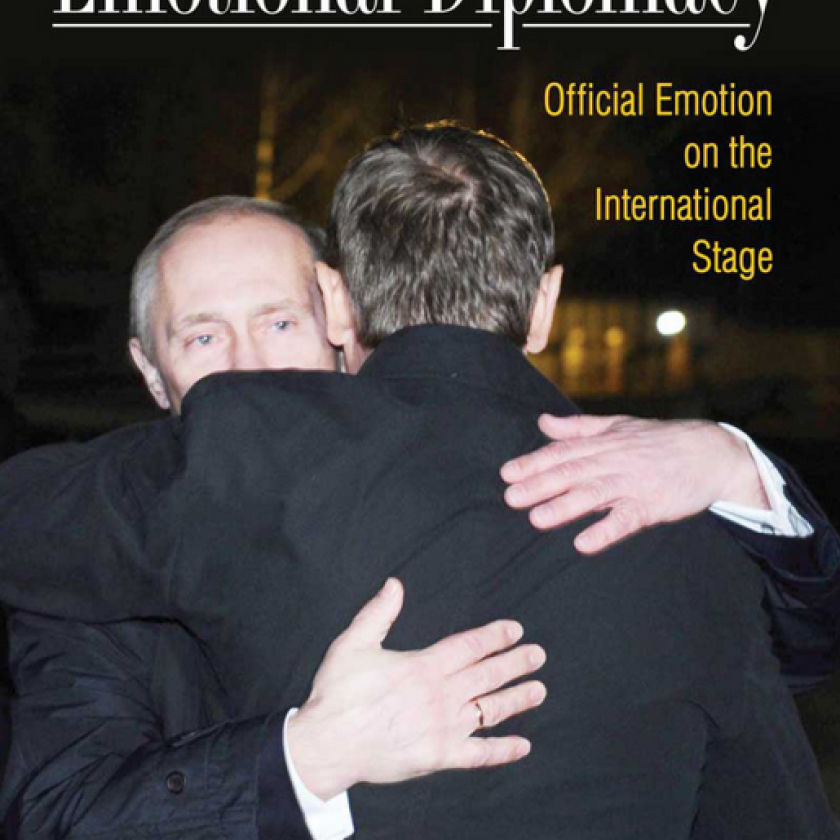
Todd H. Hall is a Professor of International Relations at the University of Oxford's Department of Politics and International Relations (DPIR) and a Tutorial Fellow in Politics at St Anne's College. He directs the University of Oxford China Centre and holds affiliations with the International Relations Network and the Centre for International Studies (CIS). His research focuses on international relations theory, emotional dimensions of diplomacy, and Chinese foreign policy, with particular emphasis on Sino-Japanese relations and East Asian security dynamics. Education: PhD in Political Science from the University of Chicago (2008). Postdoctoral fellowships at Princeton and Harvard Universities, and visiting scholar appointments at Free University of Berlin, Tsinghua University, and University of Tokyo. Research interests include the role of emotions in international politics, China's foreign policy, and the historical parallels between early 20th-century European tensions and contemporary East Asian geopolitics. His award-winning book *Emotional Diplomacy* (2015) explores how states strategically deploy emotion in international relations. Recent publications analyze Huawei's 5G policy dilemmas, China's Belt and Road Initiative, and dispute escalation mechanisms. He advises on East Asian security, including repeated tensions in the South China Sea and Sino-Japanese territorial disputes. Awards include the ISSA 2016 Diplomatic Studies Book Award. Active in policy commentary, his op-eds address Taiwan Strait tensions, China's diplomatic rhetoric, and historical memory conflicts. Labs/Teams: Leads the Oxford China Centre's research initiatives on modern Chinese diplomacy and emotional geopolitics. Collaborates with institutions like the National University of Singapore and Missouri S&T on East Asian security studies.
Professor Astrid Nordin holds the Lau Chair of Chinese International Relations at King's College London's Lau China Institute, within the School of Global Affairs. Previously, she was a Professor and Director at Lancaster University's China Centre. Her research bridges Chinese studies and critical international relations, focusing on relational theories and China's global role. Key areas include Chinese foreign policy, surveillance technologies, and decolonial approaches. Education: Peking University, Jilin University, City University Hong Kong, University of Warwick, University of Manchester Research Interests: Chinese world order concepts, relational approaches, critical social theory, and ontology of war. Her work emphasizes interdisciplinary collaboration, impacting policy, media, and cultural sectors. Notable projects include the 'Chinese Anger Diplomacy' study and the 'ESRC IAA: Community-led support for overseas Chinese' initiative. She co-edited the Routledge Handbook of Social Futures (2021) and contributes to public discourse on China's global influence. Awards: KingsCAT Tool Development (2024) alongside interdisciplinary team.
Harald Fuess is a Professor of Cultural Economic History at the Heidelberg Centre for Transcultural Studies since 2009. He holds a Ph.D. from Harvard University and B.A. from Princeton University , with prior teaching roles at the University of Sheffield, Sophia University, and visiting appointments at Oxford, Duisburg-Essen, Columbia, and Tokyo University. He serves as the Erasmus Coordinator for Asian Studies and as University Scientific Coordinator of the Hexagon Alliance . Education: Princeton University – B.A. Harvard University – M.A., Ph.D. His research spans modern Japanese history , gender dynamics , transcultural economic relations , and Eurasian cultural flows . Publications focus on Japan's legal sovereignty, consumption patterns, and the Meiji Restoration's global impact. Key academic contributions include leadership roles such as President of the European Association for Japanese Studies (2008-2011) and ongoing membership in its Executive Council (since 2000) . He has held administrative positions including Director of the Cluster Graduate School Transcultural Studies (2012-2017) and Speaker for Research Area C "Health and Environment" (2009-2012) . Recent publications analyze topics ranging from historiography of the senses to colonial legal frameworks in East Asia. His work bridges historical analysis with contemporary issues like tourism's economic impact and intellectual property evolution in transnational contexts.
Alan Patten is the Howard Harrison and Gabrielle Snyder Beck Professor of Politics and Chair of Princeton University's Department of Politics. He holds a D.Phil. from Oxford University, with prior academic roles at McGill University and the University of Exeter. His research bridges historical political thought and contemporary political philosophy, focusing on minority rights, language politics, nationalism, and religious freedom. He is the author of Hegel's Idea of Freedom (1999), Equal Recognition: The Moral Foundations of Minority Rights (2014), and co-editor of Language Rights and Political Theory (2003). Patten has served as editor of Philosophy & Public Affairs (2010–2017) and currently directs Princeton's University Center for Human Values. His recent work explores a liberal theory of religious freedom and critiques neocolonial dynamics in cultural trade. Awards include the APSA First Book Prize and the C.B. Macpherson Prize. Education: B.A. (McGill), M.A. (Toronto), M.Phil. & D.Phil. (Oxford, 1996). Teaching includes courses on political theory, democracy, and self-determination. Patten has advised numerous Ph.D. students on topics in political philosophy and intellectual history. Research interests span the moral foundations of minority rights, language policy in multicultural contexts, and the historical development of nationalist thought. His work often combines normative argumentation with historical analysis, addressing contemporary issues like religious exemptions, cultural preservation, and global justice. Awards: APSA First Book Prize in Political Theory (1999) C.B. Macpherson Prize (Canadian Political Science Association, 1999) Service: Chair of the Department of Politics (2018–2024), editorial roles, and academic leadership in interdisciplinary initiatives at Princeton.
Yuhua Wang serves as the Ford Foundation Professor of Modern China Studies within Harvard University's Faculty of Arts and Sciences, Department of Government. His scholarly work establishes him as a leading authority on Chinese political development, state capacity, and historical institutional analysis across imperial and contemporary contexts. His academic foundation includes: B.A. from Peking University Ph.D. from the University of Michigan Professor Wang's research program integrates comparative politics with Chinese studies through core interests in bureaucracy , institutions , judiciary and public law , political economy & development , political geography , and state-society relations . He employs a methodological triad of historical , qualitative , and quantitative approaches to analyze China's political evolution. His work uniquely bridges macro-historical patterns with contemporary governance challenges, particularly examining how historical legacies shape modern state capacity and institutional resilience in authoritarian contexts. Analysis of his publication trajectory reveals consistent focus on state development mechanisms, with increasing sophistication in comparative historical methodology. Recent work demonstrates expanded geographic scope beyond China while maintaining analytical depth in imperial political economy. His research shows growing integration of cross-national datasets with deep historical case studies, reflecting broader trends in political science toward mixed-method designs for complex institutional analysis. His distinguished recognition includes: 2023 Lubbert Best Book Award in Comparative Politics from the American Political Science Association for The Rise and Fall of Imperial China Harvard College Professor appointment (2025) Professor Wang maintains active research leadership through extensive publication in premier journals including American Political Science Review and Comparative Political Studies , with significant contributions to theoretical frameworks like State-in-Society 2.0. His work generates substantial policy-relevant insights on corruption, judicial review, and urban governance in China. As a core faculty member in Harvard's Government Department, he contributes to the university's intellectual ecosystem through cross-disciplinary collaboration and participation in research initiatives focused on Asian political development, though specific lab affiliations are not documented in available sources.
Prof. Dr. Ulrike Freitag is Director of the Leibniz-Zentrum Moderner Orient (Berlin) and holds a special professorship in Islamic Studies at Freie Universität Berlin. Her research focuses on social and cultural history of the Arab world, urban history, and transregional connections in the Indian Ocean. She has directed major projects like 'An Oasis Facing Globalisation: Hegra’s History since the 19th Century' and authored seminal works such as A History of Jeddah . Education: Habilitation (Islamic Studies, 2002, Bonn), PhD (1991, Freiburg), MA (1987, Freiburg). Key research stays include Damascus (1984-85, 1987-90), Yemen, and Southeast Asia. Research Interests: Urban development, migration networks, Ottoman heritage, Saudi state formation, and transregional Islamic dynamics. Current projects explore Jeddah’s urban history and transregional entanglements in the Arabian Peninsula. Engagement: Editorial roles for Journal of Arabian Studies , ZMO Studien , and advisory boards for institutions like the Leibniz Institute of European History. Awarded fellowships from Käthe-Hamburger Kolleg and LUCIS. Supervised over 20 doctoral theses on topics ranging from Ottoman governance to Gulf intellectual history. Publications: Over 150 articles, 8 monographs, and 6 edited volumes. Her work blends archival research with transregional perspectives, emphasizing marginalized voices and material culture. Recent focus on pandemic impacts and Saudi-Iranian geopolitical dynamics.