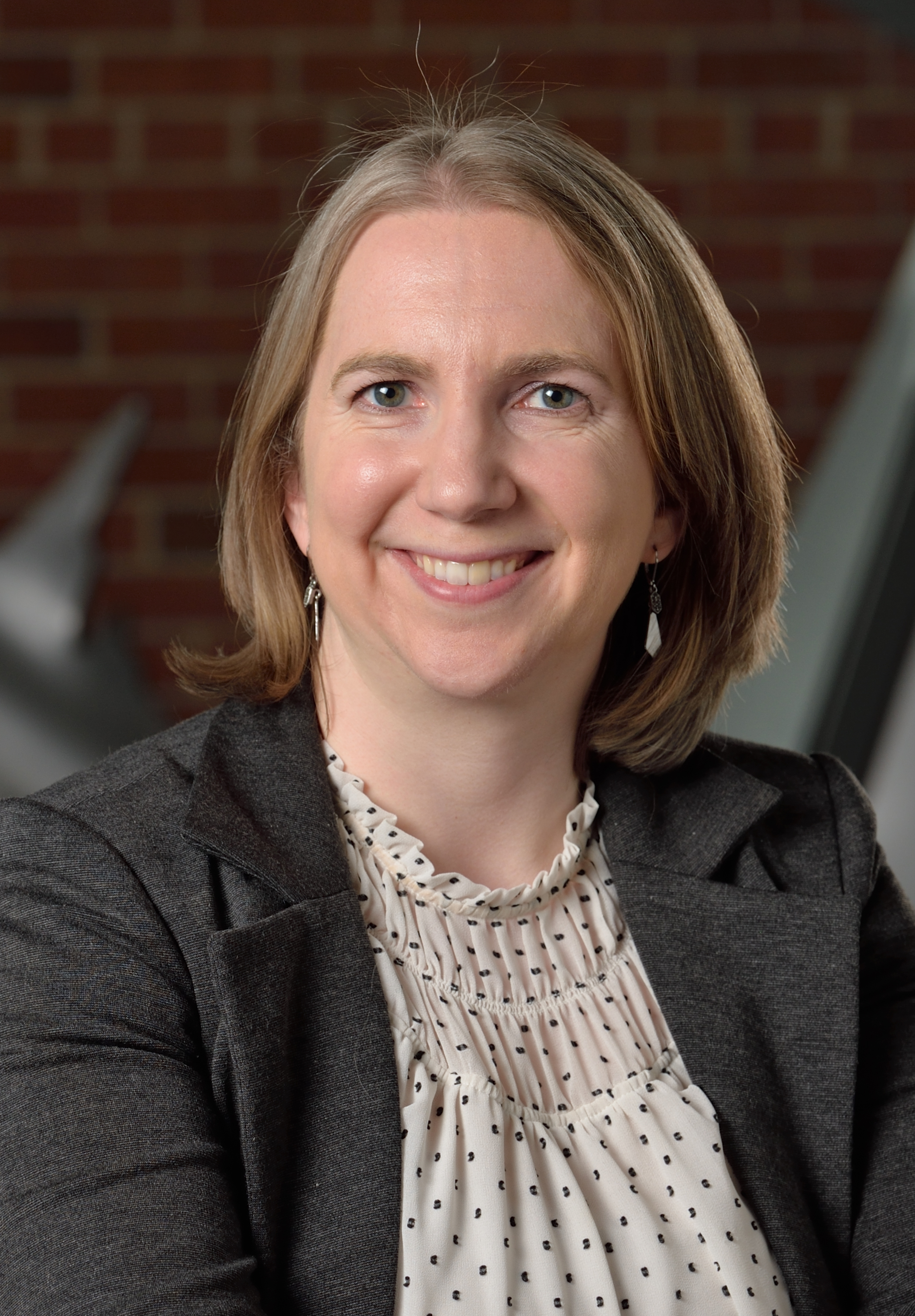
Thomas Lam is a professor of mathematics at the University of Michigan , specializing in algebraic combinatorics, total positivity, and connections to mathematical physics. His work bridges cluster algebras, positive geometry, and integrable systems, with applications to scattering amplitudes in quantum field theory. Lam has collaborated extensively with physicists such as Nima Arkani-Hamed and mathematicians like Pavlo Pylyavskyy and Mark Shimozono. Key research areas: Cluster algebras, total positivity, electrical networks, positroid varieties, and quantum cohomology. Notable contributions: Defining polypositroids, proving regularity theorems for totally nonnegative flag varieties, and establishing cluster structures in braid varieties. Recent work focuses on positive geometries , including the amplituhedron and moduli spaces of points on projective lines, with implications for particle physics. His articles often explore dual graded graphs, K-theoretic Schubert calculus, and the interplay between combinatorics and algebraic structures. Lam's research has been supported by NSF grants, including DMS-0748636 and DMS-1249708 .
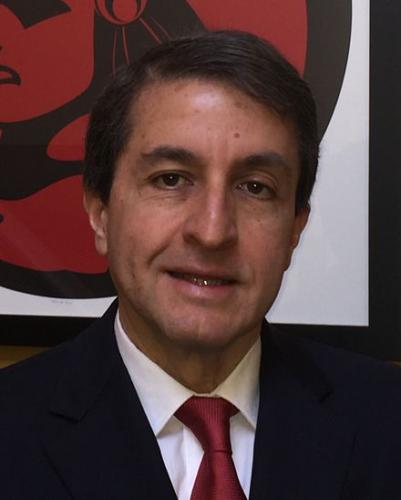
Alejandro Adem is a Professor in the Department of Mathematics at the University of British Columbia , with a distinguished career spanning institutions like the University of Wisconsin-Madison and roles such as Director of the Pacific Institute for the Mathematical Sciences (PIMS) (2008–2015), CEO of Mitacs (2015–2019), and President of NSERC (2019–present). He is on leave from UBC. B.S. , National University of Mexico (1982) Ph.D. , Princeton University (1986) Research Interests : His work bridges algebraic topology and group theory , focusing on the cohomology of finite and infinite groups , spaces of homomorphisms , K-theory , and orbifolds . Recent projects include generalized Tate cohomology, quantum mechanics applications of twisted K-theory, and structural analysis of commuting element spaces in Lie groups. Scientific Trends : His 15 most recent articles emphasize homotopy theory , group cohomology , and topological applications in physics , with collaborations on equivariant K-theory , manifold classification , and commuting element spaces . Fellow of the Royal Society of Canada , American Mathematical Society , and Canadian Mathematical Society Jeffery-Williams Prize (2019) Canada Research Chair at UBC Science, Technology, and Innovation Award of the Americas Advising & Leadership : Supervised 22 PhD students, including Daniel Sheinbaum (2020) and Max Gheorghiu (2024). Served on the NSERC Council , chaired the Global Research Council , and contributed to University of British Columbia policies .
Bastian Alexander Grossenbacher is a Full Professor of Machine Learning at the University of Fribourg, where he leads the AIDOS Lab within the Department of Informatics, Faculty of Science and Medicine. He holds secondary appointments at the Institute of AI for Health and the Helmholtz Pioneer Campus of Helmholtz Munich. He is also a TUM Junior Fellow and a member of ELLIS and AI-LIFE. He co-directs the Applied Algebraic Topology Research Network (AATRN) and is involved in the Topology, Algebra, and Geometry in Data Science (TAG DS) initiative. His research lies at the intersection of geometry, topology, and machine learning, with a focus on Geometric Deep Learning, Topological Deep Learning, and Topological Data Analysis. He develops novel machine learning methods that use topological and geometric priors to improve model robustness and interpretability, particularly in biomedical applications. His work spans theoretical foundations and practical implementations in areas such as single-cell analysis, medical imaging, and network science. The 15 most recent publications (2023–2025) reveal a strong trend toward integrating algebraic and differential topology into deep learning architectures. Key themes include the use of Euler Characteristic and magnitude transforms, curvature-based analysis of graphs and data, simplicial and manifold-based neural representations, and the application of topological methods to biomedical data. His articles appear in top-tier venues such as Nature Communications, ICML, NeurIPS, ICLR, and IEEE conferences, reflecting both theoretical depth and high-impact applications. ERC Starting Grant Bastian Rieck is actively involved in mentoring and academic leadership. He supervises PhD students and postdoctoral researchers in the AIDOS Lab and is open to new collaborations, particularly with candidates from interdisciplinary backgrounds. He has secured significant research funding, including the ERC Starting Grant, and leads multiple collaborative research initiatives. He emphasizes open science, sharing code, data, and educational materials publicly. He leads the AIDOS Lab, which focuses on advancing machine learning through topological and geometric principles. He is also a co-director of the Applied Algebraic Topology Research Network (AATRN), which hosts a large online seminar series. Additionally, he maintains DONUT, a curated database of non-theoretical applications of topology, and is active in the ELLIS and AI-LIFE networks, fostering international collaboration in AI and health.
Laurentiu-George Maxim is a Professor in the Department of Mathematics at the University of Wisconsin-Madison, where he maintains an active research program in singularity theory and algebraic topology. His academic appointments include regular participation in the topology and singularities seminar at UW-Madison and extensive international collaborations. University of Wisconsin-Madison, Department of Mathematics (current) Professor Maxim's research focuses on the topology of singular spaces, with particular expertise in hypersurface singularities, intersection homology, perverse sheaves, and characteristic classes. His work bridges pure mathematics with applications in algebraic geometry and topology. He has developed significant theoretical frameworks connecting singularity theory with Hodge theory, Alexander modules, and characteristic classes of singular varieties. His research demonstrates how topological methods can be used to understand complex algebraic structures with singularities. His publication record shows consistent output of high-impact work in singularity theory, with recent publications (2023-2025) covering weighted Ehrhart theory via mixed Hodge modules, geometry of aspherical manifolds, applications of singularity theory in algebraic statistics, and advanced studies of Hirzebruch-Milnor classes. His research demonstrates a clear progression from foundational work in intersection homology to more recent applications in optimization theory and computational aspects of singularity theory. Professor Maxim has received recognition through invitations to speak at major international conferences and through his leadership in organizing significant academic events. Organizer of the "Singularities in the Midwest" conference series (2010-2025) Organizer of the "Characteristic classes of singular spaces" conference celebrating Jörg Schürmann's 60th anniversary (Hangzhou, China, August 2024) Organizer of multiple international conferences in China, Romania, and Germany His academic service includes extensive conference organization, editorial work for conference proceedings, and leadership in the mathematical community through organizing workshops for young researchers in mathematics. Professor Maxim maintains active collaborations with mathematicians worldwide, particularly with colleagues in China, Romania, and Europe, reflecting the global nature of modern mathematical research.
Georgios George Raptis is an Associate Professor at the Department of Mathematics, Aristotle University of Thessaloniki, with research interests in Algebraic Topology, Differential Topology, and Category Theory. He has held academic positions at the University of Regensburg and University of Osnabrück. Education : PhD in Mathematics, University of Oxford (2009) Master's degree in Mathematics, University of Cambridge (2005) Degree in Mathematics, University of Cambridge (2004) Research Interests : Algebraic Topology Differential Topology Higher Categories Homotopic Algebra Algebraic K-theory Homological Algebra Blocked Synonymy Publication Trends : His recent work focuses on cobordism categories, higher homotopy theory, and algebraic K-theory, with collaborations on topological invariants and categorical structures. Articles explore abstract homotopy theory, index theorems, and unstable coalgebras. Professional Experience : Associate Professor, Aristotle University of Thessaloniki (2024-present) Assistant Professor/Lecturer (Privatdozent), University of Regensburg (2020-2024) Lecturer (Akademischer Rat aZ), University of Regensburg (2014-2020) Postdoctoral Researcher, University of Osnabrück (2009-2014)
Catherine Searle is a Full Professor in the Department of Mathematics, Statistics, and Physics at Wichita State University, where she has been a faculty member since 2014. She was promoted to Associate Professor with tenure in 2017 and to Full Professor in 2019. Prior to joining Wichita State, she held research positions in Mexico at CINVESTAV and the National Autonomous University of Mexico (UNAM). She is supported by the National Science Foundation and is a recognized expert in differential geometry, particularly in manifolds and Alexandrov spaces with curvature and symmetry. Her research focuses on differential geometry, especially the structure of manifolds and metric spaces with positive and non-negative curvature under group actions. Her work explores the interplay between symmetry, curvature, and topology, with emphasis on torus and circle actions, cohomogeneity, and Alexandrov spaces. She has made significant contributions to the classification of positively curved spaces with symmetries and the study of geometric rigidity. The recent articles reflect a strong trend in geometric analysis, particularly in classification problems under curvature and symmetry constraints. Her work combines deep topological insights with metric geometry, often leading to structural theorems for spaces with group actions. There is a consistent focus on torus symmetry, fixed-point sets, and curvature bounds, with increasing attention to singular spaces like Alexandrov spaces. Elected Member of the Mexican Academy of Sciences (2010) Catherine Searle has been supported by the National Science Foundation for her research. She has advised numerous students and collaborators, though specific advisees are not listed in the provided texts. She has delivered many invited talks and is active in promoting women in mathematics through initiatives like the Women in Geometry webpage and organizing seminars. She is involved in several collaborative research efforts and academic initiatives, including the Topology/Geometry Zoom Seminar, the WSU Friday Lecture Series, and the organization of the "New Frontiers in Curvature" program at SLMath in Fall 2024. She also contributes to outreach through Sonia Kovalevsky Day and maintains a public presence via her Wikipedia page and Google Scholar profile.
Tim A.E. Ophelders is an Assistant Professor at the School of Mathematics and Computer Science, Eindhoven University of Technology, specializing in the Applied Geometric Algorithms department. His research focuses on computational geometry, algorithms, and topological data analysis, particularly in the context of the Fréchet distance and related geometric measures. Education: Master’s thesis on algorithms for comparing moving complex shapes and higher-dimensional Fréchet distance (2014), supervised by Kevin Buchin and Bettina Speckmann. Ophelders’ research explores advanced topics in computational geometry, including trajectory analysis, subtrajectory clustering, and topological similarity measures. His recent work addresses the Fréchet distance in geodesic settings, ordered merge trees, and deterministic algorithms for geometric data processing. His contributions span both theoretical advancements and practical applications, such as measuring plant phenotypes via the Euler characteristic transform. Selected publications highlight his expertise in algorithm design, complexity analysis, and geometric modeling. Collaborations involve multidisciplinary projects, including datasets for barley seed morphology and shape analysis. His work aligns with the UN Sustainable Development Goals, particularly in computational methods for environmental and biological systems. Scientific Awards: Veni Grant (2021) from Eindhoven University of Technology Ophelders teaches courses in Topological Data Analysis and has contributed to media discussions on algorithmic research. His affiliations include the Applied Geometric Algorithms group at TU/e, with external collaborations in computational biology and data science.
Martin Raussen is an Associate Professor at the Department of Mathematical Sciences, Aalborg University, Denmark. His work focuses on geometric and topological models for concurrency theory, directed algebraic topology, and transformation groups. He has contributed significantly to applying topological methods in computer science, particularly analyzing concurrent systems using higher-dimensional automata and directed spaces. He has been honored with Årets Underviser (Teacher of the Year) in 2018 and 2019, reflecting his dedication to education. His research involves collaborations on projects like the geometric analysis of mutual exclusion models and directed algebraic topology’s applications in concurrency. Raussen has published extensively in journals such as Journal of Applied and Computational Topology and EMS Magazine , with recent work including interviews with prominent mathematicians like Volker Mehrmann and Jean-Pierre Bourguignon. His publications span over four decades, emphasizing both theoretical advancements and educational outreach. He has supervised several initiatives through research networks like ACAT (Applied and Computational Algebraic Topology) and has contributed to EMS (European Mathematical Society) activities, including editorial work and conference organization.
Elizabeth Munch is an Associate Professor at Michigan State University with appointments in the Department of Computational Mathematics, Science and Engineering and the Department of Mathematics. Her research focuses on Applied Topology and Topological Data Analysis (TDA), with applications across biology, neuroscience, and dynamical systems. PhD in Mathematics, Duke University (2013) Previous roles: Assistant Professor at University at Albany - SUNY, Postdoctoral Fellow at University of Minnesota's IMA Her work leverages TDA to study complex data in plant morphology, neural activity, and network dynamics. Recent publications highlight advancements in mapper graphs, persistent homology, and geometric deep learning. Selected awards include the 2022 NSF CAREER award . She teaches courses in TDA (CMSE 890) and optimization (CMSE 382) and co-organizes the MSU TDA Seminar.
Takahiro Kitayama is an Associate Professor at the Graduate School of Mathematical Sciences, University of Tokyo . His work focuses on 3-manifold topology with emphasis on non-commutative deck transformations , geometric group theory , and moduli spaces of representations . Research Interests : 3-manifolds, Discrete Groups, Character Varieties, Torsion Invariants, Morse-Novikov Theory Key Contributions : Foundations for applying higher-dimensional representation moduli spaces to low-dimensional topology; Generalization of Culler-Shalen theory; Interactions between geometric group theory and 3-manifold topology Recent Publications highlight applications of twisted Alexander polynomials , Blanchfield pairings , and L-functions to understanding incompressible surfaces , virtual fibering , and knot invariants . His work bridges algebraic topology, geometric group theory, and quantum topology. Awards : Dean Prize, Graduate School of Mathematical Sciences, University of Tokyo (2008) Dean Prize, Graduate School of Mathematical Sciences, University of Tokyo (2011) Education : Ph.D. in Mathematical Science, University of Tokyo (2011) M.Sc. in Mathematical Science, University of Tokyo (2008)
Professor Wolfgang Schief is a faculty member at the University of New South Wales (UNSW), affiliated with the School of Mathematics & Statistics . His research bridges integrable systems , nonlinear physics , and geometric analysis , with a focus on differential and discrete differential geometry and their applications in continuum mechanics , general relativity , and soliton theory . Research Interests His work centers on the interplay between integrable systems and geometric structures , particularly in nonlinear partial differential equations and their discrete analogs. Key areas include: Integrable discretizations of classical and modern geometric problems Backlund and Darboux transformations for physical systems Nonlinear elasticity and magnetohydrodynamics Self-dual Einstein spaces and heavenly equations Log-aesthetic curves and geometric design Recent Publications Recent studies highlight multi-dimensional integrability in affine manifolds, canonical reductions of TED equations, and geometric frameworks for fiber-reinforced fluids and relativistic systems. His work often reveals connections between soliton theory , Lagrangian mechanics , and discrete geometry . Scientific Awards Queen Elizabeth II Research Fellow (UNSW, 1999–2004) Academic Leadership Currently Professor at UNSW (since 2010), Schief has held roles including Senior Lecturer , Associate Professor (2005–2006), and Professor at TU Berlin (2006–2010). His career spans 2+1-dimensional integrable systems and geometric applications in physics and mechanics.
Matteo D'Achille is an Associate Professor (maître de conférences) of Probability at the Institut Élie Cartan de Lorraine , Université de Lorraine, France, since September 2025. He previously held post-doctoral positions at Laboratoire de Mathématiques d’Orsay (2022-2025) and at LAMA, Université Paris-Est Créteil (2020-2022), and obtained his PhD from Paris-Saclay University in 2020. Education: Ph.D. in Mathematics, Paris-Saclay University, 2020 M.Sc. in Physics (110/110 cum laude), University of Milan, 2016 B.Sc. in Physics (110/110), University of Milan, 2012 Research interests: D’Achille’s work lies at the interface of probability theory, statistical mechanics and random combinatorial optimisation . He investigates random geometric structures such as ideal Poisson–Voronoi tessellations in hyperbolic spaces, massive spanning forests , and random assignment problems on manifolds. A recurrent theme is the study of Gibbs measures and their stability under renormalisation transformations, exemplified by his analyses of decimated Ising and rotator models. Publications trend: His 13 papers (9 published, 4 submitted) display a steady trajectory from early works on one-dimensional random matching to recent deep contributions on hyperbolic random tessellations and extremal Gibbs states on Lobachevsky lattices . The research spans pure probability, rigorous statistical physics and discrete geometry, often combining exact computations with probabilistic limit theorems. Grants & recognition: He was awarded a €2.25k travel grant (2023-2025) from the Fondation Mathématique Jacques Hadamard and serves as a peer reviewer for leading journals including Ann. Inst. Henri Poincaré B , Prob. Theory Rel. Fields , Electronic J. Probability , IEEE Trans. Information Theory and Phys. Rev. X . Supervision & seminars: D’Achille currently advises PhD students and co-organises three recurring seminar series in the Paris area: the SuPerGRandMa Weekly Seminar (Orsay), The Probabilities of Tomorrow (IHP), and the Seed Seminar of Mathematics and Physics (IHP/IHES).
Lorin Crawford is a Principal Researcher at Microsoft Research, focusing on developing interpretable machine learning and AI algorithms to study genetic effects and cancer genomics. He co-leads Project Ex Vivo with the Broad Institute to target cancer cell states. His work bridges computational biology, statistics, and genetics. Education: PhD in Statistical Science from Duke University (2017), advised by Sayan Mukherjee and Kris C. Wood. BSc in Mathematics from Clark Atlanta University. Awards include Sloan and Packard Fellowships, and the COPSS Emerging Leader Award. Research spans genomic analysis, 3D shape modeling, and AI-driven cancer pharmacology. Notable projects include Bayesian kernel models for cancer genomics and topological data analysis for biological shape differentiation. Publications emphasize scalable ML methods for single-cell biology, epistasis detection in GWAS, and interpretable AI frameworks like BAKR. Collaborations involve Broad Institute, MIT, and Harvard researchers.
Dr. Deepam Patel is an Associate Professor in the Department of Mathematics at Purdue University. His research focuses on the intersection of algebraic geometry and number theory, with recent explorations into model theory and logic. Department: Mathematics, Purdue University Research Interests: Algebraic Geometry Commutative Algebra Automorphic Forms Lie Groups Number Theory Representation Theory Model Theory Topology Recent Publications highlight work in Hodge structures, cohomological density, monodromy theory, and interactions with model theory. Collaborators include prominent researchers like M. Nori and Saugata Basu.
Niny Arcila-Maya is an Assistant Professor of Mathematics at San Francisco State University (SFSU), part of the College of Science & Engineering. She holds a PhD from the University of British Columbia (2021) and completed postdoctoral work at Duke University as a William W. Elliott Assistant Research Professor under Kirsten Wickelgren and Veronica Ciocanel. Her research focuses on algebraic topology, topological data analysis, and mathematics education, with interdisciplinary applications in biology, climate science, and social justice. Education: B.Sc. (Magna Cum Laude) in Mathematics, Universidad Nacional de Colombia (2013) M.Sc. in Mathematics, Universidad Nacional de Colombia (2016) Ph.D. in Mathematics, University of British Columbia (2021) Research Interests: Niny studies topological Azumaya algebras and applies algebraic topology to real-world problems. Her work emphasizes interdisciplinary collaboration and TDA’s role in addressing societal challenges. She is committed to inclusive teaching strategies aligned with the Narrative Change pillar of the Truth, Racial Healing & Transformation Framework. Grants & Mentoring: Supported by the Simons Foundation, she co-leads Pares Ordenados, a Spanish-language Directed Reading Program for Latin American students. This initiative has engaged 78 participants from 10 countries since 2023. She mentors undergraduates in research and volunteers with the Association of Women in Mathematics. Awards: Featured in Lathisms 2024 Calendar Member of SFSU’s Black and Latinx/e Student Success Cohort