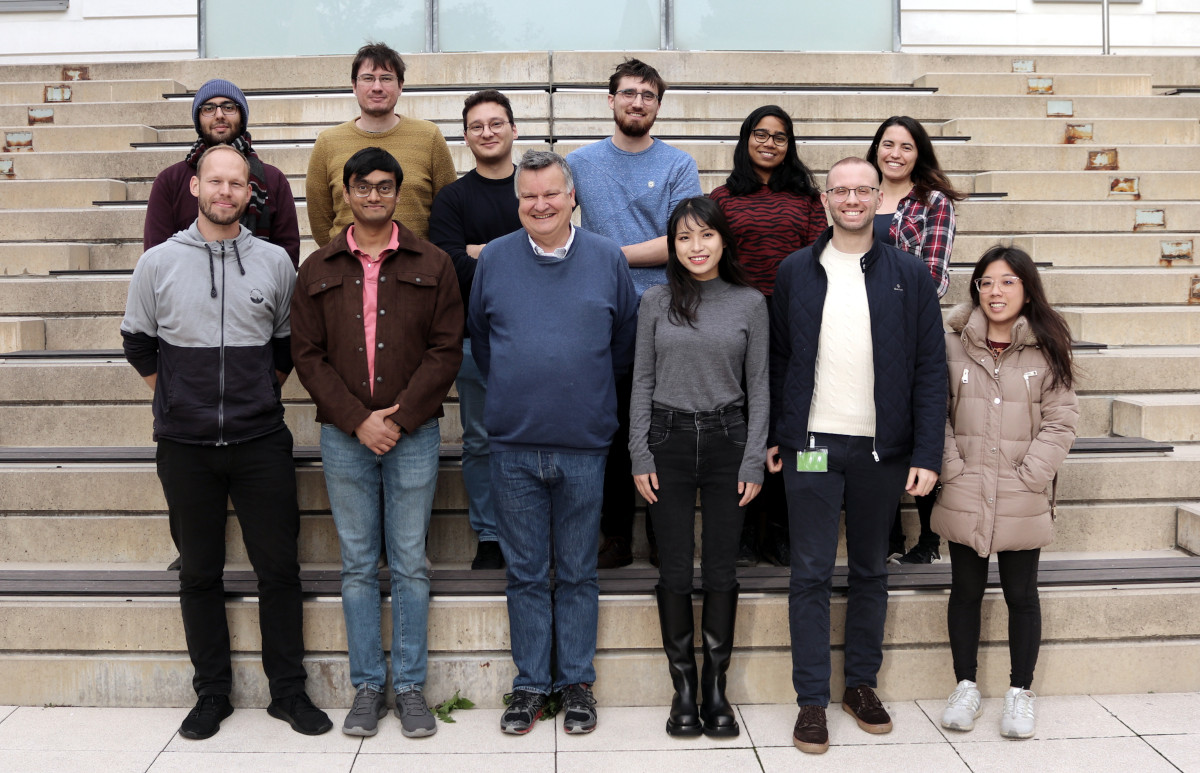
Dr. Ngoc Nha Vi Tran is an Associate Professor of Computer Science at UiT The Arctic University of Norway. She holds a PhD from UiT and was a visiting scholar at Rutgers University, USA. Her research focuses on high-performance and energy-efficient computing, machine learning, and bioinformatics. She is a member of the NORA.startup Steering Group and leads the Arctic Green Computing Group. Education: PhD in Computer Science (UiT), M.Sc. in Software Engineering via Erasmus Mundus (Blekinge Institute of Technology, Sweden & Technical University of Kaiserslautern, Germany). Research interests include energy-efficient algorithms, bioinformatics tools (e.g., vCOMBAT), and applications of machine learning in healthcare and robotics. She teaches courses such as INF-2200 Computer Architecture, INF-2900 Software Engineering, and INF-2202 Concurrent Programming. Her work spans computational models for antibiotic target-binding, runtime energy optimization (REOH framework), and power models for embedded systems (RTHpower/ICE). She contributed to the EXCESS project on energy-efficient computing systems. Labs/Teams: Arctic Green Computing Group, EXCESS consortium.
Hans Ekkehard Plesser is a Professor at the Department of Data Science, Norwegian University of Life Sciences (NMBU). His work focuses on computational neuroscience, large-scale neural network simulations, and advancing reproducibility in computational research. He is a key contributor to the NEST simulator, a widely used open-source tool for modeling spiking neural networks. His research spans theoretical and applied aspects of neuroscience, including neuron-astrocyte interactions, connectivity patterns in neural networks, and high-performance computing strategies for brain-scale simulations. He emphasizes reproducible computational practices through initiatives like the ReScience project, promoting transparency and validation in scientific software. His publications highlight advancements in simulation methodologies, algorithm optimization, and the integration of supercomputing resources for neuroscience. He has contributed to foundational work on spiking neuron dynamics, firing-rate models, and the theoretical underpinnings of neural network behavior.
Prof. Christine Grimm is a Professor at the Institute of Innovation and Technology Management (IIT) within the Lucerne School of Engineering and Architecture at HSLU. She specializes in circular economy and sustainability strategies, focusing on systemic implications of circularity, business model transformation, and innovation management. Her interdisciplinary background includes a Master’s in Management and a PhD in Science, Technology and Innovation Studies from the University of Edinburgh, complemented by advanced training in System Dynamics at MIT and a CAS in Teaching for Higher Education. Education: PhD in Science, Technology and Innovation Studies, University of Edinburgh Master’s in Management CAS in Teaching for Higher Education, University of Applied Sciences and Arts Lucerne Courses at MIT (System Dynamics & Circular Economy), University of Edinburgh (Carbon Capture and Storage) Her research bridges academic theory and practical implementation through projects like Carbon Capture, Utilization and Storage , DISCO - Developing Innovative Sustainable Cooperation Opportunities , and sustainability strategies for Lufthansa/SWISS. She has collaborated with SAP Research, Climate-KIC, and consulting firms, holding SAP-certified Design Thinking Coach credentials. Key Projects: ReRe: Circular sourcing of metals ITC Visualisierung der Energiewende in LuzernSüd Living Business Cases initiative Teaching and Research Focus: Sustainability, Innovation, Design Thinking, System Thinking, Corporate Ethics. She emphasizes interdisciplinary approaches to address sustainability challenges through systemic analysis and stakeholder collaboration. Labs/Teams: Active in the IIT lab environment, leading cross-disciplinary teams in applied research for industry partners. Her work integrates academic insights with real-world business transformation through projects like the Kreislaufstrategie für die Lufthansa Gruppe/SWISS .
Jeannette M. Wing is a prominent academic and researcher in computer science. She holds the positions of Executive Vice President for Research, Avanessians Director of the Data Science Institute, and Professor of Computer Science at Columbia University. Additionally, she is a Consulting Professor of Computer Science at Carnegie Mellon University. Her research focuses on trustworthy AI, privacy, security, and foundational aspects of computing. She has held leadership roles, including Department Head of CMU's Computer Science Department and Assistant Director of the NSF's CISE Directorate. Wing's education includes a Ph.D. (1983), S.M. (1979), and S.B. (1979) in Computer Science from MIT. She has authored over 150 publications, including influential works on computational thinking and trustworthy systems. Her leadership in initiatives like the Data Science Institute emphasizes interdisciplinary collaboration and societal impact. Awards include the PROSE Award for her book Data Science in Context . Her service spans editorial boards (e.g., Communications of the ACM ), advisory roles (e.g., DARPA ISAT), and governance (e.g., National Academies). Wing's vision bridges technical innovation with ethical and societal considerations, shaping future directions in computing and data science.
Tom Henzinger is a Professor at the Institute of Science and Technology Austria (ISTA), leading the Tom Henzinger Group. His research focuses on formal methods to enhance software quality, addressing challenges in concurrent systems, real-time and embedded systems, quantum computing, neural networks, and biochemical reaction networks. He has advised numerous PhD students and postdoctoral researchers, contributing to advancements in these fields. His work emphasizes mathematical rigor in software analysis and verification. Current projects include VAMOS (Middleware for best-effort third-party monitoring) and SPyCoDe (Semantic and Cryptographic Foundations of Security and Privacy by Compositional Design). Past projects involved model checking and runtime verification techniques. Research interests span concurrent software synthesis, quantitative modeling of reactive systems, predictability of real-time systems, and formal methods applied to quantum computation and neural networks. He is also engaged in exploring hardware-optimal solutions for quantum algorithms. Administrative Assistant Ksenja Harpprecht supports the group. Courses taught include 'Formalisms Every Computer Scientist Should Know,' focusing on logics, automata, and semantics. The group hosts regular seminars, such as the Tuesday group seminar and the Wednesday joint formal methods seminar with TU Wien's FORSYTE group.
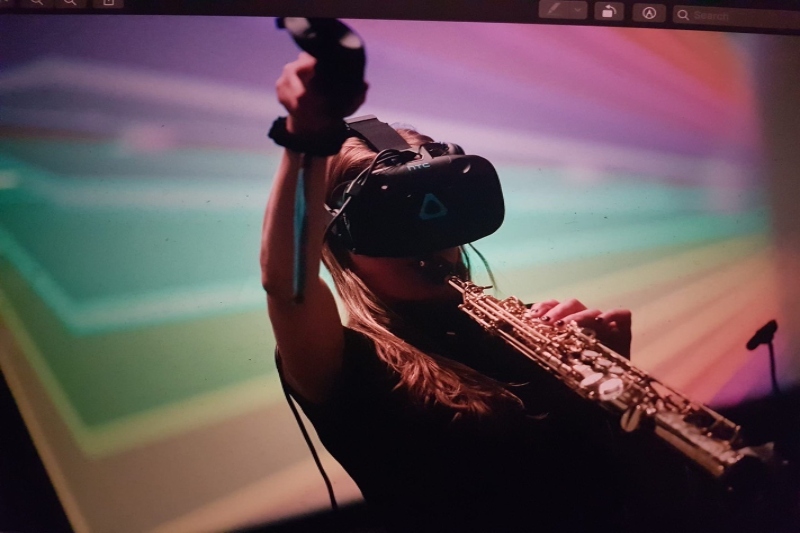
Professor Franziska Schroeder is a prominent academic and saxophonist at Queen's University Belfast's School of Arts, English and Languages. She leads the 'Performance without Barriers' research group, focusing on inclusive music technologies for disabled communities. Her work bridges critical theory, digital performance, and free improvisation practices. Schroeder holds a PhD from the University of Edinburgh and has authored influential books like Soundweaving . She serves on prestigious panels including the UK AHRC and EU EACEA. Affiliations: Sonic Arts Research Centre (SARC), AHSS Faculty Expertise: Inclusive music tech, VR design, disability inclusion Awards: Vice Chancellor’s Research Innovation Prize (2020), HEA Fellowship Her research emphasizes participatory design with disabled communities, resulting in projects like the AHRC-funded 'Bridging the Gap' initiative. Notable outputs include VR instruments for accessibility and ethnographic studies in Brazil/Portugal. Schroeder has performed globally with figures like Evan Parker and Stelarc, blending artistic practice with academic inquiry. Recent work explores AI in creative industries and VR's therapeutic applications. She supervises PhDs in music technology and improvisation, fostering interdisciplinary collaborations. Her teaching spans 145 performance students and community partnerships.
Professor Anna Krylov is a leading theoretical chemist at the University of Southern California’s Department of Chemistry. Her research focuses on computational spectroscopy, quantum chemistry, and molecular dynamics simulations, with particular expertise in excited-state dynamics, X-ray spectroscopy, and coupled-cluster methods. She has made significant contributions to understanding molecular electronic structure, including studies on electron-attached states, pressure effects on radicals, and photocatalytic systems. Her work bridges computational theory with experimental validation, as seen in collaborations analyzing pyrazine, benzene, and ozone spectra. Recognized with USC Dornsife’s 2021 Communicator of the Year Award, she advocates for scientific integrity and merit-based research, addressing societal challenges like politicization of science funding. Krylov’s research also explores quantum computing applications for molecular simulations and contributes to software development tools like libwfa and ezSpectra. Her interdisciplinary approach spans from fundamental chemistry to biomedical imaging and materials science.
Dr. Jonathan Lazar is a Professor in the College of Information Studies (iSchool) at the University of Maryland, where he serves as Executive Director of the Maryland Initiative for Digital Accessibility (MIDA) and core faculty in the Human-Computer Interaction Lab (HCIL). He previously held a professorship at Towson University, where he founded the Universal Usability Lab and directed the information systems program. His work bridges human-computer interaction (HCI), disability rights, and legal policy to advance digital accessibility for marginalized populations, particularly blind users, individuals with cognitive impairments, and people with Down syndrome. Education: LL.M. (Disability Rights Law, University of Pennsylvania), Ph.D. (Information Systems, UMBC), M.S. (Information Systems, UMBC), B.B.A. (Management Information Systems, Loyola University Maryland). Research Focus: Dr. Lazar's work emphasizes ICT accessibility in developing countries, non-visual modalities for blind users, ballot accessibility for voters with disabilities, and legal frameworks to enforce accessibility standards. He has authored/co-authored 17 books and over 200 peer-reviewed articles, with notable contributions on accessible data visualization, automated accessibility testing, and the intersection of law and technology. Awards: Includes the ACM SIGACCESS Outstanding Contribution Award (2020), ACM SIGCHI Social Impact Award (2016), and multiple University System of Maryland Board of Regents Awards. His research has influenced U.S. federal regulations, including airline website accessibility mandates following his work on discriminatory pricing for blind travelers. Professional Service: Serves on the executive board of the Friends of the Maryland Library for the Blind, co-chairs the Cambridge Workshop on Universal Access and Assistive Technology (CWUAAT), and advises government agencies on accessibility policy. He advocates for inclusive design in public libraries, voting systems, and educational technologies. Labs & Projects: Leads the Trace R&D Center's legacy work on accessibility, co-designs health IT tools with individuals with Down syndrome, and develops tools like FormA11y for PDF accessibility remediation. His research emphasizes translating academic findings into actionable policies and practices.
Maura R. Grossman is a Research Professor at the University of Waterloo, specializing in High-Recall Information Retrieval, AI ethics, and legal technology. Her work focuses on ensuring comprehensive information retrieval in high-stakes contexts like electronic discovery in law, healthcare data curation, and medical evidence synthesis. She explores the intersection of artificial intelligence and legal systems, particularly addressing challenges posed by AI-generated evidence and deepfakes in judicial processes. Education: J.D. (Georgetown University Law Center, 1999), Ph.D. (Adelphi University, 1984), M.A. (Adelphi University, 1982), A.B. (Brown University, 1980). Research interests include AI accountability in courts, responsible data science practices, and improving electronic discovery methodologies. Recent work analyzes AI’s role in legal proceedings, ethical AI frameworks, and healthcare data governance. Her publications emphasize validating technology-assisted review (TAR) systems and evaluating generative AI impacts on marginalized communities. Her articles highlight trends in AI’s legal implications, healthcare data sharing protocols, and the need for transparent algorithmic systems in justice contexts. She contributes to TREC tracks, advancing high-recall retrieval techniques for legal and medical document analysis. Notable projects include developing frameworks for unbiased health data sharing and analyzing AI’s effects on marginalized writers. Her work underscores interdisciplinary collaboration between law, computer science, and healthcare to address emerging technological challenges.
Blerta Abazi is an Associate Professor at the South East European University (SEEU), Faculty of Business and Economics, where she has been employed since 2008. She holds a PhD in Economic Sciences (2017) from SEEU, an MSc in Information Systems (2007) from Indiana University, and a BA in Business Administration (2005) from SEEU. Her research focuses on Information Systems in Higher Education , including ERP implementation challenges, digital transformation, and AI in education. She has also investigated the impact of public spending on North Macedonia’s GDP and the efficacy of managerial skills in SMEs. Research Highlights: Dr. Abazi has authored over 50 publications, including studies on ERP systems in universities, the role of AI in educational outcomes, and the digitalization of libraries. She co-authored a 2025 Springer publication tracing the evolution of enterprise systems and led a 2024 analysis of public sentiment toward digital transformation. Her work often bridges technology adoption and institutional effectiveness. Professional Roles: As Program Coordinator for the ISM Dual Degree Program (2009–2013), she managed student admissions and academic partnerships with the University of London. Her teaching spans economics, information systems management, and e-commerce. She has held roles as a Systems Analyst at Indiana University and Advisor to the Macedonian Ministry of Economy. Languages: Albanian (native), Macedonian (C2), English (C2), Turkish (B1), Spanish (A2).
Stephan Schlögl is a Full Professor at MCI - The Entrepreneurial School in Austria, leading research and teaching in Human-Computer Interaction (HCI), Artificial Intelligence (AI), and Information Systems. He holds editorial roles at journals like the Springer Discover Artificial Intelligence Journal and MDPI Multimodal Technologies and Interaction Journal. His work spans over two decades, with key roles including Postdoctoral Research Fellow at Télécom ParisTech (2012–2013) and PhD Researcher at Trinity College Dublin (2008–2012). Schlögl’s research focuses on HCI, AI-driven conversational systems, and assistive technologies for aging populations. Education includes a PhD in Computer Science from Trinity College Dublin, an MSc in Human-Computer Interaction from University College London, and a Mag.(FH) in Applied Informatics & Management from MCI. His teaching spans Software Engineering, Business Intelligence, and Research Methods. Research interests emphasize natural language interfaces, AI ethics, and technology’s societal impact. Notable projects include the EU-funded EMPATHIC initiative (2017–2021), developing an empathic virtual coach for elderly care, and the CRYSTAL project (2024–present) on conversational systems for emotional support. Schlögl has supervised numerous theses on AI applications, chatbots, and UX design. He co-organized major conferences like CUI (Conversational User Interfaces) and received awards for best papers in AI-HCI and CHIRA. His work bridges academia and industry, addressing challenges in AI adoption, digital well-being, and ethical technology design.
Marco Scialdone is a Lecturer at the European University of Rome, specializing in Information Technology Law and Legal Categories related to Technology. He holds a PhD from the same university (2016) and Master’s degrees from La Sapienza University of Rome (2005). A Fellow of the IAIC – Italian Academy of the Internet Code, he focuses on AI ethics, digital rights, and consumer protection law. His research bridges legal frameworks with emerging technologies like artificial intelligence and robotics. Education: PhD in Legal Categories and Technology (2016), European University of Rome Master’s in Computer Law (2005), La Sapienza University of Rome LL.B. in Law (Cum Laude, 110/110), LUISS Guido Carli University Research Interests: His work explores the intersection of law and technology, including AI governance, digital copyright, consumer rights in the digital age, and the legal implications of robotics. He emphasizes ethical AI development, regulatory challenges in digital markets, and public administration digitization. Recent studies analyze algorithmic bias in judicial systems and the legal protection of user-generated content. Publications & Expertise: Authored over 20 publications, including monographs like Living with Artificial Intelligence (2021) and The Legal Protection of User-Generated Content (2018). His articles address topics such as non-human creativity rights, predictive justice models, and cross-border copyright conflicts. He has served as an expert in AI policy (Italian Government’s High-Level Group on AI, 2018) and on the Permanent Advisory Committee for Copyright (2019). Professional Roles: Head of Litigation & Academic Outreach at Euroconsumers (since 2021) Former lecturer at La Sapienza University (2015–2018) and University of Perugia (2007–2012)
Dr. Jossy Mathew is a Senior Lecturer in Human Resource Management (HRM) and Organizational Behaviour at Swansea University's School of Management. He holds a PhD from Cardiff University and has extensive experience in academia, including roles at Middlesex University and Cardiff Business School. His research focuses on HRM tensions, organizational culture, and expatriation in emerging economies. He has secured grants from ESRC and ICSSR and collaborates with leading academics globally. Dr. Mathew teaches modules like International Human Resource Management and People Policies in Practice, emphasizing ethical HR practices and organizational agility. Education: PhD from Cardiff University Grants: ESRC, ICSSR, and intra-university funding Consultancy: Performance management, salary policy, and management development programs His research highlights include studies on project-based organizations in Bangalore, expatriate relationships in UK healthcare, and organizational culture's impact on effectiveness. He is actively developing new grant applications and supervising postgraduate research in HRM and performance management.
Dr. Ameer Basit is a Senior Lecturer in Management and Marketing at the University of Dundee’s School of Business, serving as Head of the Management and Marketing Team. He holds a PhD in Management from the National University of Malaysia (UKM) and brings over two decades of academic and industry experience. Prior to this role, he held leadership positions such as Dean, Head, and Programme Director at Pakistani universities. Education: PhD in Management, National University of Malaysia (2014) MBA (Details unspecified) Bachelor’s degree in Software Engineering (Implied by career background) Research Focus: Dr. Basit’s work centers on workforce engagement dynamics, integrating insights from computer science, social psychology, and organizational behavior. Key areas include talent acquisition, retention strategies, and the impact of workplace loneliness on well-being. His interdisciplinary approach leverages statistical modeling and data analytics to inform workforce management practices. Teaching: He teaches at all academic levels, including modules like Managing Teams in a Multicultural World , Strategic Management & Organisational Analysis , and Leadership and Decision Making . Professional Affiliations: Chartered Management Institute Membership (2024) Active in Scopus-indexed research with an h-index of 21 and 200+ citations Labs/Teams: Leads the Management and Marketing Team at Dundee, fostering collaborative research in organizational dynamics and workforce sciences.
Cesare Pautasso is a Full Professor at the Software Institute within the Faculty of Informatics at the Università della Svizzera italiana (USI) in Lugano, Switzerland. His research focuses on software composition techniques, Web 2.0 mashups, cloud computing, business process management, and RESTful API design. He has led projects like JOpera, a service composition tool, and contributed to frameworks such as Liquid Software for adaptive distributed systems. Education: PhD in Computer Science from ETH Zurich (2004) and a Computer Science Engineering Degree (cum laude) from Politecnico di Milano (2000). Research Interests include model-driven engineering, service-oriented architectures, and API analytics. He has authored over 200 publications and serves on numerous program committees, including IEEE and ACM. His work has been funded by grants from Swiss National Science Foundation (SNSF), EU projects like S-CUBE, and industry collaborations. Teaching and Training: Focuses on Web Development, Enterprise Architecture, and emerging technologies. Active in conferences as general chair of ECOWS 2011 and ICWE 2016. Labs/Teams: Leads research groups exploring API design, blockchain applications, and adaptive systems. Collaborates with institutions like HPI Potsdam and ETH Zurich on projects like FC4MC and API-ACE.