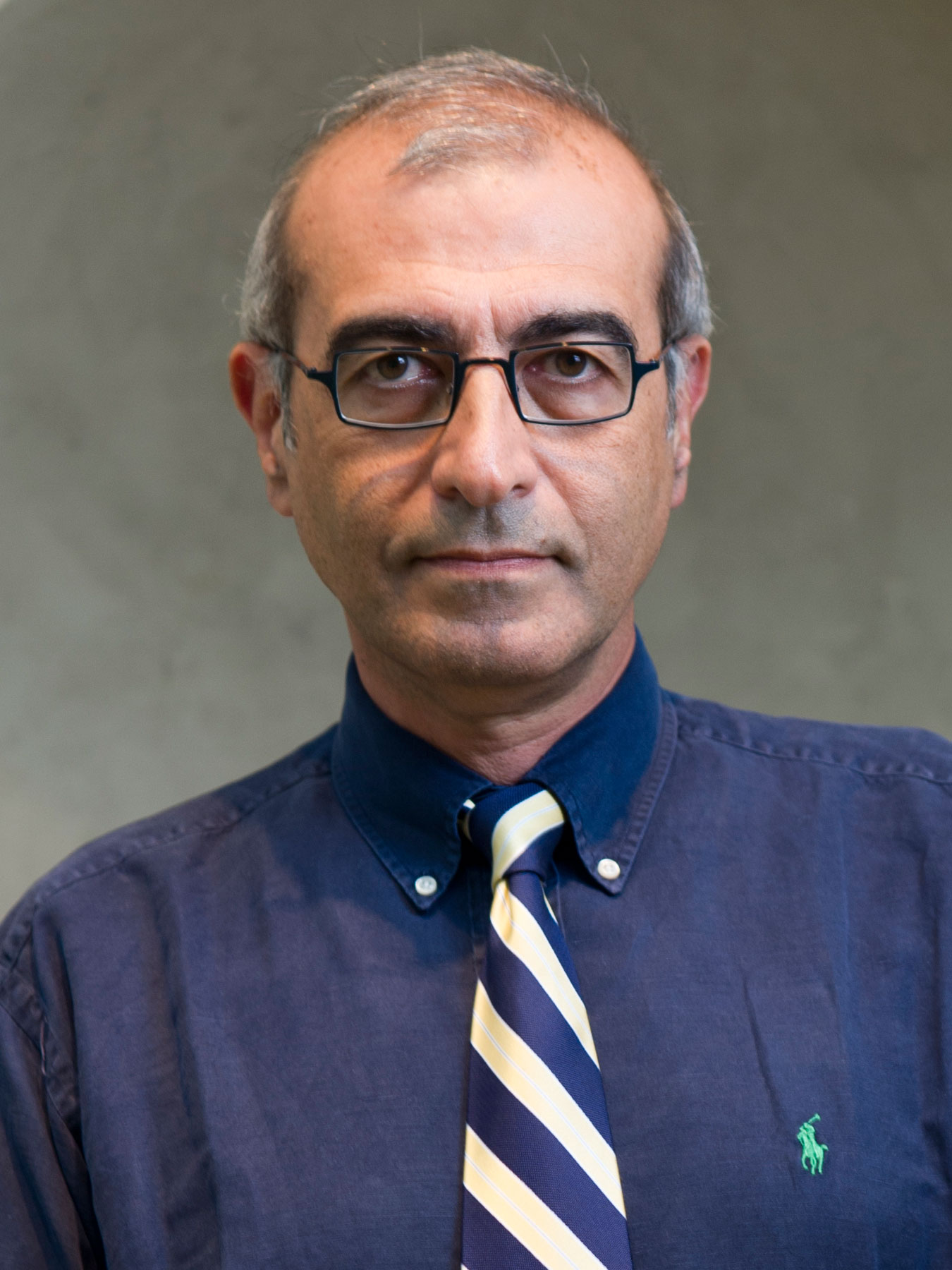
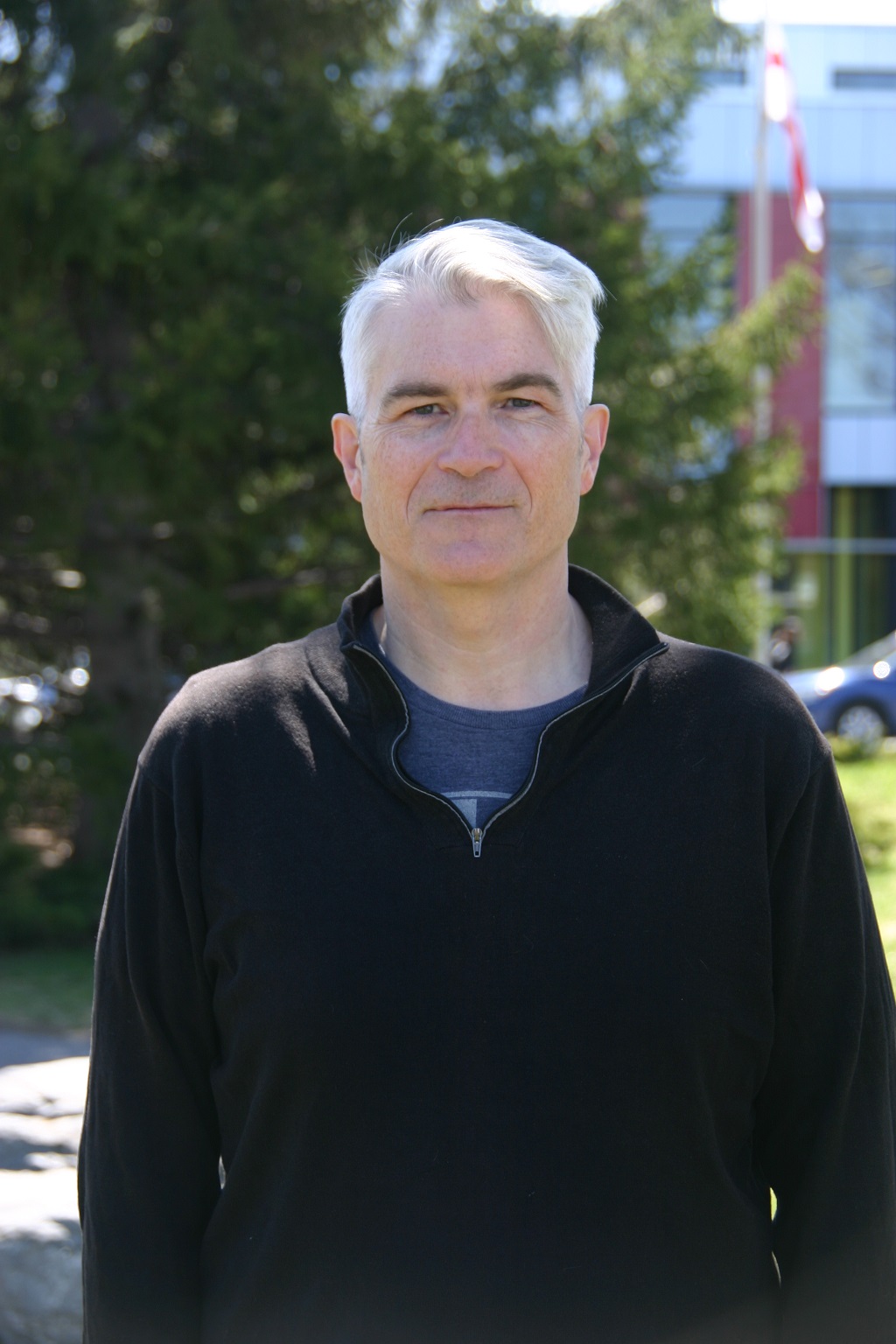
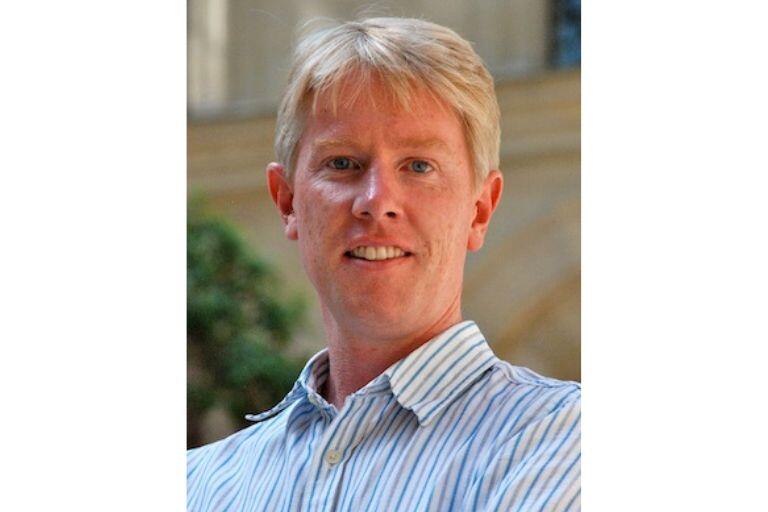
Nathan van de Wouw is a Full Professor at the Mechanical Engineering Department of Eindhoven University of Technology (TU/e), affiliated with ICMS, EAISI Mobility, EAISI High Tech Systems, EAISI Foundational, and EIRES. He also holds an adjunct Full Professor position at the University of Minnesota and a part-time Full Professorship at Delft University of Technology. His research focuses on dynamics and control of mechanical systems, including mechatronics, robotics, smart manufacturing, energy systems, and networked control. He has supervised over 150 students and led numerous projects funded by industry partners like ASML, Philips, and Shell. Education: M.Sc. (with Honors) in Mechanical Engineering, TU/e (1994) Ph.D. in Mechanical Engineering, TU/e (1999) Research Interests: Nonlinear systems and control Model reduction and complexity analysis Data-driven and networked control strategies Applications in high-tech systems, autonomous vehicles, and energy systems Awards: IEEE Control Systems Technology Award (2015) for variable-gain control in motion systems Grants & Projects: Lead projects on mechatronic design, lithography systems, and thermodynamic optimization Collaborations with TNO, ASML, and industrial partners Labs & Teams: Member of TU/e’s Dynamics and Control group Affiliated with EAISI (Eindhoven AI Systems Institute)
Taskin Padir is a Professor in the Department of Electrical and Computer Engineering at Northeastern University and concurrently serves as an Amazon Scholar. He holds a PhD and MS from Purdue University and a BS from Middle East Technical University. His research focuses on experiential robotics, human-robot teaming, and embodied AI, with leadership roles in the Robotics and Intelligent Vehicles Research Laboratory (RIVeR Lab) and the Institute for Experiential Robotics. Padir has led projects for DARPA, NASA, and industry partners, advancing autonomous systems for extreme environments and human-robot collaboration. Education: PhD, Electrical and Computer Engineering, Purdue University (2004) MS, Electrical and Computer Engineering, Purdue University (1997) BS, Electrical and Electronic Engineering, Middle East Technical University (1993) Research Interests: Shared autonomy and human-in-the-loop robotics Embodied artificial intelligence Human-robot teaming in extreme environments (e.g., space, disaster zones) Collaborative robotics for industrial applications His work bridges robotics, AI, and real-world challenges, with recent projects addressing seafood processing automation, robotic navigation in unstructured terrains, and spectroscopy-based environmental monitoring. Awards: Recipient of the 2024 Faculty Research Team Award, 2023 Impact Award, and 2022 Amazon Scholar distinction. His research has been funded by NSF, DARPA, NASA, and industry collaborators like Amazon Robotics and Intel. Labs: Director of the RIVeR Lab and Institute for Experiential Robotics, fostering interdisciplinary research in autonomous systems and intelligent vehicles. Current projects include CRISP (Co-worker Robots for Seafood Processing) and PROSPECT (robotic spectroscopy tools).
Pengfei Wang is an Assistant Professor in the Department of Civil & Environmental Engineering at Old Dominion University (ODU). He holds a Ph.D. in Geotechnical Engineering and an M.S. in Statistics from UCLA, alongside a B.S. in Transportation Engineering from Tongji University. Prior to ODU, he conducted postdoctoral research at UCLA. His expertise focuses on Geotechnical Engineering , Engineering Seismology , and Applied Statistics , with emphasis on regional geo-hazard modeling, multi-hazards risk assessment, and statistical learning applications. Key research interests include seismic site response analysis, liquefaction susceptibility, and probabilistic risk frameworks for infrastructure resilience. Dr. Wang’s work integrates geospatial analysis and statistical methodologies to address challenges in earthquake engineering. He has developed frameworks for regional landslide and liquefaction risk assessments, particularly in vulnerable regions like California’s Sacramento-San Joaquin Delta. His contributions include advancing HVSR (Horizontal-to-Vertical Spectral Ratio) methodologies and ergodic site response modeling. He maintains active collaborations with institutions globally and contributes to open-source databases for seismic data, promoting transparency and reproducibility in geotechnical research. His educational background in transportation engineering enriches interdisciplinary approaches to civil infrastructure resilience.
Professor Lei Zhou is a faculty member in the Department of Mechanical Engineering at the University of Wisconsin-Madison, with an affiliate appointment in Electrical & Computer Engineering. His research focuses on Precision Mechatronics, integrating precision mechanical design, electromagnetics, and control engineering to address challenges in electric machines, motion control, and precision systems. He holds a PhD from MIT (2019), an MS from MIT (2014), and a BE from Tsinghua University (2012). Research interests include: High-performance motion systems and electric motor design Control solutions for precision positioning and robotic actuation Magnetic levitation technologies for manufacturing and medical applications Recent work emphasizes magnetic levitation systems (e.g., LevCube nanopositioning stage) and over-actuated precision stages that break traditional performance trade-offs. His publications span 2020-2025, reflecting advancements in motor design, control algorithms, and mechatronics integration. Notable achievements include the 2023 ASPE Early Career Award and Meta Research Award. Teaching includes courses on mechatronics (ME 376), automatic controls (ME 577/ECE 577), and advanced research supervision (ECE 790/ME 890). He leads the FlexLab and LevLab, focusing on portable mechatronics education and precision motion systems. Current research explores lightweight stages for semiconductor manufacturing and magnetic catheter systems for medical treatments.
Daniel M. Roy is a Professor at the University of Toronto with cross-appointments in the Departments of Computer Science and Electrical and Computer Engineering. He serves as Associate Chair, Statistics, and is a Research Director at the Vector Institute and a CIFAR Canada AI Chair. His research focuses on foundational principles of prediction, inference, and decision-making under uncertainty, spanning machine learning, statistics, mathematical logic, applied probability, and computer science. He has contributed to learning theory, statistical network analysis, probabilistic programming, and Bayesian nonparametric statistics. Education: Ph.D. in Computer Science from MIT (2011), advised by Leslie Kaelbling. Postdoctoral fellowships at the University of Cambridge (Newton International Fellow and Research Fellow). His research explores information theories of learning , online learning , and nonstandard foundations for decision theory . Recent work includes best paper awards at ICML 2024 and advancements in probabilistic programming systems like Church. His publications address problems in generalization bounds, causal bandits, neural network theory, and exchangeable random structures. Scientific Awards include the MIT/EECS George M. Sprowls Doctoral Dissertation Award and the ICML 2024 Best Paper Award. He advises students and postdocs across statistics, computer science, and machine learning, with alumni now holding positions at institutions like Princeton, Imperial College London, and the University of Chicago.
Ryan Giordano is an Assistant Professor in the Department of Statistics at the University of California, Berkeley. He holds a PhD in Statistics from UC Berkeley (2019), advised by Michael Jordan, Tamara Broderick, and Jon McAuliffe, an MSc in Econometrics and Mathematical Economics from the London School of Economics (2009), and undergraduate degrees in Mathematics and Theoretical/Applied Mechanics from the University of Illinois at Urbana-Champaign. Prior to academia, he worked as an engineer at Google and HP and served as a Peace Corps volunteer in Kazakhstan. His research focuses on variational methods , Bayesian robustness , sensitivity analysis , and statistical computing , with applications in machine learning, environmental science, and astronomy. He is particularly known for developing scalable Bayesian inference techniques and quantifying the robustness of statistical models to data perturbations. Giordano’s recent work includes studies on Laplace approximation accuracy, MCMC sensitivity to data removal, and robustness metrics for differential expression analysis. He has contributed to open-source statistical software and collaborates with Tamara Broderick’s group at MIT on postdoctoral work (pre-2019 position). His academic trajectory combines theoretical innovation with practical applications, emphasizing reproducibility and computational efficiency in statistical methodology.
Ali Abur is a University Distinguished Professor in the Department of Electrical and Computer Engineering at Northeastern University, and serves as the Northeastern Director of CURENT (a NSF/DOE Engineering Research Center). He holds a B.S. from Orta Dogu Teknik Universitesi (Turkey, 1979), and M.S. and Ph.D. from The Ohio State University (1981, 1985). Before joining Northeastern in 2005, he was a Professor at Texas A&M University. His research focuses on power system monitoring, state estimation, fault location, and electromagnetic transients modeling. He has led over 50 industry-funded research projects and authored/co-authored a seminal textbook on power system state estimation. His editorial roles include Associate Editor for IEEE Transactions on Power Systems (1999–2011) and guest editor for special issues. He organized the 2011 North American Power Symposium in Boston. Awards: 2025 IEEE PES Charles Concordia Power System Engineering Award 2023 U.S. National Academy of Engineering membership 2003 IEEE Fellow Leadership: Department Chair of Electrical and Computer Engineering at Northeastern (2005–2013) Abur’s work has advanced power grid reliability through innovations in state estimation algorithms, measurement validation, and fault detection systems. His lab collaborates closely with industry partners via CURENT, focusing on modernizing electrical grids.
Huazhen Fang is an Associate Professor in the Department of Mechanical Engineering at the University of Kansas School of Engineering, where he joined in 2014. He leads the Information & Smart Systems Laboratory (ISSL) and holds a courtesy appointment in the Department of Electrical Engineering & Computer Science. His research focuses on enabling intelligence for complex systems through information-driven approaches. Dr. Fang received his Ph.D. in Mechanical Engineering from the University of California, San Diego in 2014, following an M.Sc. from the University of Saskatchewan and a B.Sc. in Computer Science & Technology from Northwestern Polytechnic University in China. He was a Visiting Faculty Fellow at Mitsubishi Electric Research Laboratories in 2022. His research interests span Systems and Control, Advanced Battery Management, Energy Storage Systems, and Robotics, with particular focus on system modeling, estimation, control design, machine learning and numerical optimization. Dr. Fang's work has significant applications in energy management, cooperative robotics, and environmental observing systems. His research has been supported by the National Science Foundation, Department of Energy, Army Research Laboratory, and Mitsubishi Electric Research Laboratories. His extensive publication record shows a clear trend toward increasingly sophisticated integration of physics-based modeling with machine learning approaches, particularly in battery management systems and autonomous vehicle control. Recent work demonstrates a growing emphasis on Bayesian inference methods, distributed control architectures, and safety-critical applications of intelligent control systems. Faculty Early Career Award from National Science Foundation (2019) University Scholarly Achievement Award (2024) Miller Professional Development Award (2022) Miller Faculty Scholar Award (2018, 2019, 2023) Wesley G. Cramer Outstanding Mechanical Engineering Faculty Award (2016) Big XII Faculty Fellowship (2015) IEEE Transactions on Transportation Electrification Prize Paper Award (2024) Dr. Fang has successfully mentored numerous graduate students through the Information & Smart Systems Laboratory, with many receiving awards for their research. His research has attracted significant funding from prestigious organizations including the National Science Foundation, Department of Energy, Army Research Laboratory, and Mitsubishi Electric Research Laboratories. He currently serves as an Associate Editor for multiple prestigious journals including Information Sciences, IEEE Transactions on Industrial Electronics, and IEEE Control Systems Letters. The Information & Smart Systems Laboratory (ISSL) under Dr. Fang's leadership has established itself as a center for cutting-edge research in information-driven smart systems. The lab focuses on pushing the frontiers of information extraction, analysis and exploitation for dynamic systems to deal with system complexity and enable system intelligence. The lab actively collaborates with industry partners and local communities, emphasizing research that serves societal needs.
Cody Hyndman is a Full Professor and Acting Department Chair at the Department of Mathematics and Statistics, Concordia University, with a focus on Mathematical Finance, Machine Learning, and Stochastic Analysis. He has held significant administrative roles including Department Chair (2017–2023) and Acting Graduate Programs Director (2025–2025). Education: PhD, University of Waterloo (2005) MSc, University of Alberta BCom, University of Alberta His research spans Mathematical Finance , Stochastic Differential Equations , and Machine Learning , with notable contributions to arbitrage-free modeling, neural networks, and computational methods. Recent publications emphasize geometric deep learning and regularization techniques in finance. Scientific Awards: 2023: Concordia Academic Leadership Award Hyndman supervises graduate students in Mathematics and Statistics and co-founded the NSERC CREATE Program on Machine Learning in Quantitative Finance and Business Analytics (FIN-ML) , fostering industrial internships and interdisciplinary training.
Min Seong Kim is an Associate Professor in the Department of Economics at the University of Connecticut, affiliated with the College of Liberal Arts and Sciences. His research focuses on econometrics, particularly panel data analysis, bootstrap methods, and cross-sectional dependence. He earned his Ph.D. in Economics from UC San Diego in 2011. His contact information includes email: min_seong.kim@uconn.edu , and office location Oak Hall 330. Education: Ph.D., Economics, UC San Diego, 2011 Research Interests: Econometric theory and applications Bootstrap methods and robust inference Panel data models with cross-sectional dependence Time series analysis and spatial econometrics Publications highlight his contributions to econometric methodology, including robust inference techniques for panel data models, bootstrap methods, and policy analysis. Recent work addresses cross-sectional dependence in large panel models and diffusion index forecasts. No scientific awards are explicitly listed. Advising and grant details are not provided in the text. His research is supported through standard academic channels, and he maintains a professional website at http://minseongkim.weebly.com .
Jann Spiess is an Associate Professor of Operations, Information & Technology at Stanford University's Graduate School of Business and holds a courtesy appointment as Associate Professor of Economics in the School of Humanities and Sciences. He is also a Center Fellow at the Stanford Institute for Economic Policy Research and a Faculty Affiliate of the Golub Capital Social Impact Lab. PhD in Economics (Harvard University, 2018) AM in Economics (Harvard University, 2015) MPP in Public Policy (Harvard University, 2013) MASt in Mathematics (University of Cambridge, 2011) BSc in Mathematics (Technical University of Munich, 2010) Jann's research integrates machine learning with econometric methods to advance causal inference and data-driven decision-making . He explores high-dimensional and robust causal inference, synthetic control methods, and algorithmic fairness, while addressing challenges in human-AI collaboration and policy design. His publications span econometrics, behavioral economics, and data science, focusing on experimental design, robust statistical techniques, and applications of machine learning to public policy. Key themes include replicable inferences from big data, human-AI interaction, and ethical algorithmic design. Philip F. Maritz Faculty Scholar, 2021–22 David A. Wells Prize for best dissertation, Harvard Economics, 2018 Restud Tour, 2018 Jann's work bridges microeconometric methods , statistical decision theory , and mechanism design to enhance analytical frameworks for data-driven policy. He has contributed to robust inference in panel data and synthetic control methods, alongside studies on nudges for vaccination and financial aid renewals. As Faculty Affiliate at the Golub Capital Social Impact Lab, Jann collaborates on projects applying data science to social policy challenges, merging technical rigor with societal impact.
Bryan Kian Hsiang Low serves as Associate Professor in the Department of Computer Science at the National University of Singapore's School of Computing, while simultaneously holding leadership positions as Director of AI Research at AI Singapore and Deputy Director of the NUS AI Institute. His academic journey includes a B.Sc. (2001) and M.Sc. (2002) in Computer Science from NUS, followed by a Ph.D. in Electrical & Computer Engineering from Carnegie Mellon University (2009). His research spans probabilistic machine learning, multi-agent systems, and trustworthy AI, with particular focus on Bayesian optimization , federated learning , and data-efficient methodologies . The Low Lab develops frameworks for collaborative AI, automated machine learning, and AI applications in scientific domains through the Group of Learning and Optimization Working in AI (GLOW.AI), which maintains a multi-disciplinary approach bridging computer science, mathematics, and engineering disciplines. Analysis of his recent publications reveals a consistent emphasis on data valuation , privacy-preserving collaborative learning , and robust optimization techniques , with increasing integration of large language models into his research framework. His work demonstrates strong theoretical foundations coupled with practical applications in computational sustainability and robotics. Andrew P. Sage Best Transactions Paper Award (2006) NUS Overseas Graduate Scholarship (2004-2009) Faculty Teaching Excellence Award (2017-2018) IEEE RAS Distinguished Lecturer (2019) World Economic Forum Global Future Councils Fellow (2016-2018) Dr. Low actively mentors PhD students including Rachael Sim, Quoc Phong Nguyen, and Zhongxiang Dai, while leading major initiatives like the AI Phenome Platform for plant breeding optimization. His research group GLOW.AI operates at the intersection of theory and practice, with strong industry engagement through AI Singapore. Current projects focus on scalable AI systems for scientific discovery and developing frameworks for equitable collaborative machine learning with robust privacy guarantees.
David A. Stephens is a Professor in the Department of Mathematics and Statistics at McGill University, Montreal. He served as Chair of the Department from 2015 to 2019 and as Vice-Dean in the Faculty of Science from 2019 to 2025. His research focuses on Bayesian inference, biostatistics, causal inference, bioinformatics, and statistical genetics. He holds prestigious fellowships: International Statistical Institute (2015), American Statistical Association (2019), and Royal Society of Canada (2024). His work addresses challenges in epidemiology, HIV transmission dynamics, and clinical trial design. Key research themes include: Bayesian hierarchical modeling for infectious diseases (e.g., SARS-CoV-2, HIV) Causal inference in dynamic treatment regimes Survival analysis and censored data methods Statistical genomics and epigenetics His publications analyze public health trends, such as HIV transmission clusters in Quebec and SARS-CoV-2 seroprevalence in Canada. Methodologically, he develops novel techniques for time-series analysis, recruitment forecasting in clinical trials, and computational statistics. Notable contributions include: Advancing phylogenetic cluster inference in HIV studies Optimizing warfarin dosing strategies via SMART trials Modeling gut microbiota impacts on growth faltering in infants His academic leadership includes roles at McGill and prior experience at Imperial College London. His work bridges statistical theory and practical healthcare applications, emphasizing interdisciplinary collaboration.
Richard Allen is a Professor and the Class of 1954 Endowed Chair at the University of California, Berkeley, serving as Director of the Berkeley Seismological Laboratory. His work focuses on seismology, earthquake early warning systems, and seismic hazard mitigation. Research interests include earthquake rupture mechanisms, regional seismic structure and dynamics, mantle upwelling processes, fault interaction analysis, stress modeling in seismology, and machine learning applications in seismic data analysis. He pioneered smartphone-based seismic networks like MyShake and advanced technologies such as distributed acoustic sensing (DAS) for offshore monitoring. His recent publications highlight trends in earthquake early warning algorithms (EPIC, bEPIC), real-time ground-motion modeling, ShakeAlert system performance, and integration of multimodal data (e.g., social media, LLMs, DAS) for hazard mitigation. Collaborative efforts include global smartphone networks and cloud computing for seismic datasets. Allen leads the Berkeley Seismological Laboratory, driving innovations in seismic monitoring, structural health assessment, and public alerting systems to enhance disaster resilience.
Chris Russell is the Dieter Schwarz Associate Professor of AI, Government & Policy at the Oxford Internet Institute (OII), University of Oxford. His work bridges computer vision, machine learning, and ethical AI governance. He leads the Governance of Emerging Technologies programme, focusing on algorithmic accountability, transparency, and fairness. Prior roles include Group Leader at the Alan Turing Institute and Reader at the University of Surrey. Russell’s research has been recognized with awards, including the ICRA Best Paper Prize for autonomous driving mapping work. Research interests span algorithmic fairness, explainable AI, and responsible AI design. Notable projects include collaborations with the British Antarctic Foundation on climate modeling and causal approaches to algorithmic fairness. His work with Sandra Wachter and Brent Mittelstadt informs GDPR guidelines and tools like TensorFlow’s 'What-if Tool.' Current projects include advancing medical machine learning for inflammatory arthritis prediction and governance frameworks for emerging tech. Russell advises PhD students on socio-technical AI evaluations and teaches courses in machine learning and AI ethics. Recent publications address deepfake proliferation, LLM regulation, and fairness in foundational models. He co-leads initiatives like the Digital Good Network to align tech development with societal benefit.