D. Max Moerman is a Professor and Chair of the Department of Asian and Middle Eastern Cultures at Barnard College, Columbia University. He holds an A.B. from Columbia College (1986) and a Ph.D. from Stanford University (1999). His research focuses on East Asian Buddhism, particularly the visual and material culture of Japanese religions. His current book project, Geographies of the Imagination: Buddhism and the Japanese World Map , explores intersections between religious thought and cartographic representation. He serves as Co-Chair of Columbia’s Buddhist Studies Seminar and Associate Director of the Columbia Center for Buddhism and Asian Religions. Key research interests include sacred texts like the Lotus Sutra , medieval religious practices, and pilgrimage traditions. His work integrates textual analysis with material culture studies, addressing themes of defilement, sacred geography, and iconography. Teaching responsibilities include courses such as Colloquium on Major Texts: East Asia and The Lotus Sutra . He actively contributes to interdisciplinary dialogues on Japanese religious history through his academic leadership roles and publications in journals like the Japanese Journal of Religious Studies .
Noah D. Gardiner serves as Associate Professor and Director of Undergraduate Studies in the Department of Religious Studies at the University of South Carolina's College of Arts and Sciences. His academic journey includes a Ph.D. in Near Eastern Studies from the University of Michigan (2014), followed by positions as Lecturer in Islamic Studies at Michigan and a postdoctoral fellowship at Annemarie Schimmel Kolleg, Rheinische Friedrich-Wilhelms Universität Bonn. Gardiner's scholarly focus centers on Islamic thought and culture with particular emphasis on Sufism, esotericism, occult sciences, and manuscript culture in the 12th-15th century Arabic-speaking Mediterranean. His research explores the 'science of letters and names' (ʿilm al-huruf wa-al-asmaʾ), religious cosmology, and apocalypticism, examining how mystical ideas move between religious margins and centers. His work reveals significant connections between Islamic occult traditions and other esoteric systems like Jewish Kabbalah. His extensive publication record includes the monograph Ibn Khaldūn versus the Occultists at Barqūq's Court (2020), co-editing the special issue Islamicate Occultism: New Perspectives (2017), and numerous articles in leading journals. His current research focuses on the 13th-century Sufi occultist Aḥmad al-Būnī and the broader occult renaissance in 14th-15th century Cairo. Gardiner actively contributes to the scholarly community through his role as co-organizer of the international online workshop 'Islamic Occult Studies on the Rise' and administrator of the scholarly resource site islamicoccult.org, which showcases emerging scholarship in Islamic esotericism. He teaches courses spanning foundational religion studies to specialized topics including Islam, Qur'an, Hadith, Islamic Theology, Sufism, and Religion and the Fantastic.
Lucia Dolce serves as the Numata Professor of Japanese Buddhism within the Department of Religions and Philosophies at SOAS University of London, part of the School of History, Religions and Philosophies. Her academic base is room 342 in the Russell Square: College Buildings campus. Her educational background includes: Laurea MA (University of Venice) PhD (Leiden University) Professor Dolce's research centers on two interconnected projects: first, the discourse on the body in medieval Japanese Buddhist rituals and its connections to continental Tantric practices, emphasizing ritual fluidity and performative theory applications; second, contemporary Buddhism-Shinto syncretism with focus on revival of premodern practices in Kyoto shrines. She also examines Tokyo's urban pilgrimage routes like the Seven Gods of Fortune, analyzing institutional negotiations and religious marketing dynamics. Her journal articles (1992-2023) consistently explore ritual knowledge transfer in Japanese Buddhism, with recent works on scriptural repurposing and tantric exegesis highlighting material culture and practice-centered approaches. Earlier publications establish foundational studies on Nichiren Buddhism's esoteric dimensions, astrological cults, and celestial body worship, revealing enduring thematic threads across three decades of scholarship. Scientific awards: No awards listed in provided text Advising and grants: She currently supervises four PhD candidates: Rachel Williams (Japanese Secularity), Haruka Saito (Repentance Rituals), Sooyeun Yang (Korean Astrological Buddhism), and Yeonju Lee (Korean Nationalism). Previous supervisees include twelve PhD graduates such as Emanuela Sala (2022, Sannō Shintō), Ronit Wang (2022, Thai Hell Parks), and multiple 2011 completions. Dolce led the Newton Fellowship-associated project 'The Lucky Gods of Tokyo' (2014-2016), investigating spatial politics in Buddhist-Shinto pilgrimage networks.
Rachel Fell McDermott is Professor of Asian and Middle Eastern Cultures at Barnard College, Columbia University, specializing in South Asian religions, particularly the Hindu goddess traditions of Bengal in India and Bangladesh. Her work bridges religious studies, human rights, and comparative religion, with a strong focus on Kali, Durga Puja, and the literary legacy of Kazi Nazrul Islam. Education: A.B., Religious Studies, University of Pennsylvania, 1981 M.Div., Harvard Divinity School, 1984 A.M., Study of Religion, Harvard University, 1986 Ph.D., Study of Religion, Harvard University, 1993 Her research centers on the religious and cultural dynamics of Bengal, exploring themes such as goddess worship, ritual practices, religious poetry, and the intersection of religion with politics and identity. She is deeply engaged in comparative religion, examining how religious themes like suffering, sacrifice, and divine femininity manifest across traditions. Her scholarship also addresses diasporic religious experiences, digital religion, and interfaith dialogue, particularly between Hindu and Christian communities. The 15 most recent publications reflect a sustained scholarly engagement with goddess traditions, especially Kali and Durga, as well as broader themes in South Asian religion, including Tantric symbolism, festival culture, and the reception of Hindu deities in the West. Her work spans ethnographic, historical, and textual analysis, often highlighting the contested and evolving nature of religious canons. She frequently contributes to major academic anthologies and journals in religious studies, South Asian studies, and comparative theology. Scientific Awards: No specific awards listed in the provided text. As a senior professor and managing editor of major academic volumes, she has likely advised numerous graduate students and secured research funding, though specific names and grants are not mentioned. She teaches courses such as “Why Do Bad Things Happen to Good People?” that explore theodicy across religions. She is currently on leave for the 2024–2025 academic year, indicating ongoing active involvement in academic life. She is involved in significant editorial projects, including the third edition of The Sources of Indian Traditions , and is working on translations and a monograph on Kazi Nazrul Islam. Her scholarly presence includes invited lectures at institutions such as Princeton, the University of Connecticut, and the Bangla Academy in Dhaka, reflecting her international recognition in the field of South Asian religious studies.
Professor Owen Davies is a faculty member at the University of Hertfordshire , affiliated with the History Department at the School of Creative Arts . His research spans witchcraft , magic , supernatural beliefs , and folklore , with a focus on interdisciplinary approaches integrating archaeology, anthropology, and biomedical studies. Key research areas : Witchcraft, Domestic Magic, Medical History, Electrification, Public History. Recent projects : AHRC-funded 'StoryMachine', Leverhulme 'Inner Lives', Wellcome Trust 'Harnessing the Power of the Criminal Corpse', and a new AHRC 3-year study on witch bottles. Selected publications : America Bewitched (2013), The Oxford Illustrated History of Witchcraft and Magic (2017), Troubled by Faith (2023). Awards : Funded by AHRC, Wellcome Trust, and Leverhulme Trust. Collaborates with institutions like Museum of London Archaeology and University of Essex. Leads community engagement via the Heritage Hub and 'Electric Generations' exhibition.
Takashi Miura is an Associate Professor at the University of Arizona specializing in Japanese religions from the early modern to modern periods. His work explores millenarian movements, Shinto practices, and Buddhist visual culture. He holds degrees from the University of Hawai'i at Mānoa (B.A./M.A.) and Princeton University (Ph.D.). Dr. Miura's research examines religious innovations like the rise of 'yonaoshi' renewal gods and deified peasants. His 2019 monograph Agents of World Renewal analyzes apocalyptic concepts in Japanese history. Current projects include a study on early modern peasant deification and its societal impacts. He teaches courses on Buddhism and Japanese religious practices, including EAS 160A1 and JPN 220. His publications span academic journals and edited volumes, addressing topics from Meiji-era polemics to post-war new religions. His work frequently bridges textual analysis with visual and material culture studies.
Professor Jinhua Chen (PhD, McMaster University, 1997) is a leading scholar in East Asian Buddhism at the University of British Columbia’s Department of Asian Studies, Faculty of Arts. Holding a Canada Research Chair (2001-2011) and inducted into the Royal Society of Canada (2020), his work spans trans-regional Buddhist narratives, monastic institutions, relic veneration, and technological innovations in medieval Asian religions. Key Affiliations: UBC Buddhist Forum (Director), Peter Wall Institute for Advanced Studies (Resident Scholar), and editorial roles in Brill Book Series on East Asian Religions and Studies in Chinese Religions . Research Themes: Combines textual analysis with interdisciplinary methods to explore Buddhist sacred sites, doctrinal transmissions, and church-state dynamics. His projects include From the Ground Up (SSHRC Partnership Grant 2016-2023), examining East Asian religions through multi-media sources, and studies on ruixiang (propitious signs) in medieval Chinese prognostication. Scientific Awards: Royal Society of Canada Fellow, Canada Research Chair, SSHRC Insight Grants, Humboldt Research Fellowship, and Max Planck Institute funding. Publications: Over 30 book chapters and journal articles (2000-2016), including monographs on Fazang, Shingon-Tendai conflicts, and Buddhist sacred geography. Teaching: Courses on Chinese thought, Chan/Zen Buddhism, and Buddhist text interpretation, emphasizing methodological rigor and cross-cultural analysis. Projects: Directed international collaborations on Buddhist manuscripts, palace chapels, and relic cultures, with grants totaling over $4 million CAD.
Ryuichi Abe is the Reischauer Institute Professor of Japanese Religions at Harvard University, currently on leave during 2025-26. He holds a Ph.D. in Religious Studies from Columbia University and teaches graduate and undergraduate courses on East Asian religions, premodern Japanese religions, and Buddhism. Education B.A. in Economics from Keio University M.A. from School of Advanced International Affairs, Johns Hopkins University M.Phil. and Ph.D. in Religious Studies from Columbia University Professor Abe's research focuses on Japanese Buddhism and its intersections with visual culture, literature, and gender studies. He explores historical developments of esoteric Buddhist traditions and interactions between Shinto and Buddhist practices. His work spans critical analyses of Buddhist textual theory, medieval origin narratives, and the cultural impact of figures like Zen Master Ryōkan. Publications include studies on Kūkai's esoteric discourse, the Lotus Sutra's medieval interpretations, and Xuanzang's Heart Sutra in Japanese kami worship contexts. Key themes in his research include ritual consecration, medieval Buddhist environments, and the symbolic integration of Shinto elements into Buddhist frameworks. He has contributed to journals such as Japanese Journal of Religious Studies and Impressions .
Dr. Stefanie Burkhardt is a Research Associate at the Department of Religious Studies and Intercultural Theology , University of Münster, since October 2024. She previously served as a Postdoctoral Researcher and Research Coordinator at the Friedrich-Alexander University Erlangen-Nürnberg (2016–2024) and completed her doctorate in 2022 with a dissertation on Mircea Eliade's dual work in Religious Studies and Literature. Education: PhD (2022, FAU Erlangen-Nürnberg), MA in 'Ethics of Textual Cultures' (2013), BA in Religious and German Studies (2012). Research Interests span the intersection of Religion and Literature , Postcolonial Religious Studies , and the Spectral Turn in Cultural Theory . Her work critically examines Eliade's methodologies, the role of African and diasporic narratives in decolonizing the 'spectral turn', and the socio-cultural implications of border crossings in postcolonial contexts. Recent Publications include a monograph on Eliade's literary and academic duality (Brill 2024) and upcoming edited volumes on authenticity in esoteric practices (Brill 2026) and Eliade's entanglements in religious history (Brill 2025). She has contributed to debates on postcolonialism, spectral theory, and Eliade's exoticism in Indian studies. Grants and Projects include participation in the DFG Advanced Study Group 'Alternative Rationalities and Esoteric Practices in Global Perspective' (2023–2024) and leadership in projects on post-Eurocentric cultural theory.
Professor Ahmet T. Karamustafa serves as Professor and Department Chair of History at the University of Maryland, College Park, and holds affiliations with the Roshan Institute for Persian Studies and the School of Languages, Literatures, and Cultures. He also serves as Senior Advisor to PersDig@UMD. His research focuses on medieval and early modern Islamic intellectual history, Sufism, and Ottoman Turkish religious texts. Key works include Sufism: The Formative Period (2007) and God’s Unruly Friends (1994), exploring ascetic movements and mystical literature. Current projects include The Flowering of Sufism and Vernacular Islam . His academic contributions span editorial roles in major publications like Cartography in the Traditional Islamic and South Asian Societies (1992). Research expertise bridges religious studies theory, Ottoman manuscript analysis, and medieval Anatolian religious dynamics. Administrative experience includes directing Washington University's Religious Studies Program and co-chairing the American Academy of Religion’s Study of Islam Section (2008–2011). Research interests emphasize comparative religious frameworks, Sufi textual traditions, and the interplay between Islamic intellectual history and regional cultural contexts. His work critically engages Western models of religion through Islamic conceptual frameworks like 'din,' offering new methodologies for studying premodern Muslim thought.
Dr Christian Luczanits serves as the David L. Snellgrove Senior Lecturer in Tibetan and Buddhist Art at SOAS University of London, where he also acts as Department Recruitment, Admissions and Marketing Convenor. He previously held research positions at the University of Vienna, Austrian Academy of Sciences, and Lumbini International Research Institute, followed by visiting professorships at UC Berkeley , Free University Berlin, and Stanford University. Before academia, he was Senior Curator at the Rubin Museum of Art, New York. PhD in Tibetan and Buddhist Studies (University of Vienna) under the late Maurizio Taddei Specializes in early Buddhist art (1st-5th centuries) and early Tibetan Buddhist art (7th-15th centuries) Key research topics: Maitreya iconography , development of Mahāyāna and esoteric traditions, Tibetan artistic adaptation of Indian forms, and AHRC-funded monastery collections documentation in Mustang and Ladakh His recent publications analyze transcultural dynamics in Himalayan Buddhist heritage, including monastic collections, mandala symbolism, and artistic revival movements. He co-curated the Gandhara – The Buddhist Heritage of Pakistan exhibition at Bonn's Kunst- und Ausstellungshalle der Bundesrepublik Deutschland. PhD supervisees include: Udomluck Hoontrakul (Political Economy of Marginal Polities) Qianhui Lin (Bodhisattva Conceptualization in Gandhāra) Agneta Niklasson (Esoteric Buddhism in Swat-Gilgit-Kashmir sculpture) Dr Lesley S Pullen (Angkorian Divine Adornment) Kulamitra David Zukas (Rock-Cut Buddhist Monasteries)
Emma Martin is Senior Lecturer in Museology at the University of Manchester's School of Arts, Languages and Cultures, where she serves as Associate Director for Research (Impact and Knowledge Exchange). With over 25 years of professional experience including 17 years as Senior Curator for National Museums Liverpool (2003-2020), her work bridges academic research and museum practice. Her current research focuses on colonial-era Tibetan collections, contemporary museum activism, and dissident curatorial practices in exile contexts. Dr. Martin's research interests sit at the critical intersection of colonialism, Tibetan Studies, and material culture studies. She examines how colonial-era museum collections continue to shape contemporary representations of Tibet while exploring pathways for Tibetan agency in museum decision-making. Her practice-led research includes serving as curatorial advisor to the Dalai Lama Centre for Tibetan and Ancient Indian Wisdom (2024-25) and leading the development of the Tibet Museum for the Central Tibetan Administration (2017-2023). She co-convenes the international Tibetan Materiality Network, fostering cross-border collaboration on Himalayan material culture research. Her publication trends reveal a sustained focus on decolonizing museum practices through historical analysis of Tibetan material culture. Early work examined colonial collecting networks and diplomatic gift exchanges, while recent publications address contemporary issues like digital sovereignty, museum representation of diaspora communities, and dissident curatorial methodologies. Her scholarship consistently connects archival research with practical museum interventions, demonstrating how historical understanding can inform ethical contemporary practice. Fellow, Royal Asiatic Society Fellow, Higher Education Academy Dr. Martin has supervised four completed PhDs and currently mentors five doctoral students working on topics spanning South Asian, Himalayan, and Tibetan museology. Her research project "Object Lessons from Tibet and the Himalayas" involves international collaboration with institutions in Copenhagen and explores how material culture can challenge colonial narratives. Her impact work includes developing new museological approaches for representing Tibet, referenced in Wikipedia and cited by policy makers addressing cultural restitution. She leads the Tibetan Materiality Network connecting European and Asian researchers, and her current monograph "The Dissident Museum: Oppositional Curating at the Tibet Museum" (Routledge) documents innovative curatorial practices developed during the Tibet Museum project. Her external roles include curatorial advisory positions with Tibetan cultural institutions and examination duties at UCL and University of Westminster.
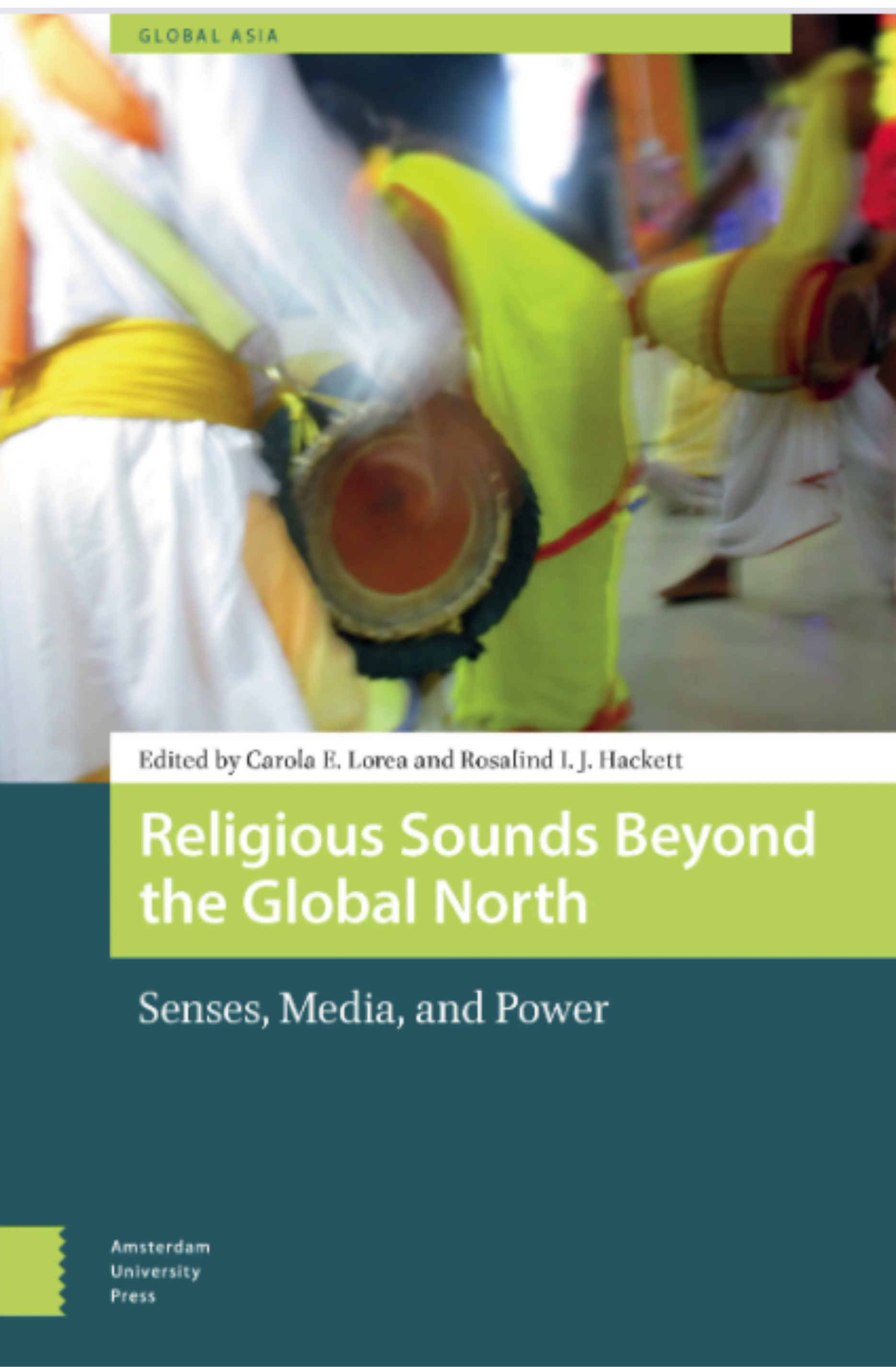
Dr. Carola Lorea is a Junior Professor at the Institute for Religious Studies, Faculty of Philosophy, University of Tübingen (since 2023) and former Senior Research Fellow at NUS's Asia Research Institute (2022-2023). Her work bridges religious studies, cultural anthropology, and digital humanities with a focus on South/Southeast Asian borderlands. PhD in South Asian Studies (2015, La Sapienza University of Rome) 2023 Habilitation Venia Legendi in religious studies and cultural anthropology Research centers on Matua traditions , Baul oral cultures , religion and pandemics , and sensory scholarship . She pioneered the CoronAsur research blog (2020) and leads the MANTRAMS project with ERC Synergy Grant (2023). Key contributions include: Digital Archive of Baul Songs (EAP1247 PI) Theoretical work on bricolage thinking in borderland communities Critical analysis of caste dynamics in post-Partition Andaman settlers Sonic approaches to religious studies Teaching includes courses on Religious Sounds (Tübingen 2024), Religion and South Asian Society , and Bengali language instruction. She founded the Digital Archive 'Songs of the Old Madmen' and co-edits volumes on global religious sound studies.
Lea Altnurme (born December 23, 1968) is an Associate Professor of Sociology of Religion at the University of Tartu, Faculty of Arts and Humanities, School of Theology and Religious Studies. She has been affiliated with the University of Tartu since 1995, holding various research and teaching positions including Senior Research Fellow in Sociology of Religion (2016-2020) and Senior Research Fellow in Religion Studies (2011-2016). Dr. Altnurme earned her Doctor's Degree in 2006 from the University of Tartu with a dissertation titled 'Kristlusest oma usuni' (From Christianity to Own Belief), supervised by Tarmo Kulmar and Ülo Valk. Her educational background includes a degree in History from the University of Tartu (1994, cum laude) and a Master of Theology (1997). Her primary research interests focus on the religiosity of Estonians throughout history and in contemporary society, with particular expertise in non-Christian religions, esotericism, religious individualization, and the marginalization of Christianity in Estonia. Her work examines how religious traditions transform in modern society, especially within Estonian context. Dr. Altnurme's publications reveal a strong focus on contemporary religious trends in Estonia, particularly the rise of new spiritualities, esoteric practices, and nature-based religious expressions. Her recent work (2020-2025) explores topics including nature worship, shamanic traditions, ayahuasca communities, religious healing, and the complex relationship between institutional and vernacular religious expressions in post-secular Estonia. 2006: The expert commission of social sciences of Estonian Science Foundation acknowledged her project 'Religious Life in Estonia in the Second Half of the 20th Century' She is an active member of the Estonian academic community, serving as a member of the Estonian Society for the Study of Religions (and board member from 2006-2010) and the Estonian Society of Academic Theology (serving as secretary from 1999-2001 and 2003-2006). Her research contributes significantly to understanding the complex religious landscape of contemporary Estonia and its historical development.
Carmen Meinert holds the Chair for Central Asian Religions and serves as Deputy Director of the Center for Religious Studies (CERES) at Ruhr University Bochum. She is Principal Investigator of the ERC-funded BuddhistRoad project and coordinates the Climate and Culture publication series. Her academic foundation includes research and studies at universities in Bonn, Hamburg, Beijing, Chengdu, Vienna, and the Institute of Advanced Study in the Humanities, Essen. Research Focus: Meinert's scholarship centers on the transfer of Buddhism across Central Asia, with emphasis on Tantric rituals, manuscript traditions (Dunhuang/Kharakhoto), and religious syncretism. Key themes include: Medieval religious networks and sacred space formation Buddhist-Daoist/Tibetan-Chinese doctrinal exchanges Ritual adaptation and esoteric practices Buddhism's intersections with art, violence, and human rights Cultural dimensions of climate change Publications: Her extensive corpus examines Buddhist transmission along Silk Road networks, with recent works analyzing Tantric ritual texts, sacred geography under Tangut rule, and cross-cultural religious encounters. Publications demonstrate consistent focus on manuscript evidence and comparative frameworks. Awards & Fellowships: Käte Hamburger Kolleg Visiting Research Fellowship Research Leadership: Meinert directs multiple initiatives: ERC project BuddhistRoad (dynamics of religious transfer) CRC 1475 'Metaphors of Religion' Subproject A03 (ritual-textual networks) Climate and Culture publication series (6 volumes) She previously led projects on Dzogchen tradition development and rNying ma codification. Current work integrates Central Asian religious studies within global comparative frameworks.