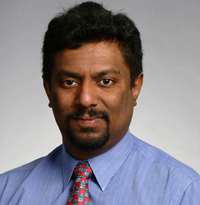
Weidong Xiang is a Professor in the Department of Electrical and Computer Engineering at the University of Michigan-Dearborn's College of Engineering and Computer Science. His research focuses on wireless communication systems, vehicular networks, and cybersecurity innovations for automotive applications. Education: Ph.D. and M.S. in Electrical Engineering from Tsinghua University Research interests span vehicular communication protocols , MIMO/beamforming architectures , RFID security , and ultra-wideband (UWB) systems . He has pioneered work on nonlinear companding, depth-first ML decoding algorithms, and energy-harvesting wireless systems. Recent publications highlight trends in deep learning for wireless sensing , GPS error prediction using LSTMs , and DSRC channel modeling . His work integrates AI and cybersecurity into automotive communication infrastructures. Grant history includes projects funded by: NSA/DoD for cybersecurity-AI integration (2024-2027) Ford Motor Company for MIMO/DSRC systems (2019-2022) NSF grants for vehicular sensing (2015-2016, 2013-2014) DoE funding for smart grid SDR prototypes (2010-2011) He holds a patent for an Enhanced Carrier Frequency Estimator applicable in WiFi, WiMax, and WAVE systems.
Rodrigo C. de Lamare is a Reader in the Department of Electronics at the University of York, United Kingdom. He holds a Diploma from UFRJ, an MSc and PhD from PUC-RIO, and is a Member of the Institution of Engineering and Technology (MIET) and Senior Member of IEEE (SMIEEE). His educational background includes a Postgraduate Certificate of Academic Practice from the University of York (2008), a PhD in Structures and algorithms for multiuser detection and interference suppression in DS-CDMA systems from PUC-RIO (2004), a Master's in Speech coding at rates below 2 kb/s from PUC-RIO (2001), and a Diploma in A CELP speech coder for Brazilian Portuguese from UFRJ (1998). Dr. de Lamare's research spans multiple areas of signal processing and communications, with a strong focus on adaptive algorithms for wireless systems. His work addresses fundamental challenges in multiuser detection, interference suppression, beamforming, and space-time processing. He has made significant contributions to reduced-rank adaptive filtering techniques that balance performance with computational complexity, which is crucial for practical implementation in modern communication systems. His publication record shows a consistent trajectory of high-impact research in IEEE journals and conferences, with recent work focusing on large-scale MIMO systems, cooperative communications, and advanced signal processing techniques for next-generation wireless networks. The research demonstrates increasing complexity in addressing interference management in dense wireless environments while maintaining computational feasibility. As an educator, Dr. de Lamare teaches courses in Error Control Coding, Detection and Estimation Theory, Digital Signal Processing, Information Theory, Engineering Mathematics, and Emerging Technologies, reflecting the breadth of his expertise. His academic supervision includes work with PhD students and visiting academics, though specific names are not provided in the available information. His professional activities encompass extensive conference participation and contributions to the academic community through technical program committees and editorial work.
Felix Leditzky is an Assistant Professor in the Department of Mathematics at the University of Illinois Urbana-Champaign, holding the Lincoln Excellence for Assistant Professor (LEAP) Scholar position in the College of Liberal Arts & Sciences. He is a member of the Illinois Quantum Information Science and Technology Center (IQUIST) and was previously a David Blackwell Scholar (2023-2025). In 2025, he received an NSF CAREER grant for research on symmetries in noisy multipartite quantum systems. His research centers on mathematical and information-theoretic aspects of quantum information theory, with specific interests in quantum channel capacities, superadditivity phenomena, quantum source coding, data processing inequalities, strong converse theorems, second-order asymptotics, group theory applications, representation theory, matrix analysis, and many-body quantum systems. His work bridges theoretical mathematics with practical quantum information processing challenges. Leditzky's recent publications demonstrate strong focus on quantum communication protocols (teleportation/dense coding duality), entanglement characterization through topological methods, unitary designs for quantum computing, and fundamental limits of quantum channel capacities. His research consistently applies advanced mathematical techniques to solve concrete problems in quantum information science, with increasing emphasis on multipartite systems and networked quantum communication. NSF CAREER grant (2025) Lincoln Excellence for Assistant Professor (LEAP) Scholar David Blackwell Scholar (2023-2025) Editor at Quantum journal (quantum information theory) Editorial board member of Illinois Journal of Mathematics As principal investigator of the Leditzky Research Group, he mentors a diverse team of postdocs, graduate students, and undergraduates across Mathematics, Physics, ECE, and Computer Science departments. His group has secured significant funding including NSF CAREER and IQUIST postdoctoral fellowships. Leditzky actively organizes major conferences including TQC 2022 and QIP 2019, and serves on program committees for QIP and other leading quantum information conferences. The Leditzky Research Group operates at the intersection of mathematics and quantum information science, maintaining strong collaborations across departments and institutions. Their work combines theoretical rigor with computational approaches, frequently employing semidefinite programming, representation theory, and topological data analysis to tackle fundamental problems in quantum communication and information processing.
Narayanan Rengaswamy is a tenure-track Assistant Professor in the Department of Electrical and Computer Engineering at the University of Arizona. He is also a member of the NSF Engineering Research Center for Quantum Networks (CQN) and the DoE-funded Superconducting Quantum Materials and Systems (SQMS) Center. His educational background includes: PhD in Electrical and Computer Engineering from Duke University (2020) MS in Electrical Engineering from Texas A&M University (2015) BTech in Electronics and Communication Engineering from Amrita University, India (2013) Rengaswamy's research focuses on the intersection of classical and quantum information theory, with particular expertise in error correction techniques for quantum systems. His work spans quantum computing, quantum networking, and quantum communications, developing novel approaches to fault-tolerant quantum information processing. He has made significant contributions to quantum LDPC codes, stabilizer codes, and the Clifford hierarchy, bridging classical coding theory with quantum applications. His research has practical implications for building scalable quantum computers and quantum networks. His publication record reveals a strong focus on quantum error correction, with particular attention to LDPC codes, stabilizer codes, and fault-tolerant architectures. The research trajectory shows progression from foundational work on classical-quantum connections to increasingly sophisticated quantum error correction schemes, with growing emphasis on practical implementations for quantum hardware. Awards and recognitions include: Selected for a talk at the 2020 Conference on Quantum Information Processing (QIP) Chosen finalist for the NSF ERC Perfect Pitch Competition Rengaswamy serves as a reviewer for several journals and conferences, and was on the Posters Program Committee of the 2022 International Conference on Quantum Computing and Engineering (QCE22). He is actively involved in quantum research initiatives through the NSF-ERC Center for Quantum Networks and the DoE-funded SQMS Center. His work combines theoretical depth with practical applications for emerging quantum technologies. He is a member of the IEEE and the Information Theory Society, contributing to the quantum information community through research, service, and academic leadership.
Dr. Joschka Roffe is an EPSRC Quantum Career Acceleration Fellow at the University of Edinburgh and serves as the Quantum Error Correction Lead and Board Member at the UK's Quantum Software Lab. His research focuses on developing quantum error correction protocols to enable fault-tolerant quantum computing, addressing the fundamental challenge of qubit fragility in quantum systems. Dr. Roffe's educational background includes: MPhys Physics from Manchester University (2011-2015) A year abroad at the University of California, Santa Barbara (2013-2014) PhD in Quantum Computing from Durham University (2015-2018) Research Associate at Sheffield University (2018-2021) Postdoctoral Researcher at Freie Universität Berlin (2021-2023) Dr. Roffe's research addresses the critical challenge that quantum bits (qubits) are realized through fragile quantum systems such as single ions, photons or superconducting circuits, making them highly susceptible to errors. His work develops quantum error correction protocols designed to mitigate these errors, which is essential for realizing practical quantum computers that can outperform classical systems. His expertise spans theoretical frameworks for quantum error correction to practical implementations that could enable scalable quantum computing architectures. His publication record shows a clear progression from foundational work on the Coherent Parity Check framework during his PhD to increasingly sophisticated approaches for quantum LDPC codes, surface codes, and fault-tolerant architectures. Notably, his 2019 review paper 'Quantum error correction: an introductory guide' published in Contemporary Physics has become a standard reference in the field. His notable scientific achievement is the prestigious EPSRC Quantum Career Acceleration Fellowship, which supports his research at the University of Edinburgh. Dr. Roffe leads the quantum error correction efforts at the Quantum Software Lab, where he collaborates with researchers across the UK to advance quantum software development. His work bridges theoretical quantum information science with practical implementations that could enable the next generation of quantum computers capable of solving problems beyond the reach of classical computing.
Yingfei Xiong is an Associate Professor at Peking University specializing in Software Engineering and Programming Languages. His research focuses on program synthesis, automated program repair, and software analysis techniques with extensive contributions to top-tier conferences including ASE, ICSE, PLDI, and SPLASH/OOPSLA. Dr. Xiong's primary research interests include: Program Synthesis and Inductive Programming Automated Program Repair and Bug Fixing Static and Dynamic Program Analysis Machine Learning Applications in Software Engineering Compiler and Language Implementation Techniques Software Testing and Verification His publication trends show a strong shift toward neural approaches in program repair, with significant integration of large language models in synthesis tasks since 2023. His work bridges theoretical foundations with practical applications, evidenced by industrial collaborations such as the Alibaba case study on static taint analysis. Recent contributions include GrammarT5 for code generation, Tare for type-aware neural repair, and Equality Saturation techniques guided by LLMs. At Peking University, Dr. Xiong is affiliated with the School of Electronics Engineering and Computer Science (SEI) as indicated by his institutional website domain. He actively contributes to the academic community through program committee service for major software engineering conferences and mentoring student researchers.
OKAMOTO Eiji is a Professor at the Department of Electrical and Mechanical Engineering, School of Engineering, Nagoya Institute of Technology. His research focuses on quantum cryptography, satellite communications, wireless networks, 5G/6G technology, information security, and Sub-THz imaging. He has made significant contributions to the fields of quantum key distribution, non-terrestrial networks, and secure wireless communications. OKAMOTO received his Doctor of Informatics from Kyoto University in 2003, Master of Engineering in 1995, and Bachelor of Engineering in 1993, all from Kyoto University. Prior to his current position, he worked at the Communications Research Laboratory, Ministry of Posts and Telecommunications (1995-2002), NICT (2011-2013), and Simon Fraser University (2004). Professor OKAMOTO's research interests span multiple cutting-edge areas in communications technology. His work in quantum cryptography focuses on improving information reconciliation for continuous-variable quantum key distribution using polar codes and raptor codes. In satellite communications, he has conducted extensive research on non-terrestrial networks and optical satellite data relay systems. His contributions to wireless networks include developing low-latency communication techniques, advanced multiple access methods, and secure communication protocols. His recent work in Sub-THz imaging has led to innovations in hazardous material identification and complexity reduction methods. Analysis of his recent publications reveals a strong focus on quantum key distribution systems, with multiple papers addressing information reconciliation efficiency. There's also a significant emphasis on non-terrestrial networks for 6G applications, particularly leveraging LEO satellites and optical communications. His research bridges theoretical advances with practical implementations, as evidenced by numerous papers on experimental demonstrations and system implementations. Education Achievement Award from IEICE (2025) Best Paper Award from IEICE Communications Society (2024) Satellite Communication Research Award (2023) Activity Merit Award (Review Committee) (2022) Meritorious Service Award (Research Committee Chair) (2022) Excellent Teaching Award from Nagoya Institute of Technology (2022) IEICE ComEX Top Downloaded Letter Award (2022) IEICE Fellow (2022) Professor OKAMOTO actively mentors numerous graduate students, with recent research involving M1 and M2 students working on quantum cryptography, Sub-THz imaging, and non-terrestrial networks. His laboratory at Nagoya Institute of Technology has received funding for research on quantum cryptography communication (2019), autonomous driving (2014), sensor networks (2009), and optical satellite communication (2008). He has served as a committee member for numerous academic societies including IEEE and IEICE. Professor OKAMOTO leads the Eiji Okamoto Laboratory at Nagoya Institute of Technology, which focuses on creating next-generation mobile and satellite communication systems. The laboratory aims to cultivate independent thinking engineers while developing new wireless (and wired) communication methods to realize a safer, more secure, and more convenient super-smart society. Current research projects include quantum cryptography, Sub-THz imaging for security applications, non-terrestrial networks for 6G, and low-latency communication techniques for autonomous driving and V2X applications.
Dr. Steve Kolthammer is a Senior Lecturer in the Department of Physics at Imperial College London, part of the Faculty of Natural Sciences. He is affiliated with the Quantum Engineering, Science and Technology (QEST), Quantum Optics and Laser Science Group, and The Light Community. His research focuses on advanced quantum technologies, including quantum optics, photonics, and antimatter physics. Dr. Kolthammer’s work spans experimental and theoretical studies in quantum metrology, quantum simulation, single-photon sources, and antihydrogen trapping. His contributions include innovations in photonic networks, quantum error correction, and certified quantum randomness generation. Research interests include optical physics, quantum engineering, and atomic/molecular physics. Key areas of exploration involve boson sampling, multiphoton interference, and the development of scalable quantum systems. His affiliations with specialized groups reflect his involvement in cutting-edge projects like antihydrogen spectroscopy and quantum computing hardware design. Recent articles highlight advancements in quantum algorithms, photonic simulations of topological materials, and experimental techniques for nonclassical light characterization. His work bridges theoretical models with practical implementations, emphasizing applications in quantum communication and metrology. Dr. Kolthammer collaborates across multidisciplinary teams to advance foundational quantum science and engineering. His research leverages state-of-the-art facilities at Imperial College, including hollow-core photonic crystal fibers and quantum memory systems. Ongoing efforts focus on improving photon detection efficiency, optimizing quantum error correction protocols, and exploring antimatter trapping techniques for precision measurements.
Dr. Roberto Bondesan is a Senior Lecturer in Quantum Computing at the Department of Computing, Faculty of Engineering, Imperial College London. He holds a PhD in theoretical physics from UPMC Paris and has conducted research at the Universities of Cologne and Oxford on topological phases of quantum matter, focusing on materials for quantum computing and electronics. He later led machine learning research at Qualcomm AI, developing quantum neural networks and optimizing chip design using Bayesian optimization, reinforcement learning, and graph neural networks. His current research integrates quantum computing and machine learning to address computational challenges in optimization and quantum system simulation. He is affiliated with Imperial X and actively supervises PhD students through departmental scholarships. His research interests include quantum algorithms for combinatorial optimization, quantum error correction, and machine learning-driven quantum system simulation. Notable projects involve applying neural networks to quantum error correction and leveraging ML techniques for efficient quantum Gibbs sampling of complex systems like the Fermi-Hubbard model. Education: PhD in Theoretical Physics, UPMC Paris His publications span quantum computing applications, including quantum machine learning frameworks, optimization algorithms, and lattice gauge theories modeled via generative flow networks. He has contributed to advancing quantum advantage assessment in Gaussian processes and probabilistic numeric convolutional neural networks. Current work emphasizes bridging quantum algorithms with practical engineering solutions. Awards: No awards explicitly listed in provided texts. He advises students through Imperial College's scholarships and maintains collaborations with industry (e.g., Qualcomm) and academic networks (Imperial X). His lab focuses on translating theoretical quantum computing breakthroughs into real-world applications.
Professor Saman Amarasinghe is a leading academic in the MIT Electrical Engineering and Computer Science Department, specializing in compiler design, high-performance computing, and programming languages. His research bridges theoretical computer science with practical applications, focusing on optimizing compilers for modern hardware architectures. He holds a professorship within the School of Engineering at MIT. His research interests span artificial intelligence, machine learning integration into compilers, sparse tensor algebra optimizations, and domain-specific languages (DSLs) for high-performance computing. He has pioneered frameworks like TACO (Tensor Algebra Compiler) and GraphIt, which enable efficient handling of complex data structures across diverse computational domains. Recent work emphasizes compiler-driven optimizations for sparse data formats, machine learning models for code optimization, and unified interfaces for large language models. His projects often address scalability challenges in exascale computing and bioinformatics applications. Publications highlight advancements in compiler techniques for sparse tensor operations, graph analytics, and memory-efficient algorithms. His contributions to Halide, Simit, and Weld further demonstrate his impact on DSLs for image processing and physical simulation. Awards and recognitions are integral to his career, though specific personal accolades are not detailed here. His work is characterized by a strong focus on practical compiler solutions for emerging computational challenges.
Dr. Muhammad Ijaz is an Associate Professor and Department International Lead at the Department of Engineering, Manchester Metropolitan University, UK. He holds a PhD in Free-Space Optical Communications from Northumbria University (2013) and leads the Laser and Optics Communication (LOC) lab. His research focuses on optical wireless systems, IoT, 5G/LiFi, and embedded systems, secured over £950K in funding (2020–2025). He has over 100 publications, including high-impact journals and IEEE conferences, and supervises doctoral students in communication technologies. Notable projects include IoT-enabled smart sensors for industrial applications, KTP collaborations with Arctic Hayes Ltd, and innovations in energy-harvesting systems. Awards include a 2024 Technical Excellence KTP Award finalist nomination. Teaching includes Optical Communications, RF/Wi-Fi systems, and MATLAB-based signal processing. He contributes to research-informed education and serves on the Faculty International Committee. His work bridges academia and industry, emphasizing knowledge transfer and sustainable technologies. Key collaborations span industries like Trumeter Ltd and Polymeric Ltd, with global partners. The LOC lab’s applied research addresses challenges in smart cities, agriculture, and underwater communications, leveraging perovskite materials and MIMO systems. Awards and recognition include over 1,800 citations (Google Scholar), an H-index of 25, and impactful contributions to visible light positioning (VLP) and VLC channel modeling in harsh environments. His lab’s innovations include self-powered LiFi systems and adaptive modulation for underwater IoT.
Bin Chen is a researcher at the Department of Electrical Engineering, Eindhoven University of Technology (TU/e), focusing on optical communications, signal processing, and information theory. He holds a PhD from University College Dublin (2015), supported by the China Scholarship Council and Science Foundation Ireland. His roles include Postdoc positions in the Signal Processing Systems (SPS) and Electro-Optical Communication Systems (ECO) groups at TU/e, and a current guest researcher affiliation. His research emphasizes geometric shaping, coded modulation, and nonlinear channel mitigation in optical systems. Education: B.Sc. Electronic Information Science and Technology, Hefei University of Technology (2010) Ph.D. Electronics and Communications Engineering, University College Dublin (2015) Affiliations: Signal Processing Systems Group (SPS) Electro-Optical Communication Systems (ECO) Group ICT Lab Research interests include optical communication systems, cooperative communications, channel coding, and network coding. Key achievements include over 60 peer-reviewed publications and awards such as the Asia Communications and Photonics Conference Best Paper Awards (2018, 2022). He has contributed to projects like PATRIOT (coded modulation optimization) and NLCAP (nonlinear capacity maximization in optical channels). Grants and collaborations span EU-funded initiatives and industry partnerships. His work on multidimensional constellations and fiber nonlinearity models has advanced long-haul transmission systems. Current projects explore neural network-based demappers and hybrid decoding techniques.
Christian Sejer Pedersen is an Associate Professor at the Department of Electronic Systems, Aalborg University, within The Technical Faculty of IT and Design. His research focuses on acoustics, signal processing, and low-frequency noise, particularly in environmental and engineering contexts. He has contributed to studies on wind turbine noise, wireless sound zones, and psychoacoustic phenomena. Key research areas include low-frequency sound zones, packet loss concealment in wireless audio systems, and noise measurement technologies. His work integrates theoretical models with practical applications, addressing both technical and regulatory challenges in noise control. Pedersen has been involved in 12 major projects, including ISOBEL: Interactive Sound Zones for Better Living and initiatives on noise assessment methodologies. His publications span 20+ years, with recent emphases on robust sound zone filters, AR models for latency reduction, and free-field correction techniques. Media engagements highlight his expertise in public debates about noise from infrastructure projects like wind turbines and urban developments. Advising and grants involve multidisciplinary collaborations, focusing on sustainable energy systems and acoustic engineering innovations. His lab work centers on advanced audio systems and environmental noise mitigation strategies. Pedersen's contributions bridge academic research with real-world applications in acoustics and signal processing.
Matthieu ARZEL is an Associate Professor in the Department of Mathematical and Electrical Engineering at IMT Atlantique. He holds an HDR (2021), PhD (2006), and Engineer degree (2002) from Telecom Bretagne/ENST. His research focuses on iterative processing for digital communications, low-power integrated circuits, high-speed digital circuits, and FPGA implementations in domains like neural networks, medical engineering, and communication systems. Key research interests include neuromorphic hardware, neural network pruning, federated learning compression, and energy-efficient signal processing. He has supervised 18 PhD students and contributed to projects like Ouessant coprocessor architectures and clique-based neural network circuits. His work bridges algorithm-architecture interactions, emphasizing low-power and embedded system applications. Recent publications highlight innovations in FPGA-based deep learning deployment and efficient neural network compression techniques. Publications span topics from real-time semantic segmentation on FPGA to collusion-resistant watermarking. His contributions address challenges in hardware-software co-design, iterative decoders for MIMO systems, and biomedical signal processing.
Dr. Marco Eilers is a **Lecturer** in the **Department of Computer Science** at **ETH Zürich**, Switzerland. His research focuses on formal verification, programming languages, and cybersecurity, with particular expertise in smart contract verification for blockchain systems like Ethereum and Libra’s Move language. He has contributed to tools such as Viper’s symbolic execution backend and frameworks for modular program verification. His work emphasizes practical applications of formal methods to ensure security and correctness in concurrent, distributed, and GPU-based systems. Key research areas include static analysis for information flow security, product program models, and SMT-based type inference for languages like Python. He is affiliated with the Professur für Software Technology at ETH Zürich’s CAB H 89 laboratory. Publications highlight advancements in verifying real-world systems such as internet routers, GPU kernels, and blockchain smart contracts. Though no awards are explicitly listed, his contributions reflect significant impact in formal verification and programming language research. Eilers’ advising and grants are not detailed here, but his involvement in cutting-edge projects like Igloo and modular product programs indicates active collaboration in distributed system verification and secure software development.