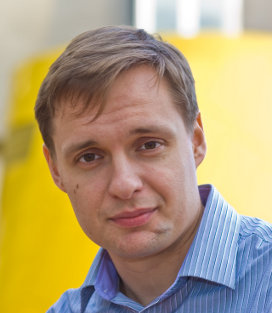
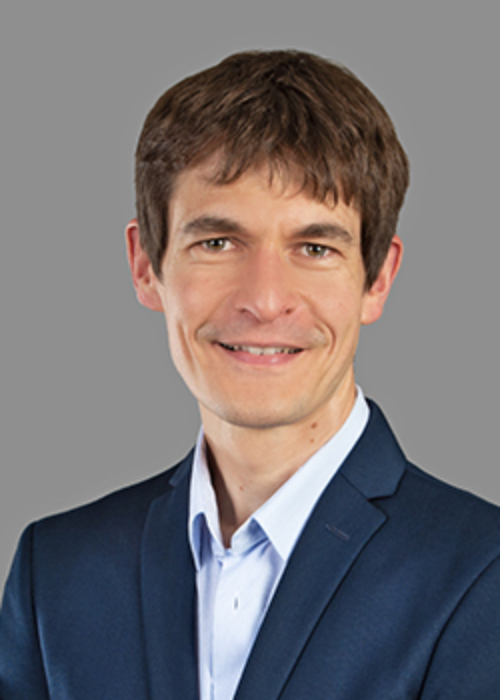
Yury Polyanskiy is a Professor of Electrical Engineering and Computer Science at the Massachusetts Institute of Technology (MIT), affiliated with the Laboratory for Information and Decision Systems (LIDS), the Institute for Data, Systems, and Society (IDSS), and the MIT Statistics and Data Science Center. He holds a Ph.D. from Princeton University (2010) and an M.S. from the Moscow Institute of Physics and Technology (2005). His research focuses on information theory, machine learning, statistical inference, error-correcting codes, and wireless communication. He has contributed to fundamental limits of communication systems, finite-blocklength analysis, and applications of information theory to learning and signal processing. Notable awards include the 2020 IEEE Information Theory Society James Massey Award, the 2013 NSF CAREER Award, and the 2011 IEEE Information Theory Society Paper Award. His work spans theoretical advancements and practical applications, including the development of the SPECTRE toolbox for short-packet communication. He is also co-authoring a textbook on information theory. Recent research highlights include studies on quantization techniques for machine learning (e.g., NestQuant), transformer-based empirical Bayes methods, and novel approaches to massive random access in wireless networks (e.g., unsourced multiple access). His contributions bridge information theory and modern data science, addressing challenges in high-dimensional data representation, neural network dynamics, and efficient communication architectures.
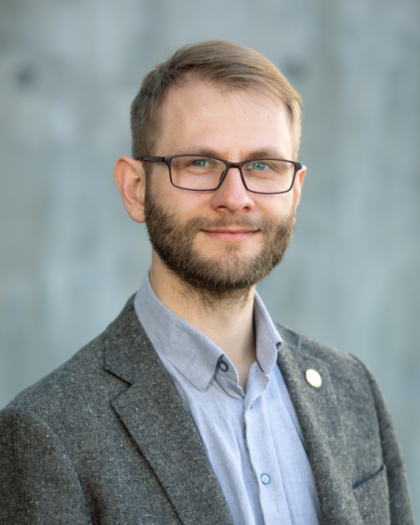
Stefan Schimanko is a Researcher affiliated with the Numerical Research Department at the Faculty of Mathematics and Geoinformation , Vienna University of Technology (TU Wien). His primary focus is on numerical analysis and computational methods for engineering applications, particularly in the areas of adaptive finite element methods (FEM), boundary element methods (BEM), and isogeometric analysis (IGA). He holds a Dipl.-Ing. (engineering diploma), Dr.techn. (doctorate in technical sciences), and BSc degree. His research emphasizes improving computational efficiency and accuracy in adaptive algorithms, with a focus on nonlinear operators, iterative solvers, and optimal complexity analysis. Recent contributions include studies on IGABEM stability in MATLAB, quasi-optimal adaptive algorithms, and preconditioned conjugate gradient (PCG) solvers for BEM. Collaborations with renowned researchers like Dirk Praetorius and Gregor Gantner highlight his active role in advancing adaptive numerical methods. Key achievements include demonstrating the quasi-optimal computational costs of adaptive FEM/BEM and developing localized smoothness control for isogeometric BEM. His work bridges theoretical numerical analysis with practical engineering applications, ensuring methods are both mathematically rigorous and computationally feasible. Education: BSc, Dipl.-Ing., Dr.techn. (Technical Sciences) Labs/Teams: Part of TU Wien's Numerical Research Department and Network Lab projects
Jakub Wiktor Both is a permanent researcher at the Department of Mathematics, University of Bergen (UiB). He is affiliated with the Porous Media Research Group and the Center for Modeling of Coupled Subsurface Dynamics. His research focuses on numerical methods for multiphysics problems in porous media, including image-based data analysis for laboratory experiments and mathematical modeling of CO2 storage. His work involves developing tools like the DarSIA (Darcy Scale Image Analysis) toolbox for fluid displacement analysis and PorePy, a Python simulation framework for fractured porous media. He leads projects on CO2 storage validation and has been awarded an NFR FRIPRO grant for his TIME4CO2 initiative, aiming to enhance CO2 storage capacity through mathematical modeling. Key research themes include optimal transport metrics, robust numerical solvers for coupled systems, and gradient flow structures in dissipative systems. His contributions span experimental validation frameworks (e.g., FluidFlower), digital twins (PoroTwin), and open-source software for subsurface dynamics. Notable awards include election as Chair of the Board of InterPore Norway (2024) and leadership in international projects like ERC CoG MaPSI and NFR Petrosenter CSSR. His interdisciplinary approach bridges mathematics, geoscience, and engineering for sustainable subsurface resource management.
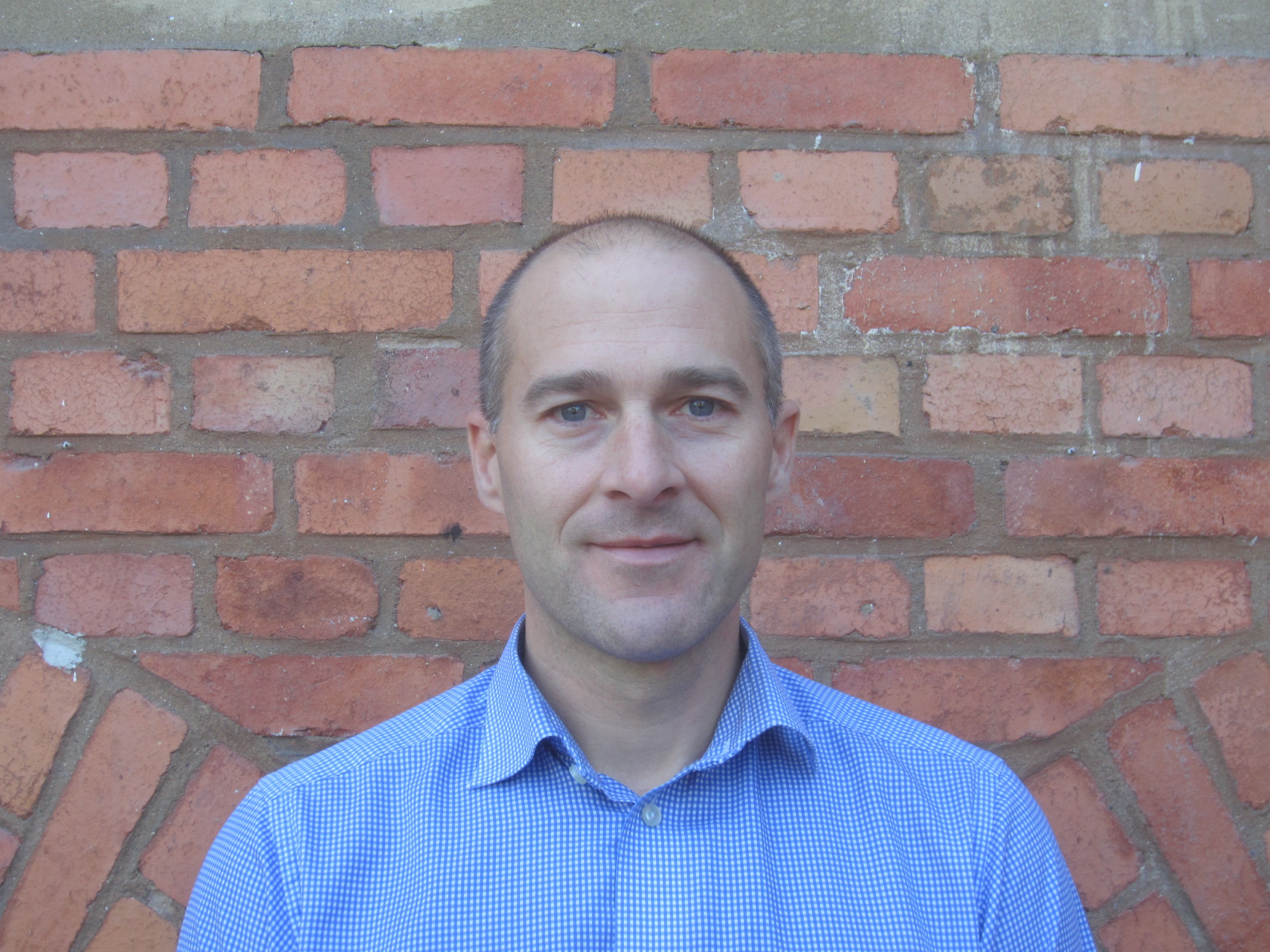
Prof. Dr. Timm Betz is an Associate Professor at the Department of Political Science of Washington University in St. Louis . Since 2023, he leads the ERC Starting Grant project PINPOINT at LMU Munich's Political Science Department. His research focuses on the political consequences of economic globalization , with emphasis on trade policy, production networks, and institutional dynamics. Education : PhD in Political Science (2015, University of Michigan), MSc in Economics (2010, Universitat Pompeu Fabra) Previous Affiliations : Technical University of Munich (2020-2023), Texas A&M University (2015-2020) His work explores domestic production networks and their influence on trade politics, supported by the ERC Starting Grant (2022-2027) . Recent publications analyze: Gendered tariff discrimination Spatial econometric methodologies Government debt regulation Political ownership dynamics Trade policy fragmentation Key findings highlight how democratic institutions shape financial regulation and how subnational economic structures affect international trade outcomes. Awards : Lawrence Longley Award (2021) Marian Irish Best Paper Award (2023) Sophonisba Breckinridge Award (2023) Best Paper in International Relations (2021) Overall Best Paper Award (2023) Collaborations include research teams at LMU Munich and Washington University, with methodological contributions to spatial analysis and instrumental variable modeling.
Ola Jetlund is an Associate Professor at the Faculty of Technology, Art and Design, Department of Mechanical, Electrical and Chemical Engineering, Oslo Metropolitan University. His work focuses on electronics, signal processing, and digital education. Education: Doctor Engineer (PhD) in Electronics and Signal Processing Research Interests: Jetlund's research spans adaptive multimedia streaming, channel coding optimization, and digital pedagogy. He contributes to the ADvanced hEalth intelligence and brain-insPired Technologies (ADEPT) research group. Publication Trends: His recent works emphasize community-based digital teaching methods and historical contributions to adaptive coded modulation schemes for wireless networks. Administrative Roles: Currently serves as Head of Studies in Electronics and Electrical Engineering.
Dr. Constantin Christof is a researcher at the University of Duisburg-Essen, Germany, leading the AG Optimal Control of Partial Differential Equations research group. His academic activities include teaching Mathematical Imaging (lectures/exercises), Practical Course in Numerical Mathematics (case studies), and Bachelor Seminar Mathematics for the Summer Semester 2025. His research spans Variational Inequalities , Optimal Control , Numerical Analysis , PDE-Constrained Optimization , and Nonsmooth Optimization . Key contributions focus on theoretical foundations of obstacle problems, directional differentiability, and stability analysis for variational inequalities. Recent work extends to machine learning applications like physics-guided neural networks for gas source localization and neural network optimization landscapes. Christof's publication trend (2021-2025) reveals deep specialization in nonsmooth optimization for PDE-constrained problems, with 15+ high-impact journal articles in SIAM, ESAIM, and IEEE venues. His work bridges theoretical analysis (e.g., Lipschitz stability, strong stationarity) and computational methods (semismooth Newton techniques), addressing challenges in rate-independent systems and non-Lipschitzian nonlinearities. Scientific Awards: No awards documented in available records. Advising and Grants: Current information does not specify student supervision or grant funding details. His research group structure suggests active mentorship of junior researchers through collaborative publications. Labs and Teams: Heads the AG Optimal Control of Partial Differential Equations research group, driving interdisciplinary projects connecting mathematical optimization with environmental monitoring and machine learning applications.
Emna Zedini is an Assistant Professor of Computer Science in the College of Innovation and Technology at the University of Michigan–Flint , where she leads research at the intersection of optical wireless communications and autonomous driving technologies. Education Ph.D. in Electrical Engineering (2016) – King Abdullah University of Science and Technology (KAUST), Saudi Arabia M.Sc. in Telecommunications (2011) – École Supérieure des Communications de Tunis (SUP’COM), Tunisia Engineering Diploma (2010) – SUP’COM, Tunisia Research Focus Her work centers on channel modeling and performance analysis of optical wireless communication systems and the application of artificial intelligence and reinforcement learning to autonomous driving. She explores free-space optics (FSO), intelligent reflecting surfaces (IRS), visible-light communication (VLC), and underwater optical links, while also developing decision-making algorithms for safe intersection navigation. Publications & Trends Since 2014 she has published more than thirty IEEE journal and conference papers. Recent contributions (2024–2025) emphasize hybrid terrestrial/non-terrestrial FSO links, phase-error mitigation in optical IRS, and deep-learning-based precoding for multi-user VLC systems, demonstrating a clear trajectory toward integrating optics with AI-enabled networking. Scientific Awards MWIN Faculty Innovation Fellowship (2025) – Michigan Wolverine Innovation Network Grants & Funding Principal Investigator on the Integrated AI Module for Safe Navigation project funded by RCA, $20,000, 01 Sep 2025 – 31 Aug 2026. Laboratory & Teams She maintains an active research group within the Computer Science, Engineering, and Physics Department at the University of Michigan–Flint, focusing on experimental validation of optical links and real-world deployment of AI algorithms in connected-vehicle testbeds.
Alexander Lincoln Read is a Professor at the University of Oslo's High Energy Physics department, specializing in precision measurements of the Higgs boson through the ATLAS experiment at CERN. His research bridges particle physics and advanced statistical/data analysis methods. Education: BS (1981, University of Illinois) | PhD (1986, University of Colorado) Employment: NAVF Scientific Assistant (1986-89) | CERN Scientific Associate (1989-91) | Professor (1993-present) Research Focus: Higgs boson properties, Dark Matter connections, CLs statistical technique, Compressed Sensing, Gaussian Processes, and Machine Learning applications in particle physics. Scientific Contributions: Key role in Higgs boson discovery (2012), development of the CLs method, and detector calibration innovations. Scientific awards: CLs technique creator | Higgs discovery contributor Projects: ATLAS experiment, NorLHC (extreme collision rates), Insights ITN (statistics network), Strategic Dark Matter Initiative.
Hasan Aksoy is an academic faculty member at Koc University and Turk Hava Kurumu University, affiliated with the Department of Software Engineering. His research focuses on bridging software engineering with computational mathematics, digital signal processing, and biomedical applications. Digital Power Estimation Automatic Gain Control Heart Rate Variability Modeling Radial Basis Functions Laplace Transform Methods Recent publications highlight his work on subsampling digital power estimation for integrated receivers, numerical inverse Laplace transforms for advection-diffusion modeling, and heart rate variability analysis using time-frequency representations. These studies address challenges in reducing process, voltage, and temperature spreads in analog circuits, improving numerical stability in computational methods, and enhancing physiological signal analysis techniques.
Marla De Jong is a distinguished academic and clinical leader currently serving as Dean and the Louis H. Peery Presidential Endowed Chair at the University of Utah College of Nursing . With a 29-year career in the US Air Force, retiring at the rank of Colonel, she transitioned to academia, where she oversees a $59M research portfolio, clinical practices, and academic programs. BSN in Nursing (Grand View College, 1988) MS in Trauma, Critical Care, and Emergency Nursing (University of Maryland, 1996) PhD in Nursing Science (University of Kentucky, 2005) Her research bridges Nursing, Military Medicine, and Healthcare Systems , focusing on surgical team communication, pandemic response leadership, and interprofessional collaboration. Articles highlight trends in AI integration for surgical time estimation, spatial design impacts on OR communication, and team familiarity dynamics. Awards include AAON Fellow (2012) , Distinguished Alumni honors , and 2022 Exemplary Nurse Leader Award . She chairs committees on aging, career-line faculty matters, and hospital boards, shaping policy and clinical practice nationally.
Dr Mark Evans is an Associate Professor in the Department of Materials Science and Engineering within the Faculty of Science and Engineering at Swansea University. With a career spanning from September 1990 to the present, he has established himself as a leading researcher in the application of statistical methods to materials science problems, particularly focusing on high-temperature material behavior. His work bridges engineering practice with advanced statistical analysis, creating practical solutions for industry challenges. Faculty of Science and Engineering, Swansea University Department of Materials Science and Engineering Associate Professor since 1990 Teaches Statistical Techniques in Engineering (EG-285) and Engineering Management B (EG-386B) Available for Postgraduate Supervision Dr Evans' research centers on the application of statistics to three main areas: the life of materials at high temperatures, process optimization in manufacturing, and techno-economic forecasting. His expertise particularly focuses on creep life prediction, where he has developed and refined methodologies like the Wilshire equations for predicting material behavior under high-temperature conditions. His work spans various materials including stainless steels (316H, 2.25Cr-1Mo), superalloys (Waspaloy, RR1000), and low-alloy steels. He combines advanced statistical techniques with materials science principles to address real-world engineering challenges in power generation, aerospace, and manufacturing sectors. His research approach integrates experimental data with sophisticated modeling to predict material failure and optimize manufacturing processes. Analyzing Dr Evans' recent publication record (2020-2025) reveals a strong focus on advancing creep modeling methodologies. His work demonstrates a consistent progression from fundamental creep behavior studies toward more sophisticated statistical approaches for model validation and prediction accuracy. Recent publications emphasize statistical rigor in comparing competing models, addressing measurement errors, and developing novel approaches like LOESS estimation to overcome limitations of traditional parametric models. His research shows particular interest in the relationship between tensile properties and creep behavior, the role of damage mechanics in creep failure, and the application of advanced statistical techniques to improve prediction reliability for critical engineering components. Dr Evans has served as Guest Editor for the Journal Materials (2017-2018) and has delivered invited presentations including 'The Potential United Kingdom Energy Gap and Creep Life Prediction Methodologies' (2012). His work appears consistently in top-tier materials science journals including Metallurgical and Materials Transactions A, Materials Science and Engineering: A, and Materials at High Temperatures. Dr Evans supervises postgraduate research, with at least one PhD completed in 2023 on 'Remnant Life Assessment based on the Small Punch Test and the Wilshire Equations' (co-supervised with Prof Helen Davies). His teaching portfolio includes Statistical Techniques in Engineering (EG-285), which emphasizes practical statistical tools for engineers using real-world data, and Engineering Management B (EG-386B), which covers business planning, entrepreneurship, and ethics for engineering professionals.
Dr. G Smid is a Researcher in the Department of Psychology within the Faculty of Social and Behavioural Sciences at Utrecht University, specializing in Clinical Psychology. His expertise centers on advanced statistical methodologies applied to psychological research, with particular emphasis on structural equation modeling under constrained data conditions. His primary research domains include Structural Equation Modeling, Bayesian Statistics, Adolescent Mental Health, Clinical Psychology, Data Synthesis, and Systematic Reviews. He has pioneered critical methodological frameworks for Bayesian SEM applications with small samples, developed interpretable synthetic data techniques, and investigated adolescent mental health determinants including harmful sexual behavior and immigration-related impacts. His work bridges complex statistical theory with clinical psychology applications. Analysis of Dr. Smid's 13 publications (2014-2023) reveals a dominant methodological trajectory focused on overcoming small-sample limitations in psychological research. His most influential contributions address Bayesian prior specification in SEM, measurement equivalence validation, and adolescent mental health risk factors. The publications demonstrate consistent innovation in statistical methodology while maintaining strong clinical relevance, particularly in adolescent psychology and mental health assessment.
Filip Lindskog is a Professor of Insurance Mathematics at Stockholm University (SU) , where he heads the Mathematical Statistics division within the Department of Mathematics . With a background in financial mathematics and actuarial science, his research focuses on quantitative risk management, non-life insurance pricing, and applications of biostochastics and biostatistics. He has co-authored the textbook Risk and Portfolio Analysis: Principles and Methods (Springer, 2012) and supervises PhD students in actuarial mathematics. Education \n \n MSc in Engineering Physics, KTH Royal Institute of Technology (2000) \n PhD in Mathematical Statistics, ETH Zürich (2004) \n Research Interests Filip's work spans actuarial mathematics , financial risk modeling , and insurance analytics . He investigates stochastic processes in regime-switching environments, capital requirements for insurers, and mathematical frameworks for claims reserving. His recent publications emphasize machine learning applications in risk adjustment, asymptotic analysis of Poisson models, and regulatory compliance under IFRS 17.\n Scientific Contributions \n \n Editor, Scandinavian Actuarial Journal (2018–present) \n Director of SU's Master's Program in Actuarial Mathematics (2016–present) \n Head of SU's Mathematical Statistics Division (2018–present) \n \n Students and Collaborations Current and former PhD students include Nils Engler , Lina Palmborg , Jonas Alm , and Johan Nykvist . Former postdocs include Julie Thøgersen , Abhishek Pal Majumder , and Kristoffer Lindensjö . His research group explores discrete random structures, financial applications of biostatistics, and insurance modeling under capacity constraints.\n
Jonathan B. Goodman is a Professor of Mathematics at the Courant Institute of Mathematical Sciences , New York University , where he has been an instructor since 2000. His research spans computational mathematics , applied mathematics , and stochastic methods in finance . He earned his Ph.D. from Stanford University in 1982, specializing in computational and applied mathematics. Research Interests: Mathematical theory of shock waves, Monte Carlo methods in quantum chemistry, anisotropic finite element refinement, stochastic processes, Bayesian graduation methods, and computational finance. Teaching: Courses include Scientific Computing (Fall 2024), Numerical Methods II (Spring 2024), Stochastic Calculus (Fall 2022), and Mathematics of Finance (Spring 2019). Teaching materials span over two decades. Students: Advisees include PhD and Masters students working on topics such as adaptive refinement algorithms, dynamic hedging with transaction costs, importance sampling for Value at Risk, and Bayesian mortality rate graduation. Software: Developed Acor , a program for estimating autocorrelation time and statistical error bars in Markov chain Monte Carlo simulations, in collaboration with Alan Sokal.
Simon Aeschbacher is an Independent Research Fellow at the Department of Evolutionary Biology and Environmental Studies, University of Zurich. His work bridges mathematical theory, computational methods, and genomic data to address fundamental questions in evolutionary biology. His educational background includes: M.Sc. in Zoology (2007) and undergraduate studies (2001-2003) at University of Zurich Ph.D. in Evolutionary Biology (2008-2011) at University of Edinburgh/IST Austria under Nick Barton Postdoctoral positions at University of Vienna (2011-2013), UC Davis (2014-2016), and University of Bern (2017) Aeschbacher's research centers on population genomics, specializing in the interplay between gene flow, natural selection, and recombination. His work combines mathematical modeling with genomic analyses to investigate local adaptation, speciation, and human evolutionary history. Key contributions include developing methods for demographic inference and quantifying selection against gene flow. His publication record shows a clear trajectory from theoretical foundations (early work on linkage effects) to applied genomic methodologies (recent development of gIMble for barrier detection). Current research emphasizes human evolution, plant speciation, and hybridization dynamics across diverse taxa. Scientific recognition includes: Swiss NSF Advanced Postdoc.Mobility Fellowship While not explicitly mentioned in the text, his role as Independent Research Fellow implies grant leadership and potential mentoring responsibilities. His work with multiple international collaborators suggests active participation in research networks across Europe and North America.