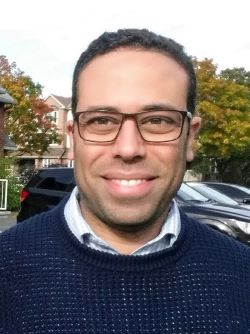
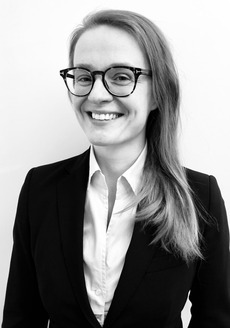
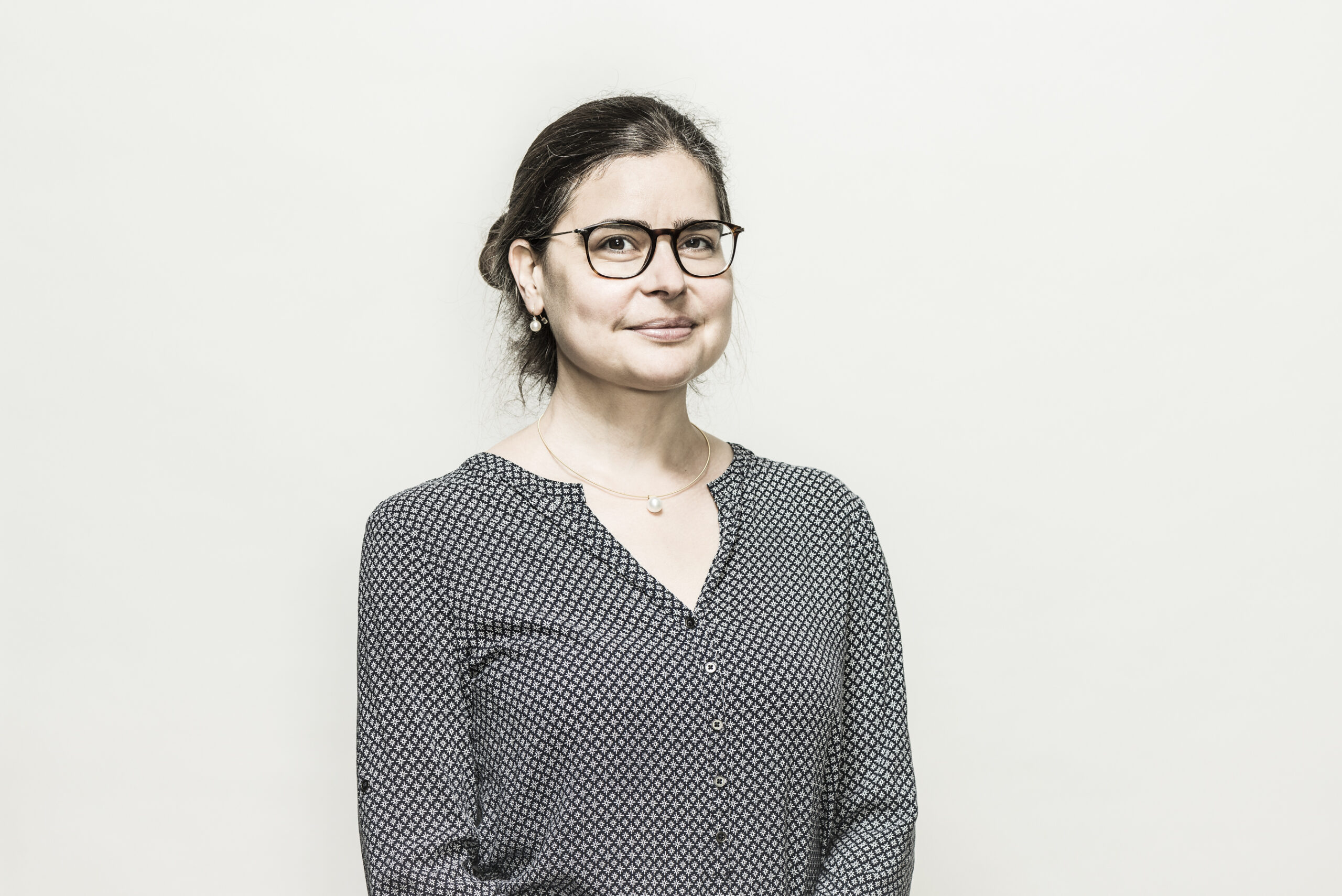
Ebrahim Bedeer Mohamed is an Assistant Professor in the Department of Electrical and Computer Engineering at the University of Saskatchewan. He joined in July 2019, following roles as an Assistant Professor (Lecturer) at Ulster University, UK, and postdoctoral fellowships at Carleton University and the University of British Columbia. He holds a Ph.D. (Distinction) from Memorial University of Newfoundland (2014), with expertise in signal processing and wireless communications. His research focuses on optimizing communication systems through advanced signal processing techniques, including faster-than-Nyquist signaling, IoT network design, AI integration, and energy-efficient protocols. Key areas include next-generation communication networks, non-orthogonal modulation, and MIMO systems. Notable contributions include work on channel estimation for FTN signaling, RIS-aided wireless systems, and LR-FHSS protocols in IoT. His publications span spectral efficiency, interference minimization, and energy management in 5G/6G contexts. He actively seeks Ph.D. students with strong backgrounds in signal processing fundamentals. Awards and grants are not explicitly listed in the provided texts. His work emphasizes practical applications, such as UAV trajectory optimization for IoT data collection and energy-efficient caching strategies in dynamic networks.
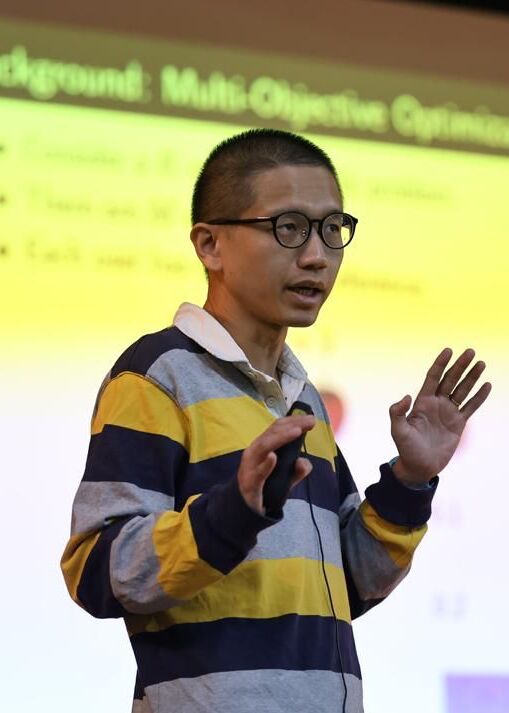
Francis Y. Yan is an Assistant Professor of Computer Science at the University of Illinois Urbana-Champaign (UIUC), holding an affiliate appointment in Electrical & Computer Engineering within the Grainger College of Engineering. He leads the Illinois Networked Systems and AI (NSAI) research group, focusing on building intelligent networked systems that are safe, robust, and performance-optimized through practical machine learning integration. Prior to joining UIUC in January 2025, he served as a Senior Researcher at Microsoft Research Redmond under Victor Bahl. His educational background includes: Ph.D. in Computer Science from Stanford University (2020), advised by Keith Winstein and Philip Levis B.S. in Computer Science (Yao Class) and B.A. in Economics from Tsinghua University (2015) Additional undergraduate studies at MIT Yan's research adopts a holistic approach to practical machine learning for networked systems, emphasizing judicious application rather than indiscriminate use. He builds real-world systems and research platforms to lay ML foundations, devises deployable algorithms using domain insights, and validates performance through extensive empirical evidence. His work consistently addresses operator concerns regarding ML deployment—focusing on safety, robustness, generalization, and efficiency—while strategically combining ML with classical networking and systems techniques. Analysis of his 15 most recent publications (2023-2025) reveals dominant themes in resource allocation for microservices (DeDe, Autothrottle), real-time video optimization (Mowgli, GRACE), and LLM-driven network algorithm design. His work bridges theoretical advances with industrial deployment, evidenced by platforms like Puffer (400,000+ users) and OpenNetLab that have become community standards for validating congestion control algorithms. His research has been recognized with top honors: USENIX NSDI Outstanding Paper Award (2024) for Autothrottle APNet Best Paper Award (2022) IRTF Applied Networking Research Prize (2021) USENIX NSDI Community Award (2020) USENIX ATC Best Paper Award (2018) for Pantheon Yan actively recruits master's and undergraduate researchers for his NSAI group, prioritizing self-motivated students for projects in networked systems and AI. His research is supported by industry collaborations (notably Microsoft) and manifests in deployable platforms like Puffer—which has enabled award-winning research at NSDI and SIGCOMM—and OpenNetLab for real-time communications. His work directly impacts production systems including Microsoft Teams and Bing. He founded and directs the Illinois Networked Systems and AI (NSAI) research group, which operates critical infrastructure including Puffer (a live TV service and research platform) and OpenNetLab. These platforms facilitate community-wide validation of novel algorithms, with Puffer alone supporting multiple best-paper awards at top conferences. Current workstreams span cloud resource management (Teal, Autothrottle, DeDe), low-latency video (Puffer, Tambur, Mowgli), and LLM-augmented systems (Nada, Designing Network Algorithms via LLMs).
Dr. Masoumeh Dashti is an Associate Professor in Mathematics at the University of Sussex, UK, affiliated with the School of Mathematical and Physical Sciences. She holds a PhD in Mathematics from the University of Warwick (2008) and prior degrees in Mechanical Engineering from Sharif University of Technology and Tehran Polytechnic. Her research focuses on Partial Differential Equations, Inverse Problems, Bayesian Inference, and their applications in fluid dynamics and epidemiology. Key research interests include: Bayesian approaches to inverse problems, sparsity-promoting estimators, uncertainty quantification, and mathematical modeling of epidemics on networks. She has contributed to foundational work on Besov priors and MAP estimator consistency in nonparametric Bayesian frameworks. Her publications span topics like network inference from epidemic data, contraction rates of posterior distributions, and fluid-structure interaction problems. She has secured grants including 'Two-dimensional stochastically perturbed shallow water equations' (2019-2023) and 'Confronting High Dimensional Network Models With Data' (2018-2022). Currently, she serves as an Associate Editor for SIAM-ASA Journal on Uncertainty Quantification and AIMS Foundations of Data Science . Teaching expertise includes Functional Analysis, Partial Differential Equations, and Calculus of Several Variables at both undergraduate and postgraduate levels.
Professor Vincent Y. F. Tan holds dual appointments in the Department of Mathematics and the Department of Electrical and Computer Engineering (ECE) at the National University of Singapore (NUS). He is also affiliated with the Institute of Operations Research and Analytics (IORA) and the Institute of Data Science (IDS). His research focuses on Online Decision Making, Multi-Armed Bandits, Reinforcement Learning, Information Theory, and Statistical Signal Processing. Notably, he has been actively publishing in top-tier conferences like NeurIPS, ICML, and IEEE journals, with recent works exploring topics such as low-rank adaptation, off-policy evaluation, and queueing control. Professor Tan has advised numerous PhD students, including Fengzhuo Zhang, Yujun Shi, and Junwen Yang. He has received recognition for his teaching, including a 4.7/5.0 rating for EE5137 Stochastic Processes. His work has led to impactful publications, such as the best paper award at the ICML 2025 workshop on World Models and an oral presentation at ICLR 2025. He currently serves as a Senior Area Chair for NeurIPS 2025 and an Area Editor for the IEEE Transactions on Information Theory. His research group focuses on advancing theoretical and applied aspects of machine learning, with projects funded by grants in areas like distributed optimization and adversarial robustness. He collaborates widely, including with institutions like IIT Delhi and HKUST Guangzhou. Open positions are available for motivated postdocs and students in his research areas.
Dr. Jonathan Gair is a Group Leader in the Astrophysical and Cosmological Relativity Division at the Max Planck Institute for Gravitational Physics (Albert Einstein Institute) in Potsdam, Germany. Previously, he served as Professor of Astrostatistics at the University of Edinburgh (2018-2019) and as Reader (Associate Professor) in Statistics at the same institution (2015-2018). Dr. Gair's research focuses on gravitational wave data analysis and its applications to cosmology and fundamental physics. His work spans multiple areas of gravitational wave astronomy, with particular emphasis on: Developing and applying new methodologies for gravitational wave data analysis Using gravitational wave observations to derive cosmological parameters, particularly the Hubble constant Developing data analysis tools for the LISA space-based gravitational wave detector Exploring the scientific potential of gravitational wave observations for testing general relativity Creating computationally efficient techniques for parameter inference in gravitational wave astronomy Dr. Gair plays a leading role within the LIGO/Virgo collaboration in deriving cosmological constraints from gravitational wave observations. He currently chairs the LISA Science Group, overseeing the development of data analysis tools for the planned ESA-led LISA mission. His research has significantly contributed to our understanding of how gravitational wave observations can serve as "standard sirens" for measuring cosmic distances and probing the expansion history of the universe. Dr. Gair's work involves both theoretical development and practical application of data analysis techniques. He has developed methods for handling selection effects in rate estimation of gravitational wave events, techniques for mapping gravitational wave backgrounds using methods adapted from cosmic microwave background analysis, and approaches for incorporating model uncertainties into gravitational wave parameter estimation.
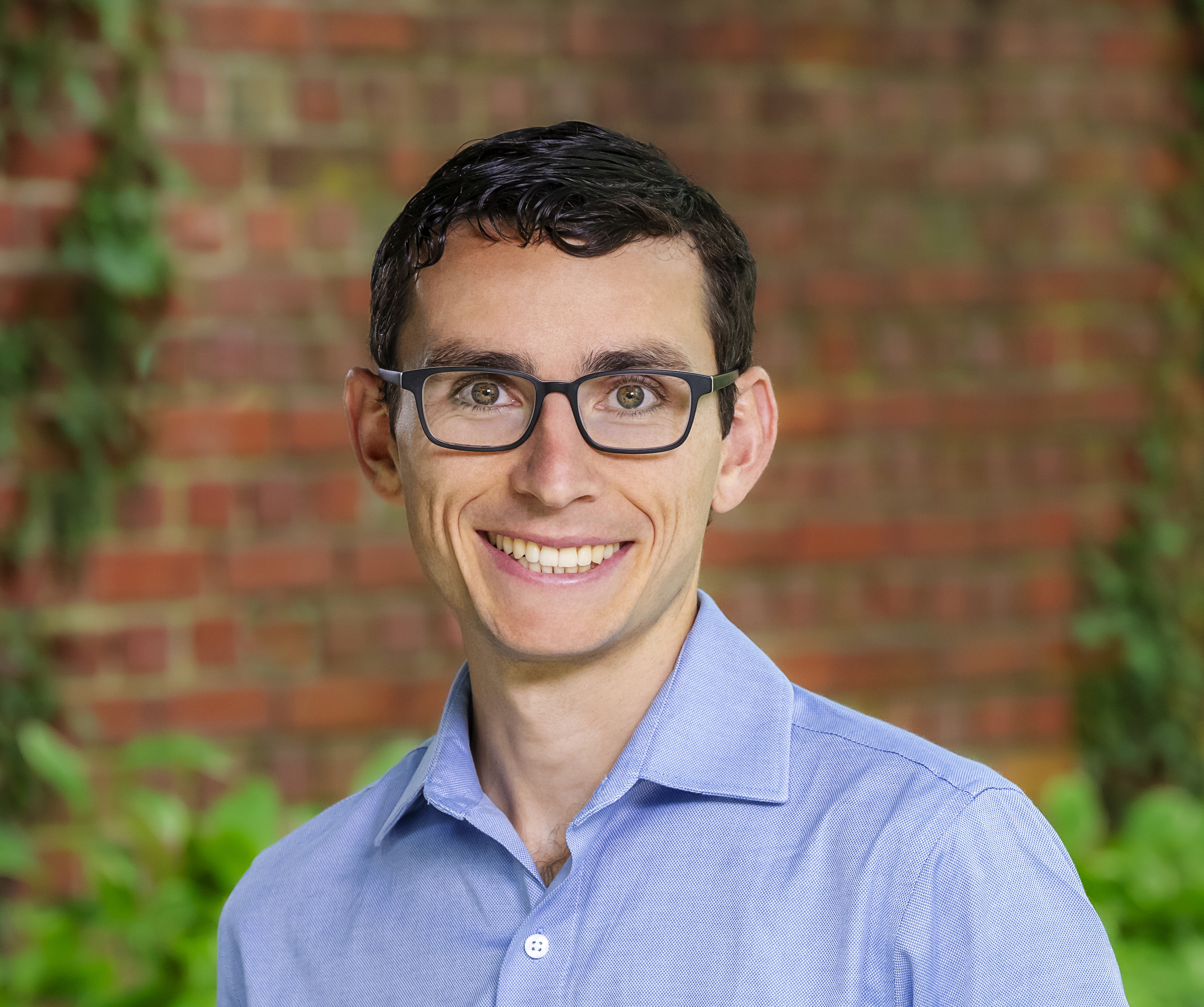
Benjamin Eysenbach leads the Princeton Reinforcement Learning Lab, where he designs algorithms that enable artificial intelligence systems to learn intelligent behaviors through trial-and-error, specializing in self-supervised methods that eliminate the need for human labels. He joined Princeton after completing his PhD in machine learning at Carnegie Mellon University under Ruslan Salakhutdinov and Sergey Levine, supported by the NSF Graduate Research Fellowship and Hertz Fellowship. His research bridges fundamental machine learning principles with practical applications in robotics and decision-making systems. Eysenbach's research focuses on developing self-supervised reinforcement learning algorithms that enable autonomous skill acquisition without external rewards. His investigations span contrastive learning methods, temporal abstraction techniques, and scalable architectures for goal-conditioned behaviors. These innovations aim to create more efficient and generalizable learning systems that can discover useful behaviors from unlabeled experience. Eysenbach's publications demonstrate consistent advancement in self-supervised RL methodologies, with recent work focusing increasingly on temporal abstraction and representation learning theory. His research shows progression from foundational contrastive RL frameworks toward more sophisticated analyses of generalization properties and uncertainty quantification. The 2025 works indicate expanding investigation into hierarchical control, probabilistic alignment, and hyper-deep network architectures. Eysenbach has been recognized with prestigious awards including the Hertz Fellowship and NSF Graduate Research Fellowship, supporting his doctoral research in self-supervised RL methodologies. His work has been presented at top machine learning conferences including NeurIPS, ICML, and ICLR. As director of the Princeton Reinforcement Learning Lab, Eysenbach oversees research initiatives in self-supervised RL, including projects on intention-conditioned modeling, horizon generalization, and contrastive learning frameworks. He has secured funding from the Princeton AI Lab to study neural correlates of temporal contrast in decision-making. Eysenbach teaches courses in reinforcement learning and has developed new benchmarks like JaxGCRL to accelerate research in goal-conditioned RL.
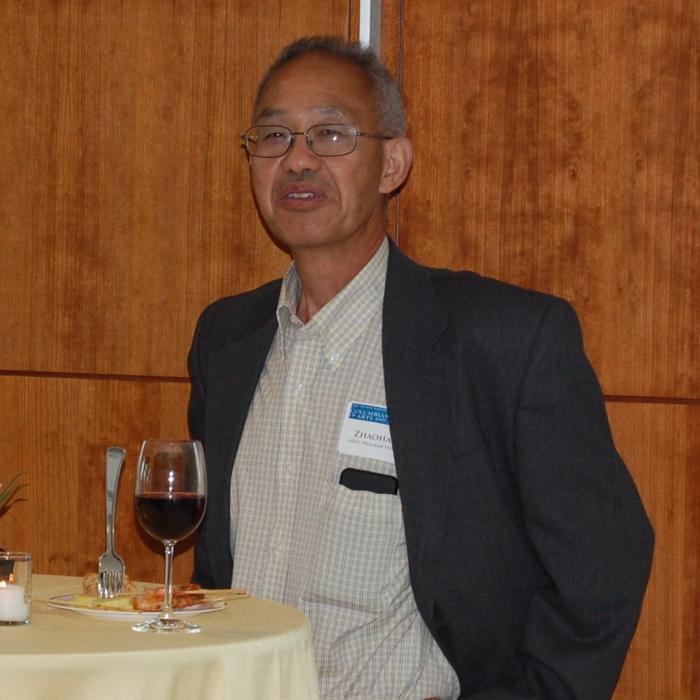
Dr. Zhaohai Li Professor of Statistics at George Washington University, specializing in statistical methodologies for genetic epidemiology and clinical biostatistics. His research focuses on meta-analysis techniques, empirical Bayes methods, and population-based study designs. He has contributed extensively to improving statistical approaches in clinical trials and addressing challenges in genetic association studies. Education: Ph.D. in Statistics, Columbia University, 1989 Research Interests: His work addresses critical issues in modern biostatistics including: Population stratification in genetic studies Hardy-Weinberg equilibrium testing Optimal experimental design for case-control studies Handling missing data in genetic linkage analysis Development of robust statistical tests for complex survey data Publications Overview: Dr. Li's recent work emphasizes methodological advancements in: Bayesian approaches to population genetics Meta-analytic frameworks for combining study results Statistical solutions for multi-stage clinical trials Algorithmic improvements for genome-wide association analyses Professional Contributions: His articles consistently address practical challenges in biomedical research, bridging theoretical statistics with real-world genetic and clinical applications.
Ali Ramezani-Kebrya is an Associate Professor with tenure in the Department of Informatics at the University of Oslo (UiO), where he leads research in machine learning theory. He holds dual Principal Investigator roles at the Norwegian Center for Knowledge-driven Machine Learning (Integreat) and SFI Visual Intelligence, and is an active member of the European Laboratory for Learning and Intelligent Systems (ELLIS) Society. His service includes Area Chair positions for NeurIPS and AISTATS, and Action Editor for Transactions on Machine Learning Research. His research focuses on theoretical foundations of deep learning with emphasis on understanding input data distribution encoding in neural network layers. Key themes include minimizing statistical risk under resource constraints, addressing distribution shifts in distributed settings, and developing practical tools for robust federated learning. Current applications span emotion recognition, marine data analysis, and neuroscience, reflecting his commitment to real-world machine learning challenges as evidenced by his FRIPRO-funded Machine Learning in Real World (MLReal) project. Recent publication trends reveal three dominant threads: (1) label/covariate shift mitigation in distributed systems through entropy regularization and density ratio estimation; (2) communication-efficient optimization via layer-wise quantization and adaptive compression techniques achieving 150% speedups; and (3) robustness guarantees against tailored attacks and distribution shifts. These works consistently bridge theoretical bounds with empirical validation across domains from GAN training to federated settings. Scientific recognition includes: FRIPRO Grant for Early Career Scientists (2025) for MLReal project SFI Visual Intelligence Spotlight Publication award (2023) for federated learning work He actively mentors 11 graduate students across Oslo and Tromsø universities, with recent PhD placements at Apple and NVIDIA. Current grant portfolio features the FRIPRO Early Career award and leadership roles in two major Norwegian research centers. His lab maintains strong industry collaborations through Vector Institute and EPFL, with recent hiring for PhD and postdoc positions in physics-informed machine learning.
Bin Nan serves as Chancellor's Professor in the Department of Statistics at the University of California, Irvine, where he develops statistical and machine learning methodologies to advance biomedical research and improve human health outcomes through rigorous data analysis. His educational credentials demonstrate a strong quantitative foundation: Ph.D. in Biostatistics, University of Washington (2001) M.S. in Biostatistics, University of Washington (1999) M.S. in Statistics, Virginia Commonwealth University (1997) M.S. in Aerospace Engineering, Beijing University of Aeronautics & Astronautics (1987) B.S. in Aerospace Engineering, Beijing University of Aeronautics & Astronautics (1984) Nan's research program focuses on developing cutting-edge statistical methods for survival analysis, longitudinal data, high-dimensional inference, and machine learning, with direct applications to epidemiology, bioinformatics, and brain imaging. His work addresses critical challenges in biomedical data such as temporal dependence in neuroimaging sequences, estimation of large correlation matrices, and analysis of disease onset with terminal events, all aimed at identifying biomarkers for earlier disease diagnosis. Analysis of his recent publications (2015-2023) reveals a consistent trajectory toward methodological innovation in handling complex biomedical data structures, particularly through de-biased lasso techniques for survival models, neural network applications to censored data, and specialized approaches for longitudinal data with terminal events. These advances predominantly support Alzheimer's disease research and transplant outcome studies. No specific scientific awards were documented in the source material. His research program maintains continuous funding through National Science Foundation and National Institutes of Health grants, including a recent $1.8 million award for Alzheimer's disease methodology development. Nan actively collaborates with the UCI Alzheimer's Disease Research Center and UCI Center for the Neurobiology of Learning and Memory, though student advising details were not provided. His teaching portfolio includes advanced graduate courses in probability theory, survival analysis, and high-dimensional inference. Nan operates within interdisciplinary biomedical research teams focused on translating statistical innovation into clinical applications, particularly through brain imaging analysis and biomarker identification for neurodegenerative diseases.
Prof. Melanie Schienle is a Professor and Chair of Statistical Methods and Econometrics at the Department of Economics and Management, Karlsruhe Institute of Technology (KIT). She also holds a professorship in the Department of Mathematics at KIT since 2021. Her expertise spans statistical methods, econometrics, financial risk analysis, and forecasting. She leads the HKMetrics Network and the RespiNow Hub for respiratory disease forecasting. She serves as a Senior Fellow at the Rimini Center for Economic Analysis (RCEA), a steering committee member of the German Economic Association, and a member of the University Research Council at KIT. Education: Ph.D. (Dr. rer. pol.) in Economics from Mannheim University (2008), summa cum laude; Diploma in Mathematics (University of Karlsruhe, 2003) with a minor in theoretical physics. She has held academic positions at Leibniz University Hannover (2012–2015) and Humboldt University of Berlin (2008–2012). Research interests focus on financial networks, systemic risk, time series analysis, and machine learning applications in economics. She co-leads projects on nowcasting and forecasting, including collaborative efforts during the pandemic to predict hospitalizations. Her work integrates advanced statistical techniques with real-world policy implications. Prof. Schienle is an Associate Editor for the International Journal of Forecasting and Journal of Time Series Analysis . She has authored over 50 peer-reviewed publications and contributed to high-impact journals like Nature Communications and Journal of Business & Economic Statistics . She leads the Institute of Statistics at KIT and chairs the MathSEE initiative for interdisciplinary mathematical applications.
Kari Lappalainen is an Assistant Professor in the Department of Electrical Engineering at Tampere University, affiliated with the Faculty of Information Technology and Communication Sciences. His research focuses on photovoltaic power systems, energy storage technologies, and renewable energy integration. He leads studies on photovoltaic module aging, parameter identification, and energy storage system optimization for power smoothing and ramp rate control. Key research interests include: Photovoltaic module diagnostics and performance analysis Energy storage system design for hybrid renewable plants Impact of environmental factors (e.g., temperature, cloud cover) on PV efficiency Advanced modeling techniques for photovoltaic systems Recent work emphasizes real-time monitoring of PV degradation via current-voltage curve analysis and optimization of energy storage configurations to mitigate power fluctuations. Over 50 peer-reviewed publications demonstrate sustained contributions to renewable energy systems research. Notably absent are awards or formal advisee listings, though collaboration with institutions like EU PVSEC and frequent conference participation indicate active academic engagement.
Yang Liu is an Assistant Professor in the Department of Electrical and Computer Engineering at the Baskin School of Engineering, University of California, Santa Cruz. Previously, they were affiliated with Harvard University and earned their PhD in 2015 from the Department of EECS at the University of Michigan, Ann Arbor. Their research lies at the intersection of machine learning, fairness, and trustworthy AI, with a strong focus on large language models, federated learning, and causal reasoning. Their research interests include: Machine Learning and Fairness Federated and Privacy-Preserving Learning Large Language Model Safety and Unlearning Causal Inference and Counterfactual Reasoning Anomaly Detection and Robust Forecasting Human-AI Interaction and Ethical AI Recent publications (2024–2025) demonstrate a strong trend in developing methods for machine unlearning, fairness in LLMs, and robustness under label noise and distribution shifts. Their work frequently appears in top-tier venues such as NeurIPS, ICLR, ICML, AAAI, and KDD, often in collaboration with researchers like Zhaowei Zhu, Mingyan Liu, Jiaheng Wei, and Kun Zhang. Themes include algorithmic fairness, model accountability, and human-aligned AI systems. Scientific contributions include: Frameworks for LLM unlearning and model editing Methods for fair classification and recourse Robust time series forecasting under anomalies Test-time adaptation in multimodal models Causal approaches to debiasing and policy learning While no formal advising list is provided, the depth and volume of collaborative work suggest active mentorship of graduate students and postdocs. Their research program is highly active, with numerous ongoing projects in trustworthy and socially responsible AI.
Professor Yue Rong is a Full Professor at Curtin University's Department of Electrical and Computer Engineering, within the School of Electrical Engineering, Computing and Mathematical Sciences. He holds editorial roles at IEEE Transactions on Signal Processing and IEEE Wireless Communications Letters. His research focuses on signal processing for communications, underwater acoustic systems, wireless networks, and healthcare IoT. Rong has authored over 140 journal and conference papers and received multiple awards, including the 2010 Young Researcher of the Year Award. Education: B.E. (Electrical Engineering), Shanghai Jiao Tong University (1999) M.Sc. (Electrical Engineering), University of Duisburg-Essen (2002) Ph.D. (Electrical Engineering), Darmstadt University of Technology (2005) Research Interests: Rong's work spans cooperative MIMO communications, underwater acoustic systems, OFDM modulation, radar-based healthcare monitoring, and secure wireless protocols. His innovations include adaptive modulation schemes for underwater environments and radar-based vital signs detection. Recent trends in his publications emphasize AI-driven signal processing for healthcare IoT and underwater optical communication systems. Awards: Best Paper Awards (WCSP 2011, APCOMM 2010) Chinese Government Award (2004) DAAD/ABB Fellowship (2001-2002) Grants & Labs: His research is supported by grants focusing on UAV-enabled data collection and underwater network optimization. He leads projects in the Distributed Data Fusion and Emerging Technologies (DDFE) lab, advancing radar-cardiography and wearable health monitoring systems.
Ruth Urner is an Associate Professor in the Department of Electrical Engineering and Computer Science at York University's Lassonde School of Engineering. She holds a PhD in Computer Science from the University of Waterloo (2013) and completed postdoctoral research at Max Planck Institute for Intelligent Systems (Germany), Carnegie Mellon University, and Georgia Tech. She was a Simons-Berkeley Fellow at the Simons Institute in 2017. Research Focus: Dr. Urner develops mathematical foundations for machine learning paradigms including semi-supervised/active learning, transfer learning, and adversarial robustness. Her current work addresses societal impacts of ML through interpretability and fairness frameworks. She leads projects on strategic classification, robust PAC learning, and calibrated model evaluation. Awards & Leadership: Simons-Berkeley Fellowship (2017) Best Paper Award at NIPS 2015 Workshop on Transfer Learning Organizer: Women in Machine Learning Theory workshops (COLT/ALT) Program Committee: NeurIPS, ICML, COLT, ICLR, AISTATS Teaching & Advising: She teaches Machine Learning Theory, Computational Logic, and Introduction to ML at York University. Current student advisees include Master's candidate Alireza Torabian. She has lectured at international summer schools including Hausdorff School on Algorithmic Data Analysis (Germany) and SMILES Summer School (Russia). Affiliations: Faculty affiliate at Vector Institute (Toronto) and collaborator with Max Planck Institute systems. Her lab investigates theoretical guarantees for learning algorithms under distribution shifts and adversarial conditions.
Andreas Peter Burg is a Tenured Associate Professor at the École Polytechnique Fédérale de Lausanne (EPFL), where he leads the Telecommunications Circuits Laboratory (TCL) within the School of Engineering. He holds multiple academic and administrative roles at EPFL including Associate Professor in Teaching (SEL, EDMI, EDEE), Director of SEL Management, and Member of the Doctoral Program Committee for Electrical Engineering. Dr. Burg received his Dipl.-Ing. degree in 2000 and Dr. sc. techn. degree in 2006 from ETH Zurich. His academic career includes positions as SNF Assistant Professor at ETH Zurich (2009-2011) before joining EPFL in January 2011 as a Tenure Track Assistant Professor, where he was promoted to Tenured Associate Professor in June 2018. His research focuses on circuits and systems for telecommunications , with particular expertise in silicon implementation of communication technologies, communication algorithms optimization for hardware, low-power VLSI signal processing, and digital integrated circuits. His work bridges theoretical communication concepts with practical circuit implementations, addressing challenges in wireless and wired communication systems. His recent publications (2024-2025) demonstrate a strong focus on next-generation communication technologies including 6G systems, advanced error correction coding, wireless sensing applications, and ultra-low power circuit design. These works span multiple subfields from LDPC and polar code decoding to RF signal processing and machine learning applications in wireless systems. Willi Studer Award (2000) ETH Medal for diploma thesis (2000) ETH Medal for Ph.D. dissertation (2006) Swiss National Science Foundation Assistant Professorship grant (2008) Dr. Burg has been involved in the development of more than 25 ASICs throughout his career and co-founded Celestrius, an ETH spinoff in MIMO wireless communication. His laboratory work focuses on practical implementations of communication algorithms with emphasis on power efficiency and hardware optimization. Current research directions include 6G technologies, wireless sensing applications, and novel error correction techniques for next-generation communication systems.