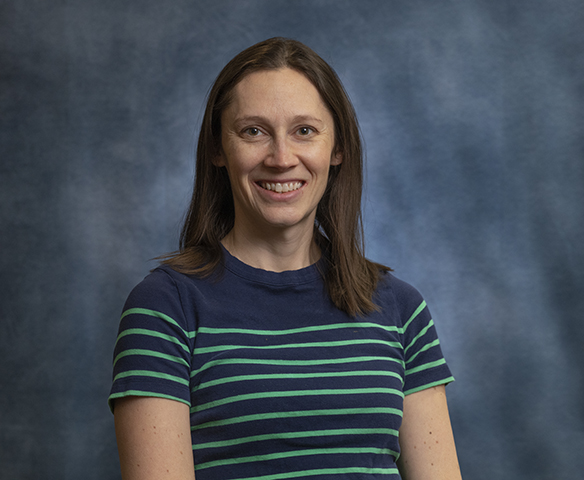
Matteo Lisi is a Lecturer in the Department of Psychology at Royal Holloway University of London. His research examines how humans process uncertainty in decision-making across perceptual, financial, and medical contexts, combining behavioral experiments with computational modeling. He actively shares code and data on GitHub and OSF. Role: Lecturer in Psychology Institution: Royal Holloway University of London Research Focus: Visual perception, interoception, and uncertainty computation Research Outputs: His recent work includes studying error correction in diverse populations, mapping visual contrast sensitivity with fMRI, and analyzing cardiac interoception in infants. Articles explore motion perception extrapolation, visual hallucinations from Ganzflicker, and prior knowledge effects in childhood vision development. Collaborative Projects: Currently involved in an MRC-funded study on sex differences in interoception and mental health across the menstrual cycle, alongside Dr. James Shinskey and others.
Atousa Hajshirmohammadi serves as a Senior Lecturer at Simon Fraser University's School of Engineering Science, where she has taught since 2004 after returning from industry experience at LSI Logic Inc. in Silicon Valley. Her academic journey includes B.Sc. and M.Sc. degrees in Electrical and Computer Engineering from Isfahan University of Technology and a Ph.D. in Communications Engineering from the University of Waterloo. Her research spans two primary domains: technical communications and engineering pedagogy. In digital communications, she focused on multimedia transmission, cognitive radio networks, and unequal error protection until approximately 2015. Her pedagogical research, which dominates recent work, investigates experiential learning, student wellbeing, time management strategies, and innovative teaching methods in engineering education. Her publication trend shows a clear shift from wireless communications research (2000-2015) to educational scholarship (2015-present), with significant contributions to IEEE Communications Magazine and Frontiers in Education conferences. Supported by multiple SFU Teaching and Learning Development Grants, she has developed tangible lab assignments, interactive online quizzes, and wellbeing-focused learning environments. Her outreach includes workshops like the Insect-Robot program for K-7 students and collaborations with SFU's Health Promotion unit. While her technical research involved graduate students, her primary role as teaching faculty emphasizes curriculum innovation rather than traditional graduate supervision.
Lindsey Bosko-Dunbar is an Associate Professor of Mathematics at St. Norbert College, where she teaches courses ranging from foundational calculus to advanced algebra and financial mathematics. She actively organizes the annual PME Conference, fostering academic collaboration in mathematical education. B.S. in Mathematics Secondary Education from Elizabethtown College M.S. and Ph.D. in Mathematics from North Carolina State University Her research focuses on Leibniz and Lie algebras, exploring their structural relationships and applications in cryptography. She also mentors student projects in recreational mathematics and games, bridging theoretical concepts with practical engagement. Recent publications highlight her work on maximal subalgebras, nilradical structures, and Frattini theory in Leibniz algebras, alongside cryptographic applications. These contributions align with broader interests in algebraic systems and applied mathematical methods. Educator of the Year, Norbertine Leadership & Service Awards (2022) Bosko-Dunbar teaches core courses such as Calculus, Abstract Algebra, and Financial Mathematics, while integrating her research into student mentorship programs. She maintains active involvement in mathematical societies and academic outreach initiatives.
Diana Ilieva Radkova is an Assistant Professor in the Department of Algebra at the Faculty of Mathematics and Informatics, Sofia University. Her research focuses on coding theory with emphasis on algebraic structures of error-correcting codes. Education: PhD (Candidate of Mathematical Sciences) from Delft University of Technology, 2009 MSc (Master of Mathematics) from Sofia University "St. Kliment Ohridski", 2001 Research Focus: Dr. Radkova specializes in Coding Theory , particularly investigating cyclic codes, constacyclic codes, and their algebraic properties. Her work explores the relationship between coding theory and algebraic concepts such as invariant subspaces, finite fields, and matrix theory. She has conducted significant research on bounds for minimum distance in various code structures, with special attention to cases where field characteristic divides code length. Her research has practical applications in error detection and correction for reliable data transmission. Publication Analysis: Dr. Radkova's publications from 2007-2009 demonstrate a cohesive research trajectory in algebraic coding theory. Her work consistently examines cyclic and constacyclic codes through algebraic frameworks, particularly focusing on invariant subspaces. A major theme across her publications is establishing theoretical bounds for minimum distance in code structures, with specialized investigations into cases where field characteristic divides code length. Her collaborations with researchers from Delft University of Technology (particularly A.J. van Zanten) and Bulgarian colleagues (notably A. Bojilov) highlight international and domestic research partnerships. Teaching Responsibilities: Dr. Radkova teaches exercises in "Linear Algebra and Analytic Geometry" for various physics-related programs including Physics, Astronomy, Meteorology and Geophysics, Engineering Physics, and Nuclear Engineering and Energy. Her office hours are held Monday 13:00-15:00 and Tuesday 15:00-17:00 in room FzF-14 at the Faculty of Mathematics and Informatics.
Dr. habil. Christoph Lossen is a Professor at the Department of Mathematics, Rheinland-Pfälzische Technische Universität Kaiserslautern-Landau, and has served as Managing Director of the Mathematics Examination Office since 2006. His academic career spans roles such as Hochschuldozent (2002–2006) and scientific assistant (1994–2002) at TU Kaiserslautern. His research focuses on Algebraic Geometry, Singularity Theory, and Computer Algebra, with significant contributions to the development of SINGULAR software and the study of plane curve singularities and equisingular families. 1986: Abitur at Willi-Graf-Gymnasium Saarbrücken 1987–1994: Diplom in Mathematics and Economics at TU Kaiserslautern 1998: PhD (Dr. rer. nat.) at TU Kaiserslautern 2002: Habilitation in Mathematics at TU Kaiserslautern His research interests include the geometry of equisingular families, computational methods in algebraic geometry, and the analysis of plane curves with prescribed singularities. He has co-authored foundational books such as Introduction to Singularities and Deformations and developed SINGULAR libraries for equisingular strata and AG codes. The 15 most recent publications highlight his work on singularity theory, computer algebra, and equisingular deformations, with a focus on plane curves, zero-dimensional schemes, and algorithmic solutions. These span mathematics education in higher education organization (2010) to studies on Hessian determinants (2004) and minimal-degree curves (1998). Lossen has not been explicitly mentioned to advise students or receive grants in the provided text. However, he has contributed extensively to the development of SINGULAR, a computer algebra system, and co-authored influential works with G.-M. Greuel and E. Shustin.
Prof. Meir Ariel serves as a Professor in the School of Electrical Engineering at Tel Aviv University and heads the university's Space Engineering Center, an interdisciplinary hub for "new space" research focused on satellite development for scientific missions including cosmic radiation monitoring and hyperspectral environmental sensing. His academic foundation comprises a B.Sc., M.Sc. (with honors), and PhD in Electrical Engineering from Tel Aviv University, specializing in algebraic structures of codes and fast decoding methods. Prior industry experience spans communication systems, satellite technology, and computer vision across Israeli and international high-tech sectors. Research domains prominently feature: Space engineering and miniaturized satellite systems (e.g., Tevel2 nano-satellite swarm launched March 15, 2025) Quantum cryptography including post-quantum algebraic encryption and satellite-based quantum key distribution Advanced satellite communication under unstable SNR conditions Classical/quantum error-correcting codes with fast decoding algorithms Hyperspectral remote sensing for climate applications Optical communications and payload deployment technologies As director of the Space Engineering Center, he oversees active projects in cosmic radiation monitoring, hyperspectral imaging, automated ground stations, and quantum encryption, while supervising graduate students in space systems development and theoretical communications research.
Kazimierz Choroś is a Professor at the Department of Applied Informatics , Faculty of Information and Communication Technology , Wrocław University of Science and Technology. He held leadership roles as Deputy Director of the Institute of Informatics (2008-2014) and Deputy Dean of the Faculty of Computer Science and Management (2016-2020). Research interests: digital image/video processing, content-based video indexing, computer animations, multimedia systems, web systems analysis, and information systems design. Organizer and Chair of the International Conference on Multimedia & Network Information Systems (MISSI 2022) Chair of Special Session WebSys 2020 at ICCCI 2020 Other activities: Since 1993, member and former President (1993-2002) of the SAGE Association (Polish Graduates of French Grandes Ecoles). Since 1982, member of the Polish Numismatic Society, author of dozens of numismatic publications, and Editor-in-Chief of Wrocławskie Zapiski Numizmatyczne (2003-present). Contact: Email: kazimierz.choros@pwr.edu.pl Phone: +48-71.320.3799 Office: Building D2, Room 201/1 Address: Wrocław University of Science and Technology, Wyb. Wyspiańskiego 27, 50-370 Wrocław, Poland
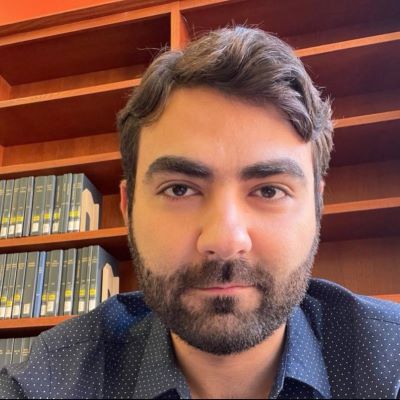
Mohammadreza MOUSAVI-KALAN is an Assistant Professor of Statistics at CREST-ENSAI. Previously, he was a postdoctoral fellow in the Department of Statistics at Columbia University. He received his Ph.D. in Electrical Engineering from the University of Southern California (USC) and his B.Sc. from Sharif University of Technology. Dr. MOUSAVI-KALAN's research focuses on theoretical foundations at the intersection of statistics and distributed computing. His primary interests include statistical machine learning, transfer learning, optimization theory, and distributed computing systems. He investigates how to design efficient algorithms that can leverage knowledge across related tasks while providing rigorous theoretical guarantees for learning procedures. His work addresses fundamental questions about sample complexity, computational efficiency, and statistical performance in modern machine learning settings. His publication record reveals a clear research trajectory from foundational work on distributed optimization (2018-2019) toward specialized topics in transfer learning and statistical hypothesis testing (2020-2025). A consistent theme across his work is establishing theoretical limits (minimax bounds, rate analyses) for practical machine learning problems. His recent publications focus on outlier detection, Neyman-Pearson classification frameworks, and transfer learning theory, demonstrating evolution toward more specialized statistical learning problems with practical applications. Dr. MOUSAVI-KALAN has established strong collaborative ties with researchers at USC, including Mahdi Soltanolkotabi, Salman Avestimehr, and Songze Li. His most influential work includes the Lagrange coded computing framework for distributed systems, which addresses critical challenges in resiliency, security, and privacy. His research bridges theoretical computer science, statistical learning theory, and practical distributed systems challenges, with implications for secure and efficient large-scale machine learning applications.
Marika Kieferova is a Senior Lecturer at the School of Computer Science, University of Technology Sydney (UTS), and a researcher at the UTS Centre for Quantum Software and Information (QSI). She previously held a postdoctoral position at UTS and earned her PhD in Physics and Astronomy from the University of Waterloo (2019) with a cotutelle from Macquarie University. Research Interests Her work spans quantum computing, quantum simulation, and quantum information theory. Key areas include developing quantum algorithms for Hamiltonian simulation, error mitigation strategies, and entanglement-induced optimization challenges in quantum neural networks. She explores non-Abelian anyon braiding, engineered dissipation for correlated states, and bound states of interacting photons in superconducting qubit arrays. Article Trends Her recent publications focus on quantum dynamics in many-body systems, error suppression techniques, and algorithmic advancements. Topics include phase transitions in random circuits, superdiffusive quantum transport, and randomized multi-product formulas for efficient simulation. These works highlight her contributions to quantum chemistry, topological quantum computing, and NISQ-era applications. Scientific Awards QIP Best Poster Award (2020) IQC Achievement Award (2019) Grants and Leadership She leads the QB-suite grant for quantum algorithm design (2024-2027) and contributes to defense quantum optimization projects (2021-2024). She serves as an associate editor for Quantum Science and Technology and participates in peer review for Physical Review A.
Shunsuke Horii is an Associate Professor at the Center for Data Science, Waseda University. His research spans information theory, coding theory, statistical learning theory, and data science applications. He actively collaborates with industry through initiatives like the Waseda Data Science Consortium. Education: Ph.D. in Science and Engineering from Waseda University (2009), Master's from Waseda University Graduate School of Science and Engineering (2004). Research Focus: Addresses causal effect estimation in data science using Bayesian decision theory, sparse modeling, and optimization techniques like ADMM and variational inference. Develops efficient algorithms for multiuser communication, matrix completion, and privacy-preserving distributed computing. Teaching: Instructs courses on statistics literacy, data science, and programming with Python/R across multiple academic quarters. Grants: Leads projects funded by Japan Society for the Promotion of Science, including causal inference frameworks, product recommendation systems, and business analytics. Publications: 21 papers with 61 Scopus citations, focusing on LP decoding, Bayesian hierarchical models, and statistical causal analysis.
Ronghui Gu is the inaugural Tang Family Associate Professor of Computer Science at Columbia University's Fu Foundation School of Engineering and Applied Science. He leads a research group focused on building verified systems software and serves on program committees for major conferences including PLDI, POPL, OSDI, and SOSP. His educational background includes: Ph.D. in Computer Science from Yale University (2016), where he received the Distinguished Dissertation Award B.S. in Computer Science from Tsinghua University (2011), graduating with Highest Distinction (3 out of 140) Gu's research centers on certified software systems, spanning programming language design, OS kernel development, formal semantics, compiler development, proof engineering, and concurrency. His work bridges theoretical foundations with practical systems, particularly in the areas of formal verification for operating systems, distributed protocols, and quantum computing. He has pioneered approaches that combine formal methods with machine learning techniques to automate verification tasks that were previously intractable. Analysis of his publication record shows a clear trajectory from foundational work on verified operating systems (CertiKOS, mCertiKOS) to broader applications in distributed systems (DistAI, DuoAI), quantum computing (Gleipnir, Giallar, HyperQ), and blockchain security. His recent work increasingly focuses on automation techniques that make formal verification practical for real-world systems. His notable achievements include: OSDI Jay Lepreau Best Paper Award (2021) SOSP Best Paper Award (2019) Multiple Amazon Research Awards (2021-2025) NSF CAREER Award (2023) VMware Systems Research Award (2023) CACM Research Highlight Gu has secured substantial research funding including a $4.5 million DARPA grant for Verified Enclave Layers. He has advised numerous PhD students who have gone on to positions at top institutions and companies. As founder of CertiK, a Web3 cybersecurity unicorn valued at $2 billion, he has successfully translated academic research into real-world impact, securing over $300 billion in cryptocurrency assets. His lab maintains active collaborations with industry partners including VMware, AWS, Google, and quantum computing companies, focusing on making formal verification practical for critical systems.
Peter O'Hearn is a Professor of Computer Science at University College London and Research Scientist at Meta AI (FAIR), renowned for co-developing separation logic which bridges theoretical computer science and industrial-scale program analysis. His dual affiliation exemplifies the synergy between academic research and practical tool development that characterizes his career. His research interests focus on program verification , separation logic , static analysis , and his recent groundbreaking work on incorrectness logic as a complementary approach to traditional verification. O'Hearn pioneered the concept of local reasoning which enables modular verification of large codebases by focusing only on relevant memory regions, forming the theoretical foundation for Facebook Infer. His publications reveal a consistent trajectory from foundational theory to industrial application, with recent work emphasizing Scalable verification for million-line codebases Compositional reasoning for concurrent systems Practical deployment of formal methods in developer workflows Bug-oriented reasoning through incorrectness logic His research consistently addresses the tension between theoretical soundness and practical applicability in program analysis. Notable scientific awards include: 2021 IEEE Cybersecurity Award for Practice 2016 Gödel Prize for separation logic 2016 CAV Award for outstanding contributions POPL 2019 Most Influential Paper Award Fellow of the Royal Society (FRS) Fellow of the Royal Academy of Engineering (FREng) O'Hearn has made substantial contributions to industrial practice through Facebook Infer, which analyzes millions of lines of code daily across Meta's codebase. His work on continuous reasoning integrates formal verification into developer workflows, while his recent focus on incorrectness logic addresses the critical need for effective bug detection in large systems. He maintains active leadership in the programming languages community through conference organization and keynotes.
Dr. Jarred Lloyd is an active Internal Grant-Funded Researcher (A) at the University of Adelaide within the School of Physics, Chemistry and Earth Sciences, Faculty of Sciences, Engineering and Technology. His primary affiliation is with the Department of Earth Sciences where he conducts research in radiometric geochronology, stratigraphy, sedimentology, tectonics, and geochemistry. His research focuses on detrital zircon provenance, stratigraphy, and the paleogeographic and tectonic evolution of the Neoproterozoic Adelaide Superbasin. Current projects investigate novel in-situ geochronometry on lithium-rich minerals in LCT-type pegmatites and their geochemical and spectral characteristics. He advocates for open science, environmentally responsible practices, accessibility, and equality in research. Lloyd completed his Bachelor of Science (Honours) at the University of Adelaide in 2014 and returned for his PhD in Earth Sciences, awarded in 2022. His doctoral research centered on the detrital zircon provenance and tectonic evolution of the Adelaide Superbasin. With expertise in data management, visualization, statistics, and programming (Julia, R, VBA), he applies computational approaches to geological problems. His publication record shows significant contributions to geochronology methodology, particularly in laser ablation techniques, Rb-Sr dating, and detrital zircon analysis. Recent work addresses critical minerals in pegmatites, Cryogenian glaciation dating, and supercontinent reconstruction. His research demonstrates strong technical innovation in analytical geochronology. Lloyd is eligible to co-supervise Masters and PhD students, reflecting his active research role. His technical skills in coding and data visualization support modern geological research practices, while his advocacy for open science and accessibility contributes to broader scientific community development.
Andrea De Lucia serves as Full Professor in the Department of Computer Science at the University of Salerno, Italy, maintaining an active research profile with office hours at Fisciano Campus (Building F2, Room 089) and correspondence via adelucia@unisa.it. His scholarly contributions span software engineering with particular emphasis on security, mobile systems, and emerging quantum applications. His research portfolio demonstrates evolving focus through distinct phases: 2018-2020 : Code smell analysis and mobile energy efficiency (e.g., Android energy consumption studies) 2021-2022 : Security vulnerability lifecycle and quantum software engineering foundations 2023-2025 : Ethical AI integration (fairness in ML engineering) and advanced exploit prediction Recent publications reveal strategic expansion into quantum-computing applications and AI ethics, maintaining core software engineering principles while addressing contemporary challenges in secure, reliable systems development. His work consistently bridges theoretical frameworks with empirical validation through large-scale studies. De Lucia actively contributes to the software engineering community as program committee member for premier conferences including ICSE, ASE, and ICSME across multiple years (2018-2026), demonstrating sustained leadership in the field.
Weidong Xiang is a Professor in the Department of Electrical and Computer Engineering at the University of Michigan-Dearborn's College of Engineering and Computer Science. His research focuses on wireless communication systems, vehicular networks, and cybersecurity innovations for automotive applications. Education: Ph.D. and M.S. in Electrical Engineering from Tsinghua University Research interests span vehicular communication protocols , MIMO/beamforming architectures , RFID security , and ultra-wideband (UWB) systems . He has pioneered work on nonlinear companding, depth-first ML decoding algorithms, and energy-harvesting wireless systems. Recent publications highlight trends in deep learning for wireless sensing , GPS error prediction using LSTMs , and DSRC channel modeling . His work integrates AI and cybersecurity into automotive communication infrastructures. Grant history includes projects funded by: NSA/DoD for cybersecurity-AI integration (2024-2027) Ford Motor Company for MIMO/DSRC systems (2019-2022) NSF grants for vehicular sensing (2015-2016, 2013-2014) DoE funding for smart grid SDR prototypes (2010-2011) He holds a patent for an Enhanced Carrier Frequency Estimator applicable in WiFi, WiMax, and WAVE systems.