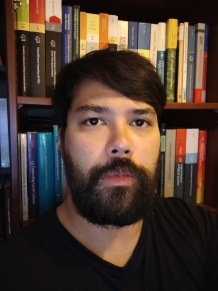
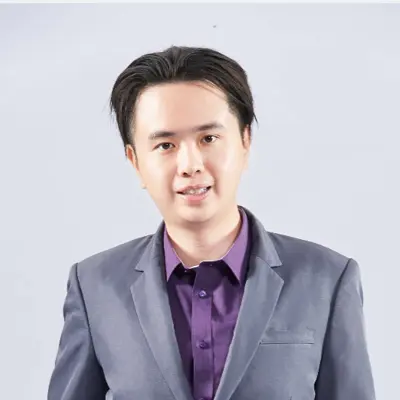
Dr. Simon Watt is a Senior Lecturer in the Department of Psychology at Bangor University's School of Psychology and Sport Science, where he has worked since 2004. He directs the Cognitive Neuroscience Institute and integrates fundamental science with practical applications through his research in Pasteur's Quadrant framework. PhD in Psychology (2001) - University of Surrey MSc in Research Methods in Psychology (1996) - University of Surrey BSc in Psychology (1994) - Cardiff University His research explores sensorimotor control and 3D vision, focusing on tool use, multisensory integration, and visual-haptic interactions. Key applications include prosthetic hand development and VR display optimization . Article analysis shows consistent themes in 3D perception , haptic integration , and robotic control frameworks across 2000-2024. Notable collaborative work includes international projects with institutions like UC Berkeley. 2023 Queen's Anniversary Prize REF 2021 Top 30 UK for Societal Impact As module organizer for Masters Research Rotation (PRP-4013) and Undergraduate Dissertation modules, he supervises Molly Hewitt on next-gen prosthetics research with Ambionics.
Dr. Alex Marchant is a Senior Lecturer in Psychology at London South Bank University (LSBU), affiliated with the School of Applied Science and the Division of Psychology. He serves as Course Leader for the MSc Psychology program. His academic background includes a BSc in Psychology, an MSc in Research Methods for Psychology, and a PhD in Visual Attention and Perception from Goldsmiths, University of London. Dr. Marchant specializes in teaching quantitative research methods and statistics across undergraduate, master’s, and PhD levels. His research focuses on pedagogy, particularly strategies to support diverse student cohorts in mastering research methods and statistics. He has presented his findings at national conferences and explores mixed-methods approaches in applied cognitive research, including topics like dyslexia, binge eating, and safeguarding transgender youth. His work contributes to the UN Sustainable Development Goal on Education. Notably, he has won the LSBU ‘Outstanding Lecturer’ award (2017 and 2016) and been Highly Commended multiple times. His research spans quality control processes, cognitive biases, and ensemble perception, with publications in journals like Clinical Psychology and Psychotherapy and Human Factors and Ergonomics in Manufacturing . Dr. Marchant’s recent scholarship emphasizes metacognitive approaches to binge eating and error reduction in industrial settings. He collaborates with teams like ASPeR (Applied Science Pedagogic Research) to advance educational practices and applied psychology research.
Dr. Sarwar Sayeed is a Researcher at Edinburgh Napier University's Blockpass Identity Lab, contributing to EU-funded projects like TRUSTEE and GLASS. His expertise spans blockchain technology, cybersecurity, and privacy-preserving systems. He holds a PhD from the University of the West of Scotland and has received notable awards including the IEEE Blockchain Initiative Award for his doctoral work. Education: Bachelor’s in Computing (University of East London) Master’s in IT (Cardiff Metropolitan University) MBA (Anglia Ruskin University) PhD (University of the West of Scotland) Research Focus: Blockchain applications in governance and agriculture Secure distributed systems Insider threat detection Control-flow integrity mechanisms Post-quantum cryptography Recent Work: Recent publications address challenges in EU digital governance, aquaculture automation through blockchain, and insider threat detection using sentiment analysis. His work emphasizes trust, privacy, and secure data-sharing frameworks. Awards: IEEE Blockchain Initiative Award for Best Doctoral Thesis Dean’s Scholarship (University of the West of Scotland) 1st Prize in Academic Excellence (Undergraduate Level) Grants & Projects: Active in EU-funded initiatives (TRUSTEE, GLASS) and UK government projects (Safety Tech Challenge Fund). His research bridges technical innovation with real-world applications in governance and industry. Labs & Teams: Member of the Blockpass Identity Lab, collaborating on cutting-edge projects in decentralized identity management and privacy engineering.
Dr. Alvaro Miyazawa is a Lecturer in the Department of Computer Science at the University of York. He holds a PhD in Computer Science from the University of York (2012) and an MSc from the University of São Paulo, Brazil (2008). His research focuses on formal methods for robotics, including robotics modelling, verification, and tool development. He has held roles such as Deputy Chair of BOE (Paper Checking for On-Campus) and has contributed to projects like RoboTest, RoboCalc, and hiJaC. His work emphasizes diagrammatic notations (e.g., RoboChart), hybrid languages, and formal verification techniques for robotic systems. Miyazawa has developed tools like RoboTool and RoboSim, integrating formal methods with practical robotic applications. He has extensive experience in safety-critical systems, including work on Safety-Critical Java (SCJ-Circus) and probabilistic modelling with PRISM. Research interests span robotics semantics, domain-specific languages, state-based notations (Z, B, VDM), and process algebras. His publications address model-based engineering, architectural design, and verification frameworks for robotics. Miyazawa’s career includes roles as a Research Associate across multiple projects, culminating in his current academic position.
Peter Popov is a Reader at the Centre for Software Reliability (CSR) , City St George's, University of London , where he has been employed since 1997. He specializes in software dependability , fault tolerance , and stochastic modeling of critical infrastructures. Before his current position, he was an Associate Professor at the Bulgarian Academy of Sciences (1990-1997) and a Research Fellow at City St George's. Peter's academic journey began with a PhD in Computer Science from the Kiev National University of Technologies and Design (1989), following his BEng in Computer Engineering from the National Technical University of Ukraine (KPI, 1982). He has worked as a visiting scientist at renowned institutions including the Coordinated Science Laboratory at the University of Illinois at Urbana-Champaign , LAAS-CNRS in Toulouse, and Duke University . His research interests span Software reliability assessment System dependability Software fault-tolerance Performance evaluation Interdependencies of critical infrastructures He has contributed extensively to projects such as ReSIST , IRRIIS , DISPO , and AFTER , focusing on the dependability of composite systems and critical infrastructure resilience. Key publication trends reveal expertise in Stochastic modeling of autonomous vehicle safety Software diversity for fault tolerance Interdependency analysis in critical systems Bayesian reliability assessment Performance evaluation of distributed protocols Security implications in cyber-physical systems Peter has supervised several PhD students , including those researching autonomous vehicle resilience , safety assurance with ML components , and adaptable web services . His professional activities include serving on program committees for ISSRE , SAFECOMP , and EDCC conferences, as well as editorial contributions to CEUR Workshop Proceedings . He is proficient in Bulgarian , English , and Russian , with peer-review capabilities in all three languages.
Ong Kai Lin is an Assistant Professor at Heriot-Watt University's School of Mathematical & Computer Sciences. Her work focuses on algebraic structures and their applications in coding theory, quantum computing, and machine learning. She leads initiatives like the Maths Gym to enhance student learning and serves as First Year Coordinator of Studies for AMS programmes. Ribbons of her research include: Algebraic applications in quantum error-correction Idempotent-based code construction Zero-divisor code equivalence analysis Quantum stabilizer code design Statistical process control techniques She received the HWU Teaching Excellence Award (Global Teaching Team) in 2021 for her innovative student-staff collaboration practices. Ong actively engages in academic outreach through oral presentations on topics like Globally Connected Learning and Linear Algebra education .
Kirsten Hermes serves as Senior Lecturer in Music Performance Technology at the University of Westminster since 2016, merging academic research with professional practice as electronica artist Nyokee. Her work bridges psychoacoustic engineering, electronic music performance, and creative technology development. Her educational foundation includes an EPSRC-funded PhD in Sound Recording and Psychoacoustic Engineering from the University of Surrey, where her thesis focused on spectral clarity predictors in music mixes. Research centers on automatic music mixing tools and spectral clarity modeling , expanding into AI's impact on creativity, virtual artist identities, and chiptune culture. Recent work examines pandemic adaptations in online music communities and audiovisual integration in live electronic performance, emphasizing practical applications for musicians. Analysis of her 15 most recent publications (2021-2025) reveals an evolution from core psychoacoustic research toward interdisciplinary exploration of AI, virtual performance, and cultural adaptation in electronic music. Key trends include human-AI collaboration frameworks, chiptune's digital resilience, and the role of 3D avatars in artist identity construction. She currently supervises doctoral researcher Clara Colotti, whose thesis investigates audiovisual expansion of orchestral cultural scope. While specific grant details aren't provided, her EPSRC-funded PhD demonstrates research funding capability. Affiliated with the university's Music Research Group, she actively engages the electronic music community through Nyokee performances at MAGfest, Comic Con, and Hyper Japan, blending academic inquiry with stage practice.
James Irvine is a Reader in the Department of Electronic and Electrical Engineering at the University of Strathclyde, Faculty of Engineering. He is actively involved in research and teaching, with a focus on wireless communications, resource management, and security. He serves as Course Director for the joint Computer and Electronic Systems degree and has extensive leadership roles in IEEE, including Vice-President for Publications of the IEEE Vehicular Technology Society. His research interests include: Radio Resource Management Error Control Coding Wireless System Design (3G to 5G) Wireless Sensor Networks Security Protocols for Wireless Networks Communications for Power Networks Privacy and Cyber Security His recent publications reflect a strong trend toward secure, efficient communication in smart grids and industrial networks, with applications in teleprotection, cloudlets, and bandwidth-constrained environments. He has led and contributed to numerous research projects involving smart infrastructure, 5G, and assistive technologies. His scientific awards include: UBICOMM - Best Paper Award (2011) IEEE Distinguished Lecturer (2011) He has supervised multiple PhD students and is currently accepting new PhD candidates. His research is supported by grants from Energy Networks Association, Scottish Funding Council, and other public and private partners. He is a co-investigator in major projects such as DEFGRID, CAELUS 2, and ReDI, focusing on digital resilience and secure infrastructure. He is affiliated with the StrathCyber initiative and contributes to innovation through the PNDC (Power Networks Demonstration Centre), where he participates in knowledge exchange and technology validation forums.
Dr. Vuong Mai is an Assistant Professor at the School of Computer Science, AI and Electronics , Faculty of Engineering and Digital Technologies , University of Bradford, UK. He is a core member of the Bradford-Renduchintala Centre for Space AI. Previously, he worked as a Research Assistant Professor at KAIST, South Korea. His research focuses on optical wireless, B5G/6G, aerospace communications, and space AI. He teaches modules in MSc Satellite Systems Engineering and MSc Advanced Biomedical Engineering. Research Interests : Optical Wireless Communication (e.g., free-space optics, lasercom) Future Space Networks (e.g., satellite constellations, space quantum internet, interplanetary links) AI/ML-driven solutions for space networks Advertised PhD Projects : AI-Enabled Free-Space Optics for Satellite Communications Earth Observation with AI Quantum Space-Aerial-Terrestrial Networks Advising & Students : Currently supervising PhD students Aftab Hussain and Nighat Sultana, as well as MSc students Thong Tran, Anthony Emuze, and Sethma Bandara. He has advised over 30 students globally. Labs/Teams : Founder and Lead of the OSpace research group, focusing on optical wireless and space networks.
Dr. Muhammad Usman Ilyas is an Assistant Professor in the School of Computer Science at the University of Birmingham, Dubai, UAE. He previously held academic positions at the University of Jeddah and the National University of Sciences and Technology (NUST), Islamabad. His expertise lies in computer science, networking, and artificial intelligence, with a focus on practical and societal applications. Education: Ph.D. in Electrical Engineering, Michigan State University, USA (2009) M.S. in Electrical Engineering, Michigan State University, USA (2007) M.S. in Computer Engineering (Dean’s List), Lahore University of Management Sciences (LUMS), Pakistan (2005) B.E. (Honors) in Electrical Engineering, National University of Sciences & Technology (NUST), Pakistan (1999) His research interests span Machine Learning, Artificial Intelligence, Internet of Things (IoT), Network Security, Wireless Networks, Data Science, and Smart Cities . He integrates these areas into applications in healthcare, urban systems, and education. His recent publications demonstrate a strong trend in applying deep learning to medical diagnostics and enhancing cybersecurity in modern networks. His work also explores educational robotics and data-driven public health analysis. Scientific Awards: No awards explicitly mentioned. Dr. Ilyas has served as a Postgraduate Program Director and has advised students through research publications, though formal student names are not listed. He has contributed to research grants and projects, particularly in IoT infrastructure and network modeling, as reflected in his publications. He has also taught modules in AI, data science, security, and mathematical foundations of computing. Labs and Teams: While specific lab names are not mentioned, his research collaborations and publication topics suggest involvement in teams focused on AI, networking, and IoT systems, likely within the School of Computer Science at the University of Birmingham Dubai.
Dr. Rumyana Neykova is a Senior Lecturer in Computer Science at Brunel University London's College of Engineering, Design and Physical Sciences. She holds a PhD from Imperial College London and specializes in concurrency theory, distributed systems verification, and blockchain technologies. Her research employs formal methods, type systems, and model checking to enhance software reliability and prevent communication faults in distributed architectures. Research Focus: Her work spans distributed protocol verification, blockchain ecosystems (Ethereum, smart contracts), simulation validation, and software engineering education. Recent projects include developing fluid session types for end-to-end protocol verification and analyzing developer dynamics in blockchain communities. Teaching & Supervision: Dr. Neykova teaches undergraduate modules in Logic/Computation and Software Development, supervises final-year/MSc projects, and advises industry collaborations through Brunel Talent Marketplace. Grants: SEAVEA (EPSRC, 2021-2024): Software Environment for Actionable & VVUQ-evaluated Exascale Applications Fluid Session Types (UK Research Institute, 2019-2023): End-to-end verification of communication protocols Professional Activities: Regular peer reviewer for journals (e.g., Information and Software Technology ) and conferences (e.g., ACM SIGPLAN). Co-chaired workshops including PLACES and BlochArch.
Dr. Peter Rugg-Gunn is a Group Leader at the Cambridge Stem Cell Institute and Head of Public Engagement at the Babraham Institute . His research focuses on the epigenetic regulation of pluripotency and early human development , investigating how chromatin organization, transcription factors, and non-coding RNA interact to shape cellular identity. Key areas include stem cell-based embryo models , heterochromatin dynamics , and age-related epigenetic changes in neural progenitors. Research Themes : Epigenetic programming in human embryogenesis, stem cell differentiation, and regenerative medicine applications Techniques : Single-cell multi-omics, promoter interactome mapping, chemical reprogramming protocols His work has influenced ISSCR guidelines for stem cell-based embryo models and revealed species-specific differences in X chromosome inactivation mechanisms. Current projects explore chromatin-based lineage barriers and epigenetic stability in human pluripotent stem cells.
Professor Christopher Tyler is a visual neuroscientist specializing in visual and oculomotor function and disorders at City St George's, University of London. He joined the institution in 2013 after working at several universities in the United States and maintaining a long-standing affiliation with the Smith-Kettlewell Eye Research Institute in San Francisco, where he established its Brain Imaging Center. His research spans multiple disciplines including neuroscience, psychology, and vision science, with active international collaborations across France, Germany, United States, Taiwan, Israel and Australia. Professor Tyler received his training in Experimental Psychology at the Universities of Leicester, Aston and Keele before taking postdoctoral fellowships at Northeastern University, Boston, University of Bristol and Bell Laboratories. His educational background provides a strong foundation for his interdisciplinary research that bridges visual neuroscience, psychophysics, and computational modeling. His research interests focus on the neural processing of visual information, with particular emphasis on form, symmetry, flicker, motion, color, and stereoscopic depth perception. Professor Tyler has developed effective psychophysical and electrophysiological tests for diagnosing retinal, optic nerve, visual cortical and oculomotor disorders. His current work investigates the effects of traumatic brain damage on eye movements and their brainstem control mechanisms, with significant implications for understanding and treating traumatic brain injury. Professor Tyler's extensive publication record demonstrates consistent contributions to understanding visual perception across multiple dimensions. His recent work shows a strong focus on traumatic brain injury effects on vision, advanced computational modeling of visual processes, symmetry processing, and the intersection of visual science with art history. His research bridges fundamental neuroscience with clinical applications, particularly in understanding how brain trauma affects visual function. Smith-Kettlewell Eye Research Institute (1996) Kettlewell Chair Smith-Kettlewell Eye Research Institute (1985) Kettlewell Chair American Academy of Optometry (1982) Garland-Clay Award Professor Tyler has taught courses at numerous prestigious institutions including Northeastern, UCLA, UC Santa Barbara, UC Berkeley and the University of Paris. His research has been supported by significant grants from CDMRP (US) for studying human oculomotor functions in traumatic brain injury, AFOSR (US) for encoding 3D structure in visual scenes, and NSF (US) for investigating neural dynamics of conceptual learning. He maintains an active research laboratory focused on visual neuroscience and has collaborated with numerous researchers worldwide. His research center is focused on Optometry and Visual Neuroscience, where he leads investigations into visual perception mechanisms and their applications to clinical problems. Professor Tyler's work bridges fundamental neuroscience with practical applications in vision science and clinical optometry.
Iain Phillips is a Senior Lecturer in the Department of Computing at Imperial College London, within the Faculty of Engineering. His research focuses on theoretical computer science, particularly in reversible computation, process calculi, and formal methods. He explores foundational topics such as event structures, concurrency semantics, and axiomatic systems for reversible systems. His work bridges mathematics and computer science, addressing challenges in concurrency theory, algorithm design, and software engineering. Key research areas include reversible process calculi (e.g., π-calculus), event structure semantics, and formal verification of concurrent systems. He investigates how reversibility can improve computational models, error recovery, and system design. His contributions span axiomatic frameworks for reversible computation, taxonomy development for reversible approaches, and applications in software transactional memory and session types for parallel programming. Phillips has published extensively on topics like CCSK protocols, controlled reversible systems, and type-safe web programming using TypeScript. His research emphasizes theoretical rigor while addressing practical challenges in distributed systems and concurrent software development.
Dominika Varga is a Research Fellow at the School of Psychology, University of Sussex, focusing on cognitive neuroscience and memory research. Her work explores the interplay between episodic memory, semantic processing, and neural network dynamics. Research Fellow, School of Psychology University of Sussex Email: D.Varga@sussex.ac.uk Her research investigates hippocampal mismatch signals, context-dependent memory integration, and the neural basis of semantic-spatial cognition. She utilizes neuroimaging techniques to study default mode network interactions during mind-wandering and reading. Recent publications reveal trends in memory distortion, conceptual representation, and functional connectivity patterns, with a focus on understanding how the brain processes expectancy violations in naturalistic contexts.