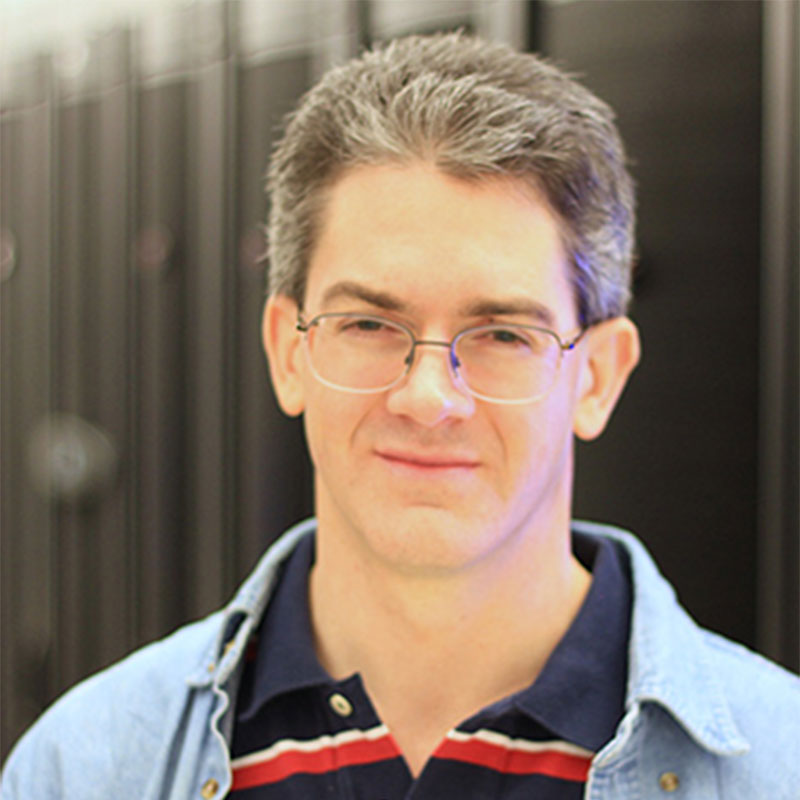
Roman Sokolovskii is a Research Fellow at Imperial College London's Department of Computing within the Faculty of Engineering. His work intersects Electrical and Electronic Engineering , Artificial Intelligence , Communications Technologies , and Distributed Computing , with a focus on innovative data storage solutions. Key research trends include advancements in DNA-based data storage , coding theory , and nanopore sequencing . His publications emphasize error-correcting codes (e.g., SC-LDPC), finite-length scaling , and adaptive sampling for efficient data retrieval. Recent work explores combinatorial motif-based DNA storage , PCR-free random access , and end-to-end coding schemes with nanopore-sequenced reads, reflecting his commitment to bridging computer science and molecular biology in novel storage media.
Chao Yin is a researcher at Shanghai University , Department of Computer Engineering and Science. His work spans multiple domains including Machine Learning, Cloud Computing, Fault Diagnosis, and Supply Chain Optimization. Key research areas: Machine Learning , Cloud Computing , Quantum Computing , Supply Chain Systems , Network Security Scientific Contributions (2024-2025): Developed heterogeneous graph neural networks for automotive supply chain analysis Created MSDF-VAE cloud-edge fault diagnosis framework using transfer learning Proposed quantum metrology methods with Heisenberg-limited precision Designed LARP pseudonym protocol for V2X communication Optimized fog computing resource scheduling with hybrid metaheuristics Prior Work (2012-2023): Contributed to fluid animation feature preservation from single images Developed label distribution learning for facial age estimation Designed erasure coding storage systems for big data Created multi-agent manufacturing networks in cloud environments
Dr. Buket Günay Alkan is an Assistant Professor in the Department of Civil Law at Izmir University of Economics, serving full-time since April 2024. Her academic trajectory includes a law degree with honors from Ankara University, a master's from Dokuz Eylül University (2018) on divorce compensation, and a PhD from Yaşar University (2023) examining liability for unlawful use of personal data. She conducted doctoral research at the University of Cologne (TÜBİTAK-funded) and the University of Göttingen (DAAD-funded). Her research focuses on Civil Law , Law of Obligations , and emerging challenges in Personal Data Protection Law , particularly regarding digital rights and algorithmic governance. Her publications reveal a strong emphasis on: Technology-driven legal issues (algorithms, biometrics) Personality rights in digital contexts Civil liability frameworks for data misuse She has received competitive scholarships including TÜBİTAK (Turkey) and DAAD (Germany) for international research. No information is available regarding student advising, grants, or lab affiliations.
Zhijie Jerry Shi is an Associate Professor at the School of Computing, University of Connecticut. His research focuses on cybersecurity, underwater acoustic networks, hardware security, and blockchain technology. He leads projects such as Ocean-TUNE, a community testbed for underwater communication, and has contributed to secure firmware updates, cryptographic algorithms, and IoT security architectures. His work integrates hardware and software solutions for resilient systems. Key research areas include cryptographic side-channel attacks, underwater acoustic communication protocols, and blockchain scalability. He has developed innovative solutions for underwater sensor networks, including Aqua-Net and Aqua-Sim simulators, and explored secure metering systems using blockchain (SMChain). His hardware security research addresses vulnerabilities in embedded systems and trustable computing education. His publications span over 15 years, with recent emphasis on hardware trojan detection, diffractive optical neural networks, and secure IoT protocols. Collaborations involve experimental deployments in underwater environments and joint work on FPGA-based acoustic modems. He advises on secure wireless protocols, cryptographic implementations, and underwater network resilience.
Camilla Hollanti is a Full Professor and Vice Head of the Department of Mathematics and Systems Analysis at Aalto University, Finland. She holds a Hans Fischer Fellowship (2017-2020) at the Technical University of Munich’s Institute for Advanced Study. Her research focuses on applying algebraic number theory to wireless communications and security, combinatorial methods in distributed storage, and private information retrieval. She has authored over 100 peer-reviewed publications and received awards such as the Väisälä Prize in Mathematics (2017) and a World Cultural Council Special Recognition Award (2014). Hollanti serves on editorial boards for journals like IEEE Transactions on Information Theory and is a member of the IEEE Information Theory Society’s Board of Governors. Education: M.Sc. and Ph.D. in Pure Mathematics from the University of Turku (2003, 2009). She has held academic positions at the University of Turku (2004–2011) and the University of Tampere (2009–2010) before joining Aalto University in 2011. Her work bridges theoretical mathematics with practical applications in communication systems and data security. Research highlights include developing coding schemes for secure wireless channels, optimizing distributed storage systems, and advancing privacy-preserving data retrieval methods. Her fellowship at TUM-IAS supported projects on coding for communications and data storage. Hollanti leads an active research group in Algebra, Number Theory, and Applications, fostering collaborations between academia and industry. Grants: Six Academy of Finland project grants, Dieter Schwarz Courageous Research Grant Future roles: General Chair of IEEE ISIT 2022 Labs/Teams: Algebra, Number Theory, and Applications Group at Aalto University
Miodrag Mihaljević is a Research Professor at the Mathematical Institute , Serbian Academy of Sciences and Arts (Belgrade, Serbia) since 1999, and serves as Deputy Director of the Institute and Head of the National Center for Cyber Security and Privacy . He has held visiting positions at institutions including The University of Tokyo (1997-2023), AIST (2006-2013), and Chuo University (2013-2014), with a focus on cryptology and information security. BSEE (1979), University of Belgrade MS (1981) and Ph.D. (1990) in Electrical Engineering His research spans Cryptology , Blockchain Technology , Information Security , and Coding Theory , with significant contributions to symmetric key cryptography, stream ciphers, LPN problem analysis, broadcast encryption, and lightweight authentication protocols. His work addresses applications in IoT, cloud computing, and smart grid security, often integrating blockchain for data integrity and access control. Recent publications highlight blockchain-enabled solutions for smart contract vulnerability detection (2025), cross-chain identity authentication (2025), and secure inference in IoT (2025). Earlier works focus on cryptographic attacks (e.g., fast correlation, algebraic attacks) and security frameworks for software-defined radio and cloud systems. Scientific recognition includes the Serbian Academy of Sciences and Arts Award (2013), JSPS Fellowship (1998), and consistent inclusion in the World's Top 2% Scientists (2020-2024). He has led projects on cryptographic techniques for information security (2002-2019) and holds multiple international patents in encryption/decryption systems.
Ying Li is an Associate Professor of Computer Science at Colby College, located in Waterville, Maine. She holds a Ph.D. in Computer Science from the University of New Hampshire, and M.Eng. and B.Eng. degrees from Hubei University of Technology in China. Her research focuses on wireless networks, particularly in energy-efficient communication strategies for resource-limited environments such as drone networks, ad hoc networks, and delay-tolerant networks. She has contributed to protocols for improving network connectivity, data dissemination, and mission-oriented systems. Professor Li teaches courses including Computer Organization, Programming Languages, and Advanced Computer Networks. Her work emphasizes practical solutions for challenges in network security, service availability, and computing efficiency. Education: Ph.D. in Computer Science, University of New Hampshire M.Eng. in Applied Technology, Hubei University of Technology B.Eng. in Computer Science and Technology, Hubei University of Technology Research Interests: Dr. Li’s research spans Wireless Sensor Networks , Drone Networks , Ad Hoc Networks , and Delay-Tolerant Networks . She explores energy-efficient trajectory planning, multi-agent reinforcement learning for collaborative drone operations, and protocols to enhance reliability in intermittently connected systems. Recent efforts include studies on erasure coding for IoT communication and containerized network performance evaluation. Her work often bridges theoretical algorithm design with real-world network challenges. Grants & Advising: Professor Li has advised numerous students on research projects, including work on energy-aware routing, multi-agent systems, and drone replacement strategies. She collaborates on grants related to network optimization and resilience, though specific funding details are not detailed in the provided texts. Labs & Teams: While no dedicated lab is explicitly named, her research involves experimental setups in Colby’s Computer Science department, focusing on simulations and prototyping for network protocols and drone systems.
Ryan Stutsman is an Associate Professor at the University of Utah, leading the Scalable Software Systems Lab within the School of Computing. His research focuses on Distributed Systems, Operating Systems, and Databases, with an emphasis on high-performance storage and low-latency systems. He holds a Ph.D. from Stanford University and was a Postdoctoral Researcher at Microsoft Research. Notable accolades include the NSF CAREER Award (2018) and PECASE Award (2025). He has contributed to projects like NrOS (a multikernel OS), Splinter (multi-tenant storage), and RAMCloud (distributed key-value storage). His work frequently addresses challenges in cloud computing, in-memory databases, and system scalability. Education: Ph.D., Stanford University (2013); Postdoc, Microsoft Research Teaching: Award-winning instructor for courses like Distributed Systems, Advanced Operating Systems, and Computer Networks Labs/Teams: Scalable Software Systems Lab His recent publications explore serverless scheduling, storage functions, and persistent memory systems. He has held leadership roles in conferences such as USENIX ATC and OSDI, and serves on NSF panels.
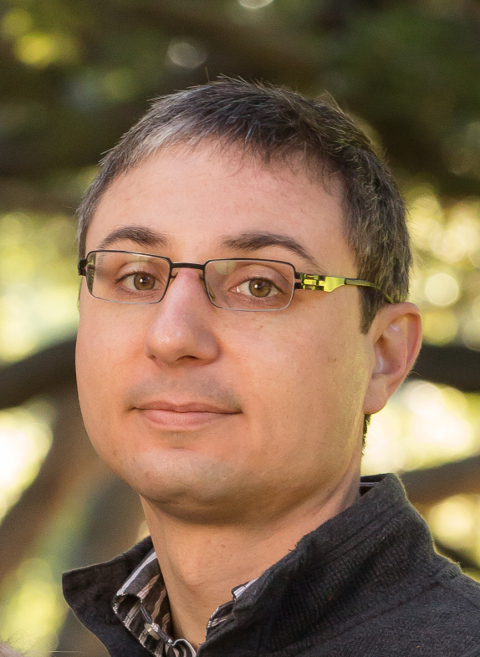
Yingwu Zhu is an Associate Professor at the Department of Computer Science and Software Engineering within Seattle University's College of Science & Engineering . With a Ph.D. in Computer Science from the University of Cincinnati and prior degrees from Huazhong University of Science & Technology, his career spans academic research in distributed systems , peer-to-peer networks , and computer security . Education : Ph.D., Computer Science, University of Cincinnati M.S., Computer Science, Huazhong University of Science & Technology B.S., Computer Science, Huazhong University of Science & Technology Research Interests Dr. Zhu's work focuses on peer-to-peer computing , with emphasis on: Semantic Search over DHT overlays Resilient Anonymous Routing using redundancy and erasure coding Content-Based Publish/Subscribe Systems with DHT integration Load Balancing in structured P2P networks Trust Management via network coding Bandwidth-Efficient Algorithms for distributed systems His research has been published in top venues like IEEE TPDS , JPDC , and HiPC , with acceptance rates as low as 14%. Key themes include scalability , fault tolerance , and proximity-aware networking . Scientific Recognition Best Paper Award , NAS'08 Top pick , NAS 2006 Academic Service He actively contributes to the field through program committee memberships at ICCCN , HiPC , IPDPS , and P2P conferences, while maintaining the Distributed Systems Laboratory (DSL) with high-end computational resources.
Fredrik Brännström is a Professor and Head of the Communication Systems Group at Chalmers University of Technology, Sweden. He also serves as a part-time Research Scientist at Neural Propulsion Systems, Inc., a California-based startup in autonomous sensing platforms. Education: M.Sc. (1998) and Ph.D. (2004) from Chalmers University of Technology Academic Career: Postdoctoral researcher (2004-2006), Principal Design Engineer (2006-2010) Research Interests: Focus on vehicular communication systems with expertise in algorithms, resource allocation, synchronization, antenna concepts, protocol design, and coding applications. Key Research Areas: Vehicular Networks, Wireless Resource Management, Antenna Design, Coding Theory, Network Synchronization, D2D Communication Scientific Awards: 2013 IEEE Communication Theory Workshop Best Poster Award 2014 Department of Signals and Systems Best Teacher Award Co-author of multiple IEEE Best Student Paper awards (2016-2018) Publications: Over 95 publications with recent focus on vehicular communication systems, LDPC coding, resource allocation, and wireless network optimization.
Paul Downen is an Assistant Professor in the Miner School of Computer & Information Sciences at the University of Massachusetts Lowell, where he has been teaching since Fall 2021. His academic journey began with dual Bachelor's degrees in Computer Science and Computer Engineering from Lawrence Technological University in 2010, followed by a Ph.D. in Computer Science from the University of Oregon in 2017. He has also been a visiting researcher at INRIA and Microsoft Research. His educational background includes: Ph.D. in Computer Science (2017), University of Oregon - Eugene, OR Dissertation Title: Sequent Calculus: A Logic and a Language for Computation and Duality B.S. Computer Science (2010), Lawrence Technological University - Southfield, MI B.S. Computer Engineering (2010), Lawrence Technological University - Southfield, MI Dr. Downen's research centers on the intersection of logic and programming languages, with a focus on using logical foundations to improve the efficiency, correctness, and safety of programs and their compilation. His primary research lies in the Curry-Howard correspondence or proofs-as-programs paradigm, exploring how logical principles can inform both program design and compiler optimization. He is particularly interested in duality principles in computation, where he investigates how concepts like functional and object-oriented programming paradigms represent dual perspectives on the same underlying computational processes. His publication record shows a consistent focus on foundational aspects of programming languages, with recent work exploring copatterns, macro systems, evaluation strategies, and the relationship between type systems and machine representation. His research often bridges theoretical concepts with practical implementation, particularly through contributions to the Glasgow Haskell Compiler (GHC). Among his notable achievements are: Best Paper Award (2017) at Programming Languages Design and Implementation (PLDI) Oregon Doctoral Research Fellowship (2017) from the University of Oregon Best Paper Award nomination (2012) at European Joint Conferences on Theory and Practice of Software Best Paper Award nominee (2025) at Trends in Functional Programming Dr. Downen has been instrumental in organizing the Oregon Programming Languages Summer School, expanding its reach to diverse audiences through a "Foundations" lecture series. His teaching portfolio includes courses on Organization of Programming Languages, Assembly Language Programming, and Effective Functional Programming. His research has resulted in practical implementations within GHC, including Sequent Core (an alternative intermediate language based on sequent calculus) and Join Points (an optimization for control flow).
Ramesh Pyndiah is a Professor at IMT Atlantique's Microwave Optics (OPT) Department, a leading institution in digital communications research. With over 30 journal papers and 100 conference publications, his work focuses on advanced channel coding techniques, particularly block turbo codes, Reed-Solomon codes, and joint source-channel coding. Research Interests : Digital communications, turbo coding, joint source-channel coding, OFDM, wireless sensor networks, optical wireless systems. Leadership : Director of Research & Innovation at IMT Atlantique, Deputy Director of COMIN Labs (2014-2017), Chair of IEEE ComSoc France Chapter (2000-2014). His research trends show a strong emphasis on error correction for high-efficiency wireless and optical systems, with recent work on LDPC codes , network coding , and low-complexity decoding . He has supervised 17 PhD students in areas like video coding, UWB systems, and DNA-inspired coding. Awards : 2001 SEE Blondel Medal, IEEE Senior Membership (2001), leadership roles in ICC, Globecom, and Turbo Code symposia. Patents : 17 innovations in high-frequency mixers, phase shifters, and error correction coding.
Denis Firsov is a researcher at the Department of Software Science at Tallinn University of Technology (TUT) and a formal methods engineer at Input Output Global (IOG) . His work bridges formal methods , cryptography , and type theory , with a focus on zero-knowledge proofs , security verification , and language-based security . He has a PhD from the Institute of Cybernetics at TUT (2016), where he studied constructive type theory using Agda and Coq. Postdoctoral research at the University of Iowa (2016-2018) involved impredicative type theory in Cedille. He has held positions at GuardTime (2018-2020) and Matter Labs (2020-2023), working on formal verification of cryptographic protocols and ZK-circuit DSLs . Research Highlights: Developed formalizations for zero-knowledge protocols (Fiat-Shamir, Schnorr, Blum) in EasyCrypt Created Rust DSLs for ZK-circuits with formal correctness proofs Advanced impredicative lambda-encodings with induction in Cedille Contributed to parser certification for context-free and regular languages Patents: US 11,316,698: Delegated signatures for smart devices EU EP4044501B1: Method for data signatures with unbounded keys
Nancy Lynch is the NEC Professor of Software Science and Engineering in the Department of Electrical Engineering and Computer Science (EECS) at the Massachusetts Institute of Technology (MIT). She leads the Theory of Distributed Systems (TDS) research group at MIT's Computer Science and Artificial Intelligence Laboratory (CSAIL), part of the broader Theory of Computation (TOC) group. Her research focuses on distributed computing, real-time systems, algorithms, formal modeling, and biological distributed systems, including brain networks and insect colony algorithms. Lynch earned her academic training in mathematics at Brooklyn College and MIT. Before joining MIT in 1982, she held positions at universities like the University of Southern California and Georgia Tech. Her work bridges theoretical computer science with applications in distributed systems, wireless networks, and computational biology. Key research interests include distributed algorithms, impossibility results, timed I/O automata, and algorithmic theories of biological systems. She has authored influential textbooks such as Distributed Algorithms and contributed to foundational theories in distributed computing. Affiliations: NEC Professor of Software Science and Engineering, MIT EECS Leader, Theory of Distributed Systems Group (TDS), CSAIL Member, MIT Theory of Computation (TOC) group Awards: Member, National Academy of Engineering Member, National Academy of Sciences ACM Fellow Recipient of major prizes in distributed computing Grants & Projects: Funding for research on distributed algorithms, biological systems, and neural networks Collaborations in robotics, wireless networks, and computational biology Her lab's current projects explore algorithms for wireless networks, brain network modeling, and swarm intelligence, with applications in robotics and healthcare.
Gregory Ganger is the Stephen J. Jatras Professor at Carnegie Mellon University's College of Engineering, holding joint affiliations with the Computer Science Department and CyLab. He has served as Director of the Parallel Data Lab (PDL) since 2000 and teaches Storage Systems (Fall) and Advanced Cloud Computing (Spring) courses. Education: Ph.D. in Computer Science & Engineering (1995, University of Michigan) M.S. in Computer Science & Engineering (1993, University of Michigan) B.S. in Computer Science (1991, University of Michigan) Dr. Ganger's research spans computer systems, focusing on: cloud computing, distributed systems, storage architectures, and machine learning infrastructure. His work addresses challenges in resource scheduling, non-volatile memory optimization, and scalable infrastructure design through projects like BigLearning, CILES, HeART, and Zoned Storage systems. Recent publications demonstrate expertise in: DNN training optimization (GraphPipe, Nonuniform-Tensor-Parallelism), sustainable storage (Storage Emissions, FairyWREN), and cloud efficiency (MACARON Cache). These works intersect machine learning, storage systems, and hardware-software co-design. Scientific Awards: 2021 OSDI Best Paper 2021 SOSP Best Paper 2021 SoCC Test of Time Award 2021 R&D 100 Award As advisor to 8 graduate students, he contributes to training the next generation of systems researchers. His lab (PDL) collaborates with industry partners on cutting-edge storage and cloud infrastructure problems.



/0x49:1964x2351/prod01/channel_34/media/seattle-university/directory/faculty-amp-staff-directory/images/scieng/Zhu,-Yingwu.jpg)