Dr. Lana Parker is an Associate Professor in the Faculty of Education at the University of Windsor. She holds a PhD in Language, Culture and Teaching from York University. Her research focuses on relationality in education, meaning-making processes, critiques of neoliberalism in educational systems, and the development of ethically-informed pedagogical practices. Dr. Parker has extensive teaching experience in both elementary and post-secondary settings, emphasizing equitable outcomes for all students. Education background: Doctor of Philosophy (Education), York University. Teaching roles include undergraduate and graduate courses within the Faculty of Education, though specific course titles are not listed. No major awards or funded grants are explicitly detailed in the provided information.
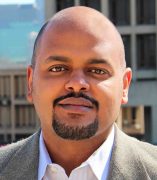
Nebiyou Tilahun is an Associate Professor and Director of Graduate Studies in the Department of Urban Planning and Policy at the University of Illinois at Chicago (UIC), within the College of Urban Planning and Public Affairs (CUPPA). He leads the Mobility Urban Systems and Equity Lab , focusing on equitable transportation solutions. His roles include teaching courses such as Transportation Planning Methods, Spatial Statistics, and Plan Making Studio. Dr. Tilahun holds a PhD in Civil Engineering from the University of Minnesota (2010), with earlier degrees in Civil Engineering (B.Sc., 2001; M.Sc., 2005). His career includes post-doctoral research at UIC’s Urban Transportation Center and the University of Minnesota’s Humphrey School of Public Affairs, as well as professional experience at the Washington State Department of Transportation. Research Interests : His work bridges transportation equity, urban planning, and policy evaluation. Key areas include: Transport accessibility and equity Automated traffic enforcement (e.g., speed/red-light cameras) Social networks and travel behavior Disability and mobility challenges Intergenerational poverty and spatial mobility Recent Research Trends : His publications emphasize equity in urban systems, such as analyzing racial disparities in traffic stops, evaluating automated camera efficacy, and exploring how residential choices shape young adults’ travel patterns. He also investigates transit accessibility gaps in Chicago and the role of technology in urban informatics. Labs/Teams : Directs the Mobility Urban Systems and Equity Lab, which develops tools like the Chicago Accessibility Explorer to visualize transit equity. Collaborates on projects like Seeing Cities Through Big Data , applying data science to urban planning challenges. Grants/Advising : While specific grants are not detailed here, his lab’s work implies funding in transportation equity and technology. No advisees are listed in the provided materials.
Professor Emma Lees serves as Professor of Environmental and Property Law at the University of Cambridge, based in the Department of Land Economy with affiliation to the Law Faculty. She is a Fellow of Downing College and maintains connections with the Conservation Research Institute and Land Economy department at the David Attenborough Building, Cambridge. Her educational background includes an undergraduate Law degree (with French Law) from Brasenose College, Oxford (2009), an LLM by Research from the University of Dundee, and a PhD in Land Economy from the University of Cambridge (2013) supervised by Professor Martin Dixon. Lees' research spans environmental and property law with particular emphasis on biodiversity protection, contaminated land regulation, waste management, and planning law. Recent work explores the use of scientific information in environmental adjudication and transnational climate litigation. Her scholarship demonstrates a clear trend toward interdisciplinary analysis connecting legal theory with practical environmental governance challenges, especially regarding the precautionary principle and climate accountability. Richard Macrory Prize for Best Paper in the Journal of Environmental Law (2016) Emerald Literati Network Awards for Excellence Highly Commended (2016) She actively supervises PhD candidates including Farhana Hamid Butt and Gonzalo Vial Forcade, with recent graduates Giulio Corsi and Douglas Maxwell. Her teaching portfolio covers Land Law, Contract Law, Landlord and Tenant Law, and Environmental Law. Lees contributes to research centers CEENRG (Centre for Environment, Energy and Natural Resource Governance) and CCPL (Cambridge Centre for Property Law), focusing on property rights in environmental contexts.
Remko Van Hoek serves as Professor of Practice in the Department of Supply Chain Management at the Sam M. Walton College of Business, University of Arkansas. He teaches Sourcing and Procurement courses across undergraduate, master's, and doctoral programs. Prior to joining the University of Arkansas, Dr. Van Hoek held academic positions in Europe and served as a visiting professor at Cranfield School of Management, complemented by extensive industry experience as a supply chain and procurement executive at global corporations including Nike, PwC, and The Walt Disney Company. He currently serves on the Council of Supply Chain Management Professionals (CSCMP) Board of Directors and acts as executive director of the CSCMP Supply Chain Hall of Fame hosted by the Walton College. Dr. Van Hoek's research centers on digital transformation in procurement and supply chain management, with particular focus on blockchain implementation, artificial intelligence applications, and sustainable sourcing practices. His work investigates how emerging technologies reshape procurement processes, supplier relationship management, and risk mitigation strategies. He explores innovative approaches to supplier diversity programs, ethical sourcing frameworks, and the strategic evolution of procurement from cost reduction to value creation. His research consistently bridges academic theory with industry practice through case studies from major corporations, developing actionable frameworks for practitioners facing digital disruption and sustainability challenges. Analysis of his 15 most recent publications (2023-2025) reveals dominant themes in AI-driven supply chain risk prevention, blockchain implementation for transparency, and sustainable supplier engagement. His work demonstrates consistent industry collaboration, drawing from case studies at Walmart, Moet Hennessy, and Bayer to address post-pandemic resilience challenges. A significant portion examines procurement's strategic evolution beyond transactional functions, with recurring emphasis on ethical considerations in digital transformation and the practical implementation barriers for emerging technologies in global supply networks. As a Professor of Practice, Dr. Van Hoek integrates executive-level industry experience into curriculum development and student mentorship. His industry-engaged teaching model includes guest lecturer programs connecting students with supply chain practitioners, as evidenced by his co-authored work on integrating industry insights into supply chain education. While specific grant funding details are not publicly documented, his leadership in the CSCMP Supply Chain Hall of Fame demonstrates commitment to professional development and industry-academia knowledge transfer. Dr. Van Hoek directs the CSCMP Supply Chain Hall of Fame initiative, which documents transformative contributions to supply chain management through interviews with industry pioneers and historical case studies. This platform serves as both an educational resource for Walton College students and a professional development tool for supply chain practitioners globally. The Hall of Fame preserves critical industry knowledge while highlighting contemporary innovations in supply chain strategy and technology implementation.
Dr. Jennifer Katz serves as an Associate Professor in the Department of Educational and Counselling Psychology, and Special Education (ECPS) at the University of British Columbia's Faculty of Education. She joined UBC in July 2016 after previously holding an Associate Professor position in Inclusive Education at the University of Manitoba. Renowned for creating the Three Block Model of Universal Design for Learning (UDL), her framework is now implemented across Canadian school divisions to advance inclusive educational practices. Dr. Katz's research centers on inclusive education K-12 , social and emotional learning (SEL) , and mental health promotion in schools . Her work integrates the Three Block Model of UDL to address diverse student needs while emphasizing indigenous perspectives through extensive collaboration with First Nation elders and communities in Manitoba, Alberta, and Quebec. This intersectional approach reimagines inclusive education through reconciliation frameworks and culturally responsive practices. Analysis of her recent publications reveals consistent focus on mental health literacy programs for students with developmental disabilities, UDL's impact on academic achievement and teacher efficacy, and the integration of Indigenous knowledge systems. Her research bridges theory and practice through classroom-based interventions, cluster-randomized trials, and transformative learning frameworks that prioritize student well-being and social inclusion. Scientific Awards: No scientific awards were documented in the provided sources. Advising and Grants: While specific graduate students and research grants aren't detailed in the text, Dr. Katz's extensive publication record and community partnerships indicate active research leadership. Her work with school divisions across Canada suggests significant program implementation funding, though grant specifics remain unreported. Labs and Teams: Dr. Katz maintains critical partnerships with First Nation communities, embedding Indigenous knowledge into educational frameworks. Her Three Block Model implementation involves multi-school division collaborations nationwide, creating practitioner-researcher networks focused on inclusive classroom transformation.
Maisha T. Winn serves as the Excellence in Learning Graduate School of Education Professor at Stanford University and is Faculty Director of the Stanford Accelerator for Learning's Equity in Learning Initiative. She leads the Futuring for Equity Lab as Principal Investigator and holds significant leadership positions including President-Elect of the American Educational Research Association and membership in the National Academy of Education. Dr. Winn's research examines how non-dominant youth and communities develop literate trajectories across historical and contemporary settings. As an ethnographer by training, she investigates how communities depicted as under-resourced create their own educational practices, processes, and institutions. Her scholarship bridges historical analysis with contemporary educational practice to build more just, collaborative, and equitable futures in education. Her work spans restorative justice in education, Black literacy studies, and transformative justice approaches, with particular attention to the school-to-prison pipeline, independent Black institutions, and futures-oriented educational frameworks. Dr. Winn analyzes how historical educational models can inform contemporary practices that center community knowledge and cultural identity. Andrew W. Mellon Fellow at CASBS (2022-23) American Educational Research Association Fellow Member of the National Academy of Education Dr. Winn advises doctoral students including Christina Hewko and Misbah Naseer, and leads research initiatives focused on educational equity. Her Futuring for Equity Lab develops frameworks for understanding how marginalized communities have historically created educational spaces that affirm their identities and knowledge systems, with direct implications for contemporary educational practice and policy. Her research team collaborates with community organizations and schools to translate scholarly insights into practical applications that promote educational justice, particularly in areas of school discipline reform and literacy education for marginalized youth.
Andrew Mondschein is Associate Professor of Urban and Environmental Planning at University of Virginia School of Architecture, serving as Associate Dean of Research. His work focuses on equitable transportation systems, sustainable accessibility, and impacts of emerging technologies on urban mobility. Education includes: PhD, University of California, Los Angeles MA Urban Planning, University of California, Los Angeles BA Architecture, Yale University Research examines how transportation technologies affect social equity and urban form, with emphasis on pedestrian wellbeing, autonomous vehicle adoption, parking policy, and community-centered planning. Recent publications demonstrate strong focus on psychophysiological impacts of urban walking, cross-cultural mobility studies, and spatial analysis of transportation preferences. Articles show consistent themes: urban walkability (especially health impacts), autonomous vehicle integration, parking policy analysis using novel data sources, and community-centered planning approaches. Methodologically, employs mixed methods including biometric sensing, sentiment analysis of social media, geospatial modeling, and participatory design. No specific awards mentioned. Teaching covers transportation policy, land use, environmental impacts, and research methods with emphasis on ethical planning practices.
Beth St. Jean is an Associate Professor and Faculty Director of the Carillon Community in Health Justice at the University of Maryland’s College of Information Studies (College Park). She holds a PhD and MS in Information from the University of Michigan School of Information and a BA in Mathematics from Smith College. Her research focuses on improving health outcomes through understanding health-related information behaviors, health literacy, and self-efficacy. She co-authored Understanding Human Information Behavior (2021) and leads projects like HackHealth to enhance youth health literacy. Education: PhD in Information, University of Michigan School of Information (2012) MS in Information (LIS), University of Michigan School of Information (2006) BA in Mathematics, Smith College (1988) Research Interests: Health informatics, health justice, consumer health information behavior, health literacy, youth digital practices, and information literacy. Her work emphasizes addressing health disparities through information access and education. Recent Research Trends: Her publications explore topics like long-haulers’ information needs (2024), pandemic-era health justice (2023), and social media’s role in predicting health disparities (2022). She also investigates patient-generated health data challenges (2022) and library roles in promoting health equity (2020). Awards and Recognition: ASIS&T SIG-USE Innovation Award (2017) ACM SIGCHI Excellent Reviewer (2017) ALISE/LMC Paper Award (2015) Beta Phi Mu/LRRT Research Award (2014) Teaching and Grants: Teaches courses on information behavior, research methods, and consumer health informatics. Co-PI on grants like HackHealth 2.0 (NIH, $123K) and youth health literacy initiatives ($68.5K). Also serves as Assistant Director of the Information Policy & Access Center and Senior Fellow at CASCI. Labs and Initiatives: Leads the Carillon Community in Health Justice and collaborates on projects like the HackHealth after-school program to engage disadvantaged youth in health entrepreneurship.
Prof. Dr. Birgit Eickelmann is a Professor of School Pedagogy at the Institute of Educational Science within the Faculty of Arts and Humanities at Paderborn University. She has held this position since October 2012, initially as a W2 professor until January 2014, and then as a W3 professor (full professor) from February 2014 onward. Her research focuses on school and lesson development in the digital age, school pedagogy under digital transformation conditions, empirical school research, teacher education, and school leadership with emphasis on digital learning leadership. Her educational background includes a habilitation in Educational Science in May 2012, a PhD in Educational Science with summa cum laude in July 2009, and state examinations for teaching Mathematics and Physics in December 1996 and January 1999. Prof. Eickelmann's research centers on the digital transformation of educational systems, particularly examining how schools develop digital competencies among students and teachers. Her work emphasizes equitable access to digital learning opportunities, the role of school leadership in digital transformation, and the development of computational thinking skills. She investigates how schools can become resilient in the face of digital challenges, with special attention to organizational factors that support successful digital integration. Her publication record reveals a strong focus on international comparative studies, particularly the IEA's ICILS (International Computer and Information Literacy Study) across multiple cycles (2013, 2018, 2023). Her research spans digital literacy assessment, school-level factors influencing digital competence development, and policy implications for educational systems undergoing digital transformation. Prof. Eickelmann leads several major research initiatives including the National Research Center for the IEA Study ICILS 2023 (2021-2026), the German coordination of the Horizon-2020 project 'DigiGen' (2019-2022), and previous leadership of ICILS 2018 (2015-2021) and ICILS 2013 (2012-2015). She is actively involved in policy advising regarding digital education in Germany. She is a member of numerous scholarly organizations including the World Educational Research Association (since 2021), the Society for Empirical Educational Research (since 2016), and the German Society for Educational Science (since 2014), among others. Her work bridges academic research with practical implementation in schools through projects like 'Navigator Bildung Digitalisierung' and 'schultransformNEXT'.
Dr. Dicky Tsang is an Associate Professor at the Faculty of Law , The Chinese University of Hong Kong. He holds degrees from Georgetown University (S.J.D.), Columbia University (LL.M., J.D.), University College London (LL.M.), and the University of Hong Kong (LL.B., PCLL). His practice experience includes corporate finance law at Linklaters and Shearman & Sterling across New York, London, Hong Kong, Beijing, and Shanghai. Admitted to practice in New York, England & Wales, and Hong Kong Research Interests : Dr. Tsang specializes in Private International Law and Company Law , focusing on cross-border corporate liability, veil-piercing, arbitration agreements, and FRAND litigation. His work bridges empirical legal analysis with comparative law frameworks. Publication Trends : His recent scholarship examines jurisdictional conflicts, enforcement of foreign judgments, and regulatory challenges in global corporate law. Publications span journals like Virginia Journal of International Law and Journal of Private International Law . Scientific Awards : Outstanding Research Impact Award 2022-23 CUHK Research Excellence Award 2019-2020 CUHK Teaching Excellence Award 2016-2017 Grants : He has led multiple RGC-funded projects, including empirical studies on China’s choice-of-law regime and foreign judgment enforcement. Collaborative grants explore corporate governance and legal education in Asia.
Juan Camilo Gómez is an Associate Professor with tenure at the University of Washington Bothell's School of Business, specializing in game theory, bargaining, and microeconomic theory. He earned his Ph.D. in Economics from the University of Minnesota and his B.Sc. in Mathematics from Universidad de los Andes in Colombia. Education: Ph.D. Economics (1998–2003), University of Minnesota, Minneapolis, MN B.Sc. Mathematics (1990–1996), Universidad de los Andes, Bogotá, Colombia Research Interests: His research focuses on foundational and applied aspects of game theory, including bargaining models, coalition formation, cooperative solution concepts, and general equilibrium. He explores how efficiency can be achieved in strategic interactions, especially when agents may behave manipulatively or when traditional balance conditions do not hold. His work contributes to understanding how coalitions form and how outcomes can be predicted or designed to ensure equitable and efficient allocations. He also investigates the implications of reference points in bargaining and the role of aspirations in shaping cooperative behavior. Publications Overview: Across his publications, a clear trajectory emerges from foundational theoretical work—such as axiomatizing core extensions in cooperative games—to applied models that predict coalition formation and bargaining outcomes. His research consistently bridges rigorous mathematical frameworks with practical economic questions, including market interpretations of cooperative solutions and strategic pricing models like 'Pay What You Want'. Awards and Honors: 2010 MBA Professor of the Year, University of Washington Bothell Teaching and Advising: Gómez has taught a wide range of courses from undergraduate calculus and mathematical economics to graduate-level game theory and quantitative methods for business. He has held teaching roles at institutions including Macalester College, University of Copenhagen, Universidad de los Andes, and University of Minnesota. He has also co-directed undergraduate theses, such as that of Santiago Saavedra, and served on numerous academic committees including MBA Admissions and faculty hiring. Labs and Teams: While no specific lab is mentioned, his collaborative working papers with researchers like Camelia Bejan and P.V. Balakrishnan suggest active participation in research networks focused on game theory and economic modeling.
Kisha Porcher is an Associate Professor in the Department of English at the University of Delaware, specializing in English Education. She serves as the Student Teaching Coordinator and holds a Ph.D. in Teaching and Teacher Education from George Mason University, alongside degrees from Spelman College and Teachers College Columbia University. B.A., English and Secondary Education, Spelman College M.A., Curriculum and Instruction, Teachers College Columbia University Ph.D., Teaching and Teacher Education, George Mason University Her research focuses on centering Blackness through frameworks like the Black Gaze and archeology of the self (Sealey-Ruiz, 2019), emphasizing racial identity development and community-engaged learning. She explores systemic assets for Black and Brown students while advocating for anti-racist pedagogies in urban education settings. Her recent publications highlight trends in critical literacy instruction , decolonizing curricula , and equity-driven teacher training , with a strong emphasis on racial justice and linguistic diversity. Notably, she received the College of Arts & Sciences Faculty Teaching Excellence Award in 2022. Porcher’s work bridges teacher self-reflection and structural reform , positioning educators as disruptors of systemic inequities. Her scholarship spans topics from cultural competency to community-embedded pedagogies, reflecting her commitment to redistributing power in educational systems.
Sara Hennessy is a Professor of Educational Dialogue and Pedagogical Inquiry at the Faculty of Education, University of Cambridge , where she teaches and supervises Masters and doctoral students. She serves as Research Director of the £30m+ FCDO-funded EdTech Hub and leads the Cambridge Educational Dialogue Research (CEDiR) Group . Her research spans high- and low-income countries, focusing on classroom dialogue analysis, technology-mediated pedagogy, and teacher professional development. Education: BSc in Social Psychology (LSE), MA (Cantab), PhD in Psychology (UCL) Professional Memberships: American Educational Research Association (AERA), British Educational Research Association (BERA), European Association for Research into Learning and Instruction (EARLI) Research Interests: Hennessy’s work examines how digital technologies can enhance classroom dialogue and collaborative learning, particularly in sub-Saharan Africa. She developed the T-SEDA toolkit for classroom dialogue analysis, which underpins multimedia professional development resources. Her projects include Camtree (global practitioner research platform) and the EdTech Hub , investigating equitable uses of educational technology in low-income contexts. Publications: Her recent articles analyze mixed-methods approaches to classroom dialogue, technology’s role in Tanzanian teacher development, and linguistic considerations in resource localization. Earlier works focus on interactive whiteboards, OERs, and socio-cultural perspectives on technology integration. Scientific Awards: ESRC Research Fellowship (2007-2010): Consolidated practitioner-researcher collaboration methodologies Editorial Roles: Former editor of the British Journal of Educational Technology (2016-2024) and editorial board member of the International Journal of Science Education .
Dr. Zhifu Mi is a Professor of Climate Change Economics at the Bartlett School of Sustainable Construction , University College London. His research focuses on carbon footprint analysis, climate change economics, air pollution and health, sharing economy sustainability, and input-output modeling. He has published extensively in top journals like Nature Sustainability , Lancet , and Science Advances . Co-Editor-in-Chief, Structural Change and Economic Dynamics (2020–present) Executive Editor, Journal of Cleaner Production (2019–present) President, Chinese Economic Association (UK/Europe) Council Member, International Input-Output Association Fellow of the Royal Geographical Society His research explores: Carbon Footprints: Economic development and emission convergence in Chinese households Climate-Health Linkages: Air pollution impacts, ultra-low emission policies Sharing Economy: Sustainable societies through shared micro-mobility Policy Analysis: Synergies between environmental regulations Recent publications analyze decarbonization employment gaps, polycentric urban structures, and health-environment policy intersections. Awards include the World Sustainability Award (2018), multiple Clarivate Highly Cited Researcher honors, and UCL's Outstanding Research Supervision Award (2022). He teaches modules on construction economics and input-output analysis.
Samia Khan is a Professor in the Department of Curriculum & Pedagogy at the University of British Columbia's Faculty of Education, where she also serves as Associate Dean of Research. Her academic work bridges educational technology, science education, and teacher preparation across K-16 contexts. Dr. Khan earned her PhD from the University of Massachusetts. Her educational background informs her interdisciplinary approach to learning sciences and technology integration. Her research centers on how digital technologies transform science learning , with emphases on model-based teaching , visualization tools , and equitable participation in STEM . She investigates simulation technologies, future-state modeling, and strategies to broaden science engagement through interpretive and mixed-methods research. Her work particularly examines teacher epistemologies, scientific reasoning development, and socio-cultural factors in technology-mediated learning environments. Analysis of her recent publications reveals three dominant trends: (1) International comparative studies of science curricula across Southeast Asia, (2) Efficacy of digital tools (PhET, GeoGebra, Symbolab) in conceptual understanding, and (3) Pre-service teacher development in model-based science instruction. Her research spans diverse contexts from Canadian classrooms to Rwandan and Vietnamese educational settings. Dr. Khan's contributions have been recognized through: New Scholar Award from the Canadian Society for Study in Education Prime Minister’s Award of Canada for Teaching Excellence in Science, Technology, and Mathematics As former MET Director (2021-2022) and author of foundational courses ETEC 530/533, she has significantly shaped UBC's educational technology programs. Her Faculty Associate role at the Institute of Resources, Environment, and Sustainability demonstrates cross-disciplinary engagement with sustainability education. Her research appears in leading journals including Journal of Technology and Teacher Education, Computers and Education, and Educational Technology Research and Development, with consistent citation as field-shaping work in educational technology.