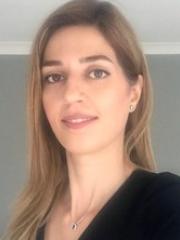
Dr. Sara Alidoust is a Senior Lecturer in Planning at the University of Queensland's School of Architecture, Design and Planning , with affiliations to the Centre for Community Health and Wellbeing and the Centre of Architecture, Theory, Criticism and History. Her research merges Urban Planning and Public Health , focusing on: Developing resilient and liveable cities through systems thinking Age-friendly urban planning for elderly populations Addressing housing vulnerability in the Global North Enhancing community engagement in policy-making Recent publications analyze topics like anti-gating policies in China , thermal comfort in vertical cities , and house-sitting practices among older Australians. Her work informs national and international planning frameworks with emphasis on health equity. As a principal advisor for PhD candidates, she supervises projects on climate-resilient urbanism , gender-focused housing models , and car-free urbanism in low-density contexts. Current initiatives include 1000 Cities Challenge health indicators development.
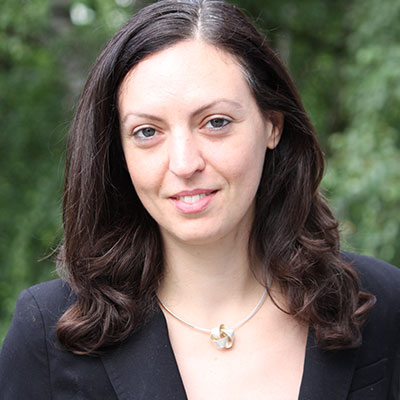
Orly Linovski is an Associate Professor in the Department of City Planning at the University of Manitoba’s Faculty of Architecture. Her work bridges professional planning practice, political processes, and urban space, emphasizing equity and justice. She holds a PhD from UCLA and advanced degrees from the University of Toronto and McGill University. Education: PhD (Urban Planning), University of California, Los Angeles M.Sc. (Urban Planning), University of Toronto B.A. (Geography/Urban Systems), McGill University Research focuses on transportation equity, private sector consulting roles, and municipal governance. Notable themes include equity in transit planning, professional practice dynamics in publicly traded firms, and participatory engagement strategies. Her work has been funded by SSHRC, MITACS, and the Centre for Professional and Applied Ethics. Teaching includes courses like Transportation and Urban Form (ARCG 7080) and Planning Research Methods (CITY 7020). She supervises students exploring transportation equity, professional planning practice, or privatization in planning, particularly with GIS or qualitative methods. Grants and Awards: Her research has been supported by SSHRC, MITACS, and other institutions. Collaborations include projects like the SSHRC-funded study on transit equity for marginalized groups in Canada. Labs/Teams: Active in the Manitoba Professional Planners Institute and as a Registered Professional Planner. Engaged in community-based research through partnerships highlighted in her SSHRC-funded projects.
Dr. Philipp Rode is Executive Director of LSE Cities and Associate Professor (Education) at the London School of Economics' School of Public Policy. He leads interdisciplinary urban development research, focusing on transport, sustainability, and governance. His work spans global urban challenges, including climate policy, emergency governance, and urban transitions. Rode co-founded the Urban Age Programme and advises international organizations like UCLG and Metropolis. He holds degrees in transport systems (TU Berlin), city design (LSE), and urban governance (PhD, LSE), and has authored/co-edited influential books such as Governing Compact Cities and Shaping Cities in an Urban Age . Affiliations: LSE Cities, University of St. Gallen (Visiting Professor) Key Roles: Co-Director of LSE's MSc in Cities, Lead of Emergency Governance Initiative Global Engagement: Partnered with OECD, UNDP, World Resources Institute, and over 50 city governments Research interests center on multi-dimensional urbanization, socio-technological transitions, and governance systems. His recent work emphasizes emergency governance frameworks for cities, climate-resilient urban policies, and accessibility strategies. Rode has contributed to shaping the UN's New Urban Agenda and advised the Global Commission on the Economy and Climate. Publications span peer-reviewed journals ( Transport Policy , Environment and Planning B ) and edited volumes addressing urban sustainability, transport governance, and strategic planning. His work bridges academic insights with policy impact, emphasizing actionable frameworks for equitable and resilient cities.
Giovanna Gioli is a Senior Lecturer in Human Geography at Bath Spa University's School of Sciences. She is a co-investigator in the Leverhulme Trust-funded project Digital Climate Futures , exploring decolonial and justice perspectives in climate change adaptation. Her research focuses on political ecology, climate migration, gender equity, and socio-ecological resilience in mountain regions of the Global South, particularly South Asia. PhD in Political Philosophy (University of Parma) MA in Political Philosophy (University of Pisa) MSc in European Studies and Migration (London School of Economics) Her research interests intersect political ecology, climate change adaptation, and the socio-cultural dimensions of migration. She examines how gender, conflict, and environmental hazards shape livelihoods and vulnerability in regions like Pakistan, Nepal, and the Hindu Kush Himalaya. Her work challenges dominant narratives, advocating for justice-oriented approaches to digitalized climate adaptation and decolonizing environmental research frameworks. Gioli has contributed to major projects such as HI-AWARE, analyzing vulnerability in glacier-dependent river basins, and authored commissioned reports for UN Women on migrant workers' socio-economic impacts in Nepal. She also co-edited Water Security across the Gender Divide and Thinking as Anarchists , advancing interdisciplinary debates in environmental humanities and critical theory. Teaching: Directed BSc Global Development and Sustainability at Bath Spa University (2020–2025), module leader for Cities and Environment , and teaches interdisciplinary research methods in environmental humanities. Grants: Leverhulme Trust (Digital Climate Futures, 2023–2026), HI-AWARE (2014–2018), and others addressing environmental migration and vulnerability. She is affiliated with the Research Centre for Environmental Humanities and the Climate, Hazards and Environmental Change Research Cluster at Bath Spa University. Her work bridges philosophical inquiry (e.g., Deleuze, Sartre) with applied research on environmental displacement, emphasizing the need for equitable, community-centered solutions.
Prof. Fatih Terzi is a faculty member in the Department of Urban and Regional Planning at Istanbul Technical University's Faculty of Architecture. His research focuses on sustainable urban development, resilience, ecology, GIS applications, and smart cities. He has held visiting researcher positions at Clemson University (USA), University College London, and Technical University Berlin. He has led projects supported by EU, TÜBİTAK, and others, addressing ecological planning, risk reduction, and urban regeneration. His work bridges academic research with practical urban planning, including projects with municipalities and the Ministry of Environment. He has received multiple awards for research and design, including the Best Paper Award (2025) and TÜBİTAK recognitions. Education: PhD in Urban and Regional Planning from Istanbul Technical University (2010), MSc in Urban Planning (2004), BSc in Urban and Regional Planning from Yıldız Technical University (2000). Research interests include spatial strategic planning, ecological cities, and climate-sensitive urban design. He uses urban modeling and GIS to address sustainability challenges. His recent projects include Istanbul's flood risk analysis, green space strategies, and sustainable city planning in Kayseri and Malatya. Notable awards include the 2024 TÜBİTAK award for urban resilience projects and the 2023 Istanbul Technical University Academic Performance Award. He has also been recognized for design competitions, including the İzmir Ecological Living Area Project (2021) and the 2017 Balkan Architectural Biennale Urbanism Grand Prix. Prof. Terzi holds administrative roles at Istanbul Technical University, including Merkez Danışma Kurulu Üyeliği (2023–present). He oversees academic projects on urban resilience, smart cities, and ecological planning, contributing to both national and international initiatives.
Tina Eliassi-Rad is Professor and the Inaugural Joseph E. Aoun Chair at Khoury College of Computer Sciences, Northeastern University in Boston. She serves as Core Faculty at the Network Science Institute and holds External Faculty positions at both the Santa Fe Institute and Vermont Complex Systems Institute. Additionally, she maintains Affiliated Faculty status across six Northeastern University institutes including the NULab for Digital Humanities and Computational Social Science, Global Resilience Institute, Cybersecurity and Privacy Institute, Institute for Experiential AI, and Internet Democracy Initiative. Her research spans: Data Mining & Machine Learning Network Science & Complex Systems Artificial Intelligence & Society She leads two major research initiatives: Trustworthy Network Science , which addresses explainability, transparency, stability, and robustness in network science ML algorithms; and Just Machine Learning , which examines broader complex systems where ML operates to understand and mitigate risks. Her work bridges theoretical foundations with societal applications. Dr. Eliassi-Rad's publication record demonstrates consistent focus on applying network science to critical societal challenges. Her recent research examines pandemic mobility patterns and cybersecurity threats using network-based approaches that combine epidemiological modeling with network analysis techniques. She actively mentors doctoral students through her RADLAB research group, currently advising PhD candidates Wan He (Network Science) and David Liu (Computer Science), along with PhD students Zohair Shafi and Samantha Dies (Computer Science). Her research has secured funding from prestigious organizations including the National Science Foundation, Department of Defense, Defense Advanced Research Projects Agency, Army Research Lab, and others. As leader of RADLAB, she directs research at the intersection of data science, network analysis, and societal impact, with particular emphasis on ensuring that technical advances in AI and network science serve societal needs responsibly and equitably.
Satadru Dey serves as an Assistant Professor in the Department of Mechanical Engineering at Penn State University, where he leads research at the intersection of energy infrastructure and smart city systems. His work spans battery technology, transportation networks, and cyber-physical security, with institutional affiliations including the Integrated Energy Systems and Equitable Communities research initiatives. His primary research focuses include battery safety and security (covering fault diagnosis, thermal management, and fast charging protocols), second-life applications for batteries/supercapacitors, secure autonomous transportation systems, and socio-technical traffic modeling. He employs advanced control theory, machine learning, and physics-based modeling to address critical challenges in energy storage and urban mobility infrastructure. Analysis of his 15 most recent publications (2022-2024) reveals a consistent trajectory toward cyber-physical security in battery and transportation systems, with 60% of works addressing battery fault detection and 40% focused on transportation security. His methodologies increasingly integrate partial differential equations, reinforcement learning, and socio-technical data fusion across electrical engineering, mechanical engineering, and computer science domains. Scientific Awards: No awards or fellowships were documented in the source material. Advising and grant activities are not explicitly detailed in the provided information, though his editorial leadership for the 2024 Special Issue on Energy in Smart Infrastructures indicates academic service responsibilities. The absence of student listings suggests either early-career status or non-publication of advising relationships. Dr. Dey directs a specialized research laboratory focused on integrated energy systems within smart city frameworks, with documented projects spanning battery management, transportation security, and equitable infrastructure development. His lab maintains active collaborations across mechanical engineering, electrical systems, and urban planning disciplines as evidenced by multi-departmental publication venues.
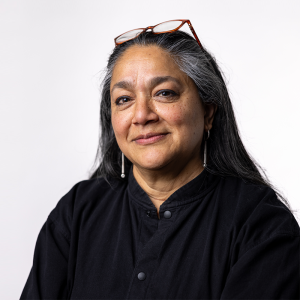
Neema Kudva is a Professor in the Department of City and Regional Planning at Cornell University's College of Architecture, Art, and Planning (AAP). She is currently on leave but remains actively involved in research and academic leadership. She serves as Senior Associate Dean for Academic Affairs, House Professor and Dean at Becker House, and co-chair of the AAP Council for Diversity & Inclusion. She is also a faculty affiliate of the South Asia Program, a fellow at the Atkinson Center for a Sustainable Future, and a field member in public affairs, Asian studies, development sociology, and visual studies. Education: Dip.Arch., School of Architecture CEPT, Ahmedabad, India (1989) M.Arch./M.C.P., University of California–Berkeley Ph.D., University of California–Berkeley (2001) Neema Kudva’s research centers on equitable planning, institutional structures for development, small cities in the Global South, and participatory planning. Her work emphasizes community-based engagement, sustainability, and social policy, with significant focus on South Asia. She leads the Nilgiris Field Learning Center in Kotagiri, India, a transdisciplinary collaboration between Cornell and the Keystone Foundation, fostering engaged learning and research. Her pedagogical innovations include citizenship and sustainability planning experiments. Her recent publications reflect a strong interdisciplinary focus on urban transformations, land dispossession, conservation, and justice. Themes across her work include spatial equity, decolonial planning, informal urbanism, and NGO roles in development. She explores how everyday practices and exceptional events shape just and sustainable urban futures. Scientific Awards and Fellowships: Kendall S. Carpenter Memorial Advising Award, Cornell University (2015) Senior long term research fellow, American Institute of Indian Studies (AIIS), Chicago and Delhi (2017) Neema Kudva has secured multiple grants for engaged research and curriculum development, particularly through Engaged Cornell and the Mario Einaudi Center. She has advised numerous students, recognized through her advising award, and collaborates extensively across disciplines and institutions, including Syracuse University and the Keystone Foundation. Her leadership in academic affairs and residential education underscores her commitment to holistic student development. She is deeply involved in transdisciplinary labs and teams, especially through the Nilgiris Field Learning Center, which integrates education, research, and practice in conservation and spatial justice. This field-based collaboratory exemplifies her commitment to community-engaged scholarship and sustainable development.
Dr. Julius Emmrich serves as a neurologist and neuroscientist at Charité – Universitätsmedizin Berlin, holding appointments as Assistant physician in the Clinic for Neurology and Associate Member of the Einstein Center Digital Future. He is a Digital Clinician Scientist funded by the German Research Foundation and leads projects within the Berlin Institute of Health's Digital Health Accelerator Program. Additionally, he co-founded and chairs the nonprofit Doctors for Madagascar since 2011. His educational background includes: Medical studies at University of Freiburg and Leipzig Doctorate (Dr. med.) from University of Leipzig / Mount Sinai School of Medicine, NYC (2012) Master of Philosophy in Neuroscience from University of Cambridge (2012) Medical license (2011) Emmrich's research integrates digital health innovation with global health equity, focusing on mobile technology solutions for healthcare access in resource-limited settings. His work with Doctors for Madagascar developed mTOMADY—a USSD-based platform enabling mobile health financing through savings, insurance, and voucher systems. This bridges his clinical neurology expertise with practical applications in maternal health, rural insurance coverage, and last-mile health fund delivery across Madagascar and the Democratic Republic of Congo. He directs significant research initiatives including the Mobile Maternal Health Wallet and Digital Insurance Card programs, funded through German Research Foundation grants and Berlin Institute of Health partnerships. His prior roles include Junior Clinician Scientist at Berlin Institute of Health (2015-2017) and visiting researcher positions at Cambridge University and the Federal Institute for Risk Assessment. As chairman of Doctors for Madagascar, Emmrich oversees operations supporting over 200,000 people through mTOMADY, which has facilitated 100,000+ treatments since 2019. The organization implements context-specific solutions including mobile health wallets for cocoa farming communities and voucher programs in remote regions, demonstrating scalable models for equitable healthcare financing.
Dr. E. Keith Smith is a Lecturer at ETH Zürich's Department of Humanities, Social and Political Sciences, affiliated with the Center for Comparative and International Studies (CIS). His research focuses on sociopolitical dimensions of climate change, particularly climate change attitudes, behaviors, and social tipping processes. He holds PhD from Colorado State University and master’s degrees from KU Leuven and University of British Columbia. His work explores why individuals engage—or disengage—in climate action, emphasizing factors like political polarization, religious beliefs (especially evangelical Protestantism), and trust in institutions. Smith's research employs quantitative methodologies and addresses challenges in environmental policy implementation, such as equitable air quality monitoring and global supply chain regulations. He contributed to the DominoES project on social tipping dynamics and has published in journals like Global Environmental Change and Nature Scientific Reports . His recent studies analyze public support for climate policies across Europe and the U.S., emphasizing how procedural inclusiveness and transparency can build trust in environmental governance. He also explores mobility policies in Switzerland, including road pricing and public transport expansion, using experimental methods to gauge citizen preferences. Smith’s work bridges environmental science and social science, aiming to identify pathways for transformative societal shifts toward climate action. His current projects focus on social tipping mechanisms and the interplay between climate risk anticipation and policy demand.
David Prytherch is a Professor in the Department of Geography at Miami University, specializing in urban planning, sustainability, and the intersection of law with urban spaces. He holds degrees from Pennsylvania State University and the University of Arizona. His research focuses on urbanization dynamics, spatial justice, and the politics of planning landscapes. He has authored/co-authored numerous publications on topics like mobility justice, right-of-way law, and regional planning in Spain and the U.S. Education: B.S. Geography, Pennsylvania State University (1992) M.A. Geography, University of Arizona (1999) Ph.D. Geography, University of Arizona (2003) Research Interests: Dr. Prytherch explores how urban landscapes reflect socio-political tensions and how planning can create equitable cities. Key themes include mobility justice, land use law, and the role of sustainability frameworks. He has studied urbanization in diverse locations like Valencia, Spain, and Pittsburgh, Pennsylvania, emphasizing how planning navigates between development and place preservation. Teaching & Advising: He teaches courses in urban geography, planning, and sustainability, emphasizing hands-on projects with local communities. He advises M.A. students on topics like regionalism and land use, collaborating on peer-reviewed publications. Notable collaborations include work with graduate students L. DePriest-Hricko and M. Zabik. Awards: 2008 Miami University Associated Student Government Professor of the Year Community Engagement: As Miami’s Sustainability Coordinator and Chair of the City of Oxford Planning Commission, he connects academic work to real-world challenges like trail systems and urban design. His projects include Safe Routes to School initiatives and the Oxford Area Trail System. Labs/Teams: Engaged in interdisciplinary urban planning projects, often involving students in community-based research. His work bridges academic research with local policymaking, fostering collaborative problem-solving.
Kevin Banks is an Associate Professor of Law at Queen's University and the Director of the Queen's Centre for Law in the Contemporary Workplace. He holds appointments as Associate Dean (Faculty and Academic Policy) and Editor-in-Chief of the Canadian Labour and Employment Law Journal . His research focuses on labour arbitration efficiency, globalization's impact on workplace law, and the intersection of international trade agreements with labour standards. He is a part-time member of the Ontario Grievance Settlement Board and has served on dispute panels for trade agreements like the US-Mexico-Canada Agreement and Canada-EU CETA. Education: S.J.D., Harvard Law School (2003) LL.B., University of Toronto (1989) B.A. (Economics), University of Toronto (1986) Research Interests: Banks explores constitutional collective bargaining rights, gaps in disability accommodation at work, and the enforcement of employment standards. He critiques trade agreement labour chapters and examines third-party liability for wage violations. His work bridges domestic law with global economic policies, emphasizing equitable labour practices in transnational contexts. Professional Achievements: He chaired the first-ever labour rights dispute arbitration panel under a free trade agreement (US-Central America FTA) and advised Ontario’s Changing Workplaces Review. His edited casebook, Labour and Employment Law , is Canada’s leading text in the field. Labs/Teams: Director of the Centre for Law in the Contemporary Workplace, coordinating interdisciplinary research on modern workplace legal challenges.
Paulo Blikstein is an Associate Professor of Communication, Media, and Learning Technologies Design at Teachers College, Columbia University. He holds affiliations with the Mathematics, Science & Technology department and the Communication, Media, and Learning Technologies Design program. His expertise spans curriculum design, digital innovation, science education, and educational technology. Dr. Blikstein earned a Ph.D. in Learning Sciences from Northwestern University (2009), M.Sc. in Media Arts & Sciences from MIT Media Lab (2002), and degrees in Engineering from the University of São Paulo (Brazil). His research focuses on leveraging technology to enhance learning through computational modeling, maker education, and tangible interfaces. He leads the Transformative Learning Technologies Lab and the FabLearn Program, which develop innovative tools like MoDa and PlayData, integrating computational thinking with real-world science experiments. His work emphasizes equitable access to technology-driven education, particularly in the Global South. Recent projects include deploying cloud labs for biology education, analyzing disinformation dynamics via agent-based models, and exploring how social media influences political radicalization. He critiques commercial education technology discourse through a critical pedagogy lens, advocating for culturally responsive, hands-on learning. Blikstein’s research bridges theory and practice, addressing systemic challenges in science education through participatory design with teachers and communities. His labs create sustainable educational technologies, such as DIY liquid handling robots and haptic feedback systems, to democratize STEM access. He also investigates computational identity formation in K-12 students and the role of making in fostering gender equity in STEM.
John Peters serves as Associate Professor at Memorial University of Newfoundland within the Faculty of Business Administration and Department of Sociology, with additional appointments as Research Fellow at Montreal's CRIMT and Associated Professor at both Montreal's School of Industrial Relations and York University's Department of Politics. His educational background includes a Master's in History from the University of Michigan and PhD in Political Science from York University, building foundational expertise for his interdisciplinary work. Peters' research critically examines labor movements within financialized economies and climate crisis responses, focusing on decarbonization's impact on workers through frameworks of just transition and political economy. His scholarship bridges theoretical analysis of inequality with practical policy solutions for sustainable labor markets. Recent publications (2019-2022) reveal consistent thematic focus: financialization's erosion of labor power, climate-labor intersections, and policy pathways for equitable economic transformation, with significant emphasis on Canadian contexts and comparative frameworks. His research awards demonstrate sustained funding success: SSHRC Engage Grant (2023) analyzing unions' climate crisis strategies SSHRC Connection Grant (2022) exploring climate-work futures Multi-year SSHRC Partnership Grant (2017-2024) for institutional labor innovation Peters actively collaborates through CRIMT on sector-specific policy studies (auto, steel, aluminum) while developing union training programs for zero-carbon transitions, emphasizing worker capacity building for equitable clean energy economies.
Bing Zhou serves as an Assistant Teaching Professor in the Department of Geography and the John A. Dutton Institute for Teaching and Learning Excellence within the College of Earth & Mineral Sciences at The Pennsylvania State University, focusing on advancing geospatial education and research. His educational background includes: Ph.D. in Geography from Texas A&M University Dr. Zhou pioneers research in geospatial data science and GeoAI, developing advanced algorithms to extract insights from big geospatial data (crowd-sourced data, mobility data, social media) for climate resilience and disaster response. He founded the revolutionary field of Responsible GIScience, which integrates ethical principles, human values, and societal interests into geospatial research and education. His work specifically targets identifying location-based help information from social media to support disaster response in high-risk communities, aiming to build resilient, equitable, and healthy societies through responsible spatial thinking. He teaches core courses including GEOG 589: Emerging Trends in Remote Sensing and GEOG 480: Exploring Imagery and Elevation Data in GIS Applications. Information regarding scientific awards, student advising, grant funding, and laboratory teams is not documented in the provided materials.