Susan Fino is a Professor at the College of Liberal Arts and Sciences, Wayne State University. Her research focuses on public law, American constitutional law, administrative law, and the role of state supreme courts. She holds a B.A. from Johns Hopkins University, an M.A. and Ph.D. from Rutgers University. She has received the President's Award for Excellence in Teaching. Her courses include American Government (PS1010) and Constitutional Law (PS5110/PS5120), taught across multiple terms from 2023 to 2025. Dr. Fino's research explores judicial federalism, state constitutional frameworks, and legal interpretations of rights. Her work analyzes topics like church-state relations, taxation provisions in state constitutions, and assisted suicide debates. She has written extensively on state supreme court dynamics, including landmark cases and institutional performance metrics. Her scholarship bridges legal theory with practical governance challenges at both state and federal levels. Her publications span over three decades, addressing evolving legal landscapes such as the Rehnquist Court’s federalism approach and technological impacts on criminal sentencing. She consistently engages with issues at the intersection of law, politics, and societal values.
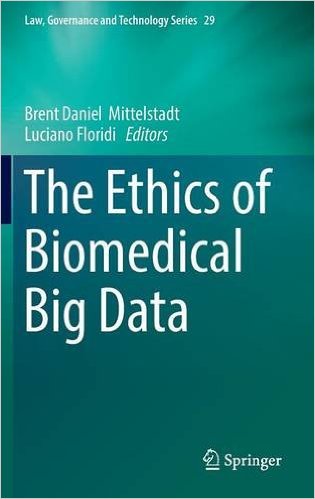
Professor Brent Mittelstadt is a leading academic in data ethics and AI governance at the University of Oxford's Oxford Internet Institute (OII), serving as Professor of Data Ethics and Policy and Director of Research. He coordinates the Governance of Emerging Technologies (GET) programme, focusing on ethics, law, and technology interplay. His work bridges academic research with policy impact, contributing frameworks like 'counterfactual explanations' and fairness metrics ('Conditional Demographic Disparity') used globally. He leads high-profile projects such as Trustworthiness Auditing for AI and A Right to Reasonable Inferences in Advertising and Financial Services. Research interests span AI ethics, medical ethics, technology governance, and non-discrimination law. He has pioneered ethical frameworks addressing algorithmic bias, GDPR compliance, and AI accountability. His work has influenced policy bodies like the UK Information Commissioner’s Office and the European Commission, and is implemented by tech giants such as Google and Microsoft. Awarded O2RB Excellence in Impact Awards (2018, 2021) and PLSC Best Paper (2019) Funded by Wellcome Trust, Sloan Foundation, and others Advisory roles for NHSx, GSK Consumer Healthcare, and regulatory bodies Recent work focuses on AI regulation (EU AI Act), generative AI ethics, and healthcare AI governance. He co-leads the OxonFair toolkit for algorithmic fairness and investigates societal impacts of deepfake proliferation and large language models.
Lorena Sosa is an Associate Professor at the Faculty of Law, Economics and Governance, Utrecht University, specializing in International and European Law. She is affiliated with the Netherlands Institute of Human Rights (SIM) and the research program Family & Law (UCERF). Her roles include membership of the management board of the Center for Global Challenges, Director of Education at UGlobe since 2022, and a community-engaged learning ambassador for her faculty since 2023. Education: PhD (cum laude) in Law from Tilburg University (2015), LL.M. in International Public Law (cum laude, National University of Córdoba), and a law degree from the same institution. Prior to Utrecht, she held positions at the University of Buenos Aires, University of Turku, and others. Research focuses on intersectional discrimination, gender-based violence, and human rights law. Key areas include the Istanbul Convention, feminist legal frameworks, and trans rights in criminal procedures. She employs socio-legal methods and collaborates with international organizations like the EU, Council of Europe, and UN. Publications span topics like femicide, domestic violence, and transgender experiences. Recent works include contributions to the Routledge International Handbook on Femicide and Feminicide (2023) and Preventing and Combating Violence Against Women (2023). Awards include the Marie Skłodowska-Curie Fellowship (2018), VENI Grant (2020), and the Max van der Stoel Award (2015) for her PhD on intersectionality in violence against women frameworks. Teaching includes courses on human rights law at Utrecht’s Legal Research Master, PIL Master, and University College Utrecht. She advises on projects related to victim rights, gender diversity, and empirical legal studies.
Dr. Charilaos Nikolaidis is a Senior Lecturer at Essex Law School, University of Essex, specializing in international human rights law and the intersection of law and literature. He received his LLB from City, University of London, LLM in International Business Law from University College London, and PhD in Law from King's College London. His research focuses on international human rights law, particularly the theory and implementation of the right to equality, and the relationship between law and literature. Nikolaidis has published extensively on equality jurisprudence, comparative human rights law, and democratic challenges in European contexts. Nikolaidis's publications demonstrate consistent focus on human rights jurisprudence, particularly equality and non-discrimination within European legal frameworks. His work spans theoretical explorations of legal equality, comparative analyses of European and US privacy rights, and practical examinations of democratic challenges in Greece and beyond.
Dr. Wolfgang Wieshaider serves as Associate Professor and Deputy Head of the Institute for Legal Philosophy at the University of Vienna's Faculty of Law. He is also the Academic Director of the LL.M. program in Religious Law and holds a position as permanent visiting professor at Charles University in Prague. His scholarly work bridges legal theory with practical applications in religious freedom, cultural heritage, and minority rights. Professor Wieshaider's research spans multiple intersecting domains with particular emphasis on religious law in Central and Eastern Europe, monument protection law, and the legal status of religious minorities. His scholarly output demonstrates deep engagement with the tension between religious practices and state regulation, especially regarding ritual slaughter, religious architecture, and religious minorities' rights. A significant portion of his work focuses on Jewish and Muslim communities in Austria and Central Europe, examining their legal status, rights, and challenges within national and European frameworks. Analysis of his recent publications reveals a consistent focus on the intersection of religious practice and state law, with growing attention to contemporary challenges like religious freedom during the pandemic, Islamic law in European contexts, and the legal recognition of philosophical organizations. His work demonstrates methodological diversity, combining doctrinal legal analysis with comparative approaches and historical perspectives. Professor Wieshaider has made substantial contributions through editorial work, serving as co-editor of the book series Law and Religion in Central and Eastern Europe and Intarsia · Interpretations of Culture and Law , as well as co-editing the Austrian Archives for Law & Religion . His academic leadership extends to directing the LL.M. program in Religious Law, which appears to be a significant educational initiative at the University of Vienna. His scholarly activities include advising graduate students, though specific names are not mentioned in the available materials. Professor Wieshaider maintains active international collaborations, particularly with scholars in Central and Eastern Europe, as evidenced by his numerous co-edited volumes and multilingual publications. The Institute for Legal Philosophy, where Professor Wieshaider works, appears to maintain a strong focus on religious law and cultural heritage, with several team members sharing similar research interests. His office is located in Room 4OG039 at Schenkenstraße 8-10 in Vienna, and he holds consultation hours on Thursdays from 2:30-3:30 pm during academic terms.
Keith Ewing is a Professor of Public Law at The Dickson Poon School of Law, King's College London since 1989. Previously, he held visiting professorships at the University of Western Australia (1992), University of Alberta (1987-88), and Osgoode Hall Law School (1982). Earlier roles included positions at the University of Edinburgh (1978-83) and University of Cambridge (1983-1989). His research focuses on labour law and constitutional reform, particularly the intersection of social rights and constitutional frameworks. He teaches undergraduate Public Law and graduate European Labour Law. His publications span constitutional law, human rights, and labour rights, with recent works addressing post-Brexit legal frameworks, trade agreements' labour provisions, and emergency governance during the pandemic. Notable books include MI5, the Cold War, and the Rule of Law (2020) and co-edited volumes on the Right to Strike in International Law (2020). His articles frequently analyze judicial roles, electoral democracy, and transnational legal challenges. Ewing has led projects such as the CONPRE initiative (2015-2017) on parliamentary human rights protections and a British Academy-funded study on counter-terrorism and human rights (2007). His work contributes to UN SDGs related to justice, equality, and sustainable development through legal reforms.
Joshua Feinzig serves as a Visiting Assistant Professor of Law at Duke University School of Law, specializing in civil procedure, administrative law, transnational litigation, and conflict of laws. His research examines how courts, agencies, and private actors structure adjudicative processes across overlapping legal systems, with a focus on transnational coordination through administrative procedure. His academic credentials include: J.D. from Yale Law School M.Phil. from the University of Cambridge as a Gates Cambridge Scholar B.A. summa cum laude from Yale University Feinzig's scholarship bridges constitutional, administrative, and international legal frameworks, analyzing procedural mechanisms that shape substantive outcomes in domestic and transnational contexts. His work demonstrates particular expertise in voting rights, presidential power dynamics, financial punishment jurisprudence, and cross-jurisdictional legal interpretation. His recent publications reveal a consistent focus on systemic interactions between legal regimes, with emerging trends examining how procedural rules channel authority across borders and within bureaucratic structures. This interdisciplinary approach spans constitutional challenges, regulatory governance, and comparative constitutional interpretation. His scholarly contributions have earned recognition through: Benjamin Scharps Prize for best third-year paper at Yale Law School Marshall Jewell Prize for best second-year contribution to a specialized journal Gates Cambridge Scholarship for graduate study Prior to academia, Feinzig clerked for Judge Diane P. Wood of the Seventh Circuit Court of Appeals and practiced appellate litigation at WilmerHale, authoring briefs for federal courts of appeals and the U.S. Supreme Court while representing clients in cross-border disputes involving foreign law and agency adjudications. His pre-legal career included fieldwork in immigration detention facilities and policy work with Taiwan's Ministry of the Interior on transpacific migration regulation.
Professor Duc Duy (Louis) Nguyen is Professor in Finance at Durham University Business School. Previously, he was Associate Professor at King's College London and Assistant Professor at University of St Andrews. His research has been featured in Forbes, Harvard Business Review, and BBC. He holds a BSc in Computing from National University of Singapore, MSc in Accounting, Finance, and Management from University of Bristol, and PhD in Finance from University of Edinburgh. Research foci include: Climate risk integration in mortgage markets and corporate finance Impact of social policies (e.g., marriage equality) on credit access Corporate governance and misconduct prevention in banking Local information environments and fraud detection Cross-cultural dimensions of executive decision-making His publication portfolio demonstrates consistent examination of how institutional frameworks (regulation, culture, governance) shape financial behaviors and market outcomes, with recent emphasis on climate finance and social equity impacts. Awards include: David Hume Publication Prize (2015) Semi-finalist, FMA Europe Best Paper Award (2018) Finalist, FMA Asia/Pacific Best Paper Award (2019) Best Registered Report on "Politics and Corporate Power" Vietnam Symposium in Climate Transition Best Paper Award (2024) He currently supervises PhD candidates Bingzhi Zhang and Jing Wei. His externally funded research includes grants from British Academy/Leverhulme Trust and Carnegie UK Trust. He serves as Associate Editor for European Journal of Finance and British Accounting Review. As frequent speaker at central banks and policy forums (Federal Reserve Banks of New York & St. Louis), he translates research insights into regulatory practice and policy development.
Professor Paul Marx is a faculty member at the University of Bonn, affiliated with the Faculty of Philosophy and the Institute of Political Science and Sociology. His research focuses on critical areas of political sociology and policy analysis, with particular emphasis on labor market dynamics and political participation. His research interests center on labor market policy , attitude research , policy analysis , politics and emotions , political socialization , tax and redistribution policy , and inequalities in political participation and representation . Professor Marx examines how economic conditions, particularly labor market experiences, shape political attitudes, behaviors, and representation. His work often employs mixed-methods approaches, combining quantitative analysis with qualitative insights from focus groups and elite interviews. Analysis of Professor Marx's recent publications reveals a consistent focus on the intersection of economic conditions and political behavior. His research demonstrates how labor market insecurity, income inequality, and welfare state policies influence political participation, voting behavior, and attitudes toward redistribution. A notable trend is his examination of political inequality, particularly how economic hardship in childhood affects later political engagement. His work also addresses contemporary political debates in Germany and Europe, including identity politics, gender-neutral language, and taxation policies. Professor Marx maintains an active research agenda with numerous publications in 2023-2025. His work appears to focus on German politics and comparative European welfare states, with some research extending to development contexts such as Bangladesh. His methodology frequently combines survey data with experimental and qualitative approaches to provide comprehensive insights into political behavior.
Dr. Amelia Simpson holds the position of Honorary Associate Professor at the Australian National University (ANU), specializing in constitutional law with a focus on discrimination principles and federalism. She earned her BA Hons and LLB Hons from ANU, followed by an LLM and JSD from Columbia University. She is a practicing Barrister and Solicitor in the High Court of Australia. Her research critically examines constitutional frameworks, particularly regarding state residence discrimination under Section 117 and interstate free trade jurisprudence. Her work has been cited in landmark High Court and Federal Court rulings, solidifying her reputation as a leading scholar in public law. Amelia’s contributions include co-authoring Hanks Australian Constitutional Law: Materials and Commentary (2016) and contributing to the Oxford Handbook of Australian Constitutional Law (2018). Her research on social equality and functionalist approaches to non-discrimination has advanced scholarly discourse on constitutional values. Notably, her 2017 paper Social Equality in Australia critiques the historical neglect of equality principles in constitutional interpretation. Her publications span constitutional doctrine, class actions reform, and environmental policy, reflecting her interdisciplinary approach. She ranks among Australia’s top 20 most prolific legal scholars in high-impact journals (2000–2010). Her work bridges theoretical analysis with practical legal challenges, influencing both academia and judicial practice.
Rosana Garciandia is a Senior Lecturer in Public International Law and Co-Director of the Centre for International Governance and Dispute Resolution (CIGAD) at The Dickson Poon School of Law, King's College London. She holds a PhD in Law from the University of Navarra and previously taught at the University of Murcia. Her research focuses on international law responses to human rights abuses, including modern slavery, racial discrimination, and corruption, with an emphasis on state accountability and intersectionality. She is also a Research Leader at the British Institute of International and Comparative Law and a Fellow of the Macrocrimes Center. Education: PhD in Law (University of Navarra) Previous Positions: Secretary General of the European Law Institute, UNODC, EU Agency for Fundamental Rights Her research interests include state responsibility, EU law, migration law, and the law of international organizations. She has published widely on topics such as inter-state communications in UN treaty bodies, domestic servitude, and human rights scrutiny in international trade policies. Recent work includes editing a special issue on inter-state communications (2024) and contributing to the Intersectional Rewrites project. She collaborates with the Leverhulme Centre for Research on Slavery in War, exploring the slavery-war nexus. Her teaching and research address global challenges, linking legal frameworks to issues like modern slavery, corruption, and human dignity. She actively engages with international organizations and policy development.
Golnoosh Farnadi is an Assistant Professor at McGill University's School of Computer Science and an Adjunct Professor at the University of Montréal. She serves as a Visiting Faculty Researcher at Google, a Core Academic Member at MILA (Quebec Institute for Learning Algorithms), and holds a prestigious Canada CIFAR AI Chair. Farnadi co-directs McGill's Collaborative for AI & Society (McCAIS) and founded the EQUAL Lab (EQuity & EQuality Using AI and Learning algorithms), which focuses on advancing algorithmic fairness and responsible AI. Her educational background includes a Ph.D. in Computer Science from KU Leuven and Ghent University (2017), with postdoctoral research at the University of Montreal/MILA (2018-2020) and the University of California, Santa Cruz (2017-2018). During her doctoral studies, she was a visiting scholar at UCLA, University of Washington, Tsinghua University, and Microsoft Research. Dr. Farnadi's research centers on developing mathematical tools and algorithms for fairness-aware machine learning systems. Her work addresses bias and discrimination in AI decision-making across critical domains including healthcare, criminal justice, financial services, and social media. She has pioneered approaches to ensure fairness in deep learning models, particularly in sequential decision-making under uncertainty. Her research bridges theoretical foundations with practical applications, examining how AI systems can be designed to promote equity while maintaining performance. Analysis of her recent publications reveals a strong focus on practical implementations of fairness mechanisms across diverse AI applications. Her work spans technical domains from generative models and large language models to recommender systems and healthcare optimization. A unifying theme is the development of mathematically rigorous frameworks that balance performance with fairness considerations, with increasing attention to cultural diversity in multilingual AI systems and privacy-preserving fairness approaches. Google Scholar Award (2021) Facebook Research Award (2021) Rising Stars in AI Ethics (2021) Google Award for Inclusion Research (2023) WAI Responsible AI Leader of the Year Finalist (2023) 100 Brilliant Women in AI Ethics (2023) Canada CIFAR AI Chair Dr. Farnadi advises numerous doctoral and master's students across McGill University, University of Montréal, and MILA, with research focusing on fairness, privacy, and responsible AI. Her EQUAL Lab brings together researchers from computer science, social sciences, and policy domains to address systemic challenges in AI ethics. She has secured significant research funding from Google and other major organizations to support her work on fairness-aware AI systems, with applications spanning healthcare, social media safety, and public policy. The EQUAL Lab serves as a hub for interdisciplinary research on algorithmic fairness, bringing together computer scientists, social scientists, and policy experts. The lab's work spans theoretical foundations of fairness metrics, practical implementations in real-world systems, and policy recommendations for responsible AI deployment. Current projects include developing frameworks for fair kidney exchange programs, mitigating cultural stereotypes in multilingual language models, and creating privacy-preserving approaches for detecting online harms while protecting user data.
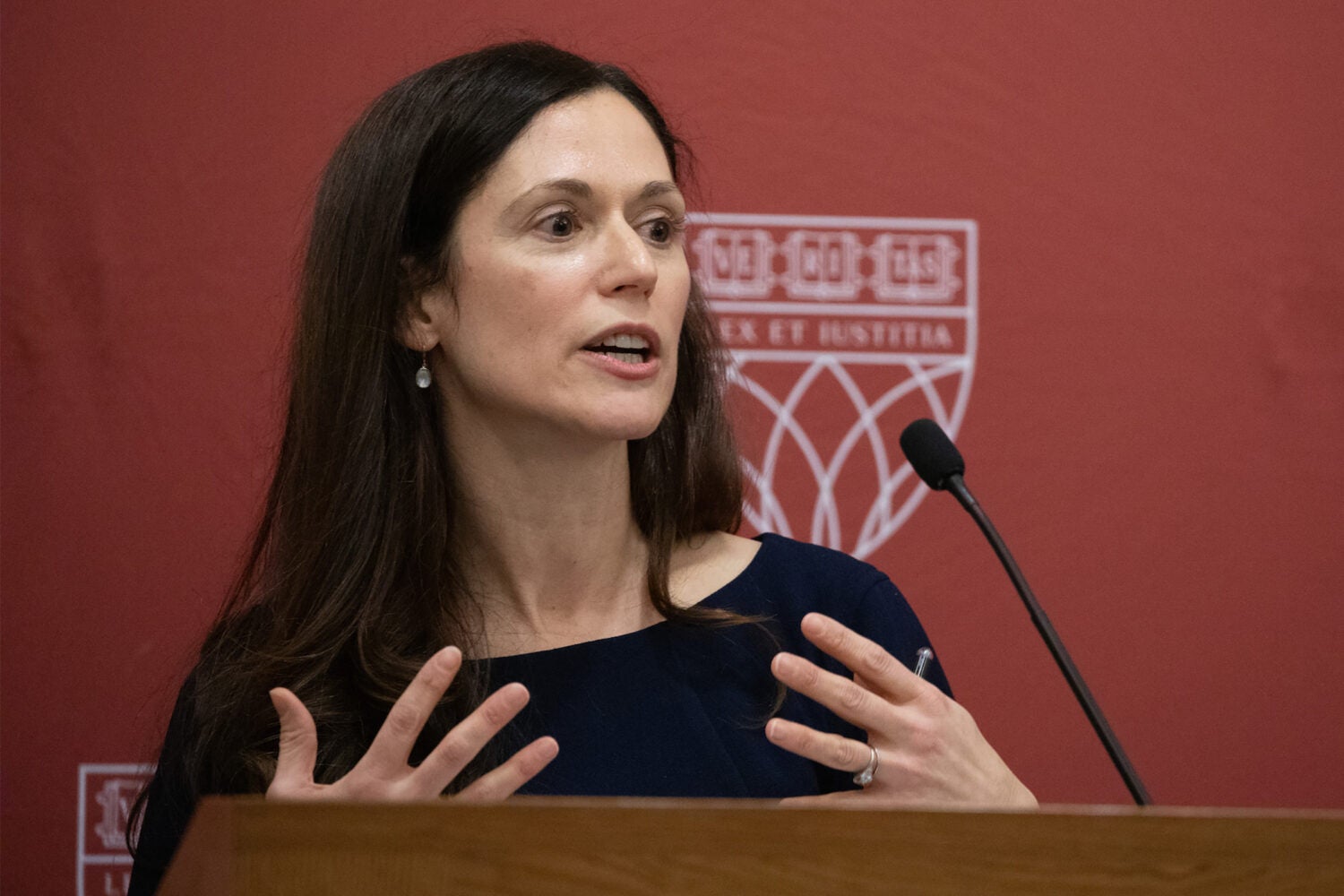
Daphna Renan is the Peter B. Munroe and Mary J. Munroe Professor of Law at Harvard Law School. Her work focuses on the U.S. presidency and the design of American democracy from the perspective of administrative and structural constitutional law. She has published extensively in leading law journals including the Columbia Law Review, Harvard Law Review, Stanford Law Review, Virginia Law Review, and Yale Law Journal. Renan received her B.A. in East Asian Studies from Yale College in 2000, summa cum laude. She earned an M.A. in International and Comparative Legal Studies from the University of London's School of Oriental and African Studies in 2001, and her J.D. from Yale Law School in 2004, where she served as an articles editor of the Yale Law Journal. Professor Renan's research centers on constitutional theory, particularly the relationship between judicial supremacy and democratic governance. She argues for 'a more political constitutionalism' that would distribute constitutional authority beyond the Supreme Court to democratically elected bodies. Her work explores presidential powers, the separation of powers, and how constitutional meaning is developed through political contestation rather than judicial finality. She contends that constitutional rights are 'only as secure as our politics can make them,' emphasizing the role of Congress and the executive in shaping constitutional interpretation. Renan's publications reveal a consistent focus on the provisional nature of constitutional order and the role of political institutions in constituting constitutional meaning. Her scholarship spans from historical analyses of political abolitionism's constitutional theories to contemporary critiques of judicial supremacy. A recurring theme is how unwritten norms and practices shape constitutional governance, particularly regarding presidential power. Her recent work with Nikolas Bowie examines the historical roots of judicial supremacy and advocates for congressional reclamation of constitutional authority. Professor Renan has held significant government positions, having served from 2009-2012 in the U.S. Department of Justice as a Counsel to the Deputy Attorney General and then as an Attorney Advisor in the Office of Legal Counsel. She also served on President-Elect Obama's Justice Department transition team. Prior to her government service, she clerked for Justice Ruth Bader Ginsburg of the U.S. Supreme Court and Judge Harry T. Edwards of the U.S. Court of Appeals for the District of Columbia Circuit.
Stephen M. Rich serves as the Maurice Jones, Jr. – Class of 1925 Professor of Law and Vice Dean for Academic Research and Intellectual Life at the University of Southern California's Gould School of Law, where he teaches employment discrimination law, constitutional equality law, and civil procedure. His educational background includes: JD from Yale Law School MA and BA in African American Studies from Yale University Rich also received a Fulbright Scholarship to study music in Fes, Morocco, and was awarded the A. Bartlett Giammati Fellowship during his undergraduate studies. Rich's research critically examines antidiscrimination law through interdisciplinary lenses, blending statutory and constitutional analysis with sociology and social psychology. His work challenges conventional approaches to racial classifications, prejudice, and diversity frameworks, arguing for nuanced understandings of social injustice and the practical limitations of legal enforcement. Recent scholarship focuses on reimagining diversity beyond affirmative action to advance equal opportunity. His publications from 2011-2016 reveal consistent thematic evolution: early work analyzed social psychology's role in discrimination enforcement ( Against Prejudice , 2011), progressed to examining textualism's impact on employment law ( A Matter of Perspective , 2014), and culminated in reconceptualizing diversity's relationship to equal opportunity ( What Diversity Contributes , 2016). Rich's accolades include: William A Rutter Distinguished Teaching Award (first junior faculty recipient at USC Gould) Fulbright Scholarship and Reginald Lewis Fellowship Yale prizes for senior essay and master's thesis Olin Fellowship at Yale Law School As Vice Dean, Rich shapes academic research initiatives while maintaining an active scholarship profile. His career trajectory—from Ninth Circuit clerkship to Cleary Gottlieb litigation practice before entering academia—infuses his work with practical legal insight. Though specific current grants aren't detailed, his Reginald Lewis Fellowship supported race and political equality research at Harvard Law School.
Robin Dunford is a Principal Lecturer at the University of Brighton's School of Humanities and Social Science, affiliated with the Inclusive Digital Societies Research Excellence Group and Centre for Applied Philosophy, Politics and Ethics. His academic profile centers on critical global ethics and political philosophy with emphasis on structural justice. His research spans four interconnected domains: Civilian Protection and Responsibility to Protect, critiquing conventional frameworks through works like Just War and the Responsibility to Protect: A Critique ; Human Rights and Transnational Resistance, particularly peasant rights advocacy via the UN Declaration on the Rights of Peasants; Decolonial Ethics, advancing 'pluriversality' as an alternative to cosmopolitanism in global ethics; Law, Ethics and Democracy, co-coordinating action-research against anti-democratic governance through the Law, Ethics and Democracy Collective. Recent publications (2019-2025) reveal consistent engagement with decolonial theory, food sovereignty movements, and curriculum transformation, frequently intersecting transnational activism with critical race and peasant studies. Dunford supervises PhD candidates including Afxentis Afxentiou (drone ethics), Marina Espinoza (Obama drone program), and current students exploring nonviolence, disability movements, Marxist imperialism, and feminist cosmopolitanism. He co-edits the 'Off the Fence: Morality, Politics, Society' book series and co-convenes the British International Studies Association's Ethics and World Politics working group.