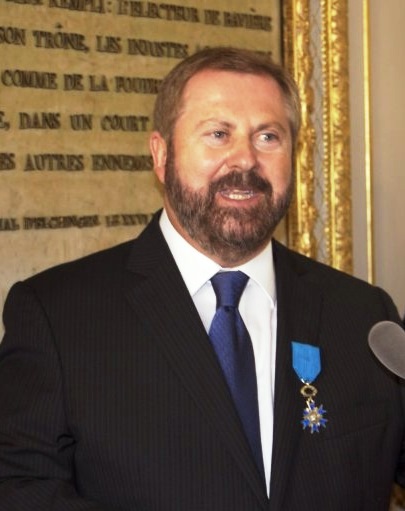
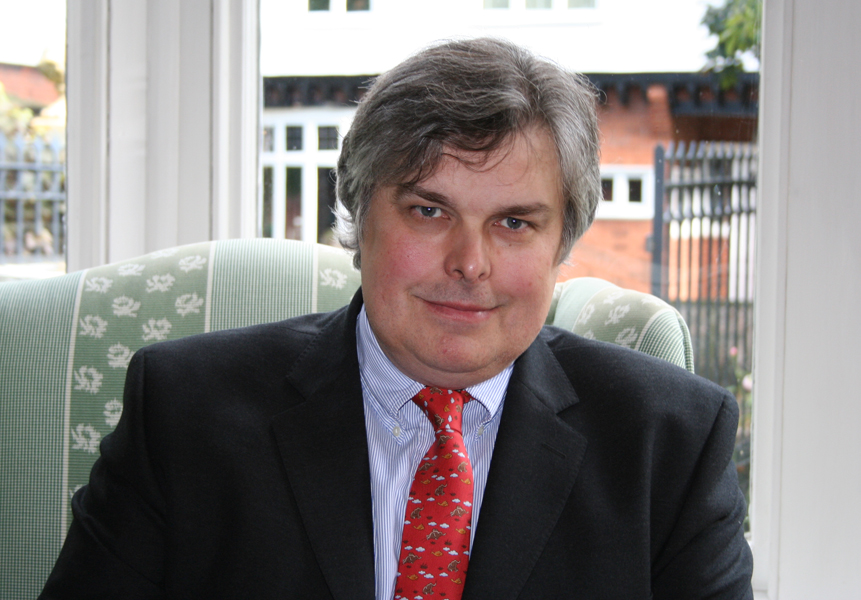
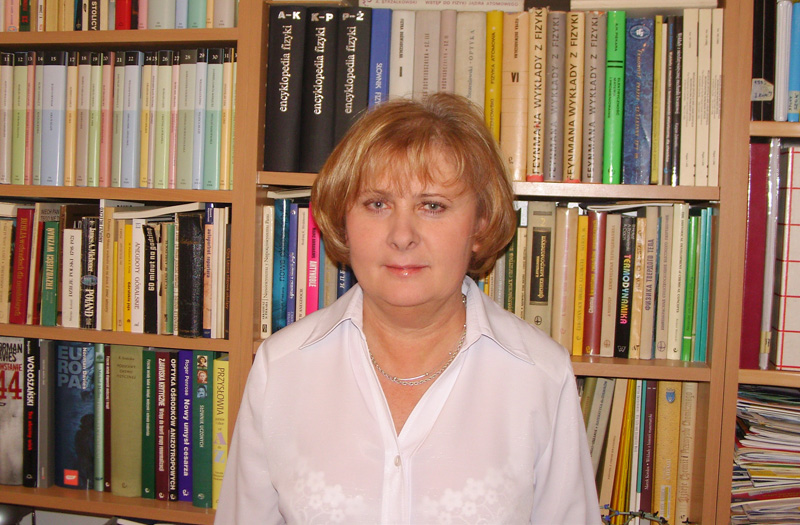
Wim van der Putten is a Professor in Functional Biodiversity at Wageningen University & Research and Head of the Department of Terrestrial Ecology at the Netherlands Institute of Ecology (NIOO-KNAW). He holds an honorary professorship at the Chinese Academy of Agricultural Sciences. His research focuses on climate change, land use dynamics, and soil biodiversity. He graduated from Wageningen University in 1984 and completed his PhD in 1989 on coastal dune ecosystems. He has led major projects like the Global Soil Biodiversity Initiative and the EU-funded EcoFinders and Liberation programs. His work bridges fundamental research with practical applications, such as soil health monitoring and ecosystem restoration. Key achievements include ERC and VICI grants, co-authoring the European and Global Soil Biodiversity Atlases, and chairing initiatives like the Heineken Environment Prize. His recent studies explore soil microbial communities, organic farming transitions, and biodiversity responses to global changes. He emphasizes sustainable land management, advocating for 'productive deintensification' in agriculture.
Dr. Alexandra Machado Ferreira Castilho is a leading researcher at the Institute of Plant Biotechnology and Cell Biology within the University of Natural Resources and Life Sciences, Vienna (BOKU) . She has served as Principal Investigator since 2018 and previously as Scientific Coordinator of the Laura Bassi Center PlantBioP (2010-2017). Her work focuses on Plant Molecular Farming and Glycoengineering , aiming to optimize plant-based production of therapeutically relevant glycoproteins. Specializes in tailoring N-glycan profiles for biopharmaceuticals Develops plant cell factories for antibody and decoy receptor production Key projects include SARS-CoV-2 neutralization strategies and cancer immunotherapy agents Her recent publications analyze glycoengineering techniques in Nicotiana benthamiana , covering topics like ACE2-Fc decoys for viral neutralization, PD1/PDL1 blockade for oncology, and protease suppression for protein stability. She has received funding from the Austrian Science Fund (FWF) for projects on immune checkpoint inhibitors and glycosylation pathway modulation.
Ulrich Cuntz serves as Head of Clinical Sub-Unit within the Research Program of Psychotherapy Evaluation in Complex Therapy Settings at Schoen Kliniken. Holding the academic title of Professor, his clinical and research work focuses on severe eating disorders with particular emphasis on anorexia nervosa pathophysiology and treatment protocols. His research interests center on the intersection of nutritional status, gastrointestinal microbiota, and mental health outcomes. Key areas include longitudinal analysis of body mass index correlations, liver function in malnutrition states, and microbiome-gut-brain axis interactions in eating disorders. His work frequently examines how rapid renutrition protocols impact physiological recovery and psychological symptoms. Notable scientific contributions include: Bester freier Habilitationsvortrag from TU München (2009) Christina Barz Forschungspreis (2007) DCCV-Forschungspreis for inflammatory bowel disease research (2000) His editorial activities include serving as Associate Editor for Obesity Facts: The European Journal of Obesity since 2008 and organizing the 2015 conference "Essstörungen - state of the art". His research output shows consistent productivity with 51 publications including original articles, reviews, and book chapters focused on eating disorder management and complications.
Giulia De Lorenzo is a Full Professor of Plant Physiology at Sapienza University of Rome since 2000, with prior roles as Associate Professor at Sapienza University of Rome (1994-1999) and University of Bari (1991-1994). Her research focuses on plant immunity, molecular recognition, and cell wall dynamics, particularly in plant-pathogen interactions involving damage-associated molecular patterns (DAMPs) and their role in signal transduction. Education: Laurea in Biology (1980, Sapienza University of Rome, cum laude), PhD in Evolutionary Biology (1987, Sapienza University of Rome) Her work explores the structural and functional basis of plant defense mechanisms, including the inhibition of cell wall-degrading enzymes and engineering plant resistance through chimeric receptors. Articles highlight her contributions to understanding DAMPs, PGIP proteins, and their applications in crop protection and bioconversion. Notable scientific awards include the 2011 Sapienza University of Rome Award for Excellence in Research , 1997 Giovanni Armenise-Harvard Foundation Award , and the 1983 Fondazione V.V. Landi Award from the Accademia dei Lincei. She has served on editorial boards and organized international conferences in plant science.
Sebastian Falk is an Associate Professor at the Max Perutz Labs, part of the University of Vienna, within the Department of Structural and Computational Biology. His research focuses on the biogenesis and action of small RNAs, particularly piRNAs, employing structural biology and biochemical approaches to elucidate molecular mechanisms. He received the prestigious EMBO Young Investigator award in 2022. His lab investigates RNA surveillance pathways, mRNA splicing, and the interplay between RNA processing and degradation. Key projects include studying the MTR4-NRDE2-CCDC174 complex and piRNA processing factors in C. elegans. Falk has organized major symposia on RNA biology and contributed to high-impact publications in journals like Nature and Nucleic Acids Research . EMBO Young Investigator (2022) Grants: 'Characterization of piRNA processing factors in C. elegans' (2023-2026)
Dominik Kopczynski is a researcher affiliated with the Department of Analytical Chemistry at the Faculty of Chemistry. His work focuses on lipidomics, mass spectrometry, and the development of bioinformatics tools for lipid structure analysis and experimental standardization. He has contributed to initiatives like the lipidomics reporting checklist and Goslin nomenclature system. Active in organizing academic events such as the de.NBI Spring School for lipidomics bioinformatics and Keystone Symposia on lipid biology, he collaborates extensively with international researchers. Research Interests: Lipid metabolism, mass spectrometry-based analytical methods, lipid nomenclature standardization, proteomics, and computational tools for omics data analysis. His work bridges biochemical experimentation with bioinformatics to enhance reproducibility and interdisciplinary collaboration in lipidomics research. Activities: Organized 36 academic events including conferences, schools, and poster sessions. Notable contributions include co-organizing the 2025 de.NBI Spring School and contributing to the Keystone Symposia on lipid cellular function and disease. Engaged in both presenting research and fostering collaborative research networks. Labs/Teams: Collaborates within the Department of Analytical Chemistry and participates in international lipidomics consortia. His work often involves cross-disciplinary teams focused on integrating biochemical and computational approaches. Grants/Advising: While specific grants are not detailed, his extensive publication record and collaborative activities suggest involvement in funded projects related to lipidomics infrastructure development and analytical method standardization.
Florian Csarman is a researcher at the Institute of Food Technology , within the Department of Biotechnology and Food Sciences at the University of Natural Resources and Life Sciences, Vienna (BOKU) . He holds a doctoral degree and is actively involved in research on biocatalysis, enzyme technology, and food biotechnology, focusing on lignocellulose-degrading enzymes such as lytic polysaccharide monooxygenases (LPMOs) and cellobiose dehydrogenases (CDHs). His work integrates biochemical, biophysical, and molecular biology approaches to understand enzyme function and stability. His research interests center on biocatalysis , bioprocess engineering , and macromolecular chemistry , particularly in the context of oxidative enzymes involved in biomass conversion. He employs techniques such as ATR-FTIR, amperometry, SAXS, and recombinant expression to study enzyme kinetics, domain interactions, and catalytic mechanisms. His work has significant implications for sustainable biotechnology and bio-based product development. The recent publications highlight a strong trend in enzyme mechanism , structural characterization , and functional analysis of carbohydrate-active enzymes. There is a consistent focus on understanding how LPMOs and CDHs interact with complex substrates, their stability under operational conditions, and their potential for industrial application. The interdisciplinary nature of the work spans biochemistry, structural biology, and applied biotechnology. Florian Csarman has served as a reviewer for multiple scientific journals, including Microbiology Spectrum , Scientific Reports , Applied and Environmental Microbiology , and Cellulose , demonstrating active engagement in the scientific community. His collaborative research, often with Roland Ludwig and other international teams, underscores his role in advancing knowledge in biocatalysis and enzyme engineering. He has contributed to EU-funded projects, such as the study on oxidative biomass-degrading enzymes, indicating involvement in grant-supported research. He completed his dissertation in 2022 titled Characterization and visualization of lignocellulolytic enzymes , reflecting a long-term commitment to enzyme research. His work is primarily conducted within the research environment of the Institute of Food Technology at BOKU, which provides advanced facilities for protein expression, purification, and functional analysis. There is no mention of formal advising roles, but his collaborative publications suggest mentorship and teamwork in a research-intensive setting.
Arnaud Echard is a Full Professor of Biology at Ecole Polytechnique (since 2018) and Head of the Membrane Traffic and Cell Division Lab at Institut Pasteur (since 2015). He holds dual roles as CNRS Research Director 1st class (since 2016) and has been a pivotal leader in cell biology, serving as President of the French Society for Cell Biology (2015–2018) and President of the Institut Pasteur's Scientific Council (2021–2023). His research focuses on cytokinesis, cell division mechanisms, and ESCRT machinery. Education: PhD in Biology, University of Paris XI (2000) with highest honours Fellow of Ecole Normale Supérieure de Lyon (1992–1996) M.Sc. Molecular and Cellular Biology Agrégation of Biochemistry (National highest teaching qualification) Research Interests: Echard explores fundamental mechanisms of cell division, including cytokinesis dynamics, membrane trafficking, and actin cytoskeleton regulation. His work bridges cell biology and biophysics, addressing how cellular components coordinate during division. Key areas include ESCRT machinery function, oxidoreduction processes, and abscission checkpoints. Awards: 2018 Gustave Roussy Prize (French Academy of Sciences) 2015 Dr. ST Huang-Chan Memorial Medal (University of Hong Kong) 2011 Schlumberger Foundation Prize Three Excellence Awards from CNRS (2012–2023) Leadership & Service: Echard chairs major scientific bodies, including the Institut Pasteur’s hiring committee and the French Society for Cell Biology. He also co-leads the Institute for Integrative Biology of the Cell (I2BC) and serves on editorial boards for Cells & Development and Biology of the Cell . Labs & Teams: He directs the Membrane Traffic and Cell Division Lab at Institut Pasteur, a hub for studying cell division mechanics. His work integrates molecular, cellular, and biophysical approaches to unravel cytokinesis processes.
Sirpa Jalkanen is a Professor of Immunology at the University of Turku and a Research Professor at the National Institute of Health and Welfare. She has held leadership roles including Director of the MediCity Research Laboratory and the Receptor Program at Turku University, and Vice Dean of the Medical Faculty (2010-2013). Degrees: M.D. (1979), Ph.D. (1983), Docent in Immunobiology (1987) Speciality: Clinical Microbiology (1990) Her research focuses on endothelial cell biology , lymphocyte trafficking , and transcellular migration . She has pioneered discovery of adhesion molecules and their roles in inflammation, with significant contributions to understanding leukocyte migration and vascular biology. The provided publications (2005-2013) highlight her work on VAP-1 interactions , Siglec receptors , endothelial markers , and lymphatic trafficking . These studies span immunology, molecular biology, and lymphatic system research, revealing mechanisms in leukocyte adhesion and potential diagnostic applications. Scientific Awards: Datta Medal (2011) Äyräpää Prize (2008) Anders Jahre Prize (2005) Elias Lönnrot Medal (2004) Maud Kuistila Prize (1997) Jalkanen has trained 24 thesis students and 21 postdoctoral fellows, five of whom hold professorships or leadership roles. Her work has led to over 242 publications (H-index 55), 10+ patents, and two biotech companies: BioTie Therapies and Faron Pharmaceuticals.
Carlos López-Otín is a Professor of Biochemistry and Molecular Biology at Oviedo University since 1987. His research focuses on protease biology and its implications in cancer, aging, and genetic disorders. Academy of Europe ID: 1861 (Ordinary Member, Section: Biochemistry & Molecular Biology, elected 1998) Main Country of Residence: Spain Research Interests: Analysis of tumor progression susceptibility Protease inhibition strategies Animal models for proteolytic function Structural characterization of human proteases Genomic instability in premature aging Autophagy regulation in tumorigenesis Scientific Awards: Member, Royal Academy of Sciences-Spain Member, Academia Europaea Santiago Ramon y Cajal National Award Carmen and Severo Ochoa Award King Jaime I Basic Research Award FEBS Silver Jubilee Prize
Kelvin J. A. Davies is a Professor at the Davis School of Gerontology and College of Letters, Arts & Sciences , University of Southern California . He holds the James E. Birren Endowed Professor of BioGerontology and is Dean of Faculty & Research at USC's Davis School of Gerontology. Born in London, UK; educated at Liverpool, Lancaster, University of Wisconsin (M.Sc. 1976), and University of California at Berkeley (Ph.D. 1981) Established field-defining research on oxidative stress , protein degradation , and mitochondrial Lon protease function in aging-related pathologies Davies' research explores oxidative stress adaptation , protein oxidation and proteolysis , and age-related decline in stress response . His work on the Nrf2 signal transduction pathway and RCAN1 gene has transformed understanding of Alzheimer's and Down syndrome mechanisms. The lab's studies on mitochondrial Lon protease and proteasome regulation establish critical links between environmental oxidants, aging, and neurodegenerative diseases. He has received seven honorary doctorates and eight fellowships , including from the American Association for the Advancement of Science and Royal Society of Medicine . Awards highlight his lifetime achievements in redox biology , mentoring excellence (Andrew W. Mellon Foundation), and scientific leadership in founding journals like Free Radical Biology & Medicine . Davies has mentored 28 graduate students and 30 postdoctoral fellows . As founding President of the California Philharmonic Orchestra and Director of the S.T.A.R. program , he combines scientific and community impact through arts and education outreach to disadvantaged youth.
Professor Martin Schroder is a leading materials chemist currently serving as Vice President and Dean of the Faculty of Science and Engineering at the University of Manchester. He previously held executive and academic roles at the University of Nottingham (1995-2015) and the University of Edinburgh (1982-1995), culminating in his appointment as Professor of Chemistry at Manchester (2015-present). His career spans over four decades with significant contributions to porous metal-organic frameworks (MOFs) for energy and environmental applications. PhD in Chemistry from Imperial College London (1978) BSc in Chemistry from the University of Sheffield (1975) Professor Schroder's research focuses on materials chemistry , particularly metal-organic frameworks (MOFs) for gas separation and capture. His work addresses CO2 reduction , toxic gas removal , and proton conductivity through innovative framework design and functionalization. Recent publications highlight MOF applications for hydrogen storage , SO2 capture , and NO2 conversion . His 15 most recent publications (2016-2020) demonstrate sustained expertise in porous materials engineering , showing consistent focus on gas adsorption mechanisms , supramolecular interactions , and environmental remediation through MOF technology. Key trends include CO2 selectivity , dynamic framework behavior , and electrochemical sensor development . Awarded numerous honors including: Royal Society of Chemistry Nyholm Prize (2020) Tilden Lectureship & Medal (2001/02) Multiple RSC awards (2003, 2008) Honorary Doctorates (2005, 2017) Fellowships (FRSE, FRSC) He has organized major international conferences like the 1st International Conference on Metal-Organic Frameworks (2008) and led the Royal Society Discussion Meeting on 'The New Chemistry of the Elements' (2014). His work bridges fundamental inorganic chemistry with practical solutions for clean air technologies and carbon capture .
Malgorzata Witko is a full Professor and Director of the Institute of Catalysis and Surface Chemistry at the Polish Academy of Sciences (PAS) in Kraków, Poland. She has held continuous positions at this institute since 1973, progressing from assistant to professor in 1997 through presidential nomination. Her institutional affiliations include membership on Scientific Councils of the Institute of Nuclear Physics and Institute of Physical Chemistry in Poland, and active roles in the European Federation of Catalysis Societies (EFCATS) and European Research Council evaluation panels. Professor Witko's research focuses on quantum chemical approaches to catalytic processes, with expertise spanning heterogeneous, homogeneous, and enzymatic catalysis. Her work particularly examines electronic structures of transition metal oxide catalysts, oxygen activation mechanisms, and nanospace constraints in catalytic systems. She employs advanced computational methods including density functional theory (DFT) to model reaction mechanisms and surface phenomena. Her publication record includes over 130 papers with 1,740 citations and an h-index of 24. Recent research demonstrates consistent focus on computational catalysis, with publications covering vanadium/titanium oxide systems, porphyrin-based oxygen activation, enzyme reaction mechanisms, and nanospace effects in supported catalysts. Member of Polish Academy of Sciences (elected 2012) Knight's Cross of the Order of Polonia Restituta (2011) Vice President of EFCATS (2005-2009) Member of European Research Council Evaluation Panels (2006-2012) 1978 President's Award and 1st Prize from Polish Academy of Sciences Professor Witko has delivered over 110 international conference lectures including keynote addresses at NATO Advanced Institutes and major catalysis conferences. She has organized numerous international symposia on quantum chemical approaches to catalysis and serves on editorial boards of Catalysis Letters and Topics in Catalysis. Her extensive international collaborations include research groups at Fritz-Haber-Institut (Berlin), University of Vienna, and Université Pierre et Marie Curie (Paris).
Birgit Wiltschi is a researcher at the Institute of Bioprocess Science and Engineering within the University of Natural Resources and Life Sciences, Vienna (BOKU) . Her work focuses on protein engineering, non-canonical amino acid incorporation, and bioprocess optimization for therapeutic and industrial applications. Academic Affiliation : BOKU, Institute of Bioprocess Science and Engineering Research Themes : Protein functionalization, bioorthogonal chemistry, enzyme engineering, synthetic biology, and bioproduction systems Recent publication trends highlight her expertise in: Site-specific non-canonical amino acid incorporation Chemoselective protein modification techniques Development of "clickable" therapeutic proteins Lectin engineering for biomedical applications Optimization of microbial bioproduction systems Doctoral Thesis Supervision : Hanaee A: Development of methods for in vitro quantification of proteolysis in E. coli systems (2024)
Markus Teige is a researcher at the Max Perutz Labs, affiliated with the Faculty of Life Sciences at the University of Vienna, in the Department of Biochemistry and Cell Biology. His work focuses on plant stress tolerance, calcium signaling, chloroplast development, protein phosphorylation, and organelle signaling networks. Current projects include Molecular mechanisms of plant stress tolerance (2021–2025) and Calcium regulation of chloroplast development & function (ongoing). Past projects include Auswirkungen von Virusinfektionen auf die Kalziumhomöostase (2020–2022). Research trends from his 62 publications emphasize calcium signaling in plant antiviral defense, chloroplast stress responses, and integrated multi-omics approaches to abiotic stress in crops like potato. His work bridges organelle physiology with whole-plant stress adaptation. Teige collaborates internationally on plant signaling and systems biology, contributing to Sustainable Development Goals (SDGs) related to climate-resilient agriculture and stress biology.