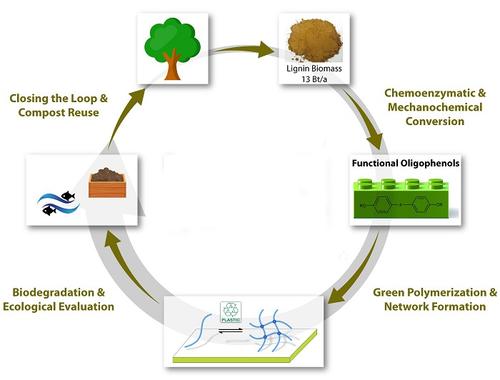
Rainer Haag is a Professor at the Department of Chemistry, Freie Universität Berlin, leading the Haag Group in the Institute of Chemistry and Biochemistry. His research focuses on biodegradable and sustainable materials, dynamic hydrogels, and polymeric nanosystems for biomedical applications. Department of Chemistry, Freie Universität Berlin Member of SFB 1449: Dynamic Hydrogels at Biointerfaces Collaborator in the StemGel startup project Co-founder of CSR|Berlin interdisciplinary research institute Research Interests: Development of stimuli-responsive polymers, multivalent virus inhibitors, and functional biointerfaces. Key projects include: Antiviral coatings using heteromultivalent polymers Thermoresponsive hydrogels for stem cell expansion Graphene derivatives for bacterial capture and disinfection Lignin upcycling for sustainable resin materials Supramolecular nanosystems for drug delivery Publication Trends highlight interdisciplinary work in polymer chemistry, nanotechnology, and biomedical applications. Recent articles focus on: 2D polyglycerols for virus interactions Redox-responsive nanogels Mucus-inspired adhesive hydrogels Tumor-targeting micelles Bacterial disinfection using graphene composites Labs & Collaborations include the Polymeric and Supramolecular Nanosystems subgroup, the Dynamic Hydrogels and Biointerfaces team, and partnerships with MIT in developing bioinspired adhesives. His group contributes to DFG-funded SFB 1449 and CSR|Berlin initiatives.
Prof. Johannes A. Lercher is a retired professor (as of April 2023) at the Technical University of Munich (TUM), holding the Chair of Chemical Technology II within the Department of Chemistry. His research focuses on heterogeneous catalysis, particularly understanding catalytic processes at solid-liquid and solid-gas interfaces, with applications in sustainable energy production, CO₂ conversion, and catalytic upcycling of polymers. He has held academic positions at the University of Twente (Netherlands) and the Pacific Northwest National Laboratory (USA), and has been Editor-in-Chief of the Journal of Catalysis . His honors include the Alwin Mittasch Prize (2021), ENI Award (2016), and Kozo Tanabe Prize (2013). His recent work emphasizes low-temperature polymer upcycling, methane activation, and bioinspired catalyst design, leveraging advanced spectroscopic and operando techniques. Despite retirement, his contributions to catalysis research remain impactful. Education: PhD (1980) and Habilitation (1985), Vienna University of Technology Visiting Lecturer, Yale University (1982) Research Interests: Heterogeneous catalysis, catalytic interfaces, sustainable energy carriers, CO₂ valorization, and polymer waste upcycling. Key areas include: Design of catalysts for selective hydrocarbon synthesis Mechanistic studies using advanced spectroscopy Development of scalable catalytic processes for industrial applications Recent Trends in Publications: Focus on low-temperature polymer recycling (e.g., PVC and polyolefin upcycling), methane activation via novel catalysts (e.g., Co 2+ in ZSM-5), and bioinspired catalytic strategies. His work bridges fundamental catalysis with industrial relevance, emphasizing sustainability and energy efficiency. Awards and Recognition: Member, Academia Europaea and US National Academy of Engineering Recipient of multiple international catalysis awards (see full list above) Grants and Labs: Led the Institute for Integrated Catalysis (Pacific Northwest National Lab, 2011–present). His research groups have pioneered studies on zeolite-confined reactions and interfacial catalysis, with collaborations spanning academia and industry. Labs/Teams: Active in the TUM Department of Chemistry and international networks focused on catalytic innovation for a carbon-neutral economy.
Prof. Dr. Markus Schwarzländer leads the Arbeitsgruppe for Plant Energy Biology at the Institute for Plant Biology and Biotechnology (WWU Münster) . His research focuses on mitochondrial physiology, redox signaling, and biosensor development in Arabidopsis thaliana and other plant species, integrating molecular biology with systems-level analyses to understand energy regulation. Key Research Areas: Mitochondrial-NAD(P)H dynamics Redox-regulated signaling networks Organelle communication Stress-adaptive metabolism Recent work highlights Golgi-localized mitochondrial uncoupling proteins , chloroplast-mitochondria redox coupling , and mitochondrial calcium uniporter function . His group employs cutting-edge fluorescent biosensors and proteomic approaches to dissect energy physiology. Students benefit from hands-on training in bioimaging , metabolic modeling , and organelle biology through iMoPLANT and Life Sciences programs. Scientific Awards: DAAD Fellowship (2019) As an active member of the Faculty of Biology , he collaborates with international institutions including University of São Paulo , CEA France , and Siberian Institute of Plant Physiology , while maintaining a robust publication record in top journals like Plant Cell and Nature . His teaching emphasizes integrative plant sciences and advanced biosensing techniques for B.Sc. and M.Sc. students.
Prof. Dr. Anja Meryandini is a Professor in the Department of Biology at IPB University (Bogor Agricultural University), Indonesia. She leads research in microbial biotechnology with a focus on enzyme technology, probiotics, prebiotics, and fermentation processes for food and agricultural applications. Her educational journey includes a Bachelor's degree in Biology from Padjadjaran University, a Master's degree in Biology from IPB University, and a PhD in Microbiology from Albert Ludwig Universitaet, Germany. This strong academic foundation has supported her extensive research career spanning over three decades. Professor Meryandini's research interests encompass: Microbial enzyme technology (protease, mannanase, xylanase) for animal feed processing Development of probiotics and prebiotics for food and animal applications Flour production using microbial technology Fermentation processes for various agricultural products Soil microbiome analysis in relation to land use changes Biodegradation of environmental pollutants Her recent publications reveal a consistent focus on lactic acid bacteria, yeast fermentation, enzyme characterization, and biodegradation processes, often utilizing Indonesian indigenous microorganisms. She has made significant contributions to understanding cocoa fermentation microbiology, tempeh processing, and agricultural waste valorization. Professor Meryandini has been actively involved in important research projects including 'Impact of rainforest transformation on phylogenetic and functional diversity of soil prokaryotic communities in Sumatra (Indonesia)' which is part of a larger CRC 990 program. Her work demonstrates strong interdisciplinary connections between microbiology, environmental science, and food technology. With over 100 publications documented from 1994 to 2024, Professor Meryandini maintains an active research program with significant contributions to microbial biotechnology in the Indonesian context and beyond.
Prof. Dr. rer. nat. Lothar Elling is a University Professor and director at the Helmholtz Institute for Biomedical Engineering, RWTH Aachen University, Germany. His research focuses on biomaterials, glycoengineering, and enzymatic synthesis of carbohydrates and glycoconjugates. Institution: RWTH Aachen University Research Unit: Helmholtz Institute for Biomedical Engineering Academic Rank: Full Professor Prof. Elling's research interests include: Glycoengineering of biomaterials Enzymatic synthesis of glycans Glycosyltransferase immobilization Glycan-protein interactions Biocatalytic cascade reactions Biomedical applications of glycomaterials His recent publications demonstrate strong expertise in: - Automated enzymatic glycan synthesis - Multi-enzyme cascade systems for nucleotide sugar production - Glycosyltransferase engineering - Galectin-targeted glycomaterials - Microgel-based biosensors
Prof. Dr.-Ing. Selin Kara is a Professor at the Institute of Technical Chemistry, Faculty of Natural Sciences, Leibniz University Hannover. She leads research in biocatalysis and bioprocessing, with a focus on sustainable and innovative enzyme-based technologies. Her leadership roles include Spokesperson of the Curriculum and Teaching Committee for Life Science and Chairperson of the Admissions Board for MSc Life Science. Full Name: Selin Kara Institution: Leibniz University Hannover Faculty: Faculty of Natural Sciences Department: Institute of Technical Chemistry Academic Rank: Professor Email: selin.kara@iftc.uni-hannover.de Her research interests center on biocatalysis and bioprocessing , particularly in redox biocatalysis , enzyme immobilization , non-conventional media such as deep eutectic solvents, biocatalytic cascades , and flow biocatalysis . She explores enzyme kinetics and process engineering to enhance efficiency and sustainability in chemical synthesis. Her group develops novel reactor systems and materials, including hydrogels and 3D-printed microfluidics, for advanced biocatalytic applications. She emphasizes green chemistry principles, aiming to replace traditional chemical processes with eco-friendly enzymatic alternatives. The most recent publications (2024–2025) demonstrate a strong trend in deep eutectic solvents , fusion enzymes , immobilization techniques , and sustainable synthesis of bio-based chemicals . Her work integrates experimental and computational methods to understand enzyme behavior and optimize reaction systems. Key themes include process intensification, solvent engineering, and industrial scalability, with applications in pharmaceuticals, fragrances, and sustainable materials. She holds leadership positions in academic governance, including: Spokesperson, Curriculum and Teaching Committee, Life Science (BSc/MSc) Chairperson, Admissions Board for MSc Life Science Executive Board Member, Institute of Technical Chemistry Deputy Representative for Professors in Faculty Council and Examination Boards Her research is highly collaborative, involving interdisciplinary teams and international partners, and is consistently published in high-impact journals such as Green Chemistry , ACS Catalysis , and ChemSusChem . While specific scientific awards and student advisees are not listed in the provided text, her extensive publication record and leadership roles reflect significant academic contributions.
Prof. Roland A. Fischer is a Full Professor at the Chair of Inorganic and Metal-Organic Chemistry at Technical University of Munich (TUM). Previously, he held a Full Professorship at Ruhr University Bochum (1997–2015). His research focuses on multifunctional metal-organic frameworks (MOFs), clusters, and composites for energy conversion, catalysis, gas storage, and environmental applications. He leads the Catalysis Research Center and has pioneered advancements in MOF-based catalytic systems and stimuli-responsive materials. Education: 1981–1986: Diplom in Chemistry (TUM) 1989: PhD, Dr. rer. nat. (TUM) 1995: Habilitation (TUM) Research Interests: His work integrates molecular and extended catalytic systems, including: - Design of MOFs for photocatalytic fuel production - Nanoparticle encapsulation in robust frameworks - Redox-switchable materials and photochromic systems - Cluster chemistry and superatom complexes - Applications in energy storage, environmental remediation, and biomedical technologies. Major Achievements: Over 680+ publications, h-index 101 (Scopus 2025) Coordinator of EU projects (SURMOF, ENHANCE, DEFNET) Recipient of Heinz-Maier-Leibnitz Award (1993) and Alfried Krupp Award (1996) Editorial roles: Angewandte Chemie , Chemical Vapour Deposition Grants & Teams: He has secured major grants including DFG Priority Programs (CVD-Materials, COORNETs) and led interdisciplinary teams in EU initiatives. His lab collaborates globally, including visiting professorships at Kyoto University and IIT Bombay. Labs & Facilities: His research uses advanced facilities like the Catalysis Research Center and contributes to platforms such as the Munich Catalysis Alliance. Key tools include atomic layer deposition, in situ characterization, and MOF-based device fabrication.
Max Planck Institute of Molecular Plant PhysiologyGermany
Prof. Dr. Ralph Bock serves as Director of Department 3: Organelle Biology, Biotechnology and Molecular Ecophysiology at the Max Planck Institute of Molecular Plant Physiology in Potsdam, Germany, where he also leads the Organelle Biology and Biotechnology research group. Previously, he held positions as C4 Professor for Plant Biochemistry and Biotechnology at the University of Münster (2001-2004) and Group Leader at the Institute of Biology III, University of Freiburg (1996-2001). His academic credentials include: Habilitation: University of Freiburg, 1999 Doctorate: University of Freiburg, 1996 Diploma: University of Halle, 1993 Prof. Bock's research focuses on plant molecular biology with particular emphasis on chloroplast biology, organelle biotechnology, and molecular ecophysiology. His work spans genetic engineering of plastids, photosynthesis research, plant biotechnology applications, and understanding organelle-nucleus communication. He has made significant contributions to developing chloroplast transformation systems and applying them to molecular farming, metabolic engineering, and understanding fundamental processes in plant cell biology. His research has important implications for sustainable agriculture, bioenergy, and pharmaceutical production, particularly through the development of plant-based systems for producing vaccines and therapeutic proteins. Analysis of Prof. Bock's recent publications (2023-2025) reveals a strong focus on chloroplast biology, genetic engineering, and molecular farming applications. His work spans fundamental research on organelle genetics, photosynthesis, and stress responses, as well as applied research on using plant and algal systems for biopharmaceutical production. A notable trend is the increasing use of advanced genetic engineering techniques, including CRISPR-based approaches, to manipulate organelle genomes. His research also shows growing interest in algal systems as alternative expression platforms for molecular farming, particularly red algae like Porphyridium for producing viral antigens and glycoproteins.
Anja Liekfeld serves as Adjunct Professor of Ophthalmic Optics/Optical Device Technology at Brandenburg University of Technology since 2018 while concurrently holding the position of Chief Physician at Klinikum Ernst von Bergmann's Department of Ophthalmology in Potsdam since 2009. Her dual roles bridge academic research in optical engineering with clinical ophthalmology practice, focusing on technological advancements for eye care delivery. Her educational foundation includes medical studies at Essen and Berlin Universities (1986-1992), state examination (1992), ophthalmology residency at Charité (1994-1997), specialist certification (1997), doctoral degree magna cum laude (1997), and habilitation on capsular bag models for cataract research (2007). Liekfeld's research centers on optical properties of intraocular lenses, clinical applications of medical devices in ophthalmology, refractive surgery techniques (laser and IOLs), cataract surgery technologies, glaucoma diagnostics/therapy, and gerontological ophthalmology. Her work emphasizes translating engineering principles into clinical solutions for complex vision correction challenges. Over 25 years of publications reveal evolving expertise from molecular glaucoma research to advanced IOL development. Recent work focuses on multifocal/toric lenses, dysphotopsia analysis, and visual outcomes measurement, demonstrating consistent innovation at the optics-clinical interface with practical applications for patient care. Her accolades include: DOG/SFO Travel Grant (2000) DGII Best Presentation Award (2008) DOC Gold Medal (2011) Focus Magazine Top Doctor (2013-2021) Stern Magazine Top Doctor (2022) As an educator, she trains surgical assistants, diet technicians, and operating room staff while teaching ophthalmology to visually impaired pedagogy students at Humboldt University. She conducts international wet labs for surgeons and optometrists, serves on editorial boards for Concept and Karger Kompass Ophthalmologie, and reviews for major ophthalmology journals. Active in professional societies including DGII, ESCRS, DOG, BBAG, and BDOC, she chairs Brandenburg's Ophthalmology Examination Board since 2021 and serves on the board of Die Augenchirurginnen e.V. Her research utilizes human capsular bag models for cataract studies and maintains focus on improving optical device performance in clinical settings.
Prof. Dr. Christian Mayer is a Professor in Physical Chemistry at the Faculty of Chemistry, University of Duisburg-Essen. He serves as Head of the working group focusing on origin of life research, nanocapsules, and NMR spectroscopy techniques. His research group is located at Universitätsstraße 5, D-45141 Essen, Germany, with contact information including phone number +49 201 183-2570. Prof. Mayer's research interests primarily focus on the origin of life in deep tectonic fault zones of the first continental fragments, where he collaborates with Prof. Dr. Ulrich Schreiber from the Faculty of Biology and Prof. Dr. Oliver Schmitz from Applied Analytical Chemistry. His work investigates how vesicle formation occurs in tectonic fault systems through cyclic phase transitions of carbon dioxide, creating ideal conditions for molecular evolution. He specializes in pulsed field gradient NMR (PFG-NMR), high-resolution NMR, and solid-state NMR techniques to characterize nanoscale systems including nanocapsules, vesicles, and microemulsions. His recent publication trends reveal a strong interdisciplinary focus spanning physical chemistry, prebiotic chemistry, and astrobiology. The articles demonstrate increasing integration of computational methods with experimental approaches, particularly in analyzing molecular structures and dynamics. His research has evolved from fundamental studies of nanocapsule systems to broader investigations of protocell formation mechanisms under early Earth conditions, with recent work extending to astrobiological contexts including potential life formation on Titan. Prof. Mayer has established significant collaborations across multiple disciplines, particularly with geologists and biologists, to investigate the physical chemical processes that could have led to the emergence of life. His work bridges fundamental physical chemistry with practical applications in nanomedicine, particularly in developing artificial oxygen carriers based on nanocapsule technology. His laboratory utilizes high-pressure facilities to simulate early Earth crust conditions, with a particular focus on supercritical CO 2 environments. The working group combines experimental approaches with theoretical modeling to understand vesicle formation processes and their implications for the origin of cellular life.
Privatdozent Dr. Andreas Faust is a leading researcher at the European Institute for Molecular Imaging (EIMI) at the University of Münster, where he heads the Chemical Targeting Lab. His work focuses on developing innovative imaging agents for medical diagnostics, particularly in radiopharmaceutical chemistry and molecular imaging. He maintains strong affiliations with the Department of Nuclear Medicine at the University Hospital Münster and participates in the "Cells in Motion" excellence cluster, contributing to cutting-edge research at the intersection of chemistry, medicine, and imaging technology. Dr. Faust completed his chemistry studies at the University of Münster, earning his Diploma in 1999, followed by his doctoral degree (Dr. rer. nat.) in 2003 with research on artificial caffeine receptors. His academic journey continued with positions at the Department of Organic Chemistry and the Department of Nuclear Medicine before becoming head of the chemistry group at EIMI in 2011. Dr. Faust's research centers on organic and medicinal chemistry with specialization in radiopharmaceutical chemistry . His team develops novel tracers for diagnostic molecular imaging using positron emission tomography (PET), single-photon emission computed tomography (SPECT), optical imaging, and photoacoustic imaging. A significant portion of his work focuses on creating specific ligands for the alarmins S100A8/S100A9 and bacteria-specific tracers based on complex carbohydrates or siderophores. His research has important applications in inflammation imaging, infection diagnostics, and cancer theranostics, with emphasis on improving metabolic stability and target specificity of imaging agents. His publication record demonstrates consistent contributions to molecular imaging, with recent work emphasizing bacteria-specific PET tracers, inflammation imaging targeting S100 proteins, and novel optical imaging probes. The research shows a clear trajectory toward developing clinically applicable imaging agents with improved specificity and metabolic stability, particularly in the areas of infection diagnostics and inflammation monitoring. 2017: Best Poster Award at Symposium "Molecular Imaging Agents in Medicine," Groningen 2009: Young Investigator Award at Deutscher Röntgenkongress, Berlin 2005: Best Scientific Poster Award at 4th Annual Meeting of the Society of Molecular Imaging, Köln Dr. Faust leads multiple significant research projects, including as Coordinator of a project on immune cell distribution imaging (2019-2024) and as Principal Investigator for CRC-project A03 "Targeting of S100A8/A9 for imaging of inflammatory disorders" and research on vascular graft infections (both 2021-2024). His Chemical Targeting Lab comprises a multidisciplinary team working at the intersection of chemistry, microbiology, and medical imaging, securing substantial funding from the Innovative Medicines Initiative and DFG Collaborative Research Centre. The Chemical Targeting Lab maintains state-of-the-art facilities for chemical synthesis, radiochemistry, and biological testing. The lab collaborates extensively with microbiologists, clinicians, and imaging specialists to translate basic research into clinical applications. Current research directions include optimizing bacterial imaging probes for clinical diagnostics and developing new inflammation-specific tracers for early disease detection, with particular focus on S100A9-targeted imaging and siderophore-based bacterial detection systems.
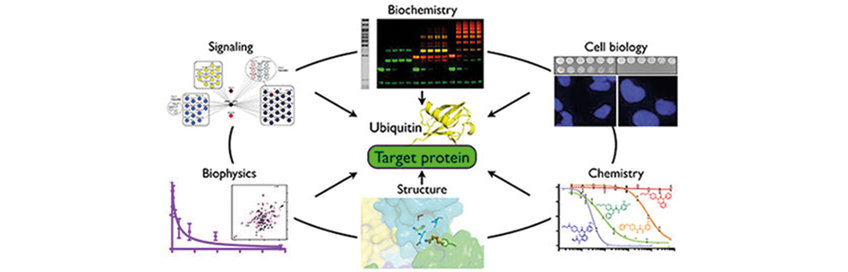
Brenda Schulman is a Professor and Director of the Molecular Machines and Signaling Pathways department at the Max Planck Institute of Biochemistry in Martinsried, Germany. She also holds an honorary professorship at the Technical University of Munich's Department of Chemistry and serves as Adjunct Faculty at St. Jude Children's Research Hospital in Memphis, TN, USA. Her research focuses on understanding how ubiquitin and ubiquitin-like proteins regulate cellular processes through protein modification. Dr. Schulman's research interests center on structural biology of the ubiquitin-proteasome system and ubiquitin-like proteins. Her work has shown that hundreds of dynamic multiprotein complexes are transiently converted into different conformations by specialized regulatory factors that control ubiquitin and ubiquitin-like proteins, thereby monitoring virtually all processes in cell biology. She combines biochemical reconstitution, structural analysis, enzymology, protein design, cell biology, and genetics to understand how these molecular machines function. Her research has significant implications for understanding diseases such as cancer, neurodegenerative disorders, and viral infections where defects in ubiquitin pathways are implicated. Her extensive publication record demonstrates expertise in ubiquitin signaling, protein degradation mechanisms, structural biology of E3 ligases, and molecular machines. Her work spans from fundamental mechanisms of ubiquitin chain formation to therapeutic applications in targeted protein degradation. Among her numerous scientific accolades are the Feldberg Prize for Anglo-German Scientific Exchange (2025), ERC Advanced Grant (2023), Louis-Jeantet Prize for Medicine (2023), Gottfried Wilhelm Leibniz Prize (2019), and election to the National Academy of Sciences (2014). She has also received the Dorothy Crowfoot Hodgkin Award from The Protein Society and has been an Investigator of the Howard Hughes Medical Institute. Dr. Schulman leads an active research group that has produced numerous high-impact publications in top journals including Nature, Cell, and Nature Structural & Molecular Biology. Her team has made significant contributions to understanding the structural mechanisms of ubiquitin transfer, E3 ligase specificity, and the role of ubiquitin in cellular quality control pathways. Current research in her lab focuses on deciphering the ubiquitin code and developing novel approaches for targeted protein degradation.
Prof. Frieder W. Scheller is affiliated with the Institute of Biochemistry and Biology at the University of Potsdam, Germany. His work centers on advanced biosensing technologies, particularly molecularly imprinted polymers (MIPs), bioelectronics, and biomimetic recognition systems. Research Interests: His primary fields include Bioanalysis, Bioelectronics, Biosensors, Molecularly Imprinted Polymers, Electrochemical Sensing, and Plastibodies. His research bridges chemistry, materials science, and biotechnology to develop synthetic alternatives to biological receptors for medical and environmental applications. The recent publications (2019–2024) highlight a strong trend in designing MIP-based nanofilms for protein and virus recognition, including applications in SARS-CoV-2 detection and enzyme monitoring. These studies focus on improving selectivity, stability, and reliability of electrochemical biosensors using innovative polymer architectures. Scientific Contributions: Developed Strep-tag imprinted polymer platforms for bio(electro)catalysis. Explored ACE2-mimicking MIPs for viral epitope recognition. Investigated challenges in MIP sensor reliability and non-specific binding. Advanced the concept of plastibodies for biomacromolecules, viruses, and cells. Collaborations and Advising: Prof. Scheller has collaborated with over 145 co-authors globally, indicating strong network engagement. While no formal students are listed in the provided text, his collaborative output suggests mentorship and team leadership roles in multidisciplinary research projects involving materials, electrochemistry, and biotechnology. Laboratories and Research Teams: His work is conducted within the Institute of Biochemistry and Biology at the University of Potsdam, likely involving a research group focused on bioanalytical chemistry and sensor development. The frequent co-authorship with researchers like Aysu Yarman and Xiaorong Zhang indicates an active, interdisciplinary team working on next-generation biosensing platforms.
Mikhail Gelfand is a Full Professor and Director of the Center for Molecular and Cellular Biology at Skolkovo Institute of Science and Technology (Skoltech), where he also serves as Vice President for Biomedical Research. His distinguished career spans multiple prestigious institutions including Lomonosov Moscow State University and the Higher School of Economics. His educational background includes: 1985: MSc in mathematics (functional analysis) 1993: PhD in physics-mathematics (biophysics) 1998: DSc in biology (molecular biology) 2007: full professor (bioinformatics) Professor Gelfand's research focuses on molecular evolution, comparative genomics, systems biology, and metagenomics. His work examines eukaryotic processes including alternative splicing, mRNA editing, and chromatin structure, as well as bacterial genome evolution and transcription regulation. His lab combines data on three-dimensional chromatin structure, epigenetic states, and gene expression to obtain an integrated view of genome functioning across diverse organisms from humans to amoebae. One major research direction focuses on the evolution of transcript splicing and editing, while comparative analysis of bacterial genomes yields functional annotations of novel enzymes, transporters, and transcription factors. His recent publications demonstrate a strong focus on RNA editing in cephalopods, bacterial genome analysis, and computational approaches to understanding chromatin structure. The work spans molecular biology, evolutionary biology, and bioinformatics, with particular emphasis on how RNA editing contributes to adaptation and molecular evolution across metazoans. His research shows how edited adenines are more frequently substituted with guanine in evolution than their unedited counterparts, suggesting RNA editing may enhance adaptation. His notable awards include: The President of Russian Federation's Award for Young Doctors of Science (2000) The "Best Scientist of the Russian Academy of Sciences" award (2004) A. A. Baev Prize in Genomics and Genoinformatics (2007) Member of Academia Europaea (2010) As Director of the Center for Molecular and Cellular Biology, Professor Gelfand leads a research group that combines computational and experimental approaches to study genome function and evolution. His lab's work has significant implications for understanding molecular mechanisms of evolution and adaptation across diverse biological systems, from bacteria to complex eukaryotes. His research on metagenomics extends to practical applications in areas including coral disease, aphids, and oil wells.
Prof. Dr. Andreas Walther is a Professor of Macromolecular Materials and Systems at the Department of Chemistry, Johannes Gutenberg University Mainz, Germany. He is also a Research Fellow at the Gutenberg Research College and the Max Planck Institute for Polymer Research. His research focuses on adaptive, bioinspired materials systems, self-assembly processes, and energy-driven functional materials. Key projects include the development of ATP-fueled systems, dissipative systems engineering, and light-actuated materials. Walther leads the Walther Lab, specializing in life-like materials and systems, and contributes to educational initiatives like the livMatS program. His expertise spans hierarchical self-assembly, biomimetic materials, and non-equilibrium systems. Recent work emphasizes communication in chemically fueled networks and programmable DNA coacervates. Publications highlight breakthroughs in ATP-responsive materials, scalable hydrogel synthesis, and light-controlled systems. Awards and grants include DFG funding for livMatS-related research. He advises two PhD students and collaborates widely across institutions.