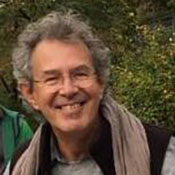
Nicholas Evans is Distinguished Professor of Linguistics and Director of the ARC Centre of Excellence for the Dynamics of Language (CoEDL) at the Australian National University’s School of Culture, History & Language. His work bridges fieldwork-based language documentation with theoretical questions in typology, cultural evolution, and social cognition. Focus on endangered Australian and Papuan languages Director of ARC Laureate Project on 'The Wellsprings of Linguistic Diversity' Co-leader of SCOPIC (Social Cognition Parallax Corpus) study Collaborator in global linguistic diversity initiatives His research explores how micro-level community multilingualism shapes macro-level linguistic diversity, with fieldwork spanning seven years in remote Indigenous communities. Recent projects include PARABANK (paradigm syncretism analysis) and Southern New Guinea language studies, particularly Nen and Yam family languages. Scientific recognition includes the Ken Hale Award (Linguistic Society of America), Anneliese Maier Forschungspreis, and fellowships in the Australian Academy of Humanities, Australian Social Sciences Academy, and the British Academy.
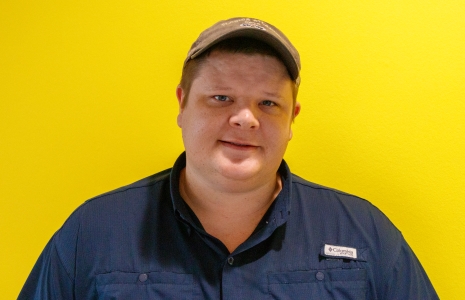
Dr. Corey T. Callaghan is an Assistant Professor in the Department of Wildlife Ecology and Conservation at the University of Florida . Based at the Fort Lauderdale Research and Education Center , his research focuses on global change ecology using big data from citizen science platforms like eBird and iNaturalist, combined with geospatial analyses and macroecological theory . Ph.D. (2019) from UNSW Sydney M.S. (2015) from Florida Atlantic University B.S. + B.S. (2013) from Canisius College His work examines urban ecology , including how species traits influence urban tolerance across birds, amphibians, and butterflies. He develops adaptive sampling frameworks to optimize citizen science data collection while addressing biases. Current projects analyze human-nature interactions through citizen science participation, secondary data in photographs, and machine learning for biodiversity monitoring. He actively contributes to conservation strategies for urban biodiversity and data-driven restoration efforts . Recent publications highlight his expertise in cross-taxa comparisons , continental-scale analyses , and ecosystem service quantification . He leads the Global Ecology Research Group at the University of Florida, emphasizing collaborative science and open-source methodologies .
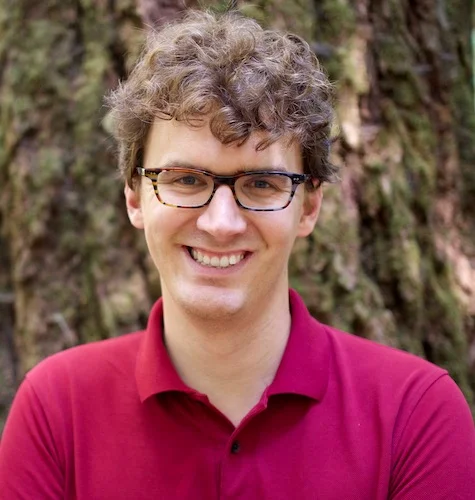
Stefano Ermon is an Associate Professor in the Department of Computer Science at Stanford University, affiliated with the Artificial Intelligence Laboratory and a Senior Fellow at the Woods Institute for the Environment. His research focuses on advancing machine learning and generative AI techniques to address societal and environmental challenges, including computational sustainability, geospatial analysis, and climate science. He holds a Ph.D. from Cornell University (2015). Education: Ph.D. in Computer Science, Cornell University (2015). Research Interests: Ermon’s work bridges foundational machine learning (e.g., diffusion models, generative AI, and optimization) with applications in sustainability, geospatial analysis (via satellite imagery), and earth observation systems. Notable contributions include predicting poverty using satellite data and developing scalable methods for molecule generation. Articles Trends: His recent work emphasizes diffusion models for generative tasks (e.g., text-to-image, molecule design), geospatial AI (e.g., environmental monitoring), and ethical AI (e.g., bias mitigation in LLMs). He also explores applications in robotics and scientific computing. Awards: He has received prestigious awards, including the ICML 2024 Best Paper Award, Sloan Research Fellowship, Microsoft Research Faculty Fellowship, and the IJCAI Computers and Thought Award. Advising and Grants: Ermon teaches courses like Probabilistic Graphical Models (CS228) and has secured grants from NSF, ONR, AFOSR, and private foundations. His lab develops tools for climate science and sustainable development. Labs/Teams: Leads the Stanford AI Lab group focused on computational sustainability and generative AI, collaborating with institutions like the Woods Institute for environmental applications.
Claire Bowern is Professor of Linguistics at Yale University specializing in historical linguistics, language documentation, and Australian Indigenous languages. Her research employs computational phylogenetics to study language evolution and supports language revitalization through digital archives and fieldwork methodologies. Recent publications address: Phylogenetic signal in lexical evolution across language families Digital infrastructure for endangered language documentation (FLEx software analysis) Decolonizing linguistics pedagogy and research practices Her work consistently integrates linguistic, anthropological, and computational approaches to analyze language diversity and change. She contributes to global databases including Grambank and D-PLACE, examining links between linguistic, cultural, and environmental patterns.
Carl Vondrick is a Professor in the Department of Computer Science at Columbia University. His research focuses on creating robust and versatile perception systems that leverage video and interaction with the natural world, with applications in 3D reconstruction, visual question answering, and robot manipulation. Former research scientist at Google Visiting researcher at Cruise Education: PhD (2017) from MIT, advised by Antonio Torralba BS (2011) from UC Irvine, advised by Deva Ramanan His research explores multimodal approaches for cross-task and cross-modal transfer, scene dynamics, audiovisual perception, interpretable models, and spatial awareness systems. The lab emphasizes zero-shot generalization and neuro-symbolic methods while addressing safety and robustness in AI systems. Key publication trends include: 2025: Video generation for robotics 2024: Differentiable rendering and cross-modal reasoning 2023: Robust perception and 3D modeling Scientific Awards: 2024 PAMI Young Researcher Award 2021 NSF CAREER Award Teaching Roles: Teaching Computer Vision II (2021-2025), Computer Vision I (2018-2019), and Representation Learning (2020-2022). Advising: Advises 8 current PhD students and has mentored 5 graduated students now at institutions like MBZUAI and UMD. The lab recruits 1-2 PhD students annually through Columbia’s PhD program. Grants and Collaborations: Funded by NSF, DARPA, Toyota Research Institute, Amazon Research, and Google.
Russell Epstein is a Professor and Director of Graduate Studies in the Department of Psychology at the University of Pennsylvania. He is affiliated with the Center for Cognitive Neuroscience and Goddard Labs. His research focuses on neural mechanisms underlying visual scene perception, spatial navigation, and memory. Epstein holds a BA in Physics from the University of Chicago and a PhD in Applied Mathematics from Harvard University. Epstein’s research interests include high-level vision, spatial cognition, and the neural basis of environmental representations. His lab uses functional MRI and cognitive neuroscience techniques to study how scenes, objects, landmarks, and spaces are encoded in brain systems such as the parahippocampal place area and retrosplenial cortex. Recent work explores cognitive maps, grid-like neural representations, and the role of multisensory cues in navigation. His articles emphasize spatial navigation strategies, hierarchical cognitive maps, and the interplay between perception and memory. Notable contributions include investigations into hippocampal spatial metrics, olfactory navigation, and the neural underpinnings of environmental learning. Epstein teaches courses on cognitive neuroscience, including PSYC 149 and PSYC 600. He advises two graduate students in Psychology and has no listed scientific awards. His work is supported by grants (unspecified) and conducted within collaborative teams at the Center for Cognitive Neuroscience. Epstein’s research extends to labs focused on spatial cognition and neuroimaging, advancing understanding of how humans mentally map environments through visual and sensory integration.
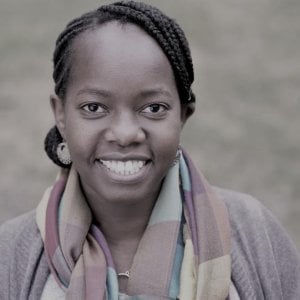
Dr Peninah Murage is an Assistant Professor at the London School of Hygiene & Tropical Medicine in the Department of Public Health, Environments and Society under the Faculty of Public Health and Policy. She specializes in environmental epidemiology with a PhD in Health Geography and focuses on health impacts of environmental changes, particularly climate change mitigation and adaptation strategies. Affiliation: Centre on Climate Change and Planetary Health Her research explores climate change effects on health outcomes like heat-related mortality, cardiovascular diseases, and cognitive development in children. She integrates GIS/spatial analysis with public health and policy frameworks to identify nature-based solutions for sustainable development. Current work examines systemic inequalities in heat risk exposure and interventions such as tree-based strategies in low-income settings. Key grants include: Health Protection Research Unit on Climate Change and Health Security (2025-2030, NIHR) Climate Change and Non-Communicable Diseases in Senegal (2024-2027) Pathfinder 2: Accelerating Climate Action for Health (2023-2026) She actively contributes to the Lancet Pathfinder Commission and serves on the Executive Committee of the International Society of Environmental Epidemiology (African Chapter).
Brendan Russo serves as an Associate Professor in the Department of Civil Engineering, Construction Management, and Environmental Engineering at Northern Arizona University, where he conducts influential research in transportation safety and traffic engineering. His work focuses on improving safety outcomes for vulnerable road users through rigorous analysis of crash data, traffic operations, and emerging mobility technologies, with significant contributions to Arizona-specific transportation challenges and national safety practices. Russo's research program centers on bicycle and pedestrian safety, crash severity analysis, and the integration of autonomous systems into transportation networks. He employs advanced methodologies including spatial analysis, statistical modeling (e.g., random parameters bivariate probit models), and observational studies to investigate traffic stress levels, intersection safety, and the impacts of infrastructure treatments. His work consistently bridges theoretical transportation engineering with practical applications for safer community design. Analysis of Russo's recent publications reveals a strong emphasis on emerging transportation technologies and their safety implications, particularly regarding autonomous delivery robots and vehicle-pedestrian interactions, while maintaining core focus on traditional safety concerns like bicycle crash frequency and severity. His research demonstrates increasing integration of spatiotemporal analysis and scenario-based testing methodologies, with a clear geographic concentration on Arizona metropolitan regions that provides valuable localized insights applicable to broader transportation contexts. No scientific awards were mentioned in the provided text. No specific information about advising responsibilities or grant funding was provided in the text, though his extensive publication record and dataset contributions indicate active research leadership. Russo collaborates within a robust research network centered on transportation safety, frequently partnering with colleagues including Gehrke, Smaglik, and Holliday on projects involving field data collection, bicycle infrastructure evaluation, and safety performance metrics. His work leverages both observational studies and simulation approaches to develop data-driven guidance for transportation practitioners, with particular attention to Arizona's unique transportation environment and metropolitan planning challenges.
Maria Gorlatova is an Associate Professor of Electrical and Computer Engineering at Duke University's Pratt School of Engineering, where she leads the Intelligent Interactive Internet of Things (I3T) Lab. She also holds a secondary affiliation as Faculty Network Member of the Duke Institute for Brain Sciences and has previously served as Assistant Professor of Computer Science. Dr. Gorlatova earned her Ph.D. in Electrical Engineering from Columbia University (2013), following M.Sc. and B.Sc. (Summa Cum Laude) degrees in Electrical Engineering from University of Ottawa, Canada. Prior to joining Duke, she was an Associate Research Scholar in the Electrical Engineering Department and Associate Director of the Princeton EDGE Lab at Princeton University (2016-2018). She also has industry experience with Telcordia Technologies, IBM, and D. E. Shaw Research. Her research focuses on advancing intelligent behavior in Internet of Things systems and applications, particularly in mobile pervasive systems and the Internet of Things. Her work crosses traditional discipline boundaries, requiring thinking across multiple layers of system and protocol stacks. Current research themes include breaking barriers for technologies that enable fundamentally new deployments and experiences, such as energy harvesting, artificial intelligence adapted to IoT constraints, and augmented reality. Her lab specifically develops edge- and IoT-enabled intelligent augmented reality platforms, with applications in healthcare and human-robot collaboration. Analyzing her recent publications reveals a strong focus on augmented reality systems, particularly for medical applications. Her work spans computer vision for AR, spatial tracking, SLAM systems, vision-language models for AR security, and VR/AR applications in neurosurgery and rehabilitation. A significant portion of her recent work addresses challenges in mixed reality for medical procedures, demonstrating the translational impact of her research. Google Anita Borg USA Fellowship Canadian Graduate Scholar CGS NSERC Fellowships Columbia University Presidential Fellowship Columbia University Jury Award for Outstanding Achievement in Communications ACM SenSys Best Student Demonstration Award IEEE Communications Society Young Author Best Paper Award IEEE Communications Society Award for Advances in Communications Best Research Artifact Award, IEEE IPSN (2020) N2 Women Rising Star, Networking Networking Women (N2Women) (2019) Dr. Gorlatova's research has been supported by various funding sources that enable her work on edge computing for augmented reality, IoT systems, and medical applications. She actively mentors graduate students who frequently appear as first authors on her publications, indicating strong student involvement in her research. Her I3T Lab at Duke focuses on creating human-facing pervasive mobile computing platforms that enable transformative applications, with recent emphasis on creating advanced augmented reality platforms that integrate edge computing and IoT technologies. The I3T Lab is developing next-generation AR systems with capabilities in edge AI, collaborative spatial awareness, AR user cognitive context sensing, and AR QoS/QoE evaluation. Current projects include applications in healthcare (particularly neurosurgery guidance and rehabilitation) and human-robot collaboration scenarios, demonstrating the lab's focus on real-world impact of pervasive computing technologies.
Alexis Battle is an Associate Professor at Johns Hopkins University with appointments in Biomedical Engineering , Computer Science , and Genetic Medicine (secondary). She directs the Malone Center for Engineering in Healthcare and serves as Deputy Director of the Data Science and AI Institute . Educated at Stanford University (PhD in Computer Science, 2013), Battle transitioned to academia after leadership roles at Google. Research Focus: Battle’s work bridges genomics and machine learning , emphasizing the impact of genetic variation on human health. Her lab develops tools like Watershed to predict functional effects of rare variants, aiming to enhance rare disease diagnosis. Key themes include non-coding DNA analysis , personalized genomics , and systems biology , with applications in cardiovascular disease and neurodegenerative disorders . Publications & Awards: Over 60 peer-reviewed articles in journals like Nature , Science , and Genome Biology , with recent emphasis on single-cell transcriptomics , multiomics integration , and telomere biology . Recipient of the President’s Frontier Award (2022), Microsoft Investigator Fellowship (2019), and Searle Scholar (2016). Scientific Awards: 2022 President’s Frontier Award 2019 Microsoft Investigator Fellowship 2019 Johns Hopkins Discovery Award 2017 Johns Hopkins Catalyst Award 2016 Searle Scholar Advising & Funding: Mentors 11 PhD students, 3 undergraduates, and postdoctoral fellows. Her research is funded by NIH, Searle Scholars, and institutional grants. The Battle Lab collaborates on projects like the GTEx Consortium , focusing on gene regulation and clinical genomics .
Barbara Caputo is a Full Professor at Politecnico di Torino, leading the VANDAL Laboratory and directing the AI@PoliTo Interdepartmental Lab. She holds a double affiliation with the Italian Institute of Technology (IIT) and has held roles at Idiap-EPFL and Sapienza University. Her research focuses on AI, computer vision, domain adaptation, and federated learning. She contributes to national AI policy, including the Italian Strategy on AI and the National PhD on AI for Industry 4.0. She is an ERC Laureate and ELLIS Fellow, co-founding ELLIS society. Her work spans visual place recognition, action recognition, and cross-domain learning. Education: PhD in Computer Science from KTH Royal Institute of Technology (2005). Major roles include Rector’s Advisor on AI at PoliTo, Board Member of ELLIS, and coordinator of the AI & Industry 4.0 vertical in the National PhD program. Awards include ERC Laureate (2017), ELLIS Fellow (2019), and Inspiring Fifty Italy (2018). Her research emphasizes federated learning, domain adaptation, and AI ethics. Recent articles explore domain generalization, resource-efficient federated models, and AI-environment interactions. She collaborates with institutions like MUR, CNR, and the European Commission on AI policy and tech initiatives.
Ming Hu is a Professor and University of Toronto Distinguished Professor of Business Operations and Analytics at Rotman School of Management, University of Toronto. He serves as Area Coordinator for the Operations Management & Statistics Area and holds editorial leadership roles including Editor-in-Chief of Naval Research Logistics and Associate Editor for multiple top journals. MS in Applied Mathematics, Brown University (2003) PhD in Operations Research, Columbia University (2009) His research focuses on sharing economy , social operations , and platform economics , examining how operational decisions can maximize societal benefit. Key areas include crowdfunding , two-sided markets , crowdsourcing , and group buying , with applications to DEI , sustainability , and AI-empowered operations . Recent work analyzes spatial operations in delivery systems, algorithmic fairness , and climate change adaptation in agricultural supply chains. His publications span top journals like Management Science and Operations Research , covering topics from blockchain traceability to quantum-inspired optimization . Scientific recognitions include: Wickham Skinner Early-Career Research Award (2016) Best Operations Management Paper in Management Science (2017) 2018 Poets & Quants Best 40 Under 40 MBA Professors As an Amazon Scholar (2022–) and Chair of Chain Analytics Institute (2023–), he bridges academic research with industry applications in AI-driven logistics and sustainable operations.
Mark Lewis is the Kennedy Chair in Mathematical Biology at the University of Victoria, holding joint appointments in the Departments of Mathematics and Statistics and Biology. His research focuses on spatial ecology and mathematical modeling, addressing ecological challenges such as animal movement, invasive species, and disease dynamics. Lewis earned his D.Phil. in Mathematical Biology from the University of Oxford and has been elected a Fellow of the Royal Society UK. His work integrates mathematical analysis, field studies, and interdisciplinary approaches to solve ecological problems. Current projects include modeling polar bear populations, cyanobacteria dynamics, and the impact of climate change on wildlife. Lewis supervises students across both UVic and his former University of Alberta lab. Education: D.Phil. in Mathematics (Mathematical Biology), University of Oxford Awards: Royal Society Fellowship, CRM-Fields-PIMS Prize, and Okubo Prize Key Research Areas: Animal movement modeling, aquatic ecology, wildlife disease, and invasive species management Publications highlight his contributions to understanding disease spread, parasite dynamics, and ecological responses to environmental changes. Lewis collaborates widely, applying mathematical tools to real-world conservation and health challenges.
Luca De Benedictis is a Professor of International Economics and Network Analysis at the University of Macerata's Department of Economics and Law. His research focuses on international trade empirics, including trade specialization measurement, network analysis, and causal models. He has authored numerous articles on topics like gravity models, migration impacts, and historical trade networks. His work spans journals such as the Journal of the Royal Statistical Society and Network Science . He teaches courses in International Economics and Network Analysis. His research interests include economic geography, policy evaluation, and applied econometrics. Notable projects include analyzing the Erasmus Program's inclusivity, Roman road networks' legacy, and immigration's effect on trade. De Benedictis has secured funding from EU initiatives like COSTNET and GeComplexity, focusing on network data science and economic systems. He serves on editorial boards of journals like Italian Economic Journal and Journal of Historical Network Research . His work bridges theoretical models with empirical applications in trade, migration, and policy.
Professor Scott Sisson is Director of the UNSW Data Science Hub (uDASH) and Professor of Statistics and Data Science at the University of New South Wales, School of Mathematics and Statistics. His research focuses on computational statistics, particularly solving 'intractable' statistical problems through Bayesian methods, big data techniques, simulation algorithms, and extreme value theory with environmental applications. Education includes a PhD in Statistics from Bristol University (2002), MSc in Environmental Statistics from Lancaster University (1997), and BSc in Mathematics and Statistics from Lancaster University (1996). Research interests span: Bayesian statistics and uncertainty quantification Big data analytics and scalable algorithms Machine learning integration with statistical methods Extreme value modeling for climate/environment Computational techniques for intractable problems Recent publications (2022-2025) demonstrate strong emphasis on Bayesian computation, spatiotemporal modeling, and interdisciplinary applications in materials science, oncology, quantum computing, transportation policy, and ecology. Methodological innovations include likelihood-free inference, modular Bayesian analyses, and symbolic data modeling. Awards and honors: 2020 Service Award (Statistical Society of Australia) 2017 ARC Future Fellowship 2015 G. N. Alexander Medal (Engineers Australia) 2011 Moran Medal (Australian Academy of Science) 2010 J.G. Russell Award (Australian Academy of Science) 2010 Queen Elizabeth II Research Fellowship As Director of uDASH, he leads data science initiatives across UNSW. He maintains sustained ARC funding and supervises students in computational statistics, Bayesian methods, extreme value theory, and machine learning. Professional service includes editorial roles for Statistics and Computing and past presidency of Statistical Society of Australia.