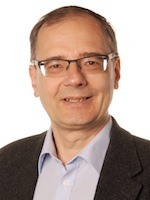
Festo Kayima is an Associate Professor in Chemistry Didactics at the Department of Teacher Education, Faculty of Social and Educational Sciences, Norwegian University of Science and Technology (NTNU). His research focuses on science teacher education, classroom knowledge, and pedagogical strategies in chemistry. Doctorate in Chemistry Education (2018, University of Bergen) Master’s in Science Education (2020, NTNU) Kayima’s research projects include developing science teacher trainees’ professional knowledge through reflective practice, enhancing scientific literacy, and integrating sustainability into chemistry education. He leads the Erasmus+ project STEMkey (2020–2023), emphasizing graduate attributes and key skills for educators. His recent publications (2025) with Springer explore pedagogical themes like chemical knowledge, outdoor teaching, and technology integration. These works align with broad keywords such as Science Education, Curriculum Development, and Experiential Learning, with subfields spanning digital tools, sustainability, and misconceptions in chemistry. Co-supervised Kristine Fjelldal Sunde’s thesis on teacher questioning in labs He contributes to research groups Naturfaglig Literacy i Skole og Lærerutdanning and ScienceHumanities , bridging interdisciplinary approaches in education. His teaching includes courses like Science as a School Subject (MGLU4211) and Teacher Education: Teaching Chemistry (PPU4626).
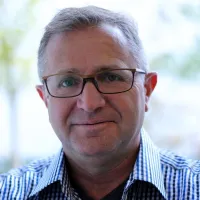
Prof. Dr. Gerald Urban is a distinguished Professor at the Institute for Microsystems Technology (IMTEK) within the Faculty of Engineering at the University of Freiburg, Germany. With over three decades of academic and research experience, he has established himself as a leading expert in biomedical microtechnology and sensor systems. His career spans prestigious institutions including the Vienna University of Technology and collaborations with major research centers worldwide. His educational journey includes: 1973: Graduated from Sigmund Freud Gymnasium in Vienna 1979: Completed studies in Technical Physics at Vienna University of Technology 1985: Earned Doctorate (Dr.-Ing.) with distinction (Summa cum Laude) from Vienna University of Technology 1994: Completed habilitation in Sensorics Prof. Urban's research focuses on the development and application of miniaturized integrated sensors for clinical and industrial applications. His work bridges the gap between fundamental materials science and practical medical devices, with particular emphasis on biomedical microtechnology , electrochemical biosensors , and organ-on-chip systems . His team has pioneered innovations in point-of-care diagnostics, therapeutic drug monitoring, and micro energy harvesting technologies. The research group maintains strong collaborations with clinical partners to ensure translational impact of their technological developments. Analysis of Prof. Urban's recent publications reveals a clear trajectory toward increasingly sophisticated multiplexed sensing platforms that integrate CRISPR-based diagnostics with electrochemical detection systems. His work demonstrates growing emphasis on point-of-care applications, with particular focus on making complex diagnostic capabilities accessible outside traditional laboratory settings. The integration of additive manufacturing techniques with sensor technology represents another significant trend in his recent work, enabling customized microreactor and organ-on-chip platforms. Among his notable scientific achievements: Stefan Schuy Prize for Biomedical Engineering (1990) AVL-List Prize (1993) Best Poster at Eurosensors (1993) Hoechst-Price (1994) Corresponding member of the Austrian Academy of Sciences (2010) EAMBES-Fellow (2018) Prof. Urban has successfully secured substantial research funding throughout his career, with accumulated third-party funding reaching approximately 5 million euros between 1986-1995. He has established multiple spin-off companies including Otto Sensorenfabrikationsgesellschaft (1985), Biosensor GnbR (1994), and Jobst Technologies GmbH (2002), demonstrating his commitment to translating research into practical applications. His leadership extends to major research initiatives including the excellence initiative "µMAT" and the graduate school "PolyMIC". At the University of Freiburg, Prof. Urban leads a vibrant research group within the Institute for Microsystems Technology, which forms part of the larger BrainLinks-BrainTools and BIOSS research clusters. His laboratory maintains state-of-the-art facilities for microsensor fabrication, including cleanroom access through the WebFab service center. The research environment benefits from strong connections with the Freiburg Material Research Center (FMF) and the Freiburg Institute for Advanced Studies (FRIAS), where he served as an Internal Fellow (2008-2010).
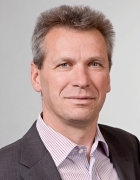
Anubhav Pratap-Singh is an Associate Professor in the Food, Nutrition and Health department within the Faculty of Land and Food Systems at the University of British Columbia, where he holds the Food and Beverage Innovation Professorship. He leads the UBC Food Process Engineering Laboratory and his research spans environmental and natural resources economics, food chemistry (including fermentation), and natural resource management. His primary research interests focus on agri-food transformation, cold plasma food engineering, food processing, functional foods, heat transfer, high pressure mass transfer, novel non-thermal processing, nutraceuticals, pasteurization, and pulsed light sterilization. Dr. Pratap-Singh's work addresses fundamental questions about the impact of food processing on food quality, how technology can maximize desirable effects while minimizing deleterious ones to feed the growing global population, and how to ensure food safety and nutrition for all socioeconomic groups. His research program is organized around three main pillars: developing novel processing technologies for food preservation, developing technologies for food fortification, and modeling the human GI tract to understand the interaction between food processing and human health. He has made significant contributions to sonic mixing technology for thermal processing and pulsed UV light processing for food surface decontamination, with particular expertise in processing of liquid particulate matter. Dr. Pratap-Singh has received numerous prestigious awards throughout his career, including the Banting Fellowship (2016) and Green College Leading Scholar award (2017). His work has been recognized with the Young Entrepreneur Award (2009), IFTPS Graduate Scholar designation (2014), and Gold Medal from the Institute for Thermal Processing Specialists (2014), among other fellowships and honors. He is affiliated with the BioProducts Institute and Materials and Manufacturing Research Institute at UBC, and supervises graduate students in Food Science (MSc and PhD programs). His laboratory focuses on interdisciplinary research that addresses critical challenges in food science, with implications for feeding the projected 10 billion people by 2050 while countering negative public perceptions around processed foods.
Bern Klein is a Professor at the University of British Columbia's Faculty of Applied Science, specifically within the Norman B. Keevil Institute of Mining Engineering. His career spans over three decades, beginning with extensive industry experience from 1990 to 1998, followed by his academic role at UBC since 1997. He has held leadership positions including Graduate Advisor (1999-2008) and Department Head (2008-2014), and has been instrumental in establishing research centers like the Centre for Industrial Minerals Innovations and the Canadian International Resources and Development Institute. Education: PhD in Mineral Process Engineering, University of British Columbia (1992) BASc in Mining and Mineral Process Engineering, University of British Columbia (1985) Research Interests: Professor Klein's research is centered on mineral processing technologies , with a strong emphasis on energy efficiency and environmental sustainability in mining operations. His work encompasses: Comminution processes and energy optimization Rheology of mineral suspensions Sensor-based ore sorting technologies Water and energy conservation in mining Development of innovative mineral processing flowsheets His research has led to the creation of Mine Sense Technologies Ltd , a startup company that has developed novel sensor-based sorting systems for the mining industry. Scientific Awards: Institute of Mining and Metallurgy Transactions Best Paper Award (2008) Canadian Institute of Mining Distinguished Lecturer Award (2011) CEEC Medal for Best Paper (2013, 2016) CEEC Honorable Mention for Best Paper (2022) Mitacs Award for Exceptional Leadership for a Professor (2023) Teaching and Supervision: Professor Klein teaches courses including MINE 201 Mineral Resources Engineering II , MINE 434/524 Processing of Precious Metal Ores , MINE 508 Integrated Mining and Processing Systems , and MINE 579 Rheology of Mineral Suspensions . He has supervised numerous graduate students, with Uuganbadrakh Oyunkhishig being one of his Master's students. Research Teams and Labs: His research involves interdisciplinary collaboration, particularly through the Quantum Matter Institute and the Centre for Industrial Minerals Innovations. He is open to collaborations with undergraduate students and other researchers, fostering a collaborative research environment.
Professor Jonathan Erichsen serves as Professor of Visual Neuroscience and Deputy Head of School within the School of Optometry and Vision Sciences at Cardiff University. With a distinguished career spanning several decades, he has established himself as a leading researcher in visual neuroscience and eye movement disorders. Professor Erichsen's research has evolved from early work on central near response pathways in the brain, including vergence and the pupillary light reflex, to a broader focus on eye movement disorders. His primary research interests include the control of visuomotor behavior, eye movement abnormalities in neurodegenerative conditions, and visual function assessment in individuals with nystagmus. He has pioneered innovative methodologies including stereotaxic surgery, immunohistochemistry, neural pathway tracing, and microstimulation in his investigations. His recent publications demonstrate a clear trend toward clinical applications of eye movement research, particularly in developing better assessment tools for visual function in nystagmus patients. The research spans from fundamental neuroanatomy to practical clinical tools, with significant contributions to understanding infantile nystagmus, Huntington's disease-related eye movement abnormalities, and visual function in children. His work increasingly integrates advanced eye tracking technologies with clinical applications. Professor Erichsen founded the Cardiff Research Unit for Nystagmus (RUN) approximately twenty years ago, establishing a large cohort of volunteers with infantile nystagmus to study how environmental factors like stress affect visual performance. More recently, he established the Eye Movement Experimental Research Group (EMERG) to expand research into eye movement abnormalities associated with neurodegenerative conditions including Huntington's disease, schizophrenia risk, and dystonia. His research has demonstrated that traditional measures of visual performance, such as visual acuity, are not significantly affected by changes in eye movements of individuals with nystagmus, suggesting the need for developing better outcome measures in clinical practice. Professor Erichsen remains actively involved in postgraduate supervision and continues to produce high-impact research in visual neuroscience.
Jukka Tuhkuri is a Professor at Aalto University's Department of Energy and Mechanical Engineering, specializing in ice mechanics and arctic marine technology . He serves as Editor-in-Chief of Cold Regions Science and Technology and became an Honorary Professor at University College London (Department of Earth Sciences) in 2023. His work spans numerical simulations using the Discrete Element Method (DEM) and experimental research in the Aalto Ice and Wave Tank, with fieldwork in both Arctic and Antarctic regions. Research Focus : Understanding ice fracture mechanics, sea ice ridge formation, and ice-structure interaction processes. He investigates how global warming alters ice conditions and affects loads on ships/marine structures, addressing risks from increased Arctic shipping activity. Scientific Awards 2023 POAC Founders Lifetime Achievement Award Teacher of the Year 2003 Espoo Ambassador 2012 1996 Best Dissertation Stipend from Helsinki University of Technology Collaborative Impact : His research directly informs offshore wind engineering and Arctic risk management frameworks through publications like Challenges with sea ice action on structures for Offshore wind (2023) and A comprehensive approach to scenario-based risk management for Arctic waters (2022).
Nina Kristiina Raitanen is a Professor in the Department of Civil Engineering at Aalto University . Her work focuses on quiet pavement technologies , sustainable transportation systems , and project-based learning (PBL) in civil engineering education. She has contributed to research on noise reduction in road infrastructure and lifecycle thinking for sustainable development. Her recent publications highlight trends in transportation engineering , emphasizing materials science and environmental engineering to address urban noise pollution and improve road sustainability. Topics include quiet pavement design, product requirements, and evaluation metrics for acoustic performance.
Jung-Eun Kim is an Assistant Professor in the Department of Computer Science at North Carolina State University, where she conducts research at the intersection of artificial intelligence, machine learning, and cyber-physical systems. Her work focuses on creating trustworthy, interpretable, and efficient AI systems, particularly for safety-critical applications. Education: Ph.D. in Computer Science, University of Illinois at Urbana-Champaign (2017) M.S. in Computer Science and Engineering, Seoul National University (2009) B.S. in Computer Science and Engineering, Seoul National University (2007) Dr. Kim's research primarily investigates how to make AI systems more trustworthy, interpretable, and efficient, with particular emphasis on understanding failure modes, safety risks, vulnerabilities, and biases in deep learning models. Her work bridges theoretical understanding with practical applications in safety-critical systems. She explores how efficiency considerations interact with these issues, seeking to fundamentally anatomize neural networks to understand what causes failure modes and how to mitigate them. Her approach has been described as 'like a heart surgeon, we open the heart of a neural network architecture, look into it, interpret it, and cure it.' Her recent publications demonstrate a strong focus on safety alignment in large language models, mitigation of spurious correlations, privacy preservation against membership inference attacks, and sustainable AI development. Her work spans theoretical foundations of trustworthy AI while addressing practical challenges in model deployment, particularly for resource-constrained environments. She has made significant contributions to understanding how model compression techniques like pruning and quantization can inadvertently amplify biases and vulnerabilities. Scientific Awards: ICLR Spotlight, 2025 IBM Faculty award, 2023 CRA Early & Mid Career Mentoring Workshop, 2023 Cloud GPU provided by Lambda, worth $17,280, for course, Spring 2023 NeurIPS Spotlight and nomination for Best Paper Award, 2022 CRA Career Mentoring Workshop, 2022 GPU Grant by NVIDIA Corporation, 2018 The MIT EECS Rising Stars, 2015 The Richard T. Cheng Endowed Fellowship, 2015-2016 Dr. Kim actively mentors PhD students, currently advising Xingli Fang, Varun Mulchandani, Jianwei Li, Rishi Singhal, and Minseon Kim. She has secured significant research funding, including an NSF SaTC (Secure and Trustworthy Cyberspace) grant as Co-PI for 'Partition-Oblivious Real-Time Hierarchical Scheduling' ($281,629.00, 2022-2024). Her research has also been supported by an NVIDIA GPU Grant and cloud resources from Lambda. She serves on program committees for top AI conferences including ICLR, ICML, NeurIPS, AAAI, and IJCAI, and has held roles such as Publicity Chair for IJCAI 2024. Her research group focuses on developing methods to make AI systems more trustworthy, interpretable, and efficient, with particular attention to safety-critical applications. The group investigates how to identify and mitigate failure modes in neural networks while maintaining efficiency, exploring the fundamental relationship between model architecture, safety risks, and computational constraints.
Prof. Dr.-Ing. Harald Klein holds the Professorship of Plant and Process Engineering at the TUM School of Engineering and Design (Technical University of Munich). His research focuses on process engineering analysis and synthesis, particularly thermal/chemical unit operations applied to power plant technology. Develops thermodynamic substance models & simulation tools Expertise in industrial process design and optimization Collaborates on hydrogen liquefaction and biofuel production Research trends: 2016-2017 publications show emphasis on sustainable energy systems Combines traditional process engineering with modern optimization Key domains: hydrogen technology, chemical reactors, and thermal systems
Prof. Dr. Nadine Göppert is a University Professor (W3) of Hydrogeology at the Institute of Geological Sciences , Freie Universität Berlin , Germany. She previously served as an Akademische Rätin and Senior Scientist at the Karlsruhe Institute of Technology (KIT) from 2011–2024, and held research positions at the Weizmann Institute of Science (2009–2011) and University of Karlsruhe (2008–2009). Her academic background includes a Dr. rer. nat. (2008) and Diploma in Geology (2002) from the University of Karlsruhe. Education Doctorate in Hydrogeology (2008), University of Karlsruhe Diploma in Geology (2002), University of Karlsruhe Her research focuses on karst hydrology , groundwater tracing , particle transport dynamics , and water quality monitoring in alpine and subtropical karst systems. Recent publications analyze tracer experiments , microplastic transport , and hydrochemical variability across diverse karst environments. Her teaching portfolio includes Applied Hydrogeology , Field Methods , and Laboratory Techniques for students in Geosciences and Water Engineering. She has supervised numerous theses on topics like karst groundwater dynamics and fluorescence-based water quality analysis .
Eduardo Viana da Silva is an Associate Teaching Professor and Portuguese Program Coordinator at the University of Washington, affiliated with the Henry M. Jackson School of International Studies and Department of Spanish & Portuguese Studies. He received his Ph.D. (2014) and M.A. (2006) from University of California, Santa Barbara (UCSB) and Brigham Young University respectively, with additional certifications in language teaching and ACTFL OPI testing. His research focuses on Environmental Activism in Arts Open Educational Resources (OER) Critical Pedagogy Luso-Brazilian literature and culture Global Citizenship education Language curriculum development . The Bate-Papo OER textbook project, supported by UW Libraries and the Center for Global Studies, demonstrates his commitment to accessible education. Recent collaborations with Brazilian institutions highlight his environmental research in the Amazon and Pantanal regions. His work spans virtual exchanges, cybersecurity language training, and heritage language pedagogy. Scientific Awards 2020 Language Teacher of the Year (WAFLT) As a certified OPI examiner and active member of MLA, ACTFL, and AATSP, he bridges language instruction with broader educational initiatives. His courses range from elementary Portuguese (PORT 103, 105) to advanced cultural studies (PORT 365), reflecting his interdisciplinary approach.
Christian Engwer is a full Professor at the University of Muenster in the Institute for Applied Mathematics, specializing in Analysis and Numerics. He leads the Engwer Group focused on Applications of Partial Differential Equations and is actively involved in the Cells in Motion initiative as a supervisor in the CiM-IMPRS Graduate Programme. His research centers on developing numerical methods for partial differential equations, particularly addressing challenges in complex geometries and multi-physics applications. He specializes in Unfitted Discontinuous Galerkin methods, which allow simulations on complex geometries without requiring domain-fitted meshes. His work spans porous media modeling, biological systems, and bioelectromagnetism applications, with significant contributions to EEG/MEG forward modeling in neuroscience. Analysis of his recent publications reveals a strong focus on model order reduction techniques, stabilized numerical schemes for cut-cell meshes, and applications in bioelectromagnetism. His work demonstrates a consistent trajectory toward developing robust, efficient numerical methods applicable to real-world problems in medical imaging and biological modeling, with increasing emphasis on high-performance computing implementations. Professor Engwer actively supervises doctoral students, with recent completions including Lukas Renelt (2025), Michael Wenske (2021), and Maria Carla Piastra (2019), among others working on topics related to numerical methods and biomedical applications. He leads several major research projects including BrainStorm: Highly Extensible Software for Advanced Electrophysiology and MEG/EEG Imaging (NIH-funded since 2019), multiple EXC 2044 Cluster of Excellence projects through 2025, and the InterKI interdisciplinary teaching program on machine learning and artificial intelligence. His group develops several important software packages including DUNE (Distributed and Unified Numerics Environment), duneuro (for bioelectromagnetism applications), and TPMC (Topology Preserving Marching Cubes). These tools support research in numerical methods and their applications to complex scientific problems.
Farzin Zareian is a Professor in Civil and Environmental Engineering at the Samueli School of Engineering, University of California, Irvine. His research focuses on performance-based earthquake engineering, collapse analysis, structural reliability, and structural control. Ph.D. in Structural Engineering, Stanford University (2006) M.S. and B.S. in Civil/Earthquake Engineering, Sharif University of Technology (1997, 1995) Zareian's research integrates analytical and experimental approaches to advance earthquake resilience in structural systems. Key areas include base plate connections, seismic response of asymmetric structures, and validation of simulated ground motions. His work with the Performance Based Earthquake Engineering Laboratory emphasizes practical applications in structural safety. Recent publications highlight innovations in column base modeling, seismic demand prediction, and infrastructure recovery frameworks. Notable trends in his 2021–2025 articles include machine learning for ground motion prediction, resettable structural systems, and probabilistic drift profile analysis for multistory buildings.
Dr. Boyin Ding is an Associate Professor at the University of Adelaide , serving as Academic Director at Haide College and researcher in the Mechanical Engineering department within the Faculty of Sciences, Engineering and Technology. He leads the Wave Energy Research initiative established in 2014, while also contributing to Robotics and Biomechanics through his work with the Flinders Medical Device Research Institute. Research Areas: Ocean Wave Energy Harvesting Control Systems for Renewable Energy 6DOF Robotic Testing Spine Biomechanics Transnational Education Programs Key Collaborations: Australia-China Joint Research Centre for Offshore Wind & Wave Energy Acoustics, Vibration and Control Research Group Scientific Awards: Australian Endeavour Fellowship Malcolm Kinnaird Engineering Excellence Award (2012) His recent publications focus on hybrid offshore energy systems, nonlinear hydrodynamics in wave energy converters, and biomechanical testing technologies. He has developed control algorithms for floating offshore wind-wave systems and pioneered 6DOF robotic platforms for medical applications. As an eligible PhD supervisor, he actively collaborates with global industries and academic institutions.
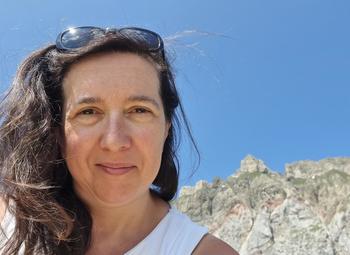
Lianne Lefsrud serves as Associate Professor and Risk, Innovation, and Sustainability Chair (RISC) in the Department of Chemical and Materials Engineering at the University of Alberta's Faculty of Engineering. Her interdisciplinary research bridges engineering, social sciences, and policy to transform risk management practices across energy, mining, construction, and railroading industries, directly influencing regulations, building codes, and industry operations for sustainable development. Her academic credentials include: BSc in Civil Engineering (Cooperative Program), University of Alberta (1994) MSc in Interdisciplinary Civil & Environmental Engineering and Sociology, University of Alberta (1996) PhD in Strategic Management and Organization, Alberta School of Business (2014) Dr. Lefsrud's research centers on risk management frameworks for sustainability challenges. She examines hazard identification, social license to operate, and technology adoption drivers in high-hazard industries, with emphasis on prospective risk assessment (e.g., hydrogen infrastructure design) and retrospective analysis (e.g., microplastic pollution impacts). Her work integrates circular economy principles into energy systems while addressing unintended consequences across UN Sustainable Development Goals. Recent publications (2024-2025) demonstrate heavy focus on machine learning applications for rail and construction safety, hydrogen infrastructure risk analysis, and science denial mitigation. Key patterns show cross-industry adaptation of AI for incident prediction, regulatory gap analysis for emerging energy systems, and socio-technical approaches to reconcile sustainability goals with operational realities. Scientific recognition includes: Erb Post-Doctoral Fellowship (University of Michigan) Dow Sustainability Research Fellowship (Ross School of Business) Dr. Lefsrud mentors graduate students through industry-integrated projects like her Sustainable Design course where teams generated patents and city solutions. Her research secures Alberta Innovates funding with 1:4 industrial-to-federal matching, collaborating with Suncor, Transport Canada, and Canadian Standards Association. Grants target practical implementations including railcar inspection systems and hydrogen safety protocols. She co-founded Insight Risk Systems and leads the Lefsrud Lab, prioritizing inclusive teams with under-represented groups (women, Indigenous, LGBTQ2S+, neurodiverse) to tackle 'wicked problems' in sustainability. The lab leverages interdisciplinary partnerships across engineering, computer science, psychology, and environmental sociology for real-world risk management solutions.