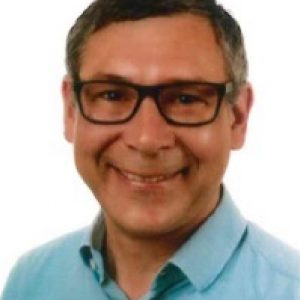
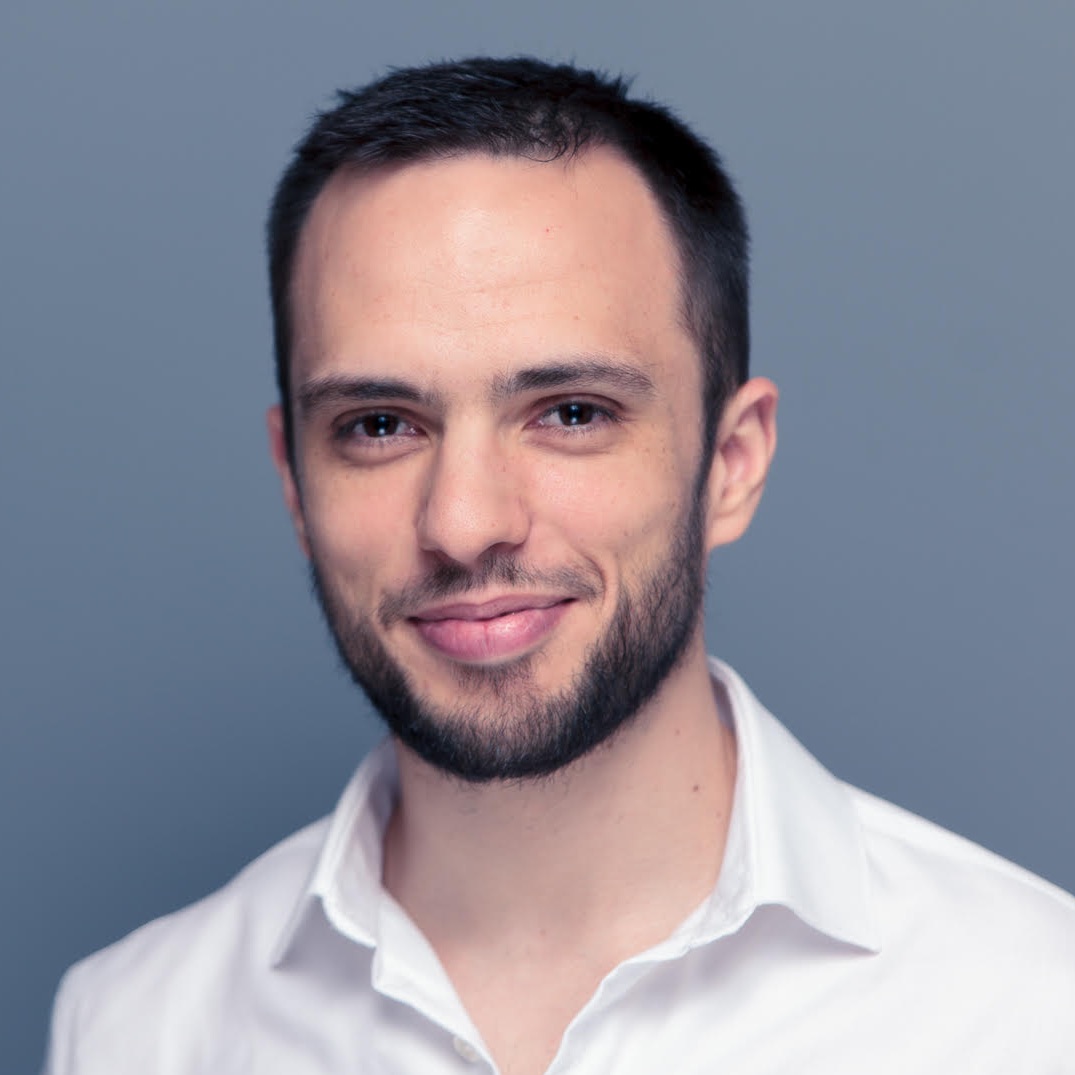
Dr. Andreas Englert is a Senior Scientist at the Department of Applied Geology , Martin Luther University of Halle-Wittenberg, and a Lecturer at the University of Cologne. His work bridges hydrogeology and hydrogeophysics.
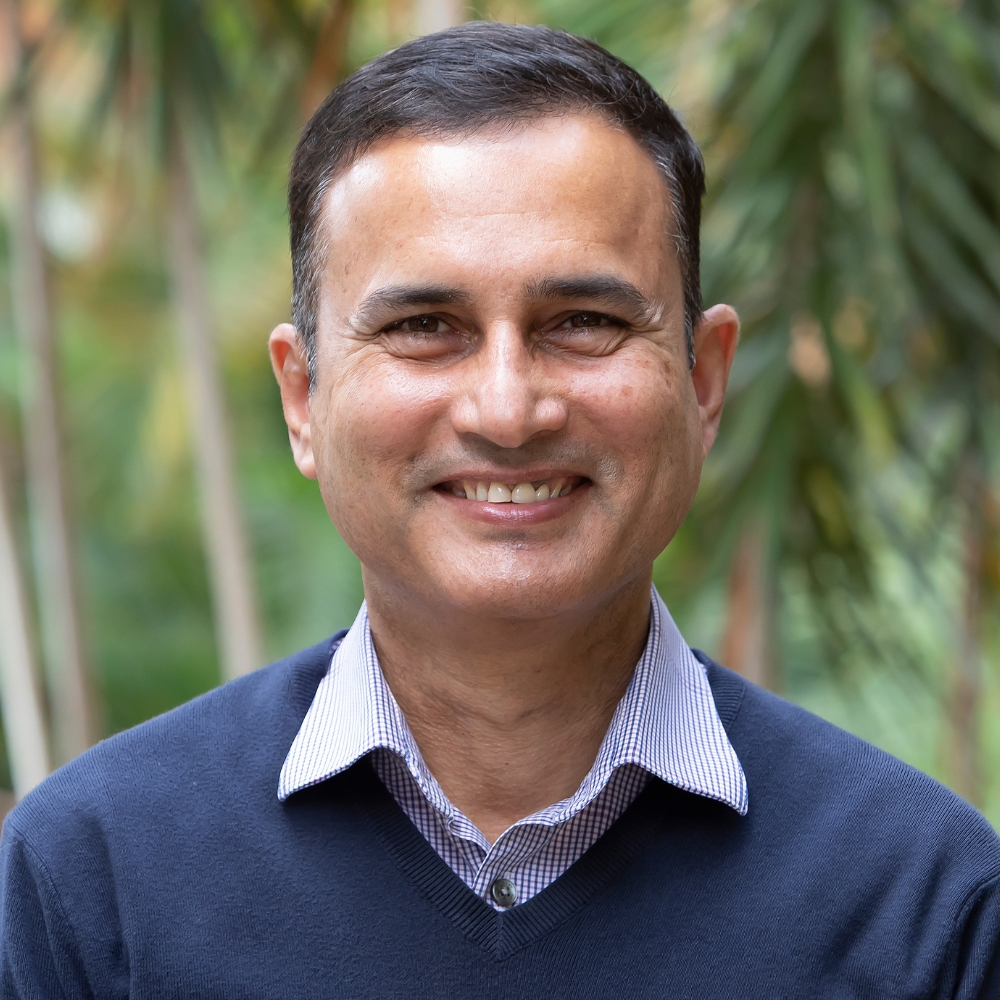
Dr. Bedanand Upadhaya is a Senior Lecturer in Accounting at Essex Business School, University of Essex, with additional leadership roles including Associate Director of Postgraduate Research and departmental representative for the £2.2 million Leverhulme Doctoral Training Programme. He serves on the management teams of the Centre for Environment and Society and the university's Environmental Sustainability Action Group. His research specializes in sustainability accounting, climate change accountability, and corporate social responsibility in developing economies, with particular focus on organizational culture and management control systems. His publications demonstrate consistent themes around accountability frameworks in crisis situations (disasters, pandemics), sustainability transitions in manufacturing, and digital transformation challenges in NGOs. Awards include the 2023 'Best International Research Impact Award' from the University of Essex and nomination for Essex Business School's 'Supervisor of the Year'. He currently supervises three PhD students investigating digital transformation in healthcare and accounting systems. Major grants include World Bank-funded projects on: Public financial management systems supporting fiscal transparency (£2.2 million) Climate change integration in South Asian public investment policies
Dr. Carolyn A. Lin is a Distinguished Research Professor in the Department of Communication at the University of Connecticut's College of Liberal Arts and Sciences. Holding a Ph.D. in Media and Information from Michigan State University, her research integrates environmental, health, risk, crisis, marketing, cross-cultural, and computer-mediated communication frameworks. Her pioneering work includes developing commercialized bioinformatics systems, health video games, and mobile applications for health promotion and storm preparedness. Her climate-change communication research examines coupled natural-human systems to develop solutions for social resilience and environmental literacy. Current projects include collaborations with Connecticut Department of Housing on green infrastructure and Department of Energy and Environmental Protection on coastal community resilience strategies. Research focuses on: Environmental and health risk communication frameworks AI and augmented reality applications in communication Cross-cultural marketing communication strategies Digital media effects on public opinion and behavior Sustainable communication for community resilience Analysis of her publications reveals consistent focus on risk communication, health messaging effectiveness, and social media's role in shaping public discourse. Her work demonstrates strong interdisciplinary connections between communication theory and practical applications in public health and environmental sustainability. Honors include: ICA Fellow recognition Top 2% global researcher citation ranking Founding AEJMC's Communication Technology Division Distinguished University Research Faculty award
Carolyn A. Lin is a Professor in the Department of Communication Education at the University of Connecticut. Her research focuses on applying marketing and persuasive communication theories to enhance advertising, public relations, and health/environmental equity outcomes. She has developed interactive informatics systems, videogames, and mobile apps for health risk management and storm preparedness. Lin holds prestigious awards including Fellow of the International Communication Association and was a founding member of the Communication Technology Division at AEJMC. She teaches courses on communication research methods, advertising, public relations, and environmental communication. Lin earned her Ph.D. in Communication from Michigan State University. Her research interests span advertising, public relations, intercultural communication, risk communication, and the impact of digital technologies like AR and AI on social interactions. She collaborates with organizations like the Connecticut Institute for Resilience & Climate Adaptation (CIRCA) and leads the Communication and Social Equity (CASE) Research Lab. Her recent work emphasizes participatory approaches to flood risk management, vaccine communication during pandemics, and the role of social media in cultural phenomena such as K-Pop's global acceptance. Lin has secured funding from federal/state agencies and published widely across communication and public health journals. Her awards include recognition as a top-cited scientist globally and a University Distinguished Research Faculty award.
Dr. Thomas Cubaud is an Associate Professor in the Department of Mechanical Engineering at Stony Brook University, where he has been since 2007. His research focuses on microfluidics, interfacial phenomena, hydrodynamics, and nanotechnologies, with particular emphasis on developing microfluidic systems for diagnostic and manufacturing applications. He holds a Ph.D. from Paris-Sud University/ESPCI (2001), an M.S. (1998), and a B.S. (1997) from Paris-Sud University, France. Education: Ph.D., Paris-Sud University/ESPCI, France (2001) M.S., Paris-Sud University, France (1998) B.S., Paris-Sud University, France (1997) Dr. Cubaud's research explores the manipulation and control of microscale interfaces in complex fluid systems. His work includes studies on droplet dynamics, interfacial tension effects, and multiphase flow instabilities in microfluidic environments. He investigates applications such as controlled emulsification, nanoemulsion dissolution, and high-viscosity fluid behavior in microchannels. His recent publications highlight advancements in understanding viscous fluid thread dynamics, solvent miscibility effects, and interfacial tension-driven phenomena in multiphase systems. He is a recipient of the 2012 Francois Naftali Frenkiel Award for Fluid Mechanics. His work often bridges fluid mechanics with materials science, addressing challenges in nanotechnology and soft matter physics. Dr. Cubaud collaborates with academic and industrial partners to advance microfluidic technologies, emphasizing applications in energy, environmental science, and biomedical engineering. He has contributed to the design of novel microfluidic devices and surface engineering techniques for wettability control.
Martin Wietschel is the Head of the Department of Energy Technology and Energy Systems at the Karlsruhe Institute of Technology (KIT). Previously, he served as Deputy Head of the Department since 2012 and was an Adjunct Professor at KIT since 2008. He also taught at ETH Zurich from 2005–2011. His work focuses on energy systems modeling, hydrogen economy, and energy policy instruments. He studied Industrial Engineering and Management at the University of Karlsruhe (now KIT). His research spans energy transitions, sector coupling, and the integration of renewables. Notable contributions include studies on hydrogen imports, green hydrogen export strategies, and electric vehicle infrastructure. Publications emphasize techno-economic analyses, policy frameworks, and interdisciplinary approaches to energy challenges. Key areas include grid infrastructure for electrified transport, renewable energy storage, and the geopolitical dimensions of energy resources. Wietschel has coordinated projects like the HYPAT Final Report and contributed to frameworks like the German Energy Storage Roadmap. His work bridges academic research with policy implementation, addressing both technical and socio-economic aspects of sustainable energy systems.
Dr. Alexandre Violle is a sociologist specializing in the intersections of science and technology studies, economic sociology, and political sociology. He is currently coordinating the "Mapping Controversies" course at Sciences Po's School of Management and Innovation and has a research affiliation with the Center for the Study of Social Movements at the School for Advanced Studies in the Social Sciences (EHESS). Previously, he completed his PhD at the Center for the Sociology of Innovation (CSI) of PSL-Mines Paris University and conducted postdoctoral research funded by the Institut Francilien Recherche Innovation Société (IFRIS). His academic journey includes: Doctorate in sociology of science and technology from École des Mines de Paris Postdoctoral research at Centre d'étude des mouvements sociaux of École des Hautes Etudes en Sciences Sociales (2021-2023) PhD research at Center for the Sociology of Innovation (CSI) of PSL-Mines Paris University Dr. Violle's research examines how expertise drawing on economic or financial knowledge transforms public action in France and Europe across various sectors. His work spans the sociology of science and technology, economic sociology, and political sociology, with particular focus on: Social studies of science: knowledge production processes, controversies, science policy Political sociology of public action: instrumentation of public action, regulation, state and European action recomposition, energy and economic policies Economic/finance sociology: valuation, green finance, theories of money and currency, the role of economic expertise in shaping public action His current research focuses on the "Anticipation: the futures of French subsoil use" (ANTICIP) project, a five-year initiative examining how different actors conceptualize and plan for the future use of subsoil resources in France. This work builds on his previous research on the European Banking Union and climate stress testing in financial systems, revealing consistent patterns in how technical instruments shape governance approaches to complex societal challenges. Dr. Violle's scholarly contributions have been recognized through numerous publications in prestigious journals. His research has explored topics including: The political dimensions of financial supervision in the European context The material politics of climate stress tests in Europe The territorialization of industry during energy transitions Scaling imperatives in technological innovation Critical mineral supply chains and environmental governance As an educator, Dr. Violle has supervised numerous master's students through their thesis work and has been instrumental in developing innovative pedagogical approaches. He has coordinated the "Mapping Controversies" course at Sciences Po for several years, guiding students through complex analyses of science-society interactions. His teaching spans multiple institutions including École des Mines, IEP de Paris, and Sciences Po, demonstrating his commitment to bridging theoretical knowledge with practical application in understanding contemporary societal challenges. Dr. Violle is actively involved in collaborative research initiatives, currently working with teams from Ecole des Mines de Paris, IMT Mines Alès, and Bureau de Recherches Géologiques et Minières (BRGM) on the subsoil resources project. His interdisciplinary approach bridges sociology, political science, and economic analysis to address contemporary challenges in governance and public policy, with particular relevance to the energy transition and financial regulation in the European context.
Dr. Wenting Cheng is a Senior Lecturer at the TC Beirne School of Law, University of Queensland, and an affiliate of the Australian Centre for Private Law. She specializes in intellectual property law, sustainability governance, and their intersection, with a focus on energy regulation (hydrogen/offshore wind), climate transition, and green finance. She holds a PhD in Regulation and Governance from the Australian National University (2018) and was a Grand Challenge Fellow (2020-2023) exploring energy transition challenges through multidisciplinary collaboration. Her research examines IP as a regulatory tool for knowledge commodification and its impact on climate objectives/access to medicines. Key areas include green finance governance, ESG disclosure, and regulatory frameworks for 'green' boundaries. She has published widely in journals like Climate Policy and International Environmental Agreements , and her 2023 monograph China in Global Governance of Intellectual Property addresses distributive justice issues. Awards include the 2023 Asian Society of International Law Young Scholar Prize. Her work bridges legal scholarship with practical policy challenges, emphasizing interdisciplinary approaches to global regulatory capitalism. Dr. Cheng advises on energy transition projects and contributes to initiatives like the ACT’s Integrated Energy Plan (2023). She collaborates across law, engineering, and economics to address systemic challenges in sustainable development.
Sylvain Coulombe is a Professor at McGill University and serves as the Director of the McGill Centre for Innovation in Storage and Conversion of Energy (McISCE). His research is centered at the intersection of plasma engineering and nanomaterials, with applications in energy and medicine. His educational background includes: ing, BSc, MScA from the University of Sherbrooke PhD from McGill University His research interests focus on plasma-catalysis for circular fuels , the development of nanomaterials for energy conversion and storage , and nanomaterials for medical applications . This work aims to create sustainable energy solutions and advanced biomedical technologies through innovative plasma and nanomaterial synthesis techniques. His recent publications demonstrate a strong trend in utilizing plasma processes for the functionalization and synthesis of carbon nanotubes and other nanomaterials, with applications spanning energy storage (supercapacitors, fuel cells), environmental remediation, and cancer therapy. As Director of McISCE and leader of the Catalytic & Plasma Process Engineering (CPPE) research group, he oversees a multidisciplinary team dedicated to advancing energy storage and conversion technologies.
Marco Fronzi is a researcher at the University of Sydney's Faculty of Science, focusing on advanced materials science and computational methods. His work spans thermoelectric materials, energy storage systems, and 2D crystal engineering. He has contributed to projects involving machine learning-driven material discovery, battery anode optimization, and photocatalytic applications. Fronzi leads the 2025 grant 'Conversion of CO into Methanol via an Innovative Photocatalytic and Electrocatalytic Process,' highlighting his expertise in sustainable energy technologies. Key research interests include van der Waals heterostructures, nanomaterials characterization, and predictive modeling for novel material design. His publications address challenges in thermoelectric efficiency, solar cell performance, and nanomaterial stability. While no awards are explicitly listed, his high-impact contributions to energy-related materials are notable. His research integrates experimental and computational approaches, with recent work exploring piezoelectric 2D crystals and lithium diffusion mechanisms in batteries. Collaboration with industry and international partners underscores his commitment to translating fundamental research into practical applications.
Dr. Masoud Fakhimi is a Senior Lecturer in Operational Research at the University of Surrey's Surrey Business School, affiliated with the Surrey Institute for People-Centred AI, Institute for Sustainability, and Centre for Business Analytics in Practice. He holds a PhD, MSc, and BSc in relevant fields. His research focuses on hybrid modeling and simulation methodologies applied to healthcare, sustainability, supply chain management, and Industry 4.0. He has received awards for teaching excellence and doctoral supervision, notably Surrey Business School's 'Teacher of the Year' (2021) and 'Postgraduate Research Supervisor of the Year' (2022). His academic background includes degrees in operational research and analytics. Research interests span hybrid simulation frameworks, sustainable operations management, and data-driven decision-making in healthcare and renewable energy sectors. He collaborates with industry and academic stakeholders on projects addressing circular economy challenges and AI-driven solutions. Key publications include a Springer monograph on hybrid modeling and simulation (2024) and peer-reviewed articles on healthcare system analysis, machine learning applications in biomarker detection, and disruptive technologies in agriculture. His work emphasizes cross-disciplinary approaches to complex decision-making in dynamic environments. Masoud supervises doctoral students in hybrid modeling and simulation methodologies, particularly in healthcare contexts. He actively contributes to research centers focused on AI ethics, sustainability, and business analytics innovation.
Dr. Martijn Smit is an Assistant Professor in the Department of Economic Geography at Utrecht University, within the Faculty of Geosciences. His research focuses on teleworking, regional development, labor markets, agglomeration economies, innovation diffusion, peripheral regions, and EU regional policy. He also explores urban development, big data, and railway infrastructure, alongside historical interests in classical music globalization and Roman studies. Education: M.Sc. in Human Geography (cum laude) and M.A. in Classics from the University of Groningen, with additional training at the Dutch Institute in Rome and Università degli Studi di Verona. Professional Experience: Since 2013, he has held an 80% position at Utrecht University. Prior roles include postdoc research at Vrije Universiteit Amsterdam (2010–2016) and freelance database design for the North Sea Interreg Program (2005–2012). Teaching: Teaches courses on philosophy of science, regional policy, and spatial econometrics, coordinating master's theses and internships in economic geography. His research interests emphasize the geography of remote work, agglomeration benefits, and EU policy impacts. Key areas include coworking spaces, eco-innovation in fashion, and the dynamics of urban-rural divides. He has contributed to high-profile projects like the EU's SPARD and IC-EU initiatives, analyzing transport infrastructure and agricultural subsidies. Awards: Won first prize in the Regional Studies Association Poster Competition (2013). His work has been featured in media outlets like De Stentor and Reporter Radio , discussing topics like post-pandemic office trends and Dutch regional policy. Service: Serves as book review editor for Papers in Regional Science , editorial board member of Tijdschrift voor Economische en Sociale Geografie , and treasurer of the Regional Science Association Nederland.
Ricardo Vinuesa is an Associate Professor at KTH Royal Institute of Technology, affiliated with the Department of Mechanics within the School of Engineering Sciences. He serves as the Principal Investigator (PI) for projects such as 'An AI-based framework for harmonizing climate policies and projects with the SDGs' and co-leads the 'Faster-than-real-time and high-resolution simulation of fluid flow in engineering applications' initiative. His work integrates artificial intelligence with fluid mechanics, sustainability, and climate policy. Education and Academic Roles: Vinuesa teaches courses including Data-driven methods in engineering mechanics, Mechanics I, and Turbulence, holding roles as examiner, course manager, and teacher. He is part of the Digital Futures Faculty and actively contributes to academic programs at KTH. Research Interests: His research focuses on AI-driven solutions for fluid mechanics challenges, turbulence modeling, sustainable development goals (SDGs), and climate policy alignment. He develops machine learning frameworks for flow control, sensor optimization, and climate risk assessment, emphasizing interdisciplinary applications. Projects and Applications: Key projects include AI-based frameworks for SDG harmonization, high-resolution fluid simulations for indoor climate, and turbulence control via reinforcement learning. His work bridges computational fluid dynamics with real-world sustainability challenges, leveraging deep learning and data-driven methodologies. Labs and Collaborations: Vinuesa leads the Artificial Intelligence Group, with a lab website at vinuesalab.com . His research is supported by collaborations with industry and academic partners, focusing on advancing fluid mechanics and environmental engineering through AI innovation.
Tina Düren is Professor and Head of Chemical Engineering at University of Bath, directing the Centre for Integrated Materials, Processes & Structures. Her research develops molecular simulation methods to design porous materials for carbon capture, hydrogen purification, drug delivery, and catalysis. Research integrates computational modeling with experimental validation to predict adsorption properties and diffusion behavior in metal-organic frameworks, zeolites, and mesoporous oxides. Current projects examine adsorption-induced flexibility, open metal site engineering, and process-scale integration of porous materials. Key investigations include controlled release of bioactive molecules (NO), solvent activation pathways, and dynamic responses in MOFs. Funded by EPSRC and Leverhulme Trust, her work advances sustainable separation technologies through atomistic modeling.
Steve Barr is the Alumni Association Distinguished Graduate Professor at North Carolina State University's Department of Management Innovation & Entrepreneurship. He specializes in Technology Commercialization, New Business Startup, Entrepreneurship, and Innovation Management. His expertise spans organizational behavior, strategic alliances, and decision-making processes. Dr. Barr earned his Ph.D. in Organizational Behavior from the University of Iowa in 1985. His research focuses on bridging academic innovation with practical commercialization, venture creation dynamics, and trust-based stakeholder relationships. He has pioneered educational programs addressing technology transfer challenges and strategic decision-making in organizational contexts. His work emphasizes leveraging big data for strategic alliances, modular product architecture, and creativity enhancement through technology. He received the NC State Outstanding Teacher Award (2021) and Alumni Association Distinguished Professorship (2021), reflecting his impactful teaching and research contributions. Barr is actively involved in the Technology Commercialization and Entrepreneurship (TEC) initiative at NC State, promoting innovation ecosystems and entrepreneurial education. His research spans over three decades, addressing topics from organizational citizenship behavior to risk aversion in public sector arbitration.