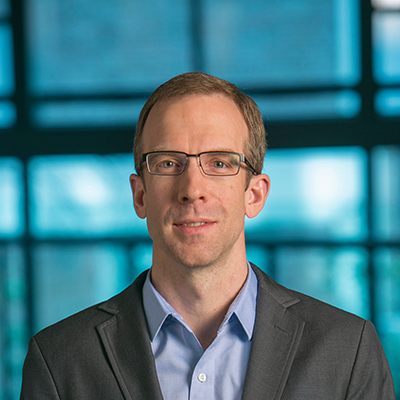
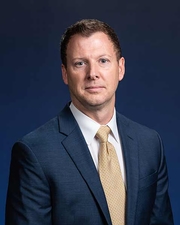
Giovanni Volpe is a Professor at the Department of Physics, University of Gothenburg. His research focuses on nanophotonics, optical tweezers, active matter, and machine learning applications in microscopy and neurodegenerative diseases. He leads the Soft Matter Lab (http://softmatterlab.org/) and collaborates internationally in interdisciplinary projects. His work bridges physics, biology, and AI, addressing challenges in nanoparticle manipulation, biomedical imaging, and neurodegenerative disease modeling. Key research areas include optical trapping of nanoparticles, self-assembly of colloidal systems, and leveraging deep learning for microscopy and sensor technologies. Recent publications span neurodegenerative disease pathways, advanced optical microscopy techniques, and plasmonic sensor development. Volpe's team has pioneered methods in computational neuroscience and nanotechnology. His lab's innovations include novel optical tweezers control algorithms and neural network models for analyzing complex biological systems. Collaborations span materials science, biophysics, and cognitive neuroscience, with applications in healthcare and environmental monitoring.
Dr. David Laverty is a Reader at Queen’s University Belfast in the School of Electronics, Electrical Engineering and Computer Science. His research focuses on Smart Grids, Cyber Security of Critical Infrastructure, and Power System Instrumentation. He is the founder of the OpenPMU project, an open-source Phasor Measurement Unit, and has contributed to advancements in precision time transfer and software-defined networking in power systems. Dr. Laverty has secured over £3M in research funding and holds an h-index of 22 with over 100 publications. He actively supervises PhD students in areas such as smart grid telecommunications, distributed energy resources, and secure information systems. His work aligns with UN Sustainable Development Goals, particularly in clean energy and infrastructure. Awards include the 2017 Premium Award for Best Paper in IET Generation, Transmission & Distribution and the 2022 BEST PAPER AWARD. His research projects, such as the Fusion/Electricity Exchange DAC, address challenges in smart grid infrastructure and cyber-physical systems. Dr. Laverty also engages in public outreach through initiatives like the Electric DeLorean project.
Ifana Mahbub is an Associate Professor at the Erik Jonsson School of Engineering and Computer Science , University of Texas at Dallas, specializing in Electrical & Computer Engineering . Her research focuses on energy-efficient integrated circuits, wireless power transfer systems for biomedical sensors, and advanced antenna designs for UAV and mm-wave applications. She leads the Integrated Biomedical, RF Circuits and Systems Lab . Education: Ph.D. in Electrical Engineering (2017), University of Tennessee, Knoxville B.S. in Electrical Engineering (2012), Bangladesh University of Engineering and Technology Research interests include: Ultrawideband/mm-wave phased-array antennas Far-field wireless power beaming V2V communication for UAVs Energy harvesting via reverse electrowetting Implantable/wearable sensor systems Recent work highlights advancements in high-efficiency rectennas, beamforming algorithms, and AI-driven metasurface design. Her systems address critical challenges in biomedical telemetry and aerial communication.
Professor Paul Brereton is Director of Strategic Alliances at the School of Biological Sciences, Queen's University Belfast, and leads the Institute for Global Food Security. He has coordinated major EU projects including €20M TRACE and €12M FOODINTEGRITY, and currently directs QUB's contributions to the UKRI Sus-Health programme and €11M TITAN Horizon Europe project. Active in food safety, authenticity, and sustainability Co-Director of UKRI Integrating Finance and Biodiversity Programme Chairs European Commission PRIMA Foundation evaluation panel His research spans food chemistry, risk assessment, and policy development, with recent focus on financial instruments for ecological restoration and combined nutritional-environmental metrics. Key projects address antimicrobial resistance, dietary sustainability, and blockchain applications in food traceability. Scientific honors include Fellow of the Royal Society of Chemistry and international awards from AOAC and OIV. His work contributes to UN Sustainable Development Goals 2 (Zero Hunger), 3 (Health), and 12 (Responsible Consumption).
Ellen M. Considine is an incoming Assistant Professor of Geography and Fellow of CIRES at the University of Colorado Boulder, starting August 2025. Her work integrates environmental change, health and wellbeing, and data science to develop pragmatic, equitable solutions for public and planetary health challenges. Education: PhD in Biostatistics from Harvard University (2025) BS in Applied Mathematics from CU Boulder Research Interests: GeoHealth and Planetary Health Applied Statistics and Data Science Policy and Decision-Making under Uncertainty Environmental Justice in Air Quality AI/ML Applications for Climate-Health Low-Cost Sensor Networks for Equitable Monitoring Scientific Awards: American Statistical Association Student Paper Competition Winner (2024) NSF Graduate Research Fellowship (2020) CU Boulder Outstanding Graduate (2020) Publications focus on causal inference for plastic waste policy analysis, AI-driven heat alerts, sensor equity in air quality, wildfire PM2.5 modeling, and interdisciplinary data science applications. She emphasizes environmental justice and equity in all projects.
Dr. Ilan Kroo Academic Appointments: Thomas V. Jones Professor in Aeronautics and Astronautics at Stanford University's School of Engineering. Active in teaching and research since at least 1983 (PhD Stanford). Education: PhD in Aeronautics and Astronautics, Stanford University (1983). Research Focus: Multidisciplinary optimization and aircraft synthesis Unconventional aircraft configurations (e.g., joined wings, oblique wings) Low-speed aerodynamics: vortex wake analysis, induced drag computation Awards: Elected Member of the National Academy of Engineering (2013–Present). Teaching: Leads courses on aircraft design, applied aerodynamics, and sustainable aviation. Courses include AA 146A/B, AA 241A/B, and independent study modules. Students: Advises master's students William Ho, Sean Lin, Adrian Loekman, and Sebastian Monsalvo. Labs/Teams: Involved in NASA and industry-sponsored projects on computational aircraft design and transonic formation flight. Recent Work: Focus on pilot-induced oscillation mitigation, extended formation flight efficiency, and UAV swarm control. Active in publishing since 2009, with 116+ papers.
Iraklis Lazakis is a Reader in Maritime Operations and Maintenance at the Department of Naval Architecture, Ocean and Marine Engineering (NAOME), within the Faculty of Engineering at the University of Strathclyde. He joined the university as a PhD researcher in 2007 and began his academic career in 2011, establishing himself as a key figure in maritime systems research and education. His research interests span a broad range of topics including ship operations, systems maintenance and reliability, condition monitoring, risk and asset management, shipyard productivity, and offshore renewable energy systems (wind, wave, and tidal). His work bridges academic theory with industrial application, drawing from his 8 years of prior industry experience in maritime surveys, accident investigations, and ship repairs. The trends in his recent publications reflect a strong focus on data-driven and digital solutions for sustainable maritime operations. Key themes include the development of simulation and optimization tools, application of virtual reality for safety, cost reduction in offshore wind O&M, and decarbonization strategies such as onboard CO2 capture. His work increasingly integrates AI, digital twins, and human factors to enhance system performance and crew wellbeing. He has received numerous accolades, including: SNAME Faculty Advisor of the Year (2024) SNAME WES Best Paper Award (2023) Multiple Knowledge Transfer Partnerships Certificates of Excellence (2020, 2022) Laureate of the Franz Edelman Award (2012) ISSC Committee IV.2 Membership (2012–2015) Lazakis actively supervises undergraduate, postgraduate, and PhD students, and leads or contributes to a wide portfolio of research and knowledge exchange projects. His recent projects include decarbonizing UK shipping, structural surveys of vessels like Calmac and the Royal Yacht Britannia, and development of low-cost underwater gliders. He plays a strategic role in supporting colleagues with funding applications, publications, and industry collaboration. His work contributes to UN Sustainable Development Goals related to sustainable energy and industry innovation.
Maurizio Ramanzin is a Full Professor at the University of Padova , affiliated with the School of Animal Science and Department of Agronomy, Animals, Food and Natural Resources (DAFNAE) . His research focuses on Agricultural Sustainability , Environmental Impact Assessment , and Precision Livestock Farming . Academic Field : AGR/19 Email : maurizio.ramanzin@unipd.it Address : Agripolis - Viale dell'università, 16 - Legnaro (Padova) – ITALY His work explores the interactions between livestock systems and ecosystem services in mountainous regions, with emphasis on: Grazing Management and biodiversity conservation Life Cycle Assessment (LCA) of dairy and beef systems Climate Change Adaptation in Alpine ungulates Animal Welfare in small-scale farms Technological Tools (GPS, NIRS) for monitoring grazing behavior Key trends in his recent publications include: Quantifying environmental drivers of wolf predation on livestock Developing low-cost biologging systems for dairy cows Analyzing social-ecological trade-offs in mountain agriculture Assessing microbial dynamics in alpine soils
Rhenish Friedrich Wilhelm University of BonnGermany
Marc Hanheide is a Professor of Intelligent Robotics and Interactive Systems at the University of Lincoln 's School of Computer Science. With a career spanning EU projects like VAMPIRE, COGNIRON, CogX, and STRANDS, his work focuses on long-term robotic behavior, human-robot spatial interaction, and cognitive system architectures. He has secured over 12 major grants from organizations including EPSRC, BBSRC, and the European Commission. Key Research Areas : Autonomous robotics, HRI, AI, cognitive systems, agricultural robotics Current Projects : STRANDS (long-term behavior), AgriFoRwArdS (robotics training), NCNR (nuclear robotics) Major Contributions : Human-aware navigation modules, topology optimization for robot fleets, causal analysis frameworks Scientific Awards: While no specific awards are listed, his numerous EPSRC grants and leadership in multi-institutional projects highlight his impact. He has over 172 publications and collaborates with institutions like CoR-Lab and CITEC.
Dr. Megan Dewdney is an Associate Professor and Extension Specialist in the Department of Plant Pathology at the University of Florida's Citrus Research and Education Center. Her extension work focuses on integrated management strategies for citrus canker, citrus greening (huanglongbing), and fungal pathogens, while her research investigates the biology of bacterial and fungal pathogens to develop enhanced disease control methods. She holds a Ph.D. and leads active research programs in citrus pathology. Her primary research interests include: Integrated disease management systems for citrus pathogens Biology and epidemiology of fungal and bacterial diseases in citrus Development of molecular detection tools for plant pathogens Implementation of precision agriculture technologies for disease forecasting Physiological impacts of huanglongbing on citrus trees Analysis of her recent publications reveals strong emphasis on: Advanced detection methods using hyperspectral imaging and machine learning Genomic studies of fungal pathogens like Phyllosticta citricarpa Development of web-based disease advisory systems for growers Physiological management of huanglongbing-affected trees Molecular characterization of citrus pathogens She currently advises doctoral student Eva Mulandesa and collaborates with postdoctoral researcher Pamela Suellen. Her laboratory team includes research technicians, a lab manager, and program support staff focused on citrus pathology research.
Samsung Lim serves as an Associate Professor of geographic information systems (GIS) in the School of Civil and Environmental Engineering at the University of New South Wales (UNSW) Sydney. With expertise spanning data science, artificial intelligence, and machine learning, Lim applies geospatial technologies to critical real-world challenges in natural disaster management and public health research. Lim's interdisciplinary work bridges engineering, computer science, and public health domains to develop practical decision-making tools for emergency response and disease surveillance. Ph.D. in Aerospace Engineering and Engineering Mechanics, University of Texas, Austin, TX, USA M.A. in Mathematics, Seoul National University, Seoul, South Korea B.A. in Mathematics, Seoul National University, Seoul, South Korea Lim's research focuses on applying GIS to natural disaster management and public health challenges. Key areas include machine learning methods for bushfire susceptibility mapping, spatial clustering for landslide susceptibility analysis, city-scale evacuation management in flood scenarios, and social media-based natural disaster assessment. In public health, Lim investigates geo-correlations between environmental factors and asthma occurrence, computational approaches to avian influenza outbreaks, emerging hot spot analysis of COVID-19, and early detection systems for emerging infectious diseases. This work combines advanced spatial analytics with machine learning to address complex environmental and health challenges. The recent publication record demonstrates a clear interdisciplinary trajectory where geospatial science intersects with public health emergency response and natural hazard management. Lim's work consistently applies machine learning techniques to geospatial data, with particular emphasis on disaster susceptibility mapping, disease outbreak detection, and infrastructure monitoring. The research spans multiple continents and addresses both immediate emergency response needs and long-term environmental health challenges, reflecting a commitment to practical applications of geospatial science. Associate Editor of Geospatial Information Science National Delegate of Commission 3 of International Federation of Surveyors (FIG) National Representative of the International Cartographic Association (ICA) Commission on Sensor-driven Mapping Senior Member of Institute of Electrical and Electronics Engineers (IEEE) Lim actively contributes to the development of early warning systems for emerging infectious diseases through collaborations with public health researchers. The work on EPIWATCH demonstrates how AI can enhance surveillance capabilities for outbreak detection. Lim's research on cruise ship transmission of diseases and the spread of avian influenza through bird migration patterns and poultry trade networks shows strong engagement with real-world public health challenges. These projects often involve multidisciplinary teams spanning engineering, computer science, epidemiology, and veterinary medicine. Lim's work integrates multiple geospatial data sources and analytical techniques to address complex environmental and public health challenges. This includes developing frameworks for performance analysis of OpenStreetMap data, creating specialized road datasets for pedestrian navigation, and applying Persistent Scatterer Interferometry for land motion monitoring. The research combines traditional geospatial methods with cutting-edge machine learning approaches to extract meaningful insights from complex spatial datasets.
Brent Lagesse is an Associate Professor at the University of Washington - Bothell , affiliated with the Division of Computing & Software Systems under the School of Science, Technology, Engineering & Mathematics . His research focuses on security in emerging environments , particularly secure machine learning and privacy in sensor-rich systems . Ph.D. in Computer Science from the University of Texas at Arlington (2009) Research Interests include: Detecting and locating hidden webcams Scalable AI/ML defense mechanisms Privacy-preserving video sharing AI systems for air quality prediction Automated yeast cell analysis CRISPR/CAS9 guide-donor libraries Article Trends : Recent publications emphasize secure machine learning for smart city applications, privacy-preserving technologies , and resource-constrained security in crowdsensing environments . Collaborative work spans cybersecurity education , environmental monitoring , and context-aware systems . Scientific Awards : Cybersecurity Fulbright Scholar (University of Cambridge, 2018) Johann-von-Spix International Guest Professorship (University of Bamberg, 2019-20) Advising & Grants : Advises current research students Neil Prakasam and Nicholas Handaja NSA grant ($96k) for GenCyber curriculum development (2022) NSF grant ($300k) for AI-enhanced cybersecurity workforce studies (2021) T-Mobile grants for ML security metrics and dataset anonymization (2020-2022) Laboratory : Leads the Security of Emerging Environments (SEE) Lab , developing practical and theoretical frameworks for smart city security and privacy-preserving technologies .
Kevin T. Turner is the John Henry Towne Department Chair and Professor of Mechanical Engineering and Applied Mechanics at the University of Pennsylvania's School of Engineering and Applied Science, with a secondary affiliation in Materials Science and Engineering. He leads the Turner Research Group, which investigates mechanics, materials, and manufacturing challenges, specializing in micro/nano-systems, adhesion, fracture mechanics, and advanced manufacturing. His research focuses on three primary thrusts: Materials with programmable mechanical properties (e.g., electroadhesives for robotics) Fracture and adhesion in structured/heterogeneous materials Printed and flexible sensors (including biodegradable cellulose-based variants) Key projects include tunable adhesion surfaces, architected materials for damage tolerance, and additive manufacturing stress control. Turner's recent publications (2022-2023) demonstrate a strong emphasis on adhesion mechanics, robotics applications, and nanomaterial design. Trends include bio-inspired structures, machine learning optimization, and interdisciplinary approaches bridging mechanics with biomedicine and agriculture. Computational methods like physics-informed neural networks are increasingly utilized for material property analysis. He directs an active research laboratory developing novel sensor technologies and materials systems, collaborating widely across engineering and applied science disciplines.
Dr. Messaoud J. Bahoura is a Professor in the College of Science, Engineering and Technology at Norfolk State University , where he has been since 2010. He serves as Director and Principal Investigator for the NSF CREST Centers for Renewable Energy and Advanced Materials (CREAM) and Nano and Bio-Inspired Materials and Devices (CNBMD), managing $30M+ in funding from NSF and DoD. His roles include graduate program coordination and faculty advising for IEEE, MRS, NSBE, and SWE chapters. Education: M.S. and Ph.D. in Laser and Matter from University of Paris XI (1993, 1998) Dr. Bahoura's research interests focus on: Design of renewable energy harvesting and storage devices Development of energy-saving low-power sensors Advanced nanomaterials for photovoltaic and biomedical applications High-dielectric materials for secure computing systems His scientific expertise spans thermoelectric materials, plasmonic biosensors, transparent conductive films, and nanostructured energy storage systems, as evidenced by over 216 publications and 12 graduate students supervised. Awards: NRC Research Associateship at NASA (1998) Dr. Bahoura has been actively involved in grants research and professional societies including IEEE, OSA, APS, and SPIE.
Dr. Kevin A. Adkins is a Professor in the College of Aviation at Embry-Riddle Aeronautical University , where he teaches aerodynamics, aircraft performance, and uncrewed aircraft systems (UAS) courses. He pioneered the first collegiate Advanced Air Mobility (AAM) course in the U.S. in 2023 and directs two labs: the Advanced Air Mobility Research and Innovation Lab (AAMRIL) and the Uncrewed Vehicle and Atmospheric Investigation Lab (UNVAIL) . Education : Ph.D. in Aerospace Engineering (Mississippi State University), M.Eng. and B.S. in Aerospace Engineering (University of Michigan-Ann Arbor) His research focuses on atmospheric boundary layer meteorology using UAS, AAM concepts of operation (ConOps), and flight test engineering. He collaborates extensively on sensor development for environmental monitoring, including low-cost particulate matter sensors and bioaerosol sampling mechanisms. Recent publications emphasize UAS applications in wildfire detection, urban microclimate analysis, and wind farm humidity studies. Dr. Adkins serves on advisory committees for the Florida Department of Transportation's AAM initiative and ASTM International's UAS standards. Awards : Fellow of the Royal Aeronautical Society, ERAU Researcher of the Year (2020), PIEoneer Real Life Learning Award (2019), AUVSI Best Paper Award (2019) He mentors numerous student projects on UAS sensor development and atmospheric research, with teams winning symposium awards. His labs integrate experiential learning with international fieldwork in Puerto Rico, Norway, and Lithuania.