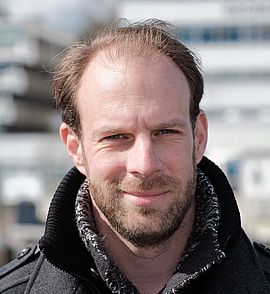
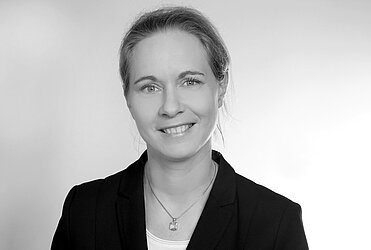
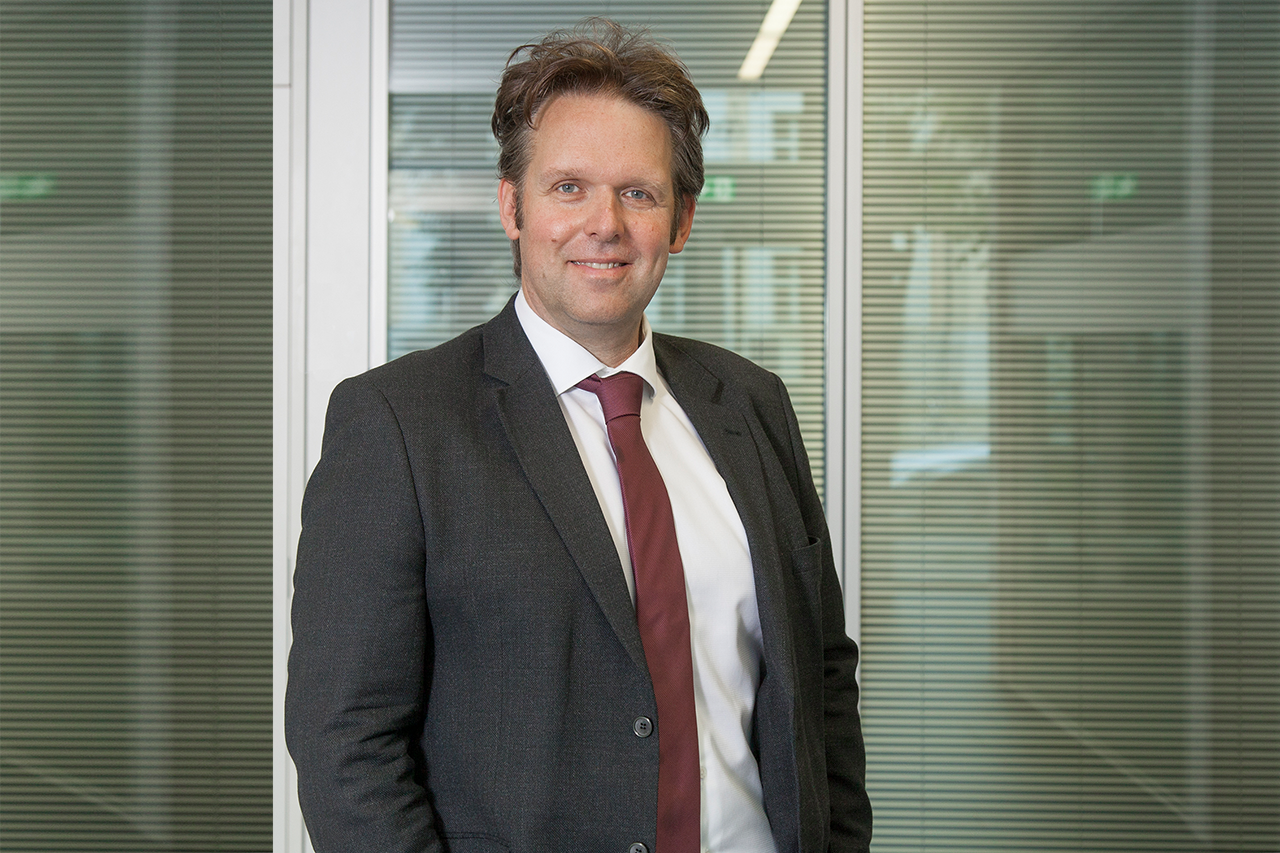
Prof. Dr. Johannes Max is a Professor at the Department of Horticulture and Food Technology, Faculty of Horticulture and Food Technology, Hochschule Weihenstepfan-Triesdorf (HSWT), located in Freising, Germany. His primary research focus is on plant nutrition, particularly optimizing nutrient cycling and sustainable agricultural practices. He leads projects on phosphorus recovery from wastewater, precision irrigation systems, and greenhouse climate management. Research Interests: Plant nutrition dynamics, recycled fertilizer efficiency, greenhouse hydroponics, water use optimization, and tropical crop adaptation. His work emphasizes bridging gaps between environmental sustainability and agricultural productivity through innovative technologies like porous pipe irrigation and circular economy concepts. Key Projects: Leading initiatives such as 'Sustainable Tunisian Tomato Production via Soilless Systems' and 'Industrial Waste Heat Utilization Guidelines.' Collaborates on research into phosphorus availability in recycled fertilizers, demonstrating how grain size impacts plant uptake. Grants & Advising: Oversees major grants focused on nutrient recycling and tropical greenhouse systems. Actively involved in international collaborations, including projects in Thailand and Greece. Advises on innovative irrigation and crop management strategies. Labs/Teams: Coordinates interdisciplinary teams in agrotechnology and resource efficiency. Works closely with industry partners to translate research into scalable solutions for sustainable agriculture.
Prof. Dr.-Ing. Martin Hoffmann is a Professor of Microsystems Technology at the Faculty of Electrical Engineering and Information Technology, Ruhr University Bochum. His academic career began at the University of Dortmund, where he earned his doctorate in high-frequency technology and later habilitated in microsystems technology (2003). He held roles as a private lecturer and industry researcher before becoming a university professor at TU Ilmenau (2006). He joined Ruhr University in 2017, specializing in cutting-edge microsystems research. His research focuses on MEMS, THz technology, microactuators, and nanoimprint lithography. Key projects include cooperative microactuator systems, THz biosensors, and energy-autonomous sensors. He collaborates with institutions like TU Ilmenau, Purdue University, and Nagoya University through international programs like Double Degree and Erasmus. His work spans academic advising, grants, and industry partnerships (e.g., HL Planartechnik GmbH, Silicon Manufacturing Itzehoe GmbH). Notable contributions include silicon grass nanostructuring, palladium-based gas sensors, and wafer-scale MoS₂ deposition. His lab develops micromechanical systems for biomedical, environmental, and defense applications.
Sergey A. Piletsky is a Professor of Bioanalytical Chemistry and Research Director in the School of Chemistry at the University of Leicester, UK. He leads the Leicester Biotechnology Group and has previously held leadership roles at Cranfield University. His research is highly interdisciplinary, focusing on molecularly imprinted polymers and biosensor development for clinical and environmental applications. His research interests include: Molecular Imprinting and Biomimetic Polymers Biosensors and Electrochemical Detection Computational Design of Receptors Environmental and Clinical Diagnostics Reduction of Animal Testing via Synthetic Antibody Alternatives Nanomaterials and Polymer Chemistry The recent publications (2023–2025) highlight a strong trend in developing practical, portable, and sensitive sensors using molecularly imprinted polymers for detecting contaminants like bisphenol A and glyphosate, as well as advancements in synthesis protocols and nanomaterial integration. His work bridges chemistry, materials science, and environmental health. Scientific awards and recognitions include: JSPS Fellowship DFG Fellowship Leverhulme Fellowship Royal Society Wolfson Research Merit Award Recognition from the President of Ukraine DSc from Cranfield University Sergey Piletsky has supervised numerous students and collaborators, including Elena Piletska, Tetyana Sergeyeva, and Kal Karim. His research has been funded by 11 EU projects and major UK and international agencies such as MRC, EPSRC, Wellcome Trust, and NOAA, as well as industrial partners. He has established global collaborations with experts like Prof. Karube (Tokyo), Prof. Wolfbeis (Regensburg), and Prof. Turner (Cranfield). He leads the Leicester Biotechnology Group, which focuses on innovative solutions in analytical biotechnology, sensor development, and sustainable alternatives to biological receptors. The team integrates experimental and computational approaches to design next-generation diagnostic tools.
Riddhi Das is a Postdoctoral Researcher at the University of Freiburg, affiliated with the Cluster of Excellence liv MatS (Freiburg Center for Interactive Materials and Bioinspired Technologies). Their research focuses on soft robotics, particularly the design, fabrication, and actuation of pneumatic soft robots. Current work emphasizes developing soft autonomous machine (SaM) systems with integrated logic gates and sensors for environmental interaction. Key research interests include biomimetic robotics inspired by biological systems such as seahorses and earthworms, peristaltic locomotion in granular media, and modular robotics for multi-terrain environments. The lab aims to merge advancements from liv MatS research areas into fully operational autonomous robotic systems. Publications highlight innovations in bioinspired robotics, granular medium locomotion, and programmable materials. While no awards are explicitly mentioned, their work aligns with cutting-edge interdisciplinary robotics research. Advising and grants details are not provided in the text. The lab is part of the liv MatS initiative, focusing on interactive materials and bioinspired technologies.
Prof. Kathrin Greiff is a University Professor at the Chair of Anthropogenic Material Cycles and Institute of Processing, Coking, and Briquetting at RWTH Aachen University's Faculty of Georesources and Materials Engineering. Her work focuses on advancing circular economy principles through innovative recycling technologies, sensor-based material flow analysis, and sustainability assessments. She leads research initiatives like the DACE Academy and the Material Assessment Lab, which explore sensor integration, waste valorization, and decarbonization strategies in industrial processes. Her research interests include optimizing mechanical recycling processes for plastics and construction materials, developing machine learning-driven sorting systems, and evaluating environmental impacts across material lifecycles. Recent projects highlight applications in lightweight packaging waste, steel forging decarbonization, and polystyrene insulation recycling. She collaborates closely with industry to translate research into scalable solutions for sustainable material management. Prof. Greiff’s publications emphasize technical feasibility studies, life cycle assessments, and cross-disciplinary approaches to circular economy challenges. Her work contributes to policy frameworks for sustainable resource use and eco-design principles in manufacturing.
Kellie Tuck is an Associate Professor at Monash University's School of Chemistry, Australia, specializing in interdisciplinary chemical research. She holds a PhD from the University of Adelaide and completed postdoctoral research at the University of South Australia and University of Cambridge. Education: PhD, University of Adelaide Postdoctoral Research, University of South Australia Postdoctoral Research, University of Cambridge Her research program integrates organic chemistry with analytical chemistry, chemical engineering, and microbiology to develop advanced sensors and bioactive therapeutic compounds. Core expertise spans organic synthesis, medicinal chemistry, lanthanide-based systems, supramolecular chemistry, and luminescent chemosensors, with emphasis on real-world environmental and biomedical applications. Recent publications (2024-2025) reveal a concentrated focus on aqueous-phase detection systems, particularly for copper ions and hydrogen sulfide using fluorescent coumarin platforms and lanthanide-copper bimetallic sensors. Her work demonstrates strong interdisciplinary collaboration patterns across chemistry subfields and emerging coordination cage synthesis methodologies. Scientific Awards: No awards were documented in the provided materials. Advising and Grants: Student mentorship details and grant funding information were not specified in the source text, though her extensive co-author network suggests active research supervision. Labs and Teams: Dr. Tuck participates in Monash University's interdisciplinary research ecosystems, notably through the Royal Australian Chemical Institute's supramolecular chemistry division (evidenced by Supramol25 conference involvement), and maintains collaborations with microbiology and nuclear science units.
Dr. Sonja Isabel Veith is a Scientific Staff member at the Institute for Special Education, Faculty of Philosophy, Leibniz University Hannover. Her work focuses on research and teaching in the fields of scientific and technical education, with a strong emphasis on phenomenography and inclusive didactics. Phenomenographic Research Science Education Physics & Computer Science Teaching Biomedical Optics Artificial Intelligence Applications Educational Background: M.Sc. in Physics (minor: Meteorology), Leibniz University Hannover B.Sc. in Physics (minor: Computer Science), Leibniz University Hannover Fellow of the International Max Planck Research School on Gravitational Wave Astronomy Dr. Veith's research explores children's perceptions of physics concepts like sound, interdisciplinary science education, and racism-critical teaching methods. She has developed innovative didactic approaches for visualizing sound and integrating computational thinking in elementary education. Her publications show a consistent focus on: Phenomenographic analysis of science concepts Physics education in elementary schools Interdisciplinary teaching methods AI applications in sensor data analysis Historical and societal contexts in science Inclusive didactic frameworks Scientific Honors: Fellow of the International Max Planck Research School on Gravitational Wave Astronomy Dr. Veith has collaborated extensively across disciplines, working with institutions such as the Albert Einstein Institute and Laser Zentrum Hannover. Her career spans multiple domains including physics, computer science, biomedical optics, and educational theory.
Professor Rainer Kiko is a Heisenberg Professor and Make Our Planet Great Again Laureate at GEOMAR Helmholtz Centre for Ocean Research Kiel, where he leads research in Marine Biogeochemistry. His work focuses on understanding how global change impacts marine life distribution and activity, with significant implications for oceanic oxygen dynamics, nutrient cycles, and carbon dioxide transfer from the atmosphere to the deep sea. Kiko's research integrates augmented image observations that combine autonomous camera and environmental sensor systems with state-of-the-art artificial intelligence solutions and ecophysiological approaches to study zooplankton and detrital particle dynamics in a changing ocean. His primary research areas include marine carbon cycling, oxygen minimum zones, zooplankton dynamics, and the development of imaging technologies for marine observations. He leads several major projects including Imaging Marine life in an Ocean of Change (IOChange) funded by the Heisenberg Program of the German Research Foundation, and the Tropical Atlantic Deoxygenation project as part of the Make Our Planet Great Again initiative. His recent publications reveal a strong focus on marine particle dynamics, carbon export mechanisms, and the role of zooplankton in biogeochemical cycles, with particular attention to oxygen minimum zones and the impacts of climate change on marine ecosystems. Kiko employs advanced imaging technologies and machine learning approaches to address fundamental questions about the biological pump and ocean carbon sequestration. Among his notable recognitions are the prestigious Heisenberg Professorship from the German Research Foundation and the Make Our Planet Great Again Laureate award. His work has been published in high-impact journals including Nature Geoscience, Nature Communications, and Global Biogeochemical Cycles. Kiko mentors several researchers including Dr. Joelle Habib (Postdoc at Laboratoire d'Océanographie de Villefranche), Dr. Xiangyu Weng (Machine Vision specialist), Simon-Martin Schröder (computer scientist), and Claudeilton "Claus" Santana (PhD student). His research group develops innovative approaches combining deep learning, in situ imaging, and citizen science to resolve marine ecological questions across multiple scales.
PD Dr. habil. Thomas Wöhling serves as a Senior Research Scientist and Team Leader for Stochastic Modelling of Hydrosystems at the Chair of Hydrology, Dresden University of Technology's Faculty of Environmental Sciences. His research spans integrated environmental systems modeling with particular expertise in surface water-groundwater interactions, braided river systems, and vadose zone processes. Previously, he held research positions at Water and Earth System Sciences Competence Cluster in Tübingen (2010-2015) and Lincoln Environmental Research in New Zealand (2006-2010). Dr. Wöhling completed his Dipl.-Hydrol. (1999) and PhD in Hydrology (2005) at Dresden University of Technology, followed by habilitation in Stochastic Hydrology (2021). His educational background includes extensive research at the Institute of Hydrology and Meteorology at TU Dresden (1999-2005) where he developed foundational expertise in hydrological modeling. Wöhling's research focuses on integrated modeling of coupled environmental systems , particularly flow and contaminant transport in surface water-groundwater systems, nutrient and energy fluxes in soil-plant-atmosphere systems, and distributed hydrological modeling. His work emphasizes stochastic modeling and uncertainty analysis , with significant contributions to inverse modeling, model calibration, multiobjective optimization, and Bayesian model averaging techniques. He has pioneered methods for evaluating monitoring network worth and data utility for environmental models. His publication record demonstrates consistent contributions to hydrological science, with recent work (2023-2025) focusing on machine learning applications in hydrology, advanced statistical inversion techniques, and complex karst system modeling. Key trends include integration of physics-based and data-driven approaches, improved uncertainty quantification methods, and applications to climate change impacts on water resources. His work bridges theoretical advances with practical applications in New Zealand's braided rivers and European hydrological systems. STAHY Best Paper Award (2018) ASCE Journal of Irrigation and Drainage Engineering Best Reviewer Awards (2008, 2010, 2011, 2015, 2018) ASCE Journal of Irrigation and Drainage Engineering Best Paper Awards (2008, 2009) Dr. Wöhling leads the Stochastic Modelling of Hydrosystems team and has secured funding for numerous projects including Klimakonform, ISOSIM, VAMOS II, and the International Research Training Group 'Integrated Hydrosystem Modelling.' His work combines novel monitoring techniques with modeling and optimal sensor placement to improve prediction reliability for river-groundwater exchange fluxes. He collaborates extensively with international partners, particularly in New Zealand through the Lincoln Agritech's Braided Rivers program. His laboratory work focuses on combining traditional hydrological measurements with advanced computational techniques, including deep learning applications for soil surface hydrology and time-windowed Bayesian analysis for predictive modeling. The team maintains strong connections with field sites in Germany's Saxon region and New Zealand's Canterbury Plains, facilitating integrated theoretical and empirical research approaches.
Prof. Dr. Haris Gačanin is a faculty member at RWTH Aachen University, affiliated with the Institute for Distributed Signal Processing under the College of Electrical Engineering. His research focuses on integrating machine learning with wireless communication systems, particularly in industrial IoT, edge computing, and network optimization. Current academic rank: Professor Contact: harisg@dsp.rwth-aachen.de Research Interests: Wireless systems, machine learning, signal processing, and network optimization. Key contributions include: Adaptive resource allocation in IIoT and vehicular networks AI-driven channel estimation and feedback mechanisms Security-oriented emitter identification via metric learning Federated/transfer learning for edge environments Hardware-efficient deep learning models for mmWave and THz communications Methodological Focus: Combines reinforcement learning, attention mechanisms, and robust neural architectures with practical implementations on FPGA and vehicular systems.
Prof. Stefan Sieber is a Professor at the Leibniz Centre for Agricultural Landscape Research (ZALF), leading the 'Sustainable Land Use in Developing Countries' working group under Program Area 2 'Land Use and Governance'. His expertise spans food security, climate change adaptation, bioenergy systems, and agricultural policy. He holds a doctoral degree (Dr. agr. habil.) from Humboldt University of Berlin. His work emphasizes decision support systems for sustainability, policy coordination, and knowledge management in international development contexts. Research interests focus on interdisciplinary approaches to sustainable land use, integrating socioeconomic factors with ecological resilience. Recent projects include analyzing wildfire impacts in Cameroon, stakeholder dynamics in forest landscape restoration (FLR), and policy interventions for deforestation-free cocoa production in Côte d'Ivoire. He coordinates global research initiatives, advising on climate-smart agricultural practices and environmental governance frameworks. Publications highlight FLR adoption in Togo, climate change impacts on crop yields in Kenya, and energy transitions in Zambia. His work bridges academic research with practical policy solutions, particularly in vulnerable regions facing climate and development challenges. Collaborations span Sub-Saharan Africa, Southeast Asia, and Latin America, emphasizing participatory methodologies and equitable resource management.
Christian Eichhorn is an Assistant Professor in the Department of Computer Science at Technical University of Munich, specializing in Human-Computer Interaction, Virtual Reality, and Augmented Reality applications. His research primarily focuses on developing serious games and immersive technologies for healthcare, education, and older adults. He has established a strong collaborative network, particularly with David A. Plecher and Gudrun Klinker, resulting in numerous publications in top HCI and VR venues. Dr. Eichhorn's research interests center around creating accessible and engaging technology applications. His work demonstrates particular expertise in developing serious games for various educational purposes (language learning, history education), healthcare applications (rehabilitation, dementia care), and technologies specifically designed for older adults. His research combines technical innovation in AR/VR systems with practical applications addressing real-world challenges in healthcare and education. Analysis of his recent publications (2022-2025) reveals a consistent focus on practical applications of immersive technologies. His work spans educational tools for programming and language learning, healthcare applications for rehabilitation and clinical training, and specialized technologies for older adults. The research demonstrates a strong interdisciplinary approach, bridging computer science with healthcare, education, and gerontology. His technical contributions include innovations in AR/VR system design, collaborative environments, and novel interaction techniques. Dr. Eichhorn has been actively involved in organizing workshops and contributing to major conferences in the VR/AR field, including IEEE VR and ISMAR. His collaborative approach is evident in his extensive co-authorship network spanning multiple institutions. His laboratory work focuses on developing practical AR/VR applications, with particular emphasis on creating systems that bridge virtual and physical experiences. Current projects include serious games for health behavior change, rehabilitation assessment tools using wearable sensors, and social VR environments for older adults.
Claudia Künzer is a leading expert in Earth observation and remote sensing, currently serving as Head of the Department of Land Surface Dynamics at the Earth Observation Center (EOC) of the German Aerospace Center (DLR). She holds a professorship at the Institute of Geography and Geology within the Faculty of Philosophy at the University of Würzburg . Her work bridges natural and social sciences to address global environmental challenges. Education Diplom (2001), University of Trier, Applied Physical Geography Dr. rer. nat. (2005), Vienna University of Technology, Remote Sensing Habilitation (2016), University of Würzburg, Geography Research Focus : Global change quantification and land surface dynamics Anthropogenic impacts on terrestrial ecosystems and resources Climate/environmental change effects on human habitats Development of adaptation strategies and policy recommendations Methodological Expertise : Multi-sensor satellite data analysis Time series analysis (intra-annual to multi-decadal) Deep learning and object extraction Processing of large-scale remote sensing archives Integration of natural and social science approaches Regional Expertise : Asia/Southeast Asia Europe Africa Polar regions
Christoph Tholen is a Professor at the German Research Center for Artificial Intelligence (DFKI) , leading the Marine Perception unit. His work focuses on applying AI to maritime challenges, with expertise in remote sensing, environmental monitoring, and machine learning for aquatic systems. Research Interests Development of AI-driven solutions for marine pollution detection Multi-platform/multi-sensor remote sensing integration Modeling photosynthetically active radiation in aquatic environments Location-independent neural network architectures Long-term monitoring of waterway pollutants Environmental data fusion techniques Projects XAI4SFAS : Intelligent assistance systems for semi-autonomous ship navigation APLASTIC-Q-Canada : Machine Learning identification of pollutants in Canadian waterways PlasticObs_plus : Airborne multi-sensor monitoring for oceanic plastic detection MATE : Maritime traffic emissions monitoring network Collaborations Works with mariNom GmbH and Jade Hochschule Wilhelmshaven/Oldenburg/Elsfleth on aquatic imaging data, plastic pollution analysis, and maritime emissions research.
Prof. Dr.-Ing. habil. Robert Böhm is a faculty member at the Faculty of Engineering , Leipzig University of Applied Sciences (HTWK Leipzig) , where he holds the Professorship for Lightweight Construction with Composite Materials . His research focuses on sustainable composite material applications, structural health monitoring, and additive manufacturing technologies. Key projects: EuReCOMP (circular economy for composites), SoKoROMed (soft robotics in medicine), and PRINTCAP (3D-printed structural supercapacitors). Active in EU clusters like Essence and Carbon Fibres & Advanced High Performance Composites . Leads the Composite Circularity Lab and Advanced Materials and Structures Lab , collaborating with institutions like York University and TU Dresden. His work bridges lightweight construction with applications in renewable energy, medical devices, and CO2-free mobility systems. He presented at the 2025 Intec Trade Fair in Leipzig, showcasing innovations like rotor blade-repurposed seating and noise-dampening 3D-printed components. The 15 most recent publications emphasize wind turbine blade recycling, structural supercapacitors, 3D-printed composites, and environmental impact assessments. Articles span 2022-2025, with keywords covering materials science, mechanical engineering, and renewable energy.