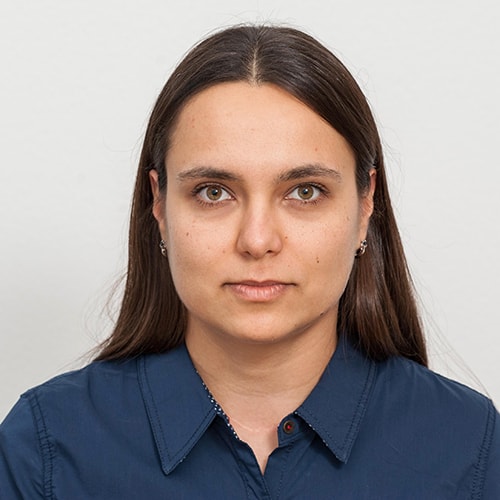
Bhaskar Reddy Sudireddy is an Associate Professor in the Department of Energy Conversion and Storage at the Technical University of Denmark (DTU). His research focuses on advanced materials for energy technologies, including solid oxide fuel cells, electrocatalysts, and ceramic processing. He contributes to UN Sustainable Development Goals related to affordable and clean energy (SDG 7) and industry innovation (SDG 9). His work emphasizes the development of high-performance electrodes, metal-supported solid oxide cells, and gas sensors. He leads projects on eco-friendly fabrication methods for energy storage systems and collaborates on piezoelectric materials sintered in humid air. His research group, Applied Ceramics and Processing, explores novel ceramic materials for applications in renewable energy and environmental monitoring. Advises five PhD students working on projects like high-temperature electrolysis cells and antiferroelectric materials. Supervises interdisciplinary research spanning electrochemistry, materials synthesis, and device fabrication. Located at DTU’s campus in Kgs. Lyngby, Denmark, with extensive international collaborations.
Seth Lloyd is a Professor of Mechanical Engineering at the Massachusetts Institute of Technology (MIT), where he directs the Center for Extreme Quantum Information Theory (xQIT). His work bridges theoretical physics, quantum information science, and complex systems theory. He has made significant contributions to the foundations of quantum computing and quantum information processing. Lloyd received his education from prestigious institutions: B.A. from Harvard College (1982) M.Phil from Cambridge University (1984) as a Marshall Scholar Ph.D. in Physics from Rockefeller University (1988) Lloyd's research focuses on quantum information science, particularly quantum computation and quantum communications. He has pioneered work in quantum analog computation, quantum error correction, and quantum metrology. His research explores how quantum mechanics can be harnessed for information processing tasks, with applications ranging from quantum computing to understanding biological processes like photosynthesis. Lloyd is also known for his work on complex systems and the relationship between information and physical systems, arguing that the universe itself can be viewed as a quantum computer. His publication record shows a clear progression from foundational quantum computing work to applications in quantum machine learning and quantum biology. The most recent articles reveal a strong focus on quantum algorithms for machine learning, quantum metrology, and the intersection of quantum mechanics with biological systems. His work on the HHL algorithm for solving linear systems has been particularly influential in quantum machine learning, though its practical advantages have been debated following Ewin Tang's classical algorithms. Lloyd has received numerous scientific honors: Lindbergh Fellow (1994) Finmeccanica Professorship (1996) Edgerton Prize (2001) Fellow of the American Physical Society (2007) Quantum Communication Award (2012) International Quantum Communication Award (2012) Throughout his career, Lloyd has mentored numerous students and researchers in quantum information science. He has secured significant research funding for his work in quantum computing and complex systems. His research has been supported by various foundations and government agencies interested in advancing quantum technologies. Lloyd has also been involved in interdisciplinary collaborations, particularly with biologists studying quantum effects in photosynthesis. Lloyd directs the Center for Extreme Quantum Information Theory (xQIT) at MIT, which brings together researchers from physics, computer science, and engineering to tackle fundamental challenges in quantum information processing. His lab has been at the forefront of developing theoretical frameworks for quantum computing and exploring practical implementations of quantum information protocols.
Arthur Merkel is a Research Fellow in the Department of Food Science at the University of Copenhagen, specializing in membrane and electromembrane processes for the dairy industry. His research focuses on electro-chemical membrane systems, including electrodialysis and bipolar membrane electrodialysis, for applications in dairy processing and sustainable food production. His primary research interests include membrane technology for dairy science, particularly in the areas of whey processing, electro-acidification, and demineralization. He investigates fouling and scaling of ion-exchange membranes and promotes green and sustainable science in food engineering. His work bridges fundamental electrochemical processes with industrial dairy applications. Recent publications (2021-2025) demonstrate a strong trend in applying electrodialysis and bipolar membrane electrodialysis to dairy streams such as skim milk and whey, with a focus on improving process efficiency, valorizing byproducts, and addressing challenges like fouling and scaling. His research integrates experimental and modeling approaches to optimize membrane processes for sustainable dairy production. Merkel actively contributes to the scientific community through peer review for several journals: Desalination Separation and Purification Technology Future Foods He is a member of the European Membrane Society and the Czech Membrane Platform, and has participated in conferences including EuroMembrane 2022 and the European Membrane Summer School (2024).
Olga Saukh is an Associate Professor at the Institute of Technical Informatics, Graz University of Technology (TU Graz), and a Faculty member at the Complexity Science Hub Vienna (CSH). She leads the Embedded Learning and Sensing Systems research group, which operates across both institutions, focusing on the design and deployment of efficient AI-based systems on edge and mobile platforms. Her work bridges deep learning and embedded systems, with applications in environmental monitoring, precision agriculture, and digital health. Ph.D. in Computer Science, University of Bonn (2009) Habilitation in Embedded Systems, TU Graz (2020) Postdoctoral Training, ETH Zurich (2010–2016) B.Sc. in Applied Mathematics, Taras Shevchenko National University of Kyiv (2002) M.Sc. in Applied Computer Science, University of Freiburg (2004) Her research centers on efficient machine learning, particularly model optimization, neural network pruning, and contrastive learning for resource-constrained devices. She is deeply engaged in solving real-world challenges in IoT, sensor networks, and cyber-physical systems. Her work emphasizes data privacy, sustainability, and practical deployment of AI at the edge. The 15 most recent publications highlight a strong trend in efficient deep learning, including model compression, pruning, and transfer learning, applied to diverse domains such as environmental sensing (air quality, pollution tracking), digital agriculture (cattle farming), and embedded AI (sensor calibration, on-demand sensing). Her work frequently appears in top-tier venues like NeurIPS, ICLR, and IEEE/ACM IPSN, reflecting her leadership at the intersection of machine learning and embedded systems. Scientific awards include: CONET Ph.D. Academic Award (2010) Multiple Best Paper Awards at IEEE PerCom, ACM/IEEE IPSN, IEEE ICPADS, IEEE SECON, and UrbCom Spotlight and Oral presentations at ICML and CoLLAs workshops Ph.D. scholarship from IPVS, University of Stuttgart (2004–2005) Prizes in Ukrainian national mathematics competitions (1996–1998) Olga Saukh actively serves on program committees of leading international conferences in machine learning and embedded systems. She has advised multiple students and leads a collaborative research group spanning TU Graz and CSH Vienna. Her group develops practical AI systems for real-world deployment, with a focus on sustainability and privacy. She co-organizes the public EfficientML reading group and has secured recognition through numerous grants and awards. Her future work continues to explore the theoretical and practical challenges of deploying efficient, trustworthy AI in mobile and embedded environments. Her research group, Embedded Learning and Sensing Systems, operates jointly between TU Graz and CSH Vienna, fostering interdisciplinary collaboration across institutions. The team develops AI solutions for edge computing, sensor networks, and cyber-physical systems, with a strong emphasis on environmental sustainability and data privacy. Members work on joint challenges using advanced collaboration tools, reflecting the distributed nature of modern academic research.
Getachew Agmuas Adnew is a Postdoctoral Researcher in Forest and Landscape Ecology at the Department of Geosciences and Natural Resource Management, Faculty of Science, University of Copenhagen. His research focuses on isotope geochemistry applications to understand climate-relevant processes in extreme environments. Dr. Adnew's research interests center on isotope geochemistry , particularly clumped isotope measurements to investigate methane dynamics beneath the Greenland ice sheet and atmospheric CO 2 composition. His work bridges glaciology, atmospheric science, and climate change research, with significant contributions to understanding subglacial biogeochemical processes. He also participates in interdisciplinary projects like CloudRoots-Amazon22 that examine land-atmosphere interactions across multiple scales. Analysis of his 18 research outputs (15 journal articles and 3 conference abstracts from 2023-2025) reveals a strong thematic focus on methane emissions from subglacial environments and atmospheric isotope signatures . His work frequently employs advanced isotopic techniques to trace biogeochemical processes relevant to climate change. The research demonstrates increasing collaboration across international boundaries, particularly with European and South American institutions. Dr. Adnew actively collaborates with major climate research groups, including those led by T. Röckmann, T. Blunier, and C.J. Jørgensen. His work appears in high-impact journals such as Geochimica et Cosmochimica Acta, Atmospheric Measurement Techniques, and Bulletin of the American Meteorological Society. His research has garnered attention across academic platforms with multiple citations and mentions in scientific networks. His current research involves field work at the Greenland ice sheet margin and analysis of atmospheric samples from various global locations. The ongoing projects suggest continued focus on understanding the connections between subglacial processes and global climate systems through innovative isotopic approaches.
Alena Thiel is an Associate Professor at the Centre of African Studies within the Faculty of Social Sciences at the University of Copenhagen. Her research examines digital technologies' impact on state formation and knowledge systems across Africa, with primary field sites in Ghana, Senegal, Botswana, and Kenya. Her core research areas include: State knowledge systems (biometric ID, census histories, DHIS2 health records) Digital governance (addressing systems, payment solutions, disaster risk datafication) African/feminist AI development and implementation Anthropology of the state through Science and Technology Studies (STS) frameworks Recent publications (2024-2025) reveal concentrated analysis of health data infrastructures in Ghana, trust dynamics in Africa's global networks, and critical sociological examinations of digital identification. Her work consistently bridges anthropological theory with practical governance challenges in African contexts. As an active member of the Centre of African Studies, she maintains interdisciplinary collaborations across multiple African countries and European institutions, with particular emphasis on Ghanaian research partnerships and editorial leadership for Africa Spectrum journal.
Anders Aagaard Rehfeld is a Postdoc at the University of Copenhagen's Department of Drug Design and Pharmacology, located at Jagtvej 160 in Copenhagen. His research focuses on reproductive biology and pharmacology, with particular emphasis on sperm function and calcium signaling pathways. His research interests center around the CatSper calcium channel in human sperm and how various compounds affect sperm function. He investigates the impact of pharmaceuticals, environmental chemicals, and natural compounds on male reproductive health. His work combines experimental pharmacology with reproductive biology to understand endocrine disruption mechanisms. Dr. Rehfeld's recent publications demonstrate a strong focus on how substances like paracetamol metabolites, pesticides, antidepressants, finasteride, and bisphenol analogs interact with sperm calcium signaling pathways. His research shows consistent patterns in examining chemical interference with the CatSper channel, which is crucial for sperm function and fertility. Scientific Recognition: PhD Cup 2018 Winner His collaborative work extends across multiple institutions in Copenhagen, particularly with Rigshospitalet researchers including Niels Skakkebæk, Anders Juul, and Katharina Main. His media presence includes an interview in Samvirke and a BRIDGE video interview in 2020, indicating engagement with both academic and public audiences. Dr. Rehfeld maintains an active research program with significant contributions to understanding environmental and pharmaceutical impacts on male reproductive health, particularly through the lens of calcium channel physiology in sperm cells.
Alessandra Meddis serves as an Assistant Professor in the Section of Biostatistics within the Department of Public Health at the University of Copenhagen's Faculty of Health and Medical Sciences. Her academic work centers on developing and applying advanced statistical methodologies for longitudinal and time-to-event data analysis, with significant contributions to public health research in Denmark and internationally. Her institutional affiliation is clearly established through university contact details and departmental listings. Her primary research interests include correlated survival data analysis, competing risk modeling, informative cluster size methodology, causal inference techniques for observational studies, and environmental epidemiology applications. Dr. Meddis has developed specialized expertise in handling complex survival data structures while maintaining focus on real-world public health problems, particularly in HIV comorbidity patterns, environmental exposure effects, and pandemic-related mortality analyses. Her methodological innovations directly address challenges in clustered and censored data common across medical research domains. Analysis of Dr. Meddis's recent publication record reveals a consistent trajectory of high-impact interdisciplinary research spanning clinical medicine, epidemiology, and statistical methodology. Her work appears in leading journals across biostatistics, infectious diseases, and public health, demonstrating strong collaborative networks with clinical researchers and epidemiologists. Key thematic areas include HIV treatment outcomes, environmental health exposures, and critical care applications during the pandemic, with recent methodological papers advancing survival analysis techniques for complex data structures. Scientific Awards: No scientific awards were specified in the available institutional profile. Advising and Grants: The institutional profile does not provide details regarding graduate student supervision or specific research grant funding. Her collaborative publications suggest involvement in multi-investigator projects including the COCOMO HIV cohort study and pandemic-related research initiatives. Labs and Teams: Dr. Meddis is affiliated with the Section of Biostatistics within the Department of Public Health, though specific laboratory facilities or dedicated research teams are not described in the source material. Her extensive co-authorship patterns indicate active participation in multiple research consortia across medical specialties.
Christian Kaarup Baron is an External Lecturer in the Department of Pharmacy at the University of Copenhagen, with research spanning interdisciplinary domains at the intersection of scientific humanities and environmental studies. His core research areas include: History and Philosophy of Science : Critical analysis of epistemic values in paleontological debates, exemplified by work on the Burgess Shale fossil site's scientific interpretations Climate Science : Empirical investigations into climate impacts through the African Monsoon Multidisciplinary Analyses (AMMA) project, focusing on West African environmental systems Baron's 2009 publications reveal a distinctive scholarly trajectory bridging conceptual frameworks from biological sciences with climate modeling methodologies, demonstrating consistent engagement with methodological rigor across disparate scientific fields despite limited output volume.
Frede Blaabjerg is a Professor at Aalborg University (AAU Energy) , affiliated with the Faculty of Engineering and Science . Since 1998, he has pioneered power electronics research in applications such as wind turbines , photovoltaic (PV) systems , reliability engineering , and Power-2-X technologies. Education : PhD in Electrical Engineering (1995, Aalborg University) Honorary Degrees : Honoris Causa at University Politehnica Timisoara (2017) and Tallinn Technical University (2018) His research focuses on power electronics control , system optimization , and reliability for renewable energy and electric mobility . Recent work includes grid-forming converters , virtual synchronous generators , and smart EV charging systems. Key publication trends span 15+ years , with over 3,733 peer-reviewed articles and 900+ journal papers in power electronics , renewables , and energy storage . Notable book series: Control of Power Electronic Converters and Systems (4 volumes, Elsevier). Scientific Awards : 46 IEEE Prize Paper Awards 2020 IEEE Edison Medal 2019 Global Energy Prize 2014 IEEE William E. Newell Power Electronics Award Leadership Roles : Editor-in-Chief, IEEE Transactions on Power Electronics (2006–2012) Chairman, Danish Council for Research and Innovation Policy (2020–) President, IEEE Power Electronics Society (2019–2020)
Professor John W. Edmunds is a leading academic in Infectious Disease Modelling at the London School of Hygiene and Tropical Medicine (LSHTM). Holding a Professor position since 2013 and serving as Dean of the Faculty of Epidemiology and Population Health (2013-2019), he combines mathematical, statistical, and economic models to inform public health policy. His part-time role at the Health Protection Agency (HPA) since 2008 underscores his policy advisory contributions. PhD in Infectious Disease Modelling (Imperial College, 1994) MSc in Health Economics (University of York, 1995) BSc in Biology (Imperial College, 1989) His research focuses on understanding disease transmission and optimizing control strategies. He has pioneered methods integrating social contact surveys , participatory surveillance (e.g., Influenzanet), and economic analysis to evaluate vaccines and interventions. Recent work includes SARS-CoV-2 dynamics , Ebola spatial forecasting , and typhoid vaccine prioritization . His 15 most recent publications highlight social contact patterns (Reconnect, CoMix studies), vaccine impact (HPV, typhoid), and real-time outbreak analytics (Ebola, cholera). Key trends include digital epidemiology , behavioral surveillance , and cross-country modeling for global health. Knighthood (2024) for services to epidemiology Weldon Memorial Prize (2022) for biostatistics contributions FMedSci (2018) for medical science excellence OBE (2016) for public service As an educator, he teaches "Modelling and the Dynamics of Infectious Diseases" and co-organizes "Pandemics: Emergence, Spread and Response" . Current grants include National Institute for Health and Care Research projects on post-pandemic surveillance and Bill & Melinda Gates Foundation funding for polio eradication. He leads collaborations with the Centre for Mathematical Modelling of Infectious Diseases , Vaccine Centre , and Health in Humanitarian Crises Centre , while advising UK and WHO committees on zoonotic influenza , variants , and testing programs .
Annette Juul Vangsted serves as a Clinical Associate Professor in the Department of Clinical Medicine at the University of Copenhagen's Faculty of Health and Medical Sciences. Her clinical specialization is in Internal Medicine with a focus on Hematology, specifically multiple myeloma. Based at Blegdamsvej 9 in Copenhagen, she maintains an active research profile with 67 documented research outputs and extensive collaborations across Nordic countries and internationally. Dr. Vangsted's research primarily centers on multiple myeloma, with particular emphasis on genetic predisposition, treatment outcomes, epidemiological patterns, and bone disease management. Her work bridges clinical practice with genetic research, examining how genetic variants influence disease risk and progression. She investigates geographical variations in myeloma incidence and outcomes, as well as novel treatment approaches for elderly patients and those with specific genetic profiles. Analysis of her recent publications reveals a clear focus on multiple myeloma across several dimensions: genetic susceptibility (including large genome-wide association studies), treatment efficacy (particularly regarding bone disease management), epidemiological patterns across Nordic countries, and specialized care for elderly populations. Her collaborative approach is evident through numerous multi-center studies involving Nordic Myeloma Study Group and international research teams. Dr. Vangsted actively participates in clinical research through the Nordic Myeloma Study Group, contributing to registry studies and clinical trials that inform treatment guidelines for multiple myeloma. Her work has significant implications for understanding disease mechanisms and improving patient outcomes, particularly in the areas of genetic risk assessment and personalized treatment approaches. She maintains strong research collaborations across Denmark, Sweden, and international institutions, with particular focus on hematological malignancies. Her laboratory and clinical research team works within the Department of Clinical Medicine's hematology division, focusing on translational research that directly impacts clinical practice for myeloma patients.
Ninette Pilegaard is a Professor and serves as Deputy Head of Division and Head of Section for Transport Policy at the Department of Technology, Management and Economics, Technical University of Denmark (DTU). Her academic career spans multiple research domains with significant contributions to transportation policy and economics. Her research interests focus on transportation policy analysis with particular expertise in: Road charging systems and pricing mechanisms Bicycle infrastructure and safety analysis Commuting behavior and accessibility impacts Car ownership and usage patterns Relationship between transportation accessibility and labor market outcomes Dr. Pilegaard's scholarly work demonstrates a strong empirical approach combining transportation engineering with economic analysis. Her recent publications reveal a consistent focus on evidence-based policy evaluation, particularly in the Danish context. She frequently employs quasi-natural experimental methods to assess transportation policy impacts, with particular attention to road pricing, cycling infrastructure, and the economic implications of transportation systems. Her research has been supported by major funding bodies including Innovation Fund Denmark and Forskningsrådsfinansiering, and has resulted in publications in high-impact transportation journals such as Transportation Research Parts A and D, and Journal of Safety Research. As an academic supervisor, Dr. Pilegaard has served as Main Supervisor for PhD projects, including the 'Productivity and agglomeration' project. She has been actively involved in numerous research collaborations both within DTU and with external partners. Her laboratory work focuses on transportation data analysis, particularly utilizing Danish transportation datasets to examine policy impacts. She has developed expertise in analyzing hospital data for traffic safety research and has contributed to methodologies for assessing infrastructure effects on traffic accidents.
Michael Zwicky Hauschild is a Professor at the Department of Environmental and Resource Engineering, Technical University of Denmark (DTU). He leads the Quantitative Sustainability Assessment group and directs the DTU Centre for Absolute Sustainability. His roles include membership in prestigious academies (ATV, CIRP) and leadership in international initiatives like SETAC and UNEP/SETAC task forces. He holds a PhD in Environmental Science (1992) and an MSc in Chemical Engineering (1988), both from DTU. Research focuses on life-cycle assessment (LCA), environmental impact assessment, and absolute sustainability. His work addresses sectors like buildings, batteries, and waste management, integrating planetary boundaries and UN SDGs. Recent projects include sustainability assessments of long-lived systems and climate tipping points. Awards include the SETAC Europe Edana Award (2018) and DADES Environmental Prize (2014). He supervises PhD students in areas like biodiversity loss, ICT sustainability, and natural resource use. He contributes to journals like International Journal of Life Cycle Assessment and advises global sustainability policies.
Marja Kaarina Koski is a Professor at the National Institute of Aquatic Resources (DTU Aqua), Technical University of Denmark, within the Section for Oceans and Arctic. She holds a PhD and Master’s in hydrobiology from the University of Helsinki and is recognized as a Docent in Aquatic Sciences. Her research spans marine and Arctic ecosystems, focusing on zooplankton, food webs, and environmental stressors. PhD in Hydrobiology / Marine Biology, University of Helsinki (1999) Master’s in Hydrobiology, University of Helsinki (1993) Docent in Aquatic Sciences, University of Helsinki (2007) Her research centers on zooplankton ecology , Arctic marine ecosystems , and mercury bioaccumulation , with a strong emphasis on climate change and anthropogenic impacts. She investigates how copepods and other plankton influence the biological carbon pump and contribute to ecosystem stability in polar regions. Recent publications reveal a consistent focus on mercury dynamics in Arctic plankton, carbon export via marine snow, and the effects of pollution on planktonic food webs. Her work integrates field experiments with international collaborations across Greenland, Scandinavia, and the North Sea. Scientific Awards: No specific awards mentioned in the provided text. She actively supervises PhD students and leads major research initiatives. Her current projects include ECOTIP and Assessing cumulative effects of shipping discharges , highlighting her role in both ecological monitoring and environmental policy support. She has advised multiple PhD candidates, including E. S. Thomsen, T. Konstantinopoulos, and D. Asiedu. Koski has collaborated extensively with institutions in the Netherlands, Finland, Sweden, Norway, and Greenland. Her lab integrates experimental marine biology with biogeochemical analysis, particularly in Arctic and sub-Arctic fjord systems influenced by glacial meltwater and climate change.