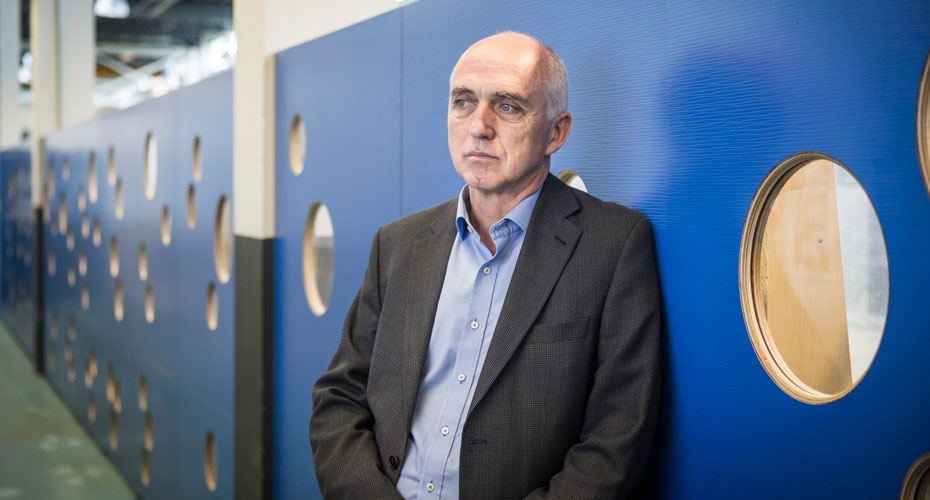
Professor Eugene O’Brien is a leading academic in UCD School of Civil Engineering, part of University College Dublin. His research focuses on enhancing bridge safety through innovative traffic loading analysis methods. He co-founded ROD-IS, a consultancy applying academic insights to real-world infrastructure projects, including assessments of the Malahide Railway Viaduct and Firth of Forth Bridge in Scotland. His work integrates Weigh-in-Motion (WIM) sensors and camera-based monitoring to address critical gaps in assessing long-span bridges under congested traffic conditions. Key projects include developing probabilistic models for bridge lifetime safety, optimizing traffic management to extend bridge lifespans, and reducing environmental impacts through carbon footprint minimization. He has secured significant EU funding, including an €890,000 grant for bridge longevity research. His research group collaborates internationally on projects like the Chacao Channel Bridge in Chile, emphasizing sustainable infrastructure solutions.
Stephen John CHARTERS is a Professor in the Wine & Spirits Department at Burgundy School of Business (BSB), where he is affiliated with the School of Wine & Spirits. His academic work focuses on wine business, marketing, and cultural aspects of wine consumption, with particular expertise in terroir studies and wine tourism. His research interests span multiple dimensions of wine business and consumer behavior. Charters examines how cultural contexts shape wine consumption patterns, the role of terroir in consumer perception, and the evolving dynamics of wine markets globally. His work frequently investigates how historical traditions interact with contemporary consumer preferences, particularly across different cultural contexts. He has conducted significant research on wine tourism development, especially in lesser-known regions, and how geographical reputation impacts consumer choices and market positioning. His recent work has increasingly focused on sustainability in wine consumption and the psychological factors influencing drinking behaviors. Analysis of his recent publications reveals a strong focus on cross-cultural comparisons, particularly examining how Old World and New World wine markets interact and influence each other. His research methodology often combines qualitative approaches with consumer surveys to understand the complex relationship between geographical indications, brand authenticity, and consumer preferences. There's a noticeable trend toward examining how traditional wine concepts like terroir apply beyond wine to other products like cheese, demonstrating conceptual innovation in his field. Professor Charters has been actively involved in major academic conferences including the Academy of Wine Business Research (AWBR), European Association of Wine Economists (EuAWE), and American Association of Wine Economists (AAWE), where he frequently presents his research findings and participates in academic discussions shaping the field. His academic contributions include co-authoring The Routledge Handbook of Wine and Culture (2022), which represents a significant scholarly contribution to understanding the intersection of wine and cultural studies. He has also co-authored books including Wine Business Management and Economie et management du vin, establishing himself as a leading authority in wine business education. Charters maintains an active research program with collaborators across multiple countries, as evidenced by his international co-authorship patterns. His work frequently appears in leading journals such as Journal of Wine Research, International Journal of Wine Business Research, and Wine Economics and Policy, demonstrating his standing within the academic community.
Lisa Hansson is a Professor of Community Planning at Molde University College, specializing in urban governance and transport policy. She is affiliated with the Logistics Department and actively contributes to sustainable mobility, socio-technical change, and multi-level governance research. PhD in Science and Technology Studies (2011), Linköping University MSc in Political Science/Public Administration (2005), Gothenburg University BA in Human Geography/Urban Planning (2003), Karlstad and Gothenburg Universities Her research focuses on sustainable transport systems, visual representation in planning, and policy adaptation. She leads externally funded projects like LEAD (Digital Twins for logistics) and SNAPSHOT (e-commerce transport), with partners including SINTEF and K2 Sweden. Her work bridges political science and transport governance, challenging economic-technical discourses. Recent articles analyze equity in 15-minute city planning, social justice in transport protests, and regulatory governance for autonomous vehicles. She chairs the WCTRS SIG G1 Transport Governance group and serves on the Thredbo Conference Committee. 2023: Co-authored Public Participation in Transport in Times of Change (Emerald) 2021: Chapter on Transport Policy and Governance (Elsevier) 2020: Editorial in Transportation Research Part A Lisa teaches MA/BA courses like Smart Mobility, European Transport Policy, and Future Cities. She supports Master’s and PhD research in sustainable urban development and transport policy.
Dr. Katarzyna Grunt-Mejer is an academic at SWPS University of Social Sciences and Humanities, based at the Poznań campus. She is affiliated with the Faculty of Psychology and Law and works within the Department of Clinical and Health Psychology at the Institute of Psychology. Holding a Doctor of Humanities in Psychology degree with additional training in sexology, philosophy, and bioethics, she serves as an Assistant Professor teaching sexology, basic psychology, and research methods in clinical psychology. She also directs the postgraduate studies in practical sexology. Dr. Grunt-Mejer's research focuses on sexual ethics, psychological support, the functioning of close relationships, and sexology. She has made significant contributions to understanding consensual non-monogamy, having led an international project from 2013 to 2015 examining attitudes toward non-mononormative relationships. Her work spans multiple disciplines including psychology, bioethics, and social sciences, with particular emphasis on the ethical implications of sexual health practices and the social construction of sexual norms. Her publication record shows consistent output across multiple domains, with her most recent work addressing contemporary issues in sexology, relationship structures, and sexual health. The articles demonstrate a clear progression from foundational research on relationship types to more nuanced examinations of ethical considerations in sexual health and the medicalization of sexual desire. Member of the scientific committee for the "Conference on the Future of Monogamy and Non-monogamy" Recipient of National Science Centre funding (SONATA competition) for her project "The concept of norm in sexology" (2017-2020) Contributor to significant research on road aggression and transportation psychology Dr. Grunt-Mejer actively engages in both academic and public discourse, participating in conferences like the Impact 2024 congress and contributing to public understanding of human sexuality. She leads the Sexology Scientific Club at the university and has been involved in numerous research projects examining the intersection of psychology, ethics, and sexual health. Her work demonstrates a commitment to bridging academic research with practical applications in clinical settings and public education.
Konstantinos Andreadis is an Associate Professor in the Department of Civil and Environmental Engineering at the University of Massachusetts Amherst. He leads the Computational Hydrology Research Group, focusing on water resources modeling, remote sensing, data assimilation, and climate change impacts. His research spans hydrologic modeling at multiple scales, satellite-based drought monitoring, and reservoir operations analysis. Education: Engineering Diploma in Environmental Engineering (2002), Technical University of Crete MScE in Civil & Environmental Engineering (2004), University of Washington PhD in Civil & Environmental Engineering (2009), University of Washington His work integrates satellite data (e.g., SWOT, SMAP) with numerical models to study freshwater dynamics, floodplain encroachment, and machine learning applications. Key projects include flood risk assessment in urbanizing regions, drought impact analysis in forested environments, and optimizing agricultural water management. Scientific Awards: NASA Early Career Achievement Medal (2015) Professor Andreadis has mentored PhD students like Xinchen He, who successfully defended his dissertation in 2025. His research group collaborates with institutions worldwide, emphasizing data-driven solutions for global hydrology.
Professor Mitch Duncan is a Professor of Public Health in the School of Medicine and Public Health at the University of Newcastle, Australia. His research focuses on understanding how patterns of physical activity and sleep influence health outcomes, and developing digital technology interventions to help people be more physically active and sleep better. Professor Duncan's work is supported by a prestigious NHMRC Career Development Fellowship, and he has published over 170 papers while securing more than $9 million worth of research funding. Professor Duncan earned his PhD from the University of Central Queensland, a Bachelor of Health & Human Performance (Honors) in Human Movement Science from the University of Central Queensland, and a Master of Medical Statistics from the University of Newcastle. His educational background has provided a strong foundation for his interdisciplinary research approach that bridges physical activity, sleep science, and digital health interventions. Professor Duncan's research centers on two key areas: (1) understanding how physical activity and sleep work together to influence health outcomes, and (2) developing and testing interventions to improve these behaviors. His unique approach focuses on the combination of these two behaviors rather than examining them separately. Much of his intervention work uses technologies such as mobile devices and the internet to deliver the interventions, including the development of a smartphone app that has been used by over 20,000 people internationally through the 'Balanced' intervention program. Analysis of his recent publications reveals a strong trend toward multi-behavioral interventions that address both physical activity and sleep simultaneously, often leveraging mobile and web-based platforms to deliver personalized interventions at scale. Professor Duncan has received several prestigious awards for his research, including: National Heart Foundation Queensland Researcher of the Year Australian Institute of Policy & Science Queensland Young Tall Poppy Award He also holds a competitive NHMRC Career Development Fellowship, which supports his ongoing research into physical activity and sleep behaviors. Professor Duncan has been highly successful in securing research funding, with more than $9 million in grants from major organizations including the National Health and Medical Research Council (NHMRC), Australian Research Council (ARC), National Heart Foundation, and Queensland Government. His research program has involved mentoring numerous students and early-career researchers. Professor Duncan serves on the Editorial Boards of the Journal of Physical Activity and Health and the Journal of Activity, Sedentary and Sleep Behaviors, contributing to the scholarly community in his field. Professor Duncan leads the development and implementation of evidence-based digital interventions like the 'Balanced' program, which has reached over 20,000 users internationally. His work often involves collaborations with researchers across multiple institutions and disciplines, reflecting the interdisciplinary nature of his research on physical activity, sleep, and health. Current projects include investigations into the impact of breaking up prolonged sitting on sleep architecture, app-based interventions for shift workers, and multi-behavioral approaches to improving postnatal mental health.
Florian Rabitz is a Professor in the Department of International Relations at Vilnius University's Institute of International Relations and Political Science (VU TSPMI). His work focuses on global environmental politics , international institutions , and the governance implications of new and emerging technologies in sustainability contexts. He holds a PhD in Political Science from the Free University of Brussels. Education : PhD in Political Science (Free University of Brussels) Rabitz's research explores the intersection of technology and global governance, particularly in areas like space resource utilization , gene drive organisms , and solar radiation management . His recent publications analyze the formation of international regimes for space resources and the equity challenges of asteroid mining. He contributes to global policy discussions through his role as a Senior Research Fellow at the Earth System Governance Project and as a member of the Ad Hoc Technical Expert Group on Synthetic Biology under the Convention on Biological Diversity. His methodological approaches include social network analysis and topic modeling to map complex governance systems. Key Affiliations : Earth System Governance Project Convention on Biological Diversity (Expert Group) Rabitz has presented his research at major international conferences, including the European Consortium for Political Research General Conference and the Toronto Conference on Earth System Governance.
Professor Stephan Theobald is a leading academic in Hydraulic Engineering and Water Resources Management at the University of Kassel , where he has served as Head of Department since 2005. His work focuses on numerical modeling of fluid dynamics , automated reservoir control systems , and flood risk management . Key Research Areas : Numerical Methods for Fluid Dynamics Hydropower Optimization Climate Change Adaptation in Water Management 3D Morphodynamic Simulations Academic Recognition : Prize for Water Management (2000) Science Prize for Hydraulic Engineering (1999) Recent Publications : 2024 papers on sediment transport in river bifurcations 2023 studies on hybrid hydropower plant analysis 2022-2023 works on predictive flood control systems
Dillon Feuz serves as Professor and Ag Economics Specialist in Utah State University's Department of Applied Economics, concurrently coordinating livestock farm operations. His dual academic-extension role bridges theoretical research with practical ranch management guidance across Western U.S. agricultural communities. Education: PhD in Agricultural Economics, Colorado State University (1990) MS in Agricultural Economics, University of Wyoming (1986) BS in Ag Business, University of Wyoming (1984) Feuz's research examines economic decision-making in beef production systems through consumer preference analysis, risk management modeling, and market structure evaluation. His work integrates experimental economics with real-world ranch data to quantify impacts of pricing mechanisms, trade policies, and production innovations on producer profitability. Recent studies explore sustainable feedlot alternatives, cattle size optimization under grazing regulations, and dairy margin protection forecasting. His 48+ journal articles reveal consistent focus on livestock economics with evolving methodological sophistication—from early spatial price analysis to contemporary consumer experimental auctions and bio-economic modeling. Key thematic threads include value-based marketing efficacy, futures hedging strategies for cattle feeders, and economic sustainability metrics for alternative production systems. Award Highlights: USU Extension Specialists Association Specialist of the Year (2010) Western Ag Economics Association Outstanding Extension Program (2000) American Ag Economics Association Distinguished Extension Program (1997) Feuz mentors graduate students in agricultural economics research while directing extension programming that reaches ranchers through workshops, publications, and direct consultation. His Beehive Master Beef Manager Program demonstrates applied risk management education impacting producer decision-making. As Livestock Farm Coordinator, he oversees university facilities supporting hands-on research in beef production systems and sustainable ranching practices.
Dr. Simon Norton is a Senior Lecturer in Accounting at Cardiff Business School , Cardiff University. His work bridges interdisciplinary domains including Business Ethics Banking Regulation Corporate Governance Islamic Finance Environmental Accounting Public Sector Administration With a legal and maritime studies background, he specializes in financial crime prevention and institutional reform.
Dr. Ronan Gallagher is a Senior Lecturer in Finance at the University of Edinburgh Business School, specializing in empirical corporate finance, asset pricing, and sport finance. His research bridges theoretical and applied finance, with a focus on venture capital portfolio management, pension liability valuation, and environmental economics. Doctor of Philosophy (PhD), Queens University Belfast (2010) Master of Science in Finance (Distinction), Queens University Belfast (2007) Bachelor of Science in Finance, Queens University Belfast (2006) His scholarly work explores institutional ownership dynamics, carbon pricing mechanisms, and pension risk. He has contributed to journals such as the Journal of Corporate Finance and Energy Economics , while also engaging in executive education and industry consulting. Scientific awards include the Business School's Best Course Award , Best Postgraduate Feedback Award , and Most Inspirational Teaching Award . He actively collaborates with industry partners and serves as an Associate Editor for Finance Research Letters . CFA Charterholder Consultant for Ofcom on pension risk analysis Media expert on enterprise risk management Ronan leads the Edinburgh Centre for Financial Innovations, integrating applied financial research with policy and industry needs.
Janet V. Cross, Ph.D., is an Associate Professor in the Department of Pathology at the University of Virginia Health System (UVA Health). Her research focuses on the molecular mechanisms of cancer chemoprevention and the anti-inflammatory benefits of dietary nutrient compounds, particularly isothiocyanates found in cruciferous vegetables like broccoli. Her work investigates how bioactive nutrients interact with cellular proteins to prevent tumor development and modulate inflammatory diseases such as rheumatoid arthritis and asthma. Using proteomics and in vitro models, she explores the role of isothiocyanates in signal transduction, apoptosis, and inflammation, linking these processes to cancer risk and therapeutic targets. Publications highlight her contributions to understanding how dietary compounds affect pathogenesis, including studies on Helicobacter pylori-related gastritis, air pollution's impact on brain immunity, and the role of macrophage migration inhibitory factor (MIF) in tumor progression. Her research bridges nutritional biochemistry and pathology, emphasizing the intersection of inflammation and cancer chemoprevention.
David Cass is a PartTime Lecturer at the Harvard Extension School , where he teaches Cybersecurity . He is also a Senior Partner at Law & Forensics LLC, leading the Cryptocurrency and Digital Banking Practice and contributing to cybersecurity and blockchain initiatives. With prior roles at the Federal Reserve Bank of New York (Vice President, Cyber and IT Risk), IBM (CISO & Global Partner of Cloud Security Services), Freddie Mac (Senior Director of Information Security Risk and Governance), and JPMorgan Chase (Vice President of Risk Management), his expertise spans financial services regulation, cryptocurrency, cloud security, and risk management. Education : MBA from the Massachusetts Institute of Technology MSE from the University of Pennsylvania Research Interests : David focuses on Cybersecurity , Cryptocurrency , and Blockchain applications in financial services, with emphasis on regulatory compliance, digital banking, and risk management. His work bridges legal frameworks and technological solutions for secure digital ecosystems. Publications and Academic Contributions : He co-authored The Dirty Truth About Crypto: Money Laundering Made Easier (Law.com) and contributes to regulatory guidance in cybersecurity. The articles from his Google Scholar profile (2023–2025), though unrelated to his primary field, highlight expertise in Optics , Nanotechnology , and Materials Science , with focus on metasurfaces, light-matter interactions, and CO2 detection. Professional Leadership : David actively collaborates with financial institutions and regulatory bodies, including the FS-ISAC and European Banking Federation, to advance cloud compliance and security standards. His industry leadership includes pioneering the first financial services blockchain initiative supported by ten international banks.
Tom Wild is a Lecturer at the School of Architecture and Landscape , University of Sheffield, specializing in nature-based solutions (NBS) for urban sustainability. His work bridges ecology, environmental planning, and socio-economic policy to address climate change adaptation, river restoration, and equitable green infrastructure investments. Focuses on biophysical and socio-political conditions enabling ecosystem rehabilitation Principal Investigator for Horizon 2020 CONEXUS project (€5M, 30+ partners) Active in economic valuation of blue-green infrastructure and governance frameworks Coordinates ESRC-funded Planning for Nature and NERC-funded GP4Streets projects His research spans urban ecology , river daylighting , and green space equity , with extensive publications on NBS implementation across Europe and Latin America. Current work examines climate adaptation strategies through the lens of community engagement and policy innovation. Key research trends include: Integration of NBS in urban drainage systems Transdisciplinary governance models Cultural and economic barriers to adoption Long-term viability of green infrastructure Professional engagements include Chartered Biologist status (Society of Biology) and prior leadership roles in environmental agencies, reflecting his commitment to translating research into practice through community partnerships and policy advocacy.
Lars J. Olson is a Professor in the Department of Agricultural and Resource Economics at the University of Maryland, College Park , within the College of Agriculture and Natural Resources . His research and teaching focus on the intersection of economics and environmental policy, particularly in the areas of natural resource management, invasive species economics, and uncertainty in environmental decision-making. Education: Ph.D. in Economics (1988), Cornell University M.A. in Economics (1985), Cornell University B.A. in Mathematics and Economics (1981), Eckerd College Research Interests: Professor Olson’s research spans several critical areas of environmental and resource economics. He has made significant contributions to understanding how economic policies can mitigate the risks of invasive species, particularly through trade regulation and phytosanitary standards. His work also delves into the economics of uncertainty, exploring how precautionary principles and dynamic modeling can inform environmental policy. Additionally, he examines the long-term impacts of resource depletion and technological substitution under uncertainty. Publications Overview: His recent publications reflect a strong focus on applied and theoretical environmental economics. Topics include the design of precautionary buffers in environmental policy, the role of tariffs in managing invasive pest risks, and the effectiveness of international phytosanitary standards. These works often combine empirical analysis with theoretical modeling to provide actionable insights for policymakers. Editorial and Review Service: Associate Editor, Journal of Environmental Economics and Management (1996–1999) Editorial Council, Journal of Environmental Economics and Management (1994–1995, 2001–2004) Referee for over 20 leading journals including American Economic Review , Econometrica , and Journal of Public Economics Grant Reviewing: Binational Agricultural Research and Development Fund (BARD) Social Sciences and Humanities Research Council of Canada (SSHRC) National Sea Grant College Program USDA Economic Research Service UC Water Resources Center And others Labs and Teams: While no specific lab is mentioned, Professor Olson is deeply embedded in the academic and policy community through his editorial roles, grant reviewing, and collaborative research across institutions and disciplines.

.jpg)