Professor Serena Margadonna holds the Chair in Materials Engineering at Swansea University's School of Engineering and Applied Sciences, Department of Chemical Engineering. Her research focuses on advanced materials and process technologies for energy production, transport, and storage, with a vision to address global energy challenges through sustainable solutions. She has a multidisciplinary background spanning chemistry, condensed matter physics, and process engineering, gained through collaborations with international labs and institutions. Her work emphasizes materials operating in extreme conditions, such as high pressures/temperatures and corrosive environments. Key achievements include high-impact publications and international recognition for innovations in battery technologies, supercapacitors, and energy-efficient materials.
Prof. Gregorio Iglesias is a Professor of Marine Renewable Energy at University College Cork (UCC) and Honorary Professor of Coastal Engineering at the University of Plymouth. His expertise lies in Marine Renewable Energy and Coastal Engineering, with a focus on wave and tidal energy systems, offshore wind integration, and coastal protection strategies. He has secured over €12M in research funding as Principal Investigator and authored/edited key texts such as Wave and Tidal Energy (Wiley) and Ocean Energy and Coastal Protection (Springer). Education: BEng (Civil Engineering, 1992), MEng (Civil Engineering, 1993), PhD (Engineering, 2001). Research Interests: Advanced modeling of wave energy converters, floating offshore wind turbines, coastal erosion mitigation, and climate change impacts on marine energy resources. His work bridges theoretical advancements and practical applications, including coasts like the Port of Gijón (Spain) and the Shannon Estuary. Recent publications highlight climate-driven renewable energy transitions, multi-hazard coastal resilience frameworks, and techno-economic assessments of offshore systems. He chairs the IEC Standards panel for wave energy device testing and serves as Subject Editor for Energy (Elsevier) . Professional Activities: Lead of Marine Renewable Energy research at MaREI (Ireland), former Head of the COAST Engineering Group at Plymouth (2012–2018), and member of PIANC’s Universities Consortium. His work has generated 5,459 citations with an h-index of 41. Teaching: Delivers modules on Ocean Energy (NE4003/NE6005) and Hydraulics (CE3007).
Yu (Yvette) Zhang is a Professor in the Department of Agricultural Economics at Texas A&M University, affiliated with the College of Agriculture and Life Sciences. She holds dual Ph.D.s in Economics (Texas A&M University, 2010) and Biology (Duke University, 2004), and a B.S. in Life Sciences from Peking University (1998). Her research focuses on behavioral and experimental economics, food economics, applied econometrics, and environmental economics. She has been recognized with awards such as the Uma Lele Mentor Award (2023) and contributed to editorial roles at major journals like Applied Economic Perspectives and Policy . Her work addresses critical issues like consumer behavior in food markets, pandemic impacts on global food systems, and policy interventions for sustainable agriculture. Recent studies include analyzing incentive programs to curb brain drain and evaluating the effects of climate change on crop yields. She has advised numerous graduate students and collaborates across disciplines to address complex economic challenges. Education : Ph.D. in Economics, Texas A&M University, 2010 Ph.D. in Biology, Duke University, 2004 B.S. in Life Sciences, Peking University, 1998 Her research intersects agriculture, environment, and policy, with a focus on empirical methods and real-world applications. Recent publications highlight interdisciplinary approaches to food security, pest management, and consumer preferences for sustainable products.
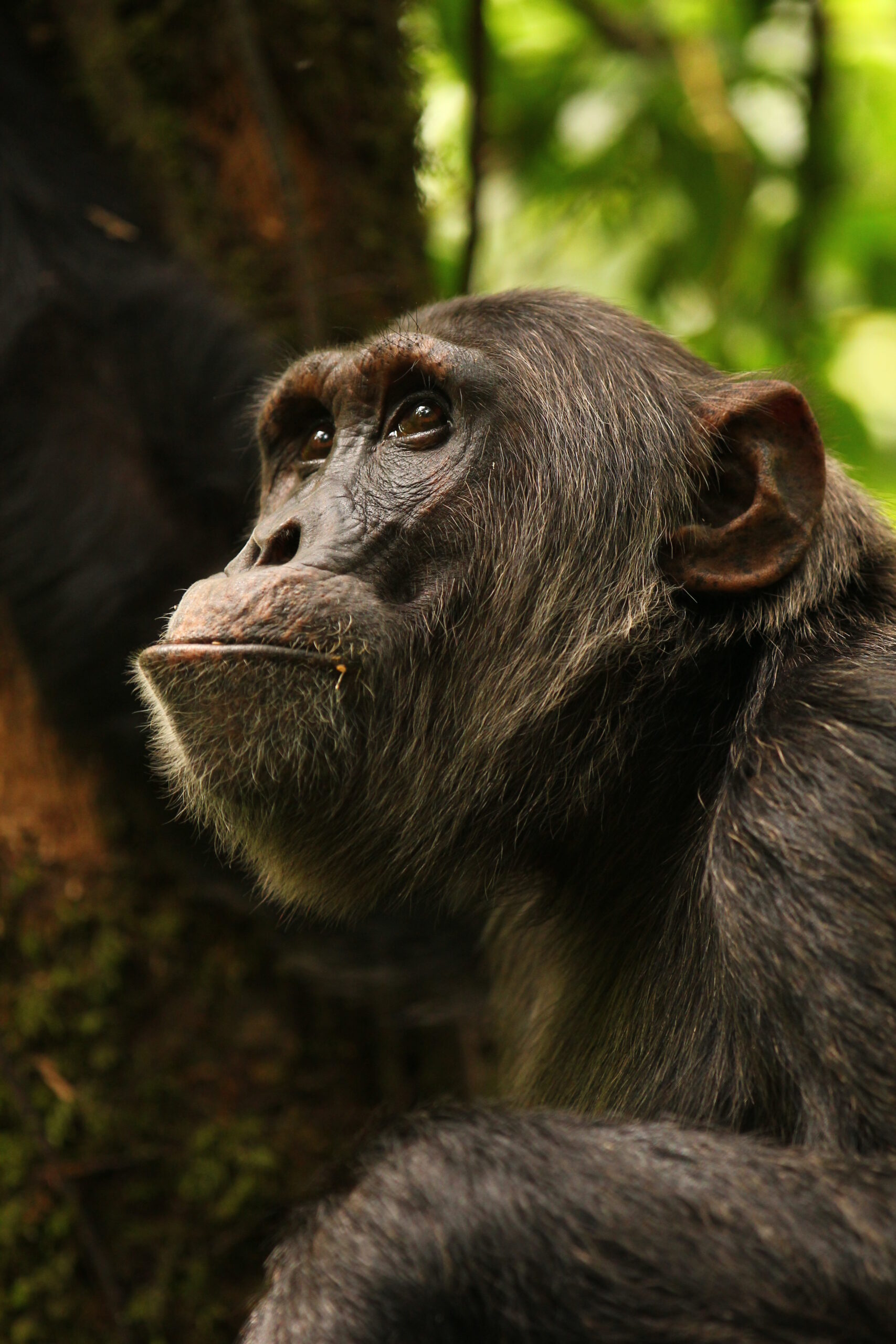
Dr. Kevin Langergraber is an Associate Professor at Arizona State University's School of Human Evolution and Social Change. His research focuses on primate behavior, conservation biology, and evolutionary anthropology, particularly through his leadership in the Ngogo Chimpanzee Project in Uganda's Kibale National Park. This long-term study examines chimpanzee social structures, health dynamics, and ecological interactions, with a strong emphasis on conservation strategies against poaching and disease transmission. Key research interests include genetic adaptation in primates, the impact of human activities on wildlife communities, and behavioral ecology across varying environmental conditions. He has pioneered methods combining genomic analysis, field observations, and machine learning to study ape behavior and biodiversity monitoring. His work integrates socioecological data with physiological measurements to understand aging patterns, reproductive strategies, and disease epidemiology in wild populations. Recent publications highlight advancements in wildlife conservation protocols, primate menopause studies, and innovative datasets for behavior recognition. Collaborations span global institutions to address challenges in primate conservation and evolutionary biology. Dr. Langergraber also engages in public outreach through documentaries and crowdfunding initiatives to fund anti-poaching patrols and support chimpanzee research.
Dr. Tania Mendo is a Lecturer at the University of St Andrews, School of Geography and Sustainable Development. She specializes in interdisciplinary approaches to small-scale coastal fisheries management, focusing on policy-informed research, socio-economic indicators, and marine spatial planning. Her work emphasizes equitable representation of fishers in the blue economy and employs statistical methods paired with user-friendly data visualization tools for stakeholder engagement. Current research interests include machine learning applications for decision-making, blue justice frameworks, climate change adaptation in hyper-arid regions, and El Niño impacts on food systems. Dr. Mendo leads projects such as the Digital Transition of Catch Monitoring in European Fisheries and Conserving Atlantic Biodiversity through Co-management. She collaborates internationally with organizations like Cefas and engages with communities in Peru and Scotland. Her research integrates quantitative methods with participatory approaches to address fisheries governance challenges and environmental sustainability. Grants include funding from UKRI, BBSRC, and EPSRC for initiatives like improving stock assessment technologies and assessing fishing communities' resilience during crises. Her publications highlight innovations in vessel tracking analysis, spatial distribution modeling, and socio-economic frameworks for fisheries. She advises PhD students Miguel Delos Santos and Tamsin Rigold. Mendo is affiliated with the Bell-Edwards Geographic Data Institute and contributes to UN SDGs related to life below water and sustainable communities.
Professor Richard Blackburn is a Professor of Sustainable Materials at the University of Leeds, School of Design. His research focuses on applying sustainability principles to materials science, textile coloration, and cosmetics. He leads the Sustainable Materials Research Group and co-founded Keracol Limited, a spin-out company developing natural cosmetic ingredients from plant extracts. His work includes innovations in dyeing technologies, reducing microfibre pollution, and sustainable textile processing. Education: BSc (Hons) and PhD in Colour Chemistry from the University of Leeds Professional Memberships: Fellow of the Royal Society of Arts, Royal Society of Chemistry, and Society of Dyers and Colourists. Key research interests span sustainable textile practices, natural dye extraction, polymer chemistry, and green chemistry applications. He has pioneered methods for extracting actives from food waste for cosmetics and developed fluorine-free repellent coatings for textiles. Awards: Silver Medal (Society of Dyers and Colourists, 2016) Fellowship (Society of Dyers and Colourists, 2017) Centenary Medal (2018 & 2019) Freedom of The City of London (2013) Advising & Grants: Leads multidisciplinary projects on textile sustainability, including FoodWasteNet and the Business of Fashion, Textiles and Technology partnership. His work bridges academia and industry through spin-offs like Keracol and RITE Group, focused on minimizing environmental impact. Labs & Teams: Head of the Sustainable Materials Research Group and collaborator with global industry partners to advance sustainable materials innovation.
Rafael Ruiz De Castañeda is a Researcher and Lecturer at the Faculty of Medicine, University of Geneva, leading the One Health Unit in collaboration with Dr. Isabelle Bolon. His work focuses on interdisciplinary global health challenges, including emerging infectious diseases, zoonotic pathogens, and conservation biology. He has extensive field experience in Africa and Latin America, coordinating projects like the EU-funded Africa Build and RAFT Network. He is also a key figure in global health education, developing MOOCs such as the Coursera course on Global Health at the Human-Animal-Ecosystem Interface . His research integrates ecological, veterinary, and human health perspectives, emphasizing snakebite envenoming epidemiology, AI-driven species identification, and planetary health. He collaborates globally with institutions like Institut Pasteur and the Geneva Science Policy Interface. Key contributions include policy briefs on humanitarian action in planetary crises and frameworks for One Health diplomacy. Recent publications highlight transdisciplinary approaches to snakebite prevention, geospatial modeling of health risks, and leveraging AI for wildlife health surveillance. His work bridges academia, policy, and community engagement to address systemic health challenges at the human-animal-environment nexus.
Stephen C. Smith is Professor of Economics and International Affairs and Chair of the Department of Economics at George Washington University. He is also Research Fellow at the Institute of Labor Economics (IZA), Nonresident Senior Fellow at the Brookings Institution, and member of the BRAC-USA Advisory Council. He previously served as Director of the Institute for International Economic Policy (IIEP) and as founding director of GW’s International Development Studies Program. Ph.D. in Economics, Cornell University His research focuses on development economics, particularly poverty reduction, climate change adaptation, and the economics of cooperatives and employee participation. His work combines rigorous empirical analysis with policy relevance, drawing on field research in Bangladesh, India, Uganda, Senegal, Germany, and other countries. He has authored or co-authored over 50 journal articles and several influential books, including the widely adopted textbook Economic Development (13th ed., 2020) with Michael Todaro and Ending Global Poverty: A Guide to What Works . His recent publications span topics such as agricultural extension in Uganda, works councils in Germany, multidimensional poverty targeting in Bangladesh, and climate adaptation in India. These works reflect a consistent focus on policy evaluation, institutional design, and the economic mechanisms underlying poverty traps and development outcomes. Fulbright Research Scholar Jean Monnet Research Fellow IZA Research Fellow Visiting Fellow, Brookings Institution Nonresident Senior Fellow, Brookings Institution Fulbright Senior Specialist UNICEF Senior Research Fellow Smith has supervised numerous doctoral students and taught core courses in development economics at undergraduate, master’s, and PhD levels. He has been Principal Investigator on major research projects funded by USAID/BASIS, including work on training, technology, and credit in smallholder agriculture. He has also served as Associate Editor of the Journal of Economic Behavior and Organization and consulted for the World Bank, UNDP, ILO, and USAID. His research program integrates fieldwork, policy engagement, and academic scholarship to advance understanding of effective strategies for global poverty reduction.
Sotirios K. Goudos is a Professor at the Department of Physics, Aristotle University of Thessaloniki (AUTH), Greece, and Director of the ELEDIA@AUTH lab within the ELEDIA Research Center Network. His research focuses on antenna design, evolutionary algorithms, wireless communications, machine learning, and IoT applications. He holds a B.Sc. in Physics (1991), M.Sc. in Electronics (1994), Ph.D. in Physics (2001), and additional qualifications in Information Systems and Electrical Engineering. Prof. Goudos is a Senior Member of IEEE and serves as Editor-in-Chief of the Telecom open access journal (MDPI) and Associate Editor for IEEE Transactions on Antennas and Propagation, IEEE Access, and IEEE Open Journal of the Communication Society. He has organized multiple special issues in journals like EURASIP Journal on Wireless Communications and Networking and has authored/edited books on antennas and AI in networks. His awards include multiple IEEE Access Outstanding Associate Editor recognitions (2019–2023) and inclusion in Stanford University's top 2% scientists list (2020–2024). He teaches courses on telecommunications, Java programming, and microwave systems, and has supervised over two dozen master's students since 2009. His work spans antenna optimization, AI-driven communications, and IoT security, with contributions to 5G/6G, RIS systems, and smart agriculture. Prof. Goudos actively contributes to IEEE Greece Section leadership roles, including Secretary (2022) and Vice-Chair (2023–2024). His labs and teams focus on ELEDIA's research in electromagnetics, optimization, and AI applications.
Danny McGowan is Professor of Finance and Head of the Department of Finance at Birmingham Business School, University of Birmingham . He holds a PhD in Economics from the University of Nottingham and has a strong academic background in economics and finance. Education: PhD in Economics, University of Nottingham, 2010 MSc in Economics, University of Bristol, 2007 BSc in Economics, University of Bristol, 2003 His research centers on applied microeconomics with a focus on financial intermediation, banking, mortgage markets, and household finance . He frequently employs quasi-experimental methods to study the impact of regulation, competition, and institutional frameworks on financial institutions and markets. His recent work explores the societal determinants of wealth inequality, lending, and entrepreneurship, as well as the effects of deposit market competition and mortgage default. His publication record is impressive, with articles in leading journals such as the Review of Financial Studies , Journal of Financial and Quantitative Analysis , and Journal of Financial Intermediation . The recent articles show a consistent trend in analyzing bank conduct, risk management, regulation, and the real effects of financial markets , often using natural experiments and policy changes as identification strategies. Research Funding and Recognition: Principal Investigator on a ~£400,000 Leverhulme Research Project Grant Over £500,000 in research funding from ESRC, British Academy, and Leverhulme Trust Research cited in House of Commons inquiries and by media outlets Advising and Grants: He has successfully advised four PhD students to completion, all of whom have secured academic positions. His research is supported by major grants from UK research councils, demonstrating the significance and impact of his work in the field of finance. Professional Engagement: He is an active member of leading professional associations including the American Finance Association, American Economic Association, European Finance Association, and Royal Economic Society, and regularly presents his work at international conferences.
Luisa Arango is an Associate Professor at the Institute of Ethnology, Faculty of Social Sciences, University of Strasbourg, where she also serves as Director of Studies for the Bachelor's program in Anthropology and Ethnology in Distance Learning (EàD). She is based at the MISHA building and is affiliated with the SAGE Laboratory (UMR 7363). Her academic work spans research, teaching, and interdisciplinary collaboration, with a strong focus on urban anthropology and environmental issues. Her research centers on urban environments, water and land resource management, identity dynamics in cities, and the anthropology of techniques, with fieldwork conducted in the Nile Valley (Sudan) and the Colombian Caribbean. She explores themes such as urbanization processes, spatiality and power, local perceptions of climate change, and alternative ethnographic methods. Her work often engages with political ecology, interdisciplinary environmental research, and the social dimensions of nature and resources. Luisa Arango’s recent publications (2013–2024) reflect a consistent focus on hydrosocial systems, urban water governance, land appropriation, and knowledge production in Africa and Latin America. Her articles appear in journals such as Canadian Journal of African Studies , Espaces et Sociétés , Autrepart , and Sources . She has also contributed to interdisciplinary dialogues on climate change, artistic ethnography, and field drawing as research tools. Knowledge about nature in Africa Urban water management in Khartoum and Cartagena Land rights and ethnic identity in Colombia Interdisciplinary approaches to climate and urban planning Ethnographic and artistic methodologies Luisa Arango is actively involved in research networks such as WATERLAT-GOBACIT and GAIA (University of Antioquia, Colombia). She has supervised academic projects and contributed to methodological innovations in ethnographic research. She teaches courses on ethnographic methods, urban anthropology, and research forums for distance-learning students. Her work emphasizes the political dimensions of resource access, the transformative power of collective action, and the importance of integrating social and material realities in understanding urban and environmental change. She has no listed scientific awards in the provided text, but her sustained publication record and leadership roles indicate significant scholarly impact. She is also engaged in public-facing research, including graphic works and documentaries on anthropological practice.
Heeju Terry Park is a Professor in the Department of Human Centered Design at Cornell University's College of Human Ecology. His research integrates engineering, design, and human physiology to advance wearable technology and functional apparel. He applies cutting-edge tools such as motion capture and thermal manikin systems to evaluate personal protective clothing and sports apparel, aiming to enhance mobility, safety, and comfort. Dr. Park’s research interests center on wearable technology, biomechanical and physiological assessment of clothing systems, and sports apparel innovation. With a strong foundation in both industry and academia, he brings practical design knowledge from his time as a sports apparel & footwear manager at PUMA Korea to his scholarly work. His research is highly interdisciplinary, bridging design, ergonomics, materials science, and human performance. His funded research projects reflect consistent excellence and relevance across sectors, drawing support from NASA, USDA, Department of Energy, US Air Force, Environmental Protection Agency, and Combating Terrorism Technical Support Office. These projects have yielded significant technological innovations, including patented wearable sensors and advanced footwear designs. Dr. Park has been recognized with numerous national and international awards, including the 2023 Fulbright U.S. Scholar Award and multiple accolades from the International Textile and Apparel Association (ITAA). His contributions have been celebrated for both scientific rigor and practical impact. He has successfully advised graduate students and continues to mentor emerging scholars. His research team has secured substantial funding—$1.96 million directly awarded to him out of $8.5 million total project funding—and developed six U.S. patents in wearable technologies. He is currently accepting new undergraduate and graduate students for the 2025–2026 academic year. Dr. Park leads an active research lab focused on wearable innovation and human-centered design. His collaborations span Cornell faculty and interdisciplinary teams, fostering a dynamic environment for technological advancement in apparel and protective gear.
Philippe le Billon is a Professor at the University of British Columbia , affiliated with both the School of Public Policy and Global Affairs and the Department of Geography . His work bridges the environment-development-security nexus , with a focus on climate change, ocean governance, extractive sectors, and conflicts. He collaborates extensively with NGOs and international organizations, particularly on environmental defenders' issues. Research Expertise: Development, Energy Policy, Environment and Climate Change, International Security, Oceans and Fisheries, Social Justice Geographic Focus: Africa, Canada/US, Latin America, Southeast Asia His research explores global challenges such as green transition mineral risks , fish crimes , reparative capitalism , and neoliberalized violence . Recent work examines the techno-utopianism of space mining , AI in anti-corruption , and ocean defender human rights . He has contributed to leading journals like Global Environmental Change and Nature Sustainability , while engaging public audiences via The Guardian and The Conversation . Scientific Contributions: 8 2025 publications on AI in extractives, energy transitions, and ocean governance 7 2024 works addressing carbon neutrality, green extractivism, and fisheries 2023 PNAS study on climate-smart conservation in Africa Awards & Appointments: Scholar, Institute for Advanced Study (Princeton) Fulbright Research Chair, UC Berkeley Research Fellowship, Science-Po Paris Founding Director, Environmental Peacebuilding Association Supervision: Mentored 15+ graduate students including Erik Post (green energy conflicts), Nick Middeldorp (environmental defenders), and Larissa Santos (microhydropower). Current advisees include Erik Post and Philippe's former students hold academic posts at institutions like University of Toronto and University of Sheffield.
Prof. Dr.-Ing. Ruben-Laurids Lange is a faculty member at the Westfälische Hochschule Gelsenkirchen, where he holds the Professorship for Water Technologies in Supply and Disposal within the Faculty of Mechanical Engineering, Environmental and Building Technology. His work bridges academic teaching and applied research in municipal water systems, with strong ties to practical engineering through prior industry experience at Emschergenossenschaft and Dahlem Beratende Ingenieure. Bachelor in Civil Engineering, Bergische Universität Wuppertal (2006) Doctorate in Engineering (Dr.-Ing.), Ruhr-Universität Bochum (2013) His research focuses on sanitary engineering, wastewater treatment, and urban water management , with particular expertise in micropollutant removal, membrane technologies, sediment dynamics in sewers, and hydraulic design of water systems. He investigates advanced treatment methods such as powdered activated carbon dosing and ultrafiltration, often in combination, to improve water quality and sustainability. His work contributes to optimizing cleaning intervals, minimizing environmental impact, and adapting infrastructure to climate change. The 15 most recent publications highlight a consistent focus on micropollutant and pharmaceutical removal , especially through adsorption and membrane-based processes . Key themes include the integration of powdered activated carbon with ultrafiltration, phosphate precipitation effects on greenhouse gases, sediment transport in real wastewater systems, and fourth-stage wastewater treatment. The research spans experimental studies, technical comparisons, and field applications, primarily targeting municipal wastewater treatment plants and urban drainage systems. No scientific awards or fellowships are mentioned in the provided text. Prof. Lange teaches core undergraduate courses in Sanitary Technology, Wastewater Engineering, and Water Treatment , covering topics such as drinking water installation design, DIN standards, fire protection, rainwater utilization, biological and chemical wastewater treatment, sludge processing, and membrane technology. He supervises various internships in water and biomass energy systems. While no formal students or advising roles are listed, his leadership in teaching and applied research suggests an active mentoring role. There is no mention of research grants or funding sources. His research is closely aligned with practical applications in municipal water infrastructure, particularly through collaborations with water management associations like Emschergenossenschaft and Lippeverband. While no formal lab or research team is explicitly named, his work involves experimental sewer systems and pilot-scale treatment studies, indicating hands-on research facilities likely integrated within the university’s engineering programs.
Göksmen Durmuş is an Assistant Professor at Gaziantep University within the Faculty of Economics and Administrative Sciences and Department of Business Administration . Holding a PhD from University of Leicester (2021) , an MSc from University of Pennsylvania (2012) , and a BSc from Selçuk University (2006) , he specializes in Management and Organization , Organizational Behavior , and Entrepreneurship . He teaches courses ranging from Qualitative Research Methods to Healthcare Management at both graduate and undergraduate levels. Education PhD: University of Leicester (2014-2021) MSc: University of Pennsylvania (2010-2012) BSc: Selçuk University (2000-2006) His research explores the intersections of Islamic Banking , Corporate Social Responsibility , and Organizational Resilience . Recent work includes bibliometric analyses of business history and studies on gratitude in Islamic financial institutions. He has published in journals like Social Responsibility Journal and Journal of Erciyes Communication , with a focus on Scopus and TR DİZİN indexed publications. Key scientific awards include the 2013 Academic Fellowship at University of London and the 2008 Public Postgraduate Education Scholarship from the Ministry of National Education. His work spans 14 international seminars at institutions like MIT and UPenn, with editorial contributions to books on Leadership Dynamics and Entrepreneurship .