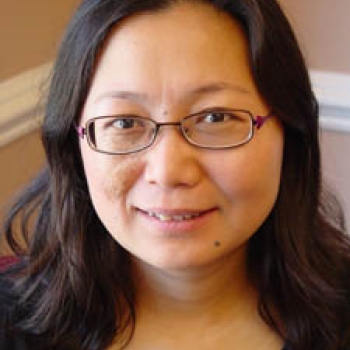
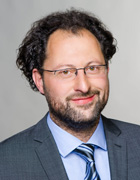
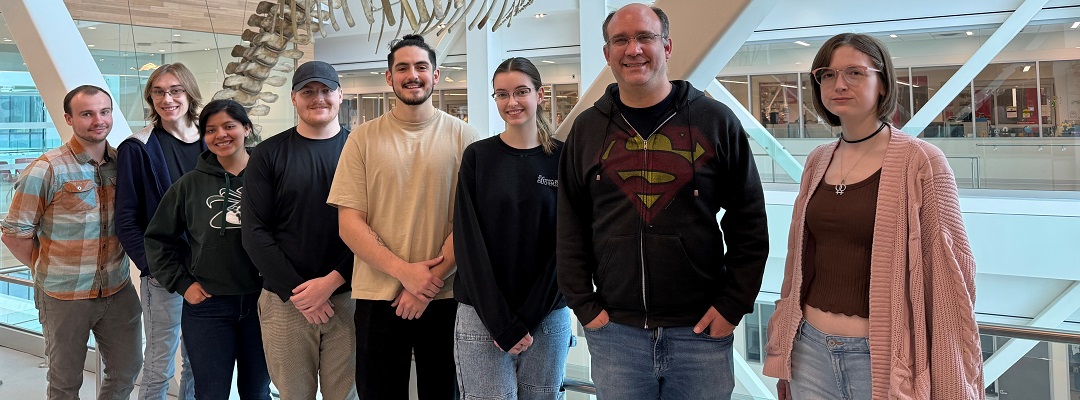
Ying Lu is an Associate Professor at the Department of Applied Statistics, Social Science, and Humanities within the Steinhardt School of Culture, Education, and Human Development at New York University. She holds dual PhDs in Public Policy and Demography from Princeton University (2005) and in Statistics from the University of North Carolina at Chapel Hill (2009). Before joining NYU, she was an Assistant Professor at the University of Colorado Boulder, affiliated with the Institute of Behavioral Science. Her research focuses on quantitative methodology in social and behavioral sciences, including applications in demography, health, and political behavior, as well as statistical methods like model selection and hypothesis testing for high-dimensional data. Her interdisciplinary work bridges statistical rigor with real-world societal challenges. Recent articles highlight her contributions to areas such as employee outcomes in HRM, gut microbiota-cardiometabolic disease links, and innovative clinical trial designs. She has also explored topics in food science, environmental catalysis, and sustainable development policy. Ying Lu’s academic journey reflects a commitment to advancing statistical methodologies while addressing pressing issues in health, policy, and environmental science. She has advised numerous projects but no specific students are listed in the provided texts.
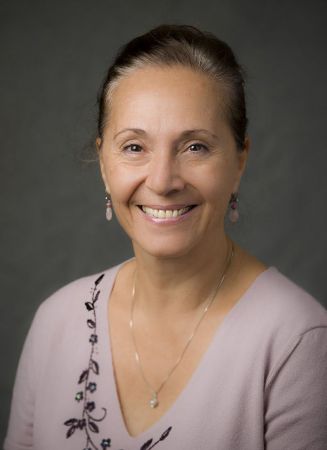
Jennifer Smith is a faculty researcher at the Scripps Institution of Oceanography, University of California, San Diego, where she leads the Smith Lab within the Center for Marine Biodiversity and Conservation. Her work focuses on coral reef ecosystems, integrating ecology with conservation, restoration, and sustainability. Her research explores how human activities such as nutrient pollution, invasive species, and climate change affect benthic marine communities. She has pioneered the use of large-area imaging and structure-from-motion technology to monitor long-term changes in Maui's coral reefs, including responses to sequential bleaching events and wildfire impacts. Her lab investigates microbial interactions with corals and the role of algae in reef degradation and resilience. Dr. Smith’s publication record reveals a strong focus on coral-algal interactions, nutrient dynamics, invasive seaweeds, and ecosystem-scale analyses. Her work spans tropical regions including Hawaii and the Great Barrier Reef, contributing to global understanding of reef resilience. She mentors graduate students and collaborates widely across marine science disciplines. Scientific Awards: No awards mentioned in the provided text. Advising and Grants: Dr. Smith advises graduate students such as Orion McCarthy and Morgan Winston. Her lab conducts long-term monitoring supported by institutional and likely federal funding, though specific grants are not listed. She leads field campaigns in Hawaii and publishes in high-impact journals. Labs and Teams: The Smith Lab is actively engaged in coral reef research, focusing on resilience, restoration, and human impacts. The team includes researchers and volunteers who conduct field surveys, analyze imagery, and produce outreach materials such as the 'Underwater Gardens' film.
Joel S. Hayworth is an Associate Professor in the Department of Civil Engineering at Auburn University's College of Engineering. His research focuses on environmental and ecosystem restoration, particularly in estuarine, terrestrial, and freshwater systems. He leads the Estuarine Environments Research Program (EERP), which investigates the fate of endocrine-disrupting chemicals (EDCs), PFAS, and oil spill residues in coastal environments. Dr. Hayworth's educational background includes a PhD in Civil Engineering (Hydrology/Hydraulics) from Auburn University, an MS in Hydrology from the University of Nevada, Las Vegas via the Desert Research Institute, and a BS in Geophysics from the University of California, Santa Barbara. He previously worked at the Tennessee Valley Authority Engineering Laboratory and the U.S. Air Force Research Laboratory, and founded Hayworth Engineering Science in 1999 before returning to academia in 2010. His research interests span environmental engineering, hydrology, hydraulics, estuarine science, pollutant fate and transport, and chemical fingerprinting. He has developed advanced analytical methods for detecting EDCs and PFAS in water, sediment, and biota. His work integrates field studies, laboratory experiments, and environmental modeling to understand complex hydrologic, geologic, chemical, and biological processes in human-impacted ecosystems. The 15 most recent articles highlight a strong trend in environmental contaminant analysis, particularly focusing on PFAS, oil spill residues, and endocrine disruptors. His research combines analytical chemistry with environmental modeling and field monitoring, often in collaboration with interdisciplinary teams. Key themes include the development of UHPLC-MS/MS and GC-MS/MS methods, fate and transport modeling of pollutants, and ecological risk assessment in estuarine systems. Dr. Hayworth's scientific contributions are supported by funding from agencies such as the Gulf Coast Ecosystem Restoration Council (RESTORE Council). His work has led to significant publications in journals like Science of the Total Environment , Marine Pollution Bulletin , and Water . He actively mentors students and collaborates with researchers like T.P. Clement, G.F. John, and V. Mulabagal. His projects, such as the restoration assessment of Cotton Bayou and Terry Cove, demonstrate applied science for environmental problem-solving. He has developed state-of-the-art analytical laboratories and partnered with coastal communities for long-term monitoring. His laboratory, the Estuarine Environments Research Program (EERP), conducts multi-year studies on endocrine disruptors in estuaries, develops innovative sampling and analysis methods, and trains the next generation of environmental engineers and scientists. The team works across disciplines to address complex environmental challenges in the Gulf Coast region.
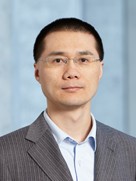
Prof. Dr. Jing Wang is a Full Professor at the Department of Civil, Environmental and Geomatic Engineering at ETH Zürich. His research focuses on air pollution control, nanoparticle transport, and environmental health and safety (EHS) impacts of nanomaterials. He has held roles including Assistant Professor at ETH Zürich (2010–present), Research Assistant Professor at the University of Minnesota (2007–2010), and postdoctoral associate in Particle Technology (2005–2007). Education: Bachelor’s in Engineering (2000) – Tsinghua University, Beijing Master’s in Computer Sciences (2003) – University of Minnesota PhD in Aerospace Engineering (2005) – University of Minnesota Research Interests: Air/water filtration technologies Nanoparticle emission reduction and measurement Multiphase flow mechanics Environmental impacts of nanomaterials Collaborations: Industrial partnerships include 3M, BASF, Boeing, Intel, Samsung, and others in nanoparticle measurement and filtration solutions. Honors: 2011 Smoluchowski Award (Association for Aerosol Research) 2006 ‘Best Dissertation’ Award (University of Minnesota) 2004 Doctoral Dissertation Fellowship Teaching: Courses include Air Pollution Control, Environmental Engineering Seminars, and Excursions for Environmental Engineers. Labs/Teams: Leads the Particle Technology Lab and collaborates with the Institute of Environmental Engineering at ETH Zürich.
Philippe Aghion is a Professor at the College de France holding the chair in Economics of Institutions, Innovation and Growth, and a Professor at INSEAD. He also serves as a visiting professor at the London School of Economics. His academic work has established him as a leading figure in growth economics, particularly through his development of the Schumpeterian Growth paradigm. Professor Aghion's research focuses on the economics of growth, innovation, productivity, and income mobility. He has pioneered the Schumpeterian Growth theory with Peter Howitt, which examines economic growth through the lens of "creative destruction" - where innovation drives progress by replacing outdated technologies and business models. His work analyzes the design of growth policies, the role of competition and industrial policy, the relationship between innovation and inequality, and solutions to the "secular stagnation" observed in developed economies. A recurring theme in his research is understanding how institutions shape innovation and growth dynamics. The analysis of his recent publications reveals a strong focus on innovation economics, environmental sustainability, and the relationship between technological change and economic outcomes. His work spans theoretical developments in growth models and empirical investigations using firm-level data, particularly from France. Key trends include examining how market competition affects innovation, the dynamics of green technology adoption, the impact of globalization on firm behavior, and the relationship between automation and labor markets. His research consistently connects theoretical frameworks with empirical evidence to inform policy design. Professor Aghion has received numerous prestigious awards for his contributions to economics: 2001: Yrjo Jahnsson Award (best European economist under age 45) 2009: John Von Neumann Award March 2020: BBVA "Frontier of Knowledge Award" (shared with Peter Howitt) Fellow of the Econometric Society Fellow of the American Academy of Arts and Sciences As the holder of the Economics of Institutions, Innovation and Growth chair at the College de France (established in 2015), Professor Aghion leads a research team comprising more than twenty researchers. His chair focuses on cutting-edge research examining the economics of innovation, environmental sustainability, productivity dynamics, and household income mobility. His influential books, including "Endogenous Growth Theory" (1998), "The Economics of Growth" (2009), "Competition and Growth" (2006), and "The Power of Creative Destruction" (2021), have shaped the field of growth economics and provided frameworks for understanding modern economic challenges.
Dr Yizhi Wang, FHEA, is a Lecturer (Assistant Professor) in Finance at Cardiff Business School, Cardiff University, UK. He serves as Co-Director of the Cardiff Fintech Research Group and is the Editor-in-Chief of Elsevier’s Finance Research Letters . He is also Associate Editor for International Review of Financial Analysis and Research in International Business and Finance , and Guest Editor for International Review of Economics & Finance and Journal of Chinese Economic and Business Studies . Research Interests: Financialization and Econometrics Climate finance and carbon markets Cryptocurrency and FinTech indices Energy economics and risk management Green finance and ESG investing Behavioral and institutional finance Dr Wang has published extensively in world-leading journals such as Risk Analysis , European Journal of Operational Research , Journal of Economic Behavior & Organization , Energy Economics , and Journal of International Money and Finance . His work spans theoretical modeling, empirical econometrics, and policy-oriented studies. Scientific Awards: Shanghai Institute of International Finance and Economics Best Paper Award Teaching & Supervision: As a Fellow of the UK Higher Education Academy (FHEA), Dr Wang is module leader for undergraduate BS2514: Financial Markets and Institutions and postgraduate BST158: Big Data Analytics for Finance , earning consistently high teaching evaluations (4.8–4.9/5). He is available to supervise doctoral students in Financialization and has mentored graduates now employed at the University of Oxford, Morgan Stanley, and JPMorgan Chase. Labs & Research Groups: Co-Director, Cardiff Fintech Research Group Member, Cardiff Sustainable Finance Research Group Member, Environmental, Ecological, Extinction Accounting, Governance and Economics Research Group Member, Cardiff Business School Research Committee Dr Wang also curates multiple quarterly-updated indices (UCRY, ICEA, CBDCAI, NFTsAI, ACCC, FinTech Index) publicly available at https://sites.google.com/view/cryptocurrency-indices/home .
Nedim Pervan is a Full Professor at the Faculty of Mechanical Engineering, University of Sarajevo, Bosnia and Herzegovina. His academic position focuses on mechanical engineering with emphasis on product design, structural analysis, and biomechanical applications. He maintains an active research profile with numerous publications and collaborations across various engineering disciplines, with office hours every workday from 09:00 to 10:00 in room 314. Professor Pervan's research interests span multiple domains of mechanical engineering. He has made significant contributions to additive manufacturing, particularly in polymer gear production and analysis. His work explores mechanical properties, failure mechanisms, and service life of polymer gears manufactured through additive processes. Additionally, he has conducted extensive research on external fixation devices used in orthopedic treatments, analyzing their biomechanical characteristics and structural stability under various loading conditions. His expertise extends to finite element analysis, structural optimization, and the application of 3D scanning technologies within Industry 4.0 contexts. His research demonstrates a strong connection between theoretical engineering principles and practical applications across automotive, medical devices, and manufacturing industries. His recent publication record reveals a strong trend toward interdisciplinary research bridging mechanical engineering with biomedical applications and advanced manufacturing technologies. A significant portion of his work focuses on polymer gears and additive manufacturing, examining material properties and performance characteristics. Another substantial research stream involves biomechanical engineering, particularly the analysis of external fixation devices. His publications demonstrate a methodological approach combining experimental testing with finite element analysis. More recently, his research has expanded into 3D scanning applications in manufacturing and the electrification of transportation systems in Bosnia and Herzegovina. Professor Pervan has been involved in numerous research projects that have advanced the capabilities of the Faculty of Mechanical Engineering. These include the "Integrated Intelligent CAD System for Interactive Design, Analysis and Prototyping of Compression and Torsion Springs" (2022), "Opremanje Laboratorije za razvoj i dizajn proizvoda" (2020), and "Modernizacija Laboratorije za ispitivanje mašinskih konstrukcija" (2019-2020). These projects have focused on developing advanced laboratory facilities, intelligent CAD systems, and equipment for mechanical design and analysis, with several specifically targeting 3D scanning technology implementation. His collaborative work extends across multiple research teams within the Department of Mechanical Constructions at the University of Sarajevo. He frequently collaborates with researchers including Adis Muminović, Elmedin Mešić, and Muamer Delić on projects related to additive manufacturing, biomechanical engineering, and structural analysis. His research group appears actively involved in both theoretical and applied engineering research with practical industrial and medical applications, contributing significantly to Bosnia and Herzegovina's engineering research landscape.
Matthew Dunbabin is a Professor at Queensland University of Technology (QUT) and Chief Investigator at the Australian Centre for Robotic Vision (ACRV). His expertise spans environmental robotics, with a focus on vision-based autonomous systems for marine conservation, water quality monitoring, and greenhouse gas management. He holds a PhD from QUT and a BEng (Aerospace) from RMIT. Dunbabin has led projects at CSIRO and QUT, developing robots like COTSBot and RangerBot to combat marine pests and promote reef restoration. His work has earned national and international awards, including the 2019 Australian Water Association Award and 2016 Google Impact Challenge. Education: PhD in Engineering, Queensland University of Technology (Queensland, Australia) BEng (Hons) in Aerospace Engineering, Royal Melbourne Institute of Technology (Melbourne, Australia) Research Interests: Environmental robotics and autonomous systems Vision-based perception and classification Marine habitat restoration and pest control Greenhouse gas monitoring via autonomous vehicles Cooperative robotics and sensor networks Awards & Recognition: 2019 Australian Water Association Award (SAMMI Project) 2019 Good Design Award - Sustainability (RangerBot) 2016 Google Impact Challenge People’s Choice Award (RangerBot AUV) 2010 Australian ICT Industry Association National iAward (iSnet) 2006 Queensland Engineering Excellence Innovation Award (Starbug Project) Grants & Projects: ARC Centre of Excellence for Robotic Vision (ACRV): Leading robotic vision research (2014–present) Revolutionising Protection Against Air Pollution: Air quality monitoring networks (2015–present) Establishing Advanced Networks for Air Quality Sensing: Sensor development for urban environments (2017–present) Labs & Collaborations: ACRV at QUT Institute for Future Environments (QUT) CSIRO Autonomous Systems Laboratory (2001–2013)
Sibel Pamukcu is a Professor in the Department of Civil and Environmental Engineering at Lehigh University, affiliated with the P.C. Rossin College of Engineering and Applied Science. Her research focuses on electroremediation of soils and groundwater, advanced geo-materials, and sensor systems for subsurface monitoring. She has held leadership roles including interim Chair of Civil and Environmental Engineering and co-director of Lehigh’s ADVANCE grant. Pamukcu teaches courses in geotechnical and environmental engineering at both undergraduate and graduate levels. Education: Ph.D. in Civil Engineering, Louisiana State University M.S. in Civil Engineering, Louisiana State University B.S. in Civil Engineering, Bogazici University, Turkey Research Interests: Her work spans electrochemical methods for environmental detoxification, development of polymer-enhanced sands, and distributed sensor networks for real-time subsurface monitoring. Key focus areas include: In-situ destruction of contaminants in clay-rich soils Enhanced oil recovery via electric fields Wireless and fiber-optic sensor systems for hazard mitigation Grants & Awards: Principal investigator on over 60 grants from NSF, DOE, DOD, and others. Notable awards include the Alfred Noble Robinson Award (Lehigh University) and the ASCE Civil Engineering Foundation Grant Award. Her lab holds multiple patents on soil remediation techniques and polymer-coated sands. Advising & Service: Supervised 9 Ph.D. and 25+ M.S. students Appointed to Martindale Center faculty and Sigma Xi leadership Contributed to 50+ peer-reviewed articles and 100+ technical publications Labs & Teams: Leads interdisciplinary initiatives in electrokinetic remediation and underground sensing, collaborating with industry partners like Electric Power Research Institute and the Pennsylvania Department of Transportation.
Professor Cedo Maksimovic is a leading academic in the Department of Civil and Environmental Engineering at Imperial College London, Faculty of Engineering. He is a Principal Research Fellow and heads the Urban Water Research Group (UWRG), with affiliations to the Environmental and Water Resource Engineering group, Grantham Institute, Space Lab, and Urban Systems Lab. His research focuses on urban water systems , including storm drainage, urban flooding, water supply, and the interaction between urban infrastructure and the environment. He has pioneered work in applied fluid mechanics , smart water infrastructure , and flood risk management , with innovations such as the AOFD method for urban surface flood modelling and intelligent sensor networks recognized by the ICE Telford Gold Medal. His recent research, as reflected in publications, spans urban pluvial flooding , leakage detection , integrated urban water management , and blue-green infrastructure . These works emphasize computational modelling, real-time monitoring, and climate resilience in urban environments. UNESCO/IAHR Lecturer of the Year 2001 ICE Telford Gold Medal (WINES project team) Prof. Maksimovic has led major projects funded by EPSRC, EU (Climate-KIC, Interreg), UNESCO, and ERANET_CRUE. He advises postgraduate students and has created international educational initiatives like the EDUCATE programme. He also serves as Editor-in-Chief of the Urban Water Book Series and co-founded the Urban Water journal. He leads the UNESCO-endorsed IRTCUD/CUW network with centres in Banjaluka, Belgrade, Cairo, Kuala Lumpur, London, Porto Alegre, Tehran, and Trondheim, promoting global collaboration in urban water research and education.
Christian Lindh is an active Associate Professor and Senior Lecturer at Lund University's Division of Occupational and Environmental Medicine. He serves as Research Team Manager for Applied Mass Spectrometry in Environmental Medicine and is affiliated with EpiHealth: Epidemiology for Health. His research focuses on environmental and occupational exposures and their health impacts, with particular expertise in biomonitoring and analytical chemistry. His research interests span Occupational Health , Environmental Health , Analytical Chemistry , Exposure Assessment , and Epidemiology . Lindh specializes in studying human exposure to environmental pollutants including PFAS, heavy metals, phthalates, and polycyclic aromatic hydrocarbons, with particular focus on vulnerable populations such as pregnant women and children. His work contributes to UN Sustainable Development Goals related to health and environmental protection. Analysis of his recent publications reveals a strong focus on environmental epidemiology, particularly examining PFAS exposure patterns, heavy metal toxicity, and the health impacts of environmental contaminants across different life stages. His research employs advanced analytical techniques, particularly mass spectrometry, to precisely measure exposure levels and investigate dose-response relationships. Lindh has secured significant research funding, currently leading projects including 'Temporal Trends in Lead, Mercury, and Cadmium Levels in Children' (Swedish Environmental Protection Agency, 2025-2026) and 'Trade-offs between food safety and food security' (FORMAS, 2024-2027). He serves as Principal Investigator on multiple active research projects totaling 15, with 7 currently active and 7 completed. As Manager of the 'Targeted Exposomics at Lund University' infrastructure, Lindh leads the Applied Mass Spectrometry in Environmental Medicine research team. His work bridges analytical chemistry with public health research, developing methodologies to assess human exposure to environmental chemicals and evaluating their health consequences through epidemiological studies.
Prof. Dr. Johannes Sauer is a Professor at the Technical University of Munich (TUM), holding dual affiliations with the TUM School of Management and the TUM School of Life Sciences . His academic focus is on production and resource economics, with expertise in agricultural sustainability, policy evaluation, and circular economy strategies in Asia-Pacific and Latin America. Education: Bachelor’s/Master’s in Agricultural Economics from Universities of Tübingen, Hamburg, and Imperial College London. Doctorate (summa cum laude) in Agricultural Economics from the University of Bonn (2004). Research Interests: Prof. Sauer’s work spans productivity and resilience in agricultural systems, adoption of sustainable technologies, water resource valuation, and bioeconomic trends. He emphasizes smart technologies and circular economy applications in developing regions. His research employs econometric methods to analyze policy impacts and environmental-economic trade-offs. Key Trends in Publications: Recent articles highlight climate-smart agriculture, ICT adoption in rural China, and agroforestry’s role in reducing ecological-economic trade-offs. He explores behavioral drivers of policy participation and innovative tools like the IoFarm decision support system. Awards: 2021 Honorary Professorship at ANU OECD Fellow Awards (2010, 2016) Best Paper Awards (2008–2015) Consulting & Roles: OECD and Asian Development Bank consultant, ESRC Peer Review College member, and liaison lecturer for the German National Academic Foundation. He advises on agri-environmental policies and international development. Labs/Teams: Active in collaborative projects such as PONDERFUL Framework and IPM Popilia , focusing on nexus research and pest management strategies.
Shanshan Xu is a Dame Kathleen Ollerenshaw Fellow and Academic Lecturer in Catalysis at the Department of Materials, University of Manchester, since January 2025. She specializes in heterogeneous catalytic systems for sustainable chemical reactions, including hydrogen production, nitrogen fixation, and CO2 conversion, employing operando X-ray spectroscopy and DRIFTS techniques to study catalytic mechanisms. Previously, she worked on the EU-funded Laurelin project, focusing on CO2 conversion to renewable methanol using nonthermal plasma catalysis. She earned her PhD in Chemical Engineering (2021) and MSc in Materials Science and Engineering from the University of Manchester. Her research interests span catalyst design (metal oxides, porous materials like zeolites and MOFs), operando spectroscopy (XAS, XPDF, IR), and sustainable chemistry. She leads the UoMaH research group at the University of Manchester-Harwell, collaborating internationally. Xu is actively mentoring PhD students and supervising projects in catalysis, with funding opportunities through scholarships like the President’s Doctoral Scholarship and the University of Manchester-CSC joint program. Notable awards include the Dame Kathleen Ollerenshaw Fellowship (2024), Dean’s Doctoral Scholarship (2017), and First Prize in the China ShaoXing Innovation Competition (2023). Her work aligns with UN Sustainable Development Goals, contributing to clean energy and sustainable industrial processes. Xu’s lab focuses on advancing catalyst design through operando studies, with emphasis on nonthermal plasma systems. She collaborates on projects like the UoMaH initiative, exploring nanoparticle behavior and catalytic materials for industrial applications.
Dr. Michael J. Katz is a Professor in the Department of Chemistry at Memorial University in St. John's, Newfoundland and Labrador, Canada. He leads an active research group focused on porous materials, particularly metal-organic frameworks (MOFs), with applications in gas storage, chemical separation, and catalysis. His work is well-recognized in the field of materials chemistry, with numerous publications in high-impact journals spanning from 2005 to 2025. Dr. Katz's primary research interests lie in the synthesis, properties, and applications of porous materials. His work specifically focuses on: Metal-Organic Frameworks (MOFs) design and synthesis Gas storage technologies, particularly low-pressure methane storage Chemical separation processes including removal of harmful molecules from air Catalysis using porous materials Adsorption properties of various porous frameworks Environmental applications of porous materials Analysis of Dr. Katz's publication record from 2017-2025 reveals a strong emphasis on zirconium-based MOFs, particularly the UiO-66 family. His research spans fundamental characterization techniques like NMR spectroscopy to practical applications in carbon capture, gas separation, and environmental remediation. A notable trend is the increasing focus on real-world implementation of MOFs, including biochar-based materials for CO 2 capture and frameworks for air pollutant removal such as nitrous acid. His work demonstrates a progression from fundamental materials science toward practical environmental applications. Dr. Katz actively supervises graduate students and postdoctoral researchers in his research group. His laboratory at Memorial University is equipped for the synthesis and characterization of novel porous materials, with particular expertise in metal-organic framework development. His research is supported by various grants that enable the exploration of structure-property relationships in porous materials and their practical applications.
Dr. Zhifu Mi is a Professor of Climate Change Economics at the Bartlett School of Sustainable Construction , University College London. His research focuses on carbon footprint analysis, climate change economics, air pollution and health, sharing economy sustainability, and input-output modeling. He has published extensively in top journals like Nature Sustainability , Lancet , and Science Advances . Co-Editor-in-Chief, Structural Change and Economic Dynamics (2020–present) Executive Editor, Journal of Cleaner Production (2019–present) President, Chinese Economic Association (UK/Europe) Council Member, International Input-Output Association Fellow of the Royal Geographical Society His research explores: Carbon Footprints: Economic development and emission convergence in Chinese households Climate-Health Linkages: Air pollution impacts, ultra-low emission policies Sharing Economy: Sustainable societies through shared micro-mobility Policy Analysis: Synergies between environmental regulations Recent publications analyze decarbonization employment gaps, polycentric urban structures, and health-environment policy intersections. Awards include the World Sustainability Award (2018), multiple Clarivate Highly Cited Researcher honors, and UCL's Outstanding Research Supervision Award (2022). He teaches modules on construction economics and input-output analysis.