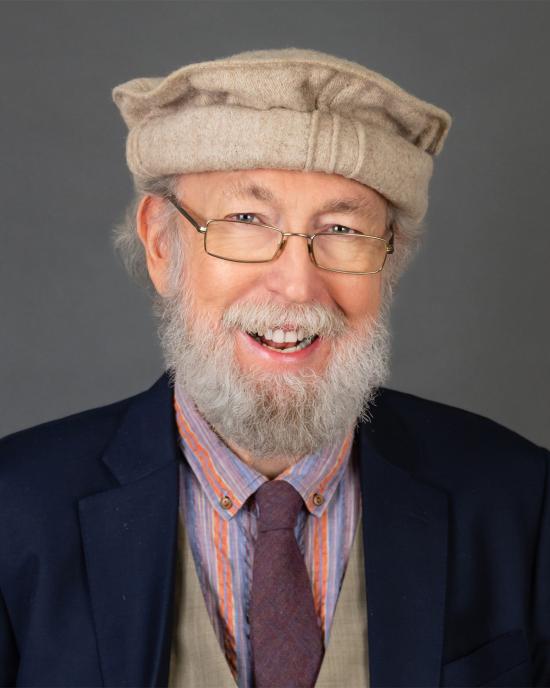
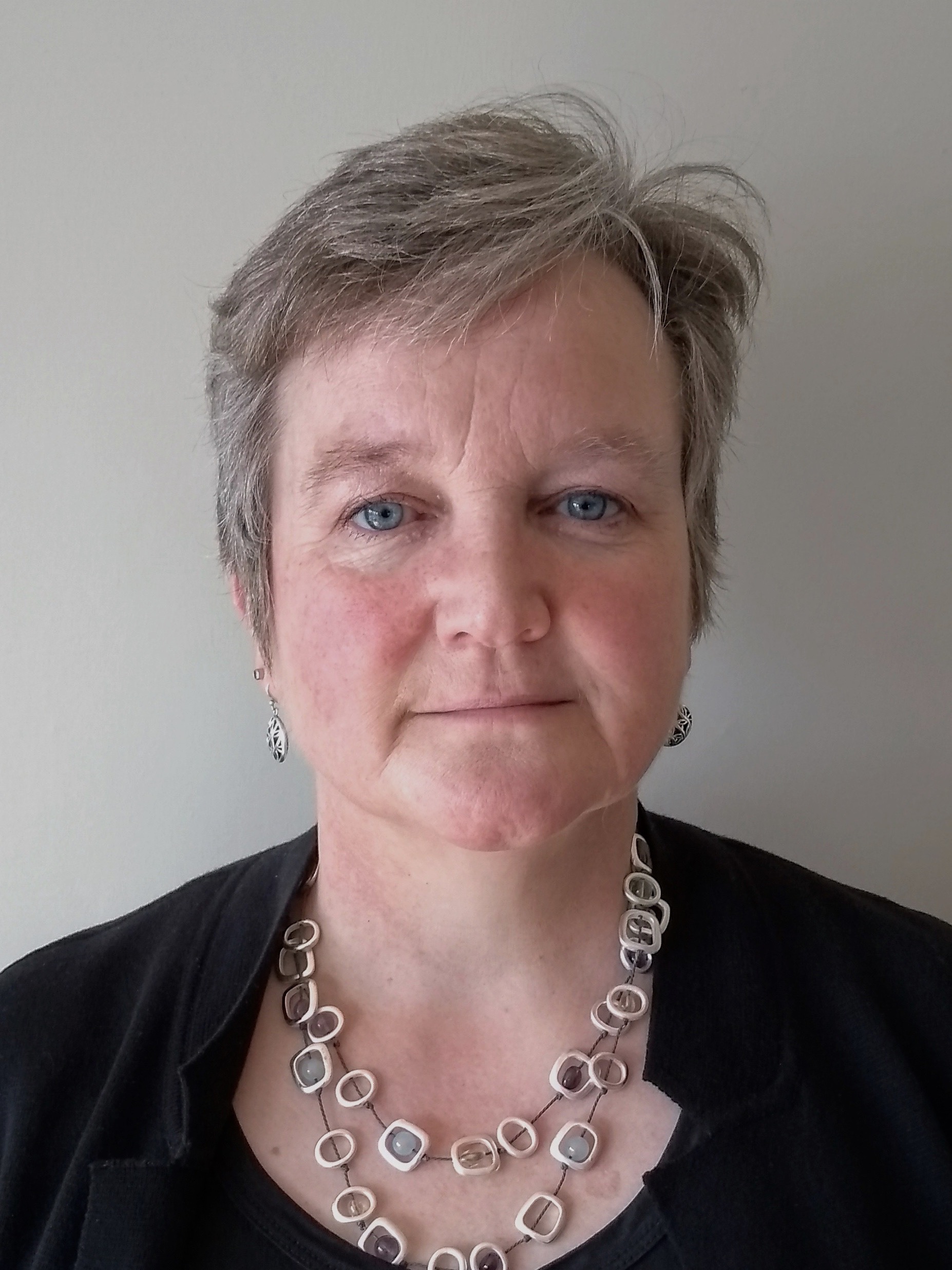
Katja Hose is a Full Professor of Data Management at TU Wien's DBAI research unit, heading the Data Management and Knowledge-Driven AI Lab. She previously held a Poul Due Jensen Foundation Professorship at Aalborg University. Her research focuses on data and knowledge engineering, including graph databases, knowledge graphs, querying, analytics, and machine learning, with interdisciplinary applications in bioscience, healthcare, and environmental assessment. Education: PhD in Computer Science (Ilmenau University of Technology, 2009), Postdoc at Max Planck Institute for Informatics (2009–2012). Academic roles include Program Co-Chair for ISWC 2024 and EDBT 2023, and editorial board membership at VLDBJ and TGDK. She leads projects like TARGET (health virtual twins) and ARMADA (data management). Research Interests: Knowledge Graphs, Semantic Web, Big Data, Machine Learning, Data Integration, and Provenance Systems. Key contributions include SHACL shape extraction, conversational data analytics, and environmental knowledge graphs. Awards include the 2025 Distinguished Meta-Reviewer Award and 2024 Manfred Paul Award. Advising and Grants: Supervised students including E. Pürmayr (Diploma Thesis 2025). Active in EU projects (TARGET, ARMADA) and grant coordination. Labs/Teams: DMKI Lab at TU Wien, collaborating with interdisciplinary teams in healthcare and environmental science.
Tina Dacin is a Professor of Strategy and Organizational Behavior at the Smith School of Business, Queen's University, Canada. She holds the Stephen J.R. Smith Chair and serves as Director of the Community Impact Research Program. Her roles include former Director of the Smith School’s Centre for Social Impact, former University Senate member, and former Chair of the Principal’s Innovation Fund Committee. She co-founded the Community of Social Innovation Chair and holds affiliations with the Academy of Management and Informs. Education: Ph.D. (1993) in Business Administration from the University of Toronto and M.A. in Psychology from the University of New Brunswick. Research focuses on cultural heritage, social innovation/entrepreneurship, strategic alliances, and globalization. Key themes include custodianship, tradition preservation, place-making, and institutional dynamics. Recent work explores craft-based ventures, place-sensitive organizational practices, and institutional renewal in crises like the Detroit water wars. Awards: None explicitly listed, though her chair position reflects academic distinction. Teaching includes courses on global social impact and analytics/ethics policy. Labs/Teams: Leadership in the Community Impact Research Program and the Scotiabank Centre for Customer Analytics.
Dr. Daniel Dutton is an Associate Professor in the Department of Community Health and Epidemiology at Dalhousie University's Faculty of Medicine, based at the Dalhousie Medicine New Brunswick campus in Saint John. His research focuses on how social environments influence health outcomes and the role of government policies in mitigating these impacts, particularly in areas like poverty, homelessness, and health economics. He holds adjunct roles at the University of New Brunswick (Sociology) and is the Scientific Director of APPTA, a hub bridging aging research and policy. He teaches courses in epidemiology, population health, and statistics. Education: PhD in Community Health Sciences (University of Calgary) MA in Economics (University of Calgary) BA Honours in Economics (Queen’s University) Research Interests: Dr. Dutton examines population-level health determinants, government policy effectiveness, and socioeconomic disparities. His work employs large datasets and econometric models to analyze topics such as homelessness incidence, healthcare cost savings through preventive measures, and the distributional impacts of public spending. Key Contributions: Scientific Director of the APPTA aging and technology hub. Co-founder of the IMPART research collaborative. Author of influential studies on Housing First programs, opioid prescribing patterns, and the fiscal benefits of guaranteed annual income policies. Advising & Grants: Supervises multiple MSc students and has collaborated on grants analyzing healthcare utilization in New Brunswick and Alberta. His work often intersects with policy-making, emphasizing actionable insights from quantitative research. Labs & Teams: Leads the Dutton Research Group, which uses mascot Odin the Saint Bernard to foster team cohesion. Active in interdisciplinary collaborations across public health, sociology, and economics.
Aeli Roberts is a Professorial Teaching Fellow at The Bartlett School of Sustainable Construction, University College London, specializing in sustainability, health and safety, and sustainable construction practices. She is a member of BSSC's Centre for Sustainable Governance and Law in the Built Environment, a partnership between UCL and Gatehouse Chambers. Her educational background includes a diverse range of qualifications: PhD from Open University (2004), Bar Vocational Course from BPP Law School (2005), BSc in Construction Management from University College London (2003), MSc from Royal Holloway (1988), BSc from Royal Holloway (1986), and Higher National Diploma from Camberwell College of Art (1990). Initially trained as a chemist, she worked in industry and taught material science to conservation students before transitioning to construction management. Roberts' research focuses on integrating green space within urban environments for environmental and social benefits, health and safety in construction, and sustainable building practices. Her work examines sustainability in small and medium enterprises (SMEs), which employ 85% of UK construction workers, and explores architect-client interactions for sustainable domestic construction. She has conducted comparative studies of health, safety, and well-being in UK and Hong Kong construction industries. Her publication record shows a strong focus on operational failure mitigation, knowledge transfer for safety culture, and the role of building control in sustainable construction. Recent work emphasizes climate change impacts on construction, wellbeing in the industry, and sustainable design integration. Her research bridges academic theory with practical application in the construction sector. Scientific Awards: Significant contributions serving the Design Futures Council's London and Cambridge Think Tank (2012) Roberts has held teaching positions across multiple subject areas including materials science, law, and sustainability. She has developed a third-year module on built asset management, emphasizing the importance of post-occupancy building performance. Her teaching philosophy connects historical building conservation with contemporary sustainability challenges, particularly in the context of upgrading existing housing stock to meet carbon reduction targets. She has been involved in collaborative research projects with organizations including the London Chamber of Commerce and Industry (LCCI), focusing on eco-design training for the construction supply chain. Her work with the CIC 2050 Group demonstrates engagement with industry-wide sustainability initiatives.
Terrence Chapman is a Professor of Government at the University of Texas at Austin, affiliated with the Robert S. Strauss Center for International Security and Law, Center for European Studies, and Clements Center on History Strategy, and Statecraft. His research focuses on international organizations, conflict resolution, and political economy frameworks. Key research areas include: International institutional legitimacy Global regulatory regimes Public opinion in international affairs Conflict management mechanisms Formal modeling of diplomatic interactions Recent scholarly trends reveal expertise in climate governance negotiations, digital surveillance politics, and regulatory effectiveness. His work spans theoretical modeling and empirical analysis of international collaboration dynamics. Scientific recognition includes: 2011-2012 APSA Conflict Processes Section Book Award Teaching portfolio covers: Science Fiction and Politics International Organization and Law Research Methods in International Politics Previously served as associate/senior editor for International Studies Quarterly .
Arman Cohan is an Assistant Professor of Computer Science at Yale University, affiliated with the School of Engineering & Applied Science. His research focuses on the intersection of Machine Learning and Natural Language Processing (NLP), particularly in language modeling, representation learning, retrieval systems, and applications in specialized domains such as scientific text processing. He earned his Ph.D. in Computer Science from Georgetown University and has received notable awards, including the Dr. Harold N. Glassman Distinguished Doctoral Dissertation Award (2019) and the EMNLP 2017 Best Long Paper Award. His work emphasizes ethical AI, robustness of LLMs, and interdisciplinary applications in healthcare, science, and education. Cohan's research group, the Yale NLP Lab, develops advanced techniques for multi-document summarization, adversarial fact-checking, and LLM-driven tools for scientific discovery. Recent projects include frameworks like SciBERT, Longformer, and ChemAgent, which enhance domain-specific reasoning and safety in AI systems. His publications address challenges in table reasoning, uncertainty expression, and multimodal reasoning, with applications in medical decision-making and educational problem-solving. He collaborates on initiatives like the Roberts Innovation Fund to advance AI in healthcare and environmental technology.
Dr. Sirui Li is a Lecturer at Murdoch University's School of Information Technology within the College of Science, Technology, Engineering and Mathematics. Her research focuses on Artificial Intelligence, Natural Language Processing (NLP), Machine Learning, Knowledge Graphs, Data Analysis, Temporal Data, and Multi-modal Models, with applications in medicine, agriculture, and mining. She collaborates with industry partners like BHP and has published in journals such as Food Chemistry and Knowledge and Information Systems , as well as conferences like ICSME and IJCNN. Education: Bachelor of Advanced Computing (Honours) in Computer Science at Australian National University Master of Computing (Specialising in AI) at ANU Ph.D. in Information Technology (AI) at Murdoch University Research interests include interdisciplinary applications of AI, such as clinical coding privacy solutions, disease spread modeling, and drug repurposing for pandemics. Her work emphasizes practical industry integration, demonstrated through awards like the 2024 EMNLP Best Demo Award and the 2023 Iron Ore Circuit Hackathon innovation prize. Professional roles include IEEE Western Australia Section committee membership, conference chair positions, and peer review for top journals. She actively mentors students pursuing Honours, Master's, or PhD projects in her areas of expertise.
Dr. Adrian Müller is a Researcher at the University of Bern's Tourism Research Unit (CRED-T) within the Center for Regional Economic Development (CRED). His work focuses on sustainable aviation, decarbonization of business travel, and the intersection of climate strategies with organizational practices. He holds a scientific role in advancing research on travel behavior, policy implications, and alternative modes of transportation. Research interests include sustainable aviation fuel adoption, post-pandemic travel trends, and the misalignment between corporate climate goals and actual travel practices. His studies explore behavioral economics aspects of travel decisions, including social norms in rail business travel and decision-making autonomy among travelers. Key articles highlight themes like decarbonization challenges in knowledge-intensive industries, preferences for sustainable aviation fuels, and the shift toward video conferencing post-COVID-19. Müller’s research often bridges environmental science, transportation economics, and policy analysis, emphasizing actionable solutions for reducing aviation’s ecological footprint. He is affiliated with the Economic Institute at the University of Bern and contributes to initiatives like the Oeschger Center for Climate Change Research. No scientific awards are explicitly listed, but his work reflects engagement with cutting-edge climate and travel research.
Jeff B Murray serves as Professor and Department Chair in the Department of Marketing at the Sam M. Walton College of Business, University of Arkansas, teaching in the full-time MBA, Executive MBA, and Marketing Doctoral programs. His leadership extends to international doctoral seminars across Europe and Australia, reflecting his scholarly influence. His academic foundation includes a Ph.D. from Virginia Tech. His research program examines critical marketing, interpretive consumer research, and philosophy of science through frameworks like Consumer Culture Theory and Transformative Consumer Research. Murray's scholarly contributions reveal a trajectory from foundational critical theory toward contemporary applications in arts markets, sustainable fashion, and digital consumption. His work consistently bridges philosophical inquiry with empirical consumer phenomena, emphasizing emancipatory interests and societal transformation. Recent publications demonstrate growing interdisciplinary engagement with sociology, anthropology, and sustainability studies. Outstanding All-Around Professor Award (2002) Charles and Nadine Baum Faculty Teaching Award (2002) Editorial board service for leading journals including Journal of Consumer Research He mentors doctoral students now holding faculty positions globally, with recent workshops in Germany, France, and Scandinavia highlighting his international impact. His professional engagements span the American Marketing Association, Association for Consumer Research, and American Sociological Association, where he contributes to critical theory development through initiatives like Consumer Culture Theory. Murray maintains active scholarly networks through Transformative Consumer Research and regularly presents at international conferences, advancing critical perspectives on marketing's societal role.
Professor Duc Duy (Louis) Nguyen is Professor in Finance at Durham University Business School. Previously, he was Associate Professor at King's College London and Assistant Professor at University of St Andrews. His research has been featured in Forbes, Harvard Business Review, and BBC. He holds a BSc in Computing from National University of Singapore, MSc in Accounting, Finance, and Management from University of Bristol, and PhD in Finance from University of Edinburgh. Research foci include: Climate risk integration in mortgage markets and corporate finance Impact of social policies (e.g., marriage equality) on credit access Corporate governance and misconduct prevention in banking Local information environments and fraud detection Cross-cultural dimensions of executive decision-making His publication portfolio demonstrates consistent examination of how institutional frameworks (regulation, culture, governance) shape financial behaviors and market outcomes, with recent emphasis on climate finance and social equity impacts. Awards include: David Hume Publication Prize (2015) Semi-finalist, FMA Europe Best Paper Award (2018) Finalist, FMA Asia/Pacific Best Paper Award (2019) Best Registered Report on "Politics and Corporate Power" Vietnam Symposium in Climate Transition Best Paper Award (2024) He currently supervises PhD candidates Bingzhi Zhang and Jing Wei. His externally funded research includes grants from British Academy/Leverhulme Trust and Carnegie UK Trust. He serves as Associate Editor for European Journal of Finance and British Accounting Review. As frequent speaker at central banks and policy forums (Federal Reserve Banks of New York & St. Louis), he translates research insights into regulatory practice and policy development.
Professor Paweł Chmura is a Full Professor at Wrocław University of Health and Sport Sciences, specializing in Sports Sciences with a focus on football performance analysis. He serves in the Department of Individual and Team Sports, where he conducts research on exercise physiology, training load monitoring, and physical activity analysis in soccer players. With over 130 publications, Professor Chmura is a recognized expert in sports science and also holds a UEFA A coaching license. Professor Chmura's research interests center on exercise physiology, particularly in the context of team sports. His work extensively examines repeated maximum effort capabilities, physical activity analysis in soccer players, and monitoring training loads. He has developed innovative concepts such as the Psychomotor Fatigue Threshold and investigates how environmental factors like temperature and air quality affect athletic performance. His research bridges the gap between theoretical sports science and practical coaching applications, making significant contributions to football performance optimization. Professor Chmura's extensive publication record demonstrates a consistent focus on soccer performance analysis, with recent work expanding into multidisciplinary approaches including physiological, psychological, and tactical aspects of the game. His research shows increasing sophistication in methodology, incorporating advanced monitoring technologies and comprehensive analysis frameworks that consider multiple performance indicators simultaneously. This evolution reflects broader trends in sports science toward integrated, holistic approaches to athlete performance. Professor Chmura actively supervises the Motosoccer Student Research Club and invites master's and doctoral students to collaborate on research projects related to football, exercise physiology, game analysis, and motor preparation. His mentorship extends beyond formal academic supervision to practical coaching guidance, leveraging his UEFA A coaching certification to provide students with both theoretical knowledge and practical field experience. As a UEFA A-licensed football coach and tennis instructor, Professor Chmura maintains strong connections between academic research and practical sports applications. He leads the Motosoccer Student Research Club, which provides hands-on research opportunities for students interested in sports science. His dual expertise in academic research and practical coaching creates a unique environment for applied sports science research that directly impacts coaching methodologies and athlete development.
Mark Aleksanyan is a Professor of Accounting and Finance at the University of Glasgow's Adam Smith Business School, serving as Associate Head of the Accounting and Finance subject group since 2004. He holds a PhD in Accounting and Finance from the University of Glasgow (2004), an MPhil in International Finance (2000), and a bachelor’s degree in Mathematical Economics from Yerevan State University (1997). Prior to academia, he worked as a financial analyst, economist at the Armenian Ministry of Finance, and assistant to the Prime Minister of Armenia (1996–1999). Research Interests Focuses on relationships between market actors (sell-side/buy-side analysts, investor relations officers), equity valuation, corporate reporting, and empirical accounting. His work explores technology’s impact (e.g., generative AI) on financial information practices and regulatory frameworks like MiFID II. Current projects include analyzing the role of state visits in cross-border M&A and media effects on insider trading. Grants & Funding Received grants totaling over £100k from bodies like the Institute of Chartered Accountants of Scotland (2019), the Foreign and Commonwealth Office (2018), and the Adam Smith Research Foundation (2010). Teaching Teaches Financial Analysis & Equity Valuation (MSc), Financial Statement Analysis & Valuation (BSc), and PhD masterclasses. Previously instructed International Corporate Finance and MBA courses. Editorial Roles Serves as Associate Editor for Qualitative Research in Financial Markets and on editorial boards of Review of Business and Economics Studies and Behavioral Research .
Michael R. Dove is the Margaret K. Musser Professor of Social Ecology and Professor of Anthropology at Yale University, where he also serves as Curator of Anthropology at the Peabody Museum and Co-Coordinator of the Combined YSE/Anthropology Doctoral Program. With over forty years of research experience, his work focuses on environmental anthropology, particularly the environmental relations of local communities in South and Southeast Asia. Dove earned his B.A. from Northwestern University and his M.A. and Ph.D. from Stanford University. His academic journey has spanned decades of field research in Asia, including more than a dozen years conducting long-term studies on human ecology in Borneo and Java, developing government research capacity in Indonesia, and advising the Pakistan Forest Service on social forestry policies. Professor Dove's research interests encompass the anthropology of climate change, cultural and political aspects of natural hazards and disasters, indigenous environmental knowledge and practice, environmental institutions and movements, history of environment-related sciences, and multispecies ethnography. His work often examines how local environmental systems interact with national and global markets, politics, and ideologies, with a focus on problematizing orthodox approaches to conservation and development. He has made significant contributions to understanding human-environment relations through both theoretical frameworks and practical applications. Dove's recent scholarly output demonstrates a progression toward more integrated approaches to environmental challenges, blending historical perspectives with contemporary issues. His publications increasingly focus on the intersections of climate change, social justice, and indigenous knowledge systems, while maintaining his longstanding interest in Southeast Asian environmental relations. The work shows a growing emphasis on post-humanist approaches and multispecies ethnography, reflecting broader trends in environmental anthropology while maintaining his distinctive focus on political ecology and institutional analysis. As an educator, Professor Dove has supervised numerous doctoral and master's students, many of whom have gone on to win research awards and secure prestigious positions. He organizes separate research labs for doctoral students from Yale School of the Environment and other departments, as well as for joint YSE/Anthropology doctoral students. His advisees typically conduct international research and have excellent records of obtaining research support both within and beyond Yale. The Dove Lab at Yale School of the Environment serves as a hub for environmental anthropology research, focusing on topics including natural resource management, property rights, power struggles, household energy transitions, and human-wildlife interactions. The lab fosters a collaborative environment with 30-50 students working on related issues each year, characterized by supportive peer dynamics rather than competition. It also contributes to policy and social change through its research and the work of its alumni.
Professor Jan Bebbington holds the Rubin Chair in Sustainability in Business at Lancaster University and serves as Director of the Pentland Centre for Sustainability in Business . Her research intersects sustainable development with organisational operations, focusing on accounting technologies for control and accountability, the Sustainable Development Goals (SDGs), and carbon accounting. Her recent work explores sustainability reporting norms , inter-corporate accountability mechanisms , and biodiversity scenario analysis . Publications highlight interdisciplinary approaches to climate accountability, organisational stability, and resilient business practices. Key projects include collaborations with Stockholm Resilience Centre , The Swedish Research Council , and Innovate UK , addressing topics like ocean stewardship (SeaBOS) and biodiversity decision-making frameworks. She employs virtual labs and cross-sector partnerships to advance sustainability governance.
Sharon Levy is an Assistant Professor in the Department of Computer Science at Rutgers University, USA. Her research focuses on Natural Language Processing (NLP) with an emphasis on Responsible AI, addressing fairness, safety, and trustworthiness in language systems. She holds a Ph.D. from the University of California, Santa Barbara (2023), and conducted postdoctoral work at Johns Hopkins University (2023-2024). Education: PhD in Computer Science (UCSB, 2023), MS (UCSB, 2018), BS (UCSB, 2017). Professional experience includes roles at AWS, Facebook AI, Pinterest, and Akamai Technologies. Research Interests: Fairness in non-English contexts, safety of LLM outputs, misinformation detection, and computational social science applications. Her work frequently intersects with public health, gender studies, and political science. Teaching: Instructs Rutgers' Natural Language Processing course (Spring 2025) and co-taught JHU's Trustworthy NLP course. Active guest lecturer at institutions including Stanford and UT Austin. Mentorship: Supervises 14+ students across PhD, MS, and undergraduate levels, with notable advisees winning CRA awards. Labs/Teams: Currently leads research within Rutgers' CS department, previously collaborated with Johns Hopkins' CLSP.