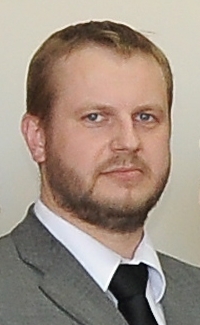
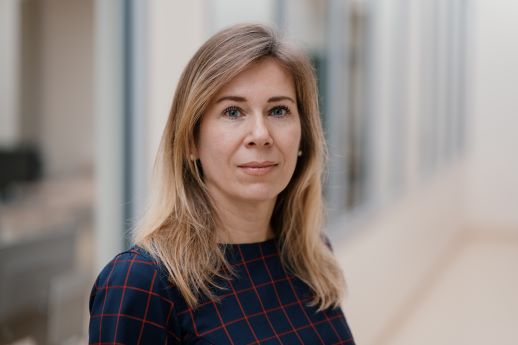
Kęstutis Navickas serves as a Professor at Vytautas Magnus University (VDU) with multiple institutional affiliations. His primary current appointment is with the Faculty of Informatics (since February 2024), while maintaining connections with the Department of Mechanical, Energy and Biotechnology Engineering and the Bioeconomy Research Institute (since September 2023). His research focuses on critical energy systems with specialization in: Renewable energy resources Environmental engineering applications Biogas production and utilization Energy conservation methodologies Professor Navickas has held his academic rank since 2011 and maintains strong institutional presence across multiple university entities, demonstrating interdisciplinary engagement between engineering and informatics domains. His professional activities include: Active research in sustainable energy systems Collaboration across engineering and bioeconomy sectors Integration of informatics approaches in energy research
Boleslovas Dapkūnas is a Lecturer at Vilnius University's Faculty of Mathematics and Informatics, actively teaching Internet technologies since the 2016/2017 academic year with scheduled instruction extending through the 2025/2026 semester. His teaching responsibilities include conducting exercise sessions for subgroup MIF-Wholesale (2,317) in Internet technologies. His research focuses on interdisciplinary mathematical modeling at the intersection of biology and physics, with core expertise in: Mathematical and computational modeling of bacterial growth dynamics Pattern formation mechanisms in microbial populations Self-organization phenomena across biological scales Environmental factor effects (oxygen, gravity) on bacterial systems His work demonstrates how mathematical frameworks can unify understanding of biological processes from bacterial colonies to human societies. No scientific awards or honors were documented in the provided materials. Available information indicates active teaching responsibilities but provides no details regarding student supervision, research grants, or laboratory affiliations.
Professor Hone-Jay Chu is a faculty member at the Department of Geomatics, National Cheng Kung University, where he has been employed since 2011. He earned his PhD from National Chiao Tung University in 2008, focusing on artificial intelligence and optimization for water resource management, followed by postdoctoral work (2008–2011) with Professor YP Lin on spatial environmental monitoring and land use change models. Education : PhD in Environmental Engineering (2008) from National Chiao Tung University His research integrates geospatial technologies with machine learning to address complex environmental challenges. Key domains include groundwater dynamics , land use/cover change , landslide detection , and air pollution analysis , leveraging big data , remote sensing , and environmental resilience frameworks. Recent publications highlight applications of deep learning (e.g., LSTM networks) and random forest models in predicting meteorological droughts, groundwater changes, and climate impacts. The work spans interdisciplinary collaboration, with co-authors from institutions in Bangladesh, Austria, and Turkey.
Linas Martišauskas is an Associate Professor at the Department of Mathematics and Statistics within the Faculty of Informatics , Vytautas Magnus University , Lithuania. His work focuses on statistical methods, energy security, and reliability analysis. Academic Rank: Associate Professor Department: Mathematics and Statistics University: Vytautas Magnus University Cluster: Security, Reliability, and Risk Analysis Methods Research Interests His research spans statistical modeling , energy system forecasting , and reliability analysis . Key areas include: Applied machine learning for sales and energy production forecasting Neural networks and ARIMA/SARIMA time series models Renewable energy integration and risk assessment Climate data analysis and temperature prediction Academic Contributions He has supervised 6 theses (2020-2025) on topics like photovoltaic energy forecasting ( ARIMA models ), lithium battery degradation ( nonlinear regression ), and meteorological data prediction using neural networks and hybrid methods . Labs & Teams Active in the Cluster of Reliability, Security, and Risk Analysis Methods , focusing on multidisciplinary applications.
Valiulis Gediminas serves as an Associate Professor at Vilnius University's Šiauliai Academy within the Department of Informatics Engineering. His academic career spans both engineering fundamentals and advanced environmental applications, with a pronounced shift toward bioaerosol monitoring and computer vision systems since 2018. His research interests focus on Environmental Informatics and Automatic Bioaerosol Detection , particularly developing computer vision models for pollen classification using light scattering techniques. This work bridges Environmental Science , Computer Vision , and Public Health through real-time pollen monitoring systems that serve allergy sufferers. His methodology combines fluorescent particle analysis , clustering algorithms , and sensor calibration to advance aerobiological research. Analysis of his publication trends reveals a strategic evolution: early work (2004-2012) centered on control systems engineering (granulation processes, microinverters), while recent output (2018-2024) demonstrates deep specialization in bioaerosol informatics . Key contributions include the Rapid-E particle counter validation, ozone-pollen interaction studies, and real-time pollen forecasting systems for clinical applications. His interdisciplinary approach connects atmospheric science with machine learning to solve environmental monitoring challenges. Automatic pollen recognition systems development Fluorescent bioaerosol characterization Real-time environmental data applications Computer vision for ecological monitoring While no formal advising relationships or scientific awards are documented in the source material, his collaborative research consistently involves multi-institutional teams across Lithuania and Europe. Current projects focus on enhancing bioaerosol sensor accuracy and developing clinical decision-support tools for allergy management through real-time environmental data integration.
Vida Malienė is a Visiting Professor at the Department of Land Use Planning and Geomatics, Faculty of Water and Land Management, Vytautas Magnus University Agriculture Academy. She contributes to the Bioeconomy Research Institute since 2023 and participated in international collaborations with Liverpool John Moores University. European Academy of Land Use and Development (Executive Board Member) International Council for Research and Innovation in Building and Construction (CIB) European Group of Operational Research Chartered Property Valuer Her research spans real estate markets , urban regeneration , land management economics , and application of multi-criteria evaluation methods . She specializes in sustainable housing , land consolidation , and affordable housing policies , with focus on Baltic and European contexts. Key publication trends include land use planning (63% of work), environmental engineering (58%), civil engineering (47%), and management sciences (13%). Recent articles explore bio-economy applications , agricultural land transformation , and value capture mechanisms across Europe. She holds a PhD in Technological Sciences (2000) and has authored over 100 publications, including 50+ peer-reviewed journal articles, 3 monographs, 20+ book chapters, and editorials. Her work is cited 2949 times (2023 metrics), with h-index-23 and i10-index-36. Languages: Lithuanian (native) English (fluent) German (fluent) Russian (fluent)
Joana Katina is an Assistant Professor at the Faculty of Mathematics and Informatics, Vilnius University, Lithuania, teaching Internet Technologies and Algorithms and Data Structures continuously from 2016/2017 through 2025/2026 academic terms across multiple course formats including lectures, exercises, and subgroup sessions. Her research bridges computer science with energy systems and financial engineering, focusing on household energy behavior in Lithuania/Morocco, cryptocurrency forecasting using neural networks, Industrial Control Systems cybersecurity, and queueing theory. She integrates computational modeling with socio-technical analysis to address sustainability challenges and market prediction problems. Analysis of her 2023-2025 publications reveals a dominant trend toward renewable energy transitions (particularly waste-to-energy systems and cross-regional green strategies) combined with machine learning applications in finance. This evolution from earlier virtual stock exchange simulations demonstrates increasing interdisciplinary scope while maintaining core expertise in stochastic modeling and predictive analytics.
Dr. Anita Juškevičienė is a Senior Researcher at the Educational Systems Group of Vilnius University's Institute of Data Science and Digital Technologies. Her work focuses on computational thinking, STEM education, and digital competence development. Research Interests : Computational thinking in primary/secondary education, STEAM integration, gender balance in STEM, educational technology adoption, and digital competence frameworks. Publications Trends : Recent work addresses pedagogical approaches for informatics education, teacher motivation, physical computing in STEM, and data modeling techniques for educational systems. Supervision : Currently supervising Snow White Bagocienė on modeling automatic assessment systems for design thinking. Projects : Active in analyzing global trends in computing education and implementing mobile learning scenarios for computer engineering training.
Linas Petkevičius serves as an Associate Professor at Vilnius University's Faculty of Mathematics and Informatics, actively teaching courses including Introduction to Quantum Computing across 10 consecutive academic years from 2016/2017 through 2025/2026 as evidenced by institutional schedules. His research demonstrates remarkable interdisciplinary breadth spanning quantum computing algorithm optimization, medical diagnostics through digital pathology analysis, and satellite-based environmental monitoring. He develops machine learning solutions for breast cancer prognosis using Ki67 heterogeneity metrics, creates quantum circuit schemes adapted to hardware constraints, and implements deep learning models for algal bloom detection in Baltic waters using Sentinel-2 data. His work consistently bridges theoretical computer science with practical healthcare and environmental applications. Analysis of his 15 most recent publications (2023-2025) reveals three dominant research thrusts: 1) Quantum computing optimization for NISQ devices, 2) Medical image analysis focusing on spatial tumor microenvironment characterization in breast cancer, and 3) Remote sensing applications using transformer models and few-shot learning for satellite change detection. His publications show increasing specialization in combining deep learning architectures with domain-specific constraints across these fields. Scientific Awards: No scientific awards were mentioned in the provided materials. Advising and Grants: The provided texts contain no information regarding student advisement, research grants, or funded projects.
Professor Dzemydienė Dalė holds a prominent academic role at the Regional Development Institute of Vilnius University's Šiauliai Academy. Previously, she served as a professor at Mykolas Romeris University (2009–2017) and Vilnius Gediminas Technical University (2017–2023). Her academic journey includes a PhD in Mathematics and Informatics (1995) and a habilitation (2004). She has extensive experience in research, including roles at the Institute of Mathematics and Informatics and the Lithuanian Academy of Sciences. Her research focuses on artificial intelligence, knowledge-based systems, and e-service design, with notable contributions to transportation logistics, data-driven decision-making, and ICT in education. She has led projects like the Smart Specialization initiative (2022–2023) and contributed to international collaborations, including internships at Foggia and Valencia Universities. Her work emphasizes interdisciplinary applications, integrating IoT, GIS, and AI to address challenges in cargo management, environmental monitoring, and sustainable development. She actively participates in academic organizations such as the Lithuanian Computer Society and the European Operations Research Association.
Dr. Inga Adamonytė serves as Associate Professor at Vytautas Magnus University, holding concurrent appointments in the Faculty of Informatics (since January 2024) and Department of Water Engineering. She maintains strong institutional ties with the Agricultural Academy where she's recorded 41 academic activities, while expanding her research scope through the Bioeconomy Research Institute (affiliated September 2024). Her scholarly foundation includes a Doctorate in Technological Sciences (2004) and promotion to Associate Professor (2015). Research interests span critical intersections of engineering and environmental systems: Advanced water resource management technologies Environmental protection frameworks and policy implementation Ecological modeling and biodiversity conservation Biosystems engineering applications in agriculture Human safety protocols in natural disaster scenarios Sustainable forestry and land management practices Adamonytė spearheads the annual 'Human and Nature Safety' international conference series since 2021, which has grown to attract 200+ participants from 37 institutions across 7 countries. Her 2024 participation in 'Women in Science: Challenges and Opportunities' demonstrates commitment to academic community development beyond technical specialties.
Assoc. Prof. Dr. Gintautas Tamulevičius serves as Director of the Institute of Data Science and Digital Technologies at Vilnius University. His primary affiliation is with the Image and Signal Analysis Group, where he contributes as a Senior Researcher and Chief Researcher in projects. Doctor of Science in Technology (2008) Pedagogical Title: Associate Professor (2014, Vilnius Gediminas Technical University) Active in IEEE Computer Society and Signal Processing Society Dr. Tamulevičius specializes in speech signal processing, with research spanning three core domains: Speech Modeling : Autoregressive/linear prediction, nonlinear fractal modeling, non-parametric approaches Recognition Systems : Deep learning-based methods, Hidden Markov models, Wave-U-Net architectures Quality Assessment : Voice phonation evaluation, vocal fold condition analysis using acoustic methods His publication trends show strong focus on: Deep learning applications for speech processing 2D feature space analysis for recognition tasks Fractal dimension-based emotion classification Language preservation through technological development Human-centered AI applications Biomedical signal processing As an educator, he has taught: Digital Signal Processing (VGTU 2012–present) Speech Signal Processing (VGTU 2008–present) Data Visualization (VGTU 2015) User Interface Design (VU 2018–present) Audio Signal Processing (VU 2020–present) His editorial contributions include reviewing for: Informatica IEEE Access Neurocomputing Baltic Journal of Modern Computing Nonlinear Analysis: Modeling and Control IEEE Journal of Biomedical and Health Informatics International Journal of Applied Mathematics and Computer Sciences He has supervised doctoral research including: Daniel Zakševski (2023–2027): Deep learning models for speech enhancement Monika Danilovaitė (2020–2026): Voice quality assessment methods Tatjana Liogienė (2012–2016): Multistage speech emotion classification
Dr. Saulius Maskeliūnas serves as a Researcher and Deputy Director at the Cybersocial Systems Engineering Group within Vilnius University's Institute of Data Science and Digital Technologies (formerly Institute of Mathematics and Informatics). His career at the institute spans from 1984 to present, progressing through positions from junior research associate to his current leadership role. Dr. Maskeliūnas earned his Doctor of Science degree in Informatics in 1996 with a dissertation on 'Knowledge base structuring method for heuristic and qualitative reasoning systems,' building upon his engineering education in automated control systems from Kaunas Polytechnic Institute (now Kaunas University of Technology) in 1984. His research expertise centers on information and knowledge-based systems, with significant contributions in Semantic Web technologies, ontology engineering, knowledge management, and workflow automation. Over his extensive career, his work has evolved from foundational research in knowledge representation to practical applications in environmental monitoring systems, water resource management, and national research data infrastructure. Dr. Maskeliūnas' scholarly output demonstrates a consistent trajectory of innovation across multiple domains, particularly in developing semantic technologies for environmental informatics and research data management systems. His recent publications focus on AI standardization, water resource monitoring systems, and research evaluation frameworks. He holds prominent leadership positions including President of the Lithuanian Computer Society (since 2010), Chair of the Technical Committee LST TK4 'Information Technologies' (since 2021), and member of the State Commission of the Lithuanian Language's Committee on Language Technologies (since 2012). Throughout his career, Dr. Maskeliūnas has successfully balanced theoretical research with practical implementation, contributing significantly to Lithuania's information technology infrastructure, research evaluation systems, and standardization efforts in computer science terminology.
Dr. Jolita Bernatavičienė serves as a Senior Researcher at Vilnius University's Institute of Data Science and Digital Technologies within the Image and Signal Analysis Group. With a Doctorate in Technological Sciences (Informatics), she has established herself as a leading researcher in medical image analysis and artificial intelligence applications in healthcare. Her extensive research portfolio spans over 15 years of continuous contributions to the field. Dr. Bernatavičienė's research interests primarily focus on medical image analysis, particularly in ophthalmology and oncology applications. Her work integrates advanced machine learning techniques with medical diagnostics, specializing in eye fundus image analysis for glaucoma detection and prostate MRI analysis for cancer identification. She has made significant contributions to deep learning architectures, signal processing methodologies, and data analysis frameworks applicable to biomedical challenges. Her publication record demonstrates strong trends in applying cutting-edge AI techniques to solve concrete medical problems, with a noticeable shift toward more sophisticated deep learning architectures in recent years. The research spans multiple medical domains including ophthalmology, cardiology, oncology, and renewable energy systems monitoring, reflecting her interdisciplinary approach to data science applications. Leader of International Conference 'Data Analysis Methods for Software Systems (DAMSS)' 2015-2024 Member of IEEE Computer Society section (since 2022) Member of the Council of the Lithuanian Computer Association, Artificial Intelligence Section Member of the Lithuanian Operations Research Society Expert at the Science, Innovation and Technology Agency (MITA) (2020-2022) Dr. Bernatavičienė actively supervises doctoral and master's students, with current doctoral student Roman Surkant working on prostate MRI analysis. She leads multiple significant research projects including 'Developing Talents in Artificial Intelligence to Solve Disruptive Environmental Problems' and serves as scientific leader for the Research Council of Lithuania funded project on cardiac MRI texture analysis. Her work has been supported by various national and international funding mechanisms including COST activities, EuroHPC programs, and Lithuanian national research grants. She is principal investigator for the long-term project developing a database of depersonalized fundus images (2018-2030) and has led numerous projects related to medical image analysis, AI applications in healthcare, and data science methodologies. Her research group maintains strong international collaborations through COST actions and other European research networks.
Dr. Jolanta Miliauskaitė serves as an Associate Professor and Researcher at the Cybersocial Systems Engineering Group within Vilnius University's Institute of Data Science and Digital Technologies. Her academic position reflects her expertise in cybersocial systems engineering and related fields, with a particular focus on the interface between cyberphysical and cybersocial systems. She maintains an active research profile with numerous publications and conference presentations focusing on fuzzy logic applications, quality of service modeling, and information systems. Dr. Miliauskaitė's research centers on cybersocial systems engineering, with significant contributions to understanding complexity issues in data-driven fuzzy inference systems and developing frameworks for membership function construction. Her work bridges theoretical computer science with practical applications in software engineering, particularly in fuzzy logic applications for quality of service planning in enterprise systems. She has conducted systematic literature reviews and developed methodologies for handling uncertainty in information systems. Her publication record shows a consistent research trajectory from foundational work on algorithm concepts to specialized research on interval type-2 fuzzy sets. Recent publications (2023-2024) demonstrate expansion into social factors affecting software quality and more sophisticated modeling of web service quality. Her work often combines theoretical insights with practical case studies, particularly in enterprise business services and web service quality modeling. DAMSS 2019 Best Poster Award for "On issues related to interval type-2 membership function development" Dr. Miliauskaitė actively mentors doctoral students, currently supervising Darius Sabaliauskas whose dissertation focuses on the "Reasoning mechanism of cognitive systems" (2024-2028). She has participated in significant research projects, including the National Complex Program Project "Theoretical and Engineering Aspects of the Development and Use of Internet of Services Technologies in High-Performance Computing Platforms" under Prof. G. Dzemyda's supervision (2012-2015). Her qualifications are continuously enhanced through Erasmus+ programs and specialized training in scientific methodology. As an active member of the academic community, Dr. Miliauskaitė serves on organizing committees for major conferences including Baltic DB&IS (2012, 2018, 2024) and DAMSS (2018), and participates in program committees for ICMarkTech'24, SAC 2025, SS AIEDUMED'25, and CompSysTech'25. She is also a member of the Lithuanian Computer Society (LIKS), contributing to the broader computer science community in Lithuania.