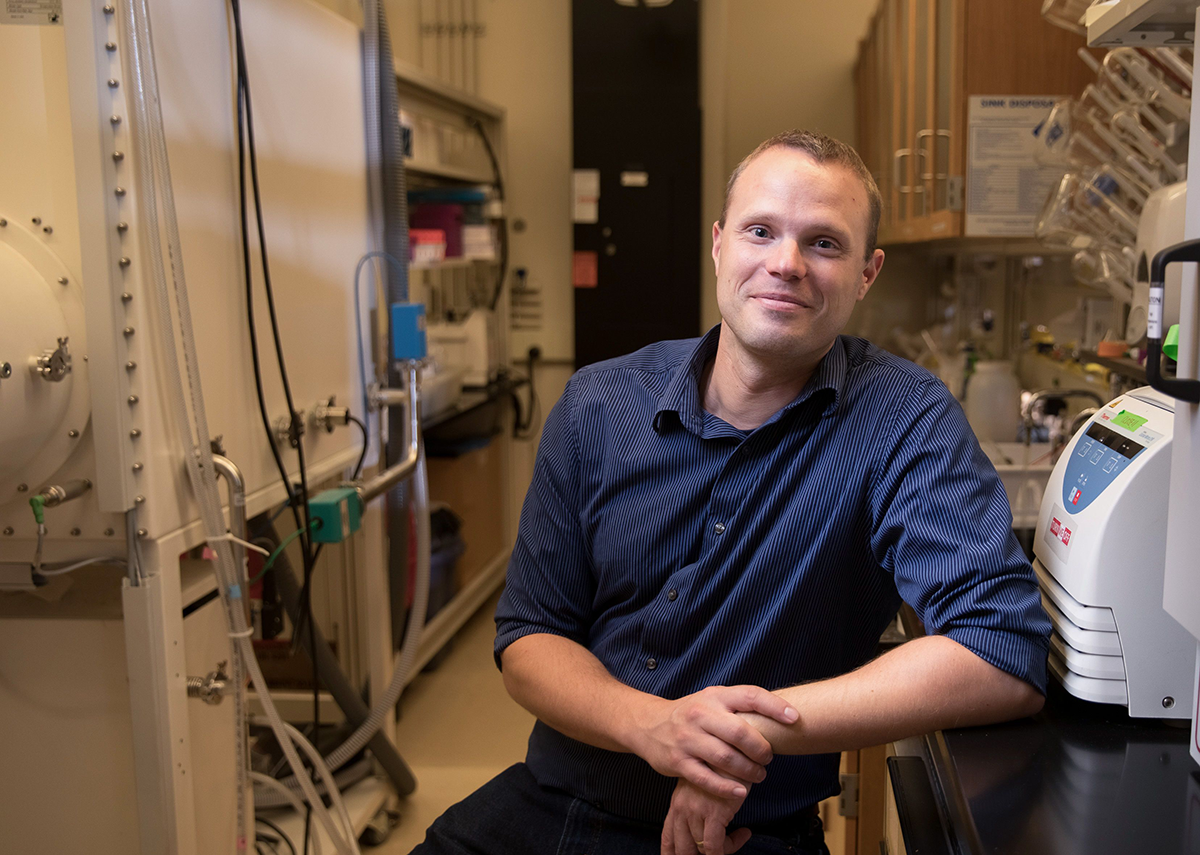
Dr. Guillermo Amador is an Assistant Professor in the Experimental Zoology department at Wageningen University & Research. His research focuses on understanding how animals interact with complex environments through locomotion, adhesion, and fluid dynamics. He investigates biological systems like insects, plants, and marine organisms to inspire bio-engineered solutions for robotics, microfluidics, and material science. Amador received his PhD in Mechanical Engineering from Georgia Institute of Technology (USA), followed by postdoctoral research at the Max Planck Institute for Intelligent Systems (Germany) and a Marie Sklodowska-Curie fellowship at TU Delft (Netherlands). His expertise spans biophysics, biomaterials, and biomechanics, with a focus on self-cleaning mechanisms and bioadhesion. He collaborates with the 4TU consortium on Dutch Soft Robotics to develop bio-inspired designs. His work bridges fundamental biology with engineering applications, emphasizing interdisciplinary approaches to solve challenges in robotics and environmental science. Amador teaches courses including Biomimetics and Functional Zoology , integrating his research into education. His research highlights include studies on cuttlefish suction cups, stick insect adhesion, and pollen transport mechanisms in pollinators.
Megan Valentine is a Professor of Mechanical Engineering at the University of California, Santa Barbara (UCSB), affiliated with the College of Engineering. She leads an interdisciplinary research group focused on biological and bioinspired materials, investigating how forces are generated and transmitted in living systems to design responsive synthetic materials. Her work bridges engineering, physics, chemistry, and biology. Education: PhD in Physics from Harvard University, MS in Physics from the University of Pennsylvania, and BS in Physics from Lehigh University. Affiliations include the California NanoSystems Institute (CNSI), Materials Research Laboratory (MRL), Neuroscience Research Institute, and the Center for Stem Cell Biology and Engineering. Research interests span soft material mechanics, bioengineering, and systems biology, with applications in marine-inspired materials, mechanobiology, and soft robotics. Her lab employs advanced experimental techniques to study biophysical and biochemical mechanisms in living systems and translate them into engineered materials capable of self-healing, movement, and environmental responsiveness. Notable awards include the NSF Early CAREER Award, Fulbright Scholarship, and election as Fellow of the American Physical Society and American Institute for Medical and Biological Engineering. Her contributions emphasize creativity, collaboration, and diversity, with a focus on addressing societal challenges through interdisciplinary innovation.
Raul Vicente Zafra is a Professor of Data Science at the University of Tartu, Faculty of Science and Technology, Institute of Computer Science, where he has been working since 2013. His research spans computational neuroscience, artificial intelligence, and data science, with a particular focus on bridging biological and artificial models of intelligence. Education: PhD in Physics (2001-2006), University of the Balearic Islands BSc in Physics (1997-2001) Professor Zafra's research interests center on computational neuroscience and artificial intelligence, with specific expertise in brain-computer interfaces, reinforcement learning, neural modeling, and explainable AI. His work bridges the gap between biological and artificial intelligence systems, exploring how neural principles can inform machine learning algorithms and vice versa. He has made significant contributions to understanding neural coherence, time interval learning in neural systems, and the application of information theory to brain-computer interfaces. His research often involves interdisciplinary collaboration between computer science, neuroscience, and medicine. Analysis of Zafra's recent publications reveals a strong focus on the intersection of artificial intelligence and neuroscience. His work spans explainable AI methods, brain-computer interfaces, reinforcement learning models that mimic cognitive processes, and neurophysiological studies of brain activity. A notable trend is his exploration of how biological principles of neural computation can inform and improve artificial intelligence systems, particularly in areas like time-based learning, consciousness modeling, and neural coherence. Scientific Awards: 2012: Attendee at the 62nd Lindau Nobel Laureate Meeting 2007: Quantum Electronics and Optics Division Prize of the European Physical Society for the best PhD Thesis in Applied Optics in Europe 2006: PhD Extraordinary Award of the Physics Department of the University of the Balearic Islands 2001: Physics Degree Extraordinary Award (First Class Honors, best GPA) 1997: Bronze Medal in the "8th Spanish Physics Olympiad" Professor Zafra has been principal investigator on numerous significant research projects including the Estonian Centre of Excellence in Artificial Intelligence, Cardiovascular Stress Impacts On Neuronal Function, and Bridging biological and artificial models of vision. His grant portfolio demonstrates strong funding support from the Estonian Research Council, European Commission, and other major funding bodies. He has supervised multiple PhD students and mentored early-career researchers in computational neuroscience and AI. His laboratory work focuses on developing computational models of neural systems and applying these insights to artificial intelligence. Current research directions include explainable AI methods, brain-computer interfaces, modeling of consciousness and cognitive processes, and the application of AI to healthcare challenges.
Sandro Carrara is a Full Professor at École Polytechnique Fédérale de Lausanne (EPFL), where he leads the Bio/CMOS Interfaces (BCI) laboratory. He is affiliated with the School of Engineering (STI), the Institute of Electrical Engineering (SCI-STI-SC), and the Integrated Systems Laboratory (LSI). His academic leadership spans teaching, doctoral supervision, and editorial roles in major journals including IEEE Sensors Journal and BioNanoScience. Education: Diploma in Electronics, National Technical Institute of Albenga, Italy Master in Physics, University of Genoa, Italy PhD in Biochemistry and Biophysics, University of Padua, Italy His research focuses on the integration of biological systems with CMOS technology, particularly in the development of nanoscale biosensors for health monitoring. Key areas include memristive biosensors, wearable and implantable sensors, electrochemical detection, and therapeutic drug monitoring. His work bridges electronics, nanotechnology, and biomedicine to enable point-of-care diagnostics and personalized medicine. His recent publications (2023–2025) show a strong trend toward sustainable printed electronics, machine learning for biosensing, in-memory computing for cancer diagnostics, and remote health monitoring. These works appear in high-impact journals such as IEEE Sensors Journal , Nanoscale , and Biosensors and Bioelectronics: X . Scientific Awards: IEEE Fellow (2015) IEEE Sensors Council Technical Achievement Award (2016) Distinguished Lecturer, IEEE Sensors Council (2017) Best Paper Award, IEEE MeMeA Symposium (2020) Multiple Gold and Bronze Leaf Prizes at PRIME and IEEE conferences Best Poster Awards at EMBEC and Nano-Tera meetings He actively advises PhD students and leads research projects involving CMOS-based biosensors, wireless implants, and smart sensor systems. His lab collaborates widely across disciplines and institutions, focusing on real-world applications in oncology, neurology, and environmental health. He has also contributed to the development of battery-free wearable devices, optical power transfer systems, and IoT-enabled telemedicine platforms. Laboratories and Teams: Bio/CMOS Interfaces (BCI) Laboratory, EPFL Integrated Systems Laboratory (LSI), EPFL Collaborations with IEEE Sensors Council and Circuits and Systems Society Editorial leadership in IEEE Sensors Journal and BioNanoScience
Professor Todd Squires is a distinguished faculty member in the Department of Chemical Engineering at the University of California, Santa Barbara, within the Robert Mehrabian College of Engineering. His research focuses on the fundamental principles of transport phenomena as applied to interfaces, membranes, and complex fluids, employing theoretical, computational, and experimental approaches to address significant challenges in micro-scale fluid mechanics. Dr. Squires' educational background includes: BS in Physics, UCLA (1995) BA in Russian Language and Literature, UCLA (1995) PhD in Physics, Harvard University (2002) His research interests span microfluidics and electrokinetics, active and nonlinear microrheology of complex materials, polymer dynamics and sensors, with particular emphasis on non-linear electrokinetic flows, interfacial rheology, and the self-assembly of nanostructured materials. His work bridges fundamental fluid mechanics with practical applications in microfluidic devices, energy storage, and biomedical systems, demonstrating the versatility of this fascinating field. Analysis of Professor Squires' recent publications reveals a consistent focus on interfacial phenomena, with particular attention to the rheological properties of fluid interfaces, particle dynamics in complex fluids, and novel microfluidic techniques for measuring and manipulating these systems. His research demonstrates strong interdisciplinary connections between chemical engineering, physics, and materials science, with applications spanning energy storage, biomedical engineering, and environmental systems. Professor Squires has received numerous prestigious awards and honors: 2018 Robert W. Vaughan Lecture in Chemical Engineering, Caltech 2015 Elected Fellow of the American Physical Society 2013 Mid-Career Award, American Electrophoresis Society 2012 The Dudley Saville Memorial Lecture at Princeton 2010 Pierre Gilles de Gennes Prize 2010 Allan P. Colburn Memorial Lectureship, University of Delaware 2009 Francois Frenkiel Award for Fluid Mechanics 2009 Camille Dreyfus Teacher-Scholar Award 2008 Beckman Young Investigator 2007 NSF CAREER Award 2005 'Rising Star' - Chronicle of Higher Education As principal investigator of the Squires Group, Professor Squires leads a dynamic research team that combines experimental, theoretical, and computational approaches to investigate transport phenomena at interfaces. His work has been supported by major funding agencies including the National Science Foundation, with his CAREER award indicating early recognition of his potential as both researcher and educator. While specific grant details aren't provided in the source material, his extensive publication record and prestigious awards suggest robust and sustained research funding. The Squires Group maintains state-of-the-art laboratory facilities for studying micro-scale fluid mechanics, including specialized equipment for microrheology measurements, microfluidic device fabrication, and interfacial characterization. Their research environment fosters collaboration across disciplines, with connections to materials science, physics, and biomedical engineering researchers at UCSB and beyond.
Prof. Dr. Björn Corzilius is a University Professor (W2) of Physical Chemistry at the University of Rostock, Germany, leading the Corzilius group. His research focuses on solid-state NMR spectroscopy, dynamic nuclear polarization (DNP), and applications in biomolecules and materials. He holds affiliations with the Leibniz Institute for Catalysis (LIKAT) and serves on multiple academic boards, including the transregional Collaborative Research Center TRR 386 and the journal Magnetic Resonance . Education: 1999: Studies of Chemistry, TU Darmstadt 2005: Diploma in Physical Chemistry (TU Darmstadt) 2008: Ph.D. in Physical Chemistry (TU Darmstadt) Research Interests: Solid-state NMR, DNP for sensitivity enhancement, paramagnetic metal ions, biomolecular dynamics, and method development. His work bridges theoretical and experimental approaches to advance structural and functional studies of complex systems like proteins, nucleic acids, and catalytic materials. Recent Article Trends: Focus on DNP applications in biomolecular interfaces, novel polarizing agents (e.g., Gd(III) complexes), and methodological advancements like serial polarization transfer and electron-decoupled DNP. Contributions span inorganic chemistry, materials science, and biophysical systems. Awards: Emmy Noether Fellowship (2012) Felix Bloch Lecture (2016) Regitze M. Vold Memorial Prize (2017) Best Ph.D. Supervision (2018) Grants & Labs: Principal Investigator of the Emmy Noether Group (2013–2019), now leading the DNP research team at the University of Rostock. Collaborates closely with LIKAT on catalytic and materials projects. His group actively develops open-access publishing platforms like Magnetic Resonance and hosts international conferences. Labs/Teams: The Corzilius group at the Institute of Chemistry (Rostock) specializes in NMR method development and applications. Associated with LIKAT for interdisciplinary catalysis research.
Dr. Praneet Prakash is a Researcher in the Department of Applied Mathematics and Theoretical Physics at the University of Cambridge, working under Prof. Raymond Goldstein. His research focuses on interdisciplinary approaches combining microfluidics, microscopy, and theoretical physics to study biological systems. Key areas include microbial motility, active matter dynamics, and the interplay between physics and living systems. He utilizes experimental techniques such as microfluidics and advanced microscopy to investigate phenomena like bacterial swimming, nutrient exchange in microbial communities, and growth oscillations in filamentous fungi. His work bridges Soft Matter Physics, Statistical Mechanics, and Biophysics, with applications ranging from understanding microorganism behavior to developing biosensor technologies. Recent studies explore phototactic algae behavior, ciliary surface interactions in animalcules, and adaptive motility in marine microorganisms. Publications highlight contributions to microbial ecology, active matter systems, and biophysical modeling. While no formal awards are listed, his research has been published in high-impact journals like Journal of the Royal Society Interface and Physical Review Fluids . He is affiliated with the Biological Physics and Mechanics research group and maintains an active presence on academic platforms like Twitter and LinkedIn.
Ting Lu is an Associate Professor at the University of Illinois at Urbana-Champaign in the School of Biomedical and Translational Sciences, focusing on microbial synthetic biology and systems biology. Their research bridges biology, engineering, and physics to reprogram cellular functionalities through gene regulatory networks. Ph.D. in Biophysics, University of California at San Diego (2007) B.S. in Physics, Zhejiang University (2002) Ting Lu's work explores microbial ecosystems, synthetic gene circuits, and their applications in biotechnology and medicine. By combining experimental approaches with mathematical modeling, they investigate bacterial communication networks, metabolic pathways, and spatial dynamics in microbial communities. Selected research trends include microbial consortia engineering for bioremediation and bioproduction, complexity reduction in microbiomes, and predictive modeling of synthetic gene networks. Their publications span high-impact journals such as Nature Communications , Nature Chemical Biology , and eLife . Fellow, American Institute for Medical and Biological Engineering (2022) Future Insight Prize (2021) Donald Biggar Willett Faculty Scholar (UIUC) (2020) NIH Maximizing Investigators' Research Award (2019) NSF CAREER Award (2015) AHA National Scientist Development Grant (2012) Ting Lu's lab has received grants from NIH, NSF, ONR, and industry partners. They offer undergraduate research opportunities in synthetic and systems biology, and teach advanced courses such as BIOE 430 - Intro Synthetic Biology and BIOE 432 - Systems Biology .
Dr. Gregor Schuhknecht is a Researcher and incoming Max-Planck Research Group Leader at the Max Planck Institute for Brain Research in Frankfurt, Germany. Starting December 2025, he will lead the Brain Algorithms and Circuits Group, focusing on computational neuroscience and neuronal circuitry in larval zebrafish. His work bridges experimental and computational approaches to understand brain algorithms enabling flexible behaviors. Education PhD in Neuroscience (2014–2019), Institute for Neuroinformatics, University of Zurich and ETH Zurich MSc in Biology (Neuroscience) (2012–2019), ETH Zurich BSc in Biosciences (2009–2012), Heidelberg University His research investigates how synaptic circuitry implements computational algorithms for sensorimotor processing, evidence accumulation, and behavior. Experimental approaches include functional imaging, optogenetics, connectomics, and computational modeling. The group will explore neuronal circuits across scales, from synapse to behavior, with a focus on biophysical properties and dynamic environmental adaptation. Recent publications highlight correlative light/electron microscopy, developmental activity-free circuit formation, and neocortical synapse analysis. Scientific Awards Meselson Prize (2024) Aspirational Neuroscience Award (2023) Best Publication Award (2021) Swiss National Science Foundation Fellowships (2021, 2019, 2018) Gregor Schuhknecht's lab will welcome graduate and postdoctoral researchers starting December 2025, focusing on experimental and computational systems neuroscience. He previously collaborated with Harvard University's Department of Molecular and Cellular Biology and the Department of Moritz Helmstaedter for connectomic analyses.
Gary Pielak is a Kenan Distinguished Professor of Chemistry, Biochemistry, and Biophysics at the University of North Carolina at Chapel Hill, with a joint appointment in the School of Medicine. His research focuses on high-resolution protein NMR studies in living cells and the biophysics of tardigrade desiccation-tolerance proteins, bridging structural biology and molecular biophysics. Education: BS in Chemistry from Bradley University (1977), PhD in Biochemistry from Washington State University (1983), Postdoc at the University of British Columbia (1983-1986), Postdoc at Oxford University (1986-1988). Research Interests center on understanding protein structure, stability, and function in physiologically relevant environments. Key areas include: In-Cell NMR: Quantifying protein behavior in living cells using advanced NMR techniques. Macromolecular Crowding: Studying synthetic polymers and proteins as crowding agents to mimic cellular environments. Tardigrade Biology: Exploring desiccation-tolerance mechanisms in intrinsically disordered proteins from water bears. Recent Publications highlight interdisciplinary trends, combining AI-driven stability prediction, solid-state NMR for dry protein analysis, and molecular glass/gel applications for preservation. His Scientific Awards include: NIH Pioneer Award DuPont and Morrow Young Faculty Awards Multiple UNC Mentorship Awards Mentorship is a cornerstone, with a focus on training graduate students and advancing NMR methodologies. His group employs Research Methods : 19F, 1H, 15N, and 13C NMR Circular Dichroism and Calorimetry Protein Expression in E. coli
Bradley D. Olsen is a full professor in the Department of Chemical Engineering at the Massachusetts Institute of Technology (MIT), where he leads research at the intersection of polymer science, soft matter physics, and bioengineering. His work focuses on designing materials for critical applications in biotechnology, hemostasis, and sustainable polymer development while advancing fundamental understanding of polymer network mechanics and self-assembly. Education: Ph.D. in Chemical Engineering, University of California Berkeley (2007) S.B. in Chemical Engineering, Massachusetts Institute of Technology (2003) Olsen's research spans protein-based materials, block copolymer phase behavior, and mechanochemical hydrogels. He has pioneered methods for quantifying polymer network topology, developing hemostatic nanoparticles, and creating bio-inspired materials for selective biomolecular transport and medical applications. His recent publications emphasize data-driven approaches to polymer characterization and educational outreach in materials science. Scientific Awards: American Physical Society (APS) Fellow (2023) Fulbright Amazonia Scholar (2023) Alexander and I. Michael Kasser Chair in Chemical Engineering (2021) ACS Macro Letters Young Investigator Award (2021) MIT Committed to Caring Honor (2019) AIChE Owens Corning Early Career Award (2019) APS Dillon Medal (2018) Kavli Emerging Leader in Chemistry (2017) ACS Polymer Division Fellow (2016) Camille Dreyfus-Teacher Scholar (2015) Alfred P. Sloan Research Fellow (2014) NSF Career Grant (2013) NIH Postdoctoral Fellowship (2008-2009) Hertz Fellow (2003-2007) Barry M. Goldwater Scholarship (2002) Olsen has received significant grant support including NSF Career (2013) and AFOSR (2012) awards. His teaching activities include innovative international outreach like the 2025 soccer-themed science camp in Brazil. The Olsen Group at MIT explores advanced materials with applications ranging from trauma care to sustainable polymers.
Gabriel Birzu is an Assistant Professor in the Department of Physics at the University of Florida. He develops quantitative models of microbial ecology and evolution using statistical physics approaches. His research investigates fine-scale diversity in microbial communities, examining how spatial processes shape evolutionary trajectories. Recent work analyzes hybridization barriers in cyanobacteria and genealogical patterns during range expansions. Birzu's interdisciplinary approach combines theory, computation, and data analysis to understand microbial diversification mechanisms and community responses to environmental perturbations.
Prof. Karen Alim is a Professor of Biological Physics and Morphogenesis at the Department of Physics, Technische Universität München (TUM), affiliated with the TUM School of Natural Sciences. She holds a PhD from the Ludwig-Maximilians-Universität München (2010) and conducted postdoctoral research at Harvard University (2010–2015) before leading a Max Planck Research Group in Göttingen. Her research focuses on non-neuronal information processing in living systems, particularly using Physarum polycephalum to study physical principles of network adaptation, fluid dynamics, and morphogenesis. Education: PhD in Physics, Ludwig-Maximilians-Universität München (2010) Studies at Universität Karlsruhe, LMU München, and University of Manchester Research Interests: Prof. Alim explores how biological systems process information without neurons, emphasizing adaptive flow networks, mechanical signaling in plants, and collective behavior in active matter. Her work combines theoretical modeling with experimental systems like slime molds and plant tissues. Awards: ERC Starting Grant (2020) Elisabeth-Schiemann-Kolleg Fellowship (2013–2018) DAAD Stipendium (2011–2014) John Birks Award (2004) Advising & Grants: While specific grant details beyond the ERC award are not listed, her research has been supported by major funding bodies. No student advisees are explicitly listed in the provided materials. Labs/Teams: Leads the Biological Physics and Morphogenesis group at TUM, focusing on interdisciplinary studies of living systems' physical principles.
Jacob Bukoski is Assistant Professor and Director of the Forests and Climate Change graduate certificate at Oregon State University's College of Forestry. His research examines forest carbon dynamics, climate mitigation, and international forestry. Education includes: PhD in Environmental Science from UC Berkeley MS in Environmental Science from Yale University BA in Environmental Studies from UNC Chapel Hill Research focuses on carbon accumulation in forests, mangrove conservation, and climate policy integration. Teaches interdisciplinary courses on social-ecological systems and forest carbon analysis. Recent publications quantify carbon storage in global plantations and mangrove ecosystems. Current projects investigate albedo impacts on reforestation protocols and coastal conservation synergies. Directs graduate studies in Forests and Climate Change.
James Van Etten is the William Allington Distinguished Professor of Plant Pathology at the University of Nebraska-Lincoln, affiliated with the School of Biological Sciences and Nebraska Center for Virology. His research focuses on chloroviruses—large dsDNA viruses infecting Chlorella-like algae—with emphasis on DNA replication, restriction systems, and membrane transport proteins. Key research themes include: Viral DNA modification systems Host-virus interactions Structural virology Evolution of organellar genomes Recent work analyzed: SMRT sequencing of viral methylation patterns Chlorovirus cryopreservation methods Potassium channel biophysics Host chemical signaling mechanisms Lab webpage: vanettenlab.unl.edu