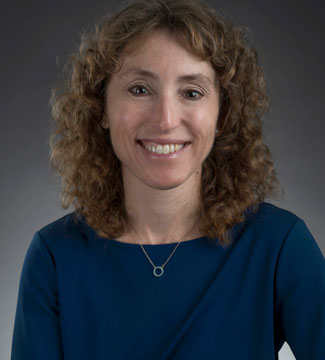
Lara Pudwell is a Full Professor and the Dixon W. and Herta E. Benz Professor in the Department of Mathematics & Statistics at Valparaiso University. She specializes in enumerative combinatorics, permutation patterns, and undergraduate research mentoring. Her work often explores pattern avoidance in permutations, rook monoids, and combinatorial structures. Education: Ph.D. in Mathematics, Rutgers University (2008) B.S. and B.A., Valparaiso University (2003) Research Interests: Lara’s research focuses on permutation patterns, combinatorial enumeration, and the application of combinatorial methods to problems in algebra, geometry, and theoretical computer science. She is particularly known for her work on pattern-avoiding permutations and enumeration schemes, as well as her contributions to undergraduate research and mentoring. Professional Activities: Lara has been an invited speaker at conferences such as the Sonia Kovalevsky Day and has participated in organizing events like MathPath. She actively contributes to mathematical communities through talks, journal articles, and mentoring programs. Labs/Teams: She collaborates with interdisciplinary teams and mentors students in research projects, including those supported by NSF grants. Her work often involves experimental mathematics and computational tools for combinatorial analysis.
Sergi Elizalde is a Professor of Mathematics at Dartmouth College, affiliated with the Department of Mathematics within the Arts & Sciences school. He holds the position of Faculty Advisor for the Byrne Scholars Program. Education: B.A., Universitat Politècnica de Catalunya Ph.D., Massachusetts Institute of Technology Research Interests: Elizalde specializes in enumerative and algebraic combinatorics, with a focus on permutations, pattern avoidance, lattice paths, bijections, generating functions, and applications to computational biology and dynamical systems. His work bridges combinatorial theory with interdisciplinary fields like cancer modeling through Markov chain models of chromosomal instability. Teaching & Mentoring: Elizalde has taught courses in graph theory, algebraic combinatorics, and calculus. He currently mentors several Ph.D. students and has advised numerous former students who have completed their doctoral degrees under his supervision. Professional Contributions: He maintains a personal research website and collaborates on projects such as the implementation of Markov chain models for studying tumor evolution. His research has been featured in high-impact journals like Nature and Advances in Applied Mathematics .
George Seelinger is an NSF Research Fellow and Postdoctoral Assistant Professor in the Department of Mathematics at the University of Michigan, specializing in algebraic combinatorics. His office is located in 3827 East Hall. He holds a PhD from the University of Virginia (2021), an MS from Loyola University Chicago (2015), and a BS from Loyola University Chicago (2015). His research focuses on polynomial invariants of plabic links and combinatorial structures. Seelinger's publications demonstrate expertise in symmetric functions, combinatorial representation theory, and algebraic structures, with recent work on LLT polynomials and Macdonald polynomials. He received the NSF Research Fellowship for his contributions to mathematical research.
Philip Matchett Wood is a Professor in the Department of Mathematics at Harvard University. His research focuses on probability theory, combinatorics, and their applications, with particular emphasis on random matrices, Markov chains, structural behavior in sumsets, and computational methods. He has contributed to foundational work in random matrix theory, including spectral analysis of non-backtracking matrices and universality principles for sparse matrices. His work often bridges theoretical insights with computational exploration, as seen in his development of Maple packages for combinatorial bijections and probabilistic algorithms. Research Interests: Probability Theory, Combinatorics, Random Matrices, Markov Chains, Computational Mathematics, Geometry Grants: Supported by NSA grants (H98230-16-1-0301 and H98230-14-1-0149) from 2014–2018, focusing on random matrix theory and spectral analysis. Publications: Over 20 peer-reviewed articles, including work on outlier detection in random matrix products, computational number theory, and universality in spectral distributions. Contributions: Developed Maple tools for combinatorial bijections (e.g., Fibonacci, ZeckFibBijections), advancing algorithmic approaches to enumerative combinatorics. He is actively involved in teaching, such as Math 22A: Vector Calculus and Linear Algebra I in Fall 2024. His interdisciplinary interests include applying probability to clinical studies (e.g., heart rate variability under anesthesia) and recreational mathematics, exploring topics like the mathematics of Rubik's Cube and origami constructions for angle trisection.
Jay Schweig is an Associate Professor in the Department of Mathematics at Oklahoma State University. Previously, he held positions as a Visiting Assistant Professor at the University of Kansas and completed his graduate studies at Cornell University. His office is located in Room 433 of the Math Sciences Building with campus extension x5690. His research focuses on algebraic and geometric combinatorics , with particular emphasis on posets, matroids, Borel ideals, and graph theory. He has developed significant connections between combinatorial structures and commutative algebra, exploring topics like vertex decomposable complexes, non-transitive dice, and the combinatorial properties of lattice path matroids. His interdisciplinary work extends to music theory, where he investigates pitch-class sets and their geometric representations. Analysis of his publication record reveals strong trends in combinatorial commutative algebra, with recurring themes of shellability, domination parameters, and lattice structures. His work frequently bridges discrete geometry with algebraic methods, particularly in the study of simplicial complexes and monomial ideals. Recent publications show increasing integration of computational methods and applications to music theory. He coordinates the Stillwater High School Math Seminar where OSU faculty deliver talks to local high school students. His teaching portfolio includes advanced courses like MATH 5903: Seminar in Mathematics Teaching and MATH 2153: Calculus II, along with interdisciplinary honors add-ons covering mathematics and music, and enumerative combinatorics.
Dr. Mark Sepanski is a Professor of Mathematics and Graduate Program Director at Baylor University's College of Arts & Sciences. He earned his Ph.D. in Mathematics from MIT (1994) and has held postdoctoral positions at Cornell University and Oklahoma State University. His research focuses on Representation Theory, Lie Theory, and Combinatorics, with notable contributions to compact Lie groups and algebraic structures. He also actively engages in mathematics education initiatives, serving with TPSEMath and the Math Alliance to support underrepresented students in STEM. Education: Ph.D., MIT (1990-1994); B.S., Purdue University (1987-1990). Postdoctoral roles included positions at Cornell and Oklahoma State University, plus a semester at the Mathematical Sciences Research Institute in Berkeley. Research interests emphasize theoretical mathematics, including representation theory of Lie groups, combinatorial structures, and algebraic methods. His work bridges pure mathematics with educational outreach, advocating for accessible post-secondary mathematics education. He has authored two influential books: Compact Lie Groups (Springer, 2007) and Algebra (AMS, 2010). Recent articles reflect expertise in graph theory, partition analysis, and Schrödinger equations within representation theory contexts. Teaching spans undergraduate to graduate levels, including courses on abstract algebra, real analysis, and Lie algebras. Advised PhD students include Jose Franco and John Miller (jointly).
Margaret A. Readdy is a Professor of Mathematics at the University of Kentucky, where she has been a faculty member since Fall 2000. She is a member of the Discrete Mathematics group within the Department of Mathematics. Her academic journey includes a PhD in Mathematics followed by a two-year postdoctoral fellowship at Laboratoire de Combinatoire et d'Informatique Mathématiques (LACIM) at Université du Québec à Montréal (UQAM), and a three-year Visiting Assistant Professorship at Cornell University. She has held numerous prestigious visiting positions including at the Institute for Advanced Study in Princeton (1998-1999 and 2010-2011), Stockholm University, MIT (2006-2007), and Princeton University (2014-2015). Professor Readdy's research focuses on algebraic combinatorics, particularly the interactions of combinatorics with algebra, topology, discrete geometry, and number theory. Her work explores the deep connections between combinatorial structures and other mathematical fields, with significant contributions to the study of polytopes, root systems, Coxeter groups, and flag enumeration. She has developed important insights into the cd-index, Eulerian posets, and combinatorial identities arising from representation theory. Her research is supported by NSF grant DMS-2247382, continuing her long-standing record of externally funded research. Analysis of Professor Readdy's recent publications (2016-2024) reveals a consistent focus on combinatorial structures with geometric interpretations. Her work often centers on polytopes (particularly the Legendre polytope), triangulations, and the combinatorial properties of Coxeter arrangements. She frequently collaborates with Richard Ehrenborg and other mathematicians, producing results that bridge discrete geometry, algebraic combinatorics, and topology. A notable theme in her recent work is the application of combinatorial methods to solve geometric problems, such as the n-dimensional pizza theorem, and the exploration of connections between different combinatorial structures through bijections and enumerative techniques. Involved with Women and Mathematics program that won the AMS 2019 Award for Mathematics Programs that Make a Difference Guest editor for March 2018 Notices of the AMS special issue for Women's History Month Featured on the cover of the March 2018 Notices of the AMS Professor Readdy actively mentors students, currently advising PhD students Will Gustafson and Ben Reese. She has received consistent research support from the National Science Foundation, including current grant DMS-2247382. She co-organizes the KOI Combinatorics Lectures (funded by NSF DMS 2435236), which brings together researchers from Kentucky, Ohio, and Indiana. She has organized the Discrete CATS Seminar since 2000 (with some interruptions), fostering a vibrant research community in combinatorics at the University of Kentucky. Professor Readdy is deeply involved in academic service and outreach. She has been a key participant in the Women and Mathematics (WAM) Program at the Institute for Advanced Study and Princeton University since 2017, serving as Academic Program Manager (2017-2019) and on the WAM Committee (2020-2022). She co-founded the Math Ambassadors program at the University of Kentucky and has organized multiple Julia Robinson Math Festivals. Her commitment to promoting mathematics extends to K-12 education through presentations at local schools and participation in the Kentucky American Water Science Fair.
Sergi Elizalde is a Professor of Mathematics at Dartmouth College, part of the Department of Mathematics within the Faculty of Arts & Sciences. He holds a B.A. from Universitat Politècnica de Catalunya and a Ph.D. from MIT. His research focuses on enumerative and algebraic combinatorics, with applications to computational biology and dynamical systems. Key areas include permutations, lattice paths, bijections, and pattern avoidance. He has supervised numerous PhD students and contributed to over 100 publications, including works on combinatorial properties of triangular partitions and chromosomal instability in tumors. Elizalde's work bridges pure mathematics with interdisciplinary applications, such as modeling tumor evolution. He has received awards like the Karen E. Wetterhahn Memorial Award and holds grants from the Simons Foundation and NSF. His teaching spans courses in combinatorics, graph theory, and algebra, reflecting his commitment to both research and education.
William J. Keith is an Associate Professor in the Department of Mathematics at Michigan Tech University . He specializes in combinatorics with a focus on partition theory , q-series , and identities . His teaching includes courses like Introduction to Linear Algebra and Combinatorics and Graph Theory , though he is currently on sabbatical for Spring 2025. Office hours: Monday/Wednesday 3-4pm (Fisher 314) or via Zoom Research interests center on partition theory , including Schmidt-type theorems , unimodality of major index distributions, and congruences for regular partitions. His work frequently bridges combinatorics with algebraic structures and modular forms. Recent publications highlight his contributions to generalized partition bijections , q-series identities , and graph-theoretic extensions . He is actively involved in mentoring graduate students, including current doctoral advisees Hunter Waldron and Philip Cuthbertson , and has previously supervised master's theses by J. T. Davies and Emily Anible . Keith coordinates the Partitions Seminar (active since 2021) and serves on the Undergraduate Committee , while also acting as an alternate faculty Senator for the Math Department. He emphasizes collaboration, particularly in exploring open problems like refining Stanley's formula and studying overpartition analogues of Gaussian coefficients.
Jean-Luc Baril is a Professor of Computer Science at the University of Burgundy , affiliated with the LIB EA 7534 laboratory. His work bridges combinatorics and discrete mathematics, focusing on bijective, enumerative, and generative aspects of combinatorial structures. Research Interests : Catalan numbers, Dyck/Motzkin paths, permutation patterns, pattern avoidance, Gray codes. Collaborators : Sergey Kirgizov, José Ramírez, Mehdi Naima, Helmut Prodinger. Education : PhD in Pure Mathematics (University of Bordeaux, 1996), CAPES, and agrégation in Mathematics. His research explores lattice structures on Dyck paths, knight's path enumeration, and bijections between polyominoes and compositions. He has developed interactive Java applets for visualizing Gray codes in restricted permutation classes related to Catalan, Schröder, and Fibonacci sequences. The articles demonstrate a consistent focus on Catalan structures , path enumeration , and pattern avoidance in permutations and words. Recent works include lattice analysis (2025), Motzkin paths with air pockets (2024), and knight's path connections to Catalan numbers (2023).
Simone Rinaldi is a full Professor at the Department of Information Engineering and Mathematical Sciences, University of Siena. His research spans combinatorics, formal languages, and discrete tomography, with a focus on enumeration and algorithmic generation of combinatorial structures. Research Interests: Enumerative and bijective combinatorics Pattern avoiding permutations and lattice paths Discrete tomography for hypergraphs and polyominoes Formal languages and tiling systems Applications to computer science and mathematical biology Publication Trends : His recent work emphasizes hypergraph reconstruction, discrete geometry, and combinatorial optimization for game theory problems, alongside advancements in tiling systems and Burrows-Wheeler transform properties.
Eric Egge is an Associate Provost and Professor of Mathematics at Carleton College. He has been at Carleton since 2005, serving as Chair of Mathematics (2017–2020) and Associate Dean/Director of Undergraduate Research (2021–2022). He holds a Ph.D. from the University of Wisconsin-Madison (2000) and taught at Gettysburg College before joining Carleton. His research focuses on algebraic and enumerative combinatorics, including symmetric functions, permutation patterns, and the Terwilliger algebra. He authored An Introduction to Symmetric Functions and Their Combinatorics (AMS, 2019) and has mentored numerous undergraduate research projects. Egge has been recognized with the MAA North Central Section Teaching Award (2020) and is active in professional organizations like the MAA and AMS. Education: B.A., Carleton College (1994); Ph.D., University of Wisconsin-Madison (2000) Administrative Roles: Associate Provost (2023–present), Director of Undergraduate Research (2021–2022) Teaching: Known for excellence in teaching, with a focus on problem-solving and undergraduate research mentorship His work bridges combinatorics and algebra, with applications to symmetric functions, permutation enumeration, and mathematical puzzles. Egge also contributes to academic leadership, departmental reviews, and faculty development initiatives.
Kendra Killpatrick is a Professor of Mathematics and Senior Associate Dean of Seaver College at Pepperdine University. She holds a PhD in Mathematics from the University of Minnesota (1998), an MS (1997) from the same institution, and a BS in Mathematics and Biological Sciences from Stanford University (1993, with Distinction). Her research focuses on combinatorics, with notable contributions to Fibonacci Tableaux, q-Catalan polynomials, pattern-avoiding permutations, and generalized Stirling numbers. She also explores conceptual understanding in Calculus education. Her work often involves combinatorial proofs, recursion relations, and enumeration techniques in algebraic and geometric contexts. Her publications span over two decades, with recent works advancing Fibonacci and Catalan number theory, Schröder path statistics, and bijection methods for Fibonomial coefficients. Earlier contributions include foundational research on q-Kostka polynomials and evacuation processes in tableau theory. She teaches courses including Calculus, Transition to Abstract Mathematics, and Combinatorics. Dr. Killpatrick’s research trends emphasize discrete mathematics, algebraic combinatorics, and educational pedagogy in STEM. She frequently collaborates on interdisciplinary projects linking combinatorial theory with mathematical education.
Susanna Fishel is an Associate Professor in the School of Mathematical and Statistical Sciences at Arizona State University (ASU), specifically within the Department of Mathematics. Her research focuses on enumerative and algebraic combinatorics, with applications in discrete mathematics, mathematical physics, and computer science. She holds a Ph.D. from the University of Minnesota-Minneapolis (1993). Her work includes studies on Catalan objects, Cherednik algebras, and hyperplane arrangements, with notable contributions to the theory of Shi regions and core partitions. Fishel has been awarded multiple Simons Collaboration Grants for Mathematicians (2015–2025) and has led NSF-funded projects such as the MCTP program fostering collaborations between ASU and Maricopa County Community Colleges. She actively participates in academic service, including roles in AWM committees and organizing workshops in algebraic combinatorics. Her teaching spans advanced courses like Combinatorics, Enumerative Combinatorics, and Discrete Mathematics, reflecting her deep engagement with both research and education.
Nathan Williams is an Associate Professor in the Department of Mathematical Sciences at the University of Texas at Dallas (UTD), tenured since 2024. He holds a Ph.D. from the University of Minnesota (2013) and completed postdoctoral research at LaCIM (Université du Québec à Montréal) and the University of California, Santa Barbara. His research focuses on algebraic combinatorics, particularly in reflection groups, braid groups, and Catalan combinatorics. Key contributions include work on noncrossing Catalan structures, dynamical algebraic combinatorics, and bijections in plane partitions. He has received UTD’s Outstanding Teaching Award (2020) and completed the ACUE Effective College Instruction program (2021). Williams has advised numerous students, including Ph.D. and honors thesis candidates, and serves on UTD’s website/computer committee and K-12 outreach initiatives. His recent grants include Simons Foundation and NSF proposals targeting combinatorial tools and braid varieties. Education: Ph.D. in Mathematics (2013, UMN), B.A. in Mathematics (2008, Carleton College) Research Interests: Coxeter groups, noncrossing partitions, combinatorial representation theory Teaching contributions include 33 courses at UTD, with a focus on discrete mathematics and graduate combinatorics. He organizes workshops like BIRS’s Dynamical Algebraic Combinatorics and co-edits the Annals of Combinatorics .