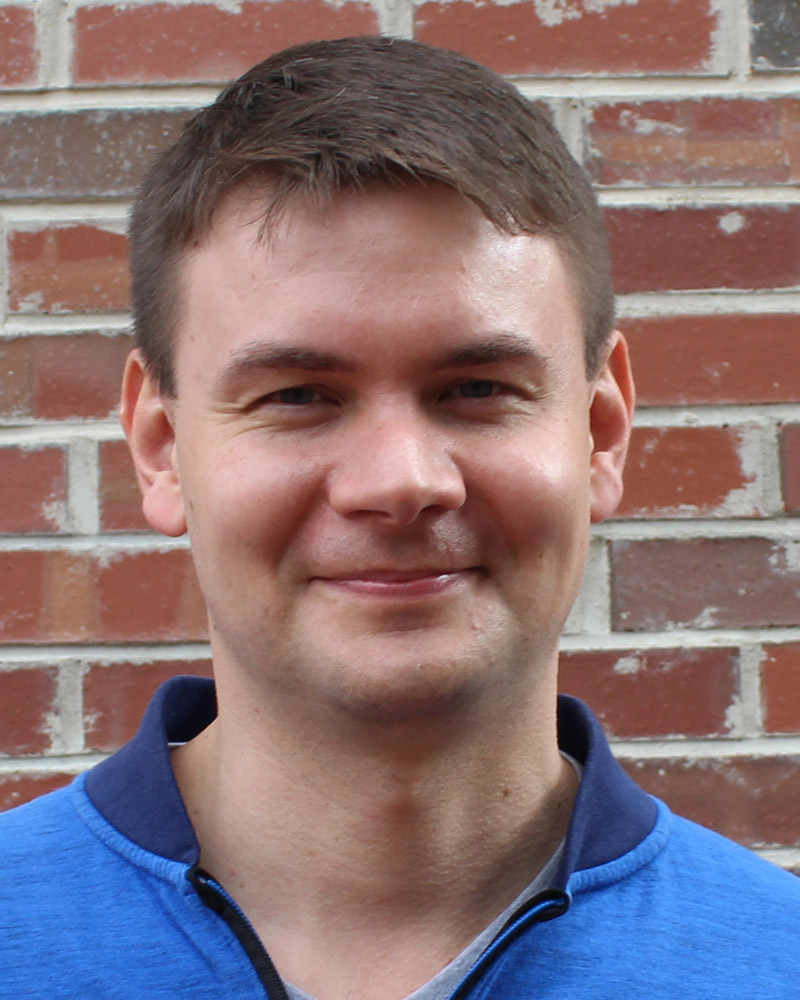
Karuppuchamy Paramasamy is a Senior Lecturer at the University of Toledo , affiliated with the College of Natural Sciences and Mathematics and the Department of Mathematics and Statistics . His research focuses on algebraic structures and geometric representations. Research Areas : Algebraic Geometry Representation Theory Schubert Varieties Publications (2013–2020) span topics in abstract algebra, with recent work on truncation methods and Schubert varieties in algebraic geometry. Collaborations : Co-author and co-investigator networks show limited connections based on current VIVO data.
Barbara Fantechi is a Full Professor of Geometry at SISSA (Scuola Internazionale Superiore di Studi Avanzati) in Italy since 2002. She previously held academic positions at the University of Udine (1999–2002) and the University of Trento (1990–1999). Her educational background includes a PhD in Mathematics (1990) and an undergraduate degree (1988) from the Università di Pisa and Scuola Normale Superiore, where her thesis focused on secant varieties and their projective applications. Fantechi specializes in Algebraic Geometry, particularly moduli spaces, algebraic stacks, and obstruction theories. Her work intersects with enumerative geometry, symplectic structures, and cohomological methods. Notable contributions include foundational research on virtual fundamental classes and orbifold cohomology. Her publications, including the influential 1997 article on The intrinsic normal cone and 2005 monograph Fundamental algebraic geometry , reflect trends in algebraic stacks, Hilbert schemes, and Gromov-Witten theory. Premio Romagnosi for young researchers (1999) Friedrich Hirzebruch Visiting Professor (2012) Chancellor Professor at MSRI/UC Berkeley (2018) Premio Tartufari per la matematica (2018) Fantechi has advised numerous PhD students in algebraic geometry, with a record of her students maintained through mathematical genealogy databases. Her research has been supported by visiting positions at institutions like the Max-Planck-Institut and the Mittag-Leffler Institute.
Tamara Grava is an Associate Professor at the International School for Advanced Studies (SISSA) in Trieste, Italy, and a Professor at the University of Bristol, UK. Her research focuses on mathematical physics, particularly integrable systems, nonlinear waves, and random matrix theory. She maintains active collaborations between these two prestigious institutions, contributing significantly to both theoretical developments and interdisciplinary applications. Her educational background includes a PhD in Mathematical Physics from SISSA, completed on October 5, 1998, with a thesis titled "On the Cauchy problem for the Whitham equations" under the supervision of Boris Dubrovin. Professor Grava's research spans several interconnected areas in mathematical physics. She investigates integrable systems with random initial data, developing probabilistic Riemann-Hilbert methods to analyze soliton gases and their connections to statistical mechanics. Her work on dispersive nonlinear partial differential equations examines long-time and small-dispersion asymptotics, with particular attention to dispersive shock waves and rogue waves. She also makes significant contributions to random matrix theory, studying special functions, orthogonal polynomials, and their connections to Painlevé equations. Her research often bridges pure mathematics with applications in physics, revealing deep connections between seemingly disparate fields. Analysis of Professor Grava's recent publications (2021-2024) reveals a strong focus on the intersection of integrable systems, random matrix theory, and nonlinear wave phenomena. Her work increasingly explores soliton gases and their statistical properties, connecting microscopic soliton dynamics to macroscopic hydrodynamic descriptions. There's a clear progression toward more complex systems involving random initial conditions and the development of rigorous mathematical frameworks to handle these problems. Her research shows strong interdisciplinary connections between mathematical physics, statistical mechanics, and quantum field theory. Professor Grava actively supervises PhD students including Sacha Grover (Bristol), Dmitrii Rachenkov (SISSA), Xiao-Fan Zhang, Xiaodong Zhu, and Zechuan Zhang. Her editorial work includes service on the boards of Nonlinearity (since 2012), SIAM Journal of Mathematical Analysis (since 2022), Constructive Approximation (since 2023), and the Bulletin and Journal of the London Mathematical Society (starting 2025). She participates in numerous international conferences and workshops, with upcoming engagements in 2025 including events on enumerative combinatorics, integrable systems, and statistical physics at institutions including CIRM, Harvard University, and the MATRIX Institute.
Semra Kuş is a Lecturer at the Mucur Vocational School of Kırşehir Ahi Evran University , Turkey, specializing in Algebra and Number Theory . She has been affiliated with the university since 2012, currently serving in the Department of Finance, Banking, and Insurance. Her academic career includes roles as Department Chair (2019–present) and extensive teaching experience in mathematics and statistics. PhD in Mathematics (2020), Gazi University MSc in Mathematics (2013), Gazi University BSc in Mathematics Teaching (2005), Selçuk University Her research focuses on q-Bernoulli polynomials , hybrid polynomials , Fibonacci matrices , and combinatorial structures in quantum calculus. Collaborations with scholars like Naim Tuğlu, Can Kızılateş, and international researchers from Saudi Arabia, India, and Turkey have resulted in publications in journals such as Demonstratio Mathematica and European Journal of Pure and Applied Mathematics . Notable scientific recognition includes the 2019 TÜBİTAK Publication Incentive Award . Her work spans 11 publications (6 journal articles, 5 conference papers) with a total of 37 citations (h-index: 3). She has co-authored studies on degenerate Bernoulli-F polynomials , harmonic Fibonacci polynomials , and q-derangement polynomials , bridging classical number theory with modern applications in finance and engineering.
Prof. Dr. Markus Reineke is a full professor of mathematics at Ruhr-Universität Bochum , where he leads the Research Team Reineke within the Faculty of Mathematics . His expertise lies in algebraic geometry and representation theory, particularly in the study of quiver representations and moduli spaces. Research Interests: Representation theory of algebras and quivers Moduli spaces in algebraic geometry Non-commutative algebraic geometry Hall algebras and Donaldson-Thomas theory Derived categories and triangulated categories Prof. Reineke's work bridges algebraic geometry and representation theory, with a focus on constructing and understanding moduli spaces of representations. His research has implications for enumerative geometry, mathematical physics, and the theory of cluster algebras. Teaching & Supervision: He actively teaches a range of courses including linear algebra, number theory, and advanced topics in algebra. He supervises doctoral students and postdocs such as Kudret Bostanci, Lydia Gösmann, Jennifer Müller, Timm Peerenboom, and Dr. Nico Lorenz. He has also hosted numerous international guests and collaborators. Events & Outreach: Prof. Reineke organizes key academic events including the ABCD-Seminar and the ARTIG-6 Conference (July 2025). He has led workshops on derived and triangulated categories and has been instrumental in fostering a vibrant research environment at Bochum.
Sally Cockburn is a Professor in the Mathematics and Statistics Department at Hamilton College, where she has been part of the faculty since 1991. Her research spans combinatorial optimization, geometric graph theory, and the philosophical foundations of mathematics. Education: Ph.D. from Yale University, M.Sc. from Queen’s University, M.Sc. from University of Ottawa, B.Sc. (Honors) from Queen’s University Her research focuses on geometric graph homomorphisms and poset structures, with applications in combinatorial optimization and computational complexity. She has explored philosophical questions in mathematics education and developed pedagogical materials for undergraduate courses. Recent publications analyze geometric graph properties (like K2,n and K3,3), NP-hardness, and set theory. These works situate her at the intersection of discrete mathematics and educational innovation. Scientific Awards: Mathematical Association of America Carl B. Allendoerfer Award (2014) Class of 1963 Faculty Fellowship (2005, 1996) Cockburn mentors students through collaborative research, notably guiding Yonghyun Song and Joshua Lesperance. She actively participates in college governance as a faculty secretary and on academic policy committees. As Mellon curricular leader for quantitative reasoning and squash team coach, she integrates academic and athletic leadership.
Martijn Kool is an Associate Professor at Utrecht University’s Faculty of Science , affiliated with the Fundamental Mathematics department. His research focuses on algebraic geometry, moduli spaces, Calabi-Yau manifolds, and intersection theory. Research Trends: His recent work (2022–2025) examines virtual invariants , Donaldson-Thomas theory , and Vafa-Witten theory , with applications to Calabi-Yau 4-folds, stable pairs, and higher-rank sheaves. Collaborations with prominent mathematicians like Lothar Göttsche and Yalong Cao are central to his contributions. Scientific Awards: NWO-Vidi award (2019) Advising & Grants: While specific student names are not listed, he has supervised three works. His research is supported by competitive fellowships and grants, including the NWO-Vidi award.
Samuel Johnston is a Heilbronn Research Fellow at Imperial College London, specializing in tropical geometry, log Gromov-Witten invariants, and mirror symmetry. He will transition to an NSF Postdoctoral Fellowship at MIT in Fall 2025 under the mentorship of Davesh Maulik. Current Position: Heilbronn Research Fellow at Imperial College London Future Position: NSF Postdoctoral Fellow at MIT (starting Fall 2025) Research Interests: His work intersects algebraic geometry and mathematical physics, focusing on: Tropical geometry and its applications to enumerative geometry Logarithmic Gromov-Witten invariants Mirror symmetry phenomena Honors: Major awards include: Heilbronn Research Fellowship National Science Foundation Postdoctoral Fellowship
David M. McClendon is a Professor in the Department of Mathematics within the College of Arts, Sciences and Education at Ferris State University, where he has been a faculty member since 2012. Prior to joining Ferris, he held postdoctoral positions at Northwestern University and Swarthmore College. Education: PhD in Mathematics from the University of Maryland BS in Mathematics from the University of North Carolina Dr. McClendon teaches across the mathematics curriculum with recent focus on calculus, advanced probability/statistics, and real analysis courses. His research focuses on ergodic theory, specifically studying statistical properties of systems that evolve over time, with particular interest in speedups of dynamical systems and odometer factors. He has also developed research interests in sports analytics, particularly applying mathematical methods to analyze college football recruiting, and in the combinatorial mathematics of LEGO brick configurations. His publications demonstrate a consistent research trajectory in dynamical systems, with recent work expanding into interdisciplinary applications. The articles show progression from foundational theoretical work on semiflows and measure-preserving systems to more specialized investigations of Z^d actions, and finally to applied work in sports analytics and combinatorial problems related to LEGO structures. Dr. McClendon serves as faculty advisor for the university's chapter of Gamma Iota Sigma, the national risk management and actuarial science fraternity. He has presented his research at numerous professional conferences including the Joint Mathematics Meetings, Midwest Sports Analytics Meeting, and various dynamics symposia. His teaching spans from introductory courses like College Algebra and Calculus to advanced topics including Real Analysis, Abstract Algebra, and specialized courses in Dynamical Systems and Game Theory.
Olivia Dumitrescu serves as an Associate Professor in the Department of Mathematics at the University of North Carolina at Chapel Hill, where she leads research at the intersection of algebraic geometry and mathematical physics. Her work focuses on foundational structures in geometry with applications to theoretical physics, particularly through the lens of Hitchin systems and topological recursion. Educational Background: B.S. in Mathematics, University of Bucharest (2004) Ph.D. in Mathematics, Colorado State University (2010) Postdoctoral Fellow, University of California, Davis (2010–2013) Postdoctoral Fellow, Leibniz University Hannover (2013–2015) Postdoctoral Fellow, Max-Planck Institute for Mathematics, Bonn (2016) Her research program spans algebraic geometry with emphases on enumerative geometry, quantum curves, Gromov-Witten theory, and birational geometry. She investigates deep connections between geometric structures and physical theories, notably exploring how topological recursion governs quantum invariants and Hitchin fibrations. Her contributions include resolving positivity problems in divisor theory and establishing bridges between oper moduli spaces and integrable systems, reflecting a sustained commitment to unifying abstract mathematics with quantum field theory frameworks. Analysis of her recent publications reveals a cohesive trajectory centered on the mathematical formalism of quantum curves and their interplay with topological recursion. Her work consistently demonstrates how geometric degeneration techniques and toric methods illuminate structures in Gromov-Witten theory, with publications appearing in premier venues like the Journal of Algebra and Letters in Mathematical Physics. This body of research underscores her role in advancing the algebraic-geometric foundations of modern theoretical physics. No scientific awards were documented in the provided text. Information regarding graduate student advising, research grants, or collaborative funding mechanisms was not specified in the available materials. No details about dedicated research laboratories, computational facilities, or structured team compositions were included in the source content.
Dr. Sara Tukachinsky is a Senior Lecturer at the School of Mathematical Sciences , Tel Aviv University , specializing in Symplectic Geometry and Gromov-Witten Theory . Her research bridges complex and symplectic geometry, focusing on open Gromov-Witten invariants, Floer theory, and quantum cohomology. Academic Appointments: Senior Lecturer, Tel Aviv University (2021–present) Institute for Advanced Study, Princeton (2017–2021) Postdoctoral Fellow, Université de Montréal (2016–2017) Member, MSRI, Berkeley (2018) Research: Explores stratified subspaces, A-infinity algebras, and Lagrangian submanifolds. Collaborates closely with Jake P. Solomon on foundational aspects of open Gromov-Witten theory. Seminars: Co-organizes the Symplectic Zoominar and the Tel Aviv Seminar in Real and Complex Geometry. Publications analyze symplectic invariants, including WDVV equations for open invariants, differential forms on orbifolds, and relative quantum cohomology. Recurring themes: mirror symmetry , Fukaya categories , and moduli spaces .
Andrey Smirnov is an Associate Professor of Mathematics at the University of North Carolina at Chapel Hill, where he also holds the distinguished position of William R. Kenan, Jr. Scholar. He is based in the Department of Mathematics within the College of Arts and Sciences, conducting research at the intersection of algebraic geometry, mathematical physics, and representation theory. His research spans several interconnected areas including enumerative geometry , mathematical physics , representation theory , combinatorics , and number theory . A particular focus of his work involves quantum K-theory, mirror symmetry, and integrable systems, where he has made significant contributions to understanding the deep connections between algebraic geometry and quantum physics. His recent publications demonstrate a consistent focus on quantum geometric methods and their applications to enumerative problems . The work prominently features themes of 3D mirror symmetry , quantum difference equations , and stable envelopes , establishing new bridges between algebraic geometry, representation theory, and mathematical physics. These contributions have advanced our understanding of quantum cohomology and K-theory of algebraic varieties. Scientific Honors: William R. Kenan, Jr. Scholar - a prestigious endowed professorship recognizing outstanding contributions to research and scholarship Contact Information: Email: asmirnov@live.unc.edu Office: 307A Phillips Hall, University of North Carolina at Chapel Hill Department: Department of Mathematics, College of Arts and Sciences
Edward Richmond is an Associate Professor and Director of Graduate Studies in the Department of Mathematics at Oklahoma State University. He previously held postdoctoral positions at the University of British Columbia (2010-2014) and the University of Oregon (2008-2010), and earned his Ph.D. in Mathematics from the University of North Carolina at Chapel Hill in 2008 under Prakash Belkale. His academic career includes roles such as Teaching Fellow (2002-2008) and Math Help Center Director (2006-2007) at UNC. Research Interests: His work focuses on algebraic combinatorics, algebraic geometry, Lie theory, and representation theory. Key research themes include Coxeter groups, Schubert varieties, billey-postnikov decompositions, and applications to geometric and combinatorial problems. He has contributed to understanding isomorphism problems in Schubert varieties, noncommutative coefficients, and smoothness criteria for algebraic structures. Recent Publications: Recent studies explore permutation pattern avoidance, cominuscule Schubert varieties, and nil-Hecke rings. These papers highlight collaborations with researchers like S. Oh, T. Grigsby, and K. Zainoulline, with applications to Young's lattice, Springer fibers, and affine flag varieties. Academic Service: Richmond has co-organized numerous special sessions at conferences, including topics in combinatorics, Lie theory, and Schubert calculus. He has also contributed to course design, such as Math 3933: Introduction to Research Methods at OSU, and participated in outreach activities like Math Mania and ELMACON.
Toshiya Kawai is an Associate Professor at the Research Institute for Mathematical Sciences (RIMS) , Kyoto University. His work bridges physics and mathematics through rigorous explorations of quantum field theory and string theory. Research interests include: String duality phenomena and geometric correspondences 2D conformal field theory (2d CFT) Gromov-Witten invariants and brane counting Elliptic genus, cohomology, and Jacobi forms Borcherds products in algebraic geometry
Tasuki Kinjo is an Assistant Professor at the Research Institute for Mathematical Sciences (RIMS) , Kyoto University. His work bridges advanced mathematical disciplines, focusing on abstract structures and their applications. Research Interests Algebraic geometry with emphasis on moduli spaces Interplay between derived algebraic/symplectic geometry and microlocal geometry Applications to geometric representation theory and Langlands duality Non-commutative derived geometry and categorified enumerative geometry Contact Email: tkinjo@kurims.kyoto-u.ac.jp