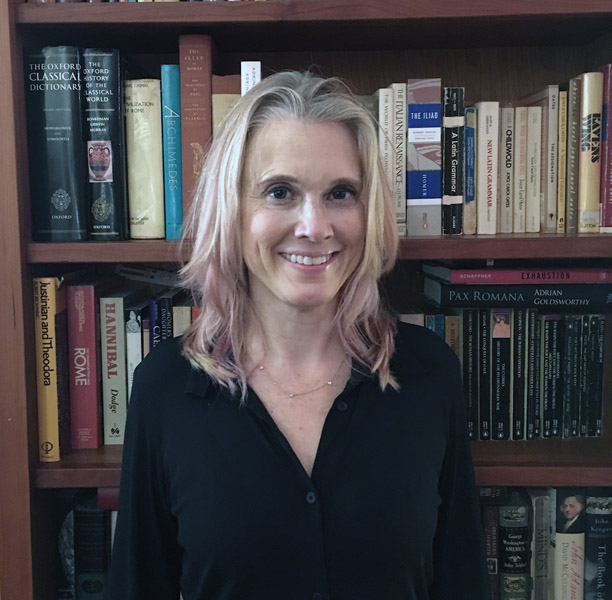
Amie Wilkinson is a Professor of Mathematics at the University of Chicago since 2012, previously holding positions at Northwestern University. She specializes in dynamical systems, ergodic theory, and geometry. Her research explores actions of discrete groups, smooth dynamics, and geometric systems. She holds a Ph.D. from UC Berkeley (1995) and an A.B. from Harvard (1989). Wilkinson has received prestigious awards including the Levi L. Conant Prize (2020) and the Ruth Lyttle Satter Prize (2011). She led the NSF-funded 'Robust and Generic Mechanisms in Smooth Dynamics' ($600,000, 2014-2019). Her work spans geodesic flows, Lyapunov exponents, and rigidity phenomena in dynamical systems. Education: Ph.D. UC Berkeley (1995), A.B. Harvard (1989) Key Positions: Boas Assistant Professor (Northwestern, 1996–1999), Associate/Full Professor roles at Northwestern (1999–2011) Awards: AMS Fellow (2013), Invited Speaker at International Congress of Mathematicians (2010) Her research emphasizes the interplay between geometry and dynamics, with contributions on ergodicity, hyperbolic systems, and foliation structures.
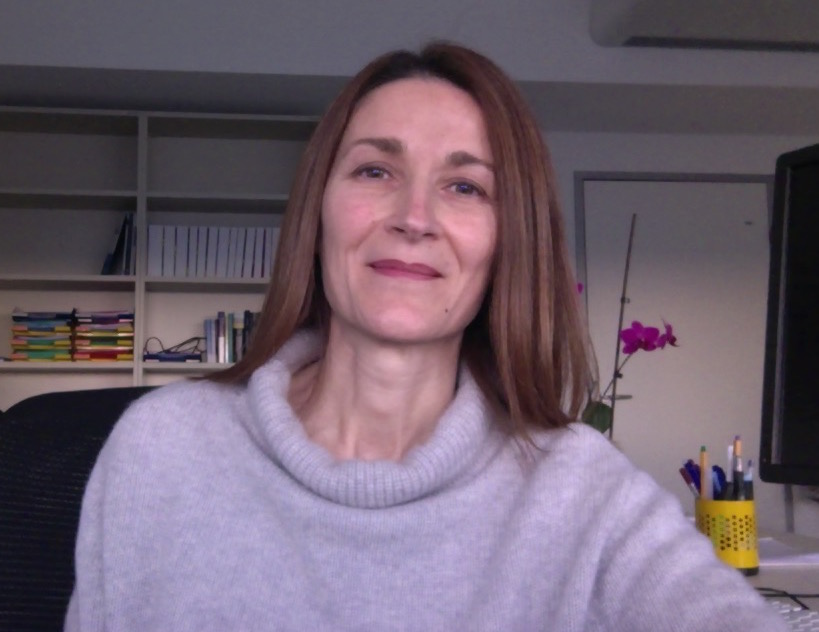
Ilaria Perugia is a University Professor (Univ.-Prof.) and Chair of Numerics of PDEs at the Department of Mathematics, Faculty of Mathematics, University of Vienna. She also serves as Deputy Head of the Research Platform Erwin Schrödinger International Institute for Mathematics and Physics. Her research focuses on numerical methods for partial differential equations with applications in computational physics and engineering. Professor Perugia's primary research interests include: Numerical methods for PDEs Finite element methods Discontinuous Galerkin methods Trefftz methods Virtual element methods Space-time methods Computational electromagnetics Wave propagation problems Nonlinear reaction-diffusion problems Her work spans theoretical analysis, algorithm development, and practical implementation of numerical methods for solving complex physical phenomena. Her recent publications demonstrate a strong focus on space-time methods, virtual element methods, and structure-preserving discretizations for wave equations, heat equations, and other PDEs. She has made significant contributions to the development of stable and efficient numerical schemes that preserve important physical properties of the underlying continuous problems, particularly in the context of wave propagation and computational electromagnetics. Professor Perugia leads a research group comprising several researchers and students including Mattia Corti, Matteo Ferrari, Monica Nonino, Andrea Scaglioni, Paul Stocker, Enrico Zampa, and Marco Zank. Her group actively collaborates on projects related to numerical analysis and scientific computing, with particular emphasis on developing novel discretization techniques for challenging PDE problems.
Eitan Tadmor is a Distinguished University Professor at the Department of Mathematics and Institute for Physical Science & Technology at the University of Maryland. He holds the 2024 Chaire d'excellence at Sorbonne University's Fondation Sciences Mathématiques de Paris, and has served as Director of multiple research centers including the Center for Scientific Computation and Mathematical Modeling (2002-2016) and The Sackler Institute of Scientific Computation (1993-1996). Current: University of Maryland (2005-present) Previous: UCLA (1995-2002), Tel-Aviv University (1989-1995), CalTech (1980-1982) His research spans nonlinear conservation laws , entropy-stable schemes , collective dynamics , spectral methods , and multiscale modeling . He pioneered the spectral viscosity method and developed stability criteria for numerical schemes. Recent publications focus on swarm-based optimization , Euler-Poisson equations , and hydrodynamic alignment with over 15000 citations. His work on kinetic formulations and regularizing effects in PDEs has become foundational in computational mathematics. 2022 Norbert Wiener Prize (AMS-SIAM) 2022 Gibbs Lecturer (AMS) 2015 Peter Henrici Prize (SIAM-ETH) 2013-2021 Fellow of AMS/SIAM NSF grants (1999, 2008-2012, 2012-2020) He developed CentPack software for hyperbolic conservation laws and co-authored influential review papers on numerical methods and mathematical modeling. His collaborative work with institutions like IPAM, KI-Net, and ETH-ITS demonstrates international scientific leadership.
Martin Ostoja-Starzewski , Ph.D. (McGill), is a Professor of Mechanical Science & Engineering at the University of Illinois at Urbana-Champaign , with affiliate appointments at the Beckman Institute and National Center for Supercomputing Applications . His research spans continuum mechanics , stochastic wave propagation , and fractal media , focusing on scaling laws and the statistical-to-representative volume element transition. 2006–Present: Professor, UIUC 2001–2005: Canada Research Chair, McGill University 2023: Rothschild Distinguished Visiting Fellow, University of Cambridge 2022: Member, European Academy of Sciences and Arts 2024: Academia Europaea Foreign Member His work pioneered continuum mechanics with spontaneous second law violations and tensor random fields for stochastic PDEs. He authored four foundational books, including Tensor-Valued Random Fields for Continuum Physics (2019), and edited 16 special issues. Recent 2025–2023 articles explore odd elasticity , fractal thermodynamics , and stochastic wavefronts , bridging non-equilibrium thermodynamics to granular Couette systems . Scientific accolades include the Worcester Reed Warner Medal (2018) and ASME , AAM , SES fellowships. As part-time faculty at Beckman Institute (2008–Present), he integrates bioimaging with mechanics across electrosurgery and traumatic brain injury modeling.
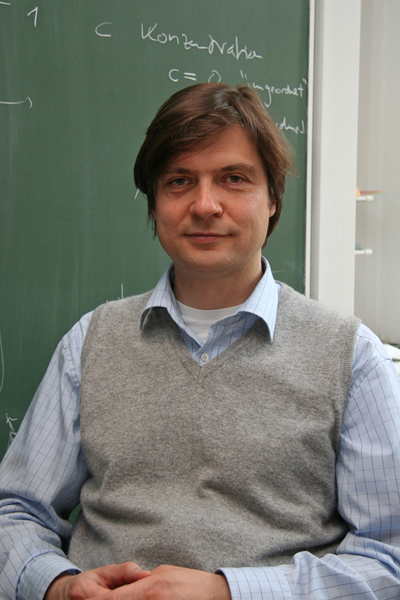
Ansgar Jüngel is a Full Professor for Analysis of Nonlinear Partial Differential Equations (PDEs) at the Technische Universität Wien (TU Vienna), affiliated with the E101-Institute for Analysis and Scientific Computing. His academic journey includes roles at universities in Berlin, Konstanz, Mainz, and Vienna since 1991. He specializes in mathematical analysis of cross-diffusion systems, entropy methods, semiconductor models, and quantum fluid dynamics. Notable achievements include an ERC Advanced Grant (2021) and the Tsungming-Tu Award (2011). Research focuses on nonlinear PDEs with applications in physics, engineering, and biology, emphasizing rigorous existence theory, numerical methods, and entropy-based approaches. Recent projects include 'Emerging network structures and neuromorphic applications' and 'Taming complexity in partial differential systems.' His teaching includes courses on partial differential equations, calculus of variations, and computational finance. Publications span over 200 works, with key contributions on cross-diffusion models, quantum hydrodynamics, and energy-transport systems. He has supervised numerous PhD students and collaborates internationally on topics like semiconductor simulations and stochastic interacting particle systems. Grants include an FWF Special Research Programme and ERC funding.
Felix Otto is a Professor and Director at the Max Planck Institute for Mathematics in the Sciences (Leipzig, Germany) since 2010. Previously, he held Full Professorships at the University of Bonn (1999–2010) and the University of California, Santa Barbara (1998–1999). His research focuses on applied mathematics, including micromagnetics, coarsening dynamics, stochastic homogenization, and hydrodynamic limits. He has received prestigious awards such as the Gottfried Wilhelm Leibniz Prize (2006) and the Max Planck Research Prize (2001). Education: 1993 PhD in Mathematics (advisor S. Luckhaus), University of Bonn 1990 Diploma in Mathematics (advisor G. Dziuk), University of Bonn Research interests emphasize the interplay between analysis, probability, and physics, particularly in understanding complex systems through rigorous mathematical methods. His work on gradient flows and optimal transport has led to foundational contributions in applied mathematics. Awards: Collatz Prize (2007) Membership in Berlin-Brandenburg Academy (2014) Leopoldina Academy (2008) Professional activities include roles as Editor of Archive for Rational Mechanics and Analysis and advisory roles at institutions like the Weierstrass Institute and Fondation Mathématique Jacques Hadamard.
Klemens Fellner is a Professor of Mathematics/Computational Sciences and Group Leader of the Applied Analysis Group at the Institute of Mathematics and Scientific Computing, University of Graz. His research focuses on the analysis of partial differential equations and mathematical modeling across physics, chemistry, and biology. Research Interests: Prof. Fellner's work spans theoretical analysis of nonlinear PDEs (reaction-diffusion, kinetic, and non-local equations) using entropy/duality methods, with applications to: Biological systems (lipolysis, protein localization, stem-cell division) Physical processes (organic photovoltaics, semiconductor modeling) Collective behavior (swarming micro-organisms, aggregation dynamics) Interdisciplinary Mathematics-Arts collaborations Publication Trends: His recent articles (2018-2021) demonstrate strong focus on: Global existence and regularity for reaction-diffusion systems Convergence to equilibrium via entropy methods Drift-diffusion models in semiconductor physics Mathematical biology applications (prion dynamics, lipolysis) Novel approaches for non-local aggregation and hysteresis phenomena Research Leadership: Currently leads the Applied Analysis Group with members including postdocs and PhD students. Key projects: Doctoral School IGDK (International Graduate School) SFB Lipid Hydrolysis (Special Research Program) Mathematics and Arts collaborations Colibri research platform Supervises PhD candidate Reymart Lagunero studying generalized reaction-diffusion systems.
Prof. Markus Valtiner is a Professor at TU Wien's Department of Applied Interface Physics, focusing on interfacial processes, corrosion science, and electrochemistry. His research combines experimental and theoretical approaches to study solid-liquid interfaces, surface chemistry, and material degradation mechanisms. He leads a team investigating high entropy alloys, passive film structures, and biomimetic membrane systems. Education: Dipl.-Ing. (Diplom-Ingenieur) in Engineering, Dr.techn. (Doctor of Engineering) from TU Wien. Research Interests: Corrosion mechanisms, electrochemical analysis, surface modification, and thin film characterization. His work spans applications in automotive materials, protective coatings, and biomedical systems. Recent Trends: Articles emphasize real-time visualization of ion dynamics, advanced surface analysis via LEIS and AFM, and sustainable material treatments. Studies on hydration layers and superlubrication highlight innovative solutions for friction reduction in confined spaces. Awards: None explicitly mentioned. Advising & Grants: Advised 19 thesis students (2018–2023) on topics like electrochemical functionalization, corrosion protection, and nanophotonic materials. Grant activities focus on interdisciplinary collaborations between physics, chemistry, and engineering. Labs & Teams: Leads the Network Lab at TU Wien, specializing in interfacial physics and advanced materials characterization using cutting-edge microscopy and spectroscopy techniques.
Norbert J. Mauser is a Professor of Mathematics at the University of Vienna 's Faculty of Mathematics. He serves as Director of the Wolfgang Pauli Institute and Co-Director of the Jungen Kurie at the Austrian Academy of Sciences. Mauser coordinates major EU projects like HYKE and DEASE , focusing on hyperbolic and kinetic equations, differential equations, and their applications in science and engineering. Research Interests : Mauser specializes in Partial Differential Equations (PDEs) , particularly Nonlinear Schrödinger Equations (NLS) , with applications in Quantum Physics and Computational Materials Science . His work spans mathematical modeling , numerical methods , and asymptotic analysis , addressing problems in micromagnetism , quantum correlation , and nonrelativistic limits . He explores Wigner transforms , stochastic NLS , and multi-configuration Hartree-Fock equations for quantum systems. Scientific Contributions : Grants & Projects : Principal Investigator for START Award , FWF , WWTF , and ANR-FWF projects on quantum dynamics, correlation, and nano-sensors. Collaborations : Active in international networks including CNRS Groupement de Recherche on kinetic equations and quantum physics. Publishing : Senior editor for journals like Asymptotic Analysis and Communications in Mathematical Sciences . Labs & Teams : Leads projects under Vienna Computational Materials Laboratory (ViCoM) and contributes to multi-scale modeling of nano-biosensors. His research integrates computational methods with theoretical physics, emphasizing quantum systems and nonlinear PDEs.
Anders Lindquist is Zhiyuan Chair Professor at Shanghai Jiao Tong University and Emeritus Professor at KTH Royal Institute of Technology. He earned his PhD from KTH in 1972 and began his career as a postdoctoral fellow at the University of Florida under R.E. Kalman. His academic journey includes positions as Assistant Professor (University of Florida), Associate Professor (University of Kentucky and Brown University), and Full Professor (University of Kentucky and KTH). At KTH, he served as Head of Mathematics Department (2000-2009) and Director of the Center for Industrial and Applied Mathematics (2006-2016). His research focuses on: Mathematical systems theory and control theory Stochastic realization and estimation Spectral estimation methods Moment problems with complexity constraints Applications of operator theory His publications demonstrate consistent focus on mathematical foundations of control systems, stochastic processes, and optimization techniques, with recent work expanding into multidimensional applications and image processing. Major scientific honors include: IEEE Control Systems Award (2020) Reid Prize in Mathematics (2009) Axelby Outstanding Paper Award (2003) Fellowships: IEEE, SIAM, IFAC Memberships: Royal Swedish Academy of Engineering Sciences, Chinese Academy of Sciences He holds four U.S. patents and has served on editorial boards of leading journals including Philosophical Transactions of the Royal Society and SIAM Review.
Jürgen Eckert is a Professor and Director at the Erich Schmid Institute of Materials Science of the OAW and holds the Chair of Materials Physics at the University of Leoben . He is a Corresponding Member of the Division of Mathematics and Natural Sciences in Austria since 2017. His research spans Materials Science , Condensed Matter Physics , and Metallurgy , focusing on metallic glasses , high-entropy alloys , microstructure engineering , and additive manufacturing . He has pioneered work on crystallization kinetics , phase transformations , and mechanical property optimization . Recent publications (2024-2025) highlight advances in 3D-printed titanium alloys , nitrogen-stabilized nanocrystalline alloys , and multi-stage heterostructures , reflecting his interdisciplinary approach combining experimental physics , computational modeling , and materials engineering . THERMEC 2023 Distinguished Award Gottfried Wilhelm Leibniz-Preis (2009) ERC-Advanced Grant (2013) DGM-Preis der Deutschen Gesellschaft für Materialkunde (2014) Dr. honoris causa, Slovak Technical University (2018) He leads the ERC Project INTELHYB and collaborates with institutions in India , Germany , and Europe , advancing heterogeneous materials design and sustainable metallurgical solutions .
Prof. Dr. Michael Zehetbauer is a retired full professor at the University of Vienna, affiliated with the Department of Physics of Nanostructured Materials. His research focuses on severe plastic deformation (SPD) techniques like high-pressure torsion (HPT), nanomaterials, and functional materials for energy and biomedical applications. He has extensively studied SPD-induced microstructural evolution in alloys, including high-entropy alloys, magnesium-based biodegradable materials, and thermoelectric materials. His work bridges materials science with applications in hydrogen storage, corrosion resistance, and medical implants. He teaches courses on materials physics characterization techniques. His publications emphasize SPD’s role in enhancing mechanical, thermal, and biomedical properties of materials. Notable research includes optimizing magnesium alloys for biodegradability and improving thermoelectric efficiency through nanostructuring. He collaborates on SPD-processing advancements for sustainable energy and biomedical solutions.
Andrea M. Tonello is a Full Professor at the Institute of Networked and Embedded Systems, University of Klagenfurt, Austria, where he chairs the Embedded Communication Systems Lab. He previously held positions at the University of Udine, Italy, where he was an Associate Professor and founded the Wireless and Power Line Communication Lab (WiPLi Lab). His research spans power line communications, wireless systems, embedded communications, smart grids, and machine learning applications in signal processing. Doctor of Engineering, University of Padova (1996) Doctor of Research, Telecommunications, University of Padova (2003) His research interests focus on next-generation communication systems, including power line and wireless networks, signal processing, machine learning for communications, UAV systems, and smart grid technologies. He has made significant contributions to PLC channel modeling, full-duplex communications, and information-theoretic learning for communication systems. His work integrates theoretical innovation with practical implementation in real-world networks. The most recent publications highlight a strong trend toward integrating machine learning and information theory into communication systems, particularly in power line and wireless networks. Themes include f-divergence based classification, mutual information estimation, neural decoding (MIND), noise-robust receivers, and topology-aware machine learning for PLC quality prediction. There is also a notable focus on UAV control, full-duplex PLC, and digital pre-distortion techniques for high-speed converters. IET 2016 Premium Award Best Paper Award, ISPLC 2016 Best Student Paper Award, ISPLC 2016 Aerospace Best Paper Award, 2018 Best Paper Award, ISPLC 2021 Best PhD Dissertation Award, 2019 IEEE ComSoc Distinguished Lecturer (2018) Two Awards from IEEE ComSoc TC-PLC (2019) University of Klagenfurt Technology Scholarships (2019) Dr. Tonello has supervised numerous PhD and Master’s students, including notable advisees such as Nunzio A. Letizia, Davide Righini, and Babak Salamat. He has led over 10 institutional and multiple industrial research projects with a total funding exceeding 20 million euros. He played a key role in promoting international academic collaboration, including Erasmus agreements, joint PhD programs with INSA Rennes and Ecole Polytechnique de Grenoble, and a joint master’s program with the University of Klagenfurt. He founded and led the WiPLi Lab at the University of Udine, which received around 3 million euros in funding and involved over 60 researchers and students. He also founded WiTiKee s.r.l., a spin-off company specializing in PLC for smart grids. Currently, he chairs the Embedded Communication Systems Lab at the University of Klagenfurt, focusing on next-generation networked and embedded communication technologies.
Karl Kunisch is University Professor at the Department of Mathematics and Scientific Computing, University of Graz , and simultaneously Scientific Director of the Radon Institute (RICAM) of the Austrian Academy of Sciences in Linz. A SIAM Fellow and recipient of the 2021 W.T. and Idalia Reid Prize, he leads the ERC Advanced Grant OCLOC and heads the research group “Optimization and Optimal Control”. Education: Dipl.-Ing. (1975), Dr. techn. (1978) and Habilitation (1980), Graz University of Technology Research Interests: His work centres on optimization and optimal control of partial differential equations , nonsmooth optimisation in function spaces , inverse problems and mathematical imaging , together with advanced numerical analysis . Current emphases are life-science applications , closed-loop control and machine-learning based feedback design. Publications Profile: With over 400 papers and two monographs, his recent output is dominated by high-impact studies on infinite-horizon optimal control , feedback stabilisation of semilinear parabolic and Navier–Stokes systems, risk-averse and data-driven control , and sparse control strategies . A clear trend is the fusion of rigorous PDE analysis with cutting-edge machine-learning techniques. Scientific Awards & Distinctions: W.T. and Idalia Reid Prize (2021) SIAM Fellow (2017) ERC Advanced Grant Horizon 2020 (2015) Alwin Walther Medaille (2008) ICM Invited Lecture, Hyderabad (2010) SIAM Outstanding Paper Prize (2006) Christian Doppler Laboratory Fellowship (1992) Fellowship of the Japanese Society for the Promotion of Science (1990) Max Kade Scholarship (1982/83) Fulbright Travel Grants (1979/80, 1985) Theodor-Körner-Fonds Research Award (1979) Pro Scienta Scholarship (1974–1977) Grants & Leadership: Principal Investigator, ERC Advanced Grant “ OCLOC – From Open to Closed Loop Control ” Scientific Director, Radon Institute (RICAM), Austrian Academy of Sciences Head of Research Group “Optimization and Optimal Control”, RICAM Co-Speaker, International Research Training Group IGDK Former member/consultant: MATHEON Scientific Advisory Board, Weierstrass Institute Scientific Advisory Board, Christian Doppler Forschungsgesellschaft Senate, DFG and INRIA evaluation boards Laboratory & Team: Prof. Kunisch currently leads the “Optimization and Optimal Control” group at RICAM, comprising post-docs, doctoral researchers and international visitors, focusing on interdisciplinary projects at the interface of PDE control, numerical optimisation and life sciences.
Dr. Noreen Mary Vielreicher is a researcher affiliated with the Department of Environment and Biodiversity at the Paris-Lodron-Universität Salzburg . Her work focuses on mineralogy, geochemistry, and thermodynamics, with a particular emphasis on silicate minerals, gold mineralization, and mineral stability in geological systems. Research Interests : Vielreicher's research spans experimental and theoretical studies of mineral thermodynamic properties, including entropy behavior in garnets, heat capacity of synthetic vs. natural olivines, and structural disordering in pyroxenes. She investigates gold deposit formation timing and processes in regions like the Yilgarn Craton. Scientific Contributions : Her publications highlight interdisciplinary approaches combining mineral physics, petrology, and economic geology. Key trends include thermodynamic modeling, geochronology of hydrothermal systems, and characterization of mineral properties for geological applications. Activities : She is an organizer for academic events such as Pangeo-Deuqua2024 and Lange Nacht der Forschung , indicating active participation in the academic community.