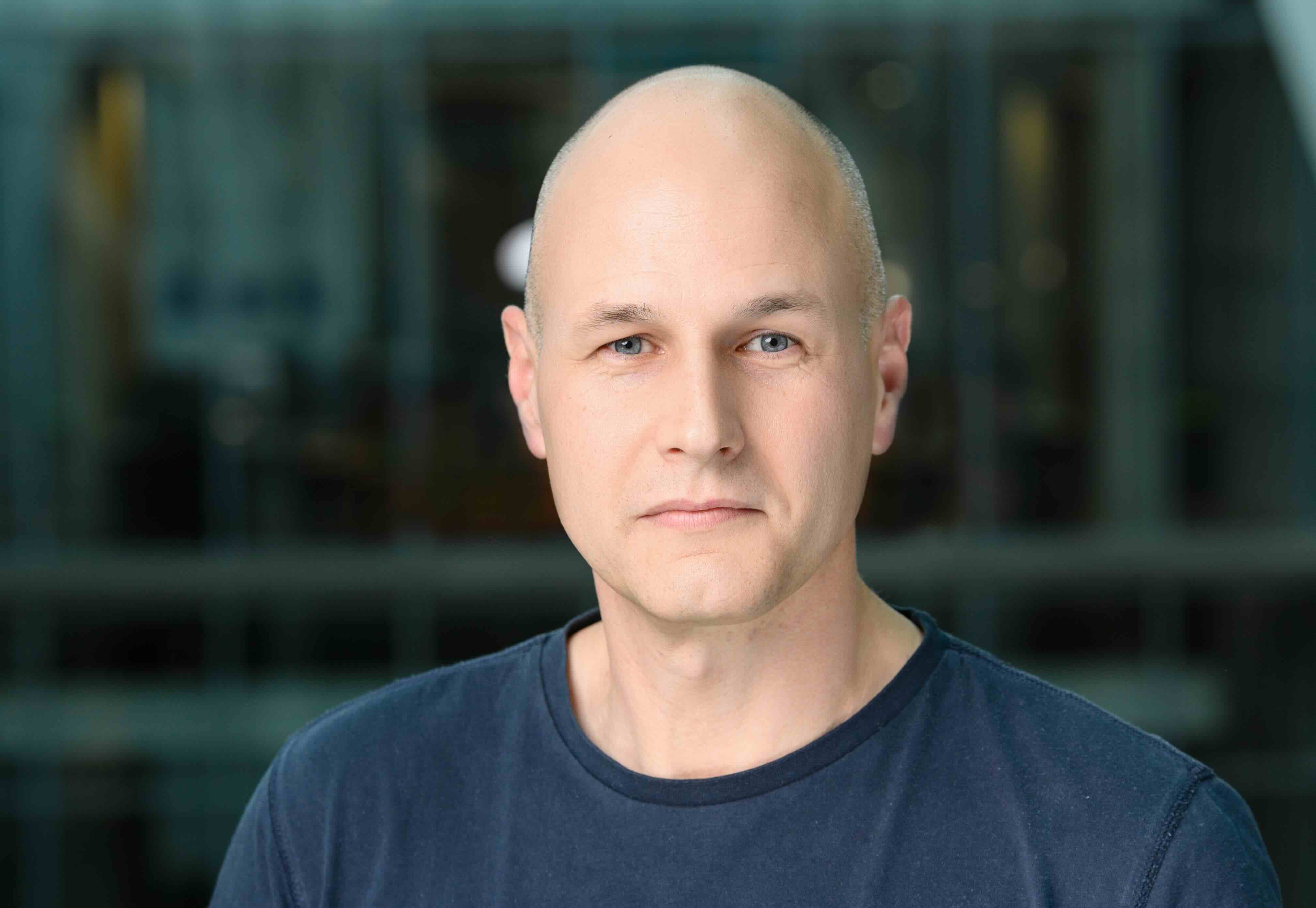
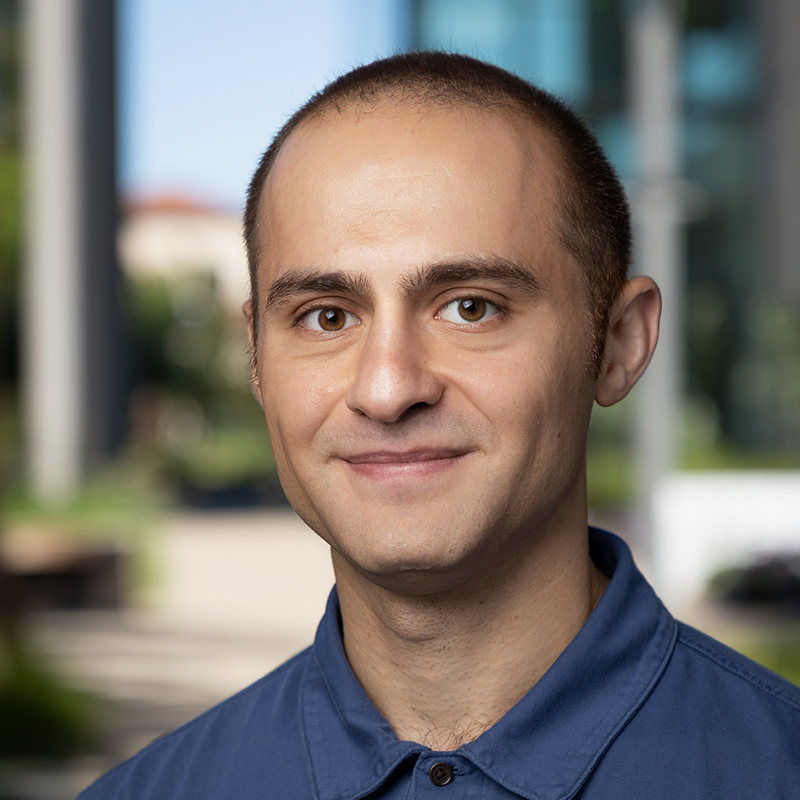
Dr. Iñaki Esnaola is a Senior Lecturer at the Department of Automatic Control and Systems Engineering, University of Sheffield, and a Visiting Research Collaborator at Princeton University. He holds a MSc from the University of Navarra (2006) and a PhD from the University of Delaware (2011). His research focuses on information theory, machine learning, and cybersecurity, particularly in cyberphysical systems like smart grids. His work addresses data integrity, privacy, robust estimation, and optimal sensor placement. Research interests include: Information theory and data science, machine learning and high-dimensional statistics, cybersecurity (especially data injection attacks), privacy, robust estimation, and sensor placement optimization. Recent projects involve empirical risk minimization with regularization, stealth attacks on control systems, and compressive sensing for environmental monitoring. Key publications include studies on relative entropy in machine learning, sensor placement for sewer networks, and stealth attacks in smart grids. He leads a research group with ongoing projects in resilient cyberphysical systems and received a UKRI grant for advanced manufacturing. His work bridges theoretical foundations with real-world applications in energy systems and environmental monitoring.
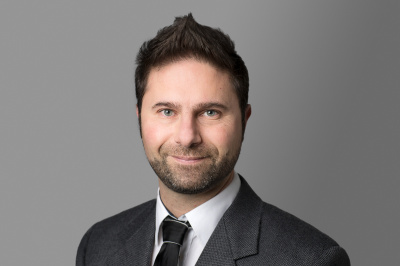
Laurent Caraffa is a Researcher at Université Gustave Eiffel, working at the LaSTIG laboratory of IGN (National Institute of Geographic and Forest Information). His research focuses on large-scale 3D data processing, including surface reconstruction from point clouds and images, leveraging triangulated structures and implicit methods. His work also covers indexing and searching within point clouds for large-scale place recognition, with applications in urban environments and navigation systems. Caraffa's research interests span 3D Data Processing, Surface Reconstruction, Point Cloud Processing, Large-scale Place Recognition, Indexing and Retrieval, Big Data, Cloud Computing, Mathematical Optimization, 3D Mapping, and Photogrammetry in degraded conditions. His work bridges theoretical computational geometry with practical applications in geographic information systems and autonomous navigation. His publication record demonstrates significant contributions to distributed 3D processing, particularly through advancements in Delaunay triangulation, watertight surface reconstruction, and neural radiance fields. Recent work shows a clear trajectory toward more efficient and scalable methods for processing massive 3D datasets, with growing emphasis on implicit representations and learning-based approaches for 3D reconstruction. Caraffa actively participates in the scientific community through organizing events like the Big Data Day 2023 at IGN and contributing to major research projects. His work has resulted in publications in top-tier conferences including ICLR, CVPR, ISPRS, and IEEE Big Data, establishing him as a significant contributor to the field of large-scale 3D data processing. As a research supervisor, Caraffa currently co-supervises four PhD students working on projects funded by AID, Criteo, and Huawei, focusing on large-scale place recognition, implicit representations for 3D reconstruction, and 3D reconstruction in degraded conditions. He is also the co-founder of ExtraLabs, a company developing distributed computing solutions for cooperative digital twins, demonstrating the practical impact of his research.
Paul Nuyujukian serves as an Assistant Professor of Bioengineering and Neurosurgery, with courtesy appointment in Electrical Engineering at Stanford University. He is a Faculty Scholar of the Wu Tsai Neurosciences Institute, directing the Brain Interfacing Laboratory where his team develops neural interface technologies for clinical applications in stroke and epilepsy. Education: MD, Stanford University (2014) PhD in Bioengineering, Stanford University (2012) BS, UCLA (2006) Dr. Nuyujukian's research integrates motor systems neuroscience with neuroengineering to decode brain activity during movement and recovery from injury. His laboratory pioneers brain-machine interface (BMI) platforms that translate neural signals into communication and control systems, with particular emphasis on intracranial EEG recording and real-time neural decoding. Current work focuses on developing clinically viable BMI solutions for neurological conditions through both preclinical models and human trials, advancing our understanding of neural population dynamics in health and disease. Recent publications reveal strong trends in intracranial EEG acquisition systems, seizure detection algorithms using information theory, and closed-loop BMI applications for ambulatory neuroscience. His work bridges fundamental neuroscience with clinical translation, particularly in epilepsy monitoring, chronic pain management, and neural prosthetics for paralysis. A notable emphasis exists on creating scalable, minimally invasive recording platforms that reduce clinical burden while maintaining high-fidelity neural data. Scientific Awards: No specific awards listed in provided materials As director of the Brain Interfacing Laboratory, Dr. Nuyujukian mentors students and collaborators in neural engineering research while securing grant funding for BMI development. His group maintains active collaborations with Stanford's Department of Neurosurgery and Neurology for clinical translation, with current projects including real-time decision-state decoding and personalized network mapping for pain management. The laboratory operates advanced facilities for both animal and human neural recording, emphasizing seamless integration of engineering innovation with clinical neuroscience. The Brain Interfacing Laboratory comprises multidisciplinary scientists and engineers developing next-generation neural interfaces. Current initiatives include the LiCoRICE platform for ambulatory neuroscience, seizure detection systems using compression-enabled entropy estimation, and ketamine's effects on hippocampal connectivity. The team actively participates in clinical trials for BMI applications in stroke rehabilitation and epilepsy, with strong partnerships across Stanford's medical and engineering schools to accelerate technology translation.
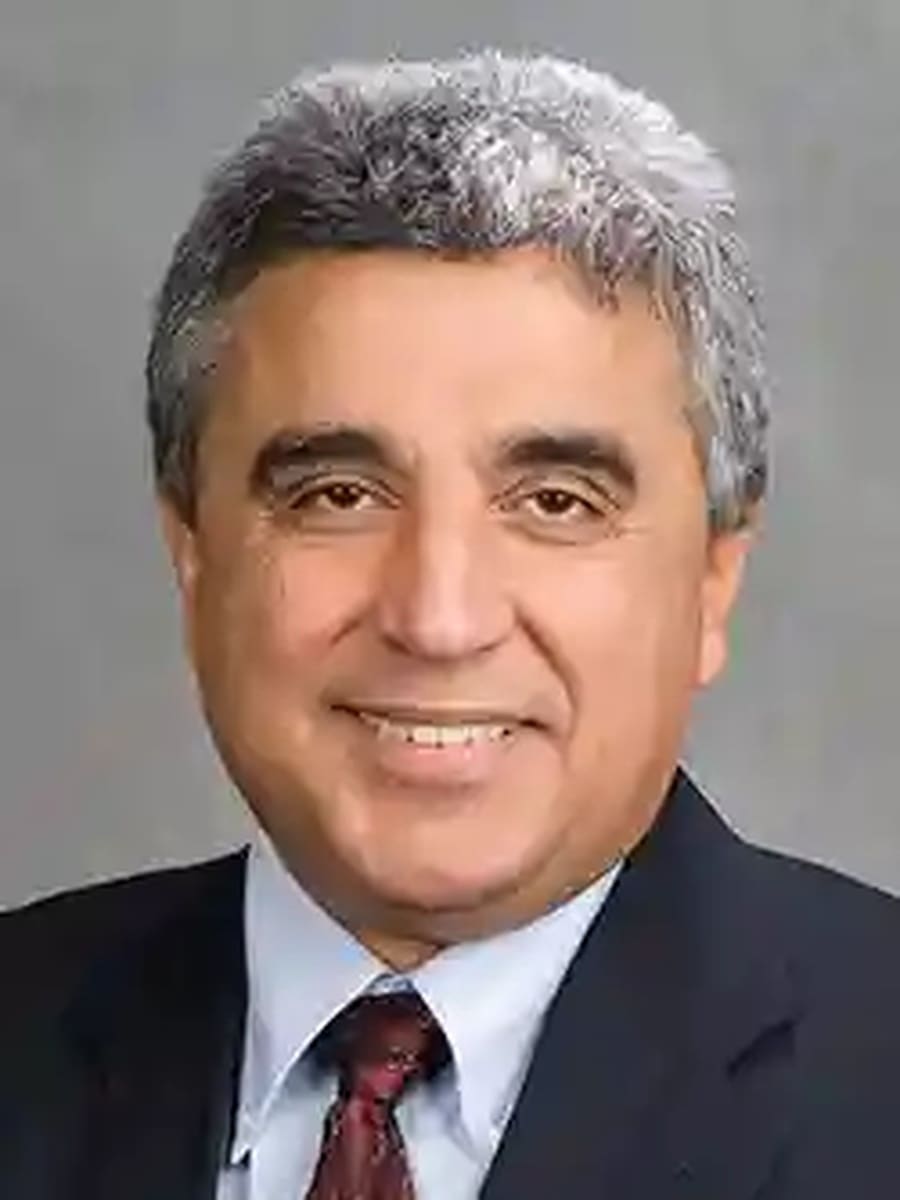
Ahmad Fakheri is Professor of Mechanical Engineering at Bradley University’s Caterpillar College of Engineering & Technology . He has served the university for more than two decades, including as Interim Associate Provost & Dean of the Graduate School (1996-1998) and Director for Research & Sponsored Programs (1992-1996). A triple alumnus of the University of Illinois at Urbana-Champaign (B.S., M.S., Ph.D., all in Mechanical Engineering), he is an ASME Fellow recognized for exceptional research and service. Education Ph.D., Mechanical Engineering, University of Illinois at Urbana-Champaign M.S., Mechanical Engineering, University of Illinois at Urbana-Champaign B.S., Mechanical Engineering, University of Illinois at Urbana-Champaign Research Interests Dr. Fakheri’s scholarship lies at the intersection of heat transfer , fluid mechanics and thermodynamics , with concentrated effort on heat-exchanger design and optimization . His work employs second-law analysis, entropy-generation minimization and advanced numerical techniques to enhance thermal efficiency and guide sustainable energy-system development. Scientific Awards & Honors Fellow, American Society of Mechanical Engineers (ASME) Outstanding Research Award, Bradley College of Engineering Outstanding Service Award, ASME Process Industries Division NASA Summer Faculty Fellow, NASA Lewis Research Center Caterpillar Fellows Program Research Award Leadership & Service Within ASME he has chaired the Process Industries Division (6,000+ members) and the Manufacturing Technical Group (10,000+ members), served on the Board on Research and Technology Development, and acted as Technical Program Chair for the 2012 ASME International Mechanical Engineering Congress. On campus he has been a member of the University Senate and has led curriculum-reform initiatives. Laboratory & Teaching Dr. Fakheri teaches undergraduate and graduate courses such as Heat Transfer , Advanced Heat Transfer , Advanced Fluid Dynamics and Advanced Computer-Aided Design , integrating computational tools and real-world design projects that connect classroom theory to industrial practice.
Yihong Wu is the James A. Attwood Professor of Statistics and Data Science at Yale University, where he also serves as Chair of the Department of Statistics and Data Science. His academic career spans prestigious institutions with a focus on theoretical and applied statistical methods. His research bridges information theory and statistics, with applications across multiple domains of data science. Professor Wu's research focuses on the theoretical foundations of high-dimensional statistics, information theory, and optimization. His work explores dimensionality reduction through both intrinsic low-dimensionality (sparsity, smoothness) and extrinsic low-dimensionality (functional estimation). He has made significant contributions to understanding statistical-computational tradeoffs in problems involving random graphs and combinatorial structures. His research has important applications in machine learning, network analysis, and signal processing. His recent publications reveal a strong focus on information-theoretic approaches to statistical problems, with particular emphasis on graph matching, empirical Bayes methods, and high-dimensional inference. Wu's work consistently addresses fundamental questions about the limits of statistical estimation and the computational feasibility of achieving those limits. His research spans theoretical foundations while maintaining relevance to practical data analysis challenges. Professor Wu actively contributes to academic education through multiple graduate-level courses including Information Theory, Statistical Inference on Graphs, and Topics in High-Dimensional Statistics and Information Theory. His teaching reflects his research interests, emphasizing mathematical rigor and theoretical foundations.
Dr. Mukund Rangamani is a Professor of Physics at the University of California, Davis. His research focuses on theoretical physics, particularly in String Theory , AdS/CFT Correspondence , and Quantum Gravity . Key affiliations: Department of Physics, UC Davis Research areas: Applications of string theory to quantum field theory and quantum gravity, holographic duality, non-equilibrium thermal systems Recent publications highlight his work on holographic thermal correlators , black hole thermodynamics , anomalous hydrodynamics , and Schwinger-Keldysh formalism in strongly coupled systems. His studies bridge quantum entanglement , relativistic hydrodynamics , and gravitational duals .
Charlene Kalle is an Associate Professor at the Mathematical Institute of Leiden University, where she also serves as the programme director of the bachelor Mathematics program. She earned her PhD in mathematics from Utrecht University and held postdoctoral positions at Warwick University and the University of Vienna before joining Leiden University. Charlene Kalle's academic journey began with her PhD studies at Utrecht University. After completing her doctorate, she pursued postdoctoral research at Warwick University and the University of Vienna, which provided her with diverse international research experiences before settling at Leiden University. Dr. Kalle's research focuses on ergodic theory , particularly examining the long-term behavior of dynamical systems. Her work explores intermittency in random dynamics , number expansions , and the fractals that emerge naturally in these contexts. She has made significant contributions to understanding random dynamical systems, β-expansions, and continued fractions. Her research bridges pure mathematics with applications in probability theory and number theory, creating connections between seemingly disparate mathematical fields. Dr. Kalle has co-authored the textbook A First Course in Ergodic Theory (2021), which has become a standard reference in the field. An analysis of Dr. Kalle's recent publications reveals a strong focus on random dynamical systems and their applications to number theory. Her work frequently examines invariant measures, matching properties, and approximation techniques within various number expansion systems. A recurring theme is the study of intermittency and critical phenomena in random interval maps, which has implications for understanding complex dynamical behaviors. Her research often combines theoretical insights with practical applications, particularly in the realm of number theory and fractal geometry. Dr. Kalle has received several prestigious recognitions for her work: TOP-grant from the Dutch Research Council (NWO) Senior Teaching Qualification (awarded February 5, 2024) Dr. Kalle has supervised numerous PhD students to completion, including Niels Langeveld (2019), Marta Maggioni (2021), and Benthen Zeegers (2023). She currently supervises Jonny Imbierski and Sven van Dijk, and has collaborated with international students like Yan Huang from Chongqing University. Her research has been supported by significant grants from the Dutch Research Council, including two prestigious TOP-grants that have enabled her to pursue innovative research directions in ergodic theory and dynamical systems. Dr. Kalle is actively involved in the mathematical community through her service roles. She serves as the secretary and board member of both the Foundation Compositio Mathematica, which oversees several prestigious mathematical journals, and the Royal Dutch Mathematical Society (Koninklijk Wiskundig Genootschap), the oldest national mathematical society in the world, founded in 1778.
Dr. Saidul Islam is a Senior Lecturer at the School of Mechanical and Mechatronic Engineering, University of Technology Sydney (UTS), Australia. He joined UTS as a Senior Lecturer on July 5, 2024, having previously served as a Lecturer (May 2022-July 2024), Scholarly Teaching Fellow (May 2019-May 2022), and Postdoctoral Research Fellow (January-December 2018) at the same institution. Dr. Islam completed his PhD in Mechanical Engineering from Queensland University of Technology (QUT), Brisbane, Australia. Dr. Islam's research spans multiple critical areas in engineering and environmental science. His primary expertise lies in computational fluid dynamics (CFD), Discrete Element Method (DEM), machine learning applications in fluid systems, thermofluids, thermal management, energy storage technologies, phase change materials, and biomedical modeling. His work addresses pressing global challenges including sustainable energy systems, air pollution impacts on respiratory health, and advanced thermal management solutions for electronics and industrial applications. His research has significant implications for clean energy technologies (SDG 7), industrial innovation (SDG 9), and climate action (SDG 13). Analysis of Dr. Islam's recent publications reveals a strong focus on energy storage systems, particularly metal hydride hydrogen storage and phase change materials for thermal management. His work integrates computational modeling with experimental validation, increasingly incorporating machine learning techniques to optimize thermal systems. There's a clear trajectory toward addressing environmental sustainability through low-GWP refrigerants and clean energy technologies, while simultaneously advancing biomedical applications through sophisticated modeling of particle transport in human airways. Best Early Career Researcher (ECR) Paper Award (2019) High-Achiever HDR Student Award QUT (2017) Best Paper Award (2015) Nomination for Outstanding PhD Thesis Award (2018) Nomination for Vice-Chancellor Teaching Award-QUT (2017) Dr. Islam actively supervises Masters and PhD students in research areas including multiphase flow, CFD-DEM, human lung modeling, energy storage, PCM, hydrogen energy, heat and mass transfer, bush fire and air quality, and thermofluids. His funded research projects include 'Decarbonising commercial and industrial process heating in Australia' (2024-2025), 'Caloric heat management space technology' (2023-2024), 'Enabling Resilient Space Computing with Advanced Thermal Management' (2023-2024), and 'Mechanical Ventilation of Stenosis Airway and Targeted Drug Delivery' (2019-2021). He serves as a guest editor for special issues on occupational respiratory health and heat wave impacts, and as an editor for International Journal of Fluid Engineering and PLoS ONE.
Ali Ramezani-Kebrya is currently an Associate Professor (with tenure) in Computer Science at the University of Oslo. Previously, he was a postdoctoral fellow at the Laboratory for Information and Inference Systems (LIONS) at EPFL and the Vector Institute in Canada. His research focuses on large-scale and distributed machine learning, optimization, privacy/security, reinforcement learning, and communication/networking aspects of machine learning algorithms. He holds a Ph.D. from the University of Toronto. Key research interests include developing robust federated learning frameworks, addressing label shift in distributed systems, and improving the generalization capabilities of stochastic gradient descent methods. His work bridges theoretical foundations with practical applications in distributed optimization and privacy-preserving machine learning. Recipient of the NSERC Postdoctoral Fellowship (equivalent to NSF fellowship in the US) His publications emphasize advancements in distributed learning systems, robust optimization techniques, and theoretical guarantees for federated learning under covariate shifts. Current research trends explore Nash equilibrium-based approaches for robustness and communication-efficient algorithms in distributed settings.
Marco Grangetto serves as Full Professor in the Department of Computer Science at the University of Turin, coordinating research in image processing and computer vision. His expertise spans wavelets, image/video coding, data compression, error resilient video coding, and biomedical image processing, with significant contributions to ISO JPEG2000 standardization and editorial roles in IEEE Transactions on Multimedia. His educational background includes a PhD in Electrical and Communications Engineering (2003) and MSc in Telecommunications Engineering (1999), both from Politecnico di Torino. His research integrates Artificial Intelligence and Deep Learning with medical imaging and fundamental compression theory , producing innovations in neural network pruning, capsule networks, and entropy-based models. Recent work focuses on Covid-19 diagnosis from chest X-rays and efficient 3D scene modeling. His publication trends reveal dual trajectories: applied medical AI (Covid-19 diagnostics, lung cancer segmentation) and theoretical advances (learned compression, contrastive learning, bias mitigation). This bridges clinical validation with information-theoretic foundations, particularly in resource-constrained environments. Scientific recognition includes: Premio Optime by Unione Industriale di Torino (2000) Fulbright Grant for research at UC San Diego (2001) He maintains leadership through IEEE editorial positions, ISO standardization participation, and MPAI membership. His research group develops medical datasets (UniToChest, UniToPatho) while advancing neural network efficiency for clinical deployment. Current projects focus on entropy minimization techniques and unbiased representation learning for healthcare applications.
Shamil Asgarli is an Assistant Professor in the Department of Mathematics and Computer Science at Santa Clara University (SCU), College of Arts and Sciences. He holds a B.Sc. from the University of British Columbia (UBC) and a Ph.D. from Brown University (2019), advised by Brendan Hassett. Previously, he was a postdoctoral fellow at UBC under mentors Dragos Ghioca and Zinovy Reichstein. His research focuses on algebraic and arithmetic geometry, with recent explorations into algebraic graph theory. Core themes include geometry and combinatorics over finite fields, transverse hypersurfaces, blocking sets, and maximum cliques in Cayley graphs. Notable contributions involve Bertini-type theorems, Picard group analysis of quadric intersections, and studies of Frobenius nonclassical hypersurfaces. Teaching spans courses at SCU (e.g., Cryptography, Calculus), UBC, and Brown, including roles as instructor and teaching assistant for calculus, linear algebra, and number theory. He completed the Sheridan Center's Reflective Teaching Program (Certificate I). His work bridges pure mathematics with combinatorial applications, often leveraging finite field structures. Key collaborations include projects with Dragos Ghioca, Chi Hoi Yip, and Kuan-Wen Lai on transverse subspaces, blocking curves, and geometric irreducibility. His publications frequently address problems at the intersection of algebraic geometry and finite field theory, with applications to coding and cryptography.
Davide La Vecchia is a Full Professor at the Research Institute for Statistics and Information Science (RISIS) at the University of Geneva, Switzerland. He holds dual PhDs in Statistics from Bocconi University (2007) and Economics from Università della Svizzera italiana (2011). His academic journey includes roles as an Assistant Professor at the University of St. Gallen and Monash University, and he has held visiting positions at Princeton University, the University of Copenhagen, and CREST (Paris). His expertise spans time series analysis, robust and semiparametric inference, financial econometrics, and spatial statistics. Key research contributions include work on saddlepoint approximations, optimal transportation methods, and latent variable models. Davide has led multiple grants, including from the Swiss National Science Foundation and the Australian Research Council. He serves as a referee for top-tier journals in statistics and econometrics. Teaching focuses on advanced statistical methods, including probability theory, time series analysis, and multivariate inference. His recent work emphasizes high-dimensional data modeling, spatio-temporal factor models, and applications to commodities trading networks. He has been honored with editorial roles and speaker invitations at global conferences, reflecting his leadership in statistical methodology.
Igor R. Klebanov is the Eugene Higgins Professor of Physics and Director of the Princeton Center for Theoretical Science at Princeton University. He holds a PhD in theoretical high-energy physics from Princeton (1986) and has been on faculty there since 1989. His research focuses on quantum field theories, AdS/CFT correspondence, and confinement mechanisms in QCD. He leads the Simons Collaboration on Confinement and QCD Strings. Education: PhD in Theoretical High-Energy Physics, Princeton University (1986) Research Interests: Klebanov explores dualities between quantum field theories and gravitational systems, particularly the Anti-de Sitter/Conformal Field Theory correspondence. His work addresses strong interactions, non-perturbative phenomena in QCD, and the physics of confining flux tubes (QCD strings). Recent efforts include studying large-N limits, renormalization group flows, and entanglement entropy in strongly coupled systems. Awards: 2023 Dirac Medal (ICTP) 2022 Oskar Klein Medal (Stockholm University) Elected to US National Academy of Sciences Elected to American Academy of Arts and Sciences Advising & Collaborations: Directs the Simons Collaboration on Confinement/QCD Strings. Advises PhD students Andrei Katsevich and Ilia Kochergin. Collaborates extensively with institutions like CERN and Stanford Linear Accelerator Center. Labs/Teams: Leads theoretical physics research groups at Princeton focused on gauge/gravity duality, string theory applications, and non-perturbative QCD phenomena.
prof. RNDr. Ľubomír Snoha, DSc., DrSc. is a Professor in the Department of Mathematics at the Faculty of Arts, Matej Bel University in Banská Bystrica, Slovakia. His research and teaching focus on advanced mathematical theory, with significant contributions to dynamical systems and topology. He maintains an active academic presence through recent publications and structured consultation hours. His academic credentials include: MSc. from Faculty of Natural Sciences, Comenius University in Bratislava (1978) RNDr. from Faculty of Natural Sciences, Comenius University in Bratislava (1978) CSc. from Faculty of Mathematics and Physics, Comenius University in Bratislava (1986) Doc. from Faculty of Mathematics and Physics, Comenius University in Bratislava (1989) DSc. from Czech Academy of Sciences, Prague (2005) DrSc. from Comenius University in Bratislava (2007) Prof. from Silesian University in Opava (2008) Professor Snoha's research centers on dynamical systems and ergodic theory (MSC 37-XX) and general topology (MSC 54-XX). His work explores chaos phenomena, entropy measures, minimal sets, and transitivity in topological spaces. He investigates complex structures including intervals, graphs, dendrites, and manifolds, often revealing fundamental properties of dynamical behavior. His theoretical contributions bridge abstract topology with concrete dynamical systems analysis. Analysis of his 15 most recent publications (2001-2024) reveals consistent advancement in minimality concepts, semigroup actions, and chaos characterization. Key trends include extending classical interval map results to graph bundles and dendrites, refining entropy frameworks, and establishing connections between scrambled sets and Li-Yorke chaos. His 2024 work on polynomial entropy demonstrates evolving focus toward rigidity-flexibility dichotomies in dynamical complexity. No specific scientific awards or fellowships were documented in the provided materials. As an educator, Professor Snoha teaches advanced courses including Dynamical Systems, Ergodic Theory, Topology, and Mathematical Analysis. His consultation schedule maintains Monday office hours (11:30-12:30), though no formal advising relationships or grant-funded projects were specified. His teaching portfolio spans foundational calculus to specialized graduate topics in mathematical dynamics. The documentation does not reference dedicated research laboratories or structured collaborative teams led by Professor Snoha, though his extensive co-authorship network indicates active scholarly collaboration within the international mathematics community.
Artur Rusowicz is a Professor at the Faculty of Power and Aeronautical Engineering , Warsaw University of Technology , specializing in the Department of Refrigeration and Building Energy . His research focuses on heat and mass transfer in refrigeration systems, free cooling technologies, plasma coatings, and entropy generation minimization in thermal systems. Key Roles: Prodziekan ds. ogólnych (since 2016), former advisor for the Student Scientific Association of Refrigeration Engineers (until 2017), Editor-in-Chief of Chłodnictwo magazine, and expert for the International Institute of Refrigeration (IIR) in Paris. Projects: Led national and international research on refrigeration, heat recovery, and plasma waste destruction, including grants from KBN, MNiSW, and Warsaw Technology Incubator. Scientific Contributions: Authored 15+ publications in leading journals like Energy , Thermal Science , and Przemysł Chemiczny , addressing thermal optimization, refrigeration cycles, and sustainable energy systems. 2020: Optimized microjet cooling systems for data centers using CFD. 2019: Refrigerant selection for Organic Rankine Cycles with environmental impact analysis. 2017: Thermoacoustic refrigeration performance evaluation. Awards: Recipient of the Rector's Award (II Class) for scientific achievements (2017, 2012) , Golden SIMP Medal (2014) , and Bronze Medal for Long Service (2012) . Also recognized for mentorship in student thesis competitions. Editorial & Organizational Roles: Served as Editor-in-Chief of Chłodnictwo , head of Warsaw SIMP Refrigeration and Air Conditioning Section, and expert in numerous scientific committees.