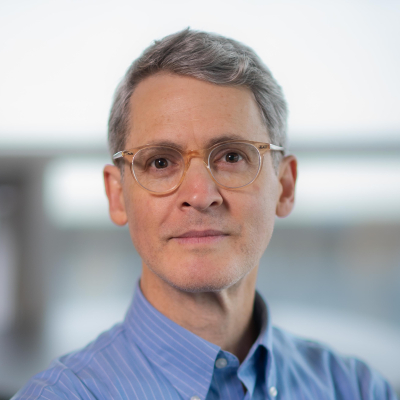
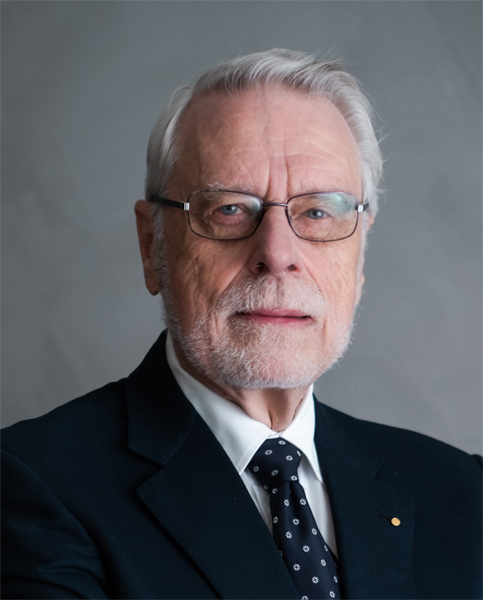
Ansgar Jüngel is a Full Professor for Analysis of Nonlinear Partial Differential Equations (PDEs) at the Technische Universität Wien (TU Vienna), affiliated with the E101-Institute for Analysis and Scientific Computing. His academic journey includes roles at universities in Berlin, Konstanz, Mainz, and Vienna since 1991. He specializes in mathematical analysis of cross-diffusion systems, entropy methods, semiconductor models, and quantum fluid dynamics. Notable achievements include an ERC Advanced Grant (2021) and the Tsungming-Tu Award (2011). Research focuses on nonlinear PDEs with applications in physics, engineering, and biology, emphasizing rigorous existence theory, numerical methods, and entropy-based approaches. Recent projects include 'Emerging network structures and neuromorphic applications' and 'Taming complexity in partial differential systems.' His teaching includes courses on partial differential equations, calculus of variations, and computational finance. Publications span over 200 works, with key contributions on cross-diffusion models, quantum hydrodynamics, and energy-transport systems. He has supervised numerous PhD students and collaborates internationally on topics like semiconductor simulations and stochastic interacting particle systems. Grants include an FWF Special Research Programme and ERC funding.
Youssef Marzouk is a Professor of Aeronautics and Astronautics at MIT, serving as co-director of the MIT Center for Computational Engineering and director of the Aerospace Computational Design Laboratory. His research focuses on integrating physical modeling with statistical inference, emphasizing Bayesian computation, uncertainty quantification, and optimal experimental design. He holds a SB, SM, and PhD from MIT and has been recognized with prestigious awards including the DOE Early Career Award and the Junior Bose Teaching Prize. Education: PhD in Aeronautics and Astronautics, MIT SM in Aeronautics and Astronautics, MIT SB in Aeronautics and Astronautics, MIT Research Interests: Uncertainty Quantification techniques for complex systems Bayesian computational methods and inverse problem solutions Optimal experimental design strategies Interdisciplinary applications in geophysics, environmental science, and engineering Awards: 2022: Report to the President, Center for Computational Science and Engineering 2021: Bayesian Inference Software Framework (hIPPYlib-MUQ) 2012: MIT School of Engineering Junior Bose Award 2010: DOE Early Career Research Award Labs & Leadership: Aerospace Computational Design Laboratory (Director) MIT Center for Computational Engineering (Co-Director) Editorial Board roles: SIAM Journal on Scientific Computing, Advances in Computational Mathematics
Professor Juhi Jang is a mathematician specializing in analysis and partial differential equations (PDEs) with applications to fluid dynamics, gas dynamics, kinetic theory, and astrophysics. She holds the rank of Professor in the Department of Mathematics at the University of Southern California (USC), where she has been since 2020. Prior to this, she served as an Associate Professor at USC (2015–2020) and UC Riverside (2014–2015), and as an Assistant Professor at UC Riverside (2010–2014). Her research focuses on the mathematical analysis of fluid and gas dynamics, singularities in PDEs, and gravitational collapse. Notable contributions include work on the Einstein-Euler system, hydrodynamic limits from kinetic equations, and nonlinear stability of expanding stars. Educationally, Jang earned a B.Sc. (summa cum laude) in Mathematics from Seoul National University (2000), followed by a M.Sc. (2004) and Ph.D. (2007) in Mathematics from Brown University. Her honors include the Frontiers of Science Award (2023), Simons Fellowship (2019–2020), and NSF CAREER grant (2014–2020). She has also organized international summer schools on mathematical fluids and served on editorial boards for journals like SIAM Journal on Mathematical Analysis and Kinetic and Related Models. Her research interests span: fluid dynamics, gas dynamics, kinetic theory, plasma physics, and mathematical physics. Key areas include moving boundary problems in compressible fluids, stability of gravitational systems, and singularity formation in fluid models. She has authored over 50 peer-reviewed articles, with recent work appearing in Annals of PDE , Archive for Rational Mechanics and Analysis , and Inventiones Mathematicae . Jang’s teaching spans graduate courses in PDEs, real analysis, and topology, alongside undergraduate calculus and topology. She has advised numerous graduate students and postdocs, contributing to the training of the next generation of mathematical analysts.
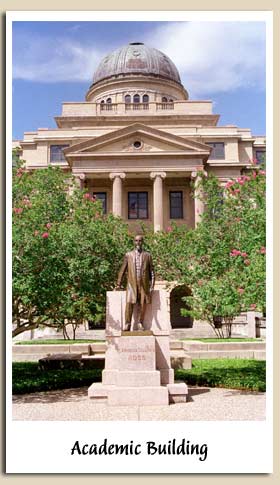
Bojan Popov is a Professor in the Department of Mathematics at Texas A&M University, part of the College of Arts & Sciences. His research focuses on numerical analysis, nonlinear partial differential equations, and approximation theory, with a particular emphasis on invariant domain preserving schemes and hyperbolic conservation laws. He holds a Ph.D. from the University of South Carolina (1999) and an M.S. from the University of Sofia (1992). Popov has led or co-led numerous grants from agencies like NSF, DOD, and DOE, totaling over $30 million. He has advised four Ph.D. students and organized major conferences, including the 2007 'Approximation and Learning in High Dimensions' and the 2008 'Nonlinear Approximation Techniques Using L1'. His work bridges numerical methods with applications in fluid dynamics, materials science, and high-performance computing. Recent research includes invariant domain preserving techniques for hyperbolic systems, entropy viscosity methods, and robust finite element approximations. He teaches advanced courses such as Hyperbolic Conservation Laws (Math 638) and Linear Algebra (Math 304).
Colleen Bailey is an Assistant Professor in the Department of Electrical Engineering at the University of North Texas. Her research focuses on the intersection of machine learning, signal processing, and energy systems, with applications spanning biomedical imaging, environmental monitoring, and edge computing. Research Interests: Machine learning optimization for edge devices Entropy-based image compression techniques Attention mechanisms in vision transformers Urban air pollution prediction models Land surface temperature super-resolution Publication Trends: Recent works emphasize compact AI architectures (e.g., MHATT network, entropy bottleneck models) for efficient processing in resource-constrained scenarios. Applications include medical imaging (Chest X-ray analysis), environmental monitoring (air quality, Martian dust storms), and energy systems (household prediction, power quality classification). Contact: Email: Colleen.Bailey@unt.edu Office: Discovery Park B252 Phone: 940-891-6874
Tushar Athawale is a Research Scientist at Oak Ridge National Laboratory (ORNL) and a Joint Faculty Assistant Professor in the Department of Electrical Engineering and Computer Science at the University of Tennessee, Knoxville. His primary research focuses on uncertainty visualization, statistical data analysis, and high-performance computing for large-scale scientific data. He holds a PhD in Computer Science from the University of Florida (2015) and has held roles including Postdoctoral Fellow at the University of Utah's Scientific Computing & Imaging Institute and Application Support Engineer at MathWorks. His academic and professional affiliations include ORNL's Computer Science and Mathematics Division, the IEEE Visualization Conference program chair (2025), and associate editor for IEEE Transactions on Visualization and Computer Graphics. He has organized workshops, tutorials, and served on program committees for major visualization conferences. Key research interests span uncertainty quantification, topological methods, and visualization techniques for biomedical imaging, fusion simulations, and quantum computing. His work emphasizes trustworthy scientific data analysis through advanced visualization frameworks like VTK-m and implicit neural representations. Awards include ORNL's 2024 Special Award and Best Paper Honorable Mention at the IEEE Uncertainty Visualization Workshop 2024. His contributions bridge visualization theory with practical applications in exascale computing and AI-driven decision-making.
Prof. Dr.-Ing. Andrea Beck is a faculty member and Managing Director of the Institute of Aerodynamics and Gas Dynamics (IAG) at the University of Stuttgart. She leads the Numerical Methods in Fluid Mechanics working group, focusing on high-precision numerical methods for supercomputers, particularly discontinuous Galerkin (DG) methods. Her research spans fluid mechanics, aeroacoustics, plasma physics, and multiphase flows, with applications in wind energy, helicopter systems, and environmental aerodynamics. Role: Professor and Managing Director, IAG Committees: Member of the DFG Review Board, Strategy Committee for National HPC, and steering committee of High Performance Center Stuttgart. Her research emphasizes high-order methods, turbulence modeling, and data-driven approaches. She teaches courses such as 'Numerical Methods in Fluid Mechanics' and 'CFD Programming Projects', and has developed open-source software like FLEXI and HOPR for high-performance computing. Recent articles highlight advancements in entropy-stable DG methods, turbulence simulation using graph neural networks, and multiphase flow modeling. Her work integrates machine learning with CFD to enhance simulation accuracy and efficiency.
Professor Alexander Kushpel is affiliated with Çankaya University, Faculty of Arts and Sciences, Department of Mathematics, Turkey, since 2018. He has held academic roles at the University of Leicester (2011-2016), State University of Campinas (1997-2001, 2006-2010), and Ryerson University (2001-2006). PhD in Mathematics, University of Leicester (2015) PhD in Mathematics, Universidade Estadual de Campinas (2009) PhD in Mathematics, Institute of Mathematics of the National Academy of Sciences of Ukraine (1992) His research focuses on Mathematical Analysis , Applied Mathematics , and Geometry , with emphasis on approximation theory, Fourier analysis, and operator entropy. Key article trends include n-widths, Sobolev classes on manifolds, and financial mathematics applications. He has advised Regis Leonardo Braguim Stabile (MSc thesis: "N-width of set of smooth functions on the sphere SD").
Yihong Wu is the James A. Attwood Professor of Statistics and Data Science at Yale University, where he also serves as Chair of the Department of Statistics and Data Science. His academic career spans prestigious institutions with a focus on theoretical and applied statistical methods. His research bridges information theory and statistics, with applications across multiple domains of data science. Professor Wu's research focuses on the theoretical foundations of high-dimensional statistics, information theory, and optimization. His work explores dimensionality reduction through both intrinsic low-dimensionality (sparsity, smoothness) and extrinsic low-dimensionality (functional estimation). He has made significant contributions to understanding statistical-computational tradeoffs in problems involving random graphs and combinatorial structures. His research has important applications in machine learning, network analysis, and signal processing. His recent publications reveal a strong focus on information-theoretic approaches to statistical problems, with particular emphasis on graph matching, empirical Bayes methods, and high-dimensional inference. Wu's work consistently addresses fundamental questions about the limits of statistical estimation and the computational feasibility of achieving those limits. His research spans theoretical foundations while maintaining relevance to practical data analysis challenges. Professor Wu actively contributes to academic education through multiple graduate-level courses including Information Theory, Statistical Inference on Graphs, and Topics in High-Dimensional Statistics and Information Theory. His teaching reflects his research interests, emphasizing mathematical rigor and theoretical foundations.
Detlev Marpe is a leading researcher at the Fraunhofer Heinrich Hertz Institute (HHI), serving as Head of the Video Coding & Analytics Department and Head of the Image & Video Coding Group. His work focuses on advancing video compression standards, including HEVC (H.265) and its extensions. He has contributed significantly to tools like entropy coding, transform coding, and scalable video coding. His research emphasizes efficient compression techniques, such as adaptive context models and wavelet-based methods, with applications in multimedia communication and low-delay video encoding. Affiliations: Fraunhofer Institute for Telecommunications HHI, Berlin, Germany Roles: Department Head, Research Group Leader, and Adjunct Lecturer at TU Berlin (2013/14) Research Interests: Video coding standards (HEVC, H.264/AVC), entropy coding (CABAC), wavelet-based compression, scalable video coding (SVC), multiview video coding (MVC), and rate-distortion optimization. His work bridges theoretical advancements with practical implementations, addressing challenges in compression efficiency, scalability, and real-time applications. Publications & Awards: Over 200 publications in top-tier journals and conferences, including IEEE Transactions and SPIE. Notable awards include the Chester Sall Best Paper Award and multiple Best Paper Awards from IEEE journals. His contributions to video coding standards have been adopted in global specifications like MPEG and ITU-T. Grants & Labs: Involved in major research projects on HEVC extensions, 3D video coding, and low-delay applications. Collaborates with industry partners and academic institutions globally. His team at HHI develops reference software and test models for emerging standards.
Gui-Qiang G. Chen is a Professor at the Mathematical Institute , University of Oxford, and a Professorial Fellow of Keble College. He serves as Director of the Oxford Centre for Nonlinear Partial Differential Equations (OxPDE) , focusing on nonlinear PDEs, hyperbolic conservation laws, and their applications to fluid dynamics, geometry, and mathematical physics. His research spans Partial Differential Equations , Nonlinear Analysis , Shock Wave Theory , and Free Boundary Problems , with recent work on stochastic PDEs , geometric PDEs , and numerical analysis . His publications cover topics like transonic shocks , hypersonic flow , and compressible fluid dynamics . Gui-Qiang Chen has co-authored 15+ major publications since 2007, including research monographs on shock reflection-diffraction and Prandtl-Meyer reflection configurations , and his work appears in leading journals like Annals of Mathematics and Communications on Pure and Applied Mathematics . Awards and fellowships include: 2024 Polya Prize (London Mathematical Society) Doctor of Science (Oxford, 2024) Member of Academia Europaea (2022) Member of the European Academy of Sciences (2020) Fellow of the American Mathematical Society (2017) SIAM Fellow (2013) Chinese National Prize of Sciences (1990) He supervises DPhil/PhD students in nonlinear PDEs and related fields, and his research is supported by Oxford's mathematical infrastructure and international collaborations.
Michael Friedlander is a Professor of Computational Mathematics at the University of British Columbia (UBC), holding joint appointments in the Departments of Computer Science and Mathematics. He serves as Director of the UBC Institute of Applied Mathematics and is a Sauder School Distinguished Scholar. His research focuses on optimization theory, algorithms, and applications, particularly in convex optimization, first-order methods, and machine learning. Friedlander is a SIAM Fellow (2024) and has received multiple teaching awards, including the 2013 UBC CS Teaching Award. Education: PhD (2002) in Operations Research from Stanford University; BA (1993) in Physics from Cornell University. Research Interests: Friedlander’s work spans computational optimization, including first-order methods, gauge duality, federated learning, and applications in signal processing and quantum computing. His contributions include SPGL1, a widely used convex optimization solver, and foundational work on atomic decomposition and polar alignment in structured optimization. Key Contributions: His research bridges optimization with practical applications, such as compressed sensing and data science. Notable areas include dual methods for federated learning, low-rank spectral optimization, and algorithms for sparse recovery. He has advised numerous PhD students, including work on topics like gauge duality and federated learning contribution valuation. Awards & Honors: SIAM Fellow (2024) 2013 UBC CS Department Teaching Award CACS Outstanding Young Researcher Prize AI & Statistics 2009 Best Paper Award Advising & Grants: Supervised over 20 graduate students and postdocs. Active in grant-funded research, including projects on optimization algorithms and their industrial applications. Collaborates with institutions like Pacific Institute for Mathematical Sciences (PIMS) and the Data Science Institute at UBC. Labs & Affiliations: Affiliated with the Institute for Computing, Information and Cognitive Systems (ICICS), Data Science Institute, and Quantum Computing Research Cluster at UBC. Leads interdisciplinary efforts in applied mathematics and computational science.
Kazuyoshi Miyagawa is a Professor at Waseda University's Department of Applied Mechanics and Aerospace Engineering within the Faculty of Science and Engineering, School of Fundamental Science and Engineering. With a Doctor of Engineering from Osaka University, he has maintained a continuous academic career at Waseda University since 2011, progressing from Associate Professor to full Professor. His educational background includes undergraduate and graduate studies in Mechanical Engineering at Waseda University, followed by specialized research at Osaka University's Graduate School of Engineering Science. Professor Miyagawa's research focuses on Fluid Engineering, Fluid Machinery, Cavitation, and Flow Induced Vibration . His work bridges theoretical fluid dynamics with practical applications in turbomachinery, particularly in hydraulic turbines, pumps, and rocket turbopumps. His research demonstrates a consistent emphasis on improving efficiency, stability, and reliability of fluid machinery through innovative design and thorough understanding of complex flow phenomena. His extensive publication record (107 papers with 683 Scopus citations and 1543 Google Scholar citations) reveals a strong focus on draft tube flow in hydraulic turbines, cavitation phenomena, and unsteady flow characteristics in various turbomachinery applications. His recent work shows increasing attention to computational fluid dynamics validation through experimental methods and practical engineering solutions for flow instability problems. Scientific Awards Multiple Technical and Paper Awards from the Turbomachinery Society of Japan (2001-2021) Recognition for development of new water turbines, high-efficiency turbochargers, and low-noise pumps Research on Francis turbine performance and cavitation phenomena Professor Miyagawa actively contributes to the engineering community through leadership roles including President of the Turbomachinery Society of Japan (2023-present) and Board Director of The Japan Federation of Engineering Society (2025-present). His professional memberships span multiple international and Japanese engineering societies including ASME, IAHR, and The Japan Society of Mechanical Engineers.
Dr. Saidul Islam is a Senior Lecturer at the School of Mechanical and Mechatronic Engineering, University of Technology Sydney (UTS), Australia. He joined UTS as a Senior Lecturer on July 5, 2024, having previously served as a Lecturer (May 2022-July 2024), Scholarly Teaching Fellow (May 2019-May 2022), and Postdoctoral Research Fellow (January-December 2018) at the same institution. Dr. Islam completed his PhD in Mechanical Engineering from Queensland University of Technology (QUT), Brisbane, Australia. Dr. Islam's research spans multiple critical areas in engineering and environmental science. His primary expertise lies in computational fluid dynamics (CFD), Discrete Element Method (DEM), machine learning applications in fluid systems, thermofluids, thermal management, energy storage technologies, phase change materials, and biomedical modeling. His work addresses pressing global challenges including sustainable energy systems, air pollution impacts on respiratory health, and advanced thermal management solutions for electronics and industrial applications. His research has significant implications for clean energy technologies (SDG 7), industrial innovation (SDG 9), and climate action (SDG 13). Analysis of Dr. Islam's recent publications reveals a strong focus on energy storage systems, particularly metal hydride hydrogen storage and phase change materials for thermal management. His work integrates computational modeling with experimental validation, increasingly incorporating machine learning techniques to optimize thermal systems. There's a clear trajectory toward addressing environmental sustainability through low-GWP refrigerants and clean energy technologies, while simultaneously advancing biomedical applications through sophisticated modeling of particle transport in human airways. Best Early Career Researcher (ECR) Paper Award (2019) High-Achiever HDR Student Award QUT (2017) Best Paper Award (2015) Nomination for Outstanding PhD Thesis Award (2018) Nomination for Vice-Chancellor Teaching Award-QUT (2017) Dr. Islam actively supervises Masters and PhD students in research areas including multiphase flow, CFD-DEM, human lung modeling, energy storage, PCM, hydrogen energy, heat and mass transfer, bush fire and air quality, and thermofluids. His funded research projects include 'Decarbonising commercial and industrial process heating in Australia' (2024-2025), 'Caloric heat management space technology' (2023-2024), 'Enabling Resilient Space Computing with Advanced Thermal Management' (2023-2024), and 'Mechanical Ventilation of Stenosis Airway and Targeted Drug Delivery' (2019-2021). He serves as a guest editor for special issues on occupational respiratory health and heat wave impacts, and as an editor for International Journal of Fluid Engineering and PLoS ONE.
Anders Lindquist is Zhiyuan Chair Professor at Shanghai Jiao Tong University and Emeritus Professor at KTH Royal Institute of Technology. He earned his PhD from KTH in 1972 and began his career as a postdoctoral fellow at the University of Florida under R.E. Kalman. His academic journey includes positions as Assistant Professor (University of Florida), Associate Professor (University of Kentucky and Brown University), and Full Professor (University of Kentucky and KTH). At KTH, he served as Head of Mathematics Department (2000-2009) and Director of the Center for Industrial and Applied Mathematics (2006-2016). His research focuses on: Mathematical systems theory and control theory Stochastic realization and estimation Spectral estimation methods Moment problems with complexity constraints Applications of operator theory His publications demonstrate consistent focus on mathematical foundations of control systems, stochastic processes, and optimization techniques, with recent work expanding into multidimensional applications and image processing. Major scientific honors include: IEEE Control Systems Award (2020) Reid Prize in Mathematics (2009) Axelby Outstanding Paper Award (2003) Fellowships: IEEE, SIAM, IFAC Memberships: Royal Swedish Academy of Engineering Sciences, Chinese Academy of Sciences He holds four U.S. patents and has served on editorial boards of leading journals including Philosophical Transactions of the Royal Society and SIAM Review.