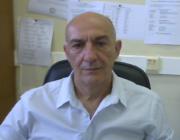
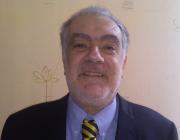
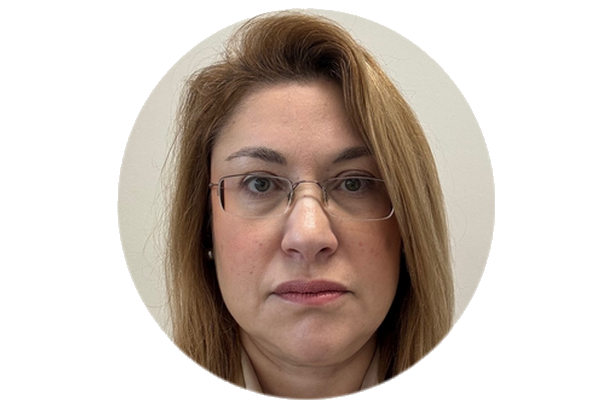
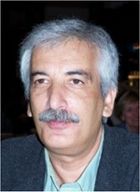
Efthimios S. Skordas is an Associate Professor of Experimental Solid State Physics at the Department of Physics, National and Kapodistrian University of Athens. Born in Lefkada, Greece in 1960, he holds a Mathematics degree (1984) from the University of Crete and a Doctorate (1992) from Uppsala University, Sweden. His research focuses on seismicity analysis through the lens of natural time analysis, complex systems, and non-extensive statistical mechanics. University of Crete (1984, Mathematics) Uppsala University (1992, Doctorate) His work demonstrates deep expertise in earthquake prediction, detection of pre-seismic anomalies through geoelectric/magnetic field variations, and entropy dynamics under time reversal. Recent publications highlight applications of natural time analysis to diverse domains including cardiovascular health monitoring. He has authored over 120 peer-reviewed publications and two monographs, with an h-index of 32. Skordas' research bridges geophysics with interdisciplinary applications, showing particular emphasis on entropy fluctuations, order parameter analysis, and multi-scale seismicity patterns. His laboratory contributes to understanding the physical interconnection of seismic electric signals with earthquake dynamics.
Nicholas V. Sarlis is a Professor of Experimental Solid State Physics at the Department of Physics , National and Kapodistrian University of Athens since 2017. With an h-index ≥36, he has authored 2 monographs, >155 peer-reviewed publications, and 80 conference communications. B.Sc. in Physics (1991), National and Kapodistrian University of Athens Ph.D. in Physics (1997), National and Kapodistrian University of Athens His research applies Natural Time Analysis to: Earthquake precursor identification Space weather and cosmic ray studies Climate phenomenon prediction (El Niño) Fracture mechanics and complex systems Seismicity and geoelectric field correlations Non-extensive statistical mechanics applications Recent work includes analyzing seismic entropy changes under time reversal and developing earthquake nowcasting systems. Publications span 2025's Statistical mechanics in geophysical contexts to 2024's cross-disciplinary disaster prediction tools.
Anastopoulos Charis is an Associate Professor in the Department of Physics at the University of Patras. He holds dual appointments in the Theoretical and Mathematical Physics Division and the Technical Institute of Patras (Optics and Optometry). His career includes postdoctoral research at Imperial College London, University of Barcelona, University of Maryland, Utrecht University, and extended research roles funded by Marie Curie Fellowships and national grants. Education: B.Sc. (University of Patras), M.Sc. and Ph.D. (Imperial College London). Research focuses on gravity theory (black hole thermodynamics, gravitational quantum physics), quantum gravity (time in quantum mechanics, quantum measurement), and quantum information (entanglement dynamics, relativistic quantum information). Notable contributions include a Princeton University Press book on quantum concepts and over 50 journal articles. His work bridges foundational quantum theory with gravitational physics, emphasizing quantum-classical transitions and spacetime structure. Awards include journal highlights (Class. Quant. Grav. 2008/2013) and Scientific American Book Club recognition. Research spans quantum decoherence, gravitational cat states, and relativistic measurement theory, with recent focus on deep space quantum experiments and holographic thermodynamics.
Paschalis Antonis is a Professor at the Department of Informatics and Telecommunications, National and Kapodistrian University of Athens. His research focuses on hardware architectures for space systems, embedded systems, and image compression standards such as CCSDS. He specializes in FPGA implementations, radiation-hardened electronics, and biomarker development for immunogenic responses to cancer therapies. Research Interests: High-performance FPGA-based hardware accelerators Space-grade embedded systems and data compression CCSDS standard implementations for aerospace applications Molecular biomarkers for immunotherapy response prediction Recent Trends: His work emphasizes resilient systems against radiation effects (e.g., SEUs in FPGAs), high-throughput image compression cores for space missions, and interdisciplinary research linking computational hardware with medical diagnostics via prothymosin α analysis. Grants & Labs: Leads the ASPIICS coronagraph project for ESA's Proba-3 mission, involving advanced optical instrumentation and formation flying systems. Collaborates on COTS FPGA utilization in extreme environments.
Nikolaos K. Efremidis serves as Professor in the Department of Mathematics & Applied Mathematics at the University of Crete and holds a Collaborating Researcher position at the Institute of Applied and Computational Mathematics (IACM) of the Foundation for Research & Technology - Hellas (FORTH) in Heraklion, Greece. His dual affiliation bridges theoretical mathematics with experimental photonics research at one of Greece's premier research institutions. His research spans nonlinear optics, photonic lattices, and optical beam engineering with particular focus on vortex beams, atmospheric turbulence mitigation, and statistical mechanics of light. Key contributions include the development of inverted pin beams for turbulence-resistant propagation, thermodynamic modeling of optical pressures in multimoded systems, and topological approaches to photonic thermalization. His work uniquely combines mathematical rigor with practical optical applications. Analysis of his 2021-2025 publications reveals three dominant research thrusts: (1) thermodynamic frameworks for optical systems including Dalton's law analogs for partial pressures, (2) topological models for prethermalization dynamics in photonic lattices, and (3) engineered beam solutions (particularly inverted pin beams) that maintain integrity through atmospheric turbulence. These intersect at the frontier of optical thermodynamics and topological photonics. Scientific recognition includes: Fellow of the Optical Society (OSA) His laboratory at FORTH's IACM specializes in computational modeling of nonlinear optical phenomena and experimental validation of novel beam propagation techniques. Current projects focus on extending turbulence-resistant beam concepts to quantum optical regimes and developing topological protection schemes for free-space optical communication.
Ioannis Andreadis is a Professor in the Department of Electrical and Computer Engineering at the School of Engineering, Democritus University of Thrace. He has been a faculty member since 1993, following his appointment as a Visiting Professor at the School of Technological Applications of TEI Kavala (1991-1992). His academic journey began with a Diploma in Electrical Engineering from Democritus University of Thrace (1983), followed by an M.Sc. in Electrical Engineering & Electronics (1985) and a Ph.D. in Instrumentation & Analytical Science (1989), both from the University of Manchester. Professor Andreadis's research spans the Design and Implementation of Electronic Systems with particular emphasis on Intelligent Systems and Machine Vision . His work has resulted in over 230 publications in international journals, book chapters, and conference proceedings. He has made significant contributions to image processing, particularly in mathematical morphology, color image processing, and real-time implementation of image processing algorithms. His research has practical applications in seismic signal processing, crowd management systems, and 3D reconstruction technologies. The analysis of his recent publications reveals a strong focus on advanced image processing techniques, with increasing integration of deep learning approaches. His work spans both theoretical foundations (such as entropy estimation and moment calculations) and practical applications (including image stabilization, multi-focus image fusion, and crowd management systems). The interdisciplinary nature of his research connects electrical engineering, computer vision, and signal processing with applications in safety engineering, structural analysis, and robotics. Among his notable achievements are the IET Image Processing Premium Award (2009) , Best Paper Award at PSVIT 2007 , and Best Paper Award at EUREKA 2009 . He was elected Fellow of the Institute of Engineering & Technology (IET) in 2006 and Fellow of the Institute of Measurement & Control (InstMC) in 2021. He has also served as Subject Editor of the IET Electronics Letters and as Guest Editor for special issues of Pattern Recognition journal. Professor Andreadis has supervised 14 PhD theses , 21 Master's theses , and 88 Diploma works , demonstrating his commitment to academic mentoring. His research has been supported by significant grants including the EDUnet project (€280,000), wireless network implementation (€37,000), laboratory infrastructure development (€120,000), school information systems support (€478,000), the RESCUER project (€350,000 as Deputy P.I.), and the EDUSAFE project (Marie Curie Actions). He leads the Electronics Laboratory at Democritus University of Thrace, which has undergone significant infrastructure development through multiple funding sources. His work on the RESCUER project demonstrates collaboration with European partners on emergency risk management systems, while his EDUSAFE involvement shows commitment to advanced AR/VR safety systems development. His research group applies computational intelligence techniques to diverse challenges from seismic analysis to pedestrian evacuation modeling.
Irene Koronaki is a Professor at the National Technical University of Athens , affiliated with the School of Mechanical Engineering and the Thermal Engineering Section . She serves as Director of the Laboratory of Applied Thermodynamics, Cooling Technology & Refrigerated Vehicles since 2022 and has held academic roles at NTUA since 1999. Her research focuses include thermodynamics, heat pumps, energy efficiency, and renewable energy systems. Diploma in Mechanical Engineering, NTUA (1996) PhD in Thermal Engineering, NTUA (2000) Postdoctoral Researcher, NTUA (2002) Her research spans thermodynamics of cooling cycles, heat pumps, power cycles, energy saving in buildings, and thermal energy storage. She has pioneered work in nanofluids, solar cooling, and CO2 absorption systems. Her publications and projects reflect expertise in Stirling engines, hybrid solar collectors, and building energy optimization. Her recent articles highlight advancements in superfluid thermodynamics, solar PV/T systems, and medical robotics. Awards include the Edward F. Obert Award (2022) and leadership of the 2021 ASHRAE Student Design Competition winning team. She serves on ASME and ASHRAE committees and co-authored educational materials for refrigeration and energy inspection standards.
Georgios Manis is an Associate Professor in the Department of Computer Science and Engineering at the School of Engineering, University of Ioannina, Greece. He holds a PhD from the National Technical University of Athens and has been a faculty member at the University of Ioannina since 2002, progressing from Lecturer to Associate Professor in 2018. He has also served as temporary teaching staff at the University of Patras, University of Crete, and University of Ioannina in the late 1990s and early 2000s. Education: B.Sc. in Computer Engineering (Diploma), National Technical University of Athens (NTUA), 1987–1992 MSc in Advanced Methods in Computer Science (Distributed and Parallel Systems), Queen Mary, University of London, 1992–1993 PhD in Computer Engineering, NTUA, School of Electrical and Computer Engineering, 1993–1997 His research interests lie at the intersection of Biomedical Engineering and Computing Systems , with a strong emphasis on Biomedical Signal Processing , Entropy Analysis , and Machine Learning . He has pioneered work in Bubble Entropy —a parameter-free entropy measure—and developed fast algorithms for entropy computation. His work also extends to compiler design and parallel computing, particularly in the automatic parallelization of recursive functions and loops. The trends in his recent publications reflect a dual focus: (1) biomedical applications involving entropy, heart rate analysis, and disease diagnosis using machine learning (especially Random Forests and SVMs), and (2) high-performance computing, including parallelization techniques and compiler optimizations for multi-core and SVP architectures. His research is highly interdisciplinary, combining signal processing, algorithm design, and clinical applications. Scientific Leadership and Recognition: Guest Editor, Special Issue on “Entropy in Biomedical Engineering”, Entropy (MDPI) Member of the IPAN Laboratory, University of Ioannina Active contributor to IEEE, Elsevier, and MDPI journals He has supervised several graduate students and is involved in funded research projects such as Palimpsest and Homore , focusing on smart systems for cultural interaction and elderly monitoring. His advising contributions are evident in co-authored papers with students like Evanthia Tripoliti and Aristeidis Mastoras. He teaches both undergraduate and postgraduate courses, including Compilers I/II and Biomedical Data Analysis . Laboratories and Teams: He is a member of the IPAN lab at the University of Ioannina, which supports interdisciplinary research in informatics and biomedical applications. His collaborative network includes researchers from Greece and abroad, particularly in the fields of biomedical signal analysis and entropy-based methods.
Christina (Tanya) Politi is an Associate Professor at the Department of Electrical and Computer Engineering, University of Peloponnese. She specializes in optical networking, high-speed communications, and IoT/smart city technologies. With a PhD in Physics from the University of Essex, she has contributed to over 100 publications and collaborated with the NAM group at the University of Patras on 5G and digital infrastructure projects. Her work bridges optical systems, wireless technologies, and modern digital frameworks for smart urban environments. She is also an associated member of Patras Science Park. Education: B.Sc. in Physics, University of Athens (1998) M.Sc. in Physics of Laser Communications, University of Essex (2000) PhD in Optical Communications, University of Essex (2005) Research Focus: Optical packet switching and fiber-optic networks High-speed data center interconnections 5G/6G technologies and IoT applications Smart city infrastructure and digital twins Laser-based security and entropy generation Recent Research Trends: Her articles explore cutting-edge areas like quantum-dot spin-VCSELs for neuromorphic computing, laser-fabricated security systems, and metaverse-driven smart city frameworks. These reflect her dual focus on optical fundamentals and applied digital technologies. Collaborations and Labs: Active in the NAM group (University of Patras) for 5G experimentation and affiliated with Patras Science Park. Her work integrates theoretical research with industrial applications in telecommunications and smart infrastructure.
Porfyriadis Achilleas is an Assistant Professor at the Department of Physics, University of Crete. His research focuses on theoretical high-energy physics and gravitational physics, particularly black holes, holographic dualities, and gravitational waves. He holds a B.Sc. in Physics from MIT (2010) and a Ph.D. in Theoretical Physics from Harvard University (2016). Career : After completing his Ph.D., he was a postdoctoral research fellow at the University of California, Santa Barbara (2016-2019) and at Harvard's Black Hole Initiative (2019-2022). He joined the University of Crete in 2022. Research Interests : His work explores advanced topics such as black hole perturbations, the Kerr/CFT correspondence, and extreme black hole physics. He investigates phenomena like gravitational wave emission, holographic dualities, and quantum gravity effects in curved spacetimes. Affiliations : He is affiliated with the Skinakas Observatory , the Institute of Theoretical and Computational Physics , and the Crete Center for Theoretical Physics (CCTP) .
Achilleas Porphyriadis is an Assistant Professor in the Department of Physics at the University of Crete since 2022. He holds a BS from MIT (2010) and a Ph.D. in Theoretical Physics from Harvard University (2016). Prior roles include postdoctoral research at UC Santa Barbara (2016-2019) and Harvard's Black Hole Initiative (2019-2022). His research focuses on Theoretical High Energy Physics and Gravity , with emphasis on black hole dynamics, gravitational waves, holographic binaries, and string theory applications. Specific interests include extreme black hole horizons, symmetry properties, and quantum gravity phenomena. Recent articles explore topics like accidental symmetries in extreme spinning black holes (2025), gravitational perturbations in AdS₂ geometries (2021), and logarithmic entropy corrections (2017). His work often bridges classical gravity with holographic duality frameworks. He is affiliated with the Institute of Theoretical and Computational Physics and the Crete Center for Theoretical Physics (CCTP). No awards are explicitly listed in the provided texts.
Andreas Koutselos is a Professor of Physical Chemistry at the Department of Chemistry, National and Kapodistrian University of Athens. His research focuses on molecular dynamics, ion transport in gases and supercritical fluids, and computational modeling of chemical systems. He has contributed significantly to understanding electrostatic field effects on ions and biomolecules, as well as environmental applications like pollutant adsorption and photocatalysis. His academic career is marked by studies on gas-phase ion behavior, nonequilibrium thermodynamics, and the interplay between theoretical chemistry and experimental observations. Key research areas include peptide dynamics, ion mobility in supercritical fluids, and the development of novel computational methods for chemical systems analysis. Publications span over three decades, reflecting expertise in both foundational physical chemistry and applied environmental chemistry. Collaboration with international teams has advanced methodologies for simulating complex chemical phenomena, including ion dynamics under external fields and reaction mechanisms in catalytic systems.
Domenikos Rafael serves as a Research Fellow holding dual appointments: Postdoctoral Researcher at Stevens Institute of Technology (2023–present) specializing in Artificial Intelligence for Renewable Energy Systems, and Research Associate at the Laboratory of Applied Thermodynamics, Cooling Technology & Refrigerated Vehicles of the National Technical University of Athens (2022–present). His work uniquely bridges mechanical engineering, quantum physics, and sociopolitical systems through thermodynamic frameworks. He completed his Doctorate in Mechanical Engineering at the National Technical University of Athens in 2022, establishing foundational expertise in cryogenic systems and thermodynamic modeling. Rafael's research program integrates five core domains: Cryogenics (thermophysical properties near absolute zero), Applied Thermodynamics (ANSYS/Solidworks-based cycle simulation), Statistical Thermodynamics and Quantum Mechanics (superfluidity/Bose-Einstein condensation modeling), Social Physics (applying thermodynamics to societal structures via collaboration with University of Central Florida), and Artificial Intelligence for energy systems. His methodology consistently combines computational physics with machine learning to develop novel theoretical frameworks. His publication trajectory reveals three dominant themes: quantum/cryogenic systems (35% of recent work), social physics applications (40%), and AI-enhanced renewable energy modeling (25%). Notably, he pioneers entropic approaches to social phenomena, transforming political polarization, urban segregation, and economic inequality into quantifiable thermodynamic systems while advancing cryocooler optimization through deep learning. His scientific recognition includes: Edward F. Obert Award 2022 from ASME for outstanding thermodynamics publication Rafael operates within NTUA's School of Mechanical Engineering Laboratory of Applied Thermodynamics, which recently acquired Carrier's R290 heat pump educational unit and Thermogas's 5.5kW system. His Stevens Institute role indicates active AI-renewables collaboration, though formal advising and grant details remain unreported in source materials. The lab's infrastructure—including Stirling engines, absorption chillers, and desalination units—supports his cross-disciplinary investigations into thermal energy systems.
Leonidas Rompolis is an Associate Professor of Finance at the Department of Accounting and Finance, School of Business, Athens University of Economics and Business (AUEB). He previously held academic positions at the University of Cyprus, National Technical University of Athens, and Hellenic Open University. He also conducts professional seminars for financial sector practitioners. Education includes: Ph.D. in Finance, Athens University of Economics and Business M.Sc. in Statistics and Stochastic Models in Economics and Finance, Paris 7 & Paris 1 Universities/ENSAE B.Sc. in Mathematics, University of Athens His research focuses on financial mathematics , computational finance , and financial econometrics , with specific applications in derivatives valuation, volatility modeling, and risk-neutral pricing. He develops quantitative methodologies for analyzing financial markets and derivative instruments. Publications emphasize empirical and theoretical innovations in derivatives pricing, volatility analysis, and risk-neutral estimation techniques, predominantly in high-impact finance journals. Research has been funded by European and Greek institutions.
Georgios J. Psarrakos is an Associate Professor at the Department of Statistics and Insurance Science, University of Piraeus, Greece. His academic journey includes a B.Sc. in Mathematics (1998, University of Athens), M.Sc. in Statistics and Operational Research (2002), and a Ph.D. in Actuarial Mathematics (2007) from the University of Piraeus. He has held positions at the University of Piraeus since 2010, progressing from Lecturer to his current role. Current Position: Associate Professor (2020–present) Assistant Professor (2015–2020) Lecturer (2010–2015) Research focuses on Actuarial Mathematics , Risk Theory , and Stochastic Models , with contributions to renewal theory, risk measures, and entropy-based methodologies. His work bridges theoretical probability and practical actuarial applications. Key publications explore topics like defective renewal equations , covariance identities , and actuarial risk measures . He has supervised 13 MSc theses and one ongoing PhD student (Vliora P.) in actuarial risk analysis. He holds editorial roles (e.g., Journal of Mathematics, 2021–2022 ) and reviews for journals in probability and actuarial science. Awards include I.K.Y. scholarships for his Ph.D. and postgraduate studies.