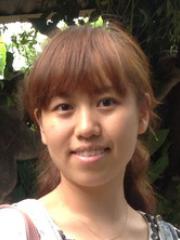
Arif Perdana is an Associate Professor specializing in digital strategy and data science at Monash University. He holds a PhD in Business Information Systems from the University of Queensland (2016) and serves as Director of the Action Lab Indonesia since December 2022. His research focuses on responsible AI, blockchain, machine learning, and digital strategy applications in finance, healthcare, and education sectors. He has secured significant funding from entities like Bank Indonesia and Monash Data Future Institute. Research Interests: - Blockchain for supply chain sustainability - Ethical AI governance - FinTech and RegTech innovations - Digital transformation strategies - Data governance frameworks Awards: - Lybrand Award 2022-2023 Key Projects: - ASEAN Disinformation Index (2024-2025) - Algorithmic Systems Governance in Finance (2023-2024) - Inclusive P2P Lending Models (2023) - Digital Health Governance in Indonesia (2022-2023) Media Contributions: - Over 50 media features discussing AI ethics, cybersecurity, and tech governance - Featured in international outlets like RMIT Vietnam and Swinburne University
Pei-Lee Teh is a Professor and Head of Department of Management at the School of Business, Monash University . She also directs the Gerontechnology Laboratory , the first of its kind in Malaysia, and founded the IEEE TEMS Malaysia Chapter . Her research bridges gerontology, technology, and management. Bachelor of Information Technology (Multimedia University, 2003) Master of Management (University Putra Malaysia, 2006) PhD in Management (Multimedia University, 2010) Her interdisciplinary research appears in journals like Information & Management , Gerontology , and Expert Systems with Applications , focusing on Management Information Systems , Gerontechnology , and Innovation in Aging . Recent work includes soft robotic grippers , age-friendly smart canes , and mobility solutions for cognitive frailty . She has secured over RM10 million in grants from entities like WHO and Malaysian ministries. Scientific awards include multiple Excellence Awards (2018-2023), Best Paper Awards (HCI, BAM), and the 2019 AACSB ICAM Innovations That Inspire recognition. She serves as Associate Editor for journals like Decision Sciences Journal of Innovative Education and Gerontechnology Journal . As an educational innovator , she integrates field trips with companies like Hewlett Packard into her teaching of courses such as International Management and Management Information Systems . Her work aligns with UN SDGs for Quality Education and Industry Innovation .
Dr. Wen Hua is an Honorary Senior Research Fellow at the University of Queensland's School of Electrical Engineering & Computer Science. His research focuses on Data Science, Machine Learning, and Knowledge Graphs, with significant contributions to privacy-preserving techniques, neural network architectures, and trajectory analysis. He has co-authored over 80 peer-reviewed publications, including influential works on entity linking, meta-learning, and spatiotemporal data privacy. His work bridges theoretical advancements with practical applications in areas like recommendation systems, sentiment analysis, and information resilience. Key research interests include: Machine Learning and Deep Learning Privacy-Preserving Data Publishing Knowledge Graph Construction Text Mining and Natural Language Processing Spatiotemporal Trajectory Analysis Information Retrieval Systems Recent publications highlight trends in: Neural architectures for meta-learning and transformer-based systems Efficient algorithms for relation extraction and entity disambiguation Temporal and spatial data anonymization techniques Integration of knowledge graphs with text corpus analysis
Professor Deb Polson is a leading academic in Digital Design at RMIT University's School of Design and Director of the Centre of Digital Ecosystems (CODE). She specializes in precision interventions in complex systems through design strategies, addressing efficiency and sustainability challenges across healthcare, urban development, and entertainment. Her work spans collaborations with entities like Marvel Studios, Plastics NZ, and healthcare organizations to create innovative digital solutions. Her research focuses on data visualization, design practice methodologies, user experience design, and serious games. Notable projects include immersive tele-guidance systems for vision-impaired users, assistive mixed reality interfaces, and a framework for global collaborative design education. She has held leadership roles, including launching the School of Design at the University of Auckland (2020) and serving as RMIT's Associate Dean (2021). Polson's career includes over 25 years of designing impactful systems—from hospital-based digital distractions for children to energy modeling tools for urban planners. Her current work at CODE integrates interdisciplinary teams to create both precise and experimental digital ecosystems. She actively supervises PhD and master's students on topics ranging from diabetes care support systems to digital fashion innovation. Her research outputs emphasize cross-disciplinary applications of technology, with publications in journals like IEEE Transactions on Visualization and Computer Graphics and conference proceedings on mixed reality and game design. She remains open to supervising students and collaborating on industry projects aligned with her expertise in values-led design practices and digital health solutions.
Dr. John Shepherd is a Senior Lecturer in the School of Computer Science and Engineering (CSE) at UNSW, Sydney, Australia. His research focuses on data/information/knowledge management, including data modeling, query processing, multimedia retrieval, web search, and text mining. Current projects include RAM (Research Area Mapper) for research data management, and educational tools like ORE (Online Role-Play in Education), CMap (Curriculum Mapping), and WebCMS (Course Management System). His work spans interdisciplinary areas such as database systems, information retrieval, and educational technology. Notable contributions include the TEXUS framework for PDF table extraction and understanding, and collaborative projects with industry partners. Dr. Shepherd’s publications (e.g., on popularity forecasting, automated table understanding) reflect his expertise in machine learning, data systems, and applied research. He actively engages in curriculum development and educational innovation, leveraging technology to enhance learning experiences.
Dr. Jack Adams is an Associate Lecturer in the School of Management at QUT Business School, part of the Faculty of Business & Law. He holds a PhD from Queensland University of Technology. His research focuses on regional Australian agrifood ecosystems, entrepreneurship, organizational behavior, and technology adoption, collaborating with entities like the Future Food Systems CRC and Coffs Harbour City Council. He also investigates psychological aspects of entrepreneurship and technology use. His teaching spans management, innovation, and strategy. Adams has published widely on retro-technology adoption, intergenerational teams, and innovation ecosystems. He is affiliated with the Centre for Agriculture and the Bioeconomy. His research highlights include exploring entrepreneurship's impact on aging populations' health, rule-breaking in entrepreneurial contexts, and agency in retro-technology experiences. Notable collaborations involve government and industry partners to enhance agrifood sustainability. While no specific awards are listed, his work reflects contributions to both theoretical and applied research areas. Adams has no listed advisees but engages in collaborative projects and grants focused on innovation ecosystems and technology adoption. His academic contributions bridge management theory and practical applications, emphasizing interdisciplinary approaches to regional development and technology's societal impact. The Centre for Agriculture and the Bioeconomy supports his work on agrifood systems, aiming to boost innovation and value-added production in regional Australia.
Dr. Michael Bewong is a Senior Lecturer in Computing at Charles Sturt University, specializing in Data Science, AI, and Cyber Security. He holds a PhD and BSc (Hons) from the University of South Australia. His roles include teaching database-related subjects and conducting research in data analytics and cyber security. Previously, he worked as a Research Fellow at UniSA, collaborating with Data to Decisions CRC on projects like 'Beat the News' (predictive data mining) and 'Predicting Cyber Security Exploits' (machine learning for vulnerability analysis). Education: PhD in Computing, University of South Australia BSc (Hons) in Computing, University of South Australia Research Interests: Focuses on applying data analytics and machine learning to solve real-world problems in cyber security, agriculture, and health. His work integrates AI-driven solutions for cyber threat detection, privacy-preserving data publication, and smart farming systems. Current projects include analyzing UAV threats to agriculture and developing frameworks for false information detection on social media. Articles Trends: Recent publications emphasize cyber security (e.g., threat hunting, exploit prediction), AI ethics (fairness algorithms), and precision agriculture (UAV threats, data-driven farming). Collaborations span interdisciplinary teams addressing challenges in graph data imputation, federated learning, and privacy techniques like LDP. Awards: Holds 12 prizes (specific names not listed in provided texts). Advising & Grants: No explicit student advisees listed. Collaborations include grants from Data to Decisions CRC and Food Agility Cooperative Centre. Labs/Teams: Affiliated with Data Science and Engineering Research Unit, Cyber Security Research Group (CSRG), and Advanced Network Research Group (ANRG) at Charles Sturt University.
Md Abul Bashar is a Research Fellow at the Queensland University of Technology's Centre for Data Science and School of Computer Science. His research focuses on developing deep learning and machine learning solutions for natural language processing tasks, including abusive content detection, misinformation analysis, and social media mining. Industrial applications include unconscious bias detection systems deployed at Fortune 500 companies and automated marketing strategy generation commercialized by Robotic Marketer. Research areas span multimodal fusion (uncertainty-guided meta-learning in 2025, pre-gating attention mechanisms in 2024), longitudinal data analysis (GAN-based imputation in 2024), and cybersecurity applications (Log4Shell threat detection in 2023). Articles demonstrate strong emphasis on NLP techniques adapted for low-resource scenarios through transfer learning and generative models. Significant Applications Unconscious bias detection for enterprise content management Automated marketing report generation (commercialized) Misogyny detection featured in Forbes, Daily Mail Energy payment propensity prediction Indigenous heritage repatriation support systems
Dr. Thanh Tam Nguyen is a Lecturer at the School of Information and Communication Technology, Griffith University, Gold Coast Campus. He holds a PhD in Computer Science from École Polytechnique Fédérale de Lausanne (EPFL), Switzerland, and is a Fellow of the Higher Education Academy (FHEA). His academic and research profile is centered on advancing Big Data and Smart technologies through efficient and trustworthy AI systems. His educational background includes a Doctor of Science and a Master of Science, both from EPFL. He is actively involved in high-impact research and has published over 65 papers in top-tier venues such as SIGMOD, VLDB, SIGIR, ICDE, IJCAI, VLDBJ, TKDE, and Pattern Recognition, with over 35 in CORE A* journals and conferences. His work has attracted more than 4,200 citations (h-index 35+). Dr. Nguyen's research focuses on Big Data Analytics, Social Network Mining, Stream Processing, Privacy-Preserving Machine Learning, Recommender Systems, Explainable AI, and Graph Neural Networks . He aims to bridge human insights with data models to ensure transparency and trust in data-driven decisions. His recent work explores misinformation management, machine unlearning, and federated learning, with applications in social networks, healthcare, and sustainable agriculture. The 15 most recent publications reflect a strong trend in privacy-preserving AI, explainability, federated learning, and graph-based modeling . Key themes include machine unlearning, adversarial robustness in recommender systems, heterogeneous graph representations, and trustworthy AI deployment. His work is frequently published in ACM and IEEE venues, indicating sustained excellence in computer science and AI research. Fellow of the Higher Education Academy (FHEA) Dr. Nguyen has secured over $1 million in research funding from government (DFAT, A4I, AKF), industry (CSIRO, Ubitech, Johnson & Johnson), and international bodies (NAFOSTED, ETRI, KARI). He serves as a guest editor for IEEE Journal of Biomedical and Health Informatics, area chair for ACL and EMNLP, and reviewer for top journals like TKDE, JVLDB, and CSUR. He supervises multiple PhD students and collaborates with leading international researchers such as Prof. Karl Aberer (EPFL), Prof. Björn Schuller (Imperial College), and Prof. Hongzhi Yin (UQ). He is a key contributor to the Responsible Big Data Lab at Griffith University and leads projects on misinformation management, AI safety, and sustainable agriculture through AI-powered traceability. His impact extends to policy and industry, particularly in cybersecurity and trustworthy AI adoption.
Dana Rezazadegan is a Senior Lecturer in Computer Science and Software Engineering at Swinburne University of Technology, affiliated with the School of Science, Computing and Emerging Technologies. Her work bridges artificial intelligence, computer vision, and healthcare applications, with a strong focus on human-robot collaboration and digital health solutions. Research Interests: Her primary research areas include deep learning, computer vision, LLMs, health informatics, continual learning, and AI for inclusive education. She investigates how intelligent systems can support human activities in healthcare and assistive robotics. The recent publications highlight a consistent focus on applying AI to healthcare challenges—ranging from clinical NLP and patient decision support to automated severity assessment in diseases like COVID-19. She also contributes significantly to foundational AI methods, including uncertainty quantification, speech summarization, and real-time 3D pose estimation for embedded and mobile platforms. Superstar of STEM, Science and Technology Australia, 2021 Teaching Award, Swinburne University of Technology, 2020 Early Career Marie Curie Fellowship, 2014 Top 20 in Iran's Mathematics Olympiad, 2000 Dana actively supervises PhD students on topics such as continual learning, AI tutoring, electricity price forecasting, and 3D pose estimation. She has secured multiple research grants, including projects on inclusive AI for dyslexic learners and AI for energy forecasting. Her collaborative work spans institutions like Macquarie University and CSIRO, and she engages in public outreach through media contributions on AI ethics and privacy. She leads and contributes to interdisciplinary teams focused on AI in healthcare and education, often involving co-design with clinicians and end-users. Her labs and research groups emphasize real-world applicability, ethical considerations, and human-centered AI design.
Dr. Kiran Ijaz is a Lecturer in Human-Computer Interaction at the University of Sydney's School of Architecture, Design and Planning. She holds a PhD in Engineering from The University of Sydney and an MSc from The University of Technology, Sydney. Her research focuses on emerging technologies, digital health, and data privacy within the HCI domain, particularly exploring how these technologies can enhance human flourishing. She is also an Honorary Research Fellow at the Australian Institute of Health Innovation. Her work bridges interdisciplinary fields including affective computing, virtual reality applications, and speculative design for future urban living. Notable collaborations include projects at Design Lab and Affective Interactions Lab. Her research has been recognized through multiple teaching and research awards, though specific award names are not detailed in the provided text. Dr. Ijaz’s academic contributions span both journal articles and conference proceedings, with recent emphases on digital health interventions, privacy in smart technologies, and cognitive assessment tools. She actively contributes to the development of immersive VR platforms for health and wellbeing, as well as systematic reviews evaluating digital tools for chronic disease prevention.
Adam Karg is a Professor of Sport Management at Deakin University's Deakin Business School within the Faculty of Business and Law. His research focuses on sport consumer behavior, including fan-organization relationships, season ticket holder retention, and attendance modeling. Additional expertise spans sponsorship, branding, technology innovation, and social connection in sport contexts. Professor Karg has secured three Australian Research Council Linkage grants and serves in advisory roles for over 100 organizations globally, including professional leagues, government bodies, and sport technology startups. He has authored key textbooks such as International Sport Business: Current Issues and Future Trends and holds leadership positions including Past President of the Sport Management Association of Australia and New Zealand. His research examines emerging trends in digital sport consumption, organizational strategy in complex sport entities, and wellbeing outcomes in recreational settings. Recent work explores NFT markets in sports, automated journalism, and social capital development through esports. Key Awards: Research Fellow, North American Society for Sport Management AMA Best in Track Paper Award (Sport and Events, 2012) Deakin University Teaching Excellence Awards (2012, 2014) Doctoral Supervision & Grants: Currently advises PhD candidates Sanghyeon Kim (media technology adoption in sport) and Aiswarya Aanand (cricket rivalry branding). Major grants include ARC-funded projects on community sport social impact ($157k+) and AIS-funded governance model comparisons ($98k). Industry partnerships span National Rugby League, Netball Australia, and aquatic recreation centers.
Dr. Mukesh Mohania serves as an Adjunct Professor at UNSW Canberra within the School of Business. His extensive academic career spans over three decades with continuous scholarly contributions from 1994 through 2025. His research bridges theoretical database systems with practical applications across multiple domains including educational technology, blockchain, and business intelligence. Professor Mohania's research interests demonstrate remarkable breadth and evolution over time. Beginning with foundational work in data warehousing and database systems, his research trajectory expanded into information integration, privacy management, and more recently, educational technology and blockchain applications. His scholarly work shows a consistent pattern of addressing emerging technological challenges while maintaining connections to core database principles. A distinctive characteristic of his research is the practical application of theoretical concepts to solve real-world business and educational problems. The analysis of his recent publications reveals a strong focus on educational technology applications, with approximately 40% of his 2022-2025 publications addressing AI-driven educational systems, question categorization, and learning analytics. Another significant portion (around 30%) focuses on security, privacy, and blockchain applications. The remaining publications continue his longstanding interest in database systems, data mining, and information integration. This distribution indicates a strategic pivot toward educational technology while maintaining expertise in his foundational areas. Professor Mohania has established a prolific publication record with over 100 scholarly contributions including book chapters, journal articles, and conference papers. His work appears in prestigious venues such as IEEE Transactions on Knowledge and Data Engineering, ACM conferences, and Springer publications. While specific awards aren't documented in the available information, his sustained publication record across multiple decades demonstrates significant scholarly impact. His research collaborations span numerous institutions and researchers globally, with frequent co-authorship patterns suggesting established research teams focused on educational technology and database systems. The consistent output across decades indicates successful grant funding and sustained research activity, though specific grant details aren't provided in the available information. Professor Mohania's work shows particular strength in translating database research into practical business and educational applications.
Dr. Simon Poon is an Associate Professor at the University of Sydney with a cross-disciplinary focus at the intersection of Health Informatics , Computer Science , and Traditional Chinese Medicine (TCM) data analytics . He holds multiple academic roles including Honorary Associate at the University of Sydney Business School and Adjunct Associate Professor at Chinese University of Hong Kong (CUHK) in the Institute of Integrative Medicine. Co-founder and Director (2014-2019) of Master of Health Technology Innovation (MHTI) program Member of Charles Perkins Centre , Sydney Centre for Healthy Societies , and China Studies Centre International collaborations with institutions in Hong Kong, UK, and USA His research focuses on digital health evaluation and AI development for medical applications, including: Machine learning for stroke risk prediction through blood pressure variability Fall prevention systems via footstep pattern classification Electronic medication management system implementation Integrative medicine data analytics Health technology evaluation frameworks Recent publications show strong emphasis on AI in radiology , clinical process mining , and healthcare workflow optimization . His work spans both technical algorithm development and organizational implementation challenges. Key affiliations include: University of Sydney (School of Computer Science) Chinese University of Hong Kong (Adjunct Associate Professor) NSW Local Health Districts (Honorary Associate) He has supervised students across Computer Science , Biomedical Engineering , Medicine , and Business disciplines.
Associate Professor Krithika Randhawa is an academic and researcher at the University of Sydney Business School, specializing in strategic decision-making, open innovation, and digital ecosystems. Her work focuses on how organizations leverage open innovation, digital platforms, and collaborative business models to drive industry transformation and sustainability. She holds an ARC Early Career Researcher Award (2024-2027) and has over 3000 citations with an h-index of 19. Krithika also has industry experience in hotel management and has advised corporates like Stryker and public sector entities such as NSW Health. She leads the University of Sydney’s Innovation and Entrepreneurship Major program and is a visiting faculty fellow at IIT Madras. Her research engages with advanced manufacturing, healthcare systems, and public policy. Education: PhD (UTS), MBA (Macquarie) Grants: ARC Fellowship, DVCR Strategic Research Impact Grant, IMCRC funding Awards: 2023 SUPRA Supervisor of the Year, 2020 Research Impact Award (UTS) Research interests include ecosystem governance, open innovation at organizational, ecosystem, and individual levels, and digital transformation in healthcare. She collaborates with global entities like IoT Alliance Australia and the Net Zero Institute. Teaching focuses on innovation pedagogy, with awards for her work in authentic assessments and entrepreneurship education. Krithika’s articles span open innovation platforms, healthcare ecosystems, and governance challenges in digital economies. Her recent work addresses industrial data ecosystems and the role of managerial decision-making in innovation project selection.