Murray Evans is a Researcher in the Department of Computer Science at the University of Bath, affiliated with the Centre for the Analysis of Motion, Entertainment Research & Applications. His work focuses on markerless motion capture systems, computer vision, and biomechanical analysis. He contributed to a project funded by the Engineering and Physical Sciences Research Council (EPSRC) on skeleton push-start performance analysis. Evans has published extensively on topics such as gait analysis, pose estimation, and clinical applications of deep learning. His datasets, like the BioCV Motion Capture Dataset, are widely referenced in academic and industry contexts. Education : Not explicitly stated in provided texts. Research interests include motion capture technologies, sports performance analysis, and clinical gait outcomes. His articles emphasize technical advancements in markerless systems and their validation against traditional methods. Collaborations span biomechanics, computer science, and clinical domains. Evans co-created the BioCV dataset, which integrates synchronized video, motion capture, and force plate data for movement analysis.
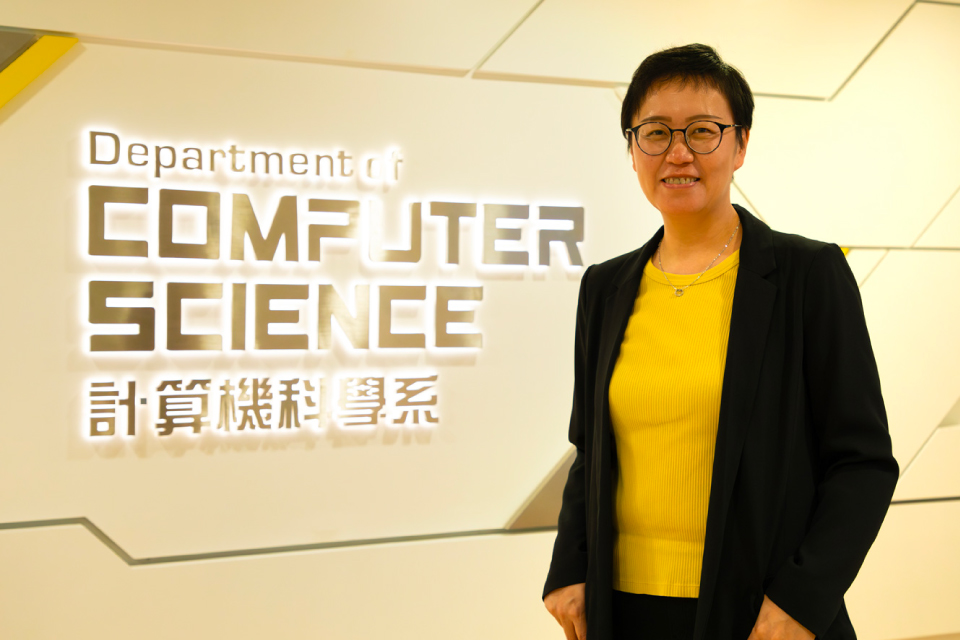
Professor Li Chen is a full Professor and Associate Head (Research) in the Department of Computer Science at Hong Kong Baptist University (HKBU), with an affiliate appointment at the Academy of Wellness and Human Development. She leads the Positive Intelligence Lab , focusing on intelligent technologies for human well-being. Her research spans conversational AI, explainable AI, recommender systems, and human-computer interaction. Education: PhD in Computer Science, Swiss Federal Institute of Technology in Lausanne (EPFL), Switzerland (Nominee for Best PhD Thesis Award) Master in Computer Software and Theory, Peking University, China Bachelor in Computer Science, Peking University, China Her research interests revolve around personalized conversational and explainable AI, with applications in entertainment, education, e-commerce, and mental well-being. She has published over 150 papers in top venues including ACM TOIS, IJHCS, CHI, SIGIR, AAAI, RecSys, and UMAP . Her work has been recognized with awards such as the RecSys Best Student Paper Award (2024), CHI Honourable Mention (2022), and multiple best paper awards at UMAP and UMUAI. The most recent publications reflect a strong trend toward fair, explainable, and user-centric recommender systems , with increasing integration of large language models , mental health applications , and conversational agents . Her research emphasizes user feedback, negative sampling techniques, and evaluation frameworks grounded in real user behavior. Scientific Awards & Recognition: President’s Award for Outstanding Performance in Teaching (Individual), HKBU (2024/25) President’s Award for Outstanding Performance in Research Supervision (2022/23) World’s Top 2% Most-Cited Scientists, Stanford University (2021–2024) ACM Senior Member (2015) RecSys’24 Best Student Paper Award CHI’22 Honourable Mention Award UMAP’20 Best Student Paper Award UMUAI 2018 Best Paper Award THE Awards Asia 2021 Excellence and Innovation in the Arts (Co-I) Professor Chen is actively involved in mentoring PhD and Master’s students such as Wanling Cai and Yuhan Zhao, who have co-authored award-winning papers. She has secured research funding through grants like the HKBU IRCMS Project. Her editorial leadership includes serving as Co-Editor-in-Chief of ACM Transactions on Recommender Systems (TORS) , Associate Editor for ACM TiiS , and Editorial Board Member for UMUAI . She has chaired major conferences including ACM RecSys’23 (General Co-Chair), RecSys’20 (Program Co-Chair), and UMAP’18 (Program Co-Chair). She leads the Positive Intelligence Lab , which conducts interdisciplinary research on AI for well-being. The lab has developed datasets like the Intent Annotation of Recommendation Dialogue (IARD) and focuses on user-centric AI design, mental health chatbots, and personalized recommendation interfaces.
Rune Andersen is a Senior Lecturer at the University of Agder , affiliated with the Department of Information and Communication Technology . He has pioneered Europe's first holistic Bachelor's program in Academic Esports and serves as its Program Head, while also leading external communication and innovation initiatives within the department. Education: General Teacher (1999) Master's in Educational Use of ICT (2008) Guidance Pedagogy (2012) Welfare Technology (2018) His research interests focus on ICT integration in education , gamification , and leveraging transferable skills from esports for workforce development. He emphasizes interdisciplinary collaboration and industry partnerships to bridge academic and professional transitions. Recent publications highlight esports as a pedagogical tool, gamification in higher education, and skill transfer from digital environments to real-world applications. His work spans game-based learning, universal design, and curriculum innovation.
Craig Caldwell is a Professor in the Department of Film & Media Arts at the University of Utah and serves as a USTAR Professor. He is also an Adjunct Professor in the School of Computing (2011–2016). He co-founded the Master’s in Games Program within the Entertainment Arts & Engineering at the University of Utah. Caldwell has extensive industry experience, including roles as Head of Creative Training at Electronic Arts (Tiburon Studio) and 3D Technology Specialist at Walt Disney Feature Animation, contributing to films like Mulan , Tarzan , and Bolt . Academically, he previously led the largest film school in Australia at Griffith University and chaired the Media Arts Department at the University of Arizona. Research Interests: Focus on graphics, augmented reality, game design, virtual reality, and storytelling in media. His book, Story Structure and Development: A Guide for Animators, VFX Artists, Game Designers, and Virtual Reality (CRC Press), underscores his expertise in narrative frameworks for digital media. Presentations & Engagement: Regular presenter at global conferences including SIGGRAPH (2014–2023), FMX (2013–2024), Sundance, and Comic-Con. His work bridges academic research with industry applications in animation and interactive media. Education: BFA in Art, Florida Southern College, 1972 MFA in Art, University of Florida, 1974 PhD in Advanced Computing Center for Art and Design, Ohio State University, 1989 Labs/Teams: Co-founder of the Games Program, fostering interdisciplinary education in entertainment arts and engineering.
Christopher Thomas Ryan is an Associate Professor in the Operations and Logistics Division at the UBC Sauder School of Business. He holds a PhD and BA from UBC in Management Science and Mathematics, respectively. His research spans optimization theory, game theory, theoretical economics, video game design, and pedagogy for business education. He has held positions at the University of Chicago Booth School of Business and is affiliated with the Colibri Learning Foundation. Education: BA (Mathematics) and PhD (Management Science) from UBC; BA (Sociology and Economics) from University of Guelph. He has authored numerous textbooks and case studies, including works on research careers, operations management, and teaching methodologies. His work integrates human-centric approaches to operations and education systems. Research Interests include small business operations, education operations, theoretical economics, and the design of video games. He has published in top journals like Management Science, Econometrica, and Mathematical Programming. His grants include SSHRC and NSERC awards. Ryan advises students across multiple institutions and has mentored prominent faculty in marketing, operations, and MIS fields. Teaching focuses on core operations management for MBA programs and pedagogical innovation. He has developed cases on AI in education, early childhood development, and small business sustainability. Ryan’s work bridges academic research with practical applications in business and education sectors.
Ehud Sharlin is a Professor in the Department of Computer Science at the University of Calgary, Faculty of Science. His research focuses on Human-Computer Interaction (HCI) with specializations in human-robot interaction, tangible interfaces, virtual/augmented reality, and autonomous vehicle interactions. He holds a Ph.D. in Computing Science from the University of Alberta (2003), and M.Sc. and B.Sc. degrees in Electrical and Computer Engineering from Ben-Gurion University of the Negev (1997 and 1990). Teaches CPSC 481: Human-Computer Interaction I Recipient of the NSERC Discovery Accelerator Award (2019), ACM Creativity & Cognition Honourable Mention (2018), and multiple academic excellence awards Active in industry collaborations, particularly in medical simulation (e.g., VRSpineSim) and geosciences (e.g., PLANWELL) Research explores: Embodied interaction through robotics and wearables Autonomous vehicle-pedestrian communication systems Immersive tools for creative and professional domains Accessibility in human-technology interfaces Publications span over 100 peer-reviewed works, emphasizing design methodologies, user experience in XR systems, and ethical considerations in sociotechnical systems. His work bridges technical innovation with human-centered design principles.
Dr. Jun Hu is an Associate Professor in Design Research on Social Computing at the Department of Industrial Design, Eindhoven University of Technology (TU/e). He serves as the Scientific Director for the Engineering Doctorate program in Designing Human-System Interaction and is the chair of the working group "Aesthetics and empowerment" of IFIP TC14. Additionally, he holds positions as a Distinguished Adjunct Professor at Jiangnan University and a Guest Professor at Zhejiang University. Dr. Hu earned his Ph.D. degree in Interaction Design and an Engineering Doctorate degree in User-system Interaction, both from TU/e. He also holds a B.Sc degree in Mathematics and an M.Eng degree in Computer Science. He is a System Analyst and a Senior Programmer with qualifications from the Ministry of Human Resources and Social Security, and the Ministry of Industry and Information Technology of China. His research focuses on the intersection of Human-Computer Interaction, Social Computing, and Design Research, with particular interests in data physicalization, empowering systems, and health informatics. Dr. Hu's work explores how technology can be designed to support human needs in social contexts, with applications in health, stress management, and physical activity motivation. His approach often combines aesthetic considerations with functional design to create systems that empower users. Analysis of Dr. Hu's recent publications reveals a strong focus on data physicalization, social aspects of personal informatics, and health applications of interactive systems. His work spans from theoretical frameworks for understanding user interaction with physicalized data to practical applications in stress management for children and motivation for physical activity. There's a clear trend toward integrating AI capabilities into human-centered design approaches while maintaining a focus on user empowerment. Senior Member of ACM Distinguished Adjunct Professor at Jiangnan University Guest Professor at Zhejiang University Editor-in-chief for EAI Endorsed Transactions on Pervasive Health and Technology Associate editor for Behaviour & Information Technology and Entertainment Computing Editor for the International Journal of Arts and Technology Dr. Hu has supervised numerous students through the Engineering Doctorate program and has been involved in various research grants, particularly in the areas of health technology and human-system interaction. He has served in leadership roles including head of the Designed Intelligence group at ID TU/e from 2015-2017 and currently chairs the working group "Aesthetics and empowerment" of IFIP TC14. He coordinates the TU/e DESIS Lab in the DESIS Network and serves on multiple editorial boards. Dr. Hu is actively involved with the Design Of Empowering Systems research group and the EAISI Health initiative at TU/e. His work often involves interdisciplinary collaboration across computer science, design, and healthcare domains, focusing on creating systems that empower users through thoughtful integration of technology into everyday contexts. He also serves as Chairman of the Foundation for Design Promotion in Europe and China and is a board member of the International Chinese Association of Computer Human Interaction (ICACHI).
Pedro Ferreira is a Professor at Iscte Business School, ISCTE - IUL, Lisbon, Portugal. His academic work spans multiple disciplines including business model innovation, cultural management, digital display systems, and consumer behavior. Key research areas: Business Model Innovation, Cultural Management, Digital Display Systems Interdisciplinary work: Healthcare Management, Energy Efficiency, Sensory Marketing Notable collaborations: Rock in Rio, Ferreira's de Castro Cultural Complex His publications demonstrate ecosystem-based approaches to cultural economics, with applications in virtual reality exhibitions and sustainable business practices. Recent work focuses on technology integration in perfume exhibitions and energy efficiency strategies. Earlier research includes pharmacological studies on P2X7 receptors in colitis and foundational financial accounting textbooks. He has analyzed group buying systems in Portugal and explored intersections between management theory and art. Academic contributions span 45 years, with a 2024 patent on digital display systems and a 1979 report on tomato industry economics. Current affiliations include: Iscte Business School ExecED at ISCTE INDEG-ISCTE Edifício INDEG-ISCTE, Lisbon
Chanheung Cho is a Postdoctoral Research Scholar in the Department of Forestry and Environmental Resources at NC State University's College of Natural Resources. His work spans environmental policy analysis, public health economics, and vector-borne disease control strategies. He also explores agricultural sustainability through pesticide resistance modeling and has interdisciplinary research in cultural economics involving film industry dynamics. Research Interests: - Environmental policy implementation and compliance mechanisms - Economic optimization of disease prevention strategies - Computational frameworks for agricultural sustainability - Market dynamics in vertically integrated entertainment sectors Recent articles highlight his work on water policy evaluation using synthetic control methods, cost-effective mosquito population control, and pesticide resistance economics. His 2017 study analyzed screening opportunity allocation in film distribution systems. No scientific awards or grants explicitly mentioned. Affiliated with the FER Postdoctoral Scholar group within the department.
Constantine Stephanidis is a Professor at the Department of Computer Science, University of Crete, and Director of the Institute of Computer Science at the Foundation for Research and Technology - Hellas (FORTH). He also serves as Head of the Human-Computer Interaction Laboratory, Centre for Universal Access and Assistive Technologies, and the Ambient Intelligence Programme of ICS-FORTH. Additionally, he is faculty of the Interdepartmental Graduate Programme in the BRAIN and MIND sciences of the University of Crete, and President of the Board of Directors of the Science and Technology Park of Crete. His research focuses on Human-Computer Interaction, Universal Access, and Assistive Technologies. Dr. Stephanidis introduced the concept and principles of Design for All in Human-Computer Interaction in the early 1990s. His work spans multiple areas including ambient intelligence environments, universally accessible game design, and health telematics. He has pioneered approaches to making technology accessible to diverse user populations, with particular attention to context-aware and adaptive interfaces that accommodate varying user needs and abilities. Prof. Stephanidis has published over 350 technical papers and edited several influential books including "The Universal Access Handbook" (2009) and "User Interfaces for All" (2001). His publication record shows a consistent focus on making technology accessible to all users, with recent work emphasizing ambient intelligence environments, universally accessible gaming, and health telematics applications. His research demonstrates a progression from foundational work on universal access principles to more specialized applications in various domains. ERCIM WG Award (2000) ERCIM Information and Communication Science and Technology Award (ICST 1999) Over the past 25 years, Prof. Stephanidis has served as Scientific Responsible for more than 40 European Commission and nationally funded projects. He has held leadership roles in numerous academic and policy initiatives, including serving as Editor-in-Chief of the Springer journal "Universal Access in the Information Society," Founding Chair of the ERCIM Working Group "User Interfaces for All," and General Chair of the International Conference 'Universal Access in Human-Computer Interaction.' He has also been actively involved in European Commission R&D Policy on Information Society, serving on various committees including the FP6 Information Society Technologies Management Committee and the eAccessibility Expert Group. He founded and leads the Human-Computer Interaction Laboratory, the Centre for Universal Access and Assistive Technologies, and the Ambient Intelligence Programme at ICS-FORTH. These research units form an integrated ecosystem focused on developing inclusive technologies that adapt to diverse user needs and contexts. His teams have been instrumental in shaping European research agendas in universal access and accessibility.
Stephen Harrington is a researcher at Queensland University of Technology , affiliated with the Faculty of Creative Industries, Education and Social Justice and the School of Communication . His work bridges media studies , journalism , political communication , and digital culture , focusing on how entertainment , satire , and social media shape public knowledge and information dissemination. Research Interests : Media convergence and television in the digital age Dynamics of disinformation , conspiracy theories , and political communication Role of satire and unorthodox news forms in public engagement Notable Contributions : Analyzed social media usage during the COVID-19 pandemic (2025) Developed computational methods for studying problematic news-sharing on Facebook (2023) Co-authored QUT DMRC submissions to Senate inquiries on digital misinformation (2024) His recent 15 publications (2004–2025) span topics like media policy , platform accountability , and audience behavior across social media , TV news , and digital journalism . While specific scientific awards and students are not documented in the provided materials, his work consistently addresses the intersection of entertainment and information in contemporary media landscapes.
Prof. Dr. Sarah Dégallier Rochat is Head of the strategic thematic field 'Humane Digital Transformation' at Bern University of Applied Sciences (BFH). She holds a joint appointment as Professor at the School of Engineering and Computer Science and serves as co-leader of the Computer Perception and Virtual Reality Lab (cpvrLab) within the Institute for Human-Centered Engineering. Her educational background includes: Ph.D. in Robotics from École Polytechnique Fédérale de Lausanne (EPFL) Master's in Mathematics from EPFL Teaching Diploma in Mathematics from Haute École Pédagogique de Lausanne Psychology studies at University of Lausanne Her research focuses on human-centered technological development with emphasis on: Designing inclusive human-machine interfaces through participatory approaches Developing upskilling strategies for industrial workforce adaptation Examining how techno-narratives shape societal perceptions of technology Creating collaborative robotic systems for agile manufacturing (Cobotics) Exploring mixed reality interfaces for worker augmentation Her publications demonstrate strong interdisciplinary focus on robotics and human-centered AI, with recent works exploring human augmentation in industry, ethical AI implementation, and participatory robot programming. The trajectory shows increasing emphasis on socio-technical systems and workforce empowerment. Significant awards include: Industry 4.0 Shapers Award (2019) CHIRA Best Paper Award (2023) She leads multiple research projects funded by Innosuisse, SNF, and EU programs, including: CODIMAN (Cobotics and workplace humanization) Agile Robotics for High-Mix Low-Volume Production Upskill at Work (digital literacy initiatives) Augmented workers with mixed reality interfaces As founder of Auto-Mate Robotics, she develops flexible robotic cells for industrial applications. She co-leads the Computer Perception and VR Lab and serves on advisory boards including the Swiss Cobotics Competence Center and EUA Task Force on AI.
Jinghui Cheng is an Associate Professor at the Department of Computer Engineering and Software Engineering at Polytechnique Montréal . He holds a PhD in Computer Science from DePaul University (2017), preceded by an MSE and BSE from Xi’an Jiaotong University, China. His research uniquely bridges Human-Computer Interaction (HCI) with Software Engineering , focusing on technologies that support domain experts with specialized information needs. Awards : Canada Research Chair Tier 2 in User Experience Design of Data-Driven Systems His recent work examines playful AI interactions (e.g., ChatGPT), designer-developer collaboration , and privacy motivation in UI/UX. He actively supervises PhD and Master’s students in the HCD Lab , with over 20 completed theses. Collaborations span institutions like the École Polytechnique and partnerships with researchers such as Jin L. C. Guo and Bram Adams . Cheng’s 15 most recent publications (2023-2025) reflect trends in AI-assisted design , usability in open-source communities , and ethical technology development . His grants include the AUDACE grant (2020) co-led with Dr. Gabrielle Pagé, focusing on healthcare applications.
Dr Duncan Hodges is a Senior Lecturer in Cyberspace Operations at Cranfield University, affiliated with the Centre for Electronic Warfare Information and Cyber within Cranfield Defence and Security. His research spans cybersecurity, digital identity, offensive cyber operations, and natural language processing applications in security. His research interests include: Identity in cyber and natural spaces Offensive cyber activity and information warfare Natural Language Processing in cybersecurity Insider threat detection Smart home and IoT security Hodges' recent publications (2015–2022) reflect a strong focus on behavioral biometrics, identity cues, privacy, and cyber-enabled crime. His work combines technical innovation with social science insights, especially in understanding human factors in cybersecurity. Key themes include keystroke dynamics, smart home vulnerabilities, and personality inference from digital behavior. Scientific Awards and Fellowships: ESRC NCRM Fellow on Digital Identity Visitor at the Alan Turing Institute Research Leadership and Grants: Lead PI on EPSRC project: 'People Powered for Desirable Social Outcomes' CO-I on EPSRC project: enabling sensitive disclosures via conversational agents Two projects funded by the Centre for Research and Evidence in Security Threats (CREST) Collaborations with EPSRC, ESRC, Innovate UK, and Defence Science and Technology Labs (DSTL) Labs and Research Groups: He is part of the Information Operations Group at Cranfield and collaborates with the Cyber Security Centre at the University of Oxford and the Alan Turing Institute .
Dr. Daniel O'Brien serves as a Lecturer at the University of Essex's Department of Literature Film and Theatre Studies. His research explores the intersection of cinema, interactive art, and computer gaming through a postphenomenological framework. He examines how digital platforms transform audiences into active participants within visual and auditory narratives. His scholarly work investigates point-of-view techniques in cinema, representations of digital technology in speculative fiction, and the evolving relationship between creators and audiences in interactive media. Recent publications analyze screen representations of computers, video conferencing interfaces, and biographical portrayals in contemporary cinema. As Graduate Director since 2020, Dr. O'Brien oversees academic programs while teaching courses on digital storytelling, interactive media, and postphenomenological approaches to visual culture. His PhD from the University of Glasgow (2016) established the foundation for his research into embodied technological experiences across media platforms.