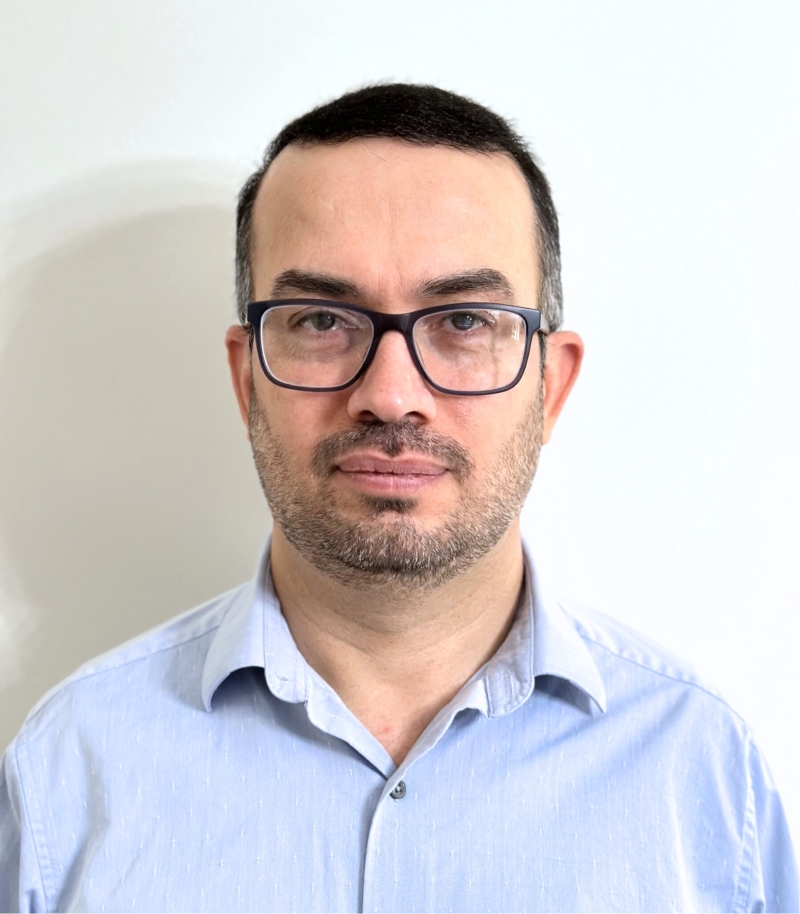
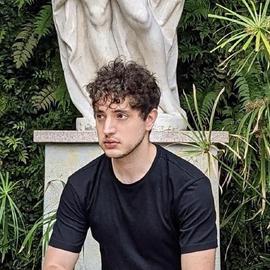
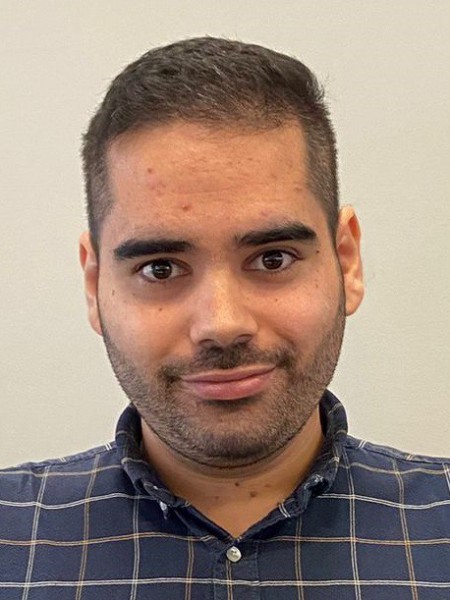
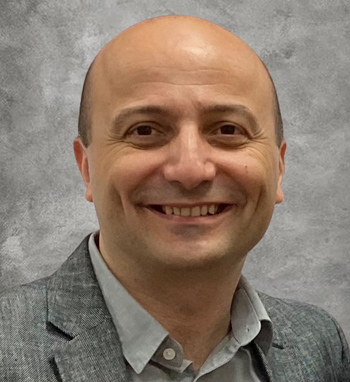
Dr. Rui Shi is an Adjunct Lecturer at the School of Civil Engineering, The University of Queensland. His research focuses on hydraulic engineering, particularly air-water flow properties in turbulent systems like hydraulic jumps, breaking bores, and stepped spillways. He employs both intrusive and non-intrusive measurement techniques to study multiphase flows and turbulence statistics. Education: PhD in Civil Engineering (2022), The University of Queensland. Shi's research spans experimental fluid dynamics, with publications analyzing bubble convection, void fraction, and dam-break wave boundary layers. His work often involves collaborations with Hubert Chanson and Davide Wüthrich, contributing to journals like International Journal of Multiphase Flow and Coastal Engineering . He has presented at conferences including the IAHR World Congress and Australasian Fluid Mechanics Conference. Shi's recent publications emphasize air-water flow measurement methodologies, turbulence dynamics in unsteady flows, and hydraulic structure optimization. His technical reports and peer-reviewed articles provide insights into stepped spillway performance, probe sensitivity, and prototype-scale hydraulic modeling. Email: r.shi@uq.edu.au
Prof. Dr. Jürgen Peissig is a Full Tenure Professor at the Institute for Communications Technology within the Faculty of Electrical Engineering and Computer Science at Leibniz University Hannover since 2014. He supervises a research group with 1 post-doctoral researcher and 12 PhD students across subgroups: Data Communications Systems, Audiocommunications and Acoustics, and Statistical Signal Processing. PhD in Physics (1992) from University of Göttingen Researcher at AT&T Bell Labs (1990-1991) Research Associate at Universities of Göttingen and Oldenburg (1992-1996) Industry leadership at Sennheiser (1996-2014) His research spans audio signal processing for hearing aids, cochlear implants, and immersive audio systems; machine-to-machine communication with robust waveforms (FBMC); and hybrid VLC-RF systems . Key sub-fields include noise cancellation, psychoacoustic modeling, MIMO interference alignment, and 3D audio reproduction. Recent publications focus on deep learning for sound source localization, spatial audio measurement frameworks, and wind turbine noise analysis. Trends show integration of neural networks , higher-order ambisonics , and mobile measurement systems . Recipient of Werner v. Siemens Excellence Award 2006 for thesis supervision Awarded Best Technical Paper at AES 156th Convention (2024) Best Student Paper Award at FRUCT 2020 and AES Poster Award 2019 He has taught courses on Signals and Systems , Digital Data Transmission , and Acoustical Transducers , supervising over 30 diploma/master's theses and 15 PhD students. His lab, the Immersive Media Laboratory , develops advanced audio systems for live events and virtual environments.
Sebastian Reich is a Professor of Numerical Analysis at the University of Potsdam and holds an honorary Visiting Professorship at Imperial College London . He leads the Chair of Numerical Mathematics and serves as Editor-in-Chief of the SIAM/ASA Journal on Uncertainty Quantification since 2021. Research Interests Numerical methods for Hamiltonian systems Data assimilation in geoscience Stochastic particle filters Bayesian inference algorithms Molecular dynamics simulation Multi-scale modeling Collaborative Projects : Principal Investigator and former Speaker (2017-2024) of SFB 1294 Data Assimilation , a DFG-funded Collaborative Research Center Active participant in SFB 1114 Scaling Cascades in Complex Systems at Freie Universität Berlin Books Authored : Probabilistic Forecasting and Bayesian Data Assimilation (Cambridge UP, 2015) Simulating Hamiltonian Mechanics (Cambridge UP, 2005) Technical Contributions : Development of symplectic integration methods Innovations in ensemble Kalman filtering Regularization approaches for geophysical models Stochastic algorithms for molecular simulations
Hongsheng Wang is a Research Fellow at the Bureau of Economic Geology within the Jackson School of Geosciences at The University of Texas at Austin. His research focuses on advancing subsurface energy technologies through interdisciplinary approaches combining geoscience, engineering, and machine learning. Key areas include geological carbon storage, underground hydrogen storage, reservoir simulation, and fracture mechanics. His work emphasizes innovative applications of machine learning for challenges such as CO2 plume migration forecasting, parameterization of 3D saturation data, and fracture conductivity analysis. He also investigates leakage mitigation strategies in hydrogen storage systems and the role of permeability heterogeneity in subsurface processes. Publications highlight contributions to microfluidic experiments, porous media dynamics, and AI-driven reservoir modeling. Current projects involve surrogate models for large-scale simulations and dimension reduction techniques to enhance computational efficiency in carbon storage assessments.
Dr. Parvez Mahmud is a Senior Lecturer and Director of the Master of Sustainable Energy program at the University of Technology Sydney (UTS), School of Mathematical and Physical Sciences. He holds a PhD from Macquarie University with notable awards including Vice-Chancellor Commendation and Excellence in Research. Prior roles include postdoctoral fellowships at University of Melbourne and Deakin University, and research associate positions at Macquarie University. His research focuses on Renewable Energy, Energy Storage, Life Cycle Assessment, Nanogenerators, and Sustainability, with over 200 peer-reviewed publications and two authored books. He has supervised 4 PhD completions and currently guides 7 students. Awards include Stanford/Elsevier's Top 2% Scientists (2022-2024) and six Best Presentation Awards at international conferences. Teaching contributions include developing programs like the Master of Sustainable Energy and pioneering innovative pedagogies such as flipped classrooms and project-oriented learning. He leads funded research in areas like Hydrogen Production, Circular Economy, and Smart Grids, collaborating internationally with industries and professional networks. Active in global keynotes and workshops on Energy & Sustainability, he also drives AI-driven solutions for energy systems and wearable health technologies.
Mrinal K Sen is a Professor and Morgan J. Davis Centennial Chair in Geosciences at the University of Texas at Austin's Jackson School of Geosciences. He leads the Sen Research Group and holds affiliations with the Department of Earth and Planetary Sciences and the Institute for Geophysics. His work focuses on seismic wave propagation, anisotropy, and geophysical inverse problems, with applications in exploration seismology, reservoir characterization, and whole-Earth seismology. Sen pioneered methods combining Bayesian statistics, machine learning, and advanced numerical techniques to address uncertainty quantification and improve seismic imaging. Education: Ph.D., University of Hawaii at Manoa M.S., Indian School of Mines (now IIT) B.S., Indian School of Mines (now IIT) Research Interests: Seismic Inversion and FWI Bayesian Methods and Uncertainty Analysis Machine Learning in Geophysics Anisotropy and Wave Propagation Reservoir and CO2 Storage Modeling Recent work emphasizes hybrid quantum-neural networks for image generation, trans-dimensional MCMC for FWI, and physics-guided deep learning. His articles highlight advancements in stochastic inversion, fluid saturation modeling, and ambient noise monitoring for groundwater studies. Labs/Teams: Director of the Sen Research Group and former Interim Director (2017-2018) and Associate Director (2016-2020) of the UT Institute for Geophysics.
Emre Besler is an Assistant Professor of Instruction in the Department of Statistics and Data Science at Northwestern University's Weinberg College of Arts & Sciences. He holds a Ph.D. in Electrical and Computer Engineering from Northwestern University. His teaching philosophy emphasizes student engagement through real-world case studies, theoretical foundations, and hands-on coding exercises. Research interests focus on Machine Learning and biomedical signal processing, collaborating with Feinberg School of Medicine and the Department of Biomedical Engineering to develop cost-effective diagnostic tools. Projects aim to improve medical diagnosis accuracy while reducing equipment costs. Key research areas include real-time monitoring of radiofrequency ablation therapy, cardiac signal analysis for atrial flutter classification, and gravitational wave detection via citizen science projects like Gravity Spy. His work combines advanced machine learning techniques with biomedical engineering applications. Publications span neural network modeling for synaptic input analysis, ensemble learning in surgical monitoring systems, and sensor fusion methods. While no scientific awards are listed, his contributions bridge computational methods and clinical medicine. Advising and grants details are not explicitly provided in the text. Collaborations include interdisciplinary teams across engineering, medicine, and data science disciplines.
Imrose Muhit serves as a Senior Lecturer in Civil and Sustainable Infrastructure Engineering at Teesside University's School of Computing, Engineering & Digital Technologies (SCEDT). He holds external positions including Member (Emerging Leader) of the UK Young Academy, External Research Supervisor at Durham University, and Community Advisory Board Member for the Institution of Civil Engineers' Knowledge Networks. His roles encompass Postgraduate Research Tutor for SCEDT and Marketing and Recruitment Champion for the Engineering Department. His educational background includes: Bachelor of Civil Engineering from Chittagong University of Engineering and Technology Master of Structural Engineering from Chung-Ang University PhD in Structural Engineering from the University of Newcastle, Australia Muhit's research focuses on sustainable infrastructure solutions with particular emphasis on zero-carbon construction materials, AI-driven structural assessment, and climate-resilient design. His work bridges computational modeling with practical applications in masonry structures, low-carbon concrete technologies, and circular economy principles for the built environment. He actively develops machine learning approaches for structural reliability analysis and material optimization. His publication portfolio reveals consistent innovation in sustainable materials (hemp composites, geopolymer concrete, rubberized concrete) and structural resilience (masonry veneer walls, seismic response prediction). The research demonstrates strong interdisciplinary integration of artificial intelligence with traditional civil engineering challenges, particularly in climate adaptation contexts. Key recognitions include: Membership in the UK Young Academy as an Emerging Leader Muhit actively supervises PhD students in sustainable infrastructure topics and leads significant research initiatives including Innovate UK projects RECONSTRUCT and Activated Filter Cake. His knowledge exchange spans enterprise activities through University of Teesside Enterprises (UTEL) focusing on low-carbon construction materials. International collaboration networks span 12 countries across four continents. His professional ecosystem includes leadership roles in the Institution of Civil Engineers' Sustainability Network and Stockton-on-Tees Borough Council's Business Climate Coalition, demonstrating commitment to translating research into community impact.
Dr. Sandip Dutta is a Lecturer in the Department of Mechanical Engineering at Clemson University. He holds a Ph.D. from Texas A&M University, an MS from Louisiana State University, and a BS from the Indian Institute of Technology, Kharagpur. He is certified in ASQ Software Quality and Six Sigma Green Belt. His research focuses on Thermal Systems, Turbulence modeling, Software Quality Assurance, Image Processing and Cognition, and Business Analytics. He has contributed to 33 international patents in Gas Turbine Technology, 3D Metal Printing, and Thermal Systems engineering. His work bridges mechanical engineering with healthcare technology through innovations in medical imaging analysis using deep learning. Notable contributions include automated medical image alignment, CT image segmentation, and low-dose calcium scoring techniques. Dr. Dutta’s research also extends to fusion energy physics through studies on the ADITYA-U tokamak and additive manufacturing applications in turbine components. His publications highlight advancements in domain adaptation for medical imaging, hybrid 3D-2D localization systems, and artifact detection in CT scans. While no specific grants or advising roles are listed, his patents and collaborations indicate active engagement in industry-research partnerships.
Dr. Suzan Arslanturk is Associate Professor in Computer Science and Industrial & Systems Engineering at Wayne State University's College of Engineering. She directs the Machine Learning and Health Informatics Laboratory, focusing on predictive analytics for healthcare applications. Research domains include: Cancer subtyping through multi-omics data integration Biomarker discovery for prostate cancer using cross-cancer learning Drug repurposing for cancers with DNA-repair deficiencies Neonatal brain anomaly detection via MRI analysis Operational healthcare optimization during medical surges Leads the development of deep learning frameworks for medical imaging segmentation and clinical text analysis. Publications demonstrate innovations in multimodal data fusion, domain adaptation, and unsupervised abnormality detection. Advises PhD candidates in computational healthcare research and directs academic programs in data mining and intelligent systems.
Seyed Ziae Mousavi Mojab is an Assistant Professor (Teaching) in Computer Science at Wayne State University's James and Patricia Anderson College of Engineering. He holds a B.S.E. in Computer Science from the University of Michigan Ann Arbor, and both M.S. and Ph.D. degrees in Computer Science from Wayne State University. His research focuses on evolutionary computation, optimization methods, workflow scheduling, medical image processing, data analytics, and business intelligence. Key investigations include cultural algorithms for big data workflows, deep learning ensembles for medical diagnostics, and neural architecture synthesis techniques. Recent publications demonstrate applications in robotic surgical segmentation (2023), COVID-19 detection via chest X-ray analysis (2020-2021), and optimization frameworks for cloud-based big data systems (2019-2022). Research consistently integrates evolutionary computation with deep learning architectures across medical and data-intensive domains.
Konstantinos Blekas is a Professor at the Department of Computer Engineering and Informatics, University of Ioannina, Greece. He is affiliated with the Polytechnic School and teaches advanced courses such as 'Machine Learning' (MYE002) and 'Probability and Statistics' (MYY304). His research focuses on Machine Learning, Intelligent Agents, Computer Vision, and Bioinformatics, with particular expertise in Reinforcement Learning, Deep Learning, and their applications in autonomous systems, traffic management, and aerospace engineering. Education: Ph.D. in Electrical and Computer Engineering, National Technical University of Athens (1997) Diploma in Electrical Engineering, National Technical University of Athens (1993) Research Interests: Dr. Blekas explores cutting-edge topics in machine learning, including generative adversarial networks (GANs), multi-agent systems, and reinforcement learning for autonomous navigation. His work spans domains such as unmanned surface vehicles, air traffic management, and medical informatics. Notable contributions include advanced frameworks for flight trajectory modeling, urban traffic optimization, and brain functional network analysis. Awards and Recognition: While specific awards are not explicitly listed, his extensive publications and contributions to AI and robotics reflect significant academic impact. Advising and Grants: He supervises research in machine learning applications, though specific student names or grant details are not provided in the texts. His courses emphasize practical implementation, with resources available on e-learning platforms like e-course.uoi.gr. Labs and Teams: Engaged in collaborative projects involving robotics and AI, though no specific lab names are mentioned. His work integrates interdisciplinary approaches across computer science, engineering, and biomedical fields.
Riccardo Renzulli is a Researcher at the Department of Computer Science, University of Turin, focusing on object-centric representation learning, medical image analysis, and AI-based computer vision applications. His research emphasizes capsule networks, deep learning models for hierarchical relationships, and applications in healthcare and aerial/satellite imagery. Education: MSc and BSc in Computer Science from University of Turin (2018 and 2015). Previous research with Prof. Valentina Gliozzi explored description logics and non-monotonic reasoning. Professional experience includes a 2022 post at Aalto University (supervised by Prof. Ville Kyrki and Francesco Verdoja) and roles at Addfor and Machine Learning Reply as a deep learning scientist. Research interests span concept learning, few-shot learning, interpretability, and medical imaging. Notable work includes visual localization systems for UAVs, AI-assisted diagnosis for COVID-19 via CXR analysis, and lung nodule segmentation using DeepHealth Toolkit. He contributed to the UniToChest dataset for cancerous nodule detection. His recent publications (2022-2025) address efficient neural architectures, medical imaging applications, and 3D scene modeling. Collaborations include EIDOSLAB, with research emphasizing scalable compression, entropy-based pruning, and ensemble methods for neural networks.
Dinis O. Abranches serves as an Assistant Researcher in the Department of Chemistry at the University of Aveiro, Portugal, conducting research within the G6 - Virtual Materials and Artificial Intelligence group at CICECO (Aveiro Institute of Materials). His work bridges computational chemistry, artificial intelligence, and sustainable materials engineering with institutional recognition evidenced by CICECO's 37 positions in Stanford's 2024 World's Top 2% Scientists list. His academic credentials include: PhD in Chemical Engineering, University of Notre Dame (2024, GPA 4.0/4.0) MSc in Chemical Engineering, University of Notre Dame (2023, GPA 4.0/4.0) MSc in Chemical Engineering, University of Aveiro (2020, GPA 19/20) BSc in Chemical Engineering, University of Aveiro (2018, GPA 19/20) Dr. Abranches' research program pioneers the integration of machine learning with thermodynamic modeling to design sustainable solvents, focusing on deep eutectic solvents, ionic liquids, and hydrotropes. His work targets critical applications in battery recycling, pharmaceutical formulation, and biomass valorization through non-covalent interaction engineering and physicochemical property prediction. This interdisciplinary approach positions him at the convergence of AI-driven materials discovery and green chemistry innovation. Analysis of his 2024-2025 publications reveals dominant themes in AI-enhanced solvent characterization, with 80% of recent work focusing on deep eutectic systems. Key methodological trends include sigma profile-based digital chemical spaces, vibrational spectroscopy validation, and active learning for high-throughput experimentation. Application areas span energy storage (redox behavior studies), pharmaceuticals (antimalarial DES design), and circular economy (lignin dissolution), demonstrating consistent translation from computational prediction to experimental validation. He actively supervises PhD candidate Rafael Alexandre Farinha Serrano and contributes to the European Commission's REVITALISE project, which develops novel recycling methodologies for lithium-ion and sodium-ion batteries through: High-purity pre-treatment of low-value battery components Direct recycling approaches for cathode materials Green hydrometallurgical extraction processes As a core member of CICECO's G6 research group, he participates in cutting-edge initiatives at the AI-materials science interface, including ERC-funded programs on AI for materials science and contributions to Nobel-recognized protein design methodologies. The group's work aligns with 2024 Nobel Prize themes in Chemistry and Physics through computational solvent design and machine learning applications.
Dr. Kemal Akkaya is a Professor at the Department of Electrical & Computer Engineering, Florida International University (FIU), where he leads the Advanced Wireless and Security Lab (ADWISE). He holds a Ph.D. in Computer Science from the University of Maryland Baltimore County and has expertise in Network Security, IoT/CPS Security, Blockchain Applications, and 5G Security. His professional roles include serving as Research Director for FIU’s Emerging Preeminent Program in Cybersecurity and as Program Director for the first BS degree in IoT in the U.S. Education: Ph.D. in Computer Science, University of Maryland Baltimore County M.S. in Computer Engineering, Middle-East Technical University, Turkey B.S. in Computer Science, Bilkent University, Turkey Research Interests: Dr. Akkaya focuses on securing IoT and cyber-physical systems, blockchain for micro-payments, and network defense mechanisms. His work emphasizes privacy-aware protocols, secure key management, and SDN/NFV-based solutions. Awards: FIU Faculty Senate Excellence in Research Award (2020) College of Engineering and Computing Faculty Research Award (2020) Top Cited Article Award from Elsevier (2010) Advisees and Grants: While no student names are listed, his lab (ADWISE) likely supports graduate research in IoT and cybersecurity. His grants include interdisciplinary initiatives at FIU, focusing on securing emerging technologies like 5G and blockchain. Labs/Teams: Leads the ADWISE Lab, collaborating on projects like secure IoT payment systems, drone communication security, and resilient smart grid networks.