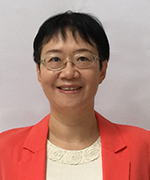
Norbert Pirk is an Associate Professor at the University of Oslo, affiliated with the Department of Physical Geography and Hydrology. His research focuses on ecohydrology in cold environments, land-atmosphere energy and trace gas exchange, and snow-vegetation interactions. He teaches courses including Geophysical Data Science and Fluvial Hydrology, and contributes to arctic climate studies through field campaigns and modeling. His research spans tundra carbon cycling, permafrost dynamics, and machine learning applications in climate modeling. Recent publications highlight advancements in snow data assimilation techniques, greenhouse gas flux monitoring using drones, and deep learning methods for Arctic methane analysis. He actively collaborates within international research networks. Current projects include SvalGaSess (methane monitoring in Svalbard), SnowSub (snow sublimation impacts on hydropower), and EMERALD (terrestrial climate interactions). He contributes to initiatives like FLUXNET2015 and the Land Sites Platform, advancing Arctic observation systems and climate modeling frameworks.
Professor Ahmed H. Elsheikh is a faculty member at Heriot-Watt University's School of Energy, Geoscience, Infrastructure and Society, within the Institute for GeoEnergy Engineering. He holds a Professor title since 2021, previously serving as Associate (2017-2021) and Assistant Professor (2013-2017). His educational background includes a Ph.D. (2010) and MASc (2002) from McMaster University, and a BASc from Al-Azhar University (1999). Research Interests: Fluid control via AI, predictive machine learning, generative modeling, data assimilation, Bayesian uncertainty quantification, and subsurface engineering. His work addresses challenges in reservoir modeling, CO2 sequestration, seismic inversion, and geophysical data analysis. Publications span 2004-2025 with a focus on machine learning applications in energy systems, stochastic field generation, and subsurface flow modeling. Notable contributions include AI-driven seismic inversion, deep learning for reactive transport, and ensemble-based history matching. Key Achievements: Developed novel methodologies for uncertainty quantification, GAN applications in geological modeling, and real-time reservoir monitoring systems. His work contributes to UN Sustainable Development Goals related to climate action (SDG 13) and affordable clean energy (SDG 7).
Artur Luczak is a Professor of Neuroscience at the University of Lethbridge, where he has been a faculty member since 2009 and is affiliated with the Canadian Centre for Behavioural Neuroscience (CCBN). His research integrates experimental and theoretical approaches to study cortical dynamics and neural computation. PhD from Jagiellonian University, Poland MSc from Wroclaw University of Technology Dr. Luczak's research focuses on how neuronal populations process information through spontaneous and sensory-evoked activity. Key interests include metabolic constraints on neural coding, predictive processing in cortical networks, and the role of neural sequences in brain function. His work bridges computational modeling with electrophysiological data to uncover fundamental principles of neural organization. His publications from 2007-2022 reveal consistent exploration of spontaneous cortical activity patterns, with increasing emphasis on energy efficiency and machine learning-inspired neural algorithms. The 2022 Nature Machine Intelligence paper demonstrating how neurons optimize metabolic energy through activity prediction represents a paradigm shift in understanding neural learning mechanisms. Scientific Awards: Fellowship in the Netherlands Fellowship in France Fellowship in Italy Dr. Luczak has trained graduate students and postdoctoral fellows through CCBN's neuroscience programs, with research supported by national and international grants. His teaching portfolio includes computational neuroscience workshops, MATLAB programming courses, and core neuroscience curriculum. He leads a research group at the CCBN utilizing multidisciplinary approaches including in vivo electrophysiology, computational modeling, and behavioral analysis to investigate neural dynamics across multiple scales.
Ole Bøssing Christensen serves as a Guest researcher in the Department of Plant and Environmental Sciences at the University of Copenhagen, specifically within the Section for Crop Sciences. His research program focuses on regional climate modeling with particular emphasis on European climate systems and future projections. His primary research interests include: Regional Climate Modeling and Downscaling Climate Change Projections for Europe Climate Model Validation and Uncertainty Analysis Extreme Climate Event Analysis Land-Sea Interactions in Climate Systems Climate Model Bias Correction Techniques Dr. Christensen's publication record demonstrates sustained contribution to climate science since the early 2000s, with his 2007 paper 'A summary of the PRUDENCE model projections of changes in European climate by the end of this century' standing as a landmark study with over 900 citations. His recent work continues to address critical questions regarding the robustness and scalability of regional climate models across Europe under different climate scenarios. His research has significant policy relevance, with multiple papers referenced in policy documents, reflecting the applied nature of his climate modeling work for adaptation planning and decision-making. Dr. Christensen frequently collaborates with leading climate scientists across Europe, particularly with researchers from the Danish Meteorological Institute where he maintains his primary institutional affiliation.
Quincy C. Hilliard serves as the Heymann Endowed Professor of Music and Composer in Residence at the University of Louisiana at Lafayette, with prior appointments at Nicholls State University, Florida International University, and prominent high schools in Florida and Tennessee. His multifaceted career integrates composition, scholarly research, and pedagogy within the music discipline. Hilliard holds the following academic credentials: Ph.D. in Music Theory and Composition from the University of Florida (Outstanding Alumnus of the School of Music, 1999) Master of Music Education from Arkansas State University Bachelor of Science in Music Education from Mississippi State University (College of Education Alumnus of the Year, 1998) Dr. Hilliard's research centers on wind band composition and music education innovation. As an acclaimed composer, his works are published by leading houses and include commissions for the 1996 Olympic Games and Library of Congress. His scholarly contributions encompass Aaron Copland studies—authorized by the Copland estate to publish performance editions—and theoretical analyses presented at national societies. Educational publications like the Superior Bands series demonstrate his commitment to practical pedagogy, addressing band technique, theory, and ensemble development. His publication history reveals consistent focus on band education resources, evolving from foundational skill-building materials in the 1990s to comprehensive curricula and contemporary pedagogical frameworks. Recent works like the Oxford University Press book Teaching Instrumental Music Across Settings reflect his leadership in advancing instrumental music education through evidence-based practices and interdisciplinary perspectives. Hilliard's accolades include: 2023 University of Louisiana at Lafayette Eminent Faculty Distinguished Professor Award 2014 Mississippi Institute of Arts and Letters Award in Classical Music Multiple Global Music Awards for compositional excellence Annual ASCAP Awards for frequent performance of his works While specific graduate student advising isn't documented, Hilliard's influence extends through widely adopted educational materials and professional development. Significant commissions include the 2021 Trinity College Press Woodwind Examination Syllabus, Library of Congress Lincoln bicentennial project, and Olympic Games score. His ongoing ASCAP recognition underscores enduring relevance in performance repertoire. As president of Hilliard Music Enterprises, Inc., he leads a consulting firm with a board of distinguished music educators, providing expert guidance to institutions nationwide. This initiative bridges academic scholarship with practical implementation in school music programs.
Stefan David Hummel is a Lecturer in Orchestral Didactics & Ensemble at Mozarteum University Salzburg's Department of Music Education Salzburg. He concurrently serves as Head of Pre-College, Personal Assistant to the Rector, and Coordinator of the International Mozart Competition, while contributing to talent development at the Leopold Mozart Institute. His work focuses on music pedagogy , particularly orchestral training methods, ensemble dynamics, and identifying/nurturing young musical talent. He leads the Pre-College program for gifted youth and coordinates the prestigious International Mozart Competition. His involvement in the Bella Musica project further highlights his commitment to innovative music education frameworks.
Emran Ali is a Graduate Researcher (Ph.D. candidate) and Part-Time Lecturer at Deakin University's School of Information Technology within the Faculty of Science, Engineering and Built Environment. He holds concurrent faculty appointments at Hajee Mohammad Danesh Science & Technology University (HSTU) in Bangladesh where he teaches computer science courses while on study leave. His academic journey includes a Master of Science (Research) in Information Technology from Deakin University (2022) and a Bachelor of Science in Computer Science and Engineering from HSTU. Doctor of Philosophy (Ph.D.) in Information Technology, Deakin University (2023–present) Doctor of Philosophy (Ph.D.) in Machine Learning, Coventry University (Cotutelle program, 2023–present) Master of Science (Research) in Information Technology, Deakin University (2020–2022) Bachelor of Science in Computer Science and Engineering, HSTU Bangladesh (2007–2012) Ali's research focuses on algorithm development and applied machine learning in health informatics, specializing in biosignal processing for neurological and sleep disorder detection. His work integrates time-series data analysis with explainable AI techniques to develop clinical decision support systems. Current projects include ML/DL modeling of sleep-stage transitions in aging populations and causal relationship analysis in sleep disorders using EEG data. Analysis of his 10 recent publications reveals strong concentration in biomedical ML applications (60%), particularly EEG-based neurological disorder detection and mental health diagnostics. Secondary focus areas include environmental monitoring systems (20%) and foundational computer science (20%). His work consistently employs ensemble methods and feature optimization techniques across diverse datasets, with increasing emphasis on real-world clinical applicability in recent publications. Deakin University Post-graduate Research Scholarship (DUPRS) through Cotutelle program with Coventry University National Fellowship from Bangladesh Ministry of Science and Technology (2020) Best Presentation Award at Deakin School of IT Conference (2021) AWS AI/ML Scholarships (2023, 2024) Next Generation Tech Booster Scholarship (2024) Ali provides research supervision at HSTU while serving as a Graduate Research Teaching Fellow at Deakin University for Machine Learning and Data Analytics units. His industry collaborations include projects with Monash University, Alfred Health, and AETMOS Australia focused on health informatics applications. Current funding includes AWS-sponsored nanodegrees and Deakin University research scholarships supporting his sleep disorder research. His technical work integrates cloud-based AI/ML platforms (AWS, Azure) with biosignal processing pipelines, utilizing collaborations across Australian healthcare institutions to validate clinical applications. Recent projects emphasize explainability in deep learning models for medical diagnostics, particularly in resource-constrained environments relevant to Bangladesh healthcare contexts.
Sunil Aryal is an Associate Professor of Data Science at the School of Information Technology, Faculty of Science Engineering and Built Environment, Deakin University, Australia. He received his PhD and Master by Research degrees from Monash University Australia and has published over 70 papers in top-tier international venues in Artificial Intelligence, Machine Learning and Data Mining. Dr. Aryal's educational background includes: Graduate Certificate of Higher Education Learning and Teaching, Deakin University (2020) PhD in Computer Science, Monash University (2017) Master of Information Technology (Research), Monash University (2012) Master of Information Technology (Coursework), University of Southern Queensland (2008) Bachelor of Information Technology, Purbanchal University, Nepal (2005) His primary research interests focus on making Machine Learning and Data Mining algorithms robust and flexible to handle heterogeneous, noisy and uncertain data in real-world problems. His work spans across several specific areas including anomaly detection, clustering, kernel/similarity-based learning, ensemble methods, learning from limited data, reinforcement learning, natural language processing, and computer vision. Dr. Aryal is particularly interested in applying these techniques to solve challenges in Defence, National Intelligence, Engineering, Manufacturing, Healthcare and Education. Dr. Aryal co-leads the Machine Learning for Decision Support (MLDS) Research Group at Deakin University and has secured over AUD 4.5 million in external research funding. His research is supported by diverse organizations including US and Australia Defence Agencies, the Australian Office of National Intelligence, Worksafe Victoria, the Victorian State Department of Education and Training, the Technology Innovation Institute (TII) UAE, and Table Tennis Australia (TTA). His notable awards include multiple Deakin University research and teaching awards, the Australian Postgraduate Award for his PhD studies, and several student travel awards during his doctoral candidature. Dr. Aryal actively supervises numerous PhD and Master's students and has contributed significantly to teaching in various courses at Deakin University and previously at Federation University. He serves on several university committees and contributes to the research community as a reviewer, program committee member, and editor for various journals and conferences.
Prof. Tegawendé F. Bissyandé is a Chief Scientist in the Professor category at the Interdisciplinary Centre for Security, Reliability and Trust (SnT) at the University of Luxembourg. He holds the prestigious position of ERC Fellow and serves as Principal Investigator of the NATURAL project focused on Artificial Intelligence for Program Repair. His research spans software engineering, cybersecurity, and artificial intelligence, with particular emphasis on applying machine learning techniques to software development and security challenges. Dr. Bissyandé's research interests include: Software Debugging (especially bug localization and program repair) Software Security (especially malware detection and analysis) Code Search (both free-form and semantic code-to-code) Machine Learning and Natural Language Processing for software engineering Cyber-security applications in mobile and cloud environments His recent work demonstrates a strong focus on leveraging Large Language Models (LLMs) for various software engineering tasks. Analysis of his 15 most recent publications reveals several key trends: extensive application of LLMs to program repair and code generation; innovative approaches to Android security and malware detection; development of novel techniques for code search and understanding; and exploration of the intersection between natural language processing and software engineering. His research increasingly bridges theoretical software engineering with practical applications in mobile security and developer productivity tools, with a significant portion of his work focusing on Android ecosystem security and program repair technologies. Dr. Bissyandé has received numerous prestigious awards throughout his career: APSEC Best ERA Paper Award (2018) for 'LSRepair: Live Search of Fix Ingredients for Automated Program Repair' IPSJ SIG SE Excellent Research Award (2018) for 'FaCOY: a Code-to-Code Search Engine' FOSS Impact Paper Award (2018) for 'Characterizing Deprecated Android APIs' SANER Best ERA Paper Award (2016) for 'Parameter Values of Android APIs: A Preliminary Study on 100,000 Apps' ASE Best Paper Award (2012) for 'Diagnosys: automatic generation of a debugging interface to the Linux kernel' As an active member of the software engineering research community, Dr. Bissyandé serves on program committees for major conferences including ICSE, ASE, and ISSTA, and has been an Area Chair for ICSE 2024. His industry partnerships include significant collaborations with BGL BNP Paribas (since January 2019), Luxembourg Stock Exchange (since January 2018), and Paul Wurth (January 2015 to 2018), demonstrating the practical impact of his research. He leads the SerVAL lab at SnT, which focuses on software validation and analysis, with particular expertise in mobile security and program repair technologies, and actively mentors PhD candidates through FNR research grants.
Trung Le is a Lecturer in the Department of Data Science & AI at Monash University. His research focuses on deep generative models, kernel methods, optimization in machine learning, and Bayesian inference, with applications to supervised learning, adversarial learning, and cyber security. He holds a PhD in Computer Science from the University of Canberra (2013). Key projects include the Australian Research Council-funded initiatives such as 'Can Machines Unlearn? Toward Next-Generation Safe Artificial Intelligence' (2025–2029) and 'Trustworthy Generative AI: Towards Safe and Aligned Foundation Models' (2024–2026). His work contributes to UN SDG 4 (Quality Education) through advancements in AI ethics and safety. Education: PhD in Computer Science, University of Canberra (2013) Research Areas: Continual Learning, Diffusion Models, Domain Adaptation, Adversarial Machine Learning Awards: KDD 2023 Best Student Paper Award, Imagine Cup 2010 Australia First Prize Trung has published extensively in top-tier venues like NIPS, ICLR, and JMLR, with over 100 outputs since 2009. His recent work emphasizes robustness in AI systems, including projects on adversarial defense and ethical concept erasure in generative models.
Peter Lucas Hulen is a Professor in the Music Department at Wabash College , where he has taught for nearly 25 years. His work bridges classical acoustic composition with experimental computer-generated electronic music, informed by his classical training and later shift toward digital techniques. Research interests include: Electronic music history Music technology pedagogy Digital synthesis methods (FM, subtractive, granular) Integration of acoustic and electronic sound Algorithmic composition Interdisciplinary applications His compositions explore: Microtonal scales using superparticular ratios Wireless performance interfaces Choral liturgy adaptation Cultural sound symbolism Speaker array design Temporal structure manipulation Recent works combine academic rigor with technical innovation: 2017: Homage and Refuge , Wobbly 2015: Organum IV 2014: Magnificat , Sitting 328b 2013: Les substances botaniques , Primitive 2012: Lamentationes Jeremiae I He developed a systematic electronic music curriculum including: History and Literature Computer Programming (Max/MSP) Performance Ensembles Theory and Composition
Dr. Jian Liu is an Assistant Research Professor at the Kummer Institute Center for Artificial Intelligence and Autonomous Systems and the Department of Electrical and Computer Engineering at Missouri University of Science and Technology. He holds a Ph.D. in Electrical Engineering from Missouri S&T and another Ph.D. in Management Science and Engineering from Nanjing University of Aeronautics and Astronautics. His research focuses on artificial intelligence, energy systems optimization, and operations research with applications in sustainable energy, queueing theory, and supply chain management. He has held visiting positions at prestigious institutions including Penn State University and Tsinghua University. Research Interests: Artificial Intelligence (Explainable AI, Reinforcement Learning) Energy Economics (Electricity Markets, Renewable Integration) Behavioral Operations (Queueing Systems, Fairness in Service) Complex System Optimization (Supply Chains, Manufacturing) Publications reflect expertise in AI applications for edge computing, energy storage optimization, and behavioral queueing models. Recent work addresses fairness in service systems, dynamic pricing strategies, and multi-period energy dispatch optimization. His research spans interdisciplinary areas including smart grids, sustainable materials, and industrial process optimization. Liu has advised multiple collaborative projects at the intersection of AI and energy systems. His work has been published in top journals like Applied Energy and IEEE Transactions on Power Systems .
Ling Liu is a Professor in the School of Computer Science at Georgia Institute of Technology's College of Computing. She directs the Distributed Data Intensive Systems Lab (DiSL) and conducts research in big data systems, cloud computing, distributed systems, privacy, and trust. An IEEE Fellow and recipient of the IEEE Computer Society Technical Achievement Award, Liu has published over 300 papers with best paper awards at major conferences. Her research develops scalable systems for AI and data analytics with emphasis on performance, security, and privacy. Current projects include federated learning, adversarial robustness, and trustworthy distributed AI. Liu has served as Editor-in-Chief for IEEE Transactions on Service Computing and ACM Transactions on Internet Technology.
Dr. V. Menkovski serves as an Associate Professor in Data Mining at Eindhoven University of Technology's Department of Mathematics and Computer Science. He also holds associate professor positions with EAISI Health and EAISI High Tech Systems, and is an ICMS Affiliated member. His work spans multiple domains of artificial intelligence and computational physics, with significant contributions to fusion energy research. Mathematics and Computer Science, Data Mining (Primary Appointment) EAISI Health (Associate Professor) EAISI High Tech Systems (Associate Professor) ICMS (Affiliated Member) Menkovski's research focuses on Graph Neural Networks, Machine Learning, Deep Learning, and their applications in diverse fields from plasma physics to metamaterials. His work demonstrates strong interdisciplinary connections, particularly between computer science and fusion energy research. He has developed novel approaches for crowd simulation, tokamak plasma monitoring, and metamaterials homogenization using advanced neural architectures. His fingerprint reveals expertise in Quality-of-Experience, Autoencoders, Neural Networks, Annotation, Graph Neural Networks, Video Streaming, Adversarial Machine Learning, and Anomaly Detection. Analysis of his recent publications (2023-2025) shows a clear trend toward applying Graph Neural Networks to complex physical systems, particularly in fusion energy research and materials science. His work increasingly integrates symmetry principles with neural architectures, as seen in his research on equivariant networks for metamaterials and symmetry-informed networks for zeolite analysis. There's also significant focus on practical applications in fake news detection, anomaly detection, and plasma state monitoring. Best Paper Award ICPM 2021 (with Sommers and Fahland) Best Paper Award of LoG 2022 (with multiple co-authors including Huang, Chen, Fang, Zhao, Yin, Pei, Mocanu, Wang, Pechenizkiy, and Liu) Menkovski teaches several advanced courses including Deep Learning, Advanced Topics in Artificial Intelligence, and Sociophysics 2, which runs through August 2025. His supervised work portfolio includes 79 projects, indicating substantial mentorship activity. He has received significant media attention for his research, including coverage by 11 news outlets, blog posts, and mentions on social media platforms. His work on 'Supervised Learning of Process Discovery Techniques Using Graph Neural Networks' was particularly noted in media coverage. His research involves collaboration with multiple institutions and teams, particularly in fusion energy research (Eurofusion Tokamak Exploitation Team, ASDEX-Upgrade team, EUROfusion MST1 Team). He works closely with researchers across disciplines, including physicists working on tokamak plasma and materials scientists studying metamaterials and zeolites.
Dr. Shahriar Kaisar is the Deputy Head of the Department of Accounting, Information Systems and Supply Chain at RMIT University, Australia. He holds a PhD from Monash University and a master's degree from the University of Saskatchewan. His research focuses on data analytics, cybersecurity, AI, health informatics, ad-hoc networks, and emerging technologies. Dr. Kaisar has held academic roles in Australia, Canada, and Bangladesh. Research Interests: His work spans generative AI in education, cyberthreat detection, health informatics, and decentralized networking. Notable projects include frameworks for cybersecurity in power grids and AI-driven decision-making systems. Teaching & Supervision: He supervises PhD students on topics like platform economy value creation and AI-driven cybersecurity. Taught courses include Digital Business Security, Practical Cybersecurity in Business, and Networking in Business. Awards: No specific awards are listed, but his work appears in top-tier journals such as Journal of Information Security and Applications and Future Generation Computer Systems . Collaborations: Active in global research networks, with a focus on interdisciplinary projects involving industry 5.0, sustainable cities (UN SDG 11), and smart infrastructure.





.jpg)