Mads Kaern is an Associate Professor in the Department of Cellular and Molecular Medicine, specializing in synthetic biology, gene regulation, and systems biology. His research integrates computational modeling with experimental approaches to understand cellular processes and design genetic circuits for biomedical applications. Key areas of focus include epistasis analysis, gene expression variability, and the development of educational programs in BIOSTEM. Research interests span molecular mechanisms of gene regulation, synthetic biology applications, and quantitative analysis of genetic interactions. His work emphasizes interdisciplinary methods combining genomics, bioinformatics, and engineering principles to address complex biological questions. Publications highlight contributions to understanding cellular heterogeneity, improving DNA assembly techniques, and advancing therapeutic strategies through synthetic biology. Educational efforts include initiatives like iGEM-inspired programs to enhance undergraduate research and skill development in biotechnology.
Joy Waite-Cusic is an Associate Professor of Food Safety and Quality Systems at Oregon State University's Department of Food Science & Technology, within the College of Agricultural Sciences. Her research integrates food safety systems, focusing on pre-harvest safety, process validation, pathogen prevalence, and microbiological quality indicators. She collaborates with industry partners to improve food safety practices and reduce foodborne illnesses. Education: B.S., Food Science & Technology, Oregon State University (2002) M.S., Microbiology, Oregon State University (2004) Ph.D., Food Science & Technology, The Ohio State University (2007) Research Interests: Dr. Waite-Cusic's work spans food safety across production, processing, and distribution. Key areas include pathogen reduction in fresh produce, sanitation efficacy, and spoilage microbiology. Her lab evaluates processes like depuration for shellfish and dry-roasting for nuts to ensure microbial safety. She also investigates antimicrobial resistance in foodborne pathogens. Key Contributions: Recent studies address alcohol-based sanitizers in dry produce packinghouses, UV-C processing for human milk, and E. coli survival in onions. Her work emphasizes practical solutions for industry compliance with food safety regulations. Awards: 2021 James and Mildred Oldfield Team Award 2020 Search for Excellence Award 2019 Oregon Farm Food Safety Team Award National Science Foundation GK-12 Fellowship (2002) Advising & Grants: Advises students like Madeleine Enriquez. Her grants fund projects on produce safety, sanitizer efficacy, and pathogen dynamics. Collaborates with the Western Regional Center to Enhance Food Safety on outreach and training. Labs & Teams: Leads the Waite-Cusic Food Microbiology Lab, focusing on process validation for food companies. Engages with industry partners to validate kill steps (e.g., dehydration, roasting) for regulatory compliance.
Femke L. Truijens is an Assistant Professor in Clinical Psychology at the Erasmus School of Social and Behavioural Sciences, Erasmus University Rotterdam, where she is affiliated with the Methods & Skills department. Her work bridges clinical psychology, methodological innovation, and philosophy of science, with a focus on the validity of patient-reported outcomes and routine outcome measurement in mental health care. PhD from Ghent University, Belgium Dr. Truijens’ research centers on foundational questions in clinical research: what constitutes valid evidence, how patients interpret symptom measures, and how therapeutic change is captured. She employs qualitative and mixed methods to interrogate the assumptions behind quantitative data in psychotherapy. Her work includes longitudinal studies on children with autism during the pandemic and critical analysis of measurement validity in depression treatment. She teaches Severe Mental Illness in Urban Contexts , advocating for pluralist diagnostic approaches and recovery-oriented care. Her recent publications span topics such as autism spectrum disorder during the pandemic, response shifts in psychotherapy, and the integration of qualitative insights into quantitative research. These works reflect a consistent theme: enhancing the clinical validity and ethical integrity of mental health research through methodological reflexivity. Impact Journey Erasmus University Rotterdam (2022) Closing webinar on the impact of the COVID-19 pandemic on families with children with ASD (2021) Most Valuable Contribution to the Integration of Science and Practice in Psychology (2020) ZonMW – COVID-19 second wave focus area 2 – Bottom up Fellowship (2020) Dr. Truijens has been actively involved in advising and public engagement, particularly through webinars and media contributions on the mental health impact of the pandemic on families with children with ASD. She leads a stakeholder study on Routine Outcome Measurement in the Dutch GGZ and has initiated two key collaborative networks: the Qualitative Research Collective GGZ in the Netherlands and the international SPR interest group Evidence for Guidelines . She also maintains a private practice offering psychotherapy to gifted adults and adolescents.
Satya Prakash Saraswat is a Postdoctoral Researcher at KTH Royal Institute of Technology's Nuclear Science and Engineering Unit in Stockholm, Sweden. He holds a Ph.D. from the Indian Institute of Technology Kanpur, with expertise in thermal-hydraulics, nuclear reactor safety, computational fluid dynamics (CFD), and system code development. His work spans fission and fusion reactor analysis, including contributions to the VALIDATIO project (University of Pisa) for fusion safety tools and the ATLAS project (Khalifa University) for advanced reactor safety enhancements. Research interests focus on computational modeling, AI integration in nuclear safety, and experimental validation of safety systems. He has developed skills in both experimental and numerical techniques, addressing challenges in multiphase flow, reactor core dynamics, and material compatibility. Key projects include validation of ASYST and SIMMER codes for condensation phenomena and lead-lithium interaction studies. Publications highlight advancements in burn-up wave characterization, code stability analysis (RELAP5/SIMMER), and thermal-hydraulic safety assessments for reactors like ESBWR and ITER systems. His work emphasizes enhancing safety tools through rigorous validation and innovative methodologies.
Dr. Christie Petrenko is a Research Associate Professor and Director of Clinical Training in the Department of Psychology at the University of Rochester. Her work focuses on preventing secondary conditions in individuals with Fetal Alcohol Spectrum Disorders (FASD), particularly through interventions like Families on Track. She investigates prenatal alcohol exposure’s long-term effects on cognition, behavior, and mental health, alongside co-occurring adversities such as maltreatment and out-of-home care. Dr. Petrenko’s research integrates developmental psychopathology frameworks to address risk factors and protective mechanisms. She has conducted pivotal studies on neuropsychological functioning in FASD, emotion regulation interventions, and caregiver support strategies. Key projects include a randomized controlled trial of Families on Track, which targets adaptive developmental pathways for children aged 4-8 with FASD. Her work emphasizes translational research to bridge clinical practice and policy. Notable contributions include telemedicine programs (e.g., ECHO FASD) to improve diagnosis capacity and mobile health tools like the My Health Coach app. She also advocates for equity in FASD care through critical race theory and disability studies perspectives. Dr. Petrenko collaborates with educators, healthcare providers, and policymakers to enhance FASD recognition and support systems. Her research spans neuroimaging analyses, qualitative caregiver studies, and longitudinal follow-ups to characterize FASD trajectories and intervention efficacy.
Loes Keijsers is a Full Professor in Clinical Child and Family Studies at the Department of Psychology, Education and Child Studies, Erasmus School of Social and Behavioural Sciences, Erasmus University Rotterdam. Her work focuses on adolescent development, parent-adolescent relationships, and the application of advanced methodological approaches such as Experience Sampling Methods to study daily emotional and behavioral dynamics in teens. Her research interests include: Clinical Child and Family Studies Adolescent mental health and well-being Parenting dynamics and autonomy support Statistical modeling and longitudinal analysis Digital interventions and e-health tools for youth Her recent publications highlight a strong trend in using intensive longitudinal data and mobile technology to understand heterogeneity in adolescent development and family processes. She emphasizes preregistered research and robust statistical models to enhance scientific rigor. Her work increasingly integrates digital tools such as smartphone apps and serious games (e.g., the Grow It! App) to promote adolescent mental health. Notable contributions include: Developing and evaluating e-health applications for adolescent depression Advancing ecological momentary assessment in family research Translating psychological research into public impact through TEDx talks and the book Waarom tieners zo irritant kunnen zijn Contributing to UN Sustainable Development Goals related to well-being and mental health She actively supervises research and has contributed to multiple datasets in the areas of social media use, adolescent well-being, and intensive longitudinal methods. Her collaborative network spans interdisciplinary teams working on youth mental health innovation. Loes leads the research project PROJECT ADAPT (www.projectadapt.nl), which aims to develop and implement personalized digital tools to support adolescent mental health and family functioning. She is also active on social media (Twitter: EUR_ADAPT) and engages in public science communication through platforms like TEDx and Universiteit van Nederland.
Asha Venkatesh is a Senior Lecturer at the University of Aberdeen, School of Medicine, Medical Sciences and Nutrition, where she plays a key role in anatomy education and academic leadership. She serves as Course Coordinator for Year 2 MBChB Anatomy, Assessment Lead for Anatomy (MBChB), and Co-lead for Equality, Diversity, and Inclusion (EDI) and the Athena Swan Self-Assessment Team within her School. Her work focuses on enhancing medical education through innovative teaching methods, inclusive curriculum design, and digital assessment strategies. Her research interests lie at the intersection of anatomy education, clinical application, and pedagogical innovation. She is particularly known for integrating radiology into anatomy teaching, developing e-learning tools, and promoting inclusive and ethical anatomy education. Her work emphasizes student engagement, curriculum reform, and the use of technology to enhance learning outcomes in medical and biomedical sciences. Dr. Venkatesh's recent publications reflect a strong trend toward inclusive, technology-enhanced, and clinically relevant anatomy education. Themes include online assessment, gamification of learning, decolonisation of curricula, and addressing neurophobia in medical students. Her scholarly output spans journals such as Journal of Anatomy , Medical Teacher , and Biomedical Visualisation , with increasing focus on equity, ethics, and innovation in anatomical sciences. AUSA and University of Aberdeen Best Undergraduate Lecturer 2020 AUSA and University of Aberdeen Best Undergraduate Supervisor 2021 AUSA and University of Aberdeen Best Undergraduate Supervisor 2022 Dr. Venkatesh actively supervises undergraduate research projects in Biomedical Sciences and MBChB electives, and has contributed to curriculum development with funded initiatives in e-learning and assessment reform. She has served on numerous university and national committees, contributing to academic governance and quality assurance. Her external roles include being an External Examiner at the Universities of Glasgow, Dundee, and Manchester, and leadership in the Anatomical Society and TEPARG. She is a member of the Trans European Pedagogic Anatomical Research group (TEPARG), the Anatomy Associations Advisory Committee, and was Lead Organiser of the Scottish Anatomists Group (2014–2021). She also serves as Membership Officer of the Anatomical Society (2022–2024) and reviews for major journals and textbooks in anatomy and medical education.
Camille Berthelot is a Principal Investigator and head of the Comparative Functional Genomics research group at the Institut Pasteur in Paris, France. Her work lies at the intersection of evolutionary biology, genomics, and reproductive physiology, with a focus on understanding how genomic changes drive evolutionary innovations in vertebrates, particularly the evolution of menstruation in primates. Her research leverages cutting-edge technologies including single-cell RNA sequencing, organoid models, and computational frameworks to compare gene expression and regulation across species such as humans, macaques, and mice. She investigates how evolutionary changes in gene function contribute to novel traits and how these relate to diseases like endometriosis. A major focus is the use of menstrual fluid as a non-invasive biomarker source for endometriosis, a direction highlighted in her systematic review published in Reproductive Biology and Endocrinology . Her recent publications span high-impact journals such as Science , Genome Research , and Nature Ecology & Evolution , covering topics from teleost fish phylogeny to regulatory evolution in mole-rats. These works reveal a consistent trend in using comparative genomics to decode deep evolutionary questions, often in collaboration with institutions like QMUL and INSERM. ERC Starting Grant (EVOMENS) – Decoding the genetics of menstruation evolution in primates Collaborative project on hypoxia adaptation in mole-rats Development of bioinformatics tools like FINSURF for non-coding variant classification She actively mentors a team of postdocs, PhD students, and master’s interns, including Claire Lavergne, Leo Zeitler, and Eulalie Liorzou. Former members such as Malgorzata Gazda and Axelle Brulport have gone on to independent academic positions, reflecting her role in training next-generation scientists. Camille Berthelot returned from maternity leave in June 2024 and remains actively engaged in research, publication, and team leadership at the Institut Pasteur.
Hannah Newnes is a Research Associate at the School of Biomedical Sciences, The University of Western Australia. Her work focuses on immunology and cancer research, particularly the role of type I interferons in antitumor immunity and immunotherapy. She is affiliated with the University of Western Australia (M503) and holds an ORCID ID (0000-0003-1647-975X). Current position: Research Associate Institution: The University of Western Australia Research focus: Immunotherapy, Tumor Microenvironment, Interferon Signaling Research Interests: Hannah's research explores how type I interferons modulate immune responses in cancer contexts. Key areas include: Differential activation of immune cells (T cells, NK cells) via interferon subtypes Mechanisms linking burn injury to cancer incidence Overcoming therapeutic resistance in tumor microenvironments Immunomodulatory cytokines (e.g., interleukin-4) in cancer treatment Systems-level understanding of immune-cancer interactions Translational immunotherapy for solid cancers Research Output Trends: Her publications (9 total) span 2021–2025, with recent emphasis on type I interferon subtypes, T cell activation, and tumor microenvironment in high-impact journals like Science Advances and Cancers . Collaborative work with teams across immunology, oncology, and biomedical sciences dominates her output. Grants: She contributed to a Cancer Council WA-funded project (2024–2025) titled Enhancing T cell-based immunotherapies for solid cancers . Contact: Email: hannah.newnes@uwa.edu.au
Karine Maria Porpino Viana is a Researcher in the Department of Psychology at the University of Oslo. Her work focuses on developmental psychology, particularly the interplay between children’s socio-cognitive development—specifically Theory of Mind—and their social interactions in educational settings. She investigates how emotion understanding influences peer and teacher interactions, emphasizing both laboratory and real-world contexts. Her research history includes a Master’s degree from the Federal University of Pernambuco (Brazil) and a PhD project on the relationship between Theory of Mind and social interactions (supervised by Prof. Francisco Pons). She is affiliated with the Quali-LAB research group and collaborates on projects like 'Behavioral and autonomic responses among Brazilians and Norwegians' and 'Psychology Without Borders.' Key projects include evaluating emotion understanding interventions in preschools and exploring the role of emotion socialization in adolescence. Her work bridges theoretical frameworks with practical educational applications, aiming to enhance social competence and collaborative learning in children. Publications span journals like Journal of Youth and Adolescence and Cognition & Emotion , focusing on topics such as parental emotion socialization, peer coordination, and epistemic humility in problem-solving. She contributes to the Oxford Handbook of Emotional Development and collaborates internationally on developmental psychology initiatives.
Dr Sarah Voss is a Professor of Emergency Care at the University of the West of England (UWE), affiliated with the Faculty of Health and Applied Sciences (HAS). She holds a BSc (Hons) in Psychology and a PhD in neuropsychology of dementia, with expertise in emergency care research, workforce development, and end-of-life care. Her research focuses on optimizing emergency care systems, including paramedic roles in primary care, nursing associate implementation, and Advance Care Planning protocols. Professor Voss leads the workforce research pillar of REACH (Research in Emergency Care, Avon Collaborative Hub), collaborating with the University of Bristol to enhance regional healthcare delivery. Her work integrates mixed-methods evaluations and realist synthesis to assess cost-effectiveness and staff/patient satisfaction in innovative care models. Key research areas include improving dementia care in emergency settings, optimizing paramedic decision-making for pediatric trauma, and analyzing occupational stress in ambulance staff. Her recent studies explore cross-cultural adaptation of emergency care protocols and barriers to tranexamic acid use in trauma patients. Professor Voss has contributed to large-scale trials like the AIRWAYS-2 RCT evaluating advanced airway management during cardiac arrest. Her publications span emergency department interventions, health promotion in urgent care, and the implementation of Additional Roles Reimbursement Schemes in primary care.
Dr. Sian Vaughan serves as Associate Professor in Research Practice at Birmingham City University and leads RAAD (Research in Art, Architecture, and Design) center. She holds strategic leadership roles in research communities, doctoral education, and large-scale academic projects. Current research focuses on research practices and cultures in creative disciplines Co-leader of Creative Pedagogies research cluster Active in CHEAD as Trustee and RIKE Alliance Chair Her expertise spans: Research practice methodologies Pedagogies in doctoral education Creative practice as knowledge generation Academic leadership in art/design Institutional research frameworks Hybrid teaching-research models Key project insights reveal: Development of flexible researcher communities Innovation in digital-physical supervision models Critical analysis of archival engagement in creative research Advocacy for para-academic research frameworks Recent publications and projects demonstrate her focus on: Transformative research supervision practices Archival materiality in art research Employability of creative researchers Institutional praxis in art education
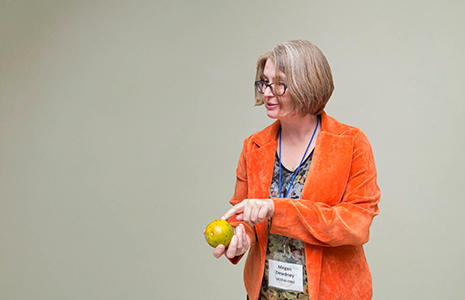
Dr. Megan Dewdney is an Associate Professor and Extension Specialist in the Department of Plant Pathology at the University of Florida's Citrus Research and Education Center. Her extension work focuses on integrated management strategies for citrus canker, citrus greening (huanglongbing), and fungal pathogens, while her research investigates the biology of bacterial and fungal pathogens to develop enhanced disease control methods. She holds a Ph.D. and leads active research programs in citrus pathology. Her primary research interests include: Integrated disease management systems for citrus pathogens Biology and epidemiology of fungal and bacterial diseases in citrus Development of molecular detection tools for plant pathogens Implementation of precision agriculture technologies for disease forecasting Physiological impacts of huanglongbing on citrus trees Analysis of her recent publications reveals strong emphasis on: Advanced detection methods using hyperspectral imaging and machine learning Genomic studies of fungal pathogens like Phyllosticta citricarpa Development of web-based disease advisory systems for growers Physiological management of huanglongbing-affected trees Molecular characterization of citrus pathogens She currently advises doctoral student Eva Mulandesa and collaborates with postdoctoral researcher Pamela Suellen. Her laboratory team includes research technicians, a lab manager, and program support staff focused on citrus pathology research.
Shelley L. Berger is the Daniel S. Och University Professor at the University of Pennsylvania, holding a "Penn Integrates Knowledge" Presidential Appointment. She serves as Director of the Epigenetics Institute at the Perelman School of Medicine and is Co-Director of the Tumor Biology Program at the Abramson Cancer Center. Her academic appointments span multiple departments including Cell and Developmental Biology, Biology, and Genetics. Dr. Berger earned her B.S. in Biology from the University of Michigan, Ann Arbor in 1982, followed by a Ph.D. in Cell & Molecular Biology from the same institution in 1987. Her distinguished career has led to her current position as a University Professor, one of the highest academic honors at the University of Pennsylvania. Dr. Berger's research focuses on epigenetics and chromatin structure/function in genomic regulation, with particular interest in post-translational modifications of histones and transcription factors. Her laboratory investigates how DNA-packaging structures are manipulated during genomic processes, with applications to understanding cancer, neurodegeneration, and other diseases. Her work spans multiple biological contexts including: Chromatin regulation of transcription Neuroepigenetics and memory formation Behavioral epigenetics in social insects Chromatin regulation in aging and senescence Cancer epigenetics and tumor suppressor mechanisms Analysis of Dr. Berger's recent publications reveals a strong focus on the intersection of epigenetics with aging, cancer, and neurobiology. Her work demonstrates how histone modifications and chromatin remodeling influence cellular senescence, with implications for age-related diseases including Alzheimer's. She has also pioneered research on epigenetic mechanisms in social behavior using ant models, and in T cell exhaustion relevant to cancer immunotherapy. A unifying theme across her publications is the role of specific histone modifications and chromatin regulators in controlling gene expression programs in diverse biological contexts. Dr. Berger has received numerous honors including her appointment as a Daniel S. Och University Professor and a "Penn Integrates Knowledge" Presidential Appointment, recognizing her exceptional interdisciplinary contributions to science. These prestigious appointments reflect her significant impact on the fields of epigenetics and chromatin biology. Dr. Berger mentors a vibrant research team consisting of multiple postdoctoral researchers, graduate students, and research specialists. Her laboratory, part of the Epigenetics Institute at Penn, investigates fundamental mechanisms of chromatin regulation with implications for human health and disease. Current research directions include exploring how epigenetic mechanisms control aging processes, cancer development, and social behavior in model organisms. Dr. Berger collaborates extensively with other leading researchers, including Carl June (pioneer of CAR T cell therapy) and John Wherry (expert in T cell exhaustion), to translate basic epigenetic discoveries into potential therapeutic applications. The Berger Lab operates within the Smilow Center for Translational Research at the University of Pennsylvania. The lab employs a multidisciplinary approach combining molecular biology, genomics, bioinformatics, and model organism studies to investigate chromatin regulation. Current research foci include epigenetic mechanisms in aging and senescence, cancer epigenetics, neuroepigenetics, and behavioral epigenetics in social insects.
Cavit Fatih Küçüktezcan is an Assistant Professor in the Department of Electrical Engineering at Istanbul Technical University, College of Engineering. His research focuses on power system security, optimization methods, and smart grid technologies. He actively contributes to advancements in electric vehicle energy systems, battery modeling, and resilience of renewable-rich power grids. Research Interests: His work spans power system dynamic security , preventive and corrective control , heuristic and evolutionary optimization (e.g., differential evolution, mean-variance mapping, genetic algorithms), and the application of machine learning for transient stability prediction. He also investigates electric vehicle battery systems , including optimal cell selection and real-time energy consumption modeling. The publication trends show a shift toward data-driven and AI-enhanced approaches in power systems, especially in modeling cyber-attack impacts and improving grid resilience. His recent articles emphasize practical applications in sustainable transportation and secure grid operation under uncertainty. Scientific Contributions: Developed optimization frameworks for preventive control with search space reduction. Applied mean-variance mapping optimization to enhance dynamic security. Explored machine learning benchmarks for transient stability under cyber threats. Contributed to battery modeling and energy efficiency in electric buses. Advising and Grants: While specific details on students or funded projects are not available in the provided text, his collaborative research patterns suggest active supervision and team-based research in power systems and energy technology. He frequently co-authors with researchers from Istanbul Technical University, indicating strong institutional collaboration. Labs and Teams: Though no specific lab or research group is named, his work aligns with smart grid, energy systems, and optimization research teams within the Department of Electrical Engineering at ITU. His focus on real-time data and cyber-physical systems suggests potential involvement in intelligent grid monitoring and control initiatives.