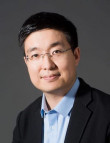
Xiaohui Yu is a Professor and Graduate Program Director in the School of Information Technology at York University. He holds a BSc from Nanjing University, an MPhil from the Chinese University of Hong Kong, and a PhD from the University of Toronto. His research focuses on the intersection of data management and machine learning, including ML-based database systems, large-scale machine learning, and spatio-temporal data analysis in contexts like intelligent transportation systems and social networks. Supported by grants from NSERC and industry partners, his work has been published in top venues such as SIGMOD, VLDB, and TKDE. He serves as an Associate Editor for journals like IEEE TKDE and ACM TKDD, and actively participates in conference program committees. Education: BSc (Nanjing University), MPhil (Chinese University of Hong Kong), PhD (University of Toronto). Research Interests: Big data management, database systems, machine learning, spatio-temporal data analytics, and video query processing. Recent articles emphasize ML-driven database components, efficient video query optimization, and scalable algorithms for large-scale data. His work addresses challenges in query processing, indexing, and real-time systems. Service: Serves on editorial boards (e.g., Information Systems), and chairs/workshops (e.g., Symposium on Data Markets). Active in program committees for SIGMOD, ICDE, and other leading conferences. Advising & Grants: Directs graduate programs and leads research groups. Collaborates with industry on data marketplaces and AI model integration. No specific student names listed, but actively recruits PhD/Master’s candidates.
LEE Wee Sun is a Professor in the Department of Computer Science at the National University of Singapore (NUS), where he previously served as Head of Department, Vice Dean of Undergraduate Studies, and Vice Dean of Research. His academic journey began with a B.Eng. in Computer Systems Engineering from the University of Queensland (1992) and a Ph.D. from the Australian National University (1996), followed by research roles at the Australian Defence Force Academy and MIT. Education: Ph.D., Australian National University, Canberra, Australia (1996) B.Eng. in Computer Systems Engineering, University of Queensland, Brisbane, Australia (1992) Research Focus: Professor Lee pioneers work in Machine Learning , Planning Under Uncertainty , and Approximate Inference , with emphasis on integrating AI subfields for holistic reasoning. His current projects include "Learning to Decompose for Reasoning and Planning" (enhancing LLMs via self-supervised problem decomposition) and "Learning to Reason with Visual-Linguistic Inputs" (unifying vision, language, and reasoning in single architectures). Publication Trends: Recent work (2023-2025) centers on bridging LLMs with classical AI techniques, featuring breakthroughs in uncertainty quantification, multi-task optimization, and graph-based reasoning. Key themes include sparsity-aware vehicle routing, epistemic uncertainty for reliable LLMs, and differentiable neural solvers for combinatorial problems. Awards: IJCAI-JAIR Best Paper Prize (2022) RSS Test of Time Award (2021) RoboCup Best Paper Award (IROS 2015) HRATC 1st Place (2015) IPPC POMDP Track 1st Place (2011, 2014) UAI Google Best Student Paper (2014) Semeval-1 1st/2nd Place (2007) J.G. Crawford Prize (ANU 1996) Leadership & Service: As steering committee chair for ACML and area chair for NeurIPS/ICML/AAAI/IJCAI, Professor Lee shapes global AI discourse. His administrative roles at NUS and collaborations with MIT/Singapore-MIT Alliance demonstrate commitment to advancing AI education and research infrastructure. While student advisees aren't listed, his leadership positions imply extensive mentoring. Research Ecosystem: His work drives NUS's AI initiatives including Knowledge@Computing projects on reasoning frontiers. Current efforts focus on making AI systems robust through uncertainty-aware planning and multi-modal integration, with applications in robotics, verification systems, and combinatorial optimization.
Minsu Kim is a CIFAR AI Safety Post-doc Fellow at KAIST and Mila, collaborating with Prof. Yoshua Bengio, Prof. Sungjin Ahn, and Prof. Sungsoo Ahn. His work bridges System 2 Deep Learning, Bayesian posterior inference, and combinatorial optimization. Ph.D., Industrial Engineering, KAIST (2025) M.S., Electrical Engineering, KAIST (2022) B.S., Mathematics and Computer Science (Dual Degree), KAIST (2020) Kim's research focuses on enabling AI systems to measure uncertainty, represent causality, and perform sequential reasoning for safety-guaranteed planning. His methodology integrates GFlowNets and diffusion models with off-policy amortized inference, targeting applications in scientific discovery , hardware design optimization , and large language model alignment . Recent work explores Bayesian posterior inference through GFlowNets, aiming to unify deep learning with probabilistic reasoning. His 15 most recent publications (2025–2024) reveal a trend of combining combinatorial optimization with generative models for tasks like molecular graph discovery, vehicle routing, and neural architecture search. He also investigates diffusion samplers for Bayesian inverse problems and symmetry-based neural methods (Sym-NCO) to enhance sample efficiency. Jang Yeong Sil Fellowship (2025) KAIST Presidential Best Ph.D. Thesis Award (2025) Qualcomm Innovation Fellowship (2023) DesignCon Best Paper Awards (2021–2022) Kim's collaborations span KAIST's Industrial Engineering department and Mila's AI research groups. He actively contributes to academic peer review for top conferences (NeurIPS, ICML, ICLR) and journals (IEEE TNNLS, TPAMI), emphasizing the intersection of AI safety , uncertainty quantification , and systemic reasoning .
Dr. Laura L. Van Eerd is a Professor of Sustainable Soil Management at the University of Guelph Ridgetown Campus, affiliated with the School of Environmental Sciences. Her research focuses on biogeochemical cycling of nitrogen and carbon in agroecosystems, emphasizing cover crops, soil health, and sustainable agriculture. She holds a BSc (Env), MSc, and PhD from the University of Guelph. Her research addresses: (1) cover crop roles in soil health and productivity, (2) nitrogen use efficiency, and (3) mitigating environmental impacts of agricultural practices. Current projects include cover crop nitrogen losses, remote sensing for crop nitrogen deficiency, and pest control product environmental impacts. She has published over 50 peer-reviewed articles, including the 2018 Best Paper in the Canadian Journal of Plant Science. Education: BSc (Environmental Science), University of Guelph MSc, University of Guelph PhD, University of Guelph Her awards include recognition as one of Canada’s Influential Women in Agriculture (2020), the Dr. Ron Pitblado Teaching Excellence Award (2016), and the OAC Distinguished Extension Award (2011). Her work bridges research, teaching, and extension to support Ontario’s agricultural sector. Advising and grants: Laura leads research teams at Ridgetown Campus, focusing on vegetable production systems and sustainable soil management. Her grants include funding for cover crop nitrogen dynamics and soil health indicator studies. Labs/teams: Active in Ridgetown Campus’s agricultural research initiatives, collaborating with growers and government to develop practical solutions for soil health and environmental sustainability.
Alec Wright is a Chancellor’s Fellow in Audio Machine Learning at the University of Edinburgh, affiliated with the Edinburgh College of Art and the Music department. He focuses on applying machine learning to musical audio signal processing and synthesis, particularly through neural network-based audio effects modeling. Education: Doctor of Science (DSc) in Neural Modelling of Audio Effects, Aalto University (2023) Master of Science (MSc) in Acoustics and Music Technology, University of Edinburgh (2018) Master of Engineering (MEng) in Mechanical Engineering, University of Manchester (2014) His research explores neural network architectures for real-time audio processing, guitar amplifier emulation, and diffusion-based distortion restoration. Key methodologies include Recurrent Neural Networks (RNNs), neural ordinary differential equations, and synthetic data generation for foundation models. Recent publications highlight sample rate conversion techniques, interpolation filters, and nonlinear distortion modeling. These works span domains like signal processing, computational audio, and physical modeling synthesis. Scientific Awards: Chancellor’s Fellow, University of Edinburgh As an active researcher, he collaborates internationally and contributes to frameworks like Open-Amp for audio effect modeling. No formal student advising details are currently available.
Gautam Kamath is an Assistant Professor at the University of Waterloo's Cheriton School of Computer Science, a Faculty Member at the Vector Institute, and a Canada CIFAR AI Chair. He leads The Salon, a research group focused on statistics, algorithms, machine learning, and optimization. His work bridges theoretical foundations with practical applications in data privacy and robustness, contributing to both academic research and real-world deployments that impact millions of users. Dr. Kamath earned his PhD and SM degrees in Electrical Engineering and Computer Science at MIT, where he was advised by Costis Daskalakis. Prior to MIT, he graduated from Cornell University in May 2012 with a degree in Computer Science and Electrical and Computer Engineering, where he worked with Bobby Kleinberg. His academic journey reflects a strong foundation in both theoretical computer science and practical applications. His research focuses on developing solutions for trustworthy and reliable machine learning and statistics, with particular emphasis on data privacy and robustness. He addresses fundamental problems in these areas, revitalizing statistical toolkits for the modern data era where privacy preservation is paramount. His work spans theoretical foundations of differential privacy to practical applications that have been deployed at scale, including contributions to systems that protect the sensitive information of hundreds of millions of individuals. Analysis of his recent publications reveals a strong trend toward addressing the interplay between privacy, robustness, and machine learning performance. His work increasingly examines practical deployment challenges while maintaining theoretical rigor, with growing emphasis on diffusion models, generative AI, and the legal implications of AI systems. There's a clear trajectory from foundational privacy theory toward addressing real-world implementation challenges across diverse application domains. Canada CIFAR AI Chair Ontario Early Researcher Award 2024 Caspar Bowden Award for Outstanding Research in Privacy Enhancing Technologies STOC Best Student Presentation Award ICML 2024 Best Paper Award Microsoft Research Fellow at the Simons Institute for the Theory of Computing Dr. Kamath actively mentors students, with notable successes including Valentio Iverson winning the Germain-Erdős Undergraduate Award and Chris Trevisan receiving the CRA Outstanding Undergraduate Researcher Award. His service to the research community is extensive, serving as Editor-in-Chief of TMLR, on the Executive Committee of the Learning Theory Alliance, and on steering committees for major conferences including ICML, COLT, and ALT. He has organized numerous workshops focused on privacy-preserving machine learning and differential privacy. Through The Salon research group, Dr. Kamath fosters a collaborative environment where postdoctoral fellows, graduate students, and undergraduates work together on cutting-edge problems at the intersection of statistics, algorithms, machine learning, and optimization. The group maintains strong connections with industry partners and participates in major research initiatives, including the Vector Institute's privacy and security research efforts. Looking forward, Dr. Kamath will be moving to the Computer Science department at NYU's Courant Institute of Mathematical Sciences in September 2026, where he plans to expand his research program.
Steven A. Corcelli is a Professor and Interim Dean of the College of Science at the University of Notre Dame, with a research focus on Theoretical Chemistry and Molecular Dynamics Simulations . His work bridges Physical Chemistry and Biochemistry , targeting Energy Applications and Biomolecular Binding Mechanisms . He leads the Computational Molecular Science & Engineering Laboratory (CoMSEL). Ph.D., Chemistry, Yale University (2001) Sc.B., Chemistry, Brown University (1997) Research interests span ionic liquids for Carbon Capture , aqueous electrolytes in battery technologies , and molecular binding processes in immunology and DNA interactions . His group employs GPU-accelerated simulations and weighted ensemble methods to uncover structural and dynamic motifs. Recent publications highlight trends in vibrational spectroscopy , TCR-MHC binding , and CO2 solvation mechanisms . Awards include the Thomas P. Madden Award (2020) , ACS Fellowship (2016) , and NSF CAREER Award (2009) . Staff: Erin Brossard (Ph.D.), Nell Karpinski, Shuang Wu, Noah Vasconez, Kaitlyn Handy, Isabel Thompson
Olivier Pfister is a Professor in the Department of Physics at the University of Virginia , with courtesy appointments in Electrical and Computer Engineering (2022–). His research focuses on experimental quantum optics and quantum information , particularly leveraging optical frequency combs to develop scalable quantum computing platforms. The Quantum Fields and Quantum Information (QFQI) group , which he leads, has pioneered techniques for generating multipartite entanglement in continuous-variable systems, achieving cluster-state entanglement in 60+ qumodes (with potential scaling to thousands). Collaborations span institutions like NIST, University of Sydney, CUNY, and Jefferson Laboratory, with applications in quantum simulation , non-Gaussian state characterization , and hybrid quantum technologies . Key contributions include the 2013 APS Fellowship for groundbreaking work on quantum frequency combs, NSF Distinguished Research Awards , and patents in quantum photonic devices. His group’s NSF-funded research (e.g., QLCI Preliminary Proposal, $3.2M; RAISE-EquIP, $750K) explores fault-tolerant quantum computing, machine learning integration, and microresonator-based entanglement. Pfister’s scientific awards include the 2013 UVA Distinguished Research Career Award and the 1996 JILA Clever Idea Contest Second Prize . His students and postdocs (e.g., Amr Hossameldin , Miller Eaton , Rajveer Nehra ) have published extensively on quantum tomography, cluster states, and photonic detector design. Pfister also serves on advisory and planning committees at UVA, emphasizing interdisciplinary collaboration across physics , engineering , and quantum information .
Anja Boisen is a Professor and Head of the Drug Delivery and Sensing Section at the Department of Health Technology, Technical University of Denmark (DTU). Her research focuses on advanced drug delivery systems, sensing technologies, and nanotechnology applications in biomedical engineering. She leads a multidisciplinary team developing innovative devices such as microcontainers, microneedles, and lab-on-a-disc platforms for targeted drug delivery and diagnostics. Her work contributes to UN Sustainable Development Goals, particularly in improving health and reducing inequalities. Key research areas include surface-enhanced Raman spectroscopy (SERS), microfabrication for medical devices, and biomaterials for tissue engineering. She has supervised multiple PhD students, including projects on oral drug delivery systems, gastrointestinal retention devices, and energy-harvesting materials for biomedical applications. Boisen’s team has pioneered technologies like self-unfolding foils for oral delivery and smart drug delivery microparticles. Their innovations aim to enhance therapeutic efficacy while minimizing side effects. She has been recognized with the Sensor Division Outstanding Achievement Award (2022) for her contributions to sensor technology. Her lab actively collaborates internationally, advancing applications in cancer therapy, antibiotic monitoring, and gut microbiota research. Current projects explore high-throughput 3D tumor modeling, SERS-based diagnostics, and biodegradable materials for bone fixation.
Marguerite M. Pinto, MBBS, serves as a Clinical Assistant Professor in the Department of Pathology at Yale School of Medicine. With decades of experience in cytopathology, Dr. Pinto specializes in diagnosing diseases through cellular examination of tissue samples, with particular expertise in fine needle aspiration techniques and cytologic diagnosis. She has maintained a strong clinical focus throughout her career, emphasizing the importance of accurate diagnosis to avoid unnecessary patient testing and biopsies. Dr. Pinto's educational background includes: MBBS from St. John's Medical College (1969) Residency at Bridgeport Hospital (1975) Fellowship at Children's Hospital of Philadelphia (1976) Fellowship at Milton S. Hershey Medical Center (1977) Her research focuses on improving diagnostic accuracy in cytopathology, particularly through the application of biomarker testing in fine needle aspirates. Dr. Pinto has specialized interest in clinical research involving small case series to develop practical diagnostic methods applicable in any laboratory setting. Her work has contributed significantly to the understanding of tumor markers like carcinoembryonic antigen (CEA) and CA-125 in the diagnosis of various cancers, with particular applications in breast, gynecologic, pancreatic, and pulmonary pathologies. She approaches diagnostic pathology with the philosophy that accuracy directly impacts patient care quality, minimizing unnecessary procedures while ensuring definitive diagnoses. Dr. Pinto's publication record from 1991-1997 demonstrates a focused research trajectory examining how tumor markers can enhance traditional cytologic diagnosis. Her work consistently explored the diagnostic value of CEA and CA-125 across multiple organ systems, establishing evidence for their practical application in fine needle aspiration biopsies. This research has contributed to standardized protocols for using these biomarkers as diagnostic adjuncts in cytopathology. Her professional recognition includes: American Cancer Award (April 14, 2009) Dr. Pinto maintains active clinical practice at Yale Medicine, where she applies her expertise in cytopathology to patient care. Her professional legacy extends beyond her own work, as she comes from a multi-generational medical family - her father was a medical school dean, and her daughter graduated from Yale School of Medicine to become a transplant cardiologist, continuing the family tradition. Dr. Pinto has been affiliated with the Norma Pfriem Cancer Center at Bridgeport Hospital from 1997-2012, contributing her cytopathology expertise to cancer diagnosis and treatment.
Dr. Merry Mani is an Associate Professor in Radiology and Imaging Sciences and Biomedical Engineering, specializing in biomedical imaging and signal processing. Her work focuses on advancing MRI-based imaging technologies to study neurological disorders such as Alzheimer's, Autism, and Epilepsy. She holds a Ph.D. in Electrical and Computer Engineering from the University of Rochester (2014) and completed a postdoctoral fellowship at the University of Iowa School of Medicine (2018). Her research combines biophysical modeling with machine learning to explore brain microstructures. Key achievements include the NNARSAD Young Investigator Grant and NIH-funded projects like 'Fast Multi-dimensional Diffusion MRI with Sparse Sampling'. Her lab develops cutting-edge reconstruction methods like qModeL and MUSSELS, prioritizing high spatio-temporal resolution imaging. Major contributions span diffusion MRI acquisition, model-based deep learning, and clinical applications in neurodegenerative diseases. Notable grants include NIH R01EB031169 for Alzheimer’s neurodegeneration studies and projects on rTMS for depression. Her work bridges imaging innovation with clinical impact, aiming to improve diagnosis and treatment through advanced imaging biomarkers.
Aaron Roth is the Henry Salvatori Professor of Computer and Cognitive Science at the University of Pennsylvania, affiliated with the Department of Computer and Information Science in the School of Engineering and Applied Science. He holds a secondary appointment in the Department of Statistics and Data Science at the Wharton School and is associated with several research centers including PRiML, the Warren Center for Network and Data Sciences, and the AMCS program. He received his PhD from Carnegie Mellon University under Avrim Blum and was a postdoc at Microsoft Research New England. His research focuses on algorithms and machine learning, particularly in private data analysis, fairness in machine learning, game theory, mechanism design, and learning theory. His work bridges theoretical computer science with societal concerns, advocating for ethically aware algorithm design. He co-authored the book The Ethical Algorithm with Michael Kearns, which explores how to embed social values like privacy and fairness into algorithmic systems. His recent publications show a strong trend toward uncertainty quantification, multicalibration, conformal prediction, and fairness in reinforcement learning and high-dimensional settings. He frequently publishes in top-tier venues such as STOC, FOCS, ICML, NeurIPS, and COLT, often with a focus on rigorous theoretical foundations with practical implications. Hans Sigrist Prize Presidential Early Career Award for Scientists and Engineers (PECASE) Alfred P. Sloan Research Fellowship NSF CAREER award Google Faculty Research Award Amazon Research Award Yahoo Academic Career Enhancement award Roth has advised numerous PhD students and postdocs, many of whom now hold academic or industry research positions. He is also an Amazon Scholar at AWS and has served in advisory roles for companies like Apple, Facebook, Leapyear, and Spectrum Labs. He has been active in organizing workshops and tutorials on differential privacy, fairness, and adaptive data analysis, and has given keynotes at major conferences and institutions worldwide. He leads research groups and collaborates widely across Penn, focusing on responsible AI, privacy, and algorithmic fairness. His lab produces foundational work on calibration, unlearning, privacy-preserving learning, and equitable decision-making systems.
Georg Fantner is an Associate Professor at the Swiss Federal Institute of Technology Lausanne (EPFL) with dual appointments in the School of Engineering (STI) within the Institute of Bioengineering and the School of Life Sciences (SV) for teaching. He directs the Laboratory for Bio- and Nano-Instrumentation (LBNI) and holds leadership roles including President of the Open Science Strategic Committee and the Association des Professeurs de l'EPFL. Research Focus: Bioinstrumentation, Nanotechnology, Scanning Probe Microscopy, and Metrology Teaching: Structural Mechanics for Life Sciences, Metrology, and Metrology Practicals His research pioneers advanced instrumentation for nanoscale characterization, emphasizing data-driven approaches to enhance microscopy techniques. Recent work integrates deep learning with scanning probe microscopy for real-time biological imaging and develops novel MEMS devices for fluid-compatible nanoscale manipulation. Key innovations include hermetically sealed sample chambers for pathogen studies and deterministic nanotopography engineering. Professor Fantner actively mentors 7 current PhD students and has supervised 14 graduates. His laboratory fosters interdisciplinary collaboration across engineering, physics, and life sciences to advance nanoscale measurement technologies and instrumentation development.
Dr. Zaheer Nasar is a Reader in Atmospheric Aerosols at Cranfield University's School of Aerospace, Transport and Manufacturing. His work focuses on real-time bioaerosol characterization, indoor/outdoor air quality dynamics, and environmental health impacts of particulate matter. He leads the NERC-funded Light-Induced Fluorescence sensor project and contributes to the BioAirNet network (NE/V002171/1) as Co-I. Research Interests Physico-chemical and biological characterization of aerosols Spatio-temporal dynamics of particulate matter (PM) and bioaerosols Quantitative microbial risk assessment (QMRA) methodologies Low-cost air quality sensor networks and machine learning calibration Urban green infrastructure effects on air pollution Policy development in Hindu Kush Himalayan air quality Recent publications emphasize machine learning-enhanced sensor calibration (2024 IEEE paper), wastewater plant bioaerosol risks (2024 Water Research), and urban air quality interventions across the UK and Lahore. He has secured over £1.6M in grants from NERC, STFC, and UKRI GCRF, with significant work on BTEX exposure in Nigeria and SARS-CoV-2 risks in wastewater facilities. Scientific Recognition Fellow of the Higher Education Academy (FHEA) Co-investigator in multiple NERC/UKRI projects Active participant in BSI bioaerosol standards committee As an advisor, he mentors five postgraduate researchers including Reece Dillon and Hathaikarn Tathong, with a strong publication record in journals like Environmental Science: Atmospheres , Risk Analysis , and BJPsych Open . His work bridges environmental science, public health, and policy implementation through interdisciplinary research.
James M. Piret is a Professor at the University of British Columbia (UBC), affiliated with the School of Biomedical Engineering and the Michael Smith Laboratories. He holds a Sc.D. from MIT (1989), an S.M. from MIT (1986), and an A.B. from Harvard College (1981). His research focuses on bioprocessing, biomedical engineering, and cell therapy biotechnology, with emphasis on optimizing therapeutic cell production and biomanufacturing processes. Education : Sc.D. in Chemical Engineering, Massachusetts Institute of Technology (1989) S.M. in Chemical Engineering, Massachusetts Institute of Technology (1986) A.B. in Chemistry, Harvard College (1981) Professor Piret’s research integrates bioreactor engineering, Raman spectroscopy, and data analytics to advance cell-based therapies for diseases like cancer and diabetes. Collaborations with stem cell biologists (e.g., Drs. Kieffer and Levings) and engineers (Drs. Turner and Gopaluni) drive innovations in bioprocess optimization and device development. His lab emphasizes multidisciplinary approaches to accelerate biotechnology production processes and cell therapy manufacturing. Awards : William F. Meggers Award (2022) R.S. Jane Memorial Award (2015) Cell Culture Engineering Award (2012) Fellow, Chemical Institute of Canada (2004) His work includes developing novel methodologies for CHO cell glycosylation engineering, optimizing fed-batch bioreactor systems, and advancing Raman spectroscopy techniques for real-time cell analysis. The lab actively recruits motivated graduate and postdoctoral researchers to tackle high-impact challenges in biomedical and chemical engineering.