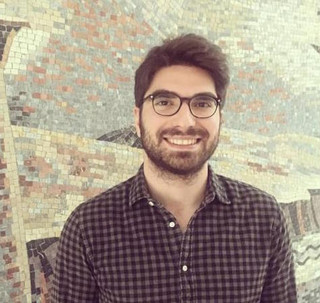
Dr. Leonarda Prela is a doctoral researcher at the Chair of Language and Cognition (Alexander von Humboldt-Professorship) within the Department of English and American Studies at Friedrich-Alexander-Universität Erlangen-Nürnberg (FAU). Her research investigates the interplay between cognitive abilities and linguistic performance in adult bilingual speakers of Greek and English, focusing on factors influencing first and second language acquisition. Research Focus : Relationship between L1 and L2 in bilinguals Cognitive predictors of language attainment Role of education and input quality/quantity Recent Publications Analyzed : 2024 study on age effects in heritage vs. late L2 learners 2022 investigation of aptitude-experience interactions in Greek-English bilinguals Contact: leonarda.prela@fau.de
Marco Coniglio is a Professor of German Philology/Linguistics at the Department of German Philology, Georg-August-University Göttingen. His research spans historical grammar, syntactic theory, corpus linguistics, and digital humanities, with a focus on modal particles, information structure, and Germanic language interfaces. Key Research Areas: Historical Grammar, Modal Particles, Corpus Linguistics, Digital Humanities Projects: WiN-Korpus (Middle Low German Corpus), HIPKON (Historical Sermons Corpus), DFG Network on Subordinate Clauses Collaborations: Institute for Digital Humanities at Göttingen, Graduiertenkolleg 'Form-Meaning Mismatches' His 15 most recent publications (2021–2025) address Germanic syntax, modal particles, mood marking in subordinate clauses, and corpus-driven language change. Topics span grammaticalization of adverbs, information structure evolution, and comparative analysis across Old High German, Old Saxon, and Old English. Collaborative works include contributions to the 'Wörterbücher zur Sprach- und Kommunikationswissenschaft' project.
Thomas Herbst serves as a Professor in the Department of English and American Studies within the Faculty of Humanities, Social Sciences, and Theology at Friedrich Alexander University Erlangen-Nuremberg (FAU). With a distinguished career spanning over four decades, his research has significantly contributed to linguistic theory and practice. His current work focuses on advancing construction grammar frameworks and their practical applications in language learning and lexicography. Professor Herbst's research interests center on Construction Grammar, Valency Theory, and Lexicography, with particular emphasis on the intersection between lexical and syntactic patterns. His scholarly work explores how constructions—recurring patterns of language—shape meaning, communication, and language acquisition. He has pioneered approaches to constructing constructicons (comprehensive inventories of constructions) and has made significant contributions to understanding how valency patterns function in English and other languages. His research bridges theoretical linguistics with practical applications in language teaching, dictionary compilation, and translation studies, particularly examining how multimodal elements like gesture and accent contribute to meaning in audiovisual contexts. Analysis of his recent publications reveals a consistent trajectory exploring constructional networks, argument structure, and the practical implementation of construction grammar in language learning. His work increasingly focuses on digital applications of linguistic theory, including constructicon development and computational implementations. Herbst's research demonstrates a strong commitment to making linguistic theory accessible and applicable to language learners, teachers, and lexicographers, with particular attention to how constructions manifest in second language acquisition and dictionary usage. Throughout his extensive career, Professor Herbst has maintained an active role in academic service, editing journals and special issues that have shaped discourse in construction grammar and lexicography. His editorial work for publications like Zeitschrift für Anglistik und Amerikanistik and contributions to major reference works have provided essential platforms for scholarly exchange in his fields of expertise.
Renate Delucchi Danhier is a researcher at the Faculty of Cultural Studies, Technical University of Dortmund, where she has held positions as Temporary Academic Councilor (2018–2026) and Research Assistant (2015–2018). She holds a Ph.D. in Comparative Linguistics from Heidelberg University and an M.A. in German as a Foreign Language, Classical Archaeology, and Egyptology. Doctorate: Comparative Linguistics, Heidelberg University (2015) Master of Arts: German as a Foreign Language Philology, Classical Archaeology, Egyptology, Heidelberg University (2008) Her research focuses on psycholinguistics, multilingualism, bilingual education, language and cognition, and the role of language in inclusion. She investigates how linguistic structures affect perception, particularly in spatial and educational contexts. Her work often integrates eye-tracking methodologies and interdisciplinary collaboration, especially with Barbara Mertins. The 15 most recent publications reveal a strong trend in psycholinguistics, with emphasis on comparative analysis of German and Spanish, syntactic features in educational texts, and multilingual cognition. Her recent work extends into data visualization and diversity in cognition, showing a growing interest in humanistic data representation. She has contributed to significant interdisciplinary projects such as 'Psycholinguistic Foundations of Inclusion' and co-edited special issues on diversity in cognition. Renate Delucchi Danhier has not received any explicitly mentioned scientific awards. She has not listed any advisees or students. There is no information about labs or research teams she leads, but her collaborative publications suggest active participation in research groups focused on language, cognition, and education.
Dr. Luke Adamson is a tenure-track Researcher in Research Area 3 'Syntax and Lexicon' at the Leibniz-Zentrum Allgemeine Sprachwissenschaft (ZAS), Berlin. Previously, he held a Postdoctoral Fellowship at Harvard University (2020–2022) and served as Lecturer at Rutgers University (2022–2023). He earned his PhD in Linguistics from the University of Pennsylvania (2019) and holds dual degrees from Oberlin College: a Bachelor of Arts in Psychology and a Bachelor of Music in Cello Performance (2010–2014). His research focuses on nominal features, grammatical gender, and syntactic modularity, with notable projects exploring gender locality hypotheses, coordination resolution in three-gendered languages, and suppletion phenomena. Collaborators include prominent linguists such as Elena Anagnostopoulou (University of Crete), Ruth Kramer (Georgetown University), and Stanislao Zompì (Universität Potsdam). Key contributions include work on gender assignment constraints in languages like Greek, Swedish, and Lithuanian, as well as syntactic interfaces in Jarawara and Italian. Recent presentations include invited talks at the University of Geneva (June 2025), Yale University (October 2024), and the Brussels Conference on Generative Linguistics (December 2024). He co-edits Linguistic Inquiry Squibs & Discussion and organizes the ZAS Brown Bag Lunches. His work has been supported by grants from the National Science Foundation and the European Research Council. Adamson’s academic networks span formal linguistics and typological studies, with ongoing projects addressing politeness pronouns in Romance languages, emotive predicates in clausal complements, and allosemy in Greek gender systems.
Prof. Dr. Mingya Liu is a W1-Professor for Empirical English Linguistics (EEL) at the Department of English and American Studies, Humboldt-Universität zu Berlin. Her research focuses on the intersection of lexicon, syntax, semantics, and pragmatics, with applications to language processing, acquisition, and sociolinguistic variation. Key projects include investigations into polarity sensitivity, modality, negation, and register effects in language use. Her work employs experimental, cross-linguistic, and socio- and psycholinguistic methods. Notable contributions include studies on modal concord (e.g., 'must certainly'), negative concord variation, and the social meanings of linguistic constructions in English, German, and Chinese. She is a core member of the CRC 1412 'Register: Language Users’ Knowledge of Situational-Functional Variation,' contributing to interdisciplinary research on language variation and cognitive modeling. Publications emphasize experimental findings on linguistic and social meaning correlations, register sensitivity in language use, and the role of interlocutor relations in formality perception. Collaborative efforts with institutions like HU Berlin and international scholars further highlight her commitment to advancing theoretical and experimental linguistics.
Dr. Jenny Arendholz is a Senior Lecturer at the Chair of English Linguistics, Ludwig-Maximilians-Universität München (LMU). She holds a PhD in English Philology (summa cum laude, University of Augsburg) and an M.A. in English Philology, Romance Philology, and Communication Science. Her research focuses on syntax, pragmatics, multimodality, computer-mediated communication (CMC), and discourse analysis. She coordinates ERASMUS+ student exchange programs, advising on UK visa requirements and funding. Professional activities include reviewing for journals like Pragmatics and presenting at international conferences such as the International Pragmatics Conference. Her teaching spans introductory linguistics courses to specialized seminars on syntax, phonetics, conversation analysis, and digital communication. She actively engages in linguistic fieldwork and intercultural training for study abroad programs. Recent publications explore mitigation strategies in online discourse, quotation pragmatics, and narrative structures in message boards. Key responsibilities include managing student exchange logistics, advising on language certification requirements for UK universities post-Brexit, and maintaining partnerships with institutions like the University of Leicester and King’s College London. She also oversees LMU’s ERASMUS International Option funding and promotes summer schools via partnerships with universities in the UK and Ireland.
Prof. Dr. Sofia Rüdiger currently holds a Visiting Professorship at the Institute of English Philology , Freie Universität Berlin, focusing on World Englishes , Computer-Mediated Communication , and Language and Food studies. She co-organizes the BæFoLa (Bayreuth-Berlin Food and Language) lecture series. Her academic journey includes a Habilitation (2020) and 6 years as an Akademische Rätin a. Z. (2018-2024) at Universität Bayreuth. Research Areas include: World Englishes (particularly Asian Englishes, Korean English, English as Lingua Franca) Pragmatics (complaints, persuasive language, historical pragmatics) Computer-Mediated Communication (YouTube discourse, social media corpora) Corpus Linguistics (spoken corpora, non-canonical syntax) Language & Food (digital ethnography, BæFoLa project) Her publication trends show sustained engagement with digital communication (YouTube, social media), English variation (Korean, Taiwanese), and pragmatic markers (like, expressives). She serves on editorial boards and has received DFG funding (RU 2369/3-1) for digital food discourse research.
Professor Heidrun Dorgeloh is affiliated with Heinrich Heine University Düsseldorf (HHU), where she has served as an Außerplanmäßige Professorin for English Language and Linguistics since 2021. She is part of the Faculty of Arts and Humanities and contributes to the Department of English Language and Linguistics through research, teaching, and leadership roles. Education : Habilitation (2014), Ph.D. in English Linguistics (1994), studies at Justus-Liebig-Universität Gießen, London School of Economics, and Université de Paris II. Her research focuses on English syntax , discourse and genre theory , discourse processing , and argumentative discourse . She examines how syntactic structures interact with discourse functions across genres, including medical, scientific, and narrative contexts. Recent work explores genre bias in language models and argument annotation schemes. Her publications and grants reflect interdisciplinary approaches, including: Scientific awards : Beste Dissertation des Jahres 1995 (HHU Düsseldorf). Grants : eLearning and teaching grants for projects like 'Linguistics, Literature, and your Career' and 'Narrativity and evolution of English genres.' Dorgeloh has held leadership roles such as Head of the B.A. Students' Office and Vice President of the HHU Senate. Her career spans full-time lecturing, interim professorships, and visiting scholarship at Ohio State University.
Prof. Dr. Ingo Plag is a faculty member at the Institute of English and American Studies , Heinrich-Heine-University Düsseldorf, specializing in English Language and Linguistics . His research focuses on Phonetics, Phonology, Morphology, Syntax, Creole languages, and English as a second language . Current Projects : DFG Project 'Form and meaning in English compounds' (2023-2026), CRC Project C08/DFG Project 'The semantics of derivational morphology' (2015-2026) Research Themes : Polysemy in derivation, compositionality of word-formation, semantic mechanisms, role of world knowledge, discriminative analysis of nominalizations His recent publications explore derivational morphology through distributional semantics , frame semantics , and quantitative methods , addressing topics like English prefixation, suffix competition (-ity vs. -ness), and nominalization semantics. He has presented at conferences including the International Cognitive Linguistics Conference and the German Linguistic Society. Contact: ingo.plag@uni-duesseldorf.de
Achim Stein holds the position of Professor of Romance Linguistics at the Division of Romance Linguistics within the Institute of Linguistics at the University of Stuttgart, Germany, a role he has maintained since 2000. His academic focus centers on French and Italian linguistics through computational and corpus-based methodologies. His educational foundation includes studies in French, English, and Italian at the University of Erlangen/Nürnberg, followed by doctoral research at the University of Stuttgart and habilitation at the University of Cologne. This trajectory established his expertise in Romance language structures and historical development. Stein's research specializes in lexical semantics and language contact phenomena across synchronic and diachronic frameworks. He has pioneered computational resources for Medieval/Modern French, Italian, and Medieval Sardinian, with current work in the SILPAC Research Unit advancing "psycho-historical" linguistics—examining intersections between language change, acquisition, and cognitive processing. His methodology integrates corpus analysis with computational modeling to decode historical language evolution. Analysis of his recent publications reveals concentrated exploration of Old French-Middle English contact scenarios, particularly verb argument structure transformations and syntactic borrowing mechanisms. Key patterns include recipient passive development, cleft sentence pragmatics, and dynamic modeling of bilingual medieval contexts using diachronic corpora. Stein actively contributes to collaborative research infrastructure through the SILPAC unit and development of critical linguistic resources like the Syntactic Reference Corpus of Medieval French (SRCMF). His work bridges historical linguistics with digital humanities, creating annotation frameworks that enable cross-temporal syntactic analysis.
Titus von der Malsburg is a tenure-track Junior Professor of Psycholinguistics and Cognitive Modeling at the Institute of Linguistics, University of Stuttgart . His research focuses on incremental sentence comprehension, implicit gender biases, scanpath analysis, and computational modeling of language processing. He employs experimental methods like eye-tracking, ERP, and Bayesian statistics to investigate how humans integrate linguistic and cognitive cues during reading. Education : PhD in Cognitive Science (University of Potsdam), with postdoctoral positions at UC San Diego, University of Oxford, and University of Potsdam. His work spans psycholinguistics, cognitive science, and natural language processing, with a strong emphasis on reproducibility and open-source software development. He has contributed to debates on agreement attraction, semantic parsing, and the role of conversational principles in cognitive biases. His lab uses advanced eye-tracking equipment and promotes technical rigor in research practices. Recent publications highlight his contributions to understanding memory decay in syntactic dependencies, semantic attraction effects, and scanpath regularity as a predictor of reading comprehension. The lab actively seeks collaborators aligned with its focus on technical quality and open science. Notably, he clarifies his name’s correct formatting to avoid common misattributions.
Lisa Hofmann is a postdoctoral researcher at the University of Stuttgart in the Department of English Linguistics , working with Judith Tonhauser’s group. Her research focuses on how humans interpret language meaning by integrating information from multiple sources, blending formal semantics, pragmatics, syntax, and psycholinguistics. University: University of Stuttgart Department: Department of English Linguistics Her work addresses projective content (e.g., presupposition, anaphora, ellipsis) in counterfactual and hypothetical discourse, combining theoretical rigor with experimental methods. Recent projects include collaborations on at-issueness diagnostics and dynamic approaches to presupposition projection. Lisa’s publications span topics like anaphoric accessibility in counterfactuals and the semantics of anaphora, with a focus on connecting theoretical frameworks to psycholinguistic evidence. She actively participates in workshops and conferences, such as XPRAG FEST 2025 and the workshop on (a)symmetries in presupposition projection.
Prof. Dr. Cornelia Hamann is a full-time Professor at the University of Oldenburg, holding a position in the Institute for English and American Studies within the School of Linguistics and Cultural Studies. Her office is located in building A06, room 2-223a, with contact numbers +49 441 798-2342 and +49 441 798-3771. Her research integrates descriptive English grammar analysis into formal linguistic frameworks, with emphasis on: Syntax, Semantics, and Pragmatics (focusing on adjectives and tenses) Cross-linguistic acquisition studies using comparative syntax models Bilingual and second language acquisition processes Language impairment phenomena Her empirical work primarily examines English, German, French, and Danish linguistic structures. The webpage was last updated on June 20, 2024, confirming her active status despite outdated 2020 consultation dates.
Riccardo Ginevra is a Researcher ("Ricercatore") at the Katholische Universität Mailand, Department of Classical Philology, Papyrology, and Historical Linguistics since 2021. He holds a PhD in Historical-Comparative Linguistics from the Università per Stranieri di Siena (2018) and taught at the University of Cologne. His research focuses on Indo-European poetics, mythology, and historical linguistics, with a specialization in Old Norse, Vedic Sanskrit, and comparative studies. Affiliations: Marie Curie Post-Doc Fellow at the University of Copenhagen (2021–2024), CHS Research Fellow. Education: PhD (2018), MA (2014), BA (2012) in Classics and Linguistics from the Università Cattolica del Sacro Cuore di Milano. Riccardo’s research explores the intersections of historical linguistics, comparative mythology, and cognitive poetics. Key areas include Indo-European cosmology, the Homeric Hymn to Demeter’s pre-Greek roots, and the etymology of Norse and Vedic deities. His work integrates archaeological, linguistic, and literary evidence to reconstruct ancient narratives and conceptual systems. Publications highlight his expertise in mythological parallels between Norse Baldr, Vedic deities, and Indo-European motifs of cosmic order. Recent work includes studies on the Old Norse FrameNet and the cognitive basis of ancient metaphors. His book Odino Alfǫðr e il nome dei dvergar (2020) analyzes Norse mythology through an Indo-European lens. Awards: Marie Curie Post-Doc Fellowship (2021–2024), CHS Research Fellowship.