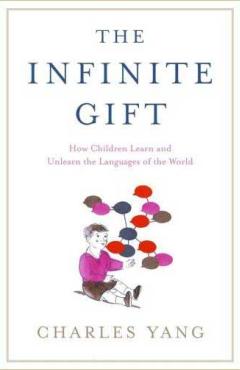
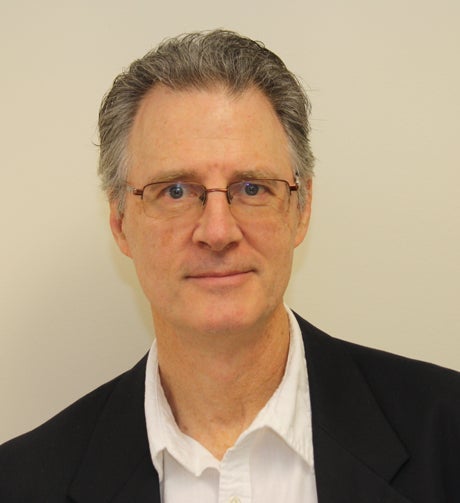
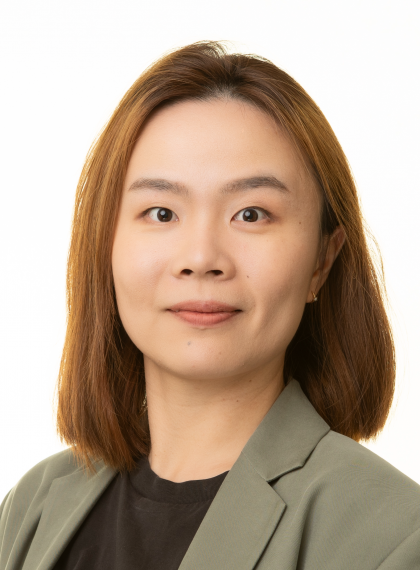
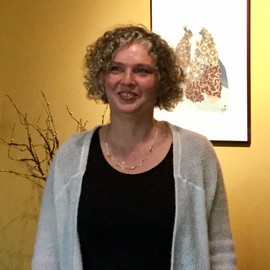
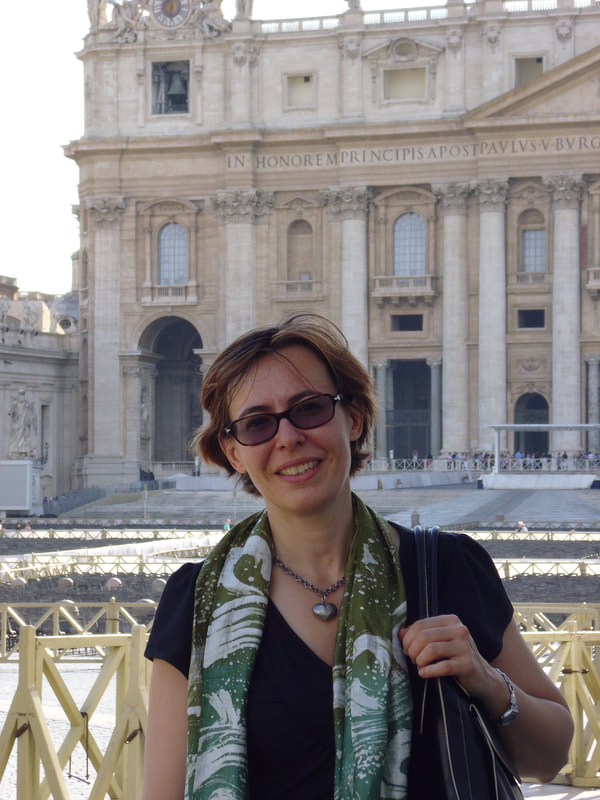
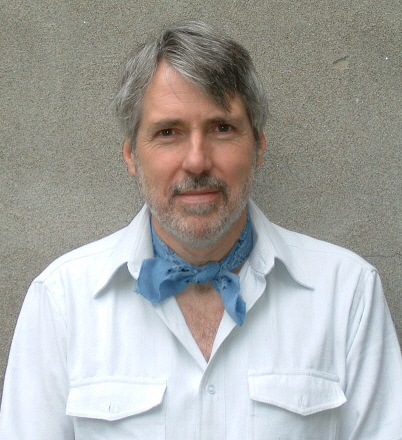
Charles Yang is a Professor of Linguistics and Computer Science at the University of Pennsylvania , where he also directs the Cognitive Science Program. His research integrates computational models with studies of language acquisition, processing, and evolution. Education: Ph.D. in Computer Science, MIT, 2000 Yang's work spans language acquisition , computational linguistics, and the evolution of cognition. He has authored The Price of Linguistic Productivity (2016), which received the Leonard Bloomfield Award from the LSA. Recent publications focus on large language models as cognitive models, the Chinese aspectual system , and statistical approaches to linguistic patterns. His 15 most recent articles (2025-2021) demonstrate a trajectory from computational models of language change to machine translation and multiword expression analysis . Yang has received significant funding from the National Science Foundation and the Guggenheim Foundation . He co-directs the Integrated Language Science and Technology group with John Trueswell and mentors students in linguistics, computer science, and psychology.
Randy Harris is a Professor in the Department of English Language and Literature at the University of Waterloo, with a cross-appointment to the David Cheriton School of Computer Science. His career spans over three decades, focusing on the intersection of rhetoric , cognitive science , and computational linguistics . He holds a PhD in Communication and Rhetoric from Rensselaer Polytechnic Institute, with postdoctoral experience at the University of Alberta. Education : PhD (Rensselaer), MSc (Rensselaer, Alberta), MA (Dalhousie), BA (Queen's) Research Interests : Cognitive Rhetoric, Computational Rhetoric, Rhetorical Figures, Construction Grammar, Rhetoric of Science, and Neurocognitive Stylistics. His work explores how rhetorical figures like chiasmus and antimetabole reflect brain structure and cognitive processing. Recent projects involve building the Rhetoricon , a collocational database of rhetorical figures, and investigating their role in large language models . He has received numerous awards, including the University of Waterloo Arts Award for Excellence in Research (2023) and Fellow of the Royal Society of Canada (2022) . Harris has supervised graduate students in professional communication , linguistics , and science writing . His grants include NSERC Discovery Horizon (2024-2029) and multiple SSHRC grants for Computational Rhetoric and Rhetorical Figure Ontology . He actively organizes interdisciplinary workshops like Computing Figures and contributes to media discussions on language, AI, and rhetoric.
Dr. Alan Bale is a Professor in the Department of Classics, Modern Languages and Linguistics at Concordia University, specializing in semantics and syntax-semantics interfaces. His work integrates generative linguistics frameworks with experimental methods to explore grammatical representations of meaning, particularly focusing on number, comparison, and scalar competition across languages like Mi’gmaq, English, and Western Armenian. He investigates how conceptual development interacts with linguistic structures through both linguistic and non-linguistic meaning analysis. His research emphasizes teasing apart contributions from pure semantics, psychological categories, and pragmatic reasoning. Key topics include the mass-count distinction, scalar implicature, and experimental methodologies. He maintains a website and has published extensively on topics ranging from linguistic pragmatics to formal syntax. His CV provides additional details on his academic contributions. Bale's publications (2020–2025) reflect a sustained focus on scalar implicature mechanisms, mass-count distinctions, and cross-linguistic syntax-semantics interactions. Recent work explores how online experimental methods and cognitive load influence pragmatic reasoning. His research bridges formal linguistic theory with empirical cognitive science approaches.
Veno Volenec is a Tenure-track Assistant Professor in the Department of Modern Languages and Linguistics at Concordia University. His research focuses on phonetics, phonology, neurobiology of language and speech, and cognitive neuroscience. He teaches courses such as LING 200 (Introduction to Linguistic Science) and LING 372 (Phonetics), covering topics like language acquisition, syntax, semantics, and sociolinguistics. His work bridges theoretical linguistics and cognitive science, with a strong emphasis on phonological features, generative grammar, and the neurobiological underpinnings of speech. Recent studies include cross-linguistic phonetic analyses, L2 acquisition patterns, and critiques of computational language models. Publications span 2012–2025, reflecting expertise in phonetics, cognitive linguistics, and historical linguistics. He actively contributes to debates on Chomskyan theory, innate language features, and the legacy of generative grammar. Volenec’s work is accessible via his Academia.edu profile and personal website, where he shares research on Croatian phonological phenomena, neurolinguistics, and pedagogical approaches in language education.
Zhao Zhao is an Assistant Professor at the School of Computer Science, University of Guelph. Her work focuses on wearable systems, human-robot interaction, and gamification for health and education. She holds a PhD from Carleton University (2019) and completed a postdoctoral fellowship at the University of Toronto (2019–2023) before roles at McMaster University and her current position. Education includes a BSc in Computer Science from University of Electronic Science and Technology of China (2011), MSc from Carleton University (2014), and PhD in Electrical and Computer Engineering (2019). Research interests span physiological computing, AI-assisted creativity tools, and adaptive systems leveraging wearable sensors. Key research areas include: 1) Wearable-based gamification for health and education, 2) Emotion sensing via physiological signals, and 3) Human-robot interaction enhanced by wearable data. Her lab uses Empatica EmbracePlus wristbands and Emotiv EEG headsets to analyze real-time physiological responses in diverse interaction scenarios. Recent publications (2020–2025) emphasize personalized exergame systems, child-robot interaction studies, and AI linguistic competency analysis. She actively seeks graduate students and industry partnerships in wearable technology, education tech, and HRI.
Azita Hojatollah Taleghani is an Associate Professor in the Teaching Stream of Linguistics at Language Studies, University of Toronto. She focuses on Persian language, literature, and linguistics, with cross-appointments in the Department of Near & Middle Eastern Civilizations. Education: PhD, Linguistics, University of Arizona MA, Linguistics, University of Arizona MA, General Linguistics, Tehran University BA, English Language and Translation, Tehran University Her research spans second-language and heritage speakers' pedagogy, Persian syntax/morphology, stylistic analysis of Persian women poets, and digital language teaching. Her publications explore theoretical linguistics, Persian second language acquisition, and the intersection of poetic techniques with linguistic processes. Key trends in her work include generative approaches to Persian tense structures, the role of archaism in poetry, and comparative studies of linguistic modules. She has contributed extensively to Persian syntax, aspect, and pedagogical frameworks.
Karim Achab serves as a Part-time Professor in the Department of Linguistics within the Faculty of Arts at the University of Ottawa, holding dual teaching responsibilities in linguistics and French as a Second Language. His research centers on Amazigh studies with deep expertise in Tamazight (Berber, Kabyle, Tuareg) linguistics, spanning syntax, morphology, and lexical semantics. He maintains a strong focus on North African geopolitics alongside broader interests in bilingualism, language contact, heritage languages, dialectal variation, minority languages, and second-language pedagogy. His multilingual capabilities in French, English, Tamazight varieties, Hungarian, and Spanish directly inform his interdisciplinary approach to linguistic diversity. While the source text confirms his active faculty status and research domains, it does not specify details regarding student advising, grant funding, laboratory affiliations, or collaborative research teams. No information about scientific awards or publications was provided in this institutional profile.
Ana Teresa Pérez-Leroux is a Professor of Spanish and Linguistics and Chair of the Department of Spanish and Portuguese at the University of Toronto . She also serves as Director of the Cognitive Science Program. Her research focuses on child language acquisition, bilingualism, and Spanish syntax, with an emphasis on understanding how children learn complex grammatical structures. She holds a PhD in Hispanic Linguistics from the University of Massachusetts Amherst. Key affiliations include the Faculty of Arts and Science , where she has been a professor since 2009, and leadership roles such as Chair of Spanish and Portuguese (2019–present) and Director of Cognitive Science (2014–2019). Earlier roles include Visiting Professorships at the Federal University of Rio de Janeiro and Michigan State University. Research Interests : Her work investigates syntactic and semantic development in monolingual and bilingual children, particularly recursion in noun phrases, clitic usage, and tense/mood systems. Recent projects include SSHRC-funded studies on noun phrase complexity ($158,848, 2014–2018), revealing insights into recursive structures across languages like Japanese, German, French, Spanish, and English. Grants and Collaborations : Co-PI on SSHRC Insight Grant exploring recursive embedding in children. Collaborators include Susana Bejar, Diane Massam, and Yves Roberge. Supervises over 20 graduate students and has published extensively in Bilingualism: Language and Cognition , Linguistics , and Language . Education : PhD in Hispanic Linguistics (1993), MA in Spanish & Linguistics (1992), both from UMass Amherst. BA in Modern Languages (1983) from Universidad Autónoma de Santo Domingo.
Laura Colantoni is a Professor of Hispanic Linguistics at the Department of Spanish and Portuguese, University of Toronto. Her research focuses on phonetics, phonology, and second language acquisition, particularly in the context of sound change and variable phonetic parameters. She holds a BA from the University of Buenos Aires and a PhD from the University of Minnesota. She has held administrative roles including Chair of the Department of Spanish & Portuguese (2014-2019) and Associate Chair of Undergraduate Studies (2022-present). Her research involves collaborative projects funded by SSHRC and U of T, exploring topics like phonetic variability in bilingual language acquisition and electropalatographic studies of consonant assimilation patterns. Key collaborations include projects on Spanish-English bilingual children's grammatical development and cross-linguistic studies of nasal and lateral consonants in French, Spanish, and other languages. Publications highlight her work on Argentine Spanish, second language speech production, and the interplay between prosody and morphology. She has edited volumes on Argentine Spanish (2013) and co-authored Second Language Speech: An Introduction (2015). Her recent work examines articulatory timing differences in French/Spanish clusters and intonation patterns across languages such as Jordanian Arabic and Lombard Italian. Her teaching and research emphasize evidence-based approaches to pronunciation pedagogy and the application of laboratory methods to phonological analysis. She actively collaborates with scholars in linguistics, speech pathology, and related fields to advance understanding of language variation and acquisition processes.
Brendan S. Gillon is a Professor in the Department of Linguistics at McGill University, Montreal. His research focuses on semantics, pragmatics, and formal methods in linguistics, with notable contributions to the study of classical Indian logic and Sanskrit grammar. He holds a PhD in Philosophy from MIT (1984) and has taught at MIT, University of Alberta, University of Toronto, and McGill since 1991. His work bridges linguistics and philosophy, addressing topics like the semantics of noun phrases, context sensitivity, and cross-cultural language studies. Education: PhD in Philosophy (MIT, 1984), MA in East Asian Studies (University of Michigan, 1975), MA in Sanskrit/Indian Studies (University of Toronto, 1979) Fellowships: Senior Research Fellow at American Institute of Indian Studies (1986-1987), Numata Fellow at Ryokoku University (2006) Research interests include the semantics-pragmatics distinction, mass-count noun distinctions, and formal methods applied to syntax and semantics. Collaborations include projects on lexical semantics and brain-language interactions. He has advised numerous PhD students on topics ranging from comparative linguistics to historical theories of language. Publications span over 50 articles and edited volumes, including Semantics: A Reader (Oxford UP, 2004) and works on Dharmakīrti’s logic and classical Sanskrit grammar. His lectures have been delivered globally, emphasizing interdisciplinary connections between linguistics, philosophy, and cognitive science.
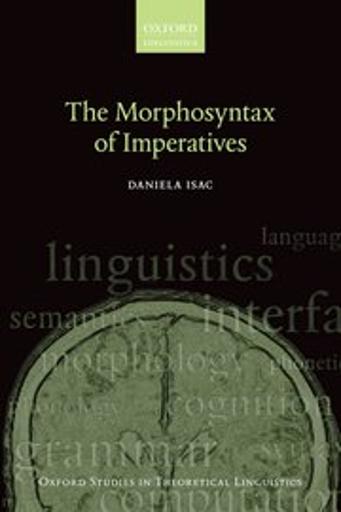
Dr. Dana Isac is an Associate Professor in the Department of Classics, Modern Languages and Linguistics at Concordia University. Her research focuses on the syntactic and semantic properties of clause types (declaratives, interrogatives, imperatives, and exclamatives), with a strong emphasis on the syntax-semantics and syntax-phonology interfaces. She co-authored the influential monograph I-language: An Introduction to Linguistics as Cognitive Science (Oxford University Press, 2008) and is currently working on a new book, The Morphosyntactic Ingredients of Force . Education: PhD in Linguistics, University of Bucharest (2000) BA in English and French, University of Bucharest (1998) Research Interests: Comparative syntax, syntax-semantics interface, syntax-phonology interface, and cognitive science. Her work bridges formal linguistics with interdisciplinary approaches, particularly in cognitive science.
Ai Taniguchi is an Assistant Professor (Teaching Stream) in the Department of Language Studies at the University of Toronto Mississauga, specializing in English Language Linguistics and Online Teaching. Her academic journey includes a PhD in Linguistics from Michigan State University, where she worked under Marcin Morzycki, an MA in Linguistics from the same institution, and a BA (Highest Honours) in Linguistics and French from the University of Georgia. Her research expertise spans formal semantics and pragmatics, with particular focus on non-at-issue meaning, social meaning, and dynamic semantics. She explores what kinds of meaning exist in language beyond literal, at-issue meanings and how they can be formally modeled. Her work includes investigations of Japanese linguistic phenomena such as sentence-final particles, role language ( yakuwarigo ), and pejorative language use. Taniguchi's pedagogical work is equally innovative, combining linguistics with visual arts to create accessible educational content. She uses comics and other visual media to communicate complex linguistic concepts to broader audiences through her LingComics projects. Her teaching interests include equity, diversity, inclusion, and decolonization in linguistics education, public outreach, and innovative online teaching methods for large introductory courses. Her publications and research demonstrate a consistent pattern connecting formal linguistic theory with practical applications in education and public communication. She has co-authored Essentials of Linguistics (2nd edition), an open educational resource that makes linguistics accessible to wider audiences, reflecting her commitment to public linguistics and educational equity. LSA 2019: 5-Minute Linguist (winner) University of Toronto International Student Experience Fund (2022-2023) eCampusOntario Virtual Learning Strategy grant (2021-2022) As a teaching-focused faculty member, Taniguchi has developed numerous courses including LIN204 (English Grammar I), LIN205 (English Grammar II), LIN337 (Lexical Semantics), LIN338 (Pragmatics), and LIN452 (Communicating English Language Linguistics). Her pedagogical approach emphasizes authentic assessment, justice-centered curriculum development, and the integration of visual arts into linguistic instruction. Taniguchi maintains an active presence in both academic and public spheres, with media appearances, public lectures, and high school outreach programs in the Greater Toronto Area. Her work bridges the gap between specialized linguistic research and public understanding through creative communication methods.
Dr. Naomi Nagy is Professor and Chair of the Department of Linguistics at the University of Toronto, Faculty of Arts and Science. She teaches courses on sociolinguistics, language variation and change, and heritage languages at both undergraduate and graduate levels. Her academic career spans over two decades with previous appointments at the University of New Hampshire and visiting positions at institutions worldwide. Ph.D. in Linguistics, University of Pennsylvania (1996) B.A. cum Laude in Linguistics (with Honors) and French, Dartmouth College (1989) Dr. Nagy's research focuses on sociolinguistics, particularly language variation and change in heritage language contexts. She specializes in understanding language contact through variationist sociolinguistic approaches, with particular expertise in Faetar (a Francoprovençal dialect), heritage languages, language contact phenomena, New England English dialects, phonetics, and sociolinguistic variation in Toronto's multilingual communities. Her work examines how languages change across generations in contact situations, with a focus on maintaining linguistic complexity in heritage language contexts. Her extensive publication record demonstrates consistent contributions to understanding heritage language variation across multiple languages including Italian, Russian, Korean, Tagalog, and Cantonese. Her research reveals that heritage languages maintain significant complexity and often follow similar patterns of variation as homeland varieties, challenging assumptions about simplification in heritage language grammars. Dean's Research Excellence Award, University of Toronto (2022) Dean's Excellence Award, University of Toronto (2016, 2017, 2021, 2022) LabEx Visiting Professor (Chaire Internationale 2022), Université de Paris (Spring 2022) Marco Polo Visiting Professor, University of Groningen (Summer 2015) Distinguished Visiting Professor, Queen Mary University London (March 2013) Dr. Nagy has successfully supervised numerous graduate students and secured significant research funding. She directs the Heritage Language Variation and Change (HLVC) Project, which has received multiple grants from the Social Sciences and Humanities Research Council (SSHRC), including Insight Grants for 'Ethnolinguistic variation and change: coordinating production and perception' (2018-2025) and 'Heritage languages speakers in Toronto -- what do they tell sociolinguists?' (2015-2022). Her research has involved over 50 students in its first two years and continues to expand. Dr. Nagy leads the Heritage Language Variation and Change in Toronto Project, which documents and analyzes variation in 10 heritage languages spoken in Toronto (Cantonese, Faetar, Hungarian, Italian, Korean, Polish, Portuguese, Russian, Tagalog and Ukrainian). She has also developed methodology and a corpus of recorded conversational data for these languages. Additionally, she has worked extensively on documenting Faetar, an endangered Francoprovençal language, creating a descriptive grammar, online teaching materials, and currently developing #FPglobal, a social media platform to support inter-dialectal communication in Francoprovençal.
Susana Béjar is an Associate Professor in the Department of Linguistics at the University of Toronto, Faculty of Arts and Science. Her research focuses on syntax, morphology, and linguistic theory, particularly exploring topics like DP recursion, phi-features, copular clauses, and language acquisition. She holds a PhD, MA, and BA from the University of Toronto. Her work examines syntactic structures, formal feature theory, and the acquisition of complex NPs in child language. Béjar has collaborated on numerous projects, including studies on Inuttitut corpus development and split ergativity in Kurdish varieties. She actively participates in research networks and has presented at conferences such as NWAV and LSA. Research Interests: Syntax, Morphology, Linguistic Theory, Language Acquisition, Phi-Features, Copular Clauses, DP Recursion. Recent Work Trends: Her publications emphasize syntactic recursion, feature-driven operations, and cross-linguistic agreement patterns. Notable contributions include analyses of copular clauses and the role of phi-features in syntactic dependencies. Grants: Over 30 grants secured from SSHRC and other agencies, including projects on case agreement in Laki, possessive extraction in English, and corpus development for Inuttitut. Labs/Teams: Collaborates with the Department of Linguistics research groups at U of T and participates in international research networks on syntax and language acquisition.
Bronwyn Bjorkman is an Associate Professor and Department Head in the Department of Languages, Literatures, and Cultures (LLCU) at Queen's University, Canada. She specializes in syntax, morphology, and semantics, with a focus on verbal inflection, tense, and aspect. Her research explores how syntactic features mediate between morphological realization and semantic interpretation, particularly in expressions of anteriority and morphophonological processes. Education: PhD in Linguistics, Massachusetts Institute of Technology (2011) BA in Linguistics and Philosophy, McGill University (2006) Research Interests: Her work delves into morphology-syntactic interfaces, feature theory, and the relationship between morphological structure and phonology. Notable areas include counterfactual marking, pronoun paradigms, and the syntax-semantics of coordination. Teaching: She teaches courses in linguistics, including Introduction to Linguistics , Morphology , Syntax , and Historical Linguistics . She co-leads the SynTeach project to improve syntax pedagogy across institutions. Awards: Banting Postdoctoral Fellowship (University of Toronto, 2013–2015) Grants & Projects: Involved in initiatives like the Essentials of Linguistics textbook (2nd Edition) and the Word to the Whys podcast for linguistic education. Labs/Teams: Leads the LLCU department and collaborates with international teams on syntax pedagogy and linguistic theory.