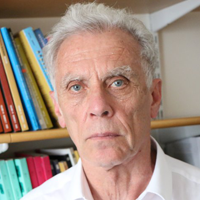
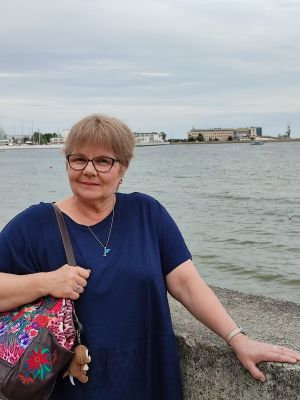
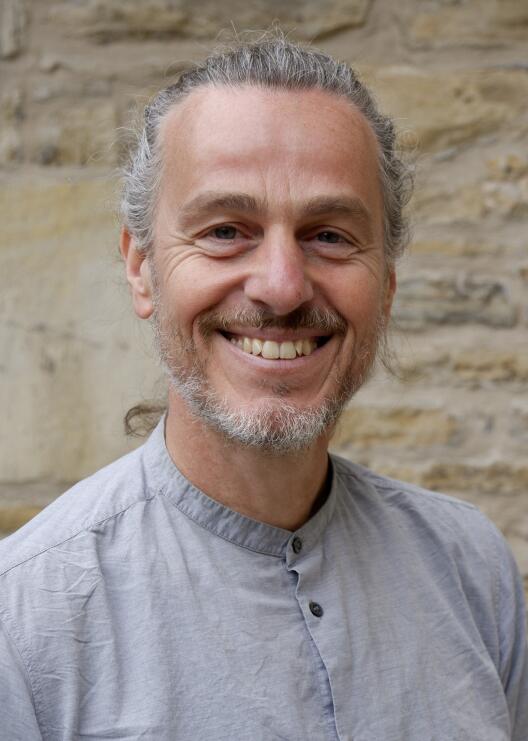
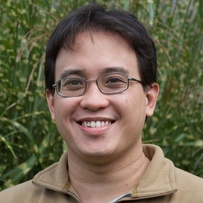
Professor Thomas Meier is a Visiting Professor at the Department of Life Sciences, Imperial College London (since 2015), and Director of the Centre for Structural Biology (2017–2021). He leads research on ATP synthase structure, drug targets for tuberculosis, and molecular mechanisms of disease. Previously, he was a Group Leader at the Max-Planck-Institute of Biophysics (2006–2015) and ETH Zurich's Institute of Microbiology. His work combines structural biology (X-ray crystallography, electron microscopy) with biochemical studies. Education: Dr. sc. nat. (2002) and Dipl. sc. nat. (1998) from ETH Zurich. Awards include the Wellcome Trust Investigator (2015–present). Research focuses on ATP synthase's role in energy conversion, drug development, and structural biology. His lab includes postdocs and students like Lisa Uhrig and Anthony Cheuk. Key affiliations: Centre for Structural Biology, Membrane Biology Group, and Bacterial Pathogenesis studies. Languages: German, English, French (fluent), Latin (read/write). Publications span structural biology, planetary science, and drug discovery. His work on ATP synthase inhibitors for TB has clinical implications, while astrophysical studies explore planetary formation via giant impacts.
Francisco Panizza is a Professor at the Department of Government, London School of Economics and Political Science (LSE). He holds a PhD in Politics from the University of Essex and has expertise in Democracy, Human Rights, Latin American Politics, Populism, and MERCOSUR. Previously worked at Amnesty International (1991-1995), joined LSE in 1995. On sabbatical 2022/2023. Languages spoken: English, Spanish. Education: Law degree from Universidad de la República (Uruguay), MA and PhD in Politics from University of Essex. Research focuses on political patronage in Latin America, democratic governance, populist discourses, and left-wing politics in Latin America. Key works include 'Handbook of Politicization and Political Patronage' (2025), 'Populism and the Mirror of Democracy' (2005), and studies on Argentina's and Uruguay's public administration reforms. Teaches courses such as GV245: Democracy and Democratisation, GV443: The State and Political Institutions in Latin America, and GV320: Populism. Active in comparative politics research, editing the Routledge Series 'Conceptualizing Comparative Politics.' Research emphasizes political appointments, public sector reform, and the interplay between populism and democracy. No specific scientific awards listed, but holds prominent academic standing in political science.
Steve Mann is a Professor in Applied Linguistics at the University of Warwick, where he has been affiliated since 2007. His work focuses on English Language Teacher Education (ELTE), teacher development, and qualitative research methodologies. He holds a PGCE from the University of Warwick (1984) and has extensive experience in ELT across Hong Kong, Japan, and Europe. Mann’s research group investigates reflective practice, teacher beliefs, mentoring, and technology integration in education. Notable contributions include co-editing the Routledge Handbook of English Language Teacher Education (2019) and pioneering studies on video-based teacher reflection. He has supervised numerous PhD students exploring aspects of teacher development, though he is currently not accepting new PhD candidates. Education: PGCE, University of Warwick (1984) Pre-service teaching in English and Drama in England (1980s) British Council Teaching Scheme in Hong Kong (1980s) Research Interests: Teacher education, reflective practice, qualitative interview methodologies, and the role of technology in professional development. His work emphasizes bridging theory and practice in ELT, particularly through collaborative dialogue and action research. Grants & Projects: Supporting Sustainable English Teacher Professional Development in Yunnan Province (British Council, 2022–2023) China Course Research: Postgraduate Curriculum Design (2019–2022) Video in Language Teacher Education (British Council, 2016–2018) Labs/Teams: Leads a research group focused on teacher development, mentoring, and blended learning strategies. Collaborates with institutions like the British Council on global teacher education initiatives.
Dr. Iwona Łęska-Drajerczak is a Senior Lecturer at the Faculty of English, Adam Mickiewicz University, Poznań, Poland. With a career spanning over four decades, she has held significant roles such as EFL (PNJA) Coordinator (2006-2021) and grammar coordinator (1990-2006), contributing to curriculum development and teacher training programs. Her work includes organizing 17 in-service teacher training workshops (2003-2009) and serving as a Methodological Advisor for Teacher Training College in Bydgoszcz (2008-2015). Education: MA in English (1981), Ph.D. in English (2006) Professional Qualifications: RSA Cambridge DipTEFLA (1996) Her research focuses on Applied Linguistics , particularly English Language Teaching Methodology , Language Testing , and Teacher Training . She has developed advanced-level phonetics and grammar courses and contributed to EFL course planning frameworks. Her work also explores teacher and learner motivation in Business English contexts. International Collaboration: Language Rich Europe Project (Warsaw, London, Brussels, 2011-2013) Erasmus Staff Mobility: Aveiro (2009), Lyon (2015), Istanbul (2019), Nicosia (2023) Guest Lectures: Teacher Training Colleges in Poznań, Bydgoszcz, Zajączkowo Conference Participation: IATEFL Annual Conferences (Wrocław to Poznań), Poznań Linguistic Meeting Recognized with prestigious awards including the Minister of Science and Higher Education Award for Didactic Achievements (2016, 2022) and the Medal Komisji Edukacji Narodowej (2018), she has also contributed to the TELL project at UAM (2017-2023) and served as a juror for High School Science Lab initiatives.
Daniel Kreisman is an Associate Professor of Economics at Georgia State University and a faculty affiliate at the University of Milan. His research focuses on labor economics, education finance, and policy, particularly examining school funding, career and technical education (CTE), and student loan repayment systems. Kreisman founded the Career & Technical Education Policy Exchange (CTEx), a multi-state consortium under Georgia Policy Labs, which analyzes CTE policy impacts. He holds a Ph.D. in Public Policy from the University of Chicago and a B.A. in History and Philosophy from Tulane University. Prior to academia, he taught high school English in New Orleans. His education includes a PhD from the University of Chicago (Public Policy) and a BA from Tulane University (History and Philosophy). Research Interests: Educational Finance and School Funding Mechanisms CTE Program Design and Equity Student Loan Repayment Behaviors Labor Market Signaling and Economic Outcomes Public Policy Evaluation CTEx collaborations include state partners in Massachusetts, Michigan, Montana, Tennessee, Texas, Washington, and Atlanta, focusing on data-driven policy to enhance CTE programs. Advising & Grants: Kreisman’s work bridges academia and policy, with grants supporting research on CTE alignment, financial aid impacts, and loan repayment systems. His lab affiliations enable applied policy analysis. Labs/Teams: Director of CTEx and active member of Georgia Policy Labs, emphasizing evidence-based education policy.
Professor Michael Burke holds a full professorship in Rhetoric at Utrecht University (Faculty of Humanities) and teaches at University College Roosevelt (UCR) in Middelburg. Previously, he served as UU Honours Dean (2016–2021). His research focuses on rhetoric, stylistics, cognitive aspects of language, and education. He earned his Ph.D. in English Language and Literature from the University of Amsterdam, where he also completed his undergraduate studies. Research interests span written, oral, and digital rhetoric, emphasizing pedagogical, cognitive, stylistic, and neuroscientific dimensions. He has held visiting roles at institutions like the University of Cambridge and University of Bologna. Editorial roles include series editor for Routledge’s 'Research Monographs in Linguistics' and board memberships with journals like Language and Literature . Teaching includes undergraduate courses on classical rhetoric, argumentation, and public speaking at UCR, plus leadership and interdisciplinary research modules for Utrecht’s Honours College. He supervises PhD students in the UiL-OTS linguistics research school. Notable publications include The Routledge Handbook of Stylistics (2023) and studies on critical thinking, digital literacy, and cognitive literary science. Professional activities include keynote speaking at conferences like PCST and EARS, and contributions to projects such as ‘Undergraduate Research in the Netherlands’. His work bridges rhetoric, cognitive science, and education, emphasizing practical applications for students and educators.
Hakan Özkan is a Privatdozent and Research Associate at the Institute of Arabic and Islamic Studies, Department of Middle Eastern Studies, University of Münster, where he has been working since 2007 in various capacities. He was awarded his Venia Legendi (Habilitation) in November 2019 for Arabic and Islamic Studies with his thesis 'History of Eastern Zajal – Dialectal Arabic Verse Poetry from the East of the Arab World.' His academic background includes a Franco-German doctorate completed in 2006 from Université de Provence and University of Cologne, supervised by Claude Audebert and Monika Gronke, with external reviewers including Wolfhart P. Heinrichs from Harvard University. His educational background includes: 2019: Venia Legendi for Arabic and Islamic Studies, University of Münster 2002-2006: Franco-German Doctorate in Arabic Studies and Narratology (Université de Provence and University of Cologne) 1995-2000: Master of Arts in Islamic Studies, Oriental Languages and Literatures (University of Cologne) 2000-2001: Course program in Modern Standard Arabic and Syrian-Lebanese dialect at Institut Français d'Etudes Arabes de Damas Özkan's research focuses on premodern Arabic dialect poetry, particularly zajal and muwashshaḥ forms, narratology, prosimeter literature, socio-literary history, and diachronic dialectology. His interdisciplinary approach bridges linguistic analysis with literary criticism, examining how dialectal forms evolved within Arabic literary traditions across different historical periods and geographical regions. He has conducted extensive field research in Arab countries including Syria, Egypt, Lebanon, Tunisia, and Morocco, with particular emphasis on the historical development of poetic forms from the Mamluk through Ottoman periods. His publication history demonstrates consistent scholarly contributions to Arabic literary studies, with his 2020 monograph 'History of Eastern Zajal' representing a landmark study in the field. His recent work has expanded to include analyses of religious poetry praising the Prophet Muhammad in zajal form, wine poetry in Arabic literary traditions, and the integration of dialects into Arabic language teaching methodologies. His scholarly output spans monographs, critical editions, encyclopedia entries, journal articles, and book chapters across multiple languages including German, English, French, and Turkish. Among his academic recognitions: 2018: Second place on shortlist for W2 Professorship for Arabic Language and Translation Science, University of Leipzig 2008: Offered Junior Professorship at American University in Cairo (declined) 2007: Second place on shortlist for maître de conférence position at University of Nancy 2007: Official Qualification from National University Council (CNU) for positions as maître de conférence at French universities Özkan has served on numerous academic committees, including appointment committees for professorships in Sinology and Arabic and Islamic Studies at the University of Münster. He has been a juror for the Sheikh Hamad Award for Translation and International Understanding in Doha and has served on the steering committee for the 'Translation for Dialogue' program of the Anna Lindh Foundation. His editorial work includes reviewing for Mamluk Studies Review, Die Welt des Islams, and Middle Eastern Literatures since 2012. His scholarly activities extend to linguistic fieldwork on Pontic Greek dialects in Turkey and organizing significant academic conferences including 'The Race Course of Literature – An-Nawāǧī and His Contemporaries' in 2018 at the University of Münster. His multilingual capabilities (Arabic, Turkish, German, French, English, Persian, Ottoman Turkish, and knowledge of Modern Greek) enable his comparative work across multiple linguistic and cultural traditions in the Mediterranean region.
Stephen Brown is a Full Professor at the School of Political Studies , part of the Faculty of Social Sciences at the University of Ottawa . His research focuses on democracy, democratization, conflict, foreign aid, and LGBT rights, particularly in Sub-Saharan Africa and Mongolia. He also analyzes Canadian foreign aid policies under recent governments. Email: brown@uottawa.ca Office: 613-562-5800 (1896) Languages: English, French, Spanish, Portuguese His work bridges international development, political science, and human rights, examining how foreign aid intersects with democratic ownership, gender equality, and conflict resolution. Recent publications highlight tensions between donor priorities and local contexts, as well as Canada's evolving role in global development. Key trends in his 15 most recent articles (2025–2020) include: Canadian foreign aid policy under Harper and Trudeau governments LGBTQI+ rights advocacy in Africa and Asia Impact of global crises (e.g., COVID-19) on development cooperation Political economy of extractive industries in developing economies Debates on aid effectiveness, policy coherence, and donor alignment Transitional justice and electoral conflict management in post-crisis states
Brendan T. O'Connor is an Associate Professor at the College of Information and Computer Sciences, University of Massachusetts Amherst, where he directs the SLANG Lab and serves as Associate Director of the Computational Social Science Institute. His research bridges statistical machine learning and natural language processing with social science applications, particularly using text data from news and social media to understand societal patterns. His work focuses on developing text analysis methods to answer social science questions in domains like political science and sociolinguistics. Current collaborative projects include combating misinformation, analyzing bias in news coverage, and developing tools for clinical discourse assessment using large language models. O'Connor's publications demonstrate a consistent focus on computational social science, with recent work exploring multilingual analysis, legal discourse patterns, and sociolinguistic variation. His methodological contributions span coreference resolution, event extraction, and argument mining. At UMass, he contributes to multiple research centers including the Computational Social Science Institute, UMass NLP group, and Centers for Data Science and Intelligent Information Retrieval. He teaches graduate seminars in natural language processing and maintains active collaborations across disciplines.
Susan Holmes is Professor at the School of Media, Language and Communication Studies at the University of East Anglia (UEA), where she joined as Reader in Television in 2007 and was appointed to Professor in 2018. She is an active member of several research groups including Media Equality, Film, Television and Media, Gender and Its Intersections Steering Committee, and HealthUEA. Her work spans television studies, celebrity culture, and feminist approaches to eating disorders. Professor Holmes received her academic training at the University of Sussex (BA in English and Media Studies), followed by an MA in Film from the University of Southampton, and completed her PhD on British film and television in the 1950s at the same institution. Prior to joining UEA, she taught Media and Cultural Studies at the Southampton Institute (now Southampton Solent University) and television and film at the University of Kent. Her research focuses on several interconnected areas that challenge traditional disciplinary boundaries. In television studies, she has made significant contributions to understanding British television history, particularly through her books 'British TV and Film in the 1950s' and 'Entertaining TV: the BBC and Popular Programme Culture in the 1950s,' where she challenges canonical ideas about early BBC television. Her work on reality TV examines historical development, generic labeling, and celebrity. Since 2014, she has conducted important empirical research on feminist approaches to eating disorders, analyzing media representations and working directly with people with lived experience. A key focus of this research examines how feminist approaches are neglected in contemporary eating disorder treatment, with implications for both clinical practice and cultural understanding. She co-founded the influential Celebrity Studies journal in 2010 and edited it for the first eight years of its publication. Analysis of Professor Holmes' recent publications reveals a clear trajectory where her expertise in media and television studies converges with her feminist scholarship on eating disorders. Her most recent work (2023-2025) increasingly focuses on cross-cultural applications of feminist approaches to eating disorders (including work in China), the use of innovative methodologies like Photovoice, and examinations of therapeutic alliance in treatment settings. Simultaneously, she continues to analyze contemporary media representations, particularly focusing on motherhood, true crime television, and reality TV through feminist lenses. This dual focus demonstrates how media representations shape cultural understandings of both celebrity and health conditions. Professor Holmes' significant contributions to academia have been recognized with several prestigious awards: Senior Fellowship from Advance HE (2024) UEA engagement award (2017) ALPSP award nomination for Celebrity Studies as best new journal (2011) She currently runs the Feminist Media Studies research cluster at UEA and is actively supervising postgraduate research in areas including popular television, television/film history, British TV history, stardom/celebrity, and feminist approaches to eating disorders. Her current major research project is the 'ALLIANCE study' (2024-2026), funded by the National Institute for Health and Care Research, which aims to develop practice and policy recommendations to support effective therapeutic alliance in inpatient treatment for eating disorders. This builds on her earlier British Academy-funded research on 'Entertaining Television: British TV, the BBC and Popular Programme Culture in the 1950s' (2007-2008). Professor Holmes plays a significant role in the academic community through her editorial work, serving on the boards of journals including Archives of Psychology, Big Data & Society, and Critical Studies in Television, and previously as co-founder and editor of Celebrity Studies. She has also been active in media engagement, contributing expert commentary on topics ranging from Netflix's portrayal of eating disorders to Celebrity Big Brother.
Kisha Porcher is an Associate Professor in the Department of English at the University of Delaware, specializing in English Education. She serves as the Student Teaching Coordinator and holds a Ph.D. in Teaching and Teacher Education from George Mason University, alongside degrees from Spelman College and Teachers College Columbia University. B.A., English and Secondary Education, Spelman College M.A., Curriculum and Instruction, Teachers College Columbia University Ph.D., Teaching and Teacher Education, George Mason University Her research focuses on centering Blackness through frameworks like the Black Gaze and archeology of the self (Sealey-Ruiz, 2019), emphasizing racial identity development and community-engaged learning. She explores systemic assets for Black and Brown students while advocating for anti-racist pedagogies in urban education settings. Her recent publications highlight trends in critical literacy instruction , decolonizing curricula , and equity-driven teacher training , with a strong emphasis on racial justice and linguistic diversity. Notably, she received the College of Arts & Sciences Faculty Teaching Excellence Award in 2022. Porcher’s work bridges teacher self-reflection and structural reform , positioning educators as disruptors of systemic inequities. Her scholarship spans topics from cultural competency to community-embedded pedagogies, reflecting her commitment to redistributing power in educational systems.
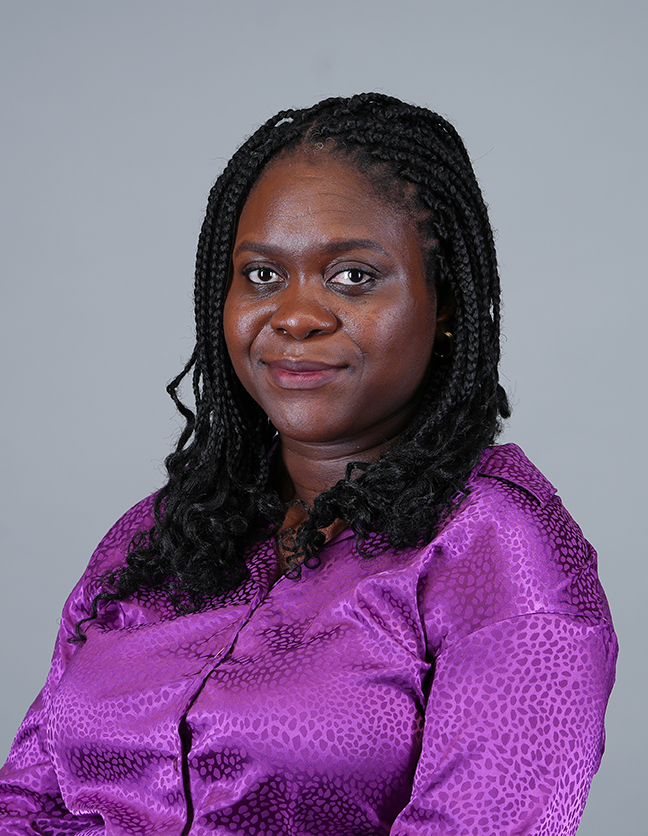
Dr. Omotoyosi Odukomaiya serves as Assistant Professor of English at Hope College, where she commenced her teaching career in Fall 2023. Her role encompasses instructing courses in American ethnic literature, Black science fiction, and women's literature while advising the English Club to cultivate critical literary engagement. Her academic credentials include: Ph.D. in English Literature, Southern Illinois University (2023) MBA, Webster University (2016) M.Sc. in Marketing Communication, University of Birmingham, UK (2010) B.A. in English Language and Literature, Redeemer’s University, Nigeria (2005) Dr. Odukomaiya's research centers on Black science fiction and women's literature , critically examining intersections of race, gender, and technology. Her work investigates how marginalized voices challenge dominant narratives through decolonial futurism , historical trauma analysis, and diasporic identity construction. She emphasizes the transformative potential of speculative fiction in envisioning liberated futures for Black communities globally. Her scholarship consistently explores Africanfuturism and feminist science fiction through analyses of authors like Nnedi Okorafor, Tade Thompson, and Octavia Butler. Recurring themes include diaspora identity negotiation, historical reclamation, and gendered resistance within speculative frameworks, bridging literary criticism with critical race and gender theory. Scientific Awards: None documented in source materials As faculty advisor for Hope College's English Club, Dr. Odukomaiya mentors students in literary exploration and critical discourse. She develops curricula that interrogate cultural representations and center diverse literary traditions, prioritizing inclusive pedagogy that examines identity, power structures, and narrative sovereignty across historical and contemporary contexts.
Miguel Ángel Bernal Merino serves as a Part-Time Lecturer in the Department of Modern Philology, Translation and Interpretation at the University of Las Palmas de Gran Canaria. Concurrently, he acts as convener of the MA in Translation at the University of Roehampton in London, managing its Specialised Translation, Audiovisual Translation, and Intercultural Communication pathways since 2005. His academic profile bridges theoretical research and industry application in localization disciplines. PhD in The Localisation of Video Games, Imperial College London MSc in The Localisation of Multimedia Interactive Entertainment Software, Imperial College London Certificate in Software Localisation, University of Limerick CELTA, University of Cambridge MPhil in Lip-Synched Dubbing, Universidad de Alicante MA in Hispanic Literature, University of Rhode Island BA in English & Spanish Linguistics, Universidad de Alicante Bernal Merino's research pioneers the expansion of Translation Studies into interactive media domains. His work on video game localization examines interactivity, cultural adaptation, glocalisation, and playability, while his audiovisual translation research investigates creativity in lip-synched dubbing, subtitling, and audiodescription. He extends these frameworks into gaming-based language learning through haptic environments and multisensory reinforcement, exploring physiological aspects of multilingual cognition and polysemiotic neural networks. This multidisciplinary approach fundamentally challenges traditional boundaries in translation theory. His publication trajectory reveals evolving industry-academia integration, shifting from foundational game localization frameworks (2008-2015) toward user-centered research and educational applications (2018-2024). Recent work emphasizes measurable business impacts through quality localization, regional market adaptations, and crowd-sourced methodologies, demonstrating consistent influence on professional standards across gaming and translation sectors. Fellow of the Higher Education Academy Bernal Merino supervises doctoral research on mobile game localization, transmedia fan experiences, and historical game content translation while developing industry-academia pipelines through projects like AHRC's Media Across Borders. His funded initiatives—including Maximising ROI through Quality Game Localisation and Video Games for Language Learning—bridge theoretical innovation with commercial implementation, focusing on glocalisation strategies, interactivity metrics, and playability optimization. These collaborations connect European universities, gaming studios, and localization service providers. As chair of the IGDA Localization SIG and member of GIR Discourse, Communication and Society, he directs international forums for game localization discourse. His work with Routes into Languages promotes audiovisual media in language education, while REF-readiness collaborations enhance research excellence across European institutions through his professional network spanning industry conferences like GDC Summit and Game Global.
Ju Hui Judy Han is an Associate Professor in Gender Studies at the University of California, Los Angeles, with additional affiliations at the Center for Korean Studies, Center for the Study of Women, and Asia Pacific Center. Her office is located in 1117 Rolfe Hall at UCLA. As a cultural geographer, Professor Han is committed to building critical and transnational conversations concerning gender, sexuality, and activism, regularly contributing to community-based projects and public events both on campus and beyond. Professor Han received her Ph.D. in Geography from UC Berkeley and her B.A. in English and Women's Studies from UC Berkeley. Her educational background bridges humanities and social sciences, providing a strong foundation for her interdisciplinary research. Her research interests span (Im)mobilities, Religion and difference, conservatism, LGBTQ/queer politics and activism, Comics and graphic novels, Korean studies, and Cultural geography. Professor Han approaches these topics through a critical lens that emphasizes transnational perspectives, particularly focusing on South Korea and the Korean diaspora. Her work often examines how power operates through spatial arrangements and how marginalized communities navigate and resist dominant structures. She has developed innovative approaches to studying activism through comics and graphic nonfiction, creating accessible yet theoretically rich analyses of complex social phenomena. Professor Han's publications reveal consistent engagement with queer politics in South Korea, religious movements, and transnational activism. Her work shows a progression from analyzing specific case studies to developing broader theoretical frameworks about resistance, solidarity, and spatial politics. The recurring themes across her publications include the intersection of religion and queer politics, the spatial dimensions of activism, and the transnational connections between social movements. UCLA Center for the Study of Women/Barbra Streisand Center, inaugural Barbra Streisand Fellowship on Truth in the Public Sphere Podcast Support Grant, University of California Humanities Research Institute (UCHRI), 2021-22 Society of Hellman Fellows Award, UCLA, 2021-22 UCLA Faculty Career Development Award, 2018-2019 Co-Applicant, 'Protesting Publics in South Korea,' SSHRC Insight Grant (PI: Jennifer Jihye Chun), 2015-2020 Co-Investigator, 'Urban Aspirations in Seoul: Religion and Megacities in Comparative Studies,' Max Planck Institute, 2011-2017 Professor Han actively contributes to public discourse through media appearances and community engagement. She has received significant research funding supporting her work on South Korean protest movements and urban religious dynamics. Her teaching portfolio is diverse, including the Gender Studies undergraduate core class on power (102), senior capstone seminars (187), elective courses on transnational feminist politics (131) and comics and graphic nonfiction (185), as well as graduate seminars on feminist geographies, queer temporalities, and research design.
Professor Emma Moore is a leading sociolinguist at the School of English, University of Sheffield . Specializing in the social dimensions of language, her work integrates methodologies from anthropology and sociology to investigate how linguistic variation constructs identity and social affiliations. Research focus: Sociolinguistic style, dialect contact, youth language, identity negotiation, and community-based fieldwork Key projects: Adolescence and grammar (1999-), Isles of Scilly dialect (2008-), language and inequality (2014-), language perception software (2016-) Educational background : PhD in Sociolinguistics, University of Manchester Stanford University (USA) during PhD research Research trends across her 2021-2025 publications reveal interdisciplinary exploration of: Socio-syntactic variation Clinical linguistics (2025 MDS-UPDRS studies) Digital discourse post-pandemic Indexicality and cognitive representations Dialect contact in insular communities Educational policy implications Scientific recognition : British Academy Mid-Career Fellow (2019-2020) Elected Fellow, Royal Anthropological Institute (2014) AHRC/BA funded research projects (1999-2015) Research group leadership : Mentored 9 PhD students (2004-2024) and supervised 3 undergraduate SURE projects, including analyses of: Gender in rap performance Language style and workplace inequality Oral history digitization Professional contributions : Editorial Board: Language in Society (2015-), Gender and Language (2011-2017) External Examiner: Lancaster University MA in English Language (2013-2017) Collaborative software development for dialect perception testing