

Dr. Luisa Calè is a Professor of Romantic and Nineteenth-Century Literature & Visual Culture and Research Lead at Birkbeck, University of London. She holds degrees from the University of Rome 'La Sapienza' (1993), University of Genoa (1997), and the University of Oxford (M.St. 1998, D.Phil 2002). Her research explores the interplay between literature and visual/material culture, focusing on book history, intermediality, and practices of reading/collecting. Her Leverhulme Trust-funded project 'The Book Unbound' examines how works by Blake, Walpole, and Dickens subverted traditional book formats. Education: PhD in Literary Studies, University of Genoa (1997) D.Phil., University of Oxford (2002) M.St. in English, University of Oxford (1998) Letters Degree, University of Rome (1993) Her research interests include Romantic aesthetics, material texts, and critical disciplinarity. Notable publications include Fuseli’s Milton Gallery (2006) and co-edited volumes like Dante on View (2007). She edits Blake/An Illustrated Quarterly and serves on editorial boards for Word & Image and Romantic Circles Gallery . Recent awards include a Leverhulme Trust Research Fellowship (2019) and a Mercator Fellowship (2018-19). She supervises graduate students in Romantic literature, material culture, and book history.
جستجوی استاد راهنمای دانشگاهی
برای مسیر پژوهشیتان، استاد راهنما، استاد دانشگاه و پژوهشگر مناسب را پیدا کنید و با آنها ارتباط بگیرید.
نمایش ۱-۱۵ از ۵٬۷۳۳ استاد راهنما
اطلاعات پروفایلها از صفحات عمومی دانشگاهها گرفته شده و ممکن است بهروز نباشد.
- Creative Writing
- Poetry
- Creative Nonfiction
- +۳ مورد دیگر
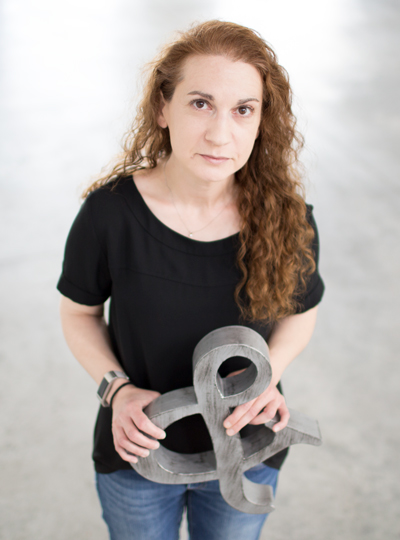
Monica Berlin was the Richard & Sophie D. Henke Distinguished Professor of English at Knox College, serving from 1998 until her passing in 2022. She held leadership roles as Chair of the Department of English and Associate Director of the Program in Creative Writing. Her academic background includes a B.A. in English Writing (1995, Knox College), M.A. in Literature and Composition (1998, Western Illinois University), and M.F.A. in Poetry (2002, Vermont College). Her research focuses on creative writing (poetry, nonfiction, fiction) and modern/contemporary American literature. She has published extensively in literary journals and anthologies, earning major awards like the Crab Orchard Poetry Series Open (2018) and New Measure Poetry Prize (2013). Her collaborative work with Beth Marzoni has been widely recognized in literary circles. Beyond academia, Berlin directed The Space (a literary center) and spearheaded digital archives like A Map of Voices: The Knox Writers' House . She contributed to campus governance as a member of the Faculty Personnel Committee and engaged with the community through roles at the Galesburg Public Library and literary festivals. Students praise her ability to guide them in refining their craft, emphasizing the 'elusive mechanics of writing.' Her legacy includes fostering literary innovation and accessibility in education and public spaces.

- Early Modern Music
- Creativity
- Material Culture
- +۵ مورد دیگر
Rebecca Herissone is Professor of Musicology at the University of Manchester and a leading scholar in early modern English music. She co-edits the peer-reviewed journal Music & Letters and serves on editorial boards for the Purcell Society, Musica Britannica, and the Complete Works of John Eccles. Her research focuses on seventeenth-century creativity, material culture, and the ontological dimensions of music notation. Key research areas: Early Modern Music, Creativity, Source Study, Notation, Reception Major awards: Diana McVeagh Prize (2015), Westrup Prize (2007) Her recent work includes digital humanities projects on music preservation and critical editions of Purcell's operas. She has pioneered interdisciplinary approaches connecting musicology with drama, art, and literature, and currently leads research on Purcell's posthumous reception in the eighteenth and nineteenth centuries. Her teaching spans music historiography, performance practices, and advanced source analysis.
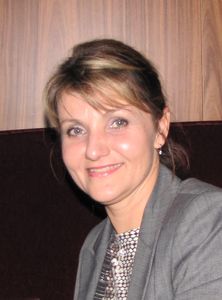
Assoc. Prof. Tatyana Yordanova is affiliated with the National Academy of Sports in Bulgaria, where she serves in the Faculty of Sports and Department of Technical and Ice Sports . She holds the academic rank of Associate Professor and has been leading the department since 2024. Education: Master's from State Central Institute of Physical Culture (1987); Doctorate in Sports Science (2019) Languages: English, Italian, Russian Her research focuses on technical elements in figure skating , speed-power abilities , balance stability , and judging systems . She has extensively studied jump mechanics and anthropometric factors in skaters. Her publications from 2018-2024 include studies on judging systems, jump techniques, and sports management. Key themes in her work involve training methodology, competition analytics, and biomechanics of skating. Since 2002, she has worked as an international figure skating judge, including at the Sochi 2014 Olympics . She chaired the Bulgarian Skating Federation (2011-2023) and participated in projects like Erasmus+ mobility (2022, 2024). Her pedagogical career includes roles as scientific assistant (1988), senior assistant (2006), and associate professor (2023).
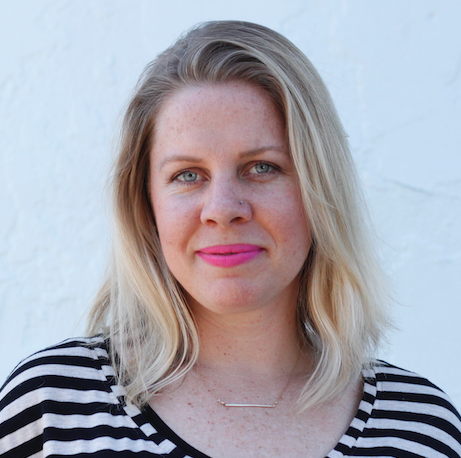
Genesea M. Carter serves as the Associate Director of Composition and Associate Professor in the English and University Composition Program at Colorado State University. She holds a PhD from the University of New Mexico. Her research focuses on administrative systems in higher education, including curriculum design, teacher training, and workload equity, and their impact on instructors’ well-being. She also investigates how students from diverse backgrounds navigate academia, with a focus on working-class pedagogy and identity development. Her recent co-edited collection Systems Shift: Creating and Navigating Change in Rhetoric and Composition Administration (2023) addresses institutional transformation. Earlier work includes Class in the Composition Classroom: Pedagogy and the Working Class (2017), exploring socioeconomic diversity in education. Her articles span topics like digital literacy, interdisciplinary pedagogy, and critical theory in composition studies. Dr. Carter’s scholarship emphasizes equity, intersectionality, and dismantling neoliberal structures in academia. She has contributed to journals such as Composition Studies , Journal of Teaching Writing , and Open Words , and her work bridges practical administration with theoretical frameworks in rhetoric and composition.
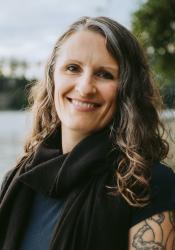
Megan Callowمشاهده پروفایل
استاد آموزشی
Megan Callow serves as an Associate Teaching Professor in the Department of English at the University of Washington, Seattle, and holds the position of Director of Writing for the campus. Since 2019, she has directed the Program for Writing Across Campus (PWAC), advancing writing instruction across academic disciplines. Her educational background includes: Bachelor of Arts in English from University of California, Berkeley (2003) Master of Arts in Liberal Arts from St. John's College (2006) Doctor of Philosophy in English Education from University of Maryland (2015) Dr. Callow specializes in Writing in the Disciplines (WID) and science writing, with deep expertise in rhetoric and composition, writing pedagogy, and faculty development for writing instruction. Her research examines how writing is taught and learned across scientific and technical fields, develops cross-disciplinary writing curricula, and explores online learning environments for writing education. She investigates genre theory, interdisciplinary writing practices, and science/technology writing integration. No scientific awards were documented in the source material. Information regarding graduate student advising or research grants was not provided in the available text. No dedicated research labs or collaborative teams were mentioned in the source documentation.
- Rhetorical Theory
- Philosophy of Writing
- Pedagogy
- +۲ مورد دیگر
Nathaniel Street is Associate Professor and Writing Minor Coordinator in the English Department at Mount Saint Vincent University. He holds a PhD in English (Composition and Rhetoric) from the University of South Carolina. His research examines the intersections of philosophy, rhetoric, and pedagogy, with particular focus on the performative power of writing. Street's scholarly work analyzes persuasion mechanisms and figuration in rhetorical traditions, drawing on thinkers like Deleuze and Guattari. His recent publications explore philosophical approaches to writing practice and pedagogical frameworks. His articles demonstrate consistent engagement with rhetorical theory across historical and contemporary contexts, examining writing as both theoretical concept and practical discipline. No awards listed

Justin Russell Greeneمشاهده پروفایل
مدرس ارشد
- Cinema Studies
- Media Studies
- Cultural Studies
- +۴ مورد دیگر
Justin Russell Greene serves as an Advanced Instructor in the Department of English within Virginia Tech's College of Liberal Arts and Human Sciences. With over 15 years of teaching experience across multiple institutions, he currently teaches courses in film, literature, and writing at Virginia Tech, where he has been employed since 2019. His academic journey spans various teaching positions at Virginia Tech, Hampden-Sydney College, Virginia Commonwealth University, and several community colleges. Greene earned his BA, MA, and PhD in English and Media, Art, and Text from Virginia Commonwealth University. His educational background reflects his interdisciplinary approach that bridges traditional literary studies with contemporary media and cultural analysis. He has also completed professional development certifications in Anti-Racist Teaching and Foundations of Online Teaching at Virginia Tech. His research focuses on the intersections of cinema, media, and cultural studies, with particular attention to authorship, celebrity, and gender performance. Greene examines how authors and celebrities construct their identities across various media platforms, exploring topics ranging from Quentin Tarantino's cinematic masculinity to Roxane Gay's digital presence. His work often analyzes the performative aspects of identity in contemporary culture, particularly through fashion, social media, and visual storytelling. Greene's scholarly output demonstrates a consistent focus on authorial identity construction across media platforms. His publications reveal a trajectory from examining literary authors' fashion choices to analyzing digital performances of identity on social media, and more recently to cinematic studies of directors like Quentin Tarantino and Jordan Peele. The evolution of his work reflects broader cultural shifts toward digital and visual media while maintaining a consistent theoretical framework centered on performance and identity construction. Joyce Gentry Smoot Award (2025) for Excellence in Teaching by an Instructor As an educator, Greene has served as a reader on graduate student capstones and has been actively involved in curriculum development and pedagogical innovation. He has participated in numerous professional development activities focused on writing instruction, anti-racist pedagogy, and the integration of AI in teaching. His teaching philosophy emphasizes building student confidence in writing abilities, recognizing diverse student backgrounds, and providing individualized feedback to help students develop their unique voices. Greene is currently working on projects examining Jordan Peele's Nope (2022) regarding point-of-view and gore, as well as speculative adaptations in contemporary US media. His research interests continue to evolve with cultural trends while maintaining his core focus on performance, identity, and media representation.

Alexander Keyمشاهده پروفایل
دانشیار
Alexander Key is an Associate Professor of Comparative Literature at Stanford University, specializing in Classical Arabic literature and the intellectual history of Arabic and Persian-speaking worlds from the 7th century onwards. His scholarship focuses on the philosophy of language, literary theory, and cross-cultural translation. Ph.D. in Arabic and Islamic Studies from Harvard University (2012) Current research: Arabo-Persian linguistic intersections, poetics in translation, and pre-modern theories of syntax and affect His articles span diverse eras and topics, including: Medieval Arabic language philosophy (5th–11th century) Modern Arabic political poetry analysis (20th–21st century) Comparative methodologies bridging Islamic and Western traditions A key editorial role includes: Board Member of Stanford University Press Advisory roles at Habib University and Stanford’s Markaz Resource Center His work bridges academic publication with public discourse through: Contributions to Arcade Colloquy Interviews on poetics, religion, and contemporary politics Podcasts and literary salon discussions

- Contemporary International Fiction
- Franz Kafka Studies
- Central European History and Literature
- +۳ مورد دیگر
Daniel Medin serves as Professor at The American University of Paris within the Department of Comparative Literature and English History and Politics, joining the faculty in January 2010 after teaching positions at Stanford University, Washington University in St. Louis, and Free University Berlin. His academic credentials include: PhD, Washington University in St. Louis MA, Washington University in St. Louis BA, University of Connecticut Professor Medin's research centers on contemporary international fiction and the global reception of Franz Kafka , with significant contributions to Central European literary studies. His scholarly focus extends to autobiographical writing , editorial practices for translated fiction , and small prose forms , consistently examining cross-cultural literary exchange through interdisciplinary lenses that bridge literature, history, and translation theory. Analysis of his recent publications reveals a pronounced trajectory toward edited volumes spotlighting global literary voices across European, Asian, and Latin American traditions. His work demonstrates sustained engagement with translation as cultural mediation and Kafka's enduring legacy in contemporary writing, frequently connecting literary analysis with musical composition through collaborations with composers and musicians. His distinguished recognition includes: Alexander von Humboldt Foundation Fellowship As director of the Center for Writers and Translators and editor of the Cahiers Series, Professor Medin cultivates transnational literary networks through institutional leadership rather than traditional grant-funded research. His extensive involvement with literary prizes—including the International Booker Prize and European Union Prize for Literature—complements his editorial work at publications like Music & Literature and Schreibheft. He actively shapes contemporary discourse through the Center for Writers and Translators, organizing events that connect authors, translators, and scholars across linguistic boundaries. His recent festival appearances at Cheltenham, Bergen, and Dublin highlight ongoing commitment to examining Kafka's relevance and fostering dialogue about global literary trends.
Kirsten Yriمشاهده پروفایل
دانشیار
Kirsten Yri is an Associate Professor of Musicology at Wilfrid Laurier University, serving as Chair of Music Promotions and Appointments, and Coordinator for Music History, Theory, and Critical Analysis. She also oversees the Master of Music: Collaboration, Curation, and Creative Performance program. Her research focuses on medievalism in contemporary music and popular culture, the early music revival of the 20th century, and representations of gender in opera and music within colonial/postcolonial contexts. Yri’s research interests include analyzing how medieval themes are reinterpreted in modern contexts (e.g., film, heavy metal, and stage productions), examining the ideological underpinnings of early music revival movements, and exploring the intersection of music with gender, nationalism, and global cultural politics. Her work often critiques Western-centric narratives and highlights marginalized voices in music history. Her publications span articles in journals and edited volumes, with a focus on composers like Carl Orff and Hildegard of Bingen, as well as groups like Corvus Corax and Anonymous 4. She has contributed to interdisciplinary projects such as The Oxford Handbook of Music and Medievalism (2020). While no scientific awards are cited, her work is widely recognized in musicology and cultural studies. Yri’s teaching and research emphasize collaborative, interdisciplinary approaches to music history, blending academic rigor with creative curation. She speaks English, Swedish, and German, enhancing her ability to engage with international scholarly resources and communities.
Courtney Rivardمشاهده پروفایل
استادیار
Courtney Rivard is an Assistant Professor in English & Comparative Literature at the University of North Carolina, Chapel Hill, with a secondary appointment at the School of Data Science & Society. She directs the Digital Literacy and Communications (DLC) Lab, focusing on digital humanities, critical game studies, and archival rhetorics. Her research bridges rhetoric, digital methods, and social justice, examining how archives and digital tools shape narratives around race, gender, and national identity. Dr. Rivard holds a Ph.D. from the University of California, Santa Cruz (2012). Her book Layered Lives (2022) combines archival and computational methods to analyze Depression-era life histories. She has secured grants from NEH, ACLS, and UNC initiatives, supporting projects like the Critical Gaming Initiative and oral history archives on PFAS contamination. Her teaching emphasizes digital literacy and public engagement, including courses on data rhetoric, game studies, and multimodal composition. The DLC Lab hosts the Greenlaw Gameroom, a game-based classroom funded by Lenovo, fostering critical pedagogies through play. Research Labs: Digital Literacy and Communications Lab, Greenlaw Gameroom Grants: NEH, ACLS Digital Extension Grant, UNC Arts & Humanities Fellowships Key Projects: Critical Gaming Initiative, Photogrammar collaboration, “Forever Chemicals” oral history archive

Timothy Oleksiak is an Associate Professor in the Department of English at UMass Boston, specializing in rhetorical theory , queer feminist rhetorics , and rhetoric and composition pedagogy . His research explores intersections of queer theory, writing pedagogy, and digital communication, with a focus on peer review practices and power dynamics in educational settings. Education: PhD, University of Minnesota MA, The University of West Florida BS, Eastern Michigan University Research Trends: His recent publications examine themes of consent , queer generativity , and slow scholarship in writing studies. He integrates critical discourses on LGBTQ+ representation, digital culture, and affect theory into pedagogical frameworks. Scientific Awards & Service: Co-Chair, CFSHRC Taskforce on Share Values (2022-2023) Chair, Lavender Rhetoric Award Committee (2020, 2023) RSA Proposal Mentor Program (2022) CCCC Executive Committee (2021-2024) Teaching & Professional Contributions: He teaches graduate courses on queer rhetorics, peer review theory, and digital writing, alongside undergraduate courses in composition and professional writing. His editorial service spans journals like Peitho and QED , emphasizing feminist and LGBTQ+ scholarship.

Maureen Kendrick is a Professor and Deputy Department Head in the Department of Language & Literacy Education at the University of British Columbia's Faculty of Education. Her research examines literacy and multimodality as integrated communicative practices, addressing social and cultural issues in diverse contexts with particular emphasis on visual communication and refugee/migrant education. Her research interests span digital literacies, multiliteracy and multimodality, and international perspectives on literacy education. She investigates how youth from refugee backgrounds use multimodal approaches to construct identities and engage with learning, often through digital storytelling and visual methodologies. Her work extends to health literacy in Ugandan contexts and the role of play in early childhood literacy development across Canada, Kenya, and Uganda. Analysis of her recent publications reveals consistent focus on refugee/migrant education, digital storytelling, and multimodal literacy. She examines how digital tools empower marginalized youth to express identities while addressing challenges in language learning and cultural integration. Her research also explores HIV/AIDS education through makerspaces and the intersection of arts-based practices with science literacy. Dr. Kendrick's scientific recognition includes: Canadian Committee for Graduate Students in Education (CCGSE) Mentorship Award (2024) Killam Teaching Prize (2012-13) Alan C. Purves Award (2013) She actively supervises graduate students across doctoral and master's programs, with current research focusing on refugee education and multilingual learners. Her SSHRC-funded projects include the 2025-2029 grant 'Digital Multimodal Composing-To-Learn' and the 'Language and Literacy Learning Among Refugee and Migrant Background Children' initiative, involving collaborators from UBC, York, and Western universities. Dr. Kendrick leads international research teams across Canada, Uganda, and Kenya, developing community-engaged approaches to literacy education that bridge academic research and classroom practice.

Daniel Varonمشاهده پروفایل
استادیار
Daniel Varon is the Boeing Assistant Professor in Aeronautics and Astronautics at MIT, joining in July 2025. He is also affiliated with the MIT Institute for Data, Systems, and Society (IDSS). His research focuses on atmospheric composition, satellite remote sensing of greenhouse gases, and air pollution. Varon holds a PhD in Atmospheric Chemistry from Harvard University (2020), an MSc in Applied Mathematics, and dual undergraduate degrees in English Literature and Physics from McGill University. He has held postdoctoral roles at Harvard and Princeton University. His work uses satellite data to quantify methane and nitrogen oxide emissions, with applications in climate policy and environmental monitoring. Notable contributions include developing methods for detecting methane super-emitters via hyperspectral satellites and quantifying emissions from oil/gas fields. Varon has received over 3,000 citations and an h-index of 24 as of 2025, with extensive media coverage for his Nord Stream pipeline leak analysis. Varon has secured grants totaling $785K, including NOAA funding for geostationary satellite methane monitoring. He mentors postdocs and graduate students in satellite data analysis and machine learning applications. His teaching includes Harvard’s Atmospheric Chemistry course, where he received the Harvard Certificate of Distinction in Teaching. Varon serves as an Associate Editor for Atmospheric Measurement Techniques and contributes to initiatives like the Methane Emissions Detection Using Satellites Assessment (MEDUSA) Advisory Board. His lab focuses on integrating machine learning with satellite data to advance climate science.
نمایش نتایج تا ۷۵۰ مورد اول. برای یافتن نتایج دقیقتر، جستجوی خود را با فیلترها محدود کنید.