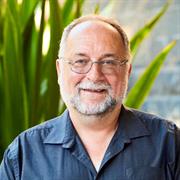
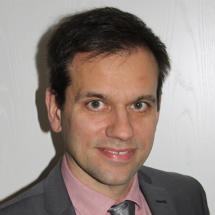
Jan Akmal is an Assistant Professor at Aalto University, holding dual affiliations in the Department of Energy and Mechanical Engineering and the Materials to Products group. His research specializes in additive manufacturing (AM), focusing on defect detection, smart materials, and 4D printing applications. He leads the AIM-Zero project (2023–2026), exploring AI-driven zero-defect AM processes. Akmal has received the Aalto Doctoral Incentive Scholarship (2023) and an Honorary Award (2023). He serves on editorial boards for Frontiers in Manufacturing Technology and Frontiers in Mechanical Engineering , and chairs the Finnish Rapid Prototyping Association (FIRPA). Key research areas include AI-based defect detection in metal AM, self-sensing components, and hybrid materials for dynamic displays. He collaborates globally on topics like optical tomography in powder bed fusion and medical AM applications. His work addresses sustainability, industrial adoption of AM, and legal frameworks for military logistics. Akmal has authored 24 publications and contributed to datasets on AM inaccuracies and defect classification, emphasizing practical applications and industry integration.
Patrick Kastner is an Assistant Professor at the School of Architecture and holds an adjunct appointment at the H. Milton Stewart School of Industrial and Systems Engineering at Georgia Tech. He directs the Sustainable Urban Systems Lab, focusing on environmental performance simulation and urban decarbonization. His work emphasizes software tools for sustainable urban decision-making, such as Eddy3D, a microclimate modeling toolkit widely adopted in academia and practice. Education: Ph.D. and M.S. in Systems Science and Engineering, Cornell University (2022, 2021) M.S. in Sustainable Building Science, Technical University of Munich (2017) B.S. in Energy Engineering, University of Erlangen–Nuremberg (2012) Research Interests: Environmental performance simulation, urban decarbonization, machine learning applications in urban systems, spatial analysis, and software development for sustainability. His work integrates computational fluid dynamics (CFD), surrogate modeling, and data-driven approaches to address urban climate challenges. Key Projects: Leads the Vertically Integrated Project SMUR (Surrogate Modeling for Urban Regeneration), fostering interdisciplinary collaboration across Georgia Tech. Developed Eddy3D, which streamlines microclimate simulations for architects and urban planners. Grants & Advising: Engages students from sophomore to graduate levels in sustainability research. Teaches at Cornell and UPenn previously. Advises on projects blending engineering, urban design, and climate science. Labs & Teams: Director of the Sustainable Urban Systems Lab, focusing on software tools for sustainable urban transformation. Collaborates with industry partners and global institutions on decarbonization strategies.
Prof. Ivan Cole is an Adjunct Professor at RMIT University's School of Engineering, specializing in rapid materials discovery for corrosion protection, nanostructures, and additive manufacturing. His work integrates computational modeling with high-throughput experimentation, focusing on corrosion inhibitors, biocompatible surfaces, and additive manufacturing process optimization. With over 30 years of experience across academia and industry (including leadership roles at CSIRO and Centro-Svilluppo Materiali), he leads the Rapid Discovery & Fabrication Team (RDF) to advance these research areas. Research Interests: Corrosion science, microbially induced corrosion (MIC), additive manufacturing surfaces, nanostructure sensing, multiscale modeling, and green materials discovery. His team addresses challenges in corrosion protection, biomedical implants, and environmental remediation through innovative methodologies. Awards: 2019 Australian Corrosion Medal 2016 CSIRO Lifetime Achievement Award 2013 Best Paper in NACE Corrosion Supervision & Projects: Active in mentoring PhD/Master’s students across corrosion inhibition, additive manufacturing, and nanostructure design. Notable projects include developing quorum sensing inhibitors for biofilm control, in-situ monitoring for metal AM, and eco-friendly corrosion inhibitors. Labs & Collaborations: Leads the Rapid Discovery & Fabrication Team and collaborates with industry partners to translate research into practical solutions for materials durability and sustainability.
Jens O. Brunner is a Professor of Decision Science in Healthcare at the Technical University of Denmark (DTU), affiliated with the Department of Technology, Management and Economics. Previously, he held a professorship at the University of Augsburg until March 2023 and served as co-director of the University Center for Health Care (UNIKA-T) from 2013 to 2020. He earned his PhD from the TUM School of Management (2009) and a diploma in Business Administration from the University of Mannheim (2006). Roles: Professor, Department Editor for Health Care Management Science , and Associate Editor for multiple journals. Education: PhD in Management, TUM School of Management (2009) Diploma in Business Administration, University of Mannheim (2006) His research focuses on healthcare operations management and the application of quantitative methods to optimize service systems. Key areas include triage policies, staff scheduling, and AI-driven healthcare solutions. His work has contributed to improving resource allocation in hospitals and pandemic response strategies. Notable awards include the Harold W. Kuhn Award (2015) and the IISE/SSE Outstanding Innovation Award (2022). His research has been published in journals like IIE Transactions and European Journal of Operational Research . He supervises PhD students in projects such as AI-integrated pooling strategies and resource optimization in healthcare. His involvement in interdisciplinary collaborations and editorial roles highlights his leadership in advancing healthcare operations research.
Prof. Dr.-Ing. Lars Linsen is a full Professor of Computer Science at the Westfälische Wilhelms-Universität (WWU) Münster, leading the VISualization & graphIX (VISIX) group. His primary affiliation is the Institute of Computer Science within the Faculty of Mathematics and Computer Science. He holds adjunct professorships at Jacobs University, Bremen, and has held previous academic roles including Full Professor at Jacobs University (2012–2017) and Associate/Assistant Professor roles in Germany and the U.S. His research focuses on interactive visual analysis, medical visualization, and scientific visualization, with applications in life sciences and engineering. Education: PhD (Dr.-Ing.) in Computer Science from Universität Karlsruhe (2001), M.Sc. (Diplom) in Computer Science (1997), B.Sc. (Vordiplom) in Computer Science (1994). Awards: IEEE Visualization Design Contest Winner (2008, 2022, 2018), Preis des Fördervereins des Forschungszentrum Informatik (2002). Research Highlights: Develops visualization tools for medical imaging (e.g., mass spectrometry imaging, MRI data analysis) and physical simulations (e.g., wildfire spread analysis, asteroid impact modeling). Active in EU-funded projects like Pig-Pro-QuO (surface coatings) and cells-in-motion initiatives. Supervised over 20 PhD/MS advisees, including notable graduates in medical visualization and simulation ensemble analysis. Publications: Over 100 peer-reviewed articles in top venues like IEEE Transactions on Visualization and Computer Graphics, Computers & Graphics, and EuroVis. Key works include SciVis contest-winning wildfire analysis frameworks and medical visualization tools for stenosis detection. Teaching: Offers courses on visualization, computer graphics, and computational science. Actively involved in thesis supervision and curriculum development at both WWU Münster and Jacobs University. Grants & Collaborations: Principal investigator on DFG-funded projects (e.g., hemodynamics simulations, ensemble visualization) and industry collaborations (e.g., Tascon GmbH for coating quality analysis). Member of the Cells-in-Motion Interfaculty Centre and CDH board at WWU.
Yves Wautelet serves as an Associate Professor at the Faculty of Economics and Business at KU Leuven, where he conducts research in conceptual modeling, business process management, and digital transformation. His work addresses critical challenges at the intersection of information systems engineering and business strategy, with particular focus on sustainability-driven modeling approaches and IT governance frameworks. His primary research interests include: Conceptual modeling methodologies and frameworks Business process management and information systems design Digital transformation strategies and implementation IT governance and business-IT alignment Sustainability-driven modeling for circular economy Agile software development practices and methods Requirements engineering with user stories Wautelet's recent publication record demonstrates significant scholarly productivity with numerous 2024-2025 publications spanning conceptual modeling frameworks for sustainability (Circulise), tools for identifying ambiguity in user stories (AmbiTRUS), and approaches to align strategic and operational agility. His work bridges theoretical foundations with practical applications across diverse domains including healthcare, circular economy, software development, and organizational transformation. His research consistently applies model-driven approaches to solve complex real-world problems, often integrating sustainability considerations into information systems engineering. As a promotor and co-promotor, Wautelet currently supervises multiple doctoral research projects including: Automatic generation of conceptual models from textual descriptions (2024-2028) Sustainability-Driven Modeling Assistant for Twin Transition in Vietnam (2024-2028) Home Care Business Process Management using Distributed Ledger Technologies (2024-2028) Teaching Modeling Skills in BPMN formalism (2021-2025) His research is conducted through the Information Systems Engineering Research Group (LIRIS) at KU Leuven's Brussels campus, where he contributes to advancing model-driven approaches for addressing contemporary business and technological challenges.
Sharon C. Glotzer is the Anthony C. Lembke Department Chair of Chemical Engineering and the John Werner Cahn Distinguished University Professor of Engineering at the University of Michigan. She holds dual professorships in Materials Science & Engineering and Macromolecular Science & Engineering, alongside Physics and Applied Physics. Her research focuses on computational assembly science, predictive materials design of colloids, and soft matter, leveraging entropy-driven self-assembly principles. Glotzer leads a large interdisciplinary group of ~30 researchers, producing over 300 peer-reviewed papers and contributing to federal agency roadmaps in materials research. Education: B.S. and Ph.D. in Physics from UCLA and Boston University. Leadership: Directed the NIST Center for Theoretical and Computational Materials Science (1993–2001). Her work introduced 'patchy particles' and the 'shape space diagram,' revolutionizing nanoparticle design and colloidal self-assembly. Notable contributions include entropy-mediated assembly, quasicrystal engineering, and computational tools like HOOMD-blue and freud. Awards include National Academy memberships, APS Fellowships, and the Aneesur Rahman Prize. Her lab integrates simulation, theory, and AI to design programmable materials, with applications in nanotechnology, photonics, and biomaterials.
Jacob P. Covey is an Assistant Professor in the Department of Physics at the University of Illinois at Urbana-Champaign (UIUC). He holds a Ph.D. in Physics from the University of Colorado Boulder (2017) and B.S. in Engineering Physics from the University of Wisconsin-Madison (2011). His research focuses on quantum optics, atomic physics, and quantum information science, particularly in quantum control of ultracold atoms and molecules, superradiance phenomena, and quantum networking. He leads the Covey Lab, which explores topics such as neutral atom quantum processors, Rydberg atom interactions, and precision measurement with optical clocks. Academic Positions: Assistant Professor at UIUC (2020–present); Richard Chace Tolman Postdoctoral Scholar at Caltech (2017–2020). Research highlights include pioneering work on Dicke superradiance in ordered atomic arrays and telecom-band quantum networking with Yb-171 atom arrays. He teaches undergraduate courses in mechanics, electromagnetism, thermodynamics, quantum physics, and quantum information. Scientific Awards: NSF CAREER Award (2024), Young Investigator Awards from AFOSR (2023) and ONR (2022), Springer Thesis Award (2018), and multiple fellowships including the Richard Chace Tolman Postdoctoral Fellowship (2017). His work bridges experimental and theoretical advances in quantum technologies, with contributions to quantum state control, precision metrology, and many-body quantum systems.
Juan Alvarez is a Teaching Assistant Professor at the Department of Electrical and Computer Engineering, University of Illinois at Urbana-Champaign (UIUC), where he has held roles since 2013. He also served as a Visiting Lecturer at institutions like Zhejiang University and Ho Chi Minh City University of Technology. His academic journey includes postdoctoral fellowships at York University (Canada), University of Toronto, and University of Saskatchewan, alongside sessional lecturing roles in Canada. **Education**: Ph.D., M.S., and B.Sc. in Electrical Engineering from UIUC and ITESM-CCM, respectively. **Research Interests**: Focus on applied probability, polymer physics (e.g., self-avoiding walks, copolymer localization), biophysical systems, and engineering education. He explores student success strategies, metacognition, and pedagogical approaches to improve learning outcomes. **Recent Publications**: Over 15 articles in journals like Journal of Statistical Mechanics and conferences like ASEE, covering topics from polymer models to student learning profiles. Recent work emphasizes undergraduate education innovations. **Teaching**: Courses include ECE 210 (Analog Signal Processing), ECE 313 (Probability), and ECE 398MA (Modern Communications with Python).
Ana Maria Alonso Rodriguez is a Full Professor of Numerical Analysis at the Department of Mathematics, University of Trento. She holds a PhD in Applied Mathematics from Universidad Complutense de Madrid (1993) and has held academic positions across Italy and Spain since 1990. Her research focuses on numerical methods for partial differential equations, computational electromagnetism, finite element methods, and domain decomposition techniques. She has organized international workshops and minisymposia, including the 2022 Oberwolfach workshop on Hilbert Complexes and the 2018 ICOSAHOM conference session on high-order methods. Her work bridges numerical analysis, topology, and applied electromagnetism, with recent contributions to Whitney finite elements and discrete potential theory. Education: PhD in Applied Mathematics, Universidad Complutense de Madrid (1988-1993) Licenciatura en Ciencias Matematicas, same institution (1982-1987) Research emphasizes high-order discretizations for electromagnetic problems, leveraging finite element exterior calculus and graph-based decomposition techniques. Recent work (2024) advances tree-cotree methods for curl operator spectra and Whitney form interpolation. She actively collaborates with international institutions like the CI2MA in Chile and the Laboratoire J. A. Dieudonné in France. Teaching includes courses on numerical PDEs, finite elements, computational electromagnetism, and MATLAB-based numerical analysis at both undergraduate and PhD levels. She has supervised numerous courses in Italy and Spain since 2000, integrating practical software tools like FreeFem and MODULEF into instruction.
Rong Pan is a Professor at the School of Computing and Augmented Intelligence, Arizona State University (ASU). He holds a Ph.D. in Industrial Engineering from Pennsylvania State University (2002), an M.S. from Florida A&M University (1999), and a B.S. in Materials Science from Shanghai Jiao Tong University (1995). His research focuses on quality and reliability engineering, design of experiments, time series analysis, and statistical learning theory. Key projects involve NSF-funded research on reliability prediction, accelerated life testing, and degradation modeling. He serves as an Associate Editor for the Journal of Quality Technology and has authored over 80 publications. Courses taught include Reliability Engineering, Design of Experiments, and Statistics for Data Analysts. His academic service includes roles as a referee for IEEE Transactions and IIE journals. Research interests emphasize statistical methods for reliability improvement, with recent work on Bayesian inference models, optimal experimental design, and machine learning applications in industrial systems. Grants include collaborations with the NSF, Arizona Department of Transportation, and Science Foundation Arizona. His work bridges theoretical advancements and practical applications in manufacturing, energy systems, and semiconductor reliability. Education: Ph.D. (2002), M.S. (1999), B.S. (1995) Key Research Areas: Reliability Engineering, Bayesian Methods, Time Series, DOE Active Grants: NSF CMMI, SUNY IT Visiting Scholar Program Teaching: IEE 573 Reliability Engineering, DSE 501 Statistics Service: Journal of Quality Technology (Associate Editor), IEEE Transactions (Referee)
Yang (Gilbert) Ye is an Assistant Professor in the Department of Civil and Environmental Engineering at Northeastern University, joining in January 2025. His research focuses on human-AI/robot teaming, automation in engineering, and assistive technologies, with a particular emphasis on human-centric robotics and sensorimotor processes. He holds a PhD in Civil Engineering from the University of Florida (2024), advised by Dr. Eric Jing Du. **Affiliations**: Member of ASCE, IEEE, and HFES. His work integrates VR/AR, robotics (e.g., drones, exoskeletons), and AI to enhance civil engineering workflows and workforce training. He leads the Ye Lab, actively recruiting PhD students and postdocs with coding experience (Python/C++/C#) and backgrounds in engineering or computer science. **Key Research Themes**: Human-robot interaction, construction automation, exoskeleton training, and delayed feedback mitigation in teleoperation. Over 20 peer-reviewed publications in journals like ASCE JoCEN, IEEE Access, and Advanced Engineering Informatics. **Lab Opportunities**: PhD/postdoc applicants require strong academic records (GPA ≥3.5) and coding skills. Undergrad/master students can apply for thesis/research roles. Funding covers tuition, insurance, and stipends.
David Burton is a Senior Lecturer in the Department of Mechanical & Aerospace Engineering at Monash University, Faculty of Engineering. He leads the Monash Wind Tunnel Research Platform (MWTRP), a major research facility supporting experimental and applied aerodynamics research across multiple industries. Research Interests: His expertise lies in experimental fluid dynamics, with a focus on wind engineering, industrial aerodynamics, and aero-acoustics. Key areas include building, vehicle, and sports aerodynamics, flow control, and the impact of wind storms and cyclones. He integrates experimental testing with numerical simulation, particularly in complex bluff body flows and sustainable engineering design. The recent publication trends reflect a strong emphasis on postcritical flow over rough and multiple cylinders, aerodynamic modeling in sports (especially cycling), and real-world applications such as freight train aerodynamics and cyclone resilience. His work combines rigorous experimentation with practical engineering solutions. Scientific Awards: No specific awards mentioned in the provided text. Advising and Grants: David Burton is accepting PhD students and actively supervises research projects. He has served as Primary Chief Investigator on significant research grants, including 'Wind and Water Loading of Flags in Cyclones' (2021–2022) and 'Wind Comfort Simulation and New Engineering Design Process' (2022–2023), demonstrating sustained external funding and project leadership. Labs and Teams: He manages the Monash Wind Tunnel Research Platform (MWTRP), an ISO9001-accredited facility featuring the largest wind tunnel of its type in the Southern Hemisphere. The platform includes CNC machining, rapid prototyping, and a multidisciplinary team of postgraduate students, designers, technical officers, and postdoctoral researchers, supporting collaborations across automotive, defense, construction, UAVs, wind energy, and sports sectors.
Professor Manolis Gavaises is a leading academic in the field of mechanical engineering and computational fluid dynamics at City St George's, University of London, where he holds the position of Professor in the School of Engineering and Mathematical Sciences. He earned his PhD from Imperial College London and has been a faculty member since 2001, progressing to full Professor in 2009. His research is centered on advanced modeling of multi-phase flows, cavitation, and fuel injection systems, with extensive collaborations across Europe and industry partners such as Delphi, Caterpillar, and BP. Education: DIC, Mechanical Engineering, Computational Fluid Dynamics, Imperial College London, 1997 PhD, Mechanical Engineering, Computational Fluid Dynamics, Imperial College London, 1997 Diploma (5 years), Mechanical Engineering, National Technical University of Athens, 1992 His research interests span computational fluid dynamics, cavitation, fuel injection, atomization, high-pressure and supercritical flows, and alternative fuels . He has developed advanced numerical models and experimental techniques, including X-ray phase contrast imaging and high-pressure test rigs. His work integrates fundamental DNS and LES simulations with industrial applications in automotive, marine, aerospace, and medical devices such as heart valves. The recent publications reflect a strong trend toward real-fluid thermodynamic modeling (e.g., PC-SAFT), multi-component fuel behavior, cavitation erosion, and advanced diagnostics . His research increasingly incorporates machine learning and high-fidelity imaging to understand complex flow phenomena across energy, transportation, and biomedical domains. Scientific Awards and Recognitions: Richard Way Prize (1998) Arch T. Collwell Merit Award (1998) Best Oral Paper, SAE World Congress (2006) PE Publication Award, IMechE (2007) Best Presentation Award, Engine Combustion Processes (2009) Fellow, IMechE (2013) Fellow, IMA (2015) As a dedicated mentor, Professor Gavaises has supervised 13 PhDs to completion and currently guides 23 doctoral students. He has secured over €16 million in EU and UK funding, including multiple Horizon 2020 Marie Skłodowska-Curie ITN projects (CAFÉ, HAOS, IPPAD), which support 46 early-career researchers globally. He has created academic opportunities for post-docs and junior faculty, significantly advancing the research profile of his institution. He leads the International Institute of Cavitation Research (IICR), co-founded in 2011 with partners from Loughborough University, TU Delft, and Imperial College, supported by The Lloyd’s Register Foundation. His lab maintains strong experimental capabilities, including a 2000bar pressure flow rig with micro-transparent nozzles and collaborations with Argonne National Laboratory for X-ray imaging.
Dr. Ryan B Graham is an Associate Professor in the School of Human Kinetics at the University of Ottawa , with cross-appointments to the Ottawa-Carleton Institute for Biomedical Engineering . He holds Adjunct Assistant Professor positions at Queen's University and University of Waterloo , reflecting his interdisciplinary collaborations in biomechanics and biomedical engineering. His research focuses on spine movement analysis , motion capture validation , and sensor technology applications in clinical and military contexts. Recent work includes developing markerless motion capture systems, assessing movement reliability, and modeling spine dynamics for injury prevention. Editorial Contributions: Associate Editor for Biomechanics and Control of Human Movement at Frontiers in Sports and Active Living Dr. Graham's academic network includes collaborations with institutions in Canada, the UK, and the Netherlands, with a focus on advancing biomechanical methodologies and their clinical translation.