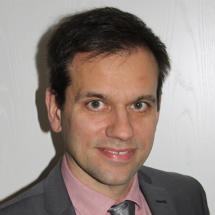
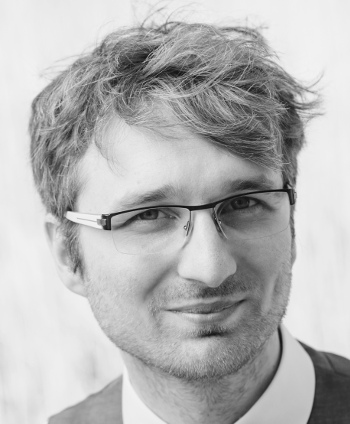
Dr. KN Sasidhar is a Researcher in the Department of Microstructure Physics and Alloy Design at Heinrich Heine University Düsseldorf. His work focuses on advanced materials science, particularly corrosion mechanisms, alloy design, and nanoscale structural analysis. He employs cutting-edge techniques like in situ synchrotron investigations and deep learning frameworks to study material behavior under extreme conditions. Current research emphasizes corrosion resistance in stainless steels, phase transformations during nitriding, and radiation effects on coatings. Key achievements include pioneering studies on nanoscale amorphization in metallic systems, data-centric approaches for materials discovery, and the development of predictive models for alloy performance. His work bridges experimental materials characterization with computational methods, addressing challenges in energy and aerospace applications. Publications span corrosion analysis, microstructural evolution under irradiation, and phase separation phenomena. Collaborative projects involve synchrotron facilities and interdisciplinary teams focusing on materials informatics. No formal awards or grants are explicitly listed in the provided texts, though his prolific publication record indicates active academic engagement.
Asia J. Biega is a tenure-track faculty member (W2) at the Max Planck Institute for Security and Privacy (MPI-SP), where she leads the interdisciplinary Responsible Computing group. She is also a principal investigator of the Cluster of Excellence CASA and the FINDHR consortium. Her work sits at the intersection of computing and society, focusing on responsible computing, data protection & governance, and digital well-being within data-driven and AI-based systems. Dr. Biega's research spans multiple disciplines including computer science, law, philosophy, and social sciences. Her work examines how principles of responsible computing can be computationally operationalized, with particular attention to data protection frameworks, privacy technology governance, and digital well-being. She actively collaborates across disciplinary boundaries to make technical contributions while supporting research in other fields. Her approach combines theoretical rigor with practical applications, often drawing from her industry experience at Microsoft and Google. Her publication record reveals a strong focus on the intersection of fairness, privacy, and transparency in information retrieval systems. She has pioneered work on data minimization compliance, fair ranking algorithms, and user perceptions of data collection practices. Her research consistently bridges technical and legal perspectives, particularly examining how GDPR principles can be computationally implemented. Recent work shows increasing attention to generative AI governance, algorithmic hiring systems, and the relational aspects of data in recommender systems. Dr. Biega has received several prestigious awards including the Council of Europe's Rodotà Award for innovative research in data protection, the SaTML Notable Reviewer Award, the GI-DBIS Dissertation Award of the German Informatics Society, and recognition as one of the '100 Brilliant Women in AI Ethics' in 2025. She has advised numerous PhD students and postdocs who have gone on to faculty positions at institutions including the University of Trieste, Penn State, and the University of Washington. Her research is funded by the Max Planck Society, Alexander von Humboldt Foundation, and the European Union (Horizon Europe FINDHR). She serves as General Co-Chair for ACM FAccT 2025 and has held leadership roles in multiple academic conferences.
Prof. Daniel Memmert is a Professor at the German Sport University Cologne, leading research in Sport Informatics and Sports Games within the Institute of Exercise Training and Sport Informatics. His work focuses on cognitive aspects of sports performance, decision-making, and data-driven analysis in football (soccer) and other sports. He has published extensively on topics like penalty kick strategies, home advantage dynamics, artificial intelligence applications in coaching, and route-setting in climbing. Memmert's research bridges sports science, computer science, and psychology, with over 550 publications and 41 projects to his name. He frequently engages with media, explaining complex sports phenomena to the public. Key Research Areas: Football analytics, cognitive psychology in sports, sports technology, decision-making under pressure Media Contributions: Over 50 media features discussing topics such as AI in coaching, referee bias, and athlete creativity Projects: Includes initiatives on sports data visualization, performance metrics, and prevention of sports betting addiction His work emphasizes translating academic findings into practical tools for athletes, coaches, and sports organizations, combining rigorous data analysis with real-world applications.
Niels Henze is a Professor at the Chair of Media Informatics within the Faculty of Languages, Literature and Cultural Studies at the University of Regensburg, where he has been serving since May 2018. His research centers on human-computer interaction, with a strong focus on predictive models in interactive systems, mobile interaction, augmented and virtual reality, and attention-aware computing. His research interests include: Human-Computer Interaction (HCI) Predictive modeling for runtime adaptation Mobile and wearable interaction Augmented and Virtual Reality (AR/VR) Attention-aware and context-sensitive systems Sociocognitive aspects of interactive technologies The analysis of his recent publications reveals a consistent focus on leveraging user behavior and contextual cues to build intelligent, adaptive interfaces. His work integrates machine learning with interaction design, emphasizing real-time model updates, implicit feedback, and cognitive load awareness to improve usability and user experience across mobile and immersive platforms. Scientific awards: No awards mentioned in the provided text. Niels Henze leads research in adaptive interactive systems and advises students in the field of media informatics. He has previously held a junior professorship at the University of Stuttgart and completed his doctorate at the University of Oldenburg under Susanne Boll. He is actively involved in advancing the theoretical and practical foundations of predictive and attention-aware computing. Grants and funding sources are not specified in the text. He is associated with the Institute for Information and Media, Language and Culture (I:IMSK) at the University of Regensburg, contributing to a multidisciplinary environment that bridges informatics with cultural and linguistic studies.
Roman Schnabel is a Professor of Experimental Physics at the University of Hamburg , affiliated with the Institute for Laser Physics under the Faculty of Mathematics, Informatics and Natural Sciences. He leads cutting-edge research in quantum optics, gravitational wave detection, and quantum technologies. Education : PhD in Physics (1999, Leibniz Universität Hannover); Physics degree (1988–1994, Leibniz Universität Hannover) Awards : QCMC 2018 Award, Gruber Cosmology Prize 2016 (LIGO team), Special Breakthrough Prize in Fundamental Physics 2016 (LIGO team), Joseph F. Keithley Award 2012 His recent work explores high-frequency gravitational wave observatories , entanglement generation , and quantum-enhanced sensing . He holds patents for gas sensors and optical surface imaging technologies. Schnabel co-founded the start-up Noisy Labs in 2023 and served as Director of Outreach & Transfer for the Cluster of Excellence 'Quantum Universe' (2019–2022).
Dr.-Ing. Tobias Fiebig is a Senior Researcher at the Max Planck Institute for Informatics (Internet Architecture department) since April 2022. He previously served as a permanent Assistant Professor at TU Delft's Faculty of Technology, Policy and Management from 2017-2022. His work combines network measurement with human factors to improve security practices, focusing on email protocols, DNS infrastructure, and academic cloud migration. PhD in Computer Science from TU Berlin (2017) MSc in System and Network Engineering from University of Amsterdam (2013) BSc in Cognitive Science from University of Osnabrück (2012) His research spans Internet security (DNS, IPv6, email), academic freedom in cloud contexts, and human-centered security challenges. Recent work analyzes MTA-STS deployment, DNS sampling biases, and university cloud migration privacy implications. He has presented at top conferences including USENIX Security , IEEE Symposium on Security and Privacy , and ACM CCS . Teaching roles include lecturing Data Networks (2023-24) and On the Practice of System and Network Engineering (2024), with prior module management in cyber security analytics and sustainable system operations.
Elena Simperl is a Professor of Computer Science and Deputy Head of Department for Enterprise and Engagement at King's College London's Department of Informatics. She co-directs the King's Institute for Artificial Intelligence and serves as Director of Research for the Open Data Institute. As a Hans Fischer Senior Fellow at the Technical University of Munich's Institute for Advanced Study, she leads the Trustworthy Knowledge Graphs focus group and contributes to advancing human-centric AI research across European institutions. Professor Simperl obtained her doctoral degree in Computer Science from the Free University of Berlin and her diploma from the Technical University of Munich. Prior to joining King's, she held academic positions in Germany, Austria, and at the University of Southampton, and was a Turing Fellow. Her career trajectory demonstrates consistent leadership in bridging academic research with practical applications in data ecosystems. Her research sits at the critical intersection of AI and social computing, focusing on human-centric approaches to building sociotechnical systems that integrate data, algorithms, and human capabilities. She investigates how to make knowledge engineering more accessible, how to leverage collective intelligence for data quality improvement, and how to design participatory AI systems that address societal challenges like misinformation. Her work spans knowledge graphs, semantic technologies, crowdsourcing, and open data, with particular emphasis on the social dimensions of data-intensive systems and the governance frameworks needed for trustworthy AI deployment. Analysis of her recent publications reveals a strong evolution toward integrating large language models with traditional knowledge engineering practices while maintaining human oversight. There's a clear trajectory from foundational work on knowledge representation toward increasingly applied research addressing real-world challenges in media ecosystems, citizen science, and data governance, with growing attention to policy implications of AI technologies. Fellow of the British Computer Society Fellow of the Royal Society of Arts Hans Fischer Senior Fellow at TUM-IAS (2023) Ranked among top 100 most influential scholars in knowledge engineering of the last decade Included in Women in AI 2000 ranking Professor Simperl has led 14 major European and national research projects totaling millions in funding, including MediaFutures (a Horizon 2020 program tackling online misinformation), QROWD, ODINE, Data Pitch, and ACTION. She currently co-chairs the Croissant working group in ML Commons developing data standards for AI, and serves as president of the Semantic Web Science Association. Her research has directly influenced the development of data ecosystems supporting startups and citizen science initiatives across Europe, demonstrating exceptional ability to translate theoretical advances into practical impact. As Director of Research at the Open Data Institute, she oversees initiatives connecting data entrepreneurs with artists and civic organizations. Her leadership in the MediaFutures project established a data-driven innovation hub that supported 51 startups/SMEs and 43 artists through three open calls, creating a sustainable model for arts-technology collaborations addressing media challenges. Her work with the ODINE project helped create a European ecosystem for data-driven startups, demonstrating her commitment to building practical applications of open data principles.
Georg Martius is a Full Professor in the Department of Computer Science at the University of Tübingen's Faculty of Science and a Max Planck Research Group Leader at the MPI for Intelligent Systems. Since April 2023, he has been a core member of the DFG-funded Cluster of Excellence 'Machine Learning: New Perspectives for Science,' which received extended funding through 2032 for its mission to integrate machine learning into fundamental scientific discovery processes. His academic foundation includes a PhD from the University of Göttingen and Bernstein Center for Computational Neuroscience (2005), a Diploma in Computer Science from the University of Leipzig (2003), and a visiting research period at the University of Edinburgh's Division of Informatics. Postdoctoral positions followed at the Max Planck Institutes for Dynamics and Self-Organization (Göttingen, 2009), Mathematics in the Sciences (Leipzig, 2010), and IST Austria (2015). Professor Martius's research pioneers the intersection of reinforcement learning, robotics, and tactile sensing, with emphasis on developing autonomous systems capable of natural locomotion, dexterous manipulation, and physical-world understanding. His work bridges theoretical machine learning with practical hardware applications, particularly in creating differentiable simulators, superresolution tactile sensors, and biologically plausible learning frameworks for robotic control. Analysis of his 2024-2025 publications reveals dominant trends in offline reinforcement learning (especially goal-conditioned and diversity-maximization techniques), object-centric representation learning for video understanding, and tactile sensing innovations. A strong thread connects foundation models to world model construction, while his work on differentiable physics engines enables precise collision handling and contact dynamics for real-world robotic control. His leadership roles include directing the Distributed Intelligence research team at Tübingen and contributing to major collaborative initiatives like the Real Robot Challenge and Myochallenge 2022. The Cluster of Excellence appointment represents recognition of his contributions to transforming scientific methodology through machine learning, particularly in automating hypothesis generation and experimental design. Current projects focus on integrating large-scale machine learning with embodied intelligence, advancing tactile perception systems like the Minsight vision-based sensor, and developing neuroplasticity-inspired approaches for robust out-of-distribution detection. His work directly impacts fields requiring physical interaction intelligence, from autonomous navigation to medical robotics, with emphasis on sample-efficient learning from limited real-world data.
Prof. Dr. Ingo Scholtes is Chair of Machine Learning for Complex Networks at Julius-Maximilians-Universität Würzburg's Center for Artificial Intelligence and Data Science (CAIDAS). His research spans network science, graph machine learning, and computational social science, with applications in software engineering, ecology, biology, and physics. He received a Juniorfellowship from the German Informatics Society (2014) and an SNSF Professorship (CHF 1.5Mio, 2018). Current affiliations: JMU Würzburg (since 2021), University of Zurich (2018-2024), Bergische Universität Wuppertal (2019-2021) Research focus: Higher-order network modeling, temporal graph analysis, AI for collaborative systems, causality-aware machine learning His recent publications demonstrate strong trends in temporal network analysis , graph neural networks for time-series, and higher-order models across software engineering and social science domains. He co-chairs multiple international workshops on complex networks and serves as associate editor for EPJ Data Science and Advances in Complex Systems. Key scientific contributions: Foundational work on higher-order network models published in Nature Physics Methodological innovations in temporal network visualization (HOTVis) and path-based analysis (pathpy) As both educator and organizer, he leads the Computational Social Science Section at GI e.V., mentors across disciplines, and develops tools like git2net for collaboration analysis. His work bridges theoretical foundations with practical applications in network science.
Nasir M. Rajpoot is a Professor in the Department of Computer Science at the University of Warwick, UK. His research focuses on computational pathology, medical image analysis, and deep learning applications in histology. He leads interdisciplinary projects integrating artificial intelligence with healthcare, particularly in cancer diagnostics and pathology workflows. Rajpoot’s work emphasizes developing robust algorithms for histology image analysis, including nuclear segmentation, tumor classification, and domain generalization in computational pathology. His contributions include the TIAToolbox, an open-source framework for tissue image analytics, and the CoNIC Challenge to advance nuclear detection and counting in histology images. He collaborates with clinicians and biologists to translate AI models into clinical practice, addressing challenges like tumor heterogeneity and staining variability. Rajpoot’s research spans colorectal, lung, and oral cancers, with a focus on predicting clinical outcomes via histological features and genomic data integration. Notable projects include the development of Handcrafted Histological Transformer (H2T) for unsupervised representations of whole slide images and the SAFRON framework for histology image synthesis. His work addresses domain adaptation, robustness evaluation, and explainability in AI-driven pathology systems.
Steffi Haag is a Professor of Digital Innovation and Entrepreneurship at the Institute of Computer Science , Heinrich Heine University Düsseldorf (HHU) . She bridges the Faculty of Mathematics and Natural Sciences and Faculty of Business Administration and Economics , collaborating with the Center for Entrepreneurship Düsseldorf (CEDUS) to inspire tech startups. Her research focuses on sustainable information systems, digital experiences, and business models. Steffi Haag’s research integrates Shadow IT , Usable Cybersecurity , and Digital Idea Management . Her work emphasizes theoretical , quantitative , qualitative , and mixed-methods research , including experimental and survey methodologies. Steffi Haag’s publications (2018–2024) span Information Systems , Cybersecurity , Digital Twins , and Sustainable Design . Common themes include Shadow IT dynamics , user behavior in security , and innovation management . Hermann Gutmann Award for special scientific achievements (2023) Schöller Fellow (2020) HMD Best Paper Award (2018) Research Award in Data Protection and Data Security (2017) Dissertation Prize (2017) Steffi Haag has secured grants such as the TU Darmstadt Postdoctoral Fellowship for Female Researchers (2016–2018) and Deloitte Foundation Fellowship (2009–2011). She actively moderates conferences and serves as Associate Editor of Business & Information Systems Engineering .
Thomas Riechert is a Professor at the Leipzig University of Applied Sciences (HTWK Leipzig), specifically within the Faculty of Computer Science and Media. He serves as Dean of Media Informatics, Chairman of the Media Informatics Study Commission, and Academic Advisor for Media Informatics. Additionally, he is a Member of the Faculty Council, Faculty representative in the IT committee, and Library Commission. He also acts as Spokesperson of the Institute of Computer Science at the HTWK. Appointed in 2014 in the field of information systems and data management, Riechert holds a doctorate from the University of Leipzig (2012, magna cum laude) and graduated as a computer scientist from TU Dresden in 2000. Professor Riechert's research focuses on information systems, data management, Semantic Web technologies, knowledge engineering, and Linked Data. His work bridges computer science with digital humanities, particularly in creating knowledge graphs for historical research. He has made significant contributions to RDF vocabulary management, ontology editing tools, and academic history databases. His research demonstrates a strong emphasis on practical applications of semantic technologies in information management systems. Analysis of his recent publications reveals a consistent trajectory in semantic web technologies applied to knowledge representation and historical data. His work shows progression from foundational semantic technologies toward increasingly sophisticated applications in digital humanities, particularly in academic history research. The Heloise project appears to be a major focus, developing common research models for collaborative historical research using Linked Open Data. His publications span both technical aspects of semantic technologies and their application in humanities contexts. Professor Riechert actively contributes to academic community building through conference organization and student engagement. His leadership roles in the Faculty of Computer Science and Media demonstrate his commitment to shaping computer science education. His research integrates practical software development with theoretical advancements in knowledge representation. As Dean of Media Informatics, Riechert oversees academic programs and research initiatives in this field. His work with the Heloise network demonstrates leadership in interdisciplinary research connecting computer science with historical scholarship. His office hours are held on Mondays from 10:00 to 11:00 in room ZU 407 at HTWK Leipzig.
Torsten Grust is a Professor of Computer Science at the University of Tübingen, leading the Database Systems research group since 2008. Previously, he held professorships at TU München and TU Clausthal. He earned his M.Sc. (Diploma) and Ph.D. in Computer Science from Universität Konstanz in 1994 and 1999, respectively. His research focuses on database languages, query and programming language technology, and scalable processing of non-relational queries. He bridges database and programming language research, emphasizing mutual benefits between the fields. **Education:** Ph.D. in Computer Science, University of Konstanz (1999) M.Sc. (Diploma), Computer Science, University of Konstanz (1994) Visiting Scientist, IBM Silicon Valley Laboratories (2000) **Research Interests:** Design and optimization of database languages Query compilation and execution engines Integration of functional programming with SQL Query provenance and debugging **Awards and Honors:** ACM SIGMOD Reproducibility Award (2021) University of Tübingen Teaching Award (2021/22) Winner of Dyalog 2019 APL Program Solving Competition Member of the VLDB Endowment Board of Trustees (2022–2027) **Advising & Grants:** Guided numerous students, including alumni such as Alexander Ulrich, Benjamin Dietrich, and Christian Duta Recipient of grants supporting research in query compilation, provenance analysis, and database language design **Labs & Teams:** Leads the Database Systems research group at University of Tübingen Collaborates with the National Institute of Informatics (Tokyo) on query and programming languages
Prof. Dr.-Ing. Lars Linsen is a full Professor of Computer Science at the Westfälische Wilhelms-Universität (WWU) Münster, leading the VISualization & graphIX (VISIX) group. His primary affiliation is the Institute of Computer Science within the Faculty of Mathematics and Computer Science. He holds adjunct professorships at Jacobs University, Bremen, and has held previous academic roles including Full Professor at Jacobs University (2012–2017) and Associate/Assistant Professor roles in Germany and the U.S. His research focuses on interactive visual analysis, medical visualization, and scientific visualization, with applications in life sciences and engineering. Education: PhD (Dr.-Ing.) in Computer Science from Universität Karlsruhe (2001), M.Sc. (Diplom) in Computer Science (1997), B.Sc. (Vordiplom) in Computer Science (1994). Awards: IEEE Visualization Design Contest Winner (2008, 2022, 2018), Preis des Fördervereins des Forschungszentrum Informatik (2002). Research Highlights: Develops visualization tools for medical imaging (e.g., mass spectrometry imaging, MRI data analysis) and physical simulations (e.g., wildfire spread analysis, asteroid impact modeling). Active in EU-funded projects like Pig-Pro-QuO (surface coatings) and cells-in-motion initiatives. Supervised over 20 PhD/MS advisees, including notable graduates in medical visualization and simulation ensemble analysis. Publications: Over 100 peer-reviewed articles in top venues like IEEE Transactions on Visualization and Computer Graphics, Computers & Graphics, and EuroVis. Key works include SciVis contest-winning wildfire analysis frameworks and medical visualization tools for stenosis detection. Teaching: Offers courses on visualization, computer graphics, and computational science. Actively involved in thesis supervision and curriculum development at both WWU Münster and Jacobs University. Grants & Collaborations: Principal investigator on DFG-funded projects (e.g., hemodynamics simulations, ensemble visualization) and industry collaborations (e.g., Tascon GmbH for coating quality analysis). Member of the Cells-in-Motion Interfaculty Centre and CDH board at WWU.
Michael Schaub is a tenure-track Assistant Professor in the Department of Computer Science at RWTH Aachen University, specializing in Computational Network Science. His research focuses on analyzing complex systems through network and graph models, integrating dynamical systems, control theory, and machine learning. He leads the Computational Network Science group, advancing methodologies for higher-order network models like simplicial complexes and hypergraphs. Schaub holds a PhD from Imperial College London and has held postdoctoral positions at MIT and Oxford. He is an ERC Starting Grant recipient (2022) and a Marie Curie Fellow, recognized for contributions to network dynamics and topological data analysis. Education: PhD in Mathematics, Imperial College London (2011-2015) MSc in Biomedical Engineering, Imperial College London (2010) BSc in Electrical Engineering, ETH Zurich (2007-2010) Research Interests: Schaub’s work spans interdisciplinary applications of network science, including biological systems, social networks, and technical infrastructures. Key areas include: Higher-order network models (hypergraphs, simplicial complexes) Graph signal processing and dynamics on networks Community detection and dynamical systems analysis Topological data analysis and machine learning Grants & Awards: ERC Starting Grant (2022): HIGH-HOPeS project Marie Skłodowska-Curie Fellowship (2017-2019) Junior Fellow, German Informatics Society (GI) Member of Junges Kolleg (North Rhine-Westphalia Academy) Labs & Teams: Leads the Computational Network Science Lab at RWTH Aachen, collaborating internationally on projects like the ELLIS Society and the European Laboratory for Learning and Intelligent Systems (ELLIS). Active in organizing workshops (e.g., Toponets, SIAM MDS).